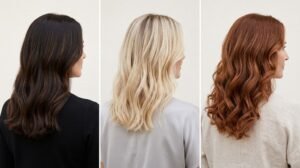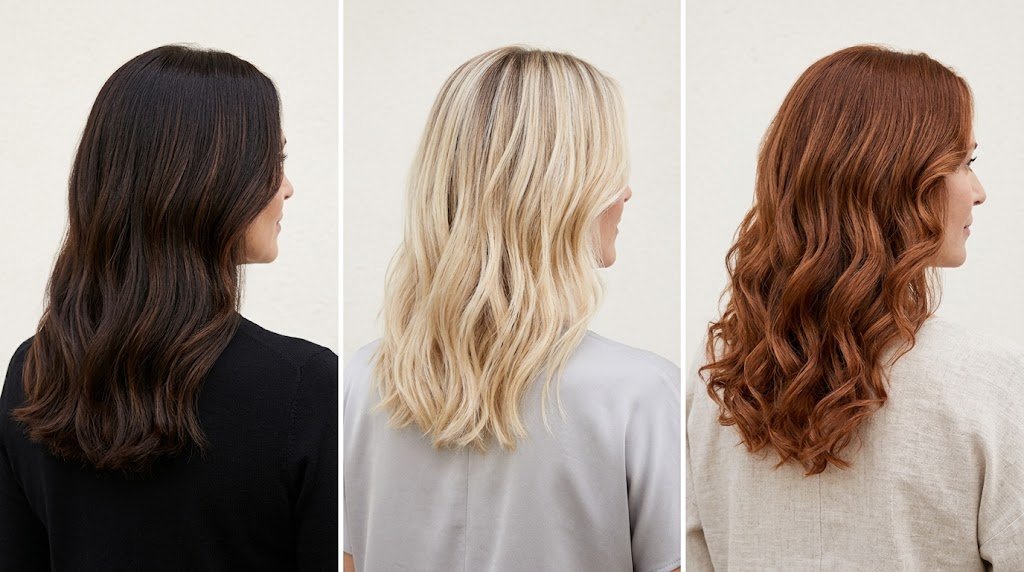

Winter hair color ideas include deep espresso, soft chocolate, creamy blonde, maple copper, and darker plum accents. The best choice starts with your current color and the amount of maintenance you want. Staying close to your natural shade can make regrowth less noticeable, while a bigger change may involve lightening, more frequent color refreshes, or both. This guide explains what makes each look different and what to consider before choosing a salon reference. Here, “winter” refers to the season, rather than the personal color-analysis categories called True, Cool, or Bright Winter.
Which Winter Hair Color Fits Your Starting Shade and Upkeep?
Before choosing a color, decide what you want to change: overall depth, warmth, brightness, or contrast. You may want darker hair throughout, or simply a few lighter pieces that make your existing brunette look more dimensional.
Use your current color as the starting point, including any dye or highlights already in it.
| Starting point | Desired change | Looks to compare | Main consideration |
|---|---|---|---|
| Natural brunette | Subtle depth | Espresso, chocolate | Staying near your natural depth can soften visible regrowth |
| Brunette | Warm dimension | Caramel ribbons, maple copper | How much brightness you want and how the tone will be maintained |
| Dark blonde | Soft brightness | Honey beige, rooted blonde | Highlight placement and contrast with new growth |
| Existing light blonde | Cooler finish | Icy pearl | Hair condition and the warmth already present |
| Lightened hair | Bold accent | Plum, blue peekaboo | Color fading and maintaining the desired intensity |
Low-maintenance winter hair color depends on the person wearing it. A dark brunette shade may blend closely with one person’s roots but create a clear line against another person’s lighter or gray regrowth.
There are also two kinds of upkeep to consider. Root maintenance addresses new growth; tone maintenance refreshes the warmth or coolness of the colored lengths. A look can have soft, blended roots and still need its tone adjusted.
Bring reference pictures that show a similar starting shade and texture to yours. Your colorist also needs to know about previous permanent dye, lightening, and areas that feel fragile before recommending a coloring plan.
Winter Brunette Hair Colors: Deep, Warm and Softly Dimensional
Brunette options range from nearly black to lighter brown-blonde blends. For winter 2026–2027, Wella’s November trend report highlights espresso melt brunette and mushroom bronde among its seasonal directions. The choices below combine those timely references with established brunette options.
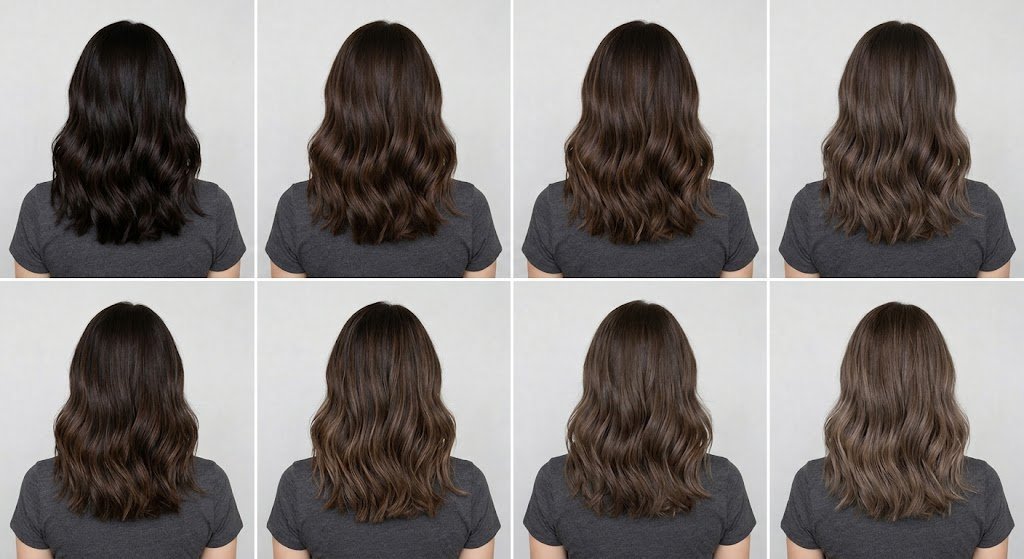
Compare the photographs as carefully as the shade names. Espresso, chocolate, and chestnut are descriptions rather than standardized formulas, so their depth and undertone can vary.
1. Espresso Brown
Espresso brown gives hair a deep, concentrated brunette appearance. It may look almost black indoors, with its brown character becoming clearer beside a window or outdoors.
Choose a reference that retains visible brown if you want depth without a near-black result. On naturally dark brunette hair, the adjustment may be modest. Moving from blonde to espresso needs a different plan, especially through previously lightened ends.
Lighter or gray roots will stand out more against this depth, so consider regrowth before committing.
2. Chocolate Brunette
A medium-to-deep chocolate brunette shows more visible brown than the espresso look above. Soft golden or neutral reflections can give the surface variation without obvious streaks.
This is worth comparing if your current brunette feels too dark or too uniform. A useful salon reference shows the amount of warmth you want, since “chocolate” can describe several different results.
Explore our chocolate brown hair color guide to compare the variations. Your starting shade determines whether the change involves adding color, lightening selected areas, or both.
3. Mocha Balayage
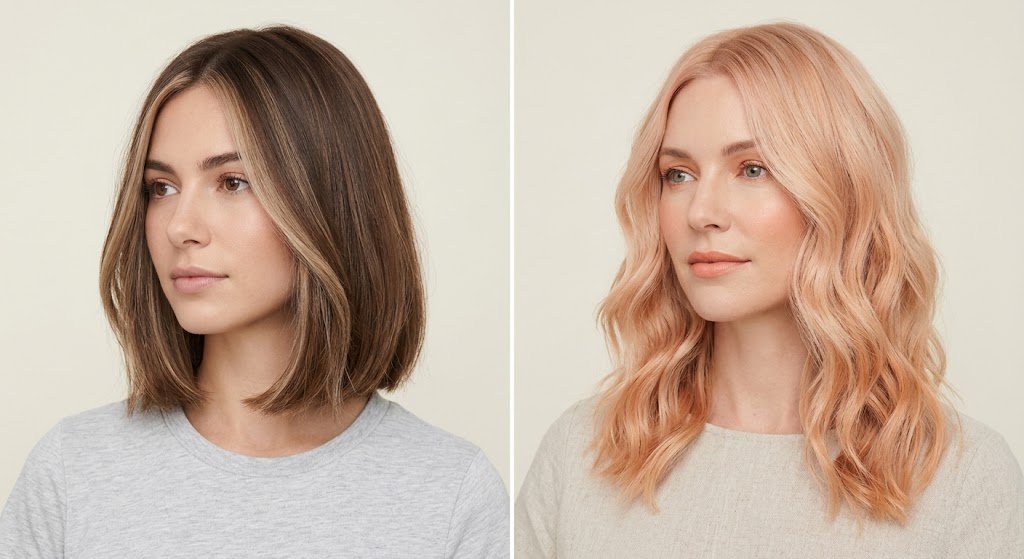
Mocha balayage keeps most of the hair brunette while introducing fine, lighter brown ribbons through the lengths. It gives a quieter contrast than golden caramel highlights.
Balayage describes a highlighting technique in which color or lightener is painted onto selected sections. When brightness is blended away from the scalp, new growth can be less obvious than with highlights beginning directly at the roots.
For this version, request restrained brightness with plenty of brunette between the lighter pieces. Our mocha brown guide explains the shade family.
4. Mushroom Brown
Mushroom brown has muted beige and taupe tones running through a brunette base. The result looks cooler and less golden than chestnut or caramel, while remaining clearly brown.
Look for photographs with soft brown-gray dimension rather than silver streaks. This helps communicate how muted you want the finish.
Starting warmth matters: warmer reflections may become more noticeable as the color changes between appointments. Professional guidance describes mushroom brown through its earthy, cool-toned character.
Compare lighter and deeper versions in our mushroom brown hair color guide.
5. Golden Chestnut
Golden chestnut brings gentle golden warmth into medium brown hair. For this look, brown remains dominant, with warmer reflections becoming more visible in brighter light.
It offers a middle ground between neutral chocolate and a more copper-led auburn. When comparing warm winter hair colors, choose a reference with the balance of gold and red you actually want.
Very dark or previously dyed hair may need lightening to reach a visibly brighter chestnut. Adding warmth alone does not guarantee the lighter result shown in a photograph.
6. Dark Brown With Caramel Ribbons
Caramel ribbons create a clearer pattern of light and dark than subtle mocha balayage. Golden sections stand out against the brunette base, making placement an important part of the look.
Fine pieces around the face can provide a small change. Wider ribbons through the lengths make the contrast more noticeable.
Keep enough dark brown between the highlights if you want to remain predominantly brunette. Our dark brown hair with caramel highlights guide offers further examples. Discuss both the initial brightness and how the lighter sections will be maintained.
7. Soft Black
Soft black is the deepest option in this brunette group. It gives a near-black appearance with less visible brown than espresso, particularly in lower light.
Use a daylight reference to judge the depth. “Soft” describes the intended appearance; it does not mean the coloring process is temporary or easy to reverse.
This choice needs extra thought if you have lighter roots, substantial gray regrowth, or plans to return to blonde. Ask your colorist how the proposed color would affect both maintenance and a later change.
8. Mushroom Bronde
Mushroom bronde combines brown and blonde with muted beige-taupe tones. Compared with mushroom brown, it has more visible blonde and a lighter overall appearance.
The brown base should still show between the brighter sections. A reference with blended roots can help communicate the balance without making the whole head blonde.
Dark hair may need lightening to achieve that contrast. Although a blended root can soften visible grow-out, maintaining the cooler finish is a separate consideration. Choose this look for its lighter brown-blonde balance rather than expecting maintenance-free color.
Blonde Hair Colors for Winter: Creamy, Rooted and Icy
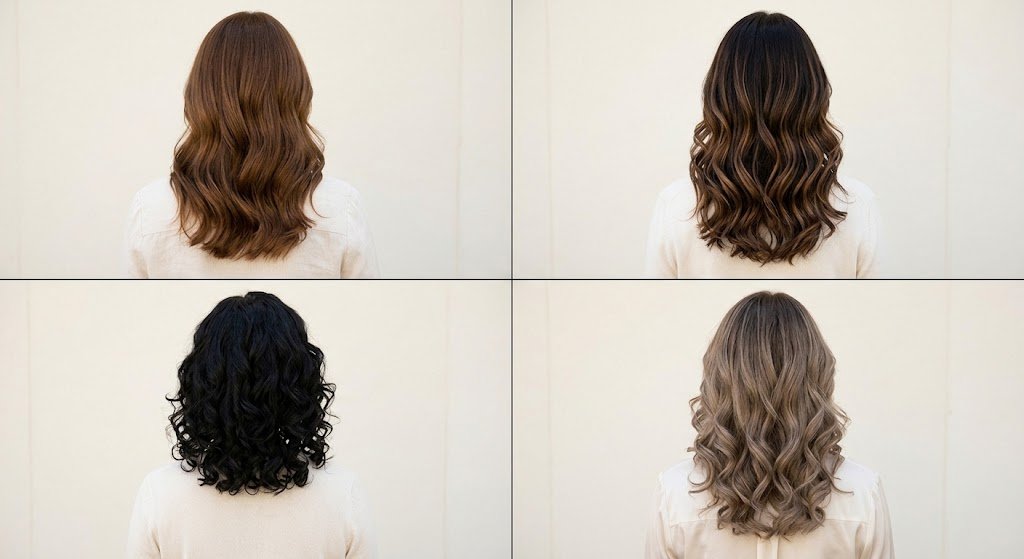
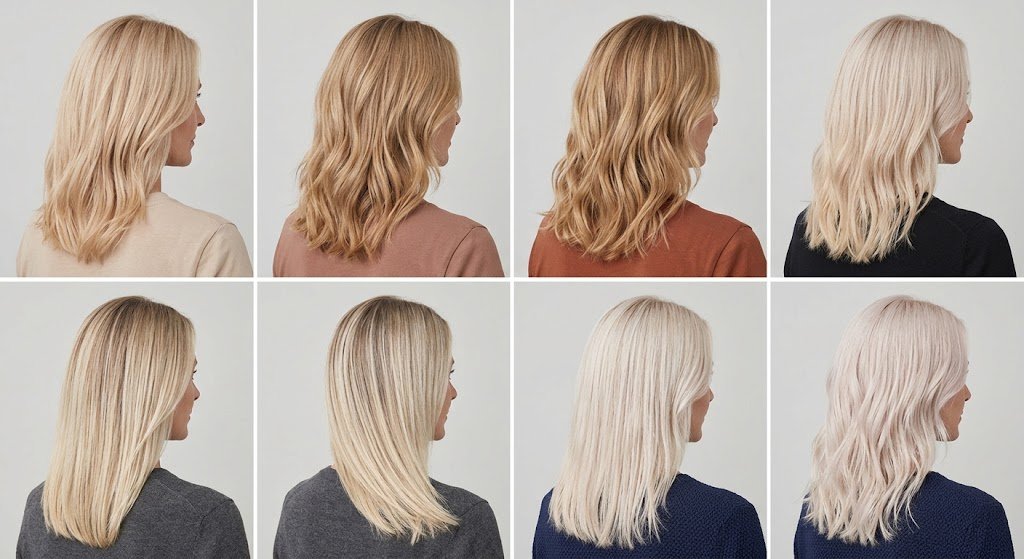
Blonde hair colors for winter range from warm honey beige to pale pearl. You can also change where the brightness sits, keeping a deeper root or adding lighter pieces beside the face.
The six looks below include both shades and placement options. Vanilla blonde appears in Wella’s November 2026 trend report, while the other choices offer different ways to adjust warmth, contrast, and upkeep.
9. Vanilla Blonde
Vanilla blonde has a creamy, light appearance with a little beige warmth. It sits between golden honey blonde and cooler pearl shades, giving you brightness without a white or silver finish.
For this look, choose a reference with visible cream tones rather than relying on the name alone. Naturally darker hair may need substantial lightening, while existing blonde may need a different adjustment.
As the color changes between appointments, the balance can shift warmer. The aim is to maintain the creamy finish without removing all its warmth.
10. Honey Beige Blonde
Honey beige blonde brings soft golden reflections into a beige blonde base. Compared with vanilla, its warmth is more noticeable; compared with a strong golden blonde, the finish is more restrained.
Fine honey-colored pieces through a darker blonde base create gentle variation. More extensive highlights produce a brighter result with less natural depth remaining.
This is a useful option if you want warm winter hair colors while keeping a blonde appearance. Golden tones are part of the intended look, so products chosen to remove warmth should match the result you actually want.
11. Rooted Winter Blonde
Rooted winter blonde is a placement choice: darker color at the scalp blends gradually into brighter lengths. It can be paired with vanilla, honey beige, or cooler blonde tones.
Keeping the root near your natural depth can soften the contrast as new hair grows. The blend should look gradual rather than like a dark band above pale ends. Wella’s professional examples show cream and beige blondes combined with this darker-root approach.
Less obvious regrowth does not mean the lengths need no attention. Their tone can still change between appointments.
12. Icy Pearl Blonde
Icy pearl blonde is pale and cool, with a delicate pearly reflection. It has less visible gold than honey beige and a cooler finish than vanilla, making the difference easiest to judge in neutral daylight.
Achieving that appearance requires a suitable light base. Previous dark dye, uneven lightening, or fragile lengths can make the change more complicated. Toner adjusts the shade, but it cannot always correct hair that has not been lightened sufficiently.
Returning yellow warmth and visible darker roots are separate upkeep considerations. Discuss both before choosing this look.
13. Beige-Blonde Face-Framing Highlights
Beige-blonde face-framing highlights place brightness beside the face while preserving more of the existing color elsewhere. Fine sections create a subtle transition; wider pieces give a stronger contrast.
Placement matters as much as shade. On a bob, consider where the light pieces fall when the hair is tucked behind the ears. On curly hair, look at examples worn in a similar curl pattern to see how the brightness follows the shape.
These sections may need lightening even though they cover a smaller area. Explore our blonde balayage guide for more placement ideas.
14. Peach Strawberry Blonde
Peach strawberry blonde adds a delicate peach-copper tint to a light blonde appearance. Unlike honey beige, its warmth has a noticeable red influence. Unlike deeper copper, blonde remains a major part of the result.
A sufficiently light base helps the peach detail show clearly. Darker starting hair will not necessarily produce the pale finish in a reference photo without lightening.
The peach tint can become less noticeable as it fades, changing the balance between blonde and copper. Our strawberry blonde hair color guide can help you compare subtle and more visibly red variations.
Warm Winter Hair Colors: Copper, Auburn and Red
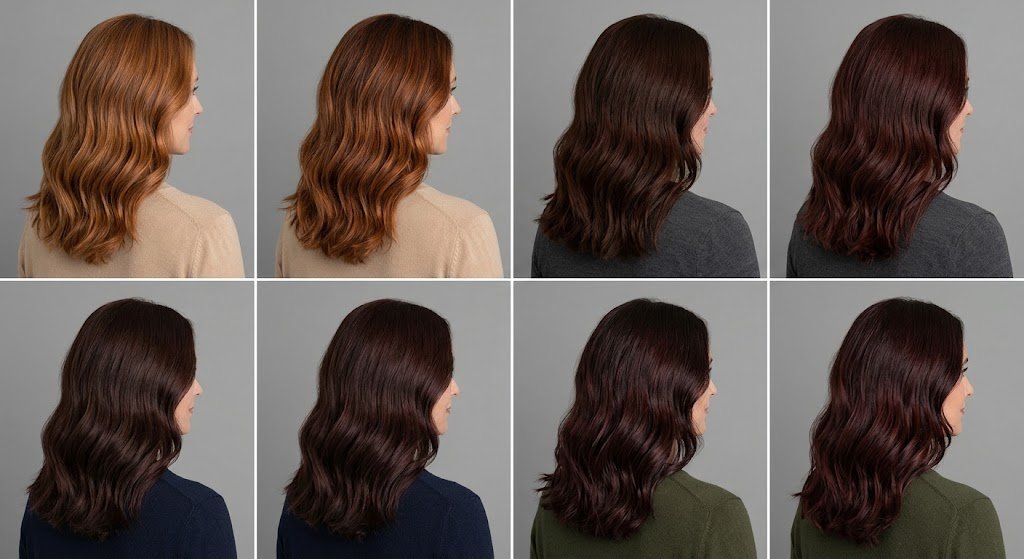
Warm winter hair colors offer different ways to bring red into your look. Maple copper emphasizes amber and copper, deep auburn combines earthy red with brown, and mahogany introduces a darker red reflection. Cherry cola keeps a brunette base with cherry-colored highlights or an overall tint.
Maple copper features in Wella’s November 2026 trend coverage. When comparing these options, look at the actual color as well as its name: salon and product descriptions can overlap.
15. Maple Copper
Maple copper brings amber and copper reflections into a brown base. It has more golden warmth than deep auburn and more depth than the peach strawberry blonde described earlier.
Fine copper pieces can introduce warmth while leaving most of your brunette intact. An all-over version makes the copper more prominent. On very dark or previously dyed hair, achieving visible brightness may require lightening.
Compare examples in our copper auburn hair guide. Pay attention to how much brown remains between the brighter areas, since that balance changes the overall effect.
16. Deep Auburn
Deep auburn combines dark brown with earthy red and copper tones. Brown provides the depth, while the red becomes more noticeable in brighter light. Compared with maple copper, this version looks less golden and more red-brown.
It offers a way to explore red without choosing a bright copper finish. However, blonde highlights or unevenly colored ends can affect how consistently the new shade develops.
Our auburn hair color ideas show different balances of red and brown. Choose the balance you like rather than assuming every deep auburn will look the same.
17. Mahogany Brown
For this look, choose a fairly uniform brown with a muted, deep red reflection. Some mahogany shades include violet, giving them a cooler red appearance than copper or auburn.
The aim here is subtle color throughout rather than obvious cherry-colored ribbons. That makes it distinct from the cherry cola option below, although the names can overlap between brands.
Previously lightened sections may show the red differently from darker roots. Explore our red brown hair color guide to compare warmer and more violet-influenced examples before deciding on the finish.
18. Cherry Cola
Cherry cola pairs a dark brunette base with a more noticeable cherry-red reflection. It may appear mostly brown indoors, then reveal red or burgundy tones in daylight.
For this version, keep the dark base visible and concentrate the cherry effect through selected pieces or a translucent-looking overall tint. A bright red reference represents a bigger change than a subtle reflection over dark brown hair.
As the cherry tone fades, the result may look less vivid even before the roots become distracting. Our cherry cola hair color guide offers more examples of subtle and stronger variations.
Fun Winter Hair Colors: Wine, Plum and Hidden Blue
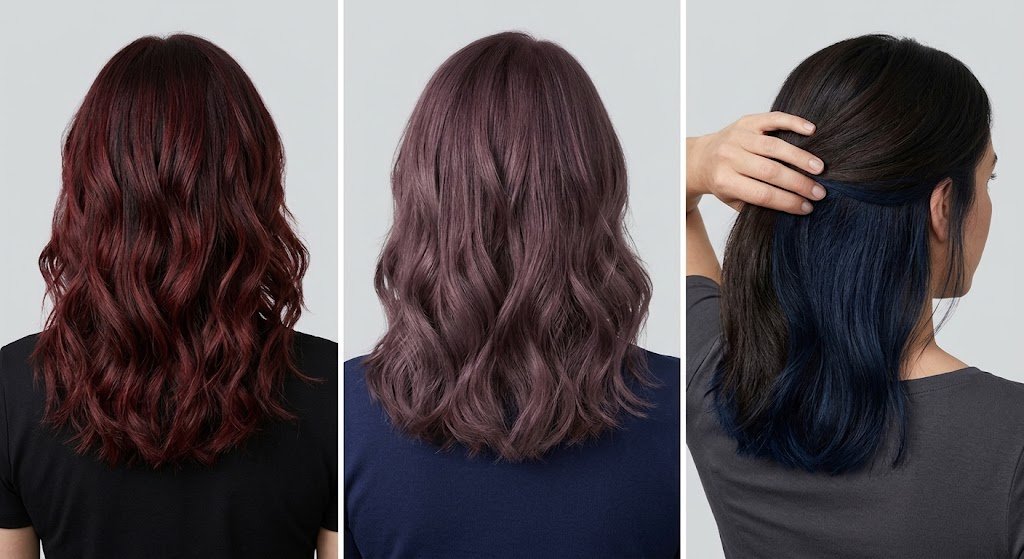
Fun winter hair colors can be dark and understated or clearly visible against your natural shade. Burgundy brings wine-red depth, smoky plum adds muted violet, and a blue underlayer changes where the color appears.
Choose the effect you want before choosing the shade name. A subtle reflection on dark hair and a saturated result on lightened hair can look very different.
19. Mulled-Wine Burgundy
Mulled-wine burgundy makes deep wine red the main feature, with brown providing depth. It looks more visibly red than cherry cola, where brunette remains dominant.
Ask for “a deep wine red with brown depth, rather than a subtle red tint.” Dark or previously dyed hair may need lightening for the red to show as clearly as your reference. The color can lose intensity between appointments, even when root growth is discreet.
Compare variations in our burgundy hair color guide.
20. Smoky Plum
Smoky plum looks like muted violet-brown rather than bright purple. Its purple reflection distinguishes it from burgundy, while the brown keeps the result darker and less saturated.
On deep brunette hair, that reflection may be subtle. A more visible violet result can require a lighter starting base. Request “a muted plum with visible brown, not vivid purple.”
Fading depends on the formula, underlying color, and hair condition, so the eventual tone is not identical for everyone. Explore our plum hair color guide for comparisons.
21. Midnight-Blue Peekaboo Color
Midnight-blue peekaboo color sits beneath the outer layers, appearing as the hair moves or is tied up. How well it stays hidden depends on layer length, density, and your everyday hairstyle.
Ask for “a deep blue underlayer that stays mostly covered when I wear my hair down.” Dark hair may show only a blue reflection; clearer blue can require lightening. Hidden placement does not prevent fading, and lightened sections remain after the blue changes.
See our blue hair color ideas for different intensities.
How Do You Choose a Winter Shade You Will Still Like in February?
Start With Your Current Color and Color History
Tell your colorist about permanent dye, highlights, previous lightening, and color applied at home. Two people with similar-looking brown hair may need different approaches because their color histories differ.
Include your plans for gray regrowth. Covering it, softening its contrast, and leaving it visible are different goals. A darker shade may create a stronger root line, so consider how the color will look between appointments as well as immediately afterward.
Compare Warmth, Coolness and Contrast in Daylight
Use photographs taken in neutral daylight where possible. Warm lighting can exaggerate copper and gold, while filters can make muted shades look more saturated.
Compare placement as well as color. Fine highlights create a different pattern from broad ribbons. On short hair, check how the brightness falls around the hairline and ends. For curly and coily hair, references with a similar curl pattern help show how the lighter sections follow the hair’s shape.
Decide How Much Root and Tone Maintenance You Want
Consider which changes would bother you most: visible roots, warmer blonde, or less noticeable red and violet reflections.
A blended root may reduce obvious regrowth while the lengths still need their tone refreshed. Ask what that refresh involves, what it costs, and whether it fits your routine. Choose a look you can comfortably maintain rather than relying on a general “low-maintenance” label.
How Can You Keep Winter Hair Color Looking Fresh?
Use a shampoo suitable for color-treated hair that also meets your scalp’s needs. Follow with conditioner suited to your texture and the condition of your lengths. When heat styling, use an appropriate heat protectant and follow its directions.
Toning products should address a specific unwanted color. Purple shampoo can help reduce yellow tones in suitable blonde or gray hair, while blue-toning products address orange warmth in suitable hair. Neither is a universal refresher for copper, burgundy, plum, or blue. Deliberately warm shades may not need that warmth reduced.
Arrange maintenance around the change you actually notice. Root color addresses new growth; a tonal adjustment refreshes or corrects warmth and coolness through the colored hair. Vivid shades may need their color replenished separately. Follow a plan based on your formula and hair condition rather than a fixed schedule for every shade.
Winter Hair Color Questions
Should You Go Lighter or Darker With Your Hair in Winter?
Either can work. Choose according to your starting color, preferred contrast, and maintenance needs. Darker color can make lighter or gray roots more noticeable. Going lighter may involve a more substantial process, especially through previously dyed hair, so winter itself should not determine the decision.
Which Winter Hair Colors Are Lower Maintenance for Brunettes?
Colors close to your natural brunette depth often create less noticeable regrowth. Subtle highlights blended away from the scalp can also soften the transition. However, maintaining a cool finish or red reflection is a separate commitment, even when the roots blend well.
Can You Stay Blonde Throughout Winter?
Yes. You can keep your existing blonde, adjust its warmth, or introduce depth without giving up brightness. Root blending and carefully placed lowlights are options to discuss. The right choice depends on your hair’s condition and preferred appearance rather than a requirement to go darker for winter.
What Hair Color Works for a January Refresh?
Choose according to how much change you want. Refreshing an existing tone or adding a few lighter pieces may be enough. For a larger transformation, consider the process, cost, and upkeep first. There is no single shade that becomes the best choice simply because January arrives.
Are Winter Hair Colors the Same as True Winter Palette Colors?
No. Winter hair colors describe seasonal inspiration. True Winter belongs to personal color-analysis systems, which consider how someone’s coloring relates to different palettes. You do not need a Winter classification to wear these shades, and this guide does not assess your personal color season.
Save two or three reference images and note what you like about each: depth, warmth, brightness, or placement. Bring them to your colorist alongside your color history, budget, and upkeep preferences to narrow the choices to a realistic result.