
If you are exploring various blue hair colour ideas, transforming your look with a striking Blue Hair colour offers endless creative possibilities. Blue hair can range from deep and subtle to bright, vivid, or soft and pastel. The final appearance depends on the blue shade, starting hair colour, and where the colour is placed.
Blue can cover the full head or appear through highlights, face-framing pieces, ombre, balayage, underlayers, or coloured ends. Hair length also changes how these details are displayed. A short haircut may put more focus on one main shade, while longer hair provides more space for gradients and blended sections.
Looking at the main blue shade families and the starting hair colour can make it easier to narrow down a vibrant blue hair color that matches your personal style.
What Does Blue Hair Colour Include?
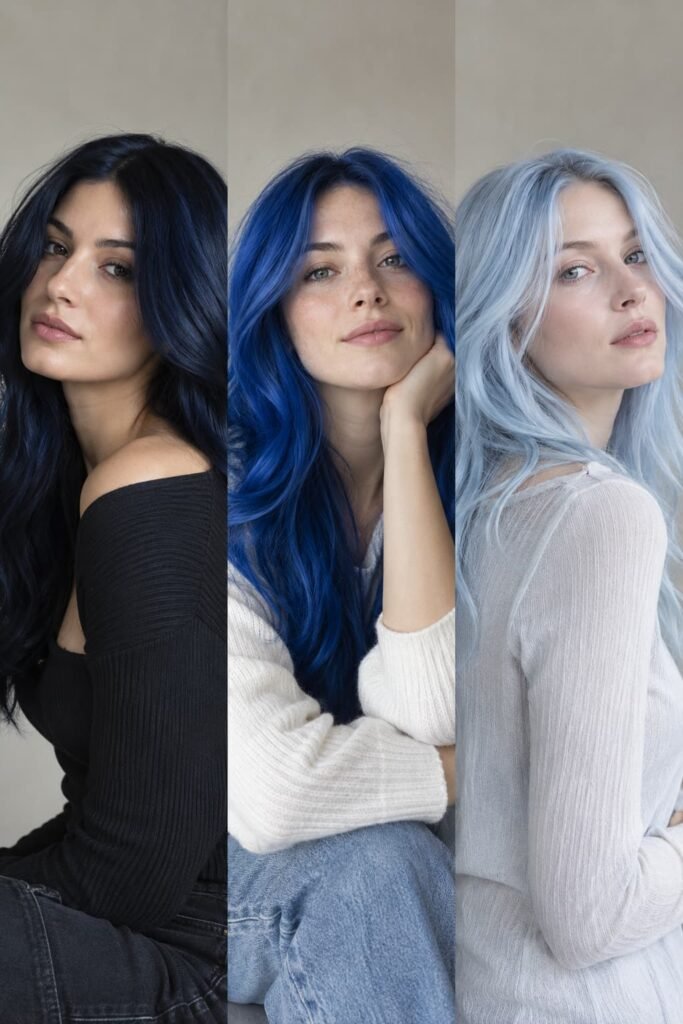
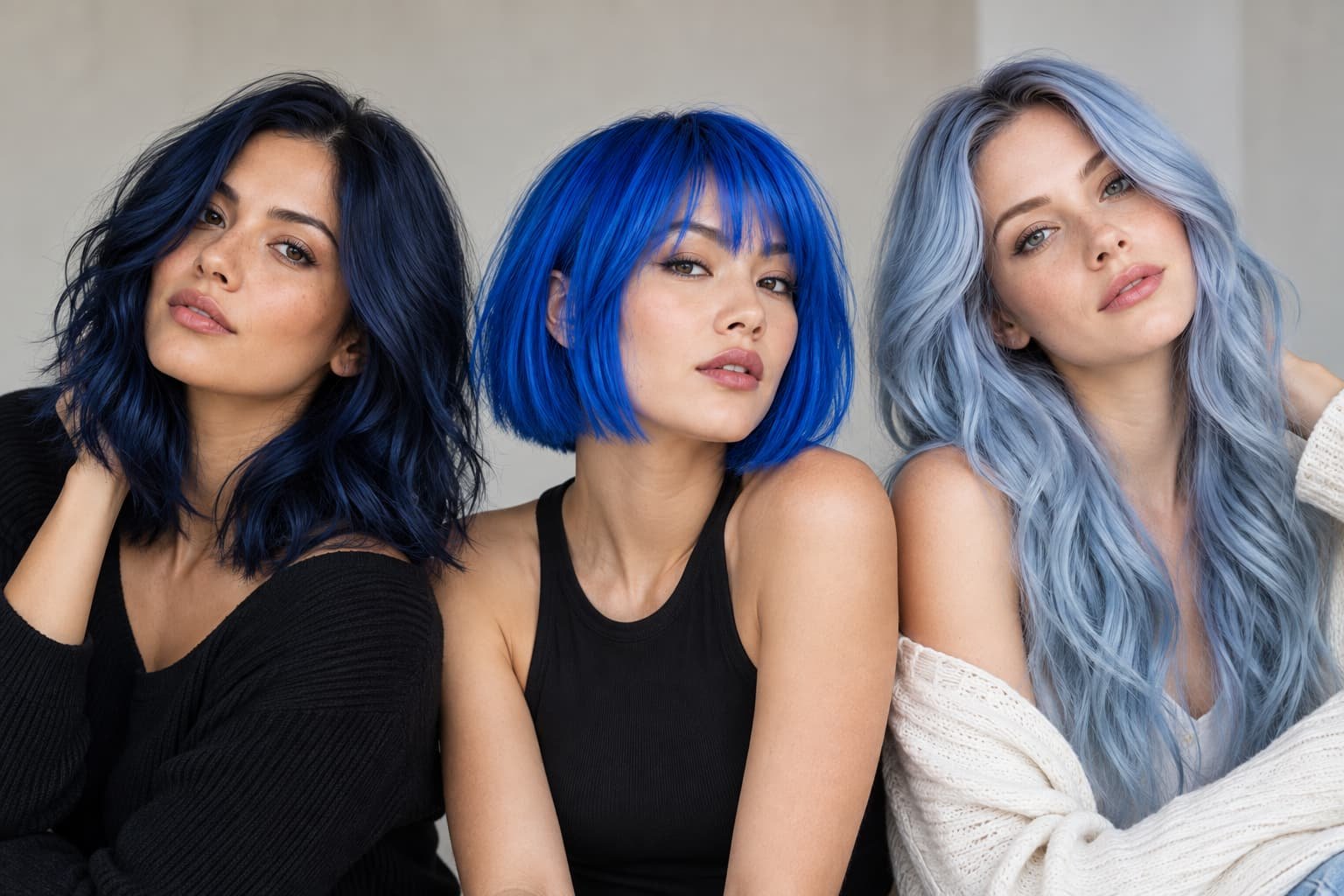
Blue hair colour covers many different tones rather than one standard shade. Common options range from very dark blue-black and navy to cobalt, electric blue, icy blue, and pale pastel tones.
The depth and brightness of the blue can change the overall look considerably. Colour placement also matters. An all-over blue creates a different effect from a few highlights or a hidden section underneath the hair.
Dark Blue Shades
Common labels for darker blue looks include blue-black, midnight blue, navy, and deep sapphire. When choosing a rich hair colour dark blue, finding the right dark blue hair dye is key to achieving the desired depth.
These shades can be options for someone who prefers a deeper colour rather than a highly vivid blue. On black or dark brown hair, some dark blue tones may appear subtle, with the blue becoming more noticeable in brighter lighting or through movement.
Blue-black stays particularly close to a very dark overall colour. Navy and deep sapphire can provide a more visible blue tone, although the result still depends on the starting base.
Dark blue can be used on short, medium, or long hair. It can also appear through highlights, coloured ends, face-framing pieces, or larger sections rather than full-head colour.
Bright and Vivid Blue Shades
Cobalt, royal blue, electric blue, and vivid aqua sit on the brighter side of the blue hair spectrum.
These shades can create stronger contrast than navy or blue-black. They may be used as an all-over colour or limited to selected sections.
Cobalt usually has a rich, clear-blue appearance, while electric blue is used to describe a particularly bright blue look. Royal blue generally sits between very deep and very light blue shades.
Bright blue can also be placed through chunky highlights, money pieces, coloured ends, or an underlayer. Vivid blue usually appears more clearly on a lighter starting base, although the exact result can vary.
Light and Pastel Blue Shades
Light blue options include powder blue, baby blue, icy blue, pale aqua, and soft silver-blue. For anyone aiming to sport striking light blue hair, these pale tones create an eye-catching pastel finish.
These shades create a paler appearance than navy, cobalt, or electric blue. Pastel blue can look soft and muted, while icy blue often combines pale blue with a cooler or slightly silvery appearance.
Pastel and very light blue shades generally show most clearly on a very light or pre-lightened base. A darker starting colour may not produce the same pale result without first creating a lighter base.
Light blue can cover the full hair or be used through selected sections. Possible combinations include darker roots with pale blue lengths, icy blue highlights, or blends of blue with lavender, silver, or aqua.
The starting tone of the hair can also influence how the finished shade appears.
How Does Your Starting Hair Colour Affect the Final Blue Shade?
Starting hair colour can have a noticeable effect on how blue appears.
A vivid shade placed over very light hair can look different from the same type of blue placed over a dark brown base. Darker hair may reduce the visible contrast of some blue shades, while a lighter base can make bright and pale colours easier to see.
Existing undertones can also influence the result. This is especially relevant when working with lighter blue shades.
Blue Hair on Black or Dark Brown Hair
Black and dark brown hair can work well with deeper blue looks such as blue-black, navy, midnight blue, and deep sapphire. Successfully coloring dark hair blue requires understanding how dark pigments interact with blue tones.
These colours may blend more closely with the dark base, creating a subtler result than a bright electric or pastel blue. The amount of visible blue can vary with the starting shade, colour placement, and lighting.
Another option is to keep most of the dark base and introduce blue only in selected areas. Navy highlights, blue ends, face-framing sections, peekaboo colour, or a hidden underlayer can add blue without changing the appearance of the entire head.
Brighter or much lighter blue sections generally need a lighter starting base to show clearly. For this reason, a vivid or pastel result on naturally dark hair may involve lightening the sections where the blue will be placed.
Blue Hair on Medium or Light Brown Hair
Medium and light brown hair provide several possible directions depending on how visible the blue is intended to be.
Deep navy or sapphire can create a darker contrast against brown hair. Cobalt, teal-blue, or brighter sections may create a more noticeable difference when used through the lengths or around the face.
The brown base can also remain visible at the roots while blue appears through the mid-lengths and ends. This creates a two-tone transition rather than one solid colour.
Highlights, balayage, ombre, coloured ends, and underlayers are possible ways to control how much blue appears in the hairstyle.
For very bright or pale blue results, the sections being coloured may need a lighter base. How much preparation is needed depends on the starting colour and the intended result.
Blue Hair on Blonde or Lightened Hair
Blonde and lightened hair can provide a clearer base for vivid and pastel blue shades.
Colours such as cobalt, electric blue, aqua, icy blue, and pastel blue may appear more clearly when there is less dark pigment underneath them.
A lighter base also allows several blue shades to be combined within the same look. One possible option is a gradient that moves from a deeper blue near the roots into brighter blue through the lengths and a paler shade toward the ends.
The underlying tone still matters. Noticeable yellow or warm tones can influence some blue colours and may shift the finished appearance toward a greener tone.
This means similar blue colours do not necessarily look identical on every blonde or lightened base.
Blue can be used as an all-over colour or limited to highlights, money pieces, ombre sections, coloured ends, or multi-tone gradients. The choice mainly depends on the desired amount of blue, contrast, and colour placement.
Blue Hair Colour Ideas for Short Hair
Short hair offers several ways to make blue a visible part of the haircut. A single shade can cover the entire style, or blue can be limited to the fringe, top sections, ends, or selected pieces.
The haircut also changes how the colour is displayed. A blunt bob can create a more continuous area of colour, while a textured crop separates the hair into shorter pieces that may show different parts of the shade as the hair moves.
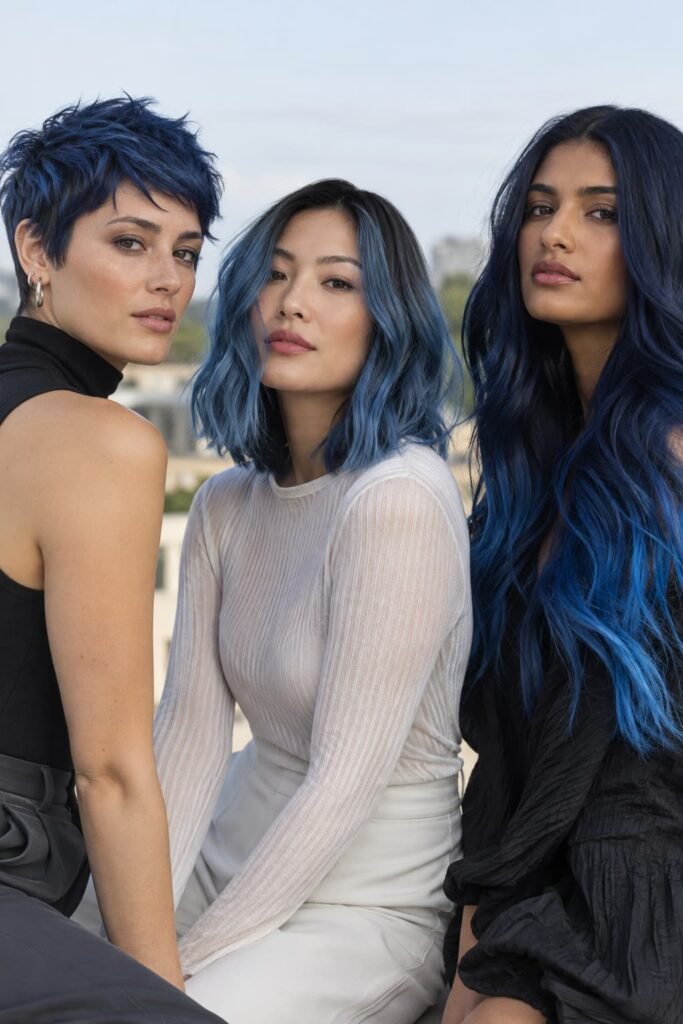
Navy Blue Pixie Cut
A navy blue pixie combines a short haircut with a deep blue shade. Navy is darker than cobalt or electric blue, so it can create a more understated appearance.
One option is to use navy throughout the entire pixie. Another is to keep the shorter sides darker and place more visible blue through the longer hair on top.
On a dark starting base, the difference between the original hair and a deep navy shade may be relatively subtle. The exact result can vary with the starting colour and the blue tone used.
Cobalt Blue Bob
Cobalt blue can give a bob a clearer, more vivid blue appearance than darker shades such as navy or blue-black.
A blunt bob can display the colour in a fairly continuous shape from roots to ends. With a layered bob, individual sections may make variations in the colour placement easier to see.
Cobalt does not have to cover the entire haircut. Dark roots, blue front sections, or cobalt through the lower lengths are other possible approaches.
For a strongly vivid result, the starting base matters. Bright blue shades generally appear more clearly on lighter or pre-lightened hair.
Blue-Black Short Hair
Blue-black combines a very dark overall colour with blue tones. It sits much closer to black than brighter shades such as cobalt or electric blue.
On a short haircut, blue-black may appear mainly dark in some lighting, with the blue becoming easier to notice under different light or as the hair moves.
The colour can be paired with a pixie, cropped cut, short bob, or another short style. It may appeal to someone who wants blue tones without making vivid blue the main feature of the haircut.
Electric Blue Textured Crop
Electric blue creates a brighter colour direction for a short textured crop.
The blue can cover the whole haircut or appear mainly through longer sections on top. Keeping the sides or roots darker is another option that creates a clear difference between the dark and blue areas.
Texture can also break the colour into smaller visible sections instead of displaying one smooth block of blue.
Electric and other vivid blues usually show more clearly on a lighter base. Darker starting hair may need to be lightened in the sections where a strong, bright blue result is wanted.
Blue Hair Colour Ideas for Medium-Length Hair
Medium-length hair provides enough space for both solid colour and gradual transitions. Lobs and shoulder-length styles can be combined with blue highlights, ombre, darker roots, face-framing colour, or an all-over shade.
The placement can be adjusted according to how much of the original hair colour someone wants to keep visible.
Denim Blue Lob
Denim blue is commonly used to describe a more muted blue look, often with smoky, grey, or slightly faded-looking tones rather than an intense electric finish.
On a lob, denim blue can cover the full length or be combined with a darker root area. Keeping some darker colour near the roots can create visible depth between the base and the blue lengths.
The styling can change how the colour placement is seen. Straight hair can show broader areas of colour, while waves may reveal separate sections and tonal variations as the hair bends.
Blue Hair With Dark Roots
Keeping dark roots while adding blue through the remaining hair creates a clear two-colour effect.
The transition can be gradual, with the dark base blending into blue, or more defined when stronger contrast is preferred. Navy, denim, cobalt, and other blue shades can all be considered depending on the desired depth and brightness.
On medium-length hair, the blue can begin close to the roots or farther down through the lengths. The amount of natural or dark root left visible is mainly a matter of colour placement and personal preference.
Blue Ombre on Shoulder-Length Hair
Blue ombre uses a gradual colour transition through the length rather than keeping one shade from roots to ends.
For example, black or brown roots can move into blue through the mid-lengths and ends. The blue itself can remain one shade or shift between deeper and lighter tones.
One possible combination is a dark base moving into navy and then a brighter blue toward the ends. A lighter starting base may also be paired with softer or pastel blue sections.
If the intended blue is very bright or pale, the relevant sections may need a lighter base for the colour to show clearly.
Blue Face-Framing Pieces
Face-framing colour concentrates blue around the front sections instead of spreading it throughout the entire hairstyle.
The coloured pieces can be narrow for a smaller accent or wider for a stronger contrast. Deep navy can create a different effect from brighter cobalt or electric blue, especially against dark hair.
Blue face-framing pieces can be combined with black, brunette, blonde, or another coloured base.
On shoulder-length hair and lobs, the blue sections can continue from around the hairline down toward the ends, keeping the colour visible around the front of the style.
Blue Hair Colour Ideas for Long Hair
Long hair provides more room for gradients, balayage, multiple blue shades, and colour concentrated through the mid-lengths or ends.
The entire length can be coloured blue, or much of the starting hair colour can remain visible while blue is added in selected areas. Layers, waves, and straight styling can each display that placement differently.
Midnight Blue Long Hair
Midnight blue is a deep blue shade that can sit close to navy or blue-black in overall depth.
Across long hair, it can be used from roots to ends for a dark, continuous blue look. Another option is to keep the root area darker and introduce midnight blue gradually through the remaining length.
Because midnight blue is relatively deep, it may create less contrast against black or dark brown hair than a vivid cobalt or electric blue would.
Long layers can also provide different surfaces for the blue to appear across as the sections overlap and move.
Blue Balayage Through the Lengths
Balayage is a colour-placement technique in which selected areas of the hair are painted to create a blended result rather than one uniform colour from root to tip.
With blue balayage, the original base can remain visible between the blue sections. Colour may begin through the mid-lengths and become more noticeable toward the ends.
One possible approach is to combine a dark base with deeper navy or brighter blue pieces. On a lighter base, vivid or pale blue sections may be more visible.
The amount and placement of blue can be adjusted. Fewer coloured sections create a more limited accent, while broader placement makes blue a larger part of the overall look.
Dark-to-Light Blue Gradient
A blue gradient moves through different depths of blue across the hair.
For example, deep navy can appear near the upper sections, followed by cobalt through the middle and a lighter blue toward the ends. Another combination might move from dark blue into aqua or icy blue.
Long hair provides more physical space for several colour changes to be displayed gradually.
This is a style option rather than a fixed formula. The shades can remain relatively deep throughout the hair or move from a dark blue into a much lighter finish.
Very pale sections generally require a sufficiently light base for the intended pastel or icy shade to appear clearly.
Blue Ends on Dark Hair
Adding blue only to the ends keeps most of a black or brown base visible.
Navy ends can create a relatively low-contrast transition on very dark hair, while cobalt or electric blue can create a stronger colour difference when the blue sections have a suitable starting base.
The transition can begin gradually through the lower lengths or form a more clearly separated section near the ends.
Layers may place the blue ends at several different points throughout the lower part of the hairstyle, while hair cut to a more even length can create a more defined band of colour.
For someone who wants blue to remain an accent rather than the main colour from roots to ends, colouring the lower lengths is one possible option.
Different Ways to Add Blue Without Colouring All the Hair
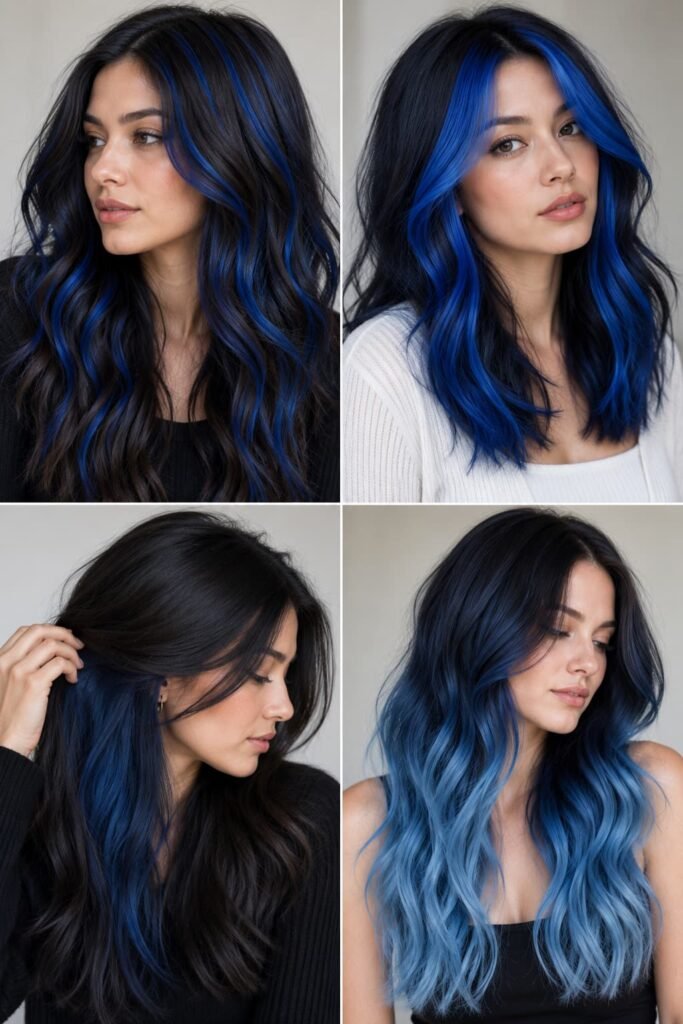
Blue can be added to selected sections instead of covering the entire head. This keeps some of the existing hair colour visible and allows the placement to become part of the overall look.
Some options put the colour around the face, while others place it through the lengths, ends, or underneath the upper layers.
Blue Highlights
Adding stunning blue hair color highlights or choosing a striking highlight colour blue can add colored strands while leaving much of the base colour visible.
Narrow highlights can create smaller flashes of blue, while wider sections can make the colour more noticeable. Deep navy may create less contrast against black or dark brown hair than a brighter cobalt or electric blue.
Highlights can be spread throughout the hair or concentrated around selected areas, such as the front, lower lengths, or ends.
For vivid blue highlights, the starting colour matters. Bright blue generally appears more clearly when the coloured sections have a light enough base.
Blue Money Pieces
A money piece places contrasting colour in the strands around the front of the face.
With blue hair, these sections can be narrow for a smaller accent or wider for a more noticeable colour block. The rest of the hair can remain black, brown, blonde, or another shade.
Navy blue may create a deeper contrast against dark hair, while cobalt or electric blue can provide a brighter effect when the starting sections are light enough to show the colour clearly.
This placement can be considered with short, medium, or long hairstyles because the blue remains focused around the front.
Blue Peekaboo Highlights
Peekaboo colour is placed beneath the upper layers of the hair so that some or all of it can remain hidden when the hair is worn down.
Blue sections may become more visible when the hair moves or is styled in a ponytail, braid, bun, or half-up style.
The amount of visible colour depends on the width, number, and position of the sections. A few narrow highlights can create small flashes of blue, while broader placement can make the hidden colour more noticeable.
Navy, cobalt, teal-blue, and other blue shades are possible options for this placement.
Hidden Blue Underlayer
A hidden blue underlayer also places colour beneath the upper part of the hair. The terms used for hidden colour techniques can overlap, but an underlayer can involve a broader area of blue rather than only a few individual highlights.
The top section may remain the original colour while blue appears underneath. When the hair is worn down, much of the blue can stay concealed. Pulling the hair up or separating the layers can reveal more of the coloured area.
A deep blue underlayer may create a lower-contrast effect against dark hair, while a brighter shade can create a clearer difference when the base allows it to show.
Blue Ombre and Balayage
Ombre and balayage can both introduce blue while leaving part of the original hair colour visible, but the placement is different.
Ombre creates a gradual transition between colours, often with one shade near the roots changing into another through the mid-lengths and ends. With blue ombre, the lower part of the hair can carry most of the blue.
Balayage uses selected painted sections rather than creating the same colour transition across all of the hair. Blue balayage can leave areas of the original base visible between the coloured pieces.
Either approach can use deep, vivid, or lighter blue tones. Very bright or pastel sections generally appear more clearly on a light or pre-lightened base.
How Hair Texture Can Change the Appearance of Blue Colour
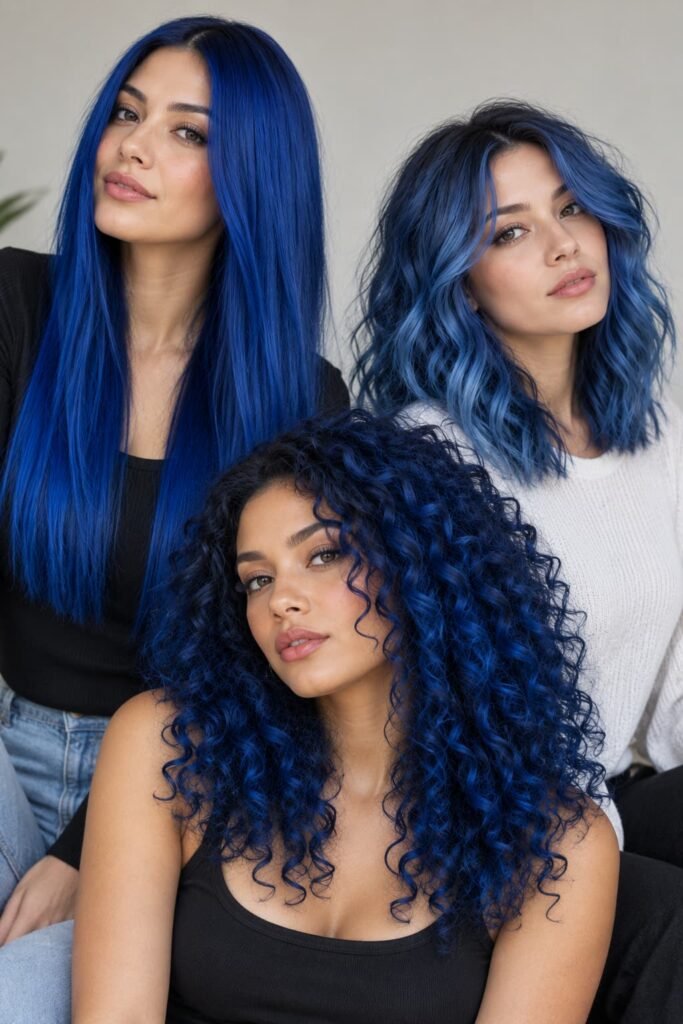
Hair texture can change how colour placement is seen, even when the same blue shade is used.
Straight hair can display larger uninterrupted sections of colour. Waves and curls can reveal coloured pieces at different points because the hair bends, overlaps, and moves.
The effect also depends on the haircut and where the blue sections are placed.
Blue Colour on Straight Hair
Straight hair can make the boundaries between different colours easier to see.
An all-over blue shade may appear more continuous, while ombre, gradients, money pieces, or contrasting panels can create clearly visible colour sections.
Highlights may also appear as more defined strands when the hair falls in a relatively straight direction.
Possible combinations include a cobalt bob, long straight hair with a blue gradient, or dark hair with blue front pieces.
Blue Colour on Wavy Hair
Waves can reveal different parts of a colour pattern as the hair curves through the lengths.
Highlights and balayage sections may appear at different points within the waves, while a gradient can show several blue tones as the hair moves.
Denim blue, sapphire highlights, dark roots with blue lengths, and blue balayage are possible options for wavy hair.
The final effect depends mainly on the placement, width, and amount of coloured hair rather than the wave pattern alone.
Blue Colour on Curly Hair
Curly hair can show blue through individual curls, selected sections, or larger coloured areas.
Highlights may appear as separate ribbons within the curl pattern. An all-over shade creates a broader blue look, while underlayers and coloured ends can appear at different points as curls overlap.
Deep navy may create a darker colour direction, while cobalt, royal blue, or teal-blue can create stronger contrast when the coloured sections have a suitable starting base.
Curl patterns vary, so the same placement may not look identical on every curly hairstyle.
How to Choose Between Subtle and Bold Blue Hair
The difference between a subtle and bold blue look depends on both the shade and its placement.
A deep shade placed against dark hair may create relatively low contrast. A vivid blue section against a darker base can appear much more noticeable.
The amount of coloured hair matters too. A few hidden highlights can create a smaller accent, while full-head colour makes blue a much larger part of the hairstyle.
Blue-Black and Navy for a Deeper Look
Blue-black and navy sit at the darker end of the blue colour range.
Blue-black remains close to black in overall depth, while navy usually has a more visible blue character. Against black or dark brown hair, these shades may create less contrast than brighter blues.
Possible approaches include full colour, navy highlights, dark blue ends, or a hidden underlayer.
These options may suit someone who prefers a deeper blue appearance rather than a highly vivid result.
Cobalt and Electric Blue for Stronger Contrast
Cobalt and electric blue create a brighter colour direction than navy or blue-black.
Cobalt is commonly used to describe a rich, saturated blue, while electric blue refers to a particularly bright blue appearance.
Either shade can cover most of the hair or be limited to money pieces, highlights, coloured ends, or hidden sections.
Vivid blue generally appears most clearly on a sufficiently light base. On darker hair, the visible result can differ depending on the starting colour and whether the selected sections have been lightened.
Pastel and Icy Blue for a Softer Look
Pastel and icy blue sit at the lighter end of the blue range.
Pastel blue has a pale, muted appearance, while icy blue may combine pale blue with cool or slightly silvery tones.
These light shades generally show most clearly on very light or pre-lightened hair. A darker starting base may not produce the same pale appearance.
Possible placements include all-over pastel colour, light blue ends, icy highlights, or pale blue lengths with darker roots.
It is also useful to separate soft colour from subtle contrast. Pastel blue can look soft because the shade itself is pale, but it may still create a noticeable contrast against darker roots or surrounding hair. Navy, by comparison, can appear deeper but less contrasting against a very dark base.
Blue Hair Colour Combinations to Consider
Blue can be combined with black, purple, teal, or other colours to create separate sections, blended tones, or gradual transitions.
The effect depends on the shades chosen and where they are placed. Some combinations keep the overall look dark, while others create a clearer contrast between colours.
Blue and Black Hair
Blue and black can be combined while keeping much of the dark base visible.
Possible options include black roots with blue lengths, blue highlights through black hair, face-framing pieces, coloured ends, or a hidden blue section underneath. Blue-black is another option for a much darker overall result.
Navy can create less contrast against black hair than a brighter cobalt or electric blue. For vivid blue to appear clearly, the coloured sections generally need a sufficiently light starting base.
The amount of black and blue can also be adjusted. A few blue sections create a different effect from using blue across most of the hair.
Blue and Purple Hair
Blue and purple can be placed in separate sections or blended into a gradual transition.
One possible combination is navy with deep violet for a darker palette. Cobalt and brighter purple create stronger colour contrast, while pale blue and lavender offer a lighter direction.
On long hair, the colours can appear through highlights, gradients, or different sections of the lengths. On shorter hair, front pieces, panels, or an underlayer can be used instead.
These combinations are style options rather than fixed rules, and the final appearance can vary with the shades and starting base.
Blue and Teal Hair
Teal contains both blue and green tones, so it can sit naturally alongside several blue shades.
Deep blue can transition into teal through the lengths, while brighter blue can be paired with aqua or more green-toned teal. Alternating blue and teal sections are another possible approach.
The combination can be used through highlights, gradients, coloured ends, or hidden sections.
How much blue or teal is included is mainly a styling choice. A look with more teal will appear different from one that stays predominantly blue.
What Should You Consider Before Choosing a Blue Hair Colour?
Before choosing a blue shade, it helps to consider the starting hair colour, desired contrast, placement, hair length, and how comfortable you are with gradual fading.
These factors can affect how the finished colour appears and how much of the original hair colour remains visible.
Starting Hair Colour
Starting hair colour affects how clearly a blue shade appears.
Deep blues may create a more subtle contrast against black or dark brown hair. Bright and pastel blues generally show more clearly on a light or pre-lightened base.
Undertones also matter. Yellow or orange warmth remaining in a lightened base can alter the appearance of blue, sometimes making the result look less like the intended shade.
For this reason, the same blue colour may appear different on black, brunette, blonde, or lightened hair.
When comparing inspiration photos, it can be useful to look at both the finished colour and the starting base.
Desired Brightness and Contrast
Consider whether you want blue to appear as a small accent or as a major part of the hairstyle.
Blue-black and navy create a deeper colour direction. Cobalt and electric blue are more vivid and can produce stronger contrast when the starting base allows the colour to show clearly.
Pastel and icy blue are pale rather than dark. Although these shades may look soft, they can still stand out strongly against darker roots or surrounding hair.
Placement also changes the overall effect. A few highlights or a hidden section can keep blue more limited, while all-over colour makes it much more prominent.
Hair Length and Colour Placement
Hair length changes how much space is available for colour transitions and separate sections.
Short hair can display one main shade or a few contrasting areas clearly. Pixies and bobs can also use front pieces, coloured tops, or darker sides.
Medium-length hair provides room for highlights, dark roots, ombré, and face-framing sections.
Long hair gives more space for gradients, balayage, several blue tones, or colour concentrated through the mid-lengths and ends.
Hair length does not determine which blue shade has to be chosen. It mainly affects how the placement and transitions are displayed.
Fading and General Maintenance
Selecting the right blue hair dye formulation can influence how long your colour stays vibrant. Blue hair colour can gradually lose intensity over time, and washing is one factor that can contribute to colour fading.
There is no single fading pattern for every blue shade. The resulting appearance can depend on the colour formula, starting base, underlying tones, and how much pigment remains as the colour changes.
A vivid blue may become less saturated over time, while a pastel shade may become increasingly faint. However, it is not accurate to claim that every blue dye will fade into one particular colour.
Someone considering blue hair may therefore want to expect some change in the shade rather than assuming the original colour will remain unchanged.
Maintenance needs also vary, so there is no universal schedule that applies to every blue hair look.
Frequently Asked Questions
Does blue hair colour show clearly on dark hair?
Blue can be visible on dark hair, but the result depends on the starting colour and the blue shade.
Deep shades such as navy, midnight blue, and blue-black may create a more subtle effect against black or dark brown hair.
A clearly vivid or pale blue generally requires a lighter starting base to show its intended brightness.
Does hair need to be lightened for bright or pastel blue?
Bright and pastel blue shades generally appear most clearly on a light or pre-lightened base.
Someone starting with very dark hair may not need lightening if the goal is a subtle blue-black or deep navy effect. A vivid electric blue or pale pastel result, however, may require the sections receiving the colour to be lightened first.
The preparation needed can vary with the starting colour and intended shade.
What Is the Difference Between Navy Blue and Electric Blue Hair?
Navy is a deep blue shade, while electric blue is much brighter and more vivid.
Navy may create relatively little contrast against black or very dark brown hair. Electric blue can create a much clearer colour difference when applied over a sufficiently light base.
Both shades can also be used within the same hairstyle, such as deeper blue near the upper sections and brighter blue through the lengths.
Can Blue Highlights Be Added to Black Hair?
Yes. Blue highlights can be combined with black hair while leaving most of the dark base visible.
Navy or deep sapphire can create a lower-contrast accent. Brighter cobalt or electric blue can create a more noticeable effect when the highlighted sections have a light enough starting base.
The highlights may be narrow, wide, face-framing, hidden underneath the hair, or concentrated toward the ends.
What Is the Difference Between Blue Ombré, Balayage, and an Underlayer?
These terms describe different colour placements.
Blue ombré creates a gradual transition between colours, commonly moving from a darker upper section into blue through the mid-lengths and ends.
Blue balayage uses selectively painted sections rather than creating the same gradient across all of the hair. This allows more of the original base to remain visible between the blue pieces.
A blue underlayer places colour beneath the upper section of the hair. Some of the blue may stay hidden when the hair is worn down and become more visible when the hair moves or is pulled up.
The final appearance can vary depending on the amount and position of the colour.
Which Blue Hair Ideas Can Create a More Subtle Look?
Blue-black, midnight blue, and navy are possible options for a deeper and less vivid appearance.
On black or dark brown hair, these shades may create less contrast than cobalt or electric blue.
Colour placement can also make blue less dominant. Thin highlights, darker blue ends, peekaboo sections, or a hidden underlayer are possible options.
What feels subtle is subjective, so both the shade and the amount of visible blue should be considered.
How Does Blue Hair Colour Change as It Fades?
Blue hair colour can gradually become less saturated as pigment fades.
The exact result varies. The starting base, underlying tone, colour formula, and amount of pigment remaining can all affect how the hair looks during the fading process.
Some blue shades may become paler or more muted. Underlying tones may also become easier to see as the blue loses intensity.
There is no single colour that all blue hair will fade into, so the change should not be described as a guaranteed result.