

You can remove most soak-off gel nail polish at home with acetone, but using the wrong technique can leave your natural nails thin, rough, or damaged. The important thing is knowing when the polish has softened enough to come off without force. Not every gel manicure responds to acetone, especially products designed to add strength or length. Before you start, it helps to identify the type of gel you’re wearing. This guide covers the proper removal process, common mistakes to avoid, and how to care for your nails afterward.
Quick Answer: To remove regular soak-off gel nail polish at home, place cotton soaked in 100% acetone over each nail and secure it with plastic food wrap. Leave it in place for about 10 minutes, as recommended by the American Academy of Dermatology. Gently wipe away the softened polish with a warm, wet washcloth, then wash and moisturize your hands. If the gel remains firmly attached, never peel or scrape it off.
Before You Start: Check What Type of Gel Is on Your Nails
The removal method depends on the gel product used for your manicure. Some formulas soften with acetone, while others require professional filing. Identifying the product first can help prevent unnecessary damage to your natural nails.
Soak-Off Gel Polish vs. Hard Gel and Builder Gel
Regular soak-off gel polish is designed to soften with acetone, making careful home removal possible. Hard gel is different. It forms a durable coating that doesn’t dissolve in acetone and generally needs professional filing.
Builder gel is a broader category. Some formulas are soak-off, while others are hard gels that must be filed. If you had your nails done at a salon, check your appointment details or ask your nail technician which product was applied. The product name or manufacturer’s removal instructions can help you identify the correct method.
When Is Professional Gel Removal the Better Choice?
Professional removal is recommended for hard gel, unfamiliar products, and extensions when you’re unsure how they were applied.
If your nails are painful, unusually thin, or lifting from the nail bed, avoid attempting removal yourself. The same applies when acetone fails to soften the coating. Forcing off stubborn gel can strip layers from the natural nail. A qualified nail technician can assess the coating, while swelling, persistent pain, or signs of infection should be evaluated by a healthcare professional.
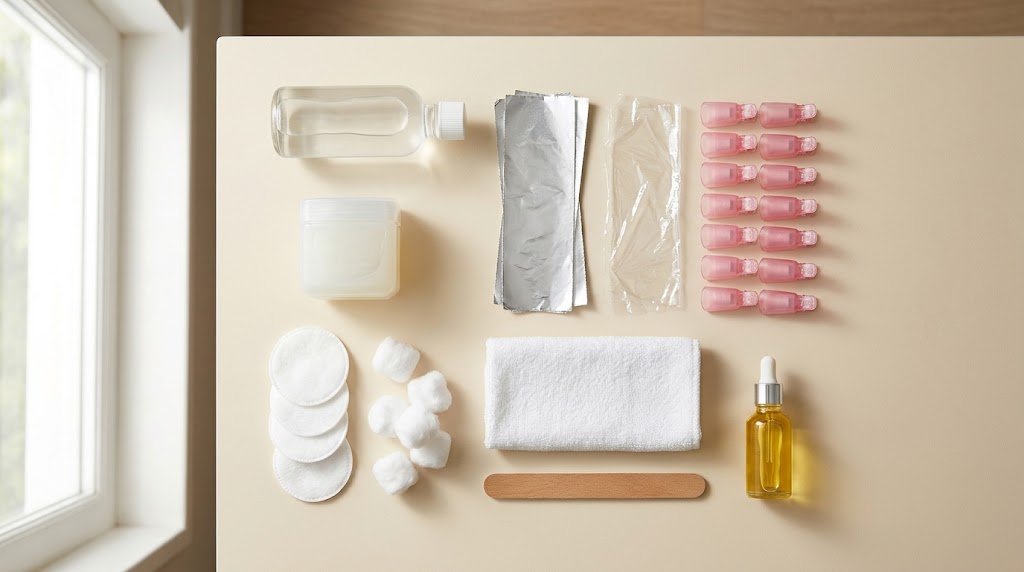
What Do You Need to Remove Gel Nail Polish at Home?
You don’t need professional salon equipment to remove soak-off gel nail polish at home, but using the right supplies makes the process easier and helps protect your natural nails.
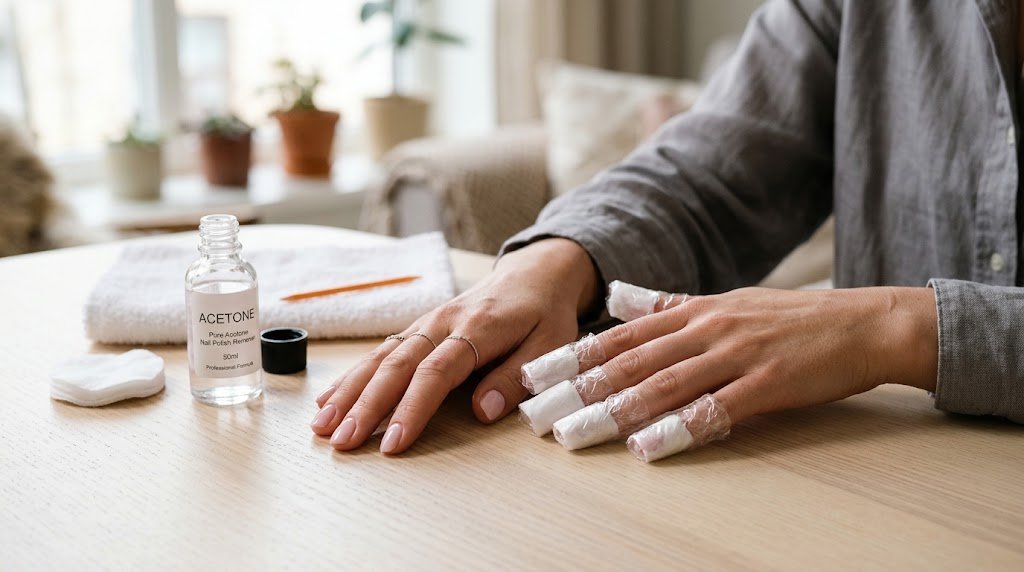
For the basic removal method, you’ll need 100% acetone, cotton balls or cotton pads, petroleum jelly, plastic food wrap, scissors, a clean towel, and a washcloth. Acetone softens the gel coating, while nail-sized cotton pieces keep the remover concentrated on the polish. Petroleum jelly helps protect the surrounding skin from irritation.
Aluminum foil wraps or reusable nail clips are alternatives when compatible with your gel product. Keep cuticle oil or fragrance-free moisturizer nearby for aftercare.
A nail file is optional. Some gel manufacturers recommend lightly filing the shiny top coat before soaking, but this isn’t necessary for the dermatologist-recommended plastic-wrap method. Never file into your natural nails.
How to Remove Gel Nail Polish at Home Step by Step
Once you’ve confirmed that your manicure uses soak-off gel polish, you can begin the removal process. The key is allowing acetone enough time to soften the coating rather than trying to lift it before it’s ready.
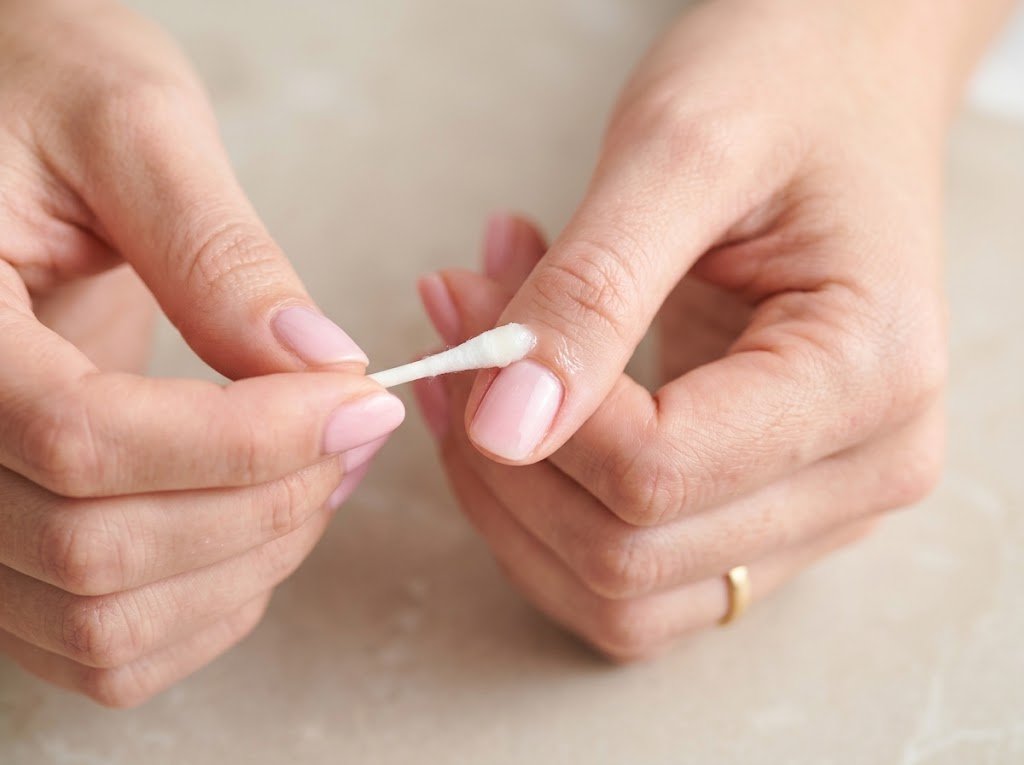
Step 1: Prepare Your Work Area and Protect Your Skin
Choose a well-ventilated area away from candles, cigarettes, and heat sources. Acetone is highly flammable and can damage furniture or countertops, so cover your work surface with plastic wrap and place a thick towel over it.
Keep the remover away from children and pets, and close the container when it’s not in use.
Before applying acetone, spread a thin layer of petroleum jelly around each cuticle and the surrounding skin. Avoid getting it on the polish itself. If you experience significant irritation during removal, stop and wash the affected skin.
Step 2: Prepare the Cotton and Acetone
Cut cotton balls or pads into pieces that match the size of your nails. Smaller pieces help minimize acetone contact with your skin.
Saturate each piece with 100% acetone and place it directly over the gel coating. The best way to get gel nail polish off is to keep the remover in contact with the polish rather than soaking your entire fingertips in a bowl.
Work on one hand at a time so you can secure the cotton properly.
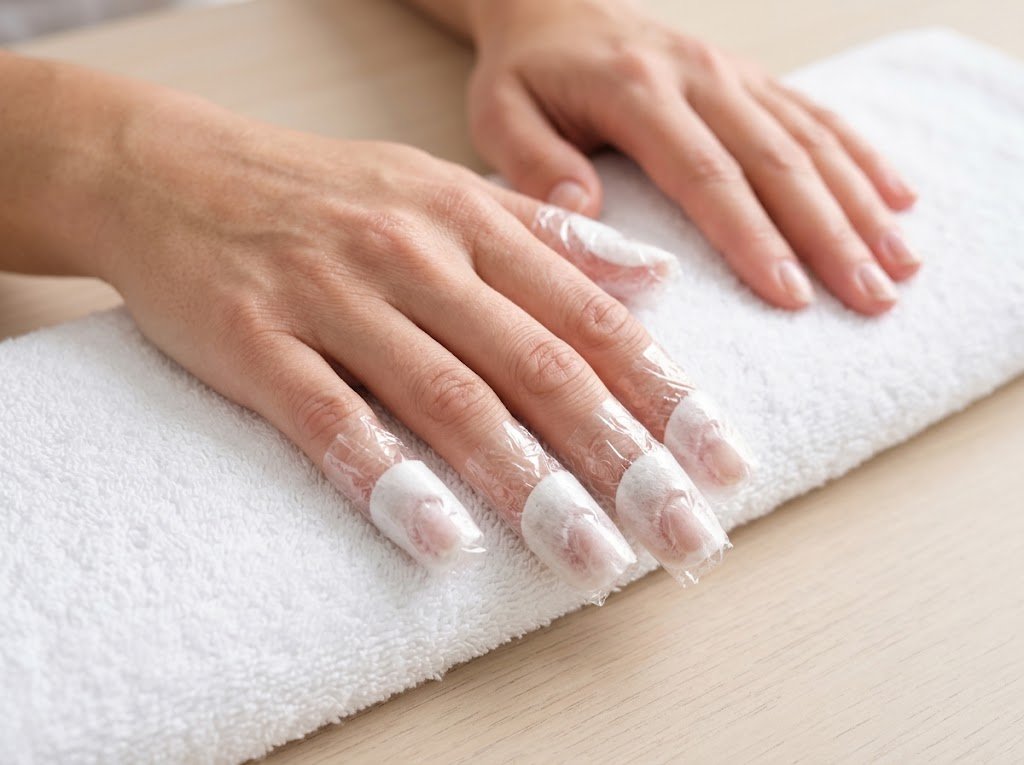
Step 3: Secure the Cotton Over Each Nail
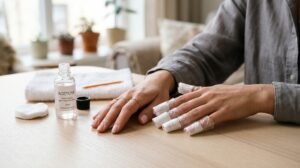
Wrap each fingertip with plastic food wrap, keeping the acetone-soaked cotton firmly against the nail. The wrap should feel secure without being tight enough to restrict circulation.
The American Academy of Dermatology recommends plastic food wrap because it creates a close seal and helps prevent dripping.
Some gel systems use aluminum foil wraps or reusable nail clips instead. These can be practical alternatives, but follow the instructions provided for your particular product.
Step 4: Allow the Gel Polish to Soften
For the dermatologist-recommended plastic-wrap method, leave the cotton in place for approximately 10 minutes.
Other removal systems may require longer. For example, OPI’s foil-wrap instructions recommend soaking for 15 to 20 minutes, while some of its at-home gel products specify 20 minutes.
Follow your gel manufacturer’s recommended soaking time. Avoid frequently opening the wraps to check the polish, as this allows acetone to evaporate. Never use a hair dryer or another direct heat source to speed up removal.
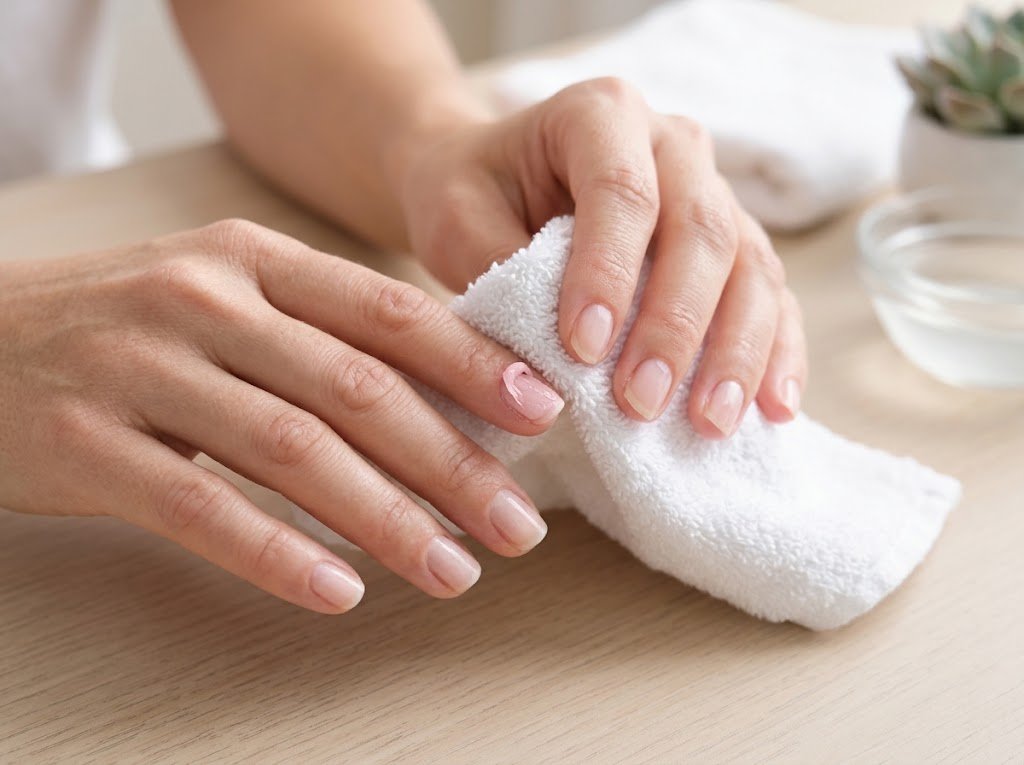
Step 5: Gently Remove the Softened Polish
Remove one wrap and check whether the gel has loosened. Properly softened polish may come away with the cotton or wipe off without much pressure.
Use a warm, wet washcloth to gently remove any remaining softened residue. Focus on the nail surface and avoid rubbing the surrounding skin.
If the coating remains firmly attached, don’t peel it, scrape it with a metal tool, or try to force it off with a cuticle stick. Follow the product instructions if additional soaking is appropriate. If the gel still won’t release, professional removal is the safer choice.
Step 6: Wash Your Hands and Moisturize
After removing the gel polish, wash your hands with mild soap and lukewarm water to remove any remaining acetone. Pat them dry with a clean towel.
Apply cuticle oil, petroleum jelly, or fragrance-free moisturizer around your nails to help relieve dryness. This simple step can make your skin more comfortable after exposure to acetone.
What if Your Gel Nail Polish Won’t Come Off?
If your gel nail polish won’t come off after soaking, applying more pressure isn’t the solution. The coating may still have an intact top-coat seal, the acetone may not have reached the polish effectively, or the product may not be designed for soak-off removal.
The way your manicure responds can help you identify the next safe step.
| What Happens | What You Should Do |
|---|---|
| Gel stays glossy and firmly attached | Check the product’s removal instructions. Some formulas require the top-coat seal to be lightly filed before soaking, while others aren’t acetone-soluble. |
| Only part of the polish softens | Leave the remaining coating alone. Follow the manufacturer’s instructions for additional soaking rather than trying to lift it by force. |
| Several nails don’t respond to acetone | Confirm which gel system was applied. Hard gel and certain builder gels require professional filing instead of soaking. |
| Nails hurt or the surrounding skin becomes irritated | Stop immediately and wash away the remover. Seek medical advice for significant or persistent pain, swelling, irritation, or nail separation. |
Peeling stubborn gel can pull away layers of the natural nail, leaving it thin, rough, or sensitive. Even a small section that remains firmly attached shouldn’t be scraped off.
If you’ve followed the appropriate product instructions and the coating still won’t release, visit a qualified nail technician. Professional removal is preferable to repeated attempts that could cause unnecessary nail damage.
Can You Remove Gel Nail Polish Without Acetone?
Acetone is the most reliable option for removing regular soak-off gel nail polish at home. Unlike ordinary polish, cured gel forms a durable coating that water and standard non-acetone nail polish removers generally cannot dissolve effectively.
Household remedies such as vinegar, lemon juice, hand sanitizer, or warm water aren’t dependable alternatives. Some specialized gel-removal products use different formulations, but their compatibility and safety depend on the specific product. Always check the manufacturer’s instructions rather than assuming an acetone-free product will work.
If you don’t have the correct remover, wait until you can obtain it or arrange professional removal.
The American Academy of Dermatology also recommends allowing gel polish to grow out naturally. Fingernails typically take around six months to grow out completely. Carefully trim them as they grow, and avoid picking at loose edges.
Whichever option you choose, never force off firmly attached gel or attempt to file away the entire coating without proper training.
How to Care for Your Nails After Removing Gel Polish
Gel nail polish removal can leave your nails and surrounding skin feeling dry, particularly after acetone exposure. While moisturizing helps manage dryness, nails that have become thin or damaged need time to grow out. Caring for them between manicures can help prevent further problems.
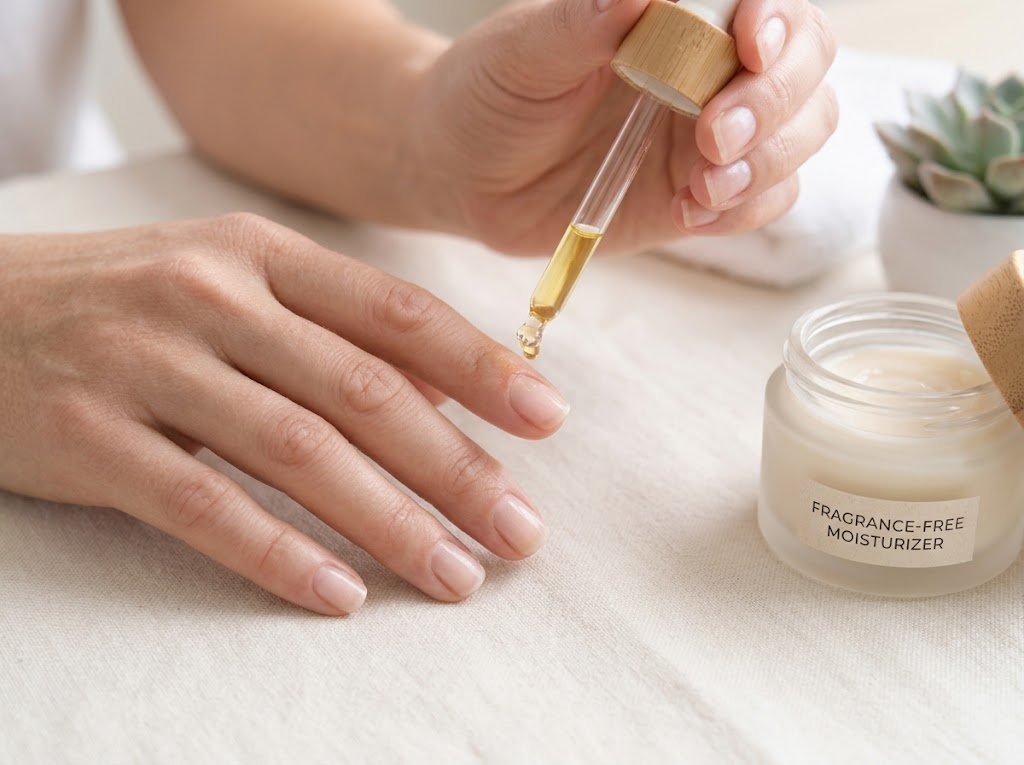
Rehydrate Nails and Cuticles
For the next seven days, gently apply petroleum jelly around your cuticles and surrounding skin at least once daily. The American Academy of Dermatology recommends this to help reduce irritation following acetone removal.
Continue moisturizing your nails and cuticles regularly, especially after washing your hands. A fragrance-free hand cream or cuticle oil can also help manage dryness. Avoid cutting or aggressively pushing back your cuticles, which protect the area where new nail growth begins.
Give Damaged or Brittle Nails Time to Recover
If your nails feel weak, peel easily, or develop rough patches, consider taking a break from polish for one to two weeks or longer.
Avoid aggressive buffing, picking, or applying another gel coating over visibly damaged nails. Moisturizers can improve dryness, but damaged portions of the nail plate must gradually grow out.
If you notice persistent pain, swelling, unusual discoloration, or nail separation, consult a dermatologist before getting another manicure.
Frequently Asked Questions About Gel Nail Polish Removal
How Long Does It Take to Remove Gel Nail Polish at Home?
The American Academy of Dermatology recommends a 10-minute soak for its plastic-wrap method. Some manufacturer-specific foil methods require 15 to 20 minutes. Preparation, wrapping, and cleanup add to the total time, so plan for longer than the soaking period alone.
Does Regular Nail Polish Remover Work on Gel Polish?
Some regular removers contain acetone and may soften compatible soak-off gel, although results depend on the formula and concentration. Non-acetone removers generally won’t dissolve cured gel effectively. For reliable removal, use a remover recommended for your specific gel product.
Do You Have to File the Top Coat Before Removing Gel Polish?
No, not always. Certain gel systems require lightly filing the shiny top-coat seal before soaking, but the dermatologist-recommended plastic-wrap method doesn’t include this step. Check your product’s instructions, and never file into the natural nail.
Can You Use Nail Clips Instead of Foil?
Yes, acetone-compatible nail clips can secure remover-soaked cotton against the nail. Foil wraps and plastic food wrap serve a similar purpose, although they seal differently. Choose a method compatible with your gel product and avoid clips that squeeze your fingertips.
Can You Remove Gel Nail Polish From Toenails the Same Way?
Yes, regular soak-off gel polish on toenails can generally be removed using the same acetone-and-cotton approach. Keep the cotton close to the size of each nail to limit skin exposure. Avoid DIY removal if a toenail is painful, damaged, or showing signs of infection.
Final Thoughts
Removing gel polish safely starts with knowing which product is on your nails and allowing the appropriate remover to do its work. If the coating stays firmly attached, don’t peel or scrape it away.
Before your next manicure, check that your nails feel comfortable and show no concerning changes. When they’re ready for another look, explore more nail ideas and designs for inspiration.