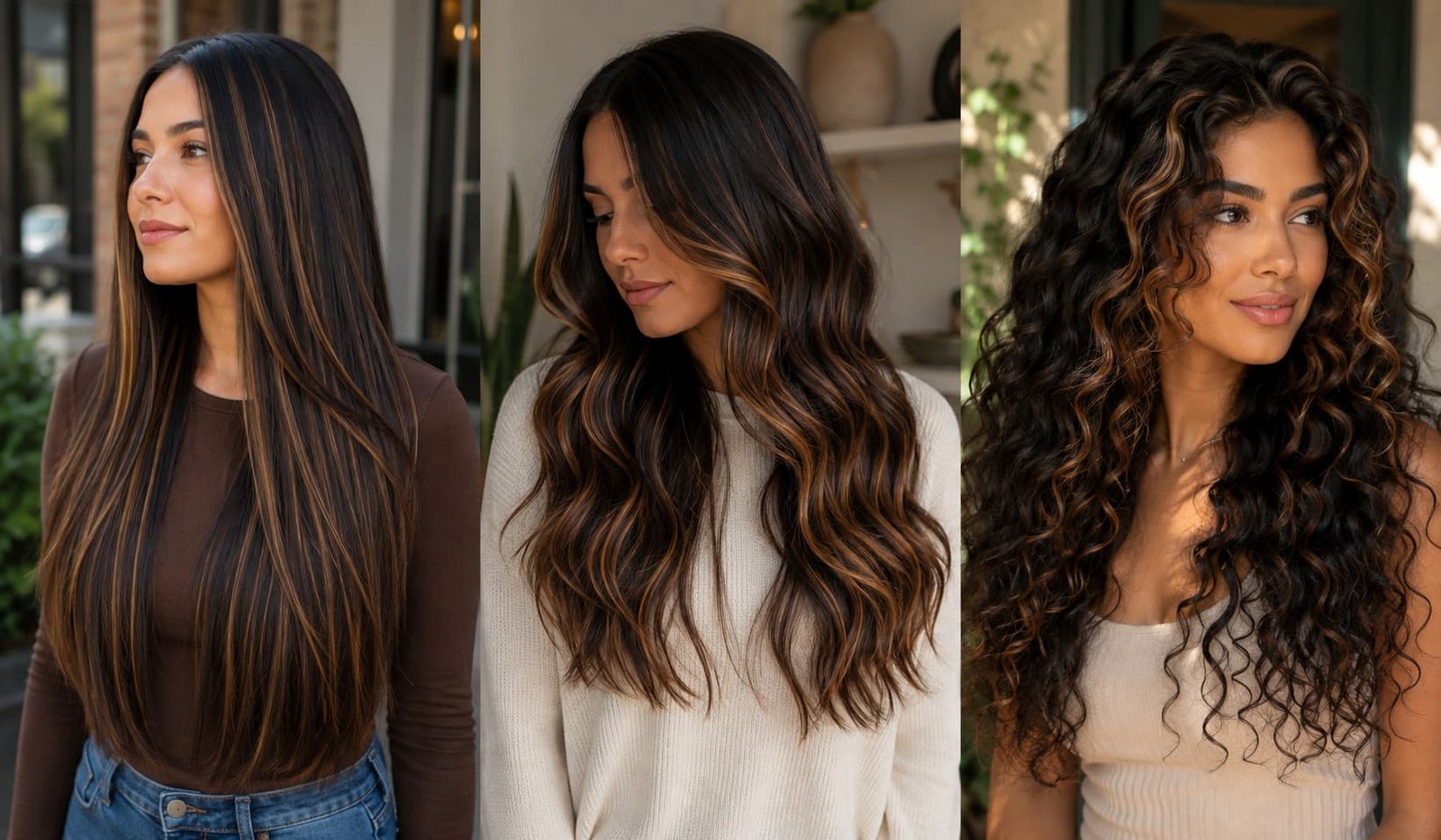
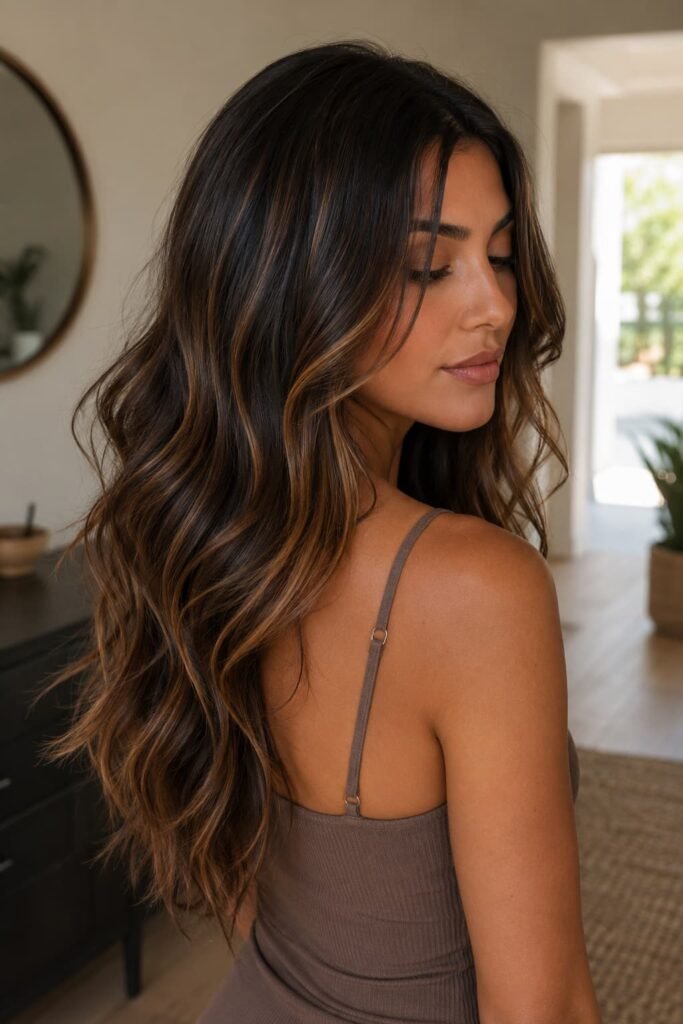
Dark brown hair with caramel highlights combines a deep brunette base with warmer, lighter pieces. The contrast can be soft and blended or more noticeable, depending on the caramel shade, the width of the highlights, and where they are placed.
On long hair, caramel tones can appear around the face, through the mid-lengths, toward the ends, or throughout the hair. Different placements can create very different results, even when the same general color family is used.
Caramel is used to describe a range of warm brown and golden-brown hair-color tones rather than one single appearance. Some versions may appear deeper and more brown-based, while others lean toward golden, honey, toffee, or beige-toned variations. Understanding these differences can make it easier to choose a look that matches the amount of warmth and contrast you prefer.
What Do Caramel Highlights Look Like on Dark Brown Hair?
Caramel highlights are lighter brown or golden-brown sections added against a darker brunette base. They usually introduce warmth without creating the very bright contrast associated with pale blonde highlights.
The final appearance can vary considerably. Some versions use only a few narrow caramel pieces, while others include larger sections through the lengths and ends.
Placement also matters. Highlights near the face tend to be more noticeable from the front, while color placed mainly through the mid-lengths and ends keeps more of the dark brown base visible near the roots.
How Caramel Tones Contrast with a Dark Brunette Base
A dark brunette base provides a strong background for warmer caramel tones. Deeper caramel shades may create a gentle difference from dark brown hair, while lighter golden or honey-caramel shades can stand out more clearly.
The amount of contrast depends on more than the shade name. Highlight thickness, placement, starting hair color, and styling can all change how light or blended the caramel sections appear.
For example, narrow caramel ribbons scattered through dark brown hair may create small flashes of warmth. Wider pieces can make the color difference more obvious.
Long hair also gives the color more space to transition gradually. A darker upper section can move into warmer mid-lengths and lighter ends without requiring every part of the hair to be highlighted.
Subtle vs More Noticeable Highlighting
Subtle caramel highlights usually stay relatively close to the depth of the brunette base. Fine sections, deeper caramel shades, and limited placement can help preserve an overall dark appearance.
Some people may prefer this approach when they want visible color variation without making the highlighted sections the main feature of the hairstyle.
More noticeable highlighting uses stronger contrast. This may include lighter caramel tones, wider ribbons, brighter face-framing pieces, or a greater amount of highlighted hair.
Neither approach is automatically better. The choice depends on whether you prefer a softly blended brunette look or a clearer difference between the dark base and caramel sections.
Caramel Shades to Consider for Dark Brown Hair
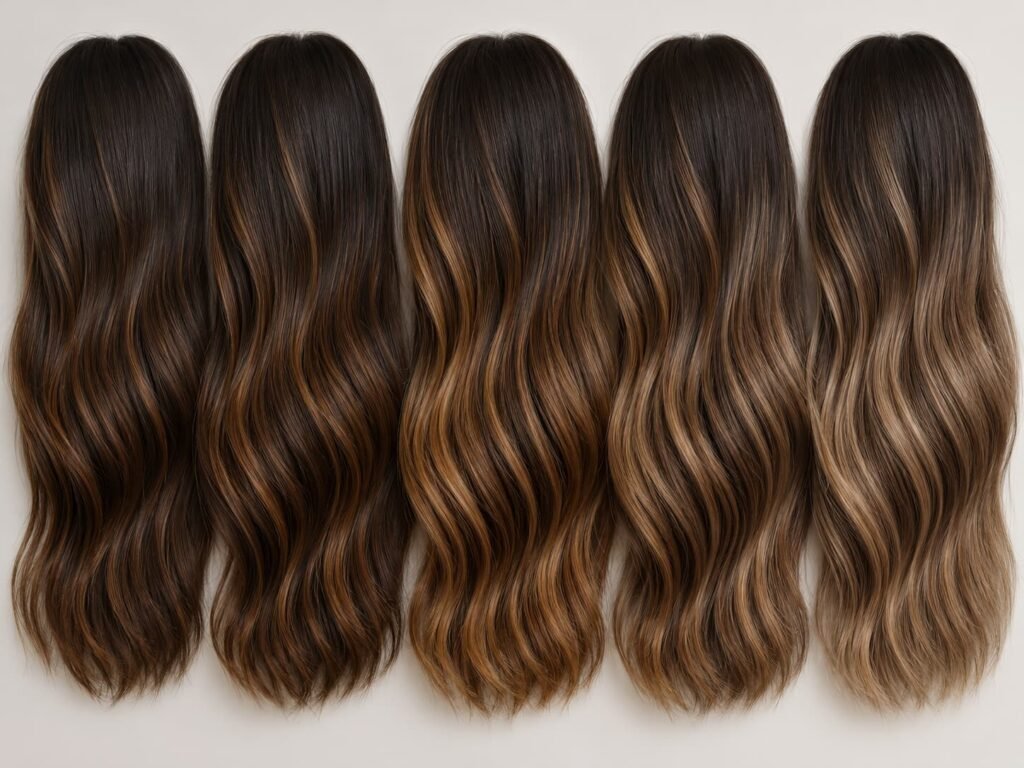
Caramel is a broad color description rather than one fixed shade. Depending on the formulation and starting hair color, it may appear deeper, more golden, more honey-toned, or closer to a beige-brown shade.
When comparing inspiration photos, it can be more useful to look at the actual depth and undertone than to rely only on the word “caramel.”
Deep Caramel
Deep caramel sits closer to medium or warm brown than to blonde.
Against dark brown hair, it can create a lower-contrast effect while still adding visible tonal variation. This shade may appeal to someone who wants the overall color to remain strongly brunette.
Deep caramel can work as fine highlights, soft ribbons, or color concentrated through the lower lengths. The exact result will depend on the starting base and placement.
Toffee Caramel
Toffee caramel usually has a warm brown appearance with slightly richer golden tones.
It can sit between deep caramel and brighter golden shades, making it useful for someone who wants more warmth without moving into a very light highlight color.
On long dark brown hair, toffee-colored pieces can be placed through layers, around the face, or toward the ends. Narrow sections may appear softer, while wider ribbons can create clearer contrast.
Golden Caramel
Golden caramel contains more visible yellow-gold warmth than deeper brown caramel shades.
It can create a brighter contrast against dark brown or espresso-colored hair, especially when the highlighted sections are wider or placed around the face.
Golden caramel does not have to cover a large amount of the hair. A few brighter pieces can still become a noticeable part of the overall color.
The final tone can vary depending on the starting hair color and how light the selected sections become.
Honey-Caramel
Honey-caramel generally appears lighter and more golden than deeper caramel brown.
It can be used when a warmer, brighter highlight effect is preferred. On a dark brunette base, the contrast may be more noticeable than with toffee or deep caramel shades.
Honey-caramel pieces can be used around the face, through the mid-lengths, or toward the ends. On long hair, combining deeper caramel with a smaller amount of honey-toned color can also create a multi-tonal appearance.
Beige or Neutral Caramel
Some caramel interpretations lean more beige or neutral and may appear less golden than honey or golden caramel tones.
The exact appearance can vary depending on the base color, lighting, and overall tone of the highlighted sections. This can be one possible option for someone who prefers a more muted caramel effect rather than a strongly golden finish.
On dark brown hair, beige-leaning caramel highlights may create a more restrained contrast than brighter golden shades. They can be used in fine sections, blended through the lengths, or combined with deeper brunette tones for a softer transition.
Because shade names are not completely standardized, reference images are often more useful than relying on labels alone when comparing caramel color options.
Traditional Highlights from Higher Sections
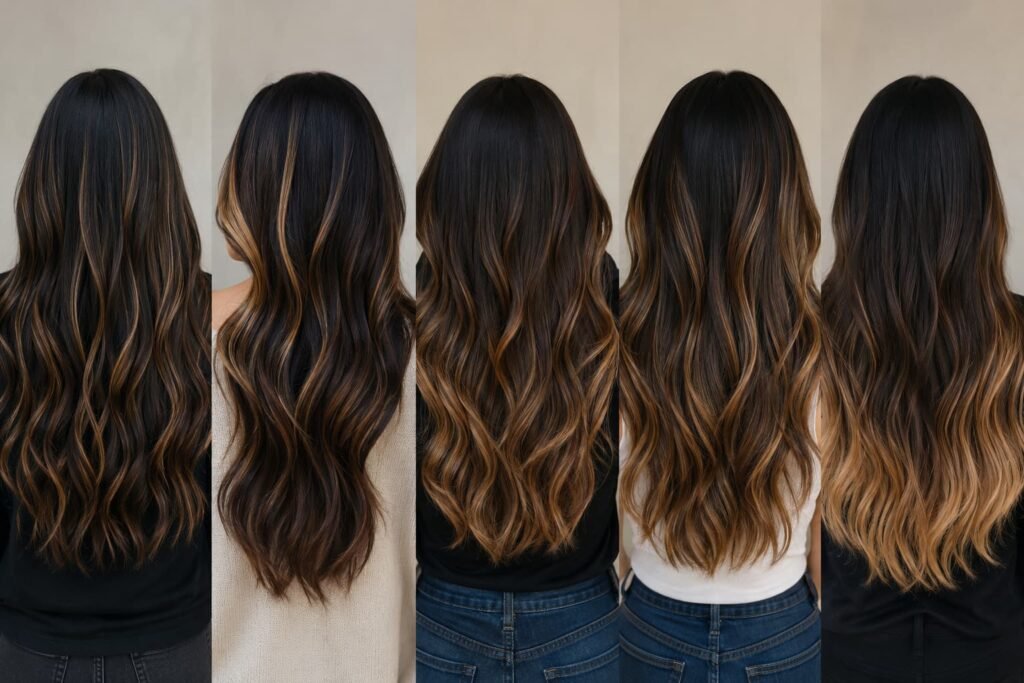
Traditional highlights can begin closer to the upper sections and continue through the lengths.
Compared with a balayage that begins farther down the hair, highlights placed from higher sections can make the lighter color visible closer to the roots. The result can range from fine and blended to more defined, depending on the width and spacing of the highlights.
Some people may prefer this approach when they want caramel color to be visible from closer to the top of the hair.
Ombré-Inspired Caramel Ends
An ombré-inspired placement keeps the upper hair darker and increases the amount of lighter color toward the bottom.
The change can be gradual or more noticeable, depending on how the tones are blended.
On long dark brown hair, this placement can preserve a strong brunette appearance near the roots while making caramel the main color through the lower lengths and ends.
19. Dark Brown Hair with Caramel Ombré
Caramel ombré gradually shifts from a darker upper section into lighter lower lengths.
Unlike scattered highlights, the lighter color becomes more concentrated toward the bottom. On long hair, an ombré transition can extend across more of the length, allowing several tones to be visible between the darker upper section and lighter ends.
21. Dark Brown Hair with Mixed Fine and Medium Highlights
Using more than one highlight width can make the placement appear less uniform.
Fine caramel sections can provide subtle warmth, while a few medium-width pieces create more noticeable areas of lightness. On long hair, fine and medium-width highlights can be distributed across different sections of the lengths.
How Hair Texture and Styling Can Change the Appearance of Caramel Highlights
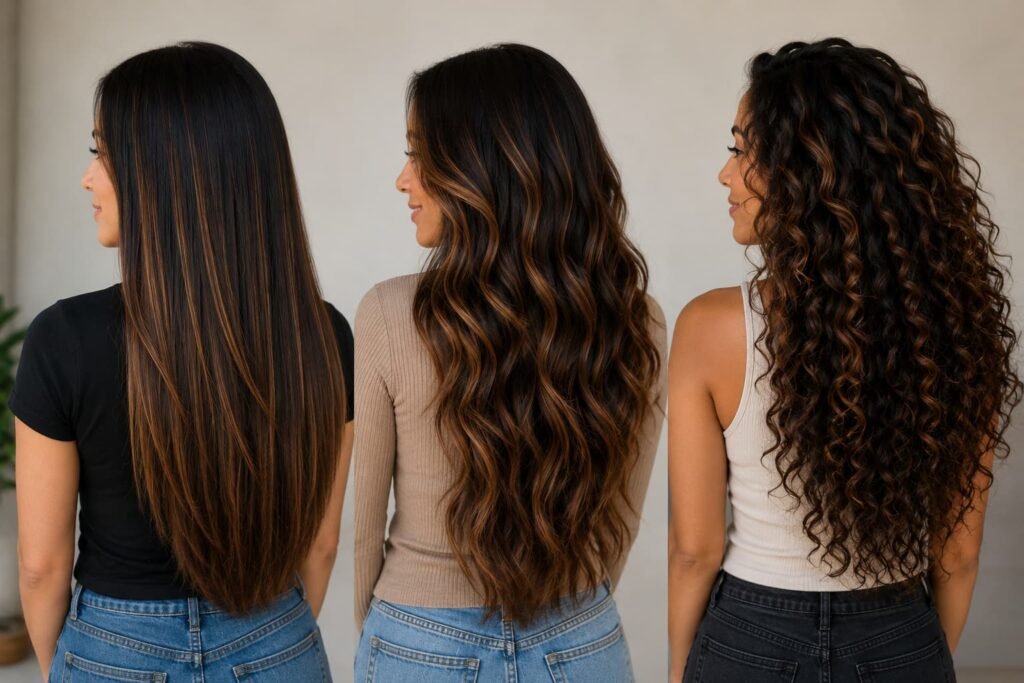
Hair texture and styling can change how highlighted sections are seen, even when the color placement stays the same. Straight hair may show individual ribbons more clearly, while waves and curls can reveal different parts of the lighter color as the hair bends.
Highlight width, placement, density, and the amount of contrast between the dark base and caramel tones can also affect the overall appearance.
Straight Hair
On straight hair, caramel highlights may appear as more defined ribbons through the lengths.
Fine highlights can create a softer pattern, while wider pieces may make the contrast easier to see. Face-framing sections can also appear more defined when the hair is worn straight.
Someone who prefers a more blended effect may choose narrower sections or a caramel tone that stays closer to the dark brown base.
Wavy Hair
Waves can show different sections of caramel color along the bends of the hair.
A blended placement may appear softer as lighter and darker sections move in and out of view. Caramel balayage, scattered ribbons, and highlighted ends can all take on a different visual effect when the hair is styled with waves.
The final appearance can vary depending on the wave pattern and where the highlighted sections are placed.
Curly Hair
On curly hair, caramel highlights may appear across different areas of the curl pattern rather than as continuous straight ribbons.
Selected lighter sections can become more or less visible depending on how the curls fall. Some people may prefer highlights distributed throughout the hair, while others may choose a smaller number of noticeable caramel accents.
Because curl pattern, density, placement, and styling vary, the same highlight design will not look identical on everyone.
What to Consider Before Choosing Caramel Highlights
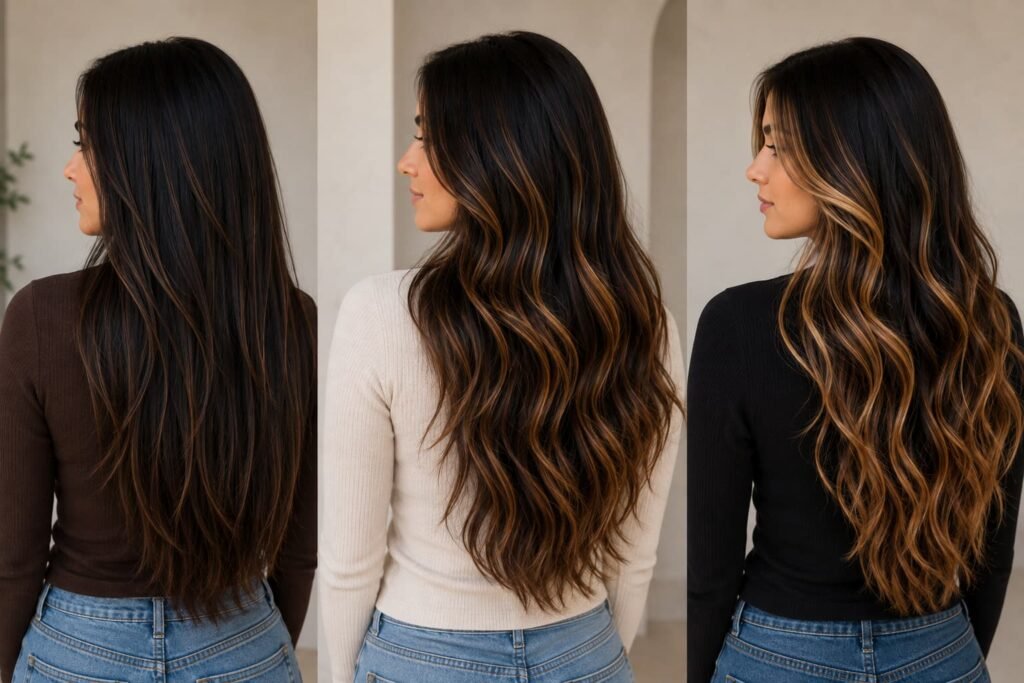
Choosing caramel highlights involves more than selecting a shade from a photograph. Contrast, placement, starting color, and previous color history can all influence the final appearance.
Reference images can still be useful. Look closely at the base color, highlight depth, placement, and amount of lightness rather than relying only on the name of the shade.
How Much Contrast You Want
Consider how noticeable you want the caramel sections to be against the dark brown base.
For a softer look, deeper caramel tones and finer sections may create less separation between the colors. Limited face-framing color or lower placement through the lengths can also keep the overall appearance predominantly brunette.
For stronger contrast, lighter caramel shades or wider highlighted sections may make the difference between the two colors more visible.
There is no single correct level of contrast. It depends on the appearance you prefer.
Where You Want the Lightest Pieces
Placement affects where the lighter color is most visible.
Face-framing highlights concentrate caramel near the front. Highlights that begin higher in the hair can make the lighter color visible closer to the roots, while lower balayage placement can leave more dark brown through the upper sections.
Another option is to concentrate the lightest color through the ends. This keeps more brunette visible near the top while making caramel more noticeable toward the bottom.
On long hair, placements can also be combined. For example, lighter pieces may frame the face while softer caramel sections continue through the lower lengths.
How Warm or Neutral You Want the Caramel Shade
Caramel can describe a range of warm brown and golden-brown tones. Some interpretations lean more golden or honey-toned, while others may appear deeper, beige, or more neutral.
Golden or honey-caramel tones are possible options for someone who prefers more visible warmth. Deeper or beige-leaning caramel may create a more muted appearance.
The visible shade can vary with the starting base, surrounding color, lighting, and coloring process, so shade names alone do not guarantee an identical result.
Your Starting Hair Color and Previous Color History
Starting color is an important consideration when planning lighter highlights on dark hair.
The difference in depth between the brunette base and the caramel sections affects how much contrast is visible. A lighter caramel shade against a very dark base may appear more noticeable than two colors that are closer in depth.
Previous artificial color can also affect how hair responds during a later lightening or coloring service. Because of this, an inspiration image should be treated as a visual reference rather than a guarantee that the same result can be reproduced exactly.
The final color can vary depending on the existing base, previous coloring, placement, and desired shade.
Maintenance and Grow-Out Considerations
Caramel highlights can show grow-out differently depending on where the lighter sections begin and how much contrast exists between the highlights and the base.
There is no universal maintenance schedule. How noticeable the change becomes depends on placement, natural growth, color contrast, tone, and personal preference.
Root Placement and Visible Grow-Out
Highlights that begin close to the roots can create a more noticeable difference as new hair grows in.
Lower balayage placement leaves more of the darker root area visible from the beginning, so the transition between the root and highlighted lengths may appear more gradual.
How noticeable the grow-out looks also depends on the contrast between the base and the caramel sections.
Someone who prefers less emphasis near the roots may choose to keep the lightest pieces farther down the hair.
Tonal Changes in Highlighted Hair
Toners are commonly used after lightening to refine or adjust the visible tone of highlighted sections.
The deposited or refined tone can change as the color fades. As this happens, highlighted sections may appear warmer, less muted, or simply different from their original appearance.
How noticeable the change becomes can vary with the toner or color used, the starting hair, and the care routine.
A fixed refresh schedule is not necessary for an informational guide because maintenance needs vary from one color result to another.
General Care for Color-Treated Lengths
A basic care routine can focus on maintaining the appearance of color-treated hair without making promises about permanent repair or hair health.
Products designed for color-treated hair are one possible option for routine cleansing and conditioning. One example is the L’Oréal Paris EverPure Moisture Shampoo and Conditioner Kit, which is designed for color-treated hair. If heat tools are used, a heat-protectant product such as CHI 44 Iron Guard Thermal Protection Spray can be applied according to its directions before heat styling.
Conditioning products may also be used through the mid-lengths and ends as part of a regular hair-care routine.
The most suitable routine can vary depending on the hair, coloring method, styling habits, and products being used.
Frequently Asked Questions
What Are Caramel Highlights on Dark Brown Hair?
Caramel highlights are lighter warm brown or golden-brown sections placed against a darker brunette base. The term caramel can describe several related tones, from deeper brown-based shades to lighter golden or honey-leaning colors.
The overall appearance depends on the shade, highlight width, placement, and amount of contrast with the base color.
Can Caramel Highlights Be Subtle on Dark Brown Hair?
Yes. Deeper caramel tones, fine highlights, and limited placement can create a softer contrast with dark brown hair.
Another option is to keep most of the upper hair dark and introduce smaller amounts of caramel around the face, through the mid-lengths, or toward the ends. Lighter or wider sections may create a more noticeable contrast.
What Is the Difference Between Caramel Highlights and Caramel Balayage?
Caramel describes the color of the lighter sections, while balayage describes a highlighting technique.
Balayage uses freehand placement to apply lighter color to selected areas of the hair. If you want to see how this type of color placement can work with a shorter brunette cut, explore these brown balayage bob hairstyle ideas. Traditional highlights are commonly created by separating sections and may use foils.
Caramel tones can be used with either approach. The final appearance depends on the placement, width of the highlighted sections, and contrast with the base color.
What Is the Difference Between Caramel and Honey Highlights?
Caramel and honey are both commonly used to describe warm highlight colors, but the terms can represent slightly different tones.
Caramel often refers to a deeper warm brown or golden-brown appearance, while honey usually describes a lighter, more golden tone. Some shades can fall between the two, so reference images may be more useful than relying only on the color name.
Can You Keep Dark Roots with Caramel Highlights?
Yes. Caramel highlights can be placed so that much of the darker root area remains visible.
Balayage, ombré-inspired placement, or highlights that begin farther down the hair are possible options for keeping more brunette depth near the roots while adding caramel through the lengths and ends.
How noticeable the transition appears can vary with placement and the amount of contrast between the colors.
Do Caramel Highlights Look Different on Straight, Wavy, and Curly Hair?
They can. Straight styling may make individual highlight ribbons easier to see, while waves can reveal alternating sections of darker and lighter color as the hair bends.
On curly hair, the highlighted pieces may appear in different areas depending on how the curls fall.
Hair density, curl or wave pattern, highlight width, placement, and styling can all influence the final appearance.
Can Very Dark Brown Hair Be Lightened to a Caramel Shade?
Selected sections of very dark brown hair can be lightened toward a caramel shade. The amount of lightening needed can depend on the starting depth, desired caramel tone, and previous color history.
A darker starting base may require more lift to create a clearly lighter caramel result. Previously colored hair can also respond differently during a later lightening process.
For this reason, an inspiration photo is best treated as a visual reference rather than a guarantee that the exact same shade can be reproduced on every starting base.
Are Caramel Highlights Only Suitable for Long Hair?
No. Caramel highlights can also be adapted to short and medium-length hair. A layered lob with caramel highlights is one example of how warm highlighted pieces can be combined with a medium-length haircut and face-framing layers.
Long hair provides more space for gradual color transitions, face-framing pieces, highlighted ends, and multi-tonal placement. On shorter hair, the placement can be adjusted to the available length and haircut shape.