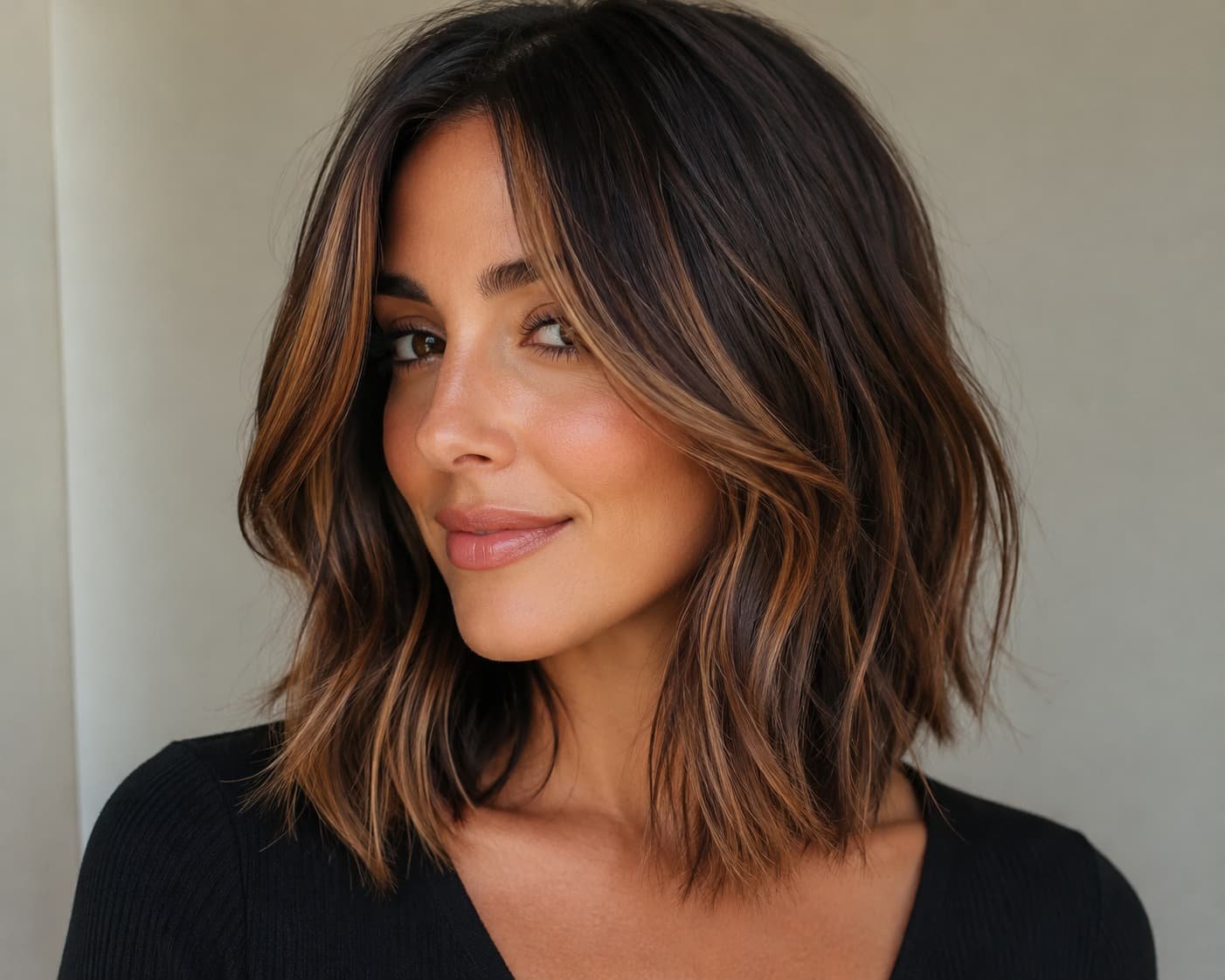
A layered lob with caramel highlights combines a medium-length haircut with soft layering and warm highlighted pieces. The result can look polished, relaxed, subtle, or more defined depending on the length, layer placement, base color, and styling.
Caramel highlights can add visible contrast to brunette hair without changing the entire base color. When they are placed around the face or through the layered sections, they can also make the shape of the haircut easier to see.
There is no single version of this style. Some layered lobs have only a few long layers, while others include more noticeable face-framing pieces. Caramel color can also range from softly blended brown tones to brighter golden-brown sections.
What Is a Layered Lob with Caramel Highlights?
A lob, or long bob, is a longer variation of the bob haircut. It usually keeps more length than a traditional short bob and may sit around the shoulders or extend closer to the collarbone.
A layered lob includes shorter sections within the haircut instead of keeping all the hair at one length. These layers may be concentrated around the face, added through the mid-lengths, or kept longer near the ends.
Caramel highlights introduce warm brown, golden-brown, or toffee-like tones into the hair. On a brunette base, they can create either soft dimension or stronger contrast depending on how light and noticeable the highlighted pieces are.
How a Lob Differs From a Shorter Bob
The main visual difference is length.
A shorter bob usually sits higher around the jaw, chin, or neck area. A lob keeps more length and often reaches closer to the shoulders.
That extra length can create more room for long layers, face-framing pieces, waves, and different highlight placements. It can also give the haircut a softer transition between the front and back sections.
The exact shape can vary. Some lobs have a blunt perimeter, while others have more visible layering or texture through the ends.
What Layers Add to the Shape
Layers change how the hair is distributed through the haircut.
Long layers can create subtle movement while keeping much of the overall length. More noticeable layers can create clearer separation between different sections of the hair.
Face-framing layers can also change the front of the style. They may begin around the cheek, jaw, chin, or lower depending on the look someone prefers.
On some hair textures, layers can create the appearance of more movement or a lighter outline. The final result can vary depending on hair density, natural texture, length, and styling.
How Caramel Highlights Change the Overall Look
Caramel highlights add warmer, lighter pieces to the base color.
On dark brunette hair, brighter caramel sections can create stronger contrast. On medium brown hair, similar caramel tones may blend more softly into the overall color.
Placement matters as much as shade. Highlights concentrated around the face can make the front sections more noticeable, while finer pieces through the lengths can create a more evenly blended effect.
Caramel highlights can also make individual layers easier to see because lighter and darker sections separate visually as the hair moves.
Layered Lob with Caramel Highlights Ideas
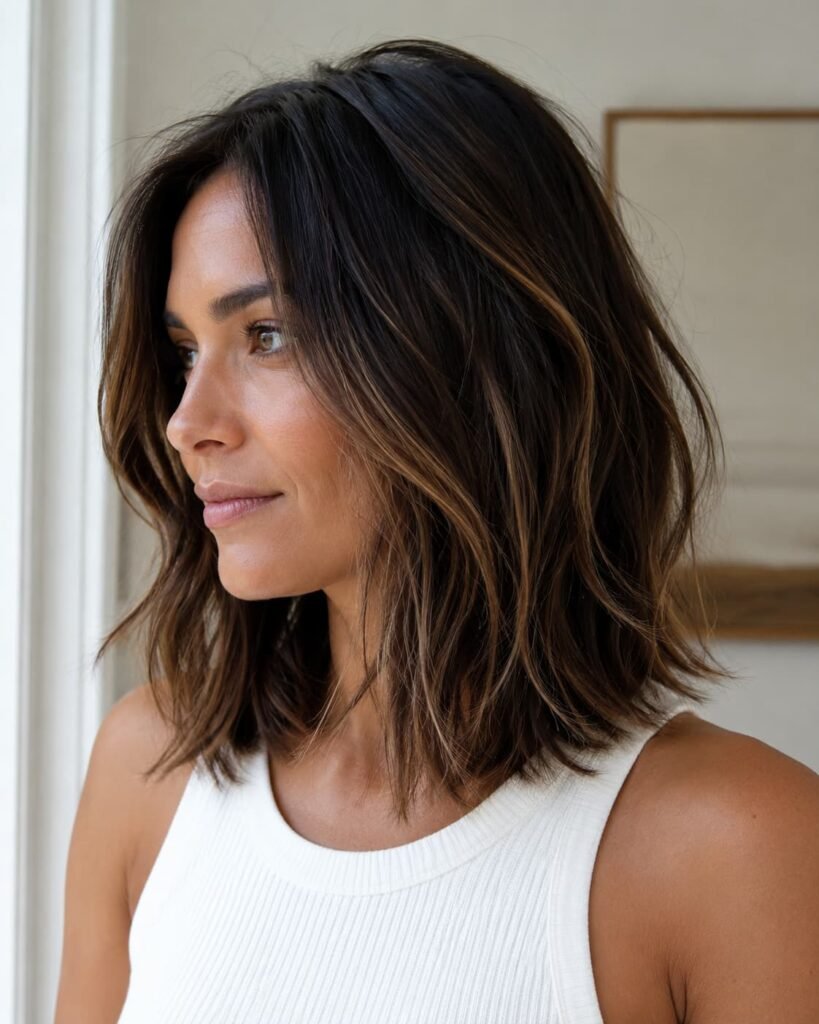
The same basic haircut can look quite different depending on the length, color contrast, layer placement, and finish. These variations focus on meaningful changes rather than small differences in wording.
1. Shoulder-Length Lob With Soft Caramel Ribbons
A shoulder-length lob can provide enough length for gentle layering without moving too far into medium or long hair.
For this variation, narrow caramel ribbons are placed through a darker brunette base. Keeping the highlighted sections relatively fine creates a softer transition between the two colors.
Long layers can help the lighter pieces appear at different points through the hair instead of forming one solid band of color.
This version may appeal to someone who prefers visible warmth without a very high-contrast finish.
2. Collarbone Lob With Long Face-Framing Layers
A collarbone-length lob keeps slightly more length and allows the front sections to extend gradually into the rest of the haircut.
Long face-framing layers can begin around the chin or lower and blend toward the collarbone. This creates a softer layered effect than very short front pieces.
Caramel highlights can follow some of these front sections to make the framing more noticeable.
The longer length can also work well with loose waves or a rounded blowout, where the movement through the front layers becomes more visible.
3. Dark Brunette Lob With Fine Caramel Highlights
A deep brunette base creates a strong background for lighter caramel tones.
Using fine highlights rather than large sections can keep the overall color predominantly dark while adding small areas of warmth throughout the haircut.
This type of placement can work especially well when the goal is to show dimension without making the lob look heavily highlighted.
A smooth finish can make the fine color variation easier to see, while waves can reveal different highlighted pieces as the hair bends.
4. Layered Lob With Brighter Face-Framing Caramel Pieces
This variation places more of the brightness around the front of the haircut.
The face-framing pieces can be lighter than the caramel sections through the rest of the hair, creating a stronger focal point near the front.
Long layers help these brighter sections blend into the overall lob rather than appearing completely separate.
The amount of contrast can be adjusted. Some people may prefer a soft transition from brunette to caramel, while others may prefer a more noticeable difference between the front pieces and the darker base.
5. Softly Blended Caramel Balayage Lob
A caramel balayage lob creates a more gradual transition from darker areas into lighter lengths.
Instead of placing every highlighted section in the same way, the lighter color can appear more concentrated through selected mid-lengths and ends. This creates a softer, blended appearance compared with clearly separated highlight ribbons.
Layering can make the balayage more visible because different sections of hair fall at slightly different lengths.
A softly waved finish can emphasize the transition between the brunette base and caramel sections, while a straighter finish may make the placement appear more subtle.
6. High-Contrast Caramel Highlights on a Dark Base
A dark brunette base can make caramel highlights appear more noticeable, especially when the lighter pieces are noticeably lighter than the surrounding hair.
This variation creates a more defined look when the caramel pieces remain clearly visible against the darker base. Wider ribbons through the front, sides, or lower lengths can create clearer separation between the dark base and the caramel color.
The finished look can feel more defined than a softly blended brunette style. The exact contrast will depend on the starting hair color and the chosen caramel tone.
7. Wavy Layered Lob With Caramel Dimension
Loose waves can make both layers and highlights easier to see because different sections of the hair move in different directions.
A layered lob with soft waves may show darker and lighter pieces more clearly than a completely straight finish. Caramel highlights placed through the mid-lengths and ends can become more visible as the hair bends.
This version can range from relaxed and tousled to more polished, depending on how structured the waves are.
8. Sleek Straight Lob With Subtle Caramel Highlights
A straight finish places more attention on the outline of the haircut and the placement of the layers.
Fine caramel highlights can add color variation without becoming the main focus of the style. On a darker base, narrow highlighted pieces may create a softer effect than wider or brighter sections.
This option may suit someone who prefers a cleaner silhouette and more understated color contrast.
9. Side-Parted Lob With Sweeping Front Layers
A side part changes where the hair naturally falls and can make the front layers appear more prominent on one side.
Sweeping face-framing sections can move across the forehead or cheek area before blending into the longer lengths. Caramel highlights placed through these pieces can draw more attention to the front of the haircut.
A deeper side part can create a more noticeable difference between the two sides, while a softer side part keeps the shape more balanced.
10. Center-Parted Lob With Balanced Face-Framing Pieces
A center part creates a more symmetrical front shape.
Face-framing layers can fall on both sides of the face, with caramel pieces placed through the front sections for a balanced highlighted effect.
The layers do not need to begin at the same exact point on every haircut. Some versions use shorter pieces near the cheek or jaw, while others keep the front layers longer and more subtle.
11. Layered Lob With Caramel-Toned Ends
Caramel color can be concentrated toward the lower lengths instead of being distributed from the roots downward.
This keeps more of the darker base visible near the top while adding warmth through the ends. The result can look softer when the transition is blended and more noticeable when the difference between the base and ends is stronger.
Layered ends can make the lighter color appear at different levels rather than forming one even line.
12. Voluminous Blowout Lob With Visible Layered Movement
A blowout can make long layers more visible by creating lift, curved ends, and separation through the haircut.
The front sections may be styled away from the face or softly inward, depending on the desired finish. Caramel highlights can become more noticeable where the hair curves and catches the light.
This style can look polished while still showing the movement created by the layered shape.
How Length and Layer Placement Change the Look
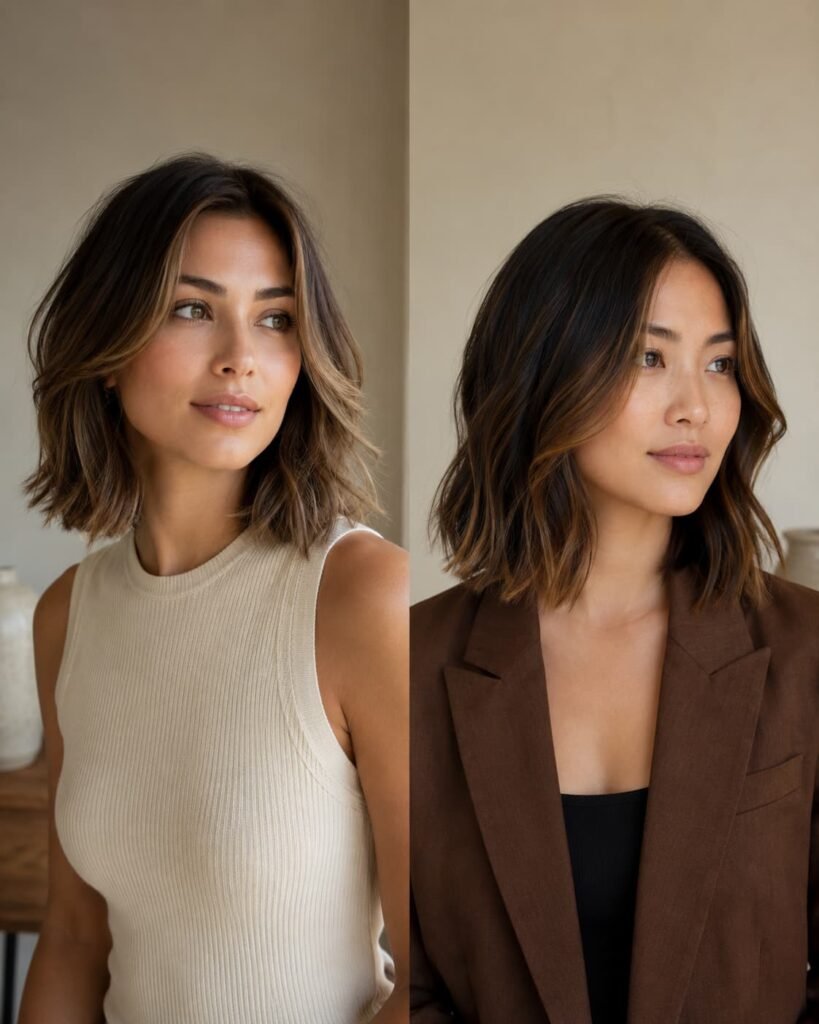
The overall shape of a lob depends on more than color. Length and layer placement can change whether the haircut looks structured, soft, compact, or more flowing.
Even small differences in where the hair ends or where the shorter sections begin can change the finished appearance.
Shoulder-Length vs. Collarbone-Length Lobs
A shoulder-length lob creates a slightly shorter, more compact shape. It can still include long layers and face-framing sections, but the overall outline remains closer to a classic long bob.
A collarbone-length lob keeps more length and can create a softer transition into medium-length hair.
The longer version provides more length for extended face-framing layers and visible movement through the lower sections.
Neither length is automatically better. The choice depends on the preferred silhouette, existing hair texture, and how much length someone wants to keep.
Subtle Long Layers vs. More Visible Layering
Long, subtle layers keep much of the hair close to the same overall length while adding some movement through the ends.
More visible layering introduces a greater difference between shorter and longer sections. This can make the haircut look more textured and separated.
Someone who prefers a more solid-looking perimeter may prefer fewer or longer layers. Someone who wants more visible movement may prefer a more noticeable layered structure.
The final effect can vary depending on hair density and natural texture.
Where Face-Framing Layers Can Begin
Face-framing layers can begin at different points around the front of the haircut.
Shorter pieces may start around the cheek or jaw, creating a more noticeable change in length. Longer face-framing sections may begin near the chin or lower and blend more gradually into the rest of the lob.
The starting point affects how much attention is placed on the front of the haircut.
Caramel highlights can follow these sections to make the framing more visible, but the front layers can also be left closer to the base color for a subtler look.
Choosing the Caramel Highlight Placement
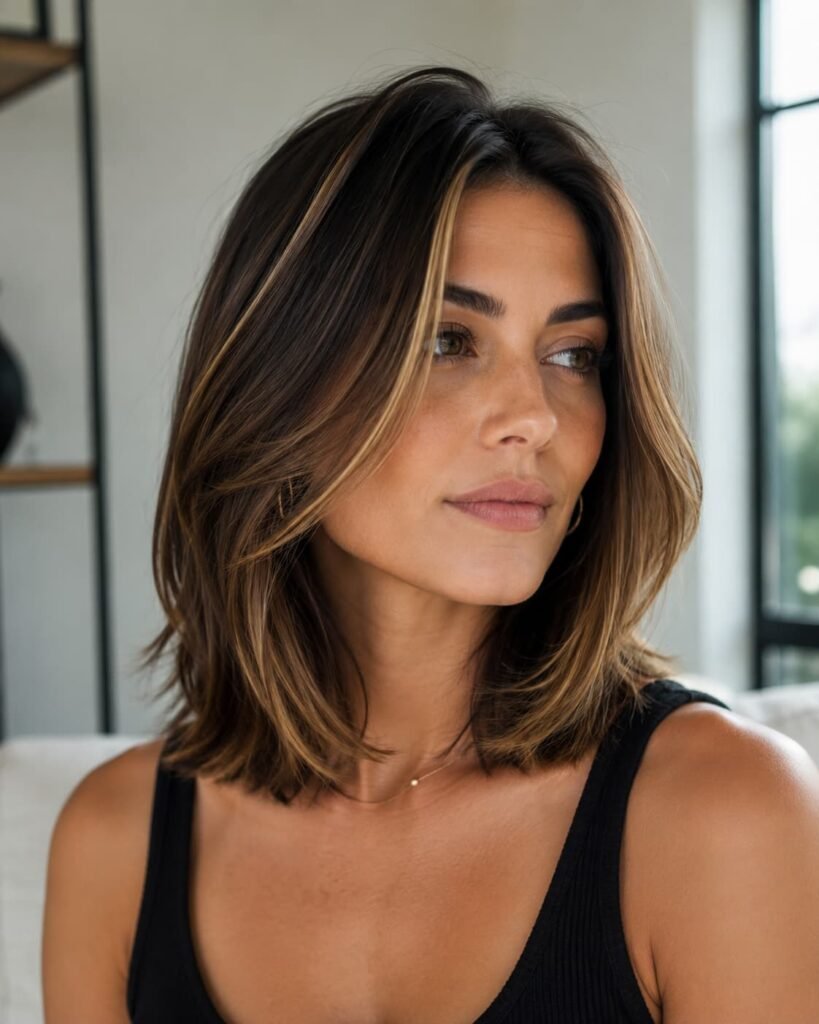
Highlight placement can have as much visual impact as the shade itself.
Caramel color can be distributed in fine pieces, wider ribbons, brighter front sections, or balayage placement. Each option can create a different level and pattern of contrast.
Fine Highlights for a More Blended Effect
Fine highlights create smaller areas of lightness throughout the hair.
When the caramel shade is relatively close to the brunette base, these pieces can blend softly and create subtle color variation.
Fine highlights may work well for someone who wants warmth and dimension without a heavily highlighted appearance.
Wider Caramel Pieces for Stronger Contrast
Wider highlighted sections create a more obvious difference between the caramel color and the darker base.
These pieces can be placed through selected areas rather than evenly across the entire head. For example, wider sections may be concentrated around the front or through the lower lengths.
The stronger the difference between the base and highlight shade, the more noticeable the contrast can appear.
Face-Framing Highlights for More Front-Focused Color
Face-framing highlights place more brightness around the front sections of the haircut.
They may follow the shorter layers around the cheek, jaw, chin, or lower front lengths. This can make the front of the lob appear lighter than the back or interior sections.
The color can be soft and blended or more defined, depending on how much contrast is preferred.
Caramel Highlights vs. Caramel Balayage
Caramel highlights and caramel balayage can use similar warm tones, but the terms describe different aspects of the color. Caramel refers to the shade, while balayage refers to a freehand coloring technique.
Traditional highlights use selected sections of hair to create lighter pieces, while balayage involves painting color onto selected areas by hand. The placement and amount of contrast can vary with either approach.
Both can be combined with a layered lob. Someone who prefers clearly defined ribbons may consider a more structured highlight placement, while balayage is another option for creating hand-painted areas of lighter color.
How Hair Texture and Styling Affect the Finished Look
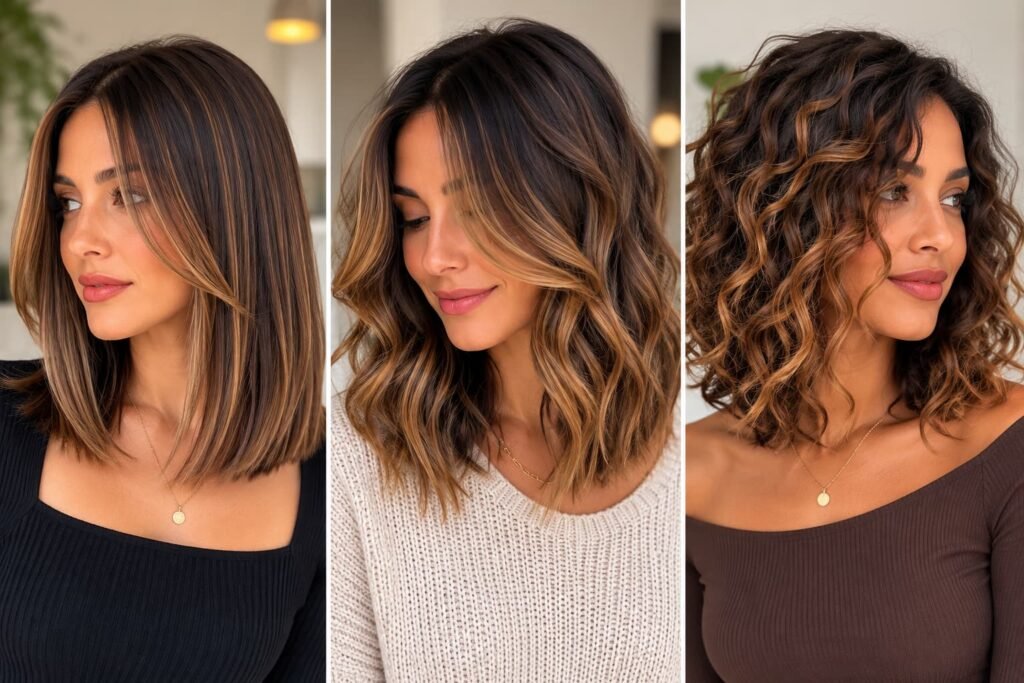
Hair texture and styling can change how the layers, length, and caramel highlights appear. The same lob may look more defined when straight, softer when wavy, or show a different silhouette when worn with natural curls.
The final look can vary depending on curl pattern, hair density, layer placement, and how the hair is styled.
Straight Hair and a More Defined Silhouette
Straight hair can make the outline of a layered lob easier to see. The perimeter, face-framing pieces, and differences between shorter and longer sections may appear more defined.
A smooth finish can also show the placement of caramel highlights clearly. Fine pieces may create subtle color variation, while wider ribbons can stand out more against a brunette base.
Someone who prefers a cleaner shape may choose longer, softer layers, while more noticeable layering can create greater separation through the ends.
Wavy Hair and Softer Layer Separation
Natural or styled waves can create visible movement through a layered lob.
As the hair bends, different sections of the haircut may separate slightly, which can make both layers and highlighted pieces more noticeable. The result may look softer and less structured than the same haircut worn completely straight.
Long face-framing layers can also blend into waves around the front rather than sitting as clearly defined sections.
Curly Hair and the Effect of Curl Pattern on Length
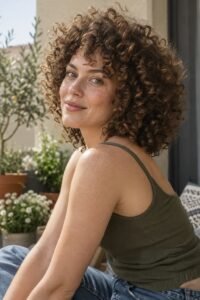
A layered lob can also be adapted for curly hair, but curl pattern affects how the finished length appears.
Curly hair may appear shorter in its natural shape than when it is stretched or straightened. The amount of visible shrinkage varies with the curl pattern, so the same measured haircut length can look different from one person to another.
Layer placement can also change how curls fall around the head and face. Some people may prefer longer layers to preserve more overall length, while others may choose more visible layering for greater separation between curl sections.
The final silhouette depends on the individual curl pattern, density, and chosen length.
Smooth, Wavy, and Blowout Styling Options
Different styling finishes can give the same haircut noticeably different appearances.
A smooth, straight finish can emphasize the perimeter and highlight placement. Loose waves can create a softer shape and make different caramel pieces appear throughout the lengths.
A blowout can add curved movement through longer layers and face-framing sections. The ends may be directed inward, outward, or away from the face depending on the preferred finish.
There is no single required way to style a layered lob. The appearance of the haircut can change with the parting, texture, and styling finish without changing the underlying cut.
What to Consider Before Choosing This Look
Before choosing a layered lob with caramel highlights, it helps to decide which parts of the style matter most to you.
Length, amount of layering, color contrast, parting, hair texture, and existing color can all influence the final appearance. Reference images can also be useful because terms such as “long layers” or “caramel” can describe a range of looks.
Your Preferred Lob Length
Start by considering where you want the perimeter of the haircut to sit.
A shoulder-length lob creates a more compact outline, while a collarbone-length version keeps additional length around the lower sections.
The longer option may leave more room for extended face-framing pieces, while a shorter lob can create a more defined bob-like shape.
The right choice is mainly a matter of preferred length, natural texture, and the overall silhouette you want.
How Much Layering You Want
Layering can be subtle or more noticeable.
Long layers keep much of the haircut close to the same overall length while creating some separation through the ends. More pronounced layers introduce clearer differences between shorter and longer sections.
Face-framing pieces can also be added independently of heavier layering through the rest of the hair.
Someone who prefers a more solid-looking perimeter may choose fewer or longer layers. Someone who prefers more visible movement may consider a more layered shape.
Subtle vs. Noticeable Color Contrast
The amount of contrast between the brunette base and caramel pieces can noticeably affect the finished appearance.
Caramel tones that remain relatively close to the base can create a softer appearance. Lighter or wider sections can make the highlighted areas more noticeable.
Contrast can also be concentrated in specific areas. For example, brighter pieces may be placed around the face while the back remains more blended.
Choosing between subtle and stronger contrast is largely a visual preference rather than a rule about which option is better.
Center Part vs. Side Part
Parting changes how the front layers fall.
A center part can create a more balanced appearance with face-framing sections falling on both sides. A side part shifts more hair toward one side and can make sweeping front layers more noticeable.
The haircut does not have to be permanently styled with one part. Some layered lobs can be worn in different ways depending on the length of the front sections and the natural direction of the hair.
Hair Texture, Density, and Existing Color
Hair texture and density can affect how a layered lob sits and how clearly individual layers are visible.
Straight hair may show the haircut’s outline more clearly, while waves and curls can create a softer or more separated shape. Hair density can also influence how solid or light the perimeter appears after layering.
Existing hair color matters when considering caramel highlights because the contrast will depend partly on the starting base. A dark brunette base may create a stronger visual difference, while a medium brown base may produce a softer transition with similar caramel tones.
Because texture, density, base color, and styling vary from person to person, the finished look will not be identical on everyone.
Maintenance Considerations
A layered lob with caramel highlights can change in appearance as the hair grows and the highlighted sections sit farther from the scalp. How noticeable these changes become depends on the original cut, highlight placement, base color, and personal styling preferences.
There is no single maintenance schedule that applies to every version of this look.
How the Layered Shape Changes as Hair Grows
As the hair grows, the perimeter becomes longer and the shorter layers gradually sit lower.
As face-framing pieces grow longer, their original length difference may become less noticeable in relation to the surrounding hair. A lob that initially has a compact outline can begin to look more like a medium-length layered haircut over time.
Some people may prefer to keep the original shape more defined, while others may be comfortable allowing the layers and perimeter to grow longer.
How Root Growth Can Affect Highlight Contrast
Root growth can change how caramel highlights relate to the natural or darker base color.
Highlights placed close to the roots may show a clearer difference as new growth appears. Color that begins farther from the scalp can create a different grow-out pattern, with more of the natural base remaining visible near the top.
The effect also depends on contrast. Caramel pieces that are noticeably lighter than the base may create a more visible distinction as the roots grow, while closer shades may appear softer.
Maintaining the Appearance of Highlighted Color
The appearance of caramel highlights can change as new hair grows and the highlighted sections sit farther from the roots.
How noticeable the change looks depends on the starting base color, highlight placement, and amount of contrast between the darker and lighter sections.
Someone who wants to preserve a particular level of brightness or contrast may choose to refresh the color when the grow-out becomes more noticeable than they prefer.
Frequently Asked Questions
What is a layered lob with caramel highlights?
A layered lob with caramel highlights is a long bob haircut with shorter sections added through the hair and warm caramel-colored highlights placed through selected areas.
The haircut may include face-framing pieces, long layers, or more visible layering. The caramel color can be subtle or more noticeable depending on the base shade and highlight placement.
What length is considered a lob?
A lob is a longer version of a bob and commonly falls around the shoulder area or extends toward the collarbone.
There is no single exact length that every lob must follow. The final length can vary depending on the haircut shape and personal preference.
What is the difference between a layered lob and a blunt lob?
A layered lob contains different lengths within the haircut, which can create more visible movement and separation.
A blunt lob keeps more of the perimeter at a similar length, creating a more solid-looking outline. Some haircuts combine a stronger perimeter with only a small amount of internal or face-framing layering.
Can a lob have face-framing layers?
Yes. Face-framing layers can be added to a lob at different lengths.
They may begin around the cheek, jaw, chin, or lower sections before blending into the rest of the haircut. The starting point changes how noticeable the front layers appear.
Can caramel highlights be used on dark brown hair?
Yes. Caramel highlights can be paired with a dark brown base.
The finished contrast depends on how light the caramel pieces are compared with the surrounding hair. Closer shades can create a softer effect, while lighter or wider sections may appear more noticeable.
What is the difference between caramel highlights and caramel balayage?
Caramel describes the warm color tone, while balayage describes a freehand coloring technique.
Traditional highlighting uses selected sections of hair to create lighter pieces, while balayage involves applying color or lightener to selected areas by hand.
Both approaches can be used to create caramel-colored sections in a layered lob, and the placement and level of contrast can vary with either technique.
Can a layered lob be worn straight or wavy?
Yes. A layered lob can be styled in different ways.
A straight finish may make the perimeter and individual layers easier to see, while waves can create a softer shape and more separation through the lengths.
A blowout is another option for adding curved movement through the front layers and ends.
How can you describe this haircut and color combination at a salon?
It can help to describe the haircut and color separately.
For the cut, mention the preferred lob length, how much layering you want, and where you would like the face-framing sections to begin. For the color, explain whether you prefer subtle caramel pieces, stronger contrast, brighter front sections, or a balayage-style placement.
Reference images can also help show the exact length, layer shape, highlight width, and color contrast you prefer.