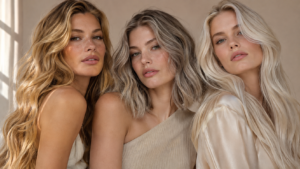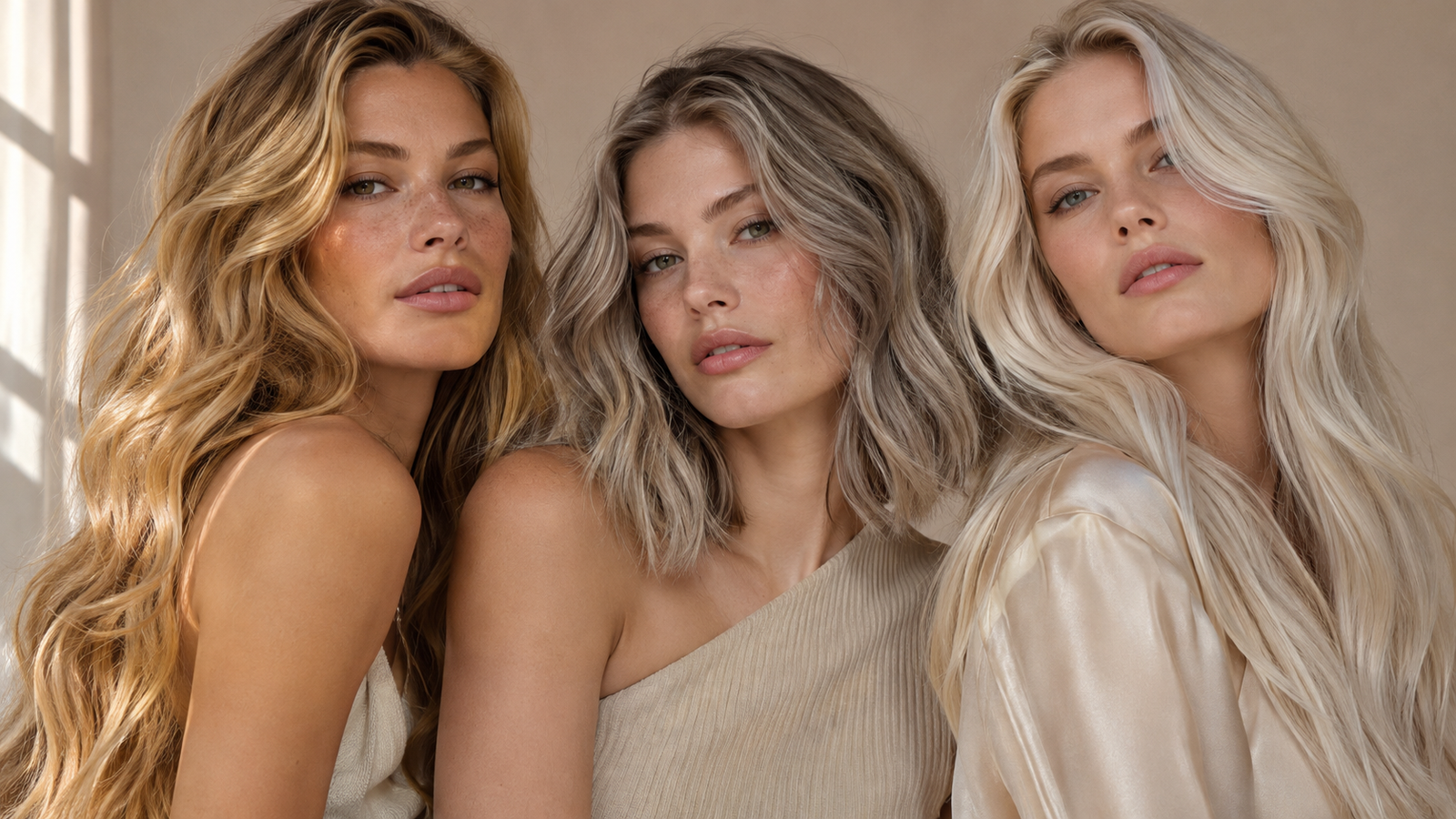

Blonde hair comes in more colors than you might expect. Some shades are soft and golden, while others have cool, silvery tones. From warm honey blonde to pale platinum, each color has its own character and can create a different overall appearance.
Exploring different shades of blonde hair can help you understand which colors may complement your skin tone, natural hair color, and personal style. A blonde shade that looks creamy in one photograph may appear more golden or beige in another because lighting and the original hair color can affect how the result looks.
You do not have to choose the lightest blonde to create a noticeable change. Darker shades, such as caramel and dirty blonde, can offer a softer transition, while platinum and icy blonde create a brighter contrast.
This guide explains 15 blonde hair shades, what makes each one different, and what to consider when choosing a color that feels right for you.
What Are the Different Shades of Blonde Hair?
Blonde hair shades range from deep, natural-looking colors to very light tones that appear almost white. The differences are not only about how light or dark the hair looks. The warmth, coolness, and mixture of tones also play an important role.
For example, honey blonde and ash blonde may have similar levels of lightness, but their overall appearance is quite different. Honey blonde has warm golden tones, while ash blonde has a cooler, muted finish.
Understanding these differences can make it easier to compare hair color ideas and choose a suitable reference photograph.
Warm, Cool, and Neutral Blonde Tones
Blonde hair colors are commonly described as warm, cool, or neutral.
Warm blonde shades contain golden, yellow, amber, or copper tones. Honey blonde, golden blonde, caramel blonde, and strawberry blonde are examples. They can create a rich, sunlit appearance.
Cool blonde shades have ash, silver, or violet-influenced tones. Ash blonde, icy blonde, and pearl blonde often fall into this category. Their appearance is usually more muted or frosty.
Neutral blonde shades balance warm and cool tones. Beige blonde, sandy blonde, and some champagne blonde variations can have a softer finish without looking strongly golden or silver.
These categories are useful for comparing colors, but they are not strict rules. A shade can be adjusted to appear slightly warmer or cooler depending on the desired result.
Light Blonde vs. Dark Blonde Hair
Light blonde hair includes pale colors such as platinum, icy, pearl, and some vanilla blonde shades. These colors reflect a high level of lightness and can create noticeable contrast against darker natural roots.
Dark blonde hair sits closer to light brown. Dirty blonde and deeper sandy blonde shades often contain a mixture of darker and lighter tones that creates natural-looking depth.
The choice between light and dark blonde depends partly on your starting color. Someone with naturally light hair may need less lightening to achieve a pale blonde than someone with very dark hair.
The final appearance also depends on the color technique, hair condition, and how warm or cool the chosen blonde is.
15 Beautiful Shades of Blonde Hair to Explore
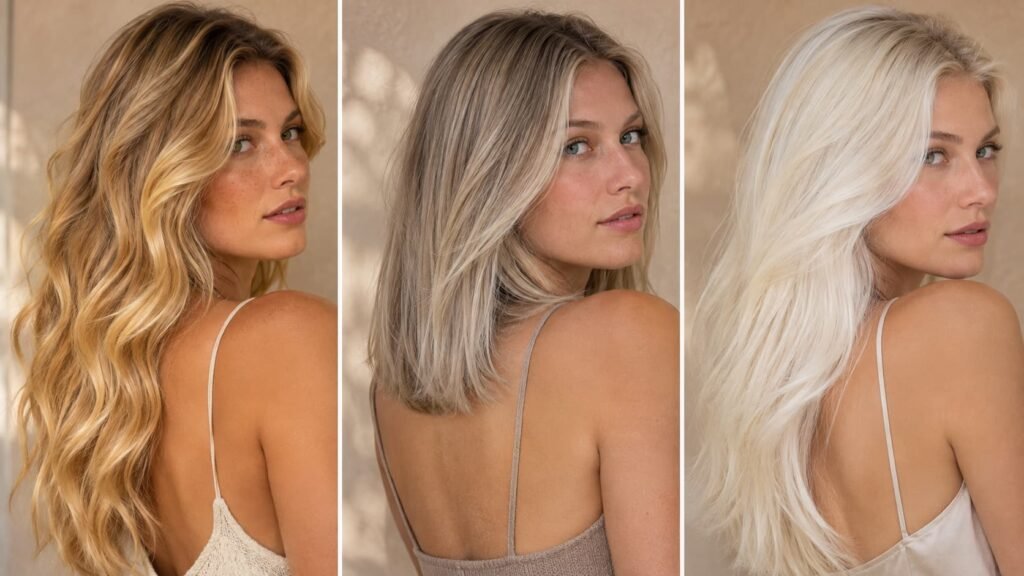
Blonde hair is not a single color. The following 15 shades offer different levels of warmth, brightness, and depth. Each has its own visual characteristics, making it easier to find an option that matches your preferred look.
1. Honey Blonde Hair
Honey blonde is a warm, golden shade with rich amber tones. It resembles the soft golden color of honey, giving the hair a bright appearance without looking extremely pale.
This color usually has more warmth than beige or ash blonde. Depending on the formula, it may appear light and golden or slightly deeper with caramel undertones.
Honey blonde may complement warm and neutral skin undertones, although people with cooler undertones may also enjoy the contrast.
It can be especially appealing when paired with a darker base because the combination creates visible dimension.
For someone considering a change from light brown hair, deeper honey blonde may offer a softer transition than platinum or icy blonde.
2. Ash Blonde Hair
Ash blonde is known for its cool, muted appearance. Instead of strong golden or yellow tones, it contains grayish, smoky, or cool beige undertones.
The color can range from darker ash blonde to very light versions. A medium ash blonde may look understated, while a lighter shade can create a softer silvery finish.
Ash blonde may appeal to people who prefer hair colors without noticeable golden warmth.
It is also worth understanding that cool blonde tones can change as the color fades. Yellow or orange undertones may become more visible over time, depending on the starting hair color and coloring process.
Toning products are sometimes used to adjust this warmth, but the appropriate product and frequency depend on the hair’s condition and color.
3. Platinum Blonde Hair
Platinum blonde is an extremely light blonde shade that often appears pale cream, silver-white, or nearly white.
Unlike honey or caramel blonde, platinum has very little visible depth when applied as an even all-over color.
Its brightness can create a strong contrast with naturally dark eyebrows or roots. Some people prefer this contrast, while others may choose a softer root blend.
Platinum blonde can have neutral or cool undertones. It should not automatically be confused with icy blonde, which usually has a more pronounced frosty tone.
Achieving this level of lightness from dark hair may require significant lightening. The process can affect hair condition, so the starting color and previous chemical treatments are important considerations.
Platinum blonde is a distinctive option for readers interested in a very light, noticeable hair color.
4. Golden Blonde Hair
Golden blonde is a bright, warm shade with clear yellow-gold undertones. It has a classic sunlit appearance that can look particularly vibrant in natural daylight.
Compared with honey blonde, golden blonde may appear brighter and less amber. It focuses more on pure golden tones rather than deeper warmth.
The shade can range from medium golden blonde to a lighter, more luminous version.
Golden blonde may complement warm skin undertones, but it can also create an appealing contrast with some cool complexions.
For those who prefer a color with visible warmth, golden blonde offers an alternative to the muted appearance of ash blonde.
It may also be combined with lighter highlights to create subtle differences in brightness throughout the hair.
5. Strawberry Blonde Hair
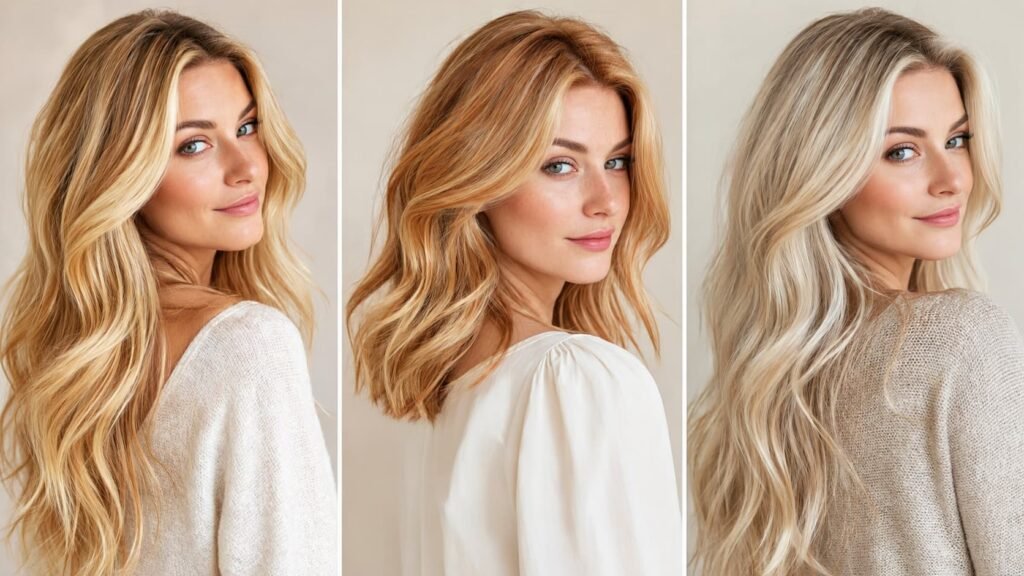
Strawberry blonde blends blonde tones with a delicate touch of red or copper.
Some versions look mostly golden with a soft peachy tint. Others have stronger copper tones and appear closer to light red hair.
This balance between blonde and red makes strawberry blonde different from traditional golden shades.
It may complement fair skin with warm or neutral undertones, although the amount of copper can be adjusted to work with different complexions.
People who enjoy warm hair colors but want something different from honey or caramel blonde may find strawberry blonde interesting.
The shade can appear more reddish in warm lighting and softer or more golden in cooler lighting, so comparing several reference photographs can be helpful.
6. Beige Blonde Hair
Beige blonde combines warm and cool tones to create a soft, balanced color.
It usually has a creamy or slightly muted appearance without the strong yellow tones of golden blonde or the grayish finish of ash blonde.
This makes beige blonde a flexible option for people who prefer a natural-looking color.
It may complement neutral skin undertones, but warmer or cooler versions can be adjusted to suit different preferences.
Beige blonde can also look attractive with subtle darker roots. The contrast creates depth while allowing the lighter lengths to remain noticeable.
For readers who find platinum too bright and golden blonde too warm, beige blonde may offer a middle ground.
7. Champagne Blonde Hair
Champagne blonde is a light, delicate shade that combines beige and soft golden tones. Some variations also include a subtle pinkish or pearly influence.
The finished color often has a creamy appearance rather than a strong yellow or silver finish.
Champagne blonde is different from traditional beige blonde because it may include a brighter, more reflective-looking tone.
It can be adjusted toward warm or cool depending on the desired color and skin undertone.
This shade may appeal to people who want light blonde hair with a soft, polished appearance.
Since champagne blonde can look different depending on the color formula, using clear reference photographs may help communicate whether you prefer a warmer or cooler version.
8. Dirty Blonde Hair
Dirty blonde is a darker blonde shade with a mixture of muted blonde and light brown tones.
It often resembles naturally blonde hair that contains darker roots, deeper strands, or subtle color variation.
Unlike platinum or icy blonde, dirty blonde is not defined by extreme brightness. Its appeal comes from the combination of soft highlights and deeper tones.
Dirty blonde can have warm, neutral, or cool undertones.
A cool version may include muted beige or ash tones, while a warmer version can contain soft golden highlights.
For people with naturally dark blonde or light brown hair, a similar shade may create a less noticeable contrast as the roots grow.
Dirty blonde is worth considering when the goal is a subtle color change rather than a dramatic transformation.
9. Caramel Blonde Hair
Caramel blonde is a deeper, warm blonde shade that contains golden-brown and amber tones.
It is richer than many light blonde colors and may look close to light brown in some lighting conditions.
Caramel blonde is commonly associated with dimensional hair color because it can blend with brunette bases while adding visible warmth.
The color may complement golden, warm, and neutral skin undertones. It can also create an attractive contrast with deeper complexions.
Compared with honey blonde, caramel blonde generally has more brown depth.
It can be used as an all-over color or as lighter sections within darker hair, depending on the preferred appearance.
For those who want blonde tones without choosing a very pale color, caramel blonde is one possible option.
10. Sandy Blonde Hair
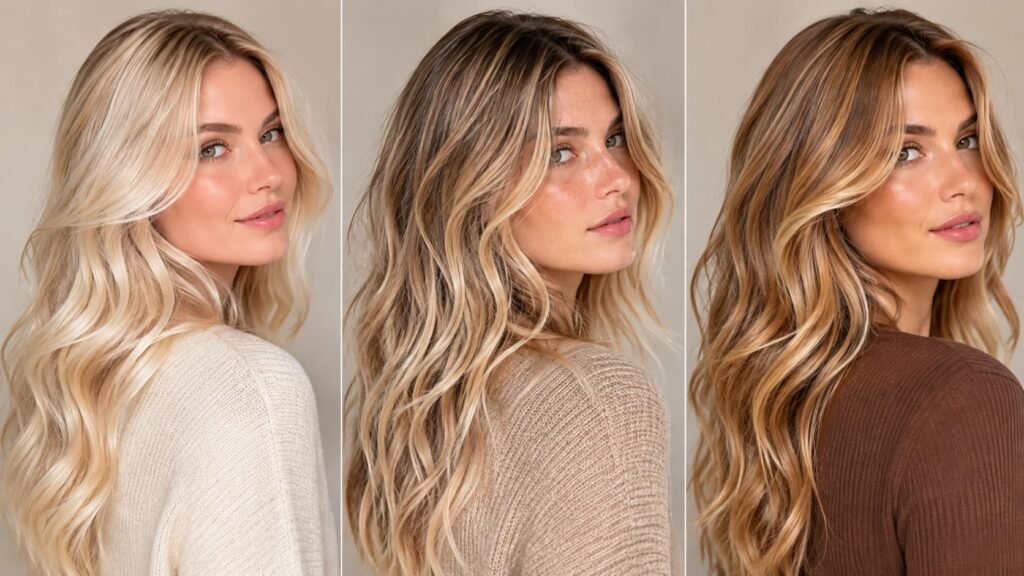
Sandy blonde is a soft, muted blonde that resembles the mixture of beige and golden tones found in natural sand.
It usually avoids both extreme warmth and strong silver undertones.
Some sandy blonde colors lean slightly golden, while others appear cooler and more beige.
This shade can create a relaxed, natural-looking appearance, particularly when combined with slightly darker blonde sections.
Sandy blonde may complement several skin undertones because its warmth can be adjusted.
It is often easier to distinguish from beige blonde when looking at the overall tone. Sandy blonde commonly has a more muted, earthy character, while beige blonde may look smoother and creamier.
The exact difference can vary between hair-color formulas.
11. Buttery Blonde Hair
Buttery blonde is a light, warm shade with creamy yellow-gold undertones.
It is brighter than many honey blonde variations but softer than a strongly yellow blonde color.
The name comes from its smooth, buttery appearance rather than a specific hair-color formula.
Buttery blonde may complement warm or neutral skin undertones and can create a bright look without the icy finish of platinum blonde.
Some versions contain slightly deeper golden pieces that give the color more dimension.
Because the shade relies on gentle warmth, it is important to distinguish the intended buttery finish from unwanted brassiness.
A reference photograph showing the preferred balance of cream and gold can make this difference easier to understand.
12. Icy Blonde Hair
Icy blonde is a very light, cool-toned blonde with a frosty appearance.
It often includes silver, violet, or cool neutral influences that reduce the appearance of golden warmth.
Compared with platinum blonde, icy blonde generally emphasizes a cooler visual effect.
The shade may appear nearly white in bright lighting, while softer lighting can reveal its silver or pale beige undertones.
Icy blonde may appeal to people who enjoy high-contrast hair colors and cooler beauty looks.
However, achieving this pale shade usually requires a very light starting hair color.
Naturally dark hair may need substantial lightening before an icy tone can be created. Hair condition and previous coloring can affect whether that level of lightness is realistic.
13. Dark Blonde Hair
Dark blonde sits between medium blonde and light brown.
It has more depth than honey, golden, or beige blonde in their lighter forms, but it still belongs to the blonde color family.
Dark blonde can have golden, ash, or neutral undertones.
A warm dark blonde may resemble a soft golden brown, while a cool version can appear muted and slightly smoky.
The shade is different from dirty blonde because dark blonde describes an overall depth of color. Dirty blonde often refers to a mixture of blonde and darker tones that creates a less uniform appearance.
Dark blonde may be an appealing option for people seeking a subtle change from light brown hair.
Its relatively deeper color can also provide a softer contrast with naturally dark roots, depending on the starting shade.
14. Pearl Blonde Hair
Pearl blonde is a light, cool-toned shade with a delicate pearly appearance.
It commonly combines soft violet, beige, or silver influences to create a gentle reflective-looking finish.
Compared with icy blonde, pearl blonde may appear slightly softer and less strongly silver.
The shade can look creamy in one lighting condition and cooler in another.
Pearl blonde may complement cool and neutral skin undertones, although a slightly warmer variation can create a different effect.
People who like pale blonde hair but prefer a subtle finish instead of a strongly frosty appearance may be interested in pearl blonde.
The desired result depends on the starting color and toning process, making clear visual references useful.
15. Vanilla Blonde Hair
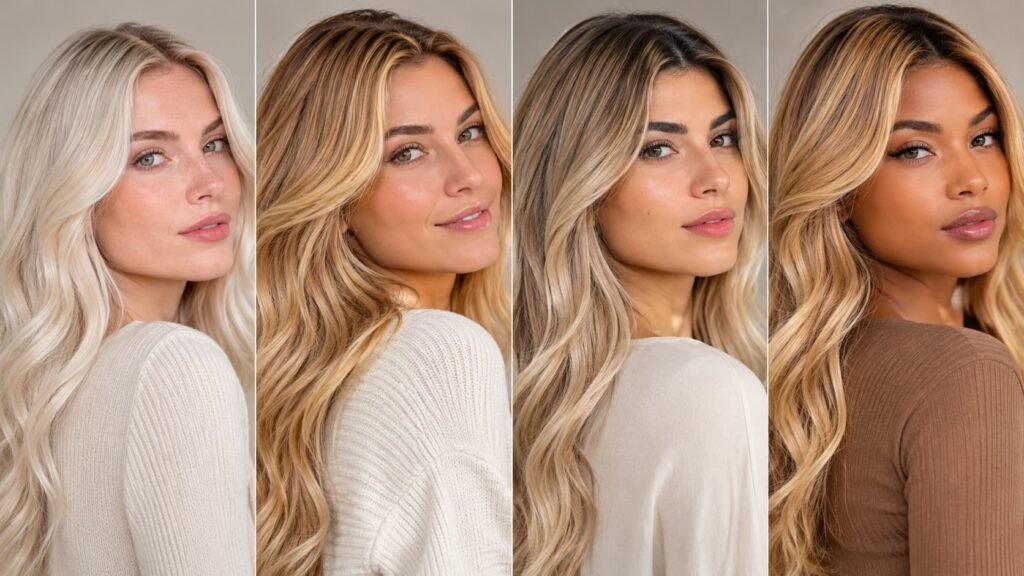
Vanilla blonde is a light, creamy shade with soft beige and gentle golden undertones.
It sits between noticeably warm blonde colors and very pale neutral blonde shades.
Unlike icy blonde, vanilla blonde usually keeps a small amount of warmth. However, it does not typically have the strong golden appearance of honey blonde.
The result can look bright, soft, and creamy.
Vanilla blonde may complement warm or neutral undertones, while cooler variations can also work with different complexions.
It can be paired with slightly darker roots or subtle lowlights to create more depth.
For readers who want a light blonde color but find platinum too pale or golden blonde too warm, vanilla blonde may offer a balanced alternative.
How to Choose Blonde Hair Shades for Your Skin Tone
Skin tone can be a useful starting point when choosing a blonde color, but it should not be treated as a strict rule. The same shade can look different on two people because natural hair color, eye color, skin undertone, and lighting all influence the overall appearance.
Your skin’s surface tone and undertone are not exactly the same thing. Surface tone describes how light or deep your complexion appears, while undertone refers to its underlying warm, cool, or neutral quality.
Blonde Hair Shades for Fair Skin
Fair skin can have warm, cool, or neutral undertones.
People with cool undertones may prefer ash blonde, pearl blonde, or soft beige blonde. These colors can create a balanced appearance without adding strong golden warmth.
Honey blonde and strawberry blonde may appeal to those who prefer warmer colors.
Platinum blonde can create a light, low-contrast look on some fair complexions, while darker blonde shades may provide more contrast.
The most suitable choice depends on the effect the individual wants.
Blonde Hair Shades for Medium Skin
Medium skin tones can look different depending on whether their undertones are golden, peachy, cool, or neutral.
Honey blonde, caramel blonde, and golden blonde may complement warmer complexions.
Beige blonde and champagne blonde can offer a softer option for people who prefer a more balanced color.
Those who enjoy cooler shades may also consider ash blonde, particularly when the color is adjusted to the natural complexion.
The depth of the blonde can be just as important as its tone.
Blonde Hair Shades for Olive Skin
Olive skin often has a greenish or muted undertone, although its warmth and depth can vary.
Beige blonde, sandy blonde, dark blonde, and caramel blonde may create a balanced appearance.
Some people with olive skin prefer muted blonde colors because they do not add strong yellow warmth.
Others may enjoy the contrast created by golden blonde or a brighter platinum shade.
Rather than avoiding an entire blonde color family, it can be more useful to compare how different versions look against the complexion.
Blonde Hair Shades for Dark Skin
Deeper skin tones can complement both warm and cool blonde colors.
Honey blonde, golden blonde, and caramel blonde can create a rich contrast while keeping warmth in the overall look.
Platinum blonde and icy blonde can create a much brighter contrast, which some people may prefer.
Dark blonde or beige blonde may offer a subtler alternative.
Choosing between these shades comes down to personal preference, desired contrast, and how the hair color interacts with the skin’s undertone.
No single blonde shade is suitable for every person within a particular skin-tone category.
How to Choose Between Warm and Cool Blonde Hair
The easiest way to compare warm and cool blonde hair is to look at the undertones rather than the overall brightness.
Warm blonde contains golden, amber, or copper influences. Cool blonde has ash, silver, or violet-based tones.
Neutral blonde combines elements of both.
| Color Family | Examples | Typical Appearance |
|---|---|---|
| Warm blonde | Honey, golden, caramel, buttery | Golden, rich, or creamy |
| Cool blonde | Ash, icy, pearl | Muted, smoky, or frosty |
| Neutral blonde | Beige, sandy, champagne | Soft and balanced |
| Variable tones | Dark blonde, dirty blonde, vanilla | Depends on the color formula |
A person’s skin undertone may help narrow the options, but personal preference matters equally.
For example, someone with warm skin may enjoy golden blonde because the tones blend naturally. Another person with the same complexion may prefer icy blonde for a stronger contrast.
Looking at reference photographs taken in different lighting conditions can help reveal the true tone of a color.
Which Blonde Hair Shades Look Most Natural?
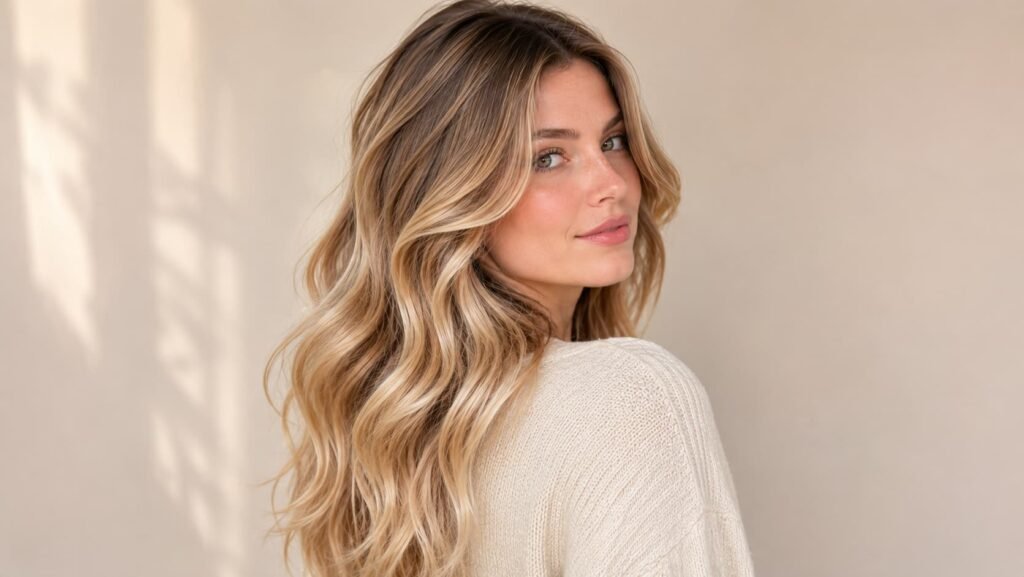
Natural-looking blonde hair often contains more than one tone.
Instead of having a completely uniform color, it may include slightly darker roots, lighter pieces around the face, or subtle differences between individual strands.
Dirty blonde, sandy blonde, beige blonde, and dark blonde can create a natural-looking appearance because they often include softer tones and visible depth.
Honey blonde may also look natural when its warmth is close to the person’s original hair color.
However, the final appearance depends on the starting shade and coloring technique.
A darker root shadow, subtle highlights, or carefully blended balayage can create a softer transition between the roots and lighter lengths.
These techniques do not automatically create a natural result for everyone. The effect depends on color placement, contrast, and the overall hair color.
Which Blonde Hair Colors Are Easier to Maintain?
Blonde hair maintenance varies depending on the shade, natural hair color, and coloring technique.
Very light colors such as platinum and icy blonde may require more attention when the natural hair is dark. Root regrowth can create a noticeable contrast, and the cool tones may change as the color fades.
Ash blonde and pearl blonde can also require color adjustments when unwanted warmth becomes visible.
Darker shades such as dirty blonde, dark blonde, and deeper honey blonde may show less obvious regrowth if they are close to the natural base color.
However, choosing a darker blonde does not automatically make the color low-maintenance.
An all-over color applied close to the scalp may need different upkeep than blended highlights or balayage.
Color-treated hair may also benefit from gentle washing, conditioning, and limiting unnecessary high heat.
Purple shampoo is sometimes used to reduce the appearance of yellow tones in suitable light blonde hair. It is not required for every blonde shade, and its effects depend on the product and hair condition.
Maintenance should be considered before choosing a shade, especially when the desired color is much lighter than the natural hair.
What to Consider Before Coloring Your Hair Blonde
A blonde shade may look beautiful in a photograph, but achieving a similar appearance depends on several individual factors.
Understanding your starting hair color, hair condition, and preferred level of maintenance can help set realistic expectations.
Your Natural Hair Color and Previous Coloring
Natural hair color influences how much lightening may be necessary.
Someone with naturally light blonde hair may have a different coloring process from someone with dark brown hair.
Previous permanent color, highlights, or other chemical treatments can also affect how the hair responds.
A photograph of a blonde shade does not reveal the starting color or process used to achieve it.
Hair Condition and Lightening Requirements
Very pale blonde shades generally require a lighter starting base than deeper blonde colors.
Lightening involves chemical changes to the hair and may increase dryness, fragility, or breakage.
The amount of lightening that can be carried out depends on the hair’s condition and previous treatments.
Not every desired shade can be achieved safely in one appointment, and some color goals may not be suitable for heavily processed hair.
Root Regrowth and Color Maintenance
The difference between natural roots and colored lengths affects how noticeable root regrowth becomes.
A blonde shade close to the natural color may create a softer transition.
A very light all-over blonde applied to naturally dark hair can create stronger contrast as the roots grow.
Root shadows, highlights, and balayage are possible approaches for people who prefer a more blended appearance.
Before deciding on a blonde shade, it helps to consider whether you prefer a uniform color or a look with natural depth.
Frequently Asked Questions About Blonde Hair Shades
What Is the Difference Between Ash Blonde and Platinum Blonde?
Ash blonde describes a cool, muted color tone, while platinum blonde describes a very light level of blonde. Ash blonde can be dark or light, and platinum blonde can have cool or neutral undertones.
Is Honey Blonde a Warm or Cool Hair Color?
Honey blonde is generally considered a warm shade because it contains golden and amber undertones. The exact amount of warmth can vary depending on the color formula.
What Is the Difference Between Dirty Blonde and Dark Blonde?
Dark blonde describes a deeper level of blonde hair color. Dirty blonde usually refers to a less uniform mixture of deeper blonde, lighter blonde, and sometimes light brown tones.
Can Naturally Dark Brown Hair Be Colored Blonde?
Naturally dark brown hair can often be lightened to blonde, but the process depends on hair condition, previous coloring, and the desired shade. Some changes may require several sessions, and significant lightening can increase the risk of damage.
Which Blonde Hair Colors May Require Less Maintenance?
Dirty blonde, dark blonde, and rooted blonde styles may need less frequent visible root maintenance when they are close to the natural hair color. The actual upkeep depends on the technique, color contrast, and individual hair characteristics.
Final Thoughts on Choosing the Right Blonde Hair Shade
Exploring different shades of blonde hair can make choosing a new color feel more manageable.
Warm shades such as honey, golden, and caramel blonde offer rich color, while ash, icy, and pearl blonde create cooler appearances. Beige, sandy, and champagne blonde provide softer options for readers who prefer a balance between warm and cool tones.
There is no single blonde shade that suits everyone. Skin undertone, natural hair color, previous coloring, hair condition, and personal preferences all play a part in the final decision.
Comparing several reference photographs and considering the level of maintenance involved can help you identify a shade that matches your goals.
Whether you prefer a subtle dark blonde or a brighter platinum color, understanding the differences between blonde shades is a useful first step toward choosing the appearance you want.