
Root touch up hair color is used to reduce the visible contrast between new hair growth and previously colored lengths. It is usually focused on the hair closest to the scalp, where natural color or gray regrowth becomes more visible as the hair grows.
Root touch-up options include temporary sprays, powders, sticks, precision applicators, and longer-lasting hair color. These products do not all work in the same way. The most suitable option depends on the existing color, the amount of visible regrowth, the desired coverage, and whether short-term or longer-lasting color is preferred.
Understanding these differences can help readers choose an option that matches the type of root coverage they want.
What Is Root Touch Up Hair Color?
Root touch up hair color refers to color applied mainly to newly grown hair near the scalp. Its purpose is usually to make visible regrowth less noticeable or help it blend more closely with previously colored hair.
The root area may show a natural shade, gray or white strands, or a noticeable difference in depth or tone compared with the colored lengths.
The term can refer to both temporary root concealers and longer-lasting hair color. Because the formulas and application methods differ, the appearance and longevity of the result can also vary.
How Root Touch Up Differs From Full Hair Color
A root touch-up focuses mainly on new growth. Full hair coloring may involve the roots, mid-lengths, and ends.
This distinction can be useful when the existing lengths already have the desired color and the main visible change is at the roots.
Temporary root products are usually applied only where coverage is wanted. Longer-lasting root color is also generally concentrated on regrowth, although the correct application area depends on the individual product and its instructions.
The roots and lengths may not always look identical after a touch-up. Previously colored hair can change in appearance over time, so differences in depth or tone may remain.
Why Visible Regrowth Becomes Noticeable
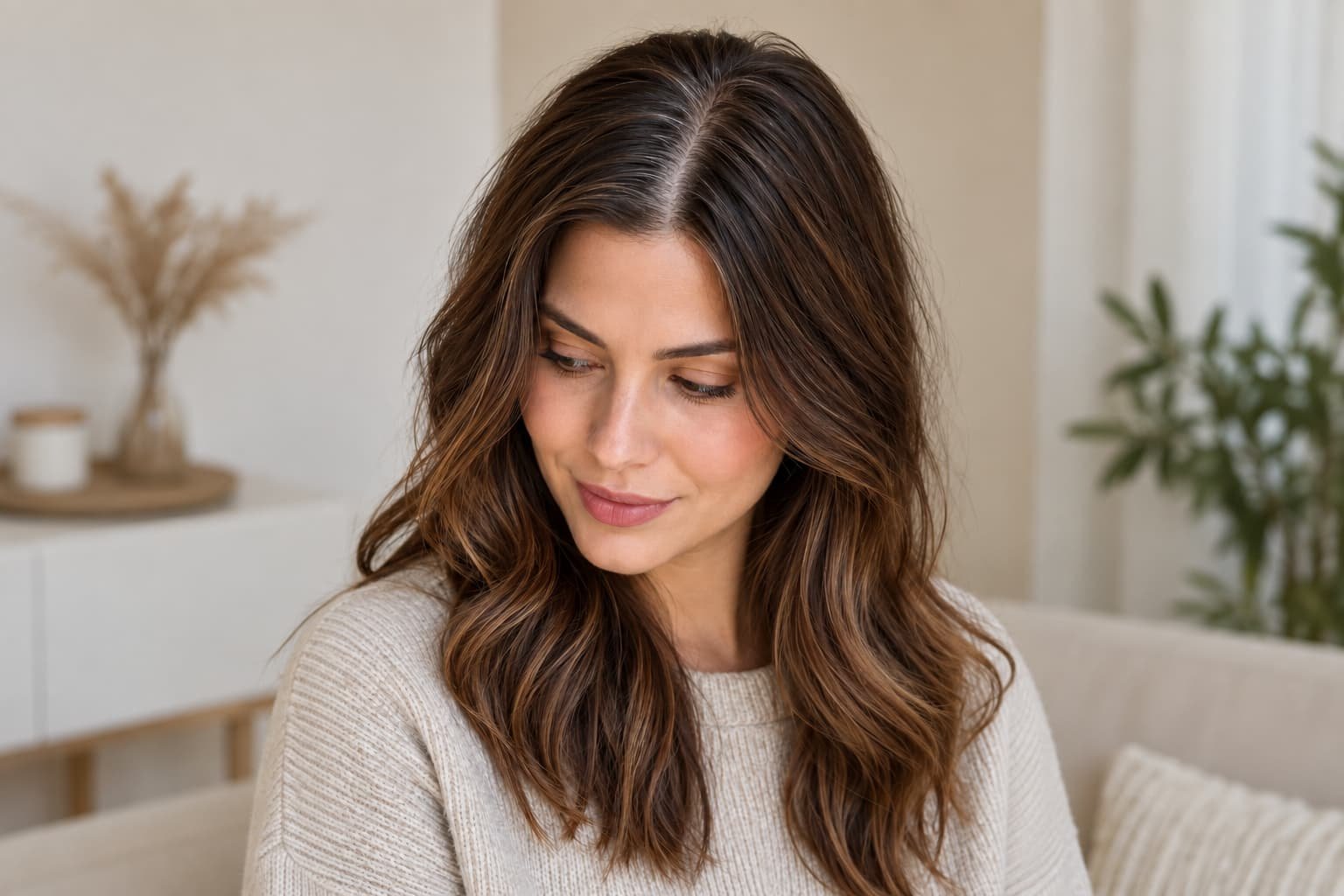
New hair grows with its natural pigmentation rather than the artificial color previously applied to older lengths. As that new growth becomes longer, the difference between the roots and colored hair may become more visible.
Contrast plays an important role in the appearance of regrowth. Dark roots against much lighter lengths can create a stronger visual difference than roots and lengths that are similar in shade.
Gray or white regrowth may also be more noticeable where the scalp is exposed, including the part line, temples, and front hairline.
The final appearance can vary according to the natural hair color, existing color, parting, placement, and amount of visible regrowth.
What Types of Root Touch Up Hair Color Are Available?
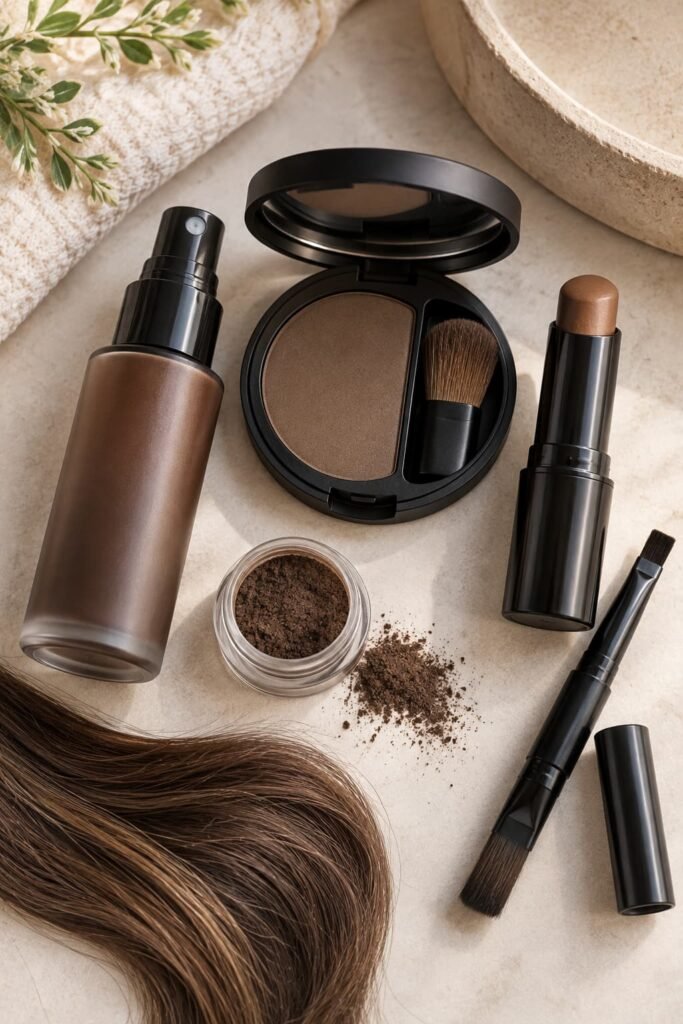
Root touch-up products are available in temporary and longer-lasting forms.
Temporary products are intended mainly to disguise visible roots for a limited period. Longer-lasting hair color changes the treated regrowth more durably.
The choice is therefore about more than the product format. It also involves the type of result the user wants.
Temporary Root Touch Up Sprays
Root touch up sprays deposit temporary color onto visible areas of the hair.
They can be used along a part line, around the front hairline, or across other areas where regrowth is noticeable. Their main purpose is cosmetic coverage rather than a permanent change to the natural root color.
Many temporary root sprays are designed to be removed with shampoo, but the exact behavior depends on the individual formula. Product directions should be checked rather than assuming every spray lasts for the same amount of time.
A spray may be one possible option when broader root coverage is wanted without using longer-lasting hair color.
Root Touch Up Powders, Sticks, and Precision Products
Powders, sticks, brush applicators, and similar root concealers allow color to be placed on smaller areas.
These formats may be useful around the part line, temples, hairline, or individual visible strands where more targeted application is preferred.
Like temporary sprays, they generally provide cosmetic coverage rather than permanently changing the natural root shade.
Coverage, texture, finish, and resistance to washing can differ between products, so these characteristics should not be assumed to be the same across every formula.
Longer-Lasting Root Hair Color
Some root touch-up products use permanent hair color rather than temporary surface coverage. Permanent, semi-permanent, and temporary hair dyes are recognized as different categories of hair-color products, and they should not be treated as interchangeable.
A permanent root color is designed to create a more durable change in the treated regrowth than a temporary spray or powder.
This type may be considered when someone wants the newly grown area to remain colored through normal washing rather than applying temporary coverage whenever the roots become visible.
Application methods and processing requirements vary between formulas. The instructions supplied with the specific hair-color product should therefore be followed rather than using a universal processing time or application rule.
Temporary vs Permanent Root Touch Up Hair Color
Temporary and permanent root color can both reduce the visible contrast of regrowth, but they achieve that result differently.
Temporary products provide surface-level cosmetic coverage for a limited period. Permanent hair color produces a more durable color change in the treated hair.
Neither type is automatically the better choice. The more appropriate option depends on the desired result, existing hair color, amount of regrowth, and preference for temporary or longer-lasting coverage.
How Temporary Root Coverage Works
Temporary root concealers place color on the hair to make the underlying root shade less noticeable.
Sprays, powders, sticks, and precision applicators may work well when coverage is needed only on visible sections such as the part line or temples.
Because the effect is temporary, these products are intended to disguise the existing root color rather than permanently replace it.
Temporary root concealers also should not be expected to perform the same function as hair lightener. Making very dark natural roots substantially lighter requires a different type of hair-color process.
When Longer-Lasting Root Color May Be Considered
Longer-lasting root color may be considered when someone wants the regrowth itself colored rather than temporarily concealed.
This may be relevant when maintaining an established brunette, red, blonde, or another artificial hair color as natural growth becomes visible.
The starting shade remains important. Depositing a similar color onto regrowth is different from trying to make naturally dark hair significantly lighter.
The colored lengths may also differ from fresh regrowth because of previous coloring and changes in the appearance of the existing shade. For this reason, a root touch-up may create a more blended result without producing an exact match in every section.
Key Differences in Coverage and Results
The clearest difference between temporary and permanent root color is how the treated hair is changed.
Temporary root color provides short-term cosmetic coverage. Depending on the formula, it may help make gray strands, darker roots, or other visible regrowth less noticeable until the product is washed away.
Permanent root color produces a more durable color change in the treated regrowth. It may be considered when repeated temporary application is not the preferred approach.
Temporary products are often useful for targeted visible areas. Permanent hair color requires closer attention to shade selection, application boundaries, processing instructions, and the specific directions supplied with the product.
With either type, results can vary. Natural root color, gray percentage, existing color, previous coloring, selected shade, and product formulation can all affect the final appearance.
A root touch-up may create a more even-looking transition between the roots and lengths, but an exact match cannot be assumed for every starting color or product.
Can Root Touch Up Hair Color Cover Gray Roots?
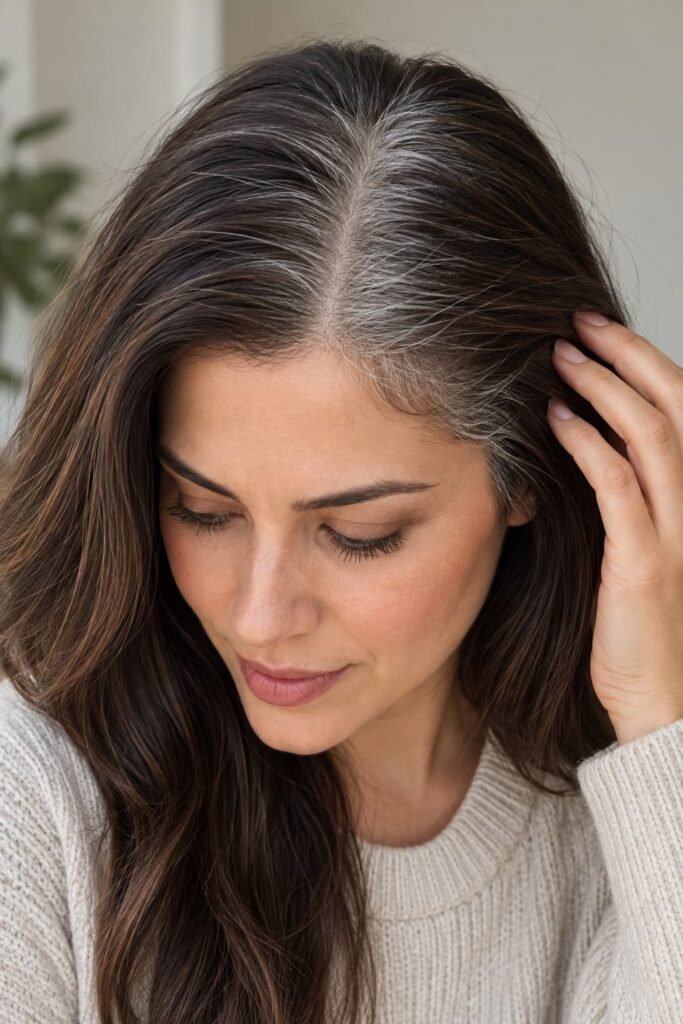
Root touch up hair color can make gray or white regrowth less noticeable. However, the level of coverage depends on the type of product, the selected shade, the amount of gray hair, and how evenly the color is applied.
Temporary products mainly disguise visible gray strands, while permanent root color can provide a longer-lasting change. Not every formula provides the same level of gray coverage, so product-specific claims should be checked before choosing one.
Temporary Coverage for Gray or White Regrowth
Temporary root concealers can be useful when gray or white strands are most visible around the part line, temples, or front hairline.
Sprays may cover a broader area, while powders, sticks, and precision applicators can make it easier to target smaller sections.
These products add temporary pigment rather than permanently changing the gray hair. Depending on the formula, the color may remain until the hair is shampooed or may have different wear instructions.
Temporary coverage may be useful when someone wants to reduce the appearance of gray regrowth without using permanent color each time the roots become visible.
What Can Affect the Appearance of Gray Coverage
Gray coverage does not look exactly the same in every situation.
Several factors can influence the final appearance, including:
- the amount and distribution of gray hair
- the contrast between gray roots and colored lengths
- the depth and tone of the selected shade
- the type of root touch-up product
- how evenly the product is applied
- the existing color around the regrowth
A small number of gray strands against blonde or light brown hair may create less contrast than white roots against very dark hair.
The product formula also matters. A temporary powder and a permanent color formulated for gray coverage are designed for different purposes, so their results should not be expected to be identical.
How Do You Choose a Root Touch Up Hair Color?
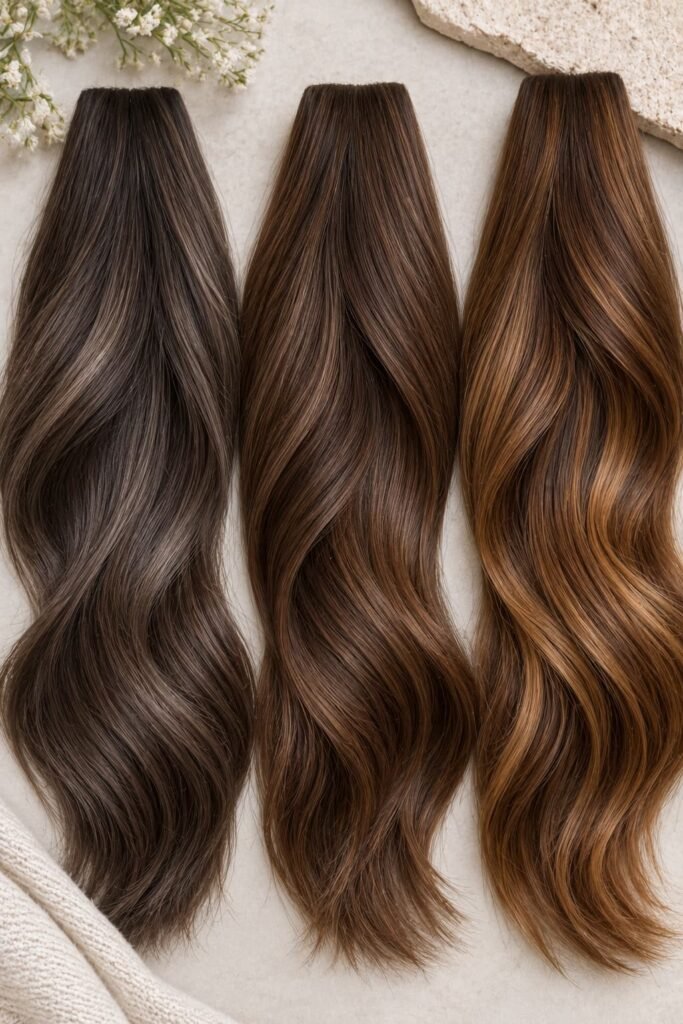
Choosing a root touch-up shade is mainly about creating a visually balanced transition between new growth and the existing hair color.
The natural root shade is not always the color that should be copied. In many cases, the goal is to make the regrowth blend with the already-colored hair.
Both color depth and undertone can affect how closely the two areas appear to match.
Match the Root Area Rather Than Faded Ends
When selecting a shade, look at the colored hair closest to the regrowth rather than relying only on the ends.
Hair ends may appear different from the upper lengths because previously colored hair can change in tone or intensity over time. Using noticeably faded ends as the only reference could lead to a shade that does not blend as naturally with the area next to the roots.
For example, if the upper lengths are medium brown but the ends appear lighter, a root shade chosen only from the ends may look too light beside the rest of the hair.
The aim is generally to create a transition between the new growth and the color immediately surrounding it.
Consider Shade Depth and Undertone
Hair colors that look similar at first can still differ in depth and undertone.
Depth describes how light or dark the shade appears. Undertones may be warm, cool, neutral, golden, ash, copper, red, or another tonal direction depending on the color range.
A medium warm brown, for example, may not blend the same way as a medium ash brown even though both belong to the same general depth.
Looking at both features can help avoid an obvious change in tone at the roots.
Shade names are not necessarily identical across every hair-color range, so the color guide provided with the specific product can be more useful than relying on a shade name alone.
What to Consider When Roots and Lengths Are Very Different
Strong contrast can make root matching more complicated.
Examples include very dark natural roots with much lighter blonde lengths, gray or white regrowth with dark brunette hair, or natural hair that differs greatly from a fashion color on the lengths.
A root concealer may soften some of this contrast, but it cannot necessarily reproduce the exact color process used on the rest of the hair.
This is especially important when the lengths were lightened, highlighted, or created with several different tones.
In these cases, the expected result should be realistic. Root touch-up color may help the transition appear more blended without making the roots and lengths completely identical.
How Is Root Touch Up Hair Color Applied?
Application depends on whether the product is a temporary concealer or a longer-lasting hair color.
Temporary products are usually placed only where visible coverage is needed. Permanent root color is generally applied to new regrowth according to the directions supplied with the formula.
There is no universal processing time or application method that applies to every root-color product.
Where Root Color Is Usually Applied
Root touch-up color is mainly intended for visible new growth.
Common areas include:
- the part line
- front hairline
- temples
- crown
- sections where gray regrowth is most visible
Application does not always need to cover every root on the head when a temporary concealer is being used. Some people may prefer to concentrate only on the sections that are visible in their usual hairstyle.
Longer-lasting color is normally applied more systematically to the intended regrowth area, following the product directions.
Applying Temporary Root Concealers
Temporary concealers should generally be applied in a controlled amount to the areas where color is needed.
Sprays can cover wider sections, while powders and precision products can provide more targeted placement.
Applying a small amount first can make it easier to judge the coverage before adding more. Too much product may make the color, texture, or finish more noticeable, depending on the formula.
Because directions differ between sprays, powders, sticks, and other formats, the instructions for the specific product should determine how it is applied and removed.
Using Longer-Lasting Root Color Carefully
Longer-lasting root color requires more precise application than a temporary concealer.
Root retouch instructions commonly focus the color on new growth rather than repeatedly covering all of the previously colored lengths.
The exact boundary can depend on the product and the existing color. Some formulas provide specific directions about how the regrowth should be covered and whether any color should be moved onto nearby lengths.
Processing time also varies between formulas. The time listed in the instructions should be followed rather than estimating how long the color needs to remain on the hair.
What Results Can Root Touch Up Hair Color Create?
The main visual goal of a root touch-up is usually to make new growth less obvious.
A successful result does not necessarily mean that every section of hair becomes exactly the same color. Instead, the root area may appear more connected to the surrounding lengths.
How noticeable the change is will depend on the starting colors and the type of product used.
Blending Visible Regrowth
Root color can reduce a clear line between natural regrowth and previously colored hair.
When the shades are relatively close, the transition may appear subtle. When there is a large difference between the natural roots and colored lengths, some contrast may remain.
Gray coverage can work in a similar way. Adding color to visible gray strands may make them blend more closely with nearby colored hair.
Temporary products provide visual camouflage, while longer-lasting color changes the treated regrowth more durably.
Why an Exact Color Match Is Not Always Possible
The roots and lengths do not always have the same starting point.
New growth may be natural, while the rest of the hair may have been previously dyed, lightened, highlighted, toned, or exposed to repeated washing and styling.
Because of these differences, the same-looking shade does not guarantee that every section will appear identical.
Lighting also affects how hair color appears. Warm indoor lighting, daylight, and photographs can make undertones and contrast look different.
For these reasons, a more blended appearance is a realistic goal, while a completely invisible match should not be guaranteed.
Factors That Can Change the Final Appearance
Several factors can influence how a root touch-up looks, including:
- natural root color
- existing dyed shade
- amount of gray or white hair
- amount of visible regrowth
- selected shade
- undertone
- previous coloring
- temporary or permanent formula
- application placement
- lighting
Hair that contains highlights or several tones can be particularly difficult to reproduce with one uniform root shade.
The final result therefore depends on the complete starting color rather than the root product alone.
Can Root Touch Up Be Used on Blonde or Highlighted Hair?
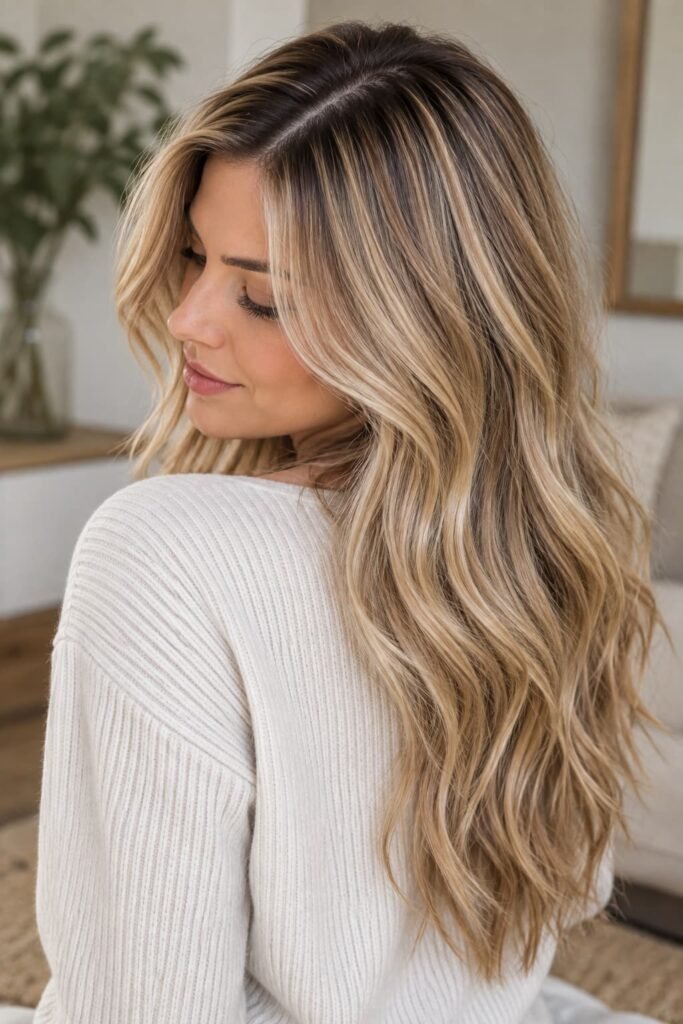
Root touch-up products can be used in some blonde and highlighted hair-color situations, but the intended result matters.
Covering gray roots near blonde hair is different from trying to make naturally dark regrowth much lighter. Highlighted hair also contains several shades rather than one uniform color.
Understanding these differences can help prevent unrealistic expectations from a root concealer.
Root Touch Up on Blonde Hair
Blonde root touch-up products may help disguise visible regrowth when the root color and blonde lengths are reasonably compatible.
They may also be used to reduce the appearance of gray or white strands within some blonde shades.
However, a temporary blonde root concealer does not chemically transform dark natural hair into blonde hair. It adds temporary pigment to alter the visible appearance of the roots.
If natural roots are significantly darker than the blonde lengths, covering them with a temporary light-colored product may not produce the same appearance as the lightening process used to create the blonde hair.
Root Coverage Around Highlights
Highlighted hair contains selected lighter strands mixed with a base color.
A root touch-up aimed at the base shade may help reduce visible regrowth without trying to recreate every highlighted strand.
Temporary precision products can also provide targeted coverage around specific visible sections.
A uniform root color cannot reproduce the placement of individual highlights. Applying permanent color over existing highlighted sections can also change their appearance, so the product should be kept within its intended application area.
When the main goal is to recreate grown-out highlights rather than cover the base root color, that is a different coloring process from a standard root touch-up.
Why Temporary Root Color Cannot Replace Hair Lightening
Temporary root concealers deposit visible color. They are not the same as products designed to lighten natural hair pigment.
This distinction is especially important for dark roots with light blonde lengths.
A blonde-colored spray or powder may alter how the root area looks temporarily, but it should not be expected to create the same result as chemically lightened hair.
Hair lightening is a separate process with different formulas and instructions.
Common Root Touch Up Hair Color Mistakes
Many disappointing root-touch-up results come from shade selection, placement, or expecting the product to do something it was not designed to do.
Understanding the intended use of the product can make the result easier to predict.
Choosing a Shade That Is Too Dark or Too Light
A noticeable difference in depth can make the root area stand out instead of blending with the lengths.
A shade that is considerably darker may create a stronger-looking root area, while one that is too light may not connect naturally with darker lengths.
Undertone also matters. A shade can be similar in depth but still appear different if one area is warm and the other is cool.
The shade should therefore be compared with the existing color near the regrowth rather than selected only from a general name such as brown, blonde, or red.
Applying Too Much Temporary Product
More temporary root concealer does not automatically produce a better result.
Heavy application can sometimes make the product itself more visible or change how the hair looks and feels.
Building coverage gradually may provide more control, particularly around the hairline, temples, and part line.
The ideal amount depends on the formula and the area being covered.
Extending Root Color Too Far Onto Previously Colored Hair
A root retouch is intended mainly for new growth.
Repeatedly extending longer-lasting color well beyond the regrowth can affect previously colored sections and may create differences in depth or tone.
Application instructions vary. Some permanent color products give specific directions about where the root color should end and whether any remaining product should be used on the lengths.
Following those instructions is more reliable than automatically applying root color through the entire head.
Expecting Root Concealer to Change Natural Hair Permanently
Temporary sprays, powders, sticks, and similar concealers are designed to change the visible appearance of the roots for a limited period.
They do not permanently replace the natural color growing from the scalp.
As the product is removed and new hair continues to grow, the natural root color remains visible.
Someone looking for a longer-lasting color change would need a product designed for that purpose rather than expecting a temporary root concealer to behave like permanent hair color.
What Should You Consider Before Using Root Touch Up Hair Color?
Before choosing a root touch-up option, consider what is visible at the roots and what kind of coverage is wanted.
The amount of regrowth, the contrast between the roots and lengths, the existing hair color, and whether temporary or longer-lasting color is preferred can all affect the choice.
Amount of Visible Regrowth
The amount and location of visible regrowth can help determine which type of root product may be practical.
If the difference is mainly visible around the part line, temples, or front hairline, a temporary spray, powder, stick, or precision concealer may provide targeted coverage.
When regrowth is visible across a larger area, broader coverage may be preferred. A longer-lasting root color may be another option when temporary camouflage is not the desired result.
Contrast also matters. A relatively small amount of dark regrowth can appear noticeable against very light lengths, while roots that are close to the existing hair color may create a softer transition.
Existing Hair Color and Contrast
Look at how different the roots are from the surrounding colored hair.
When the shades are similar, the transition may be easier to blend visually. A stronger difference in depth or tone can make the root area more noticeable.
Highlighted or multi-tonal hair can be more difficult to match with one uniform root shade because the lengths contain more than one color.
An exact match is not always necessary or possible. In some cases, reducing the visible contrast may create a more balanced-looking transition.
Temporary Coverage vs Longer-Lasting Color
Temporary root concealers and longer-lasting hair colors serve different purposes.
A temporary product may suit someone who wants short-term cosmetic coverage without permanently changing the natural root shade. It may also be useful when only a few visible areas need attention.
Longer-lasting root color changes the treated regrowth more durably and may be considered when repeated temporary coverage is not preferred.
The more suitable option depends on the desired result, existing color, amount of visible regrowth, and the characteristics of the individual product.
Product-Specific Application Instructions
Root-color products should not all be applied in the same way.
Sprays, powders, sticks, semi-permanent colors, and permanent root formulas can have different directions for preparation, placement, wear, and removal.
Processing times also vary between formulas. There is no single processing time that should be applied to every root-color product.
The directions supplied with the specific formula should therefore take priority over general advice.
Frequently Asked Questions
Does Root Touch Up Hair Color Wash Out?
It depends on the type of product.
Many temporary root concealers are designed to wash out, but the exact wear can vary by formula. Some are intended to remain until the next shampoo, while other products may have different directions.
Permanent root color is designed to create a more durable color change and should not be expected to wash out like a temporary concealer.
How Long Can Root Touch Up Hair Color Last?
There is no universal duration for root touch-up color.
Temporary products and longer-lasting hair colors are formulated differently, so their wear should not be compared using one fixed timeframe.
Washing, the specific formula, starting shade, and the appearance of new regrowth can all influence how long the result remains noticeable. The product instructions are the most appropriate source for specific longevity claims.
Can Root Touch Up Hair Color Lighten Dark Roots?
Temporary root sprays, powders, and similar concealers should not be expected to chemically lighten dark natural roots.
These products mainly change the visible appearance of the root area by adding temporary color.
Hair lightening is a different coloring process. A light-colored root concealer may alter the appearance of dark regrowth temporarily, but it does not create the same result as chemically lightened hair.
Is Root Touch Up Only for Gray Hair?
No. Root touch-up products can also be used when natural regrowth creates a noticeable difference from previously colored hair.
For example, darker natural roots may become visible against lighter lengths, or natural brown regrowth may contrast with red or another artificial shade.
Gray or white coverage is one common use, but it is not the only reason someone may use a root touch-up product.
Is Root Touch Up the Same as Coloring the Whole Head?
No.
A root touch-up focuses mainly on visible new growth near the scalp. Full hair coloring may involve the roots, mid-lengths, and ends.
When the existing lengths already have the desired color, a root touch-up can focus on the regrowth without automatically recoloring the entire length.
Can Root Touch Up Be Used Around the Hairline and Temples?
Many temporary root products are designed for targeted areas such as the hairline, temples, and part line.
Sprays may cover a wider section, while powders, sticks, and precision applicators can make it easier to place color on smaller areas.
The exact application area and method depend on the formula, so the directions provided with the specific product should be followed.