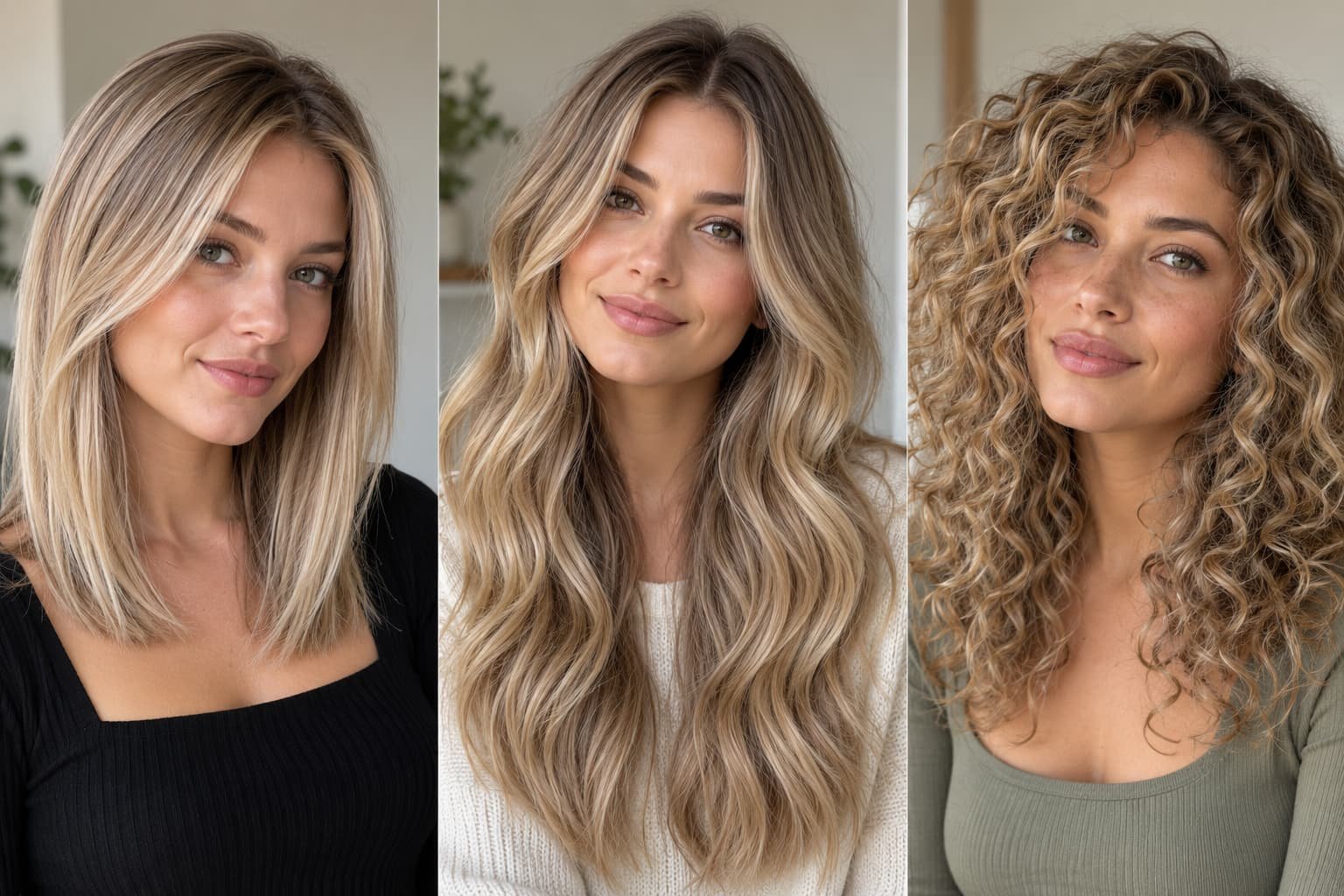
Dirty blonde hair falls between blonde and light brown. It is generally deeper than lighter blonde shades and can have a muted or blended appearance.
There is no single dirty blonde shade. The color may lean cool, neutral, or warm depending on the tones within the hair. Some dirty blonde hair color ideas also use highlights, lowlights, or deeper roots to create more visible contrast.
Understanding depth and undertone can make it easier to compare different versions of this color.
What Is Dirty Blonde Hair Color?
Dirty blonde describes a hair color between blonde and pale or light brown. Depending on the shade, it may appear closer to dark blonde or closer to light brown.
The color can include beige, ash, golden, or brown-toned elements. These differences affect whether the overall result looks cooler, warmer, lighter, or deeper.
Dirty blonde may appear fairly even in tone or show visible variation between lighter and darker strands. The exact appearance can vary from one shade to another.
What Does Dirty Blonde Hair Look Like?
Dirty blonde hair usually has more depth than very light blonde hair. It may look beige, ashy, golden, neutral, or slightly brown-toned depending on its undertone.
Some versions have only a small difference between the lightest and darkest sections. Others use more noticeable highlights, lowlights, or deeper root color to create contrast.
Darker roots are one possible style option, but they are not a requirement. A deeper root area can create a visible transition into lighter mid-lengths and ends.
Lighting can also affect how hair color is perceived. The same shade may look deeper or more muted in lower light and show more of its lighter or warmer tones in brighter light.
Is Dirty Blonde Blonde or Light Brown?
Dirty blonde sits close to the boundary between blonde and light brown, so the difference is not always visually clear.
A lighter version may read more clearly as blonde, while a deeper dirty blonde may appear close to light brown. The balance of lighter and darker tones also affects the overall appearance.
Because of this overlap, dirty blonde is more useful as a general color description than as one exact shade.
How Undertones Change Dirty Blonde Hair
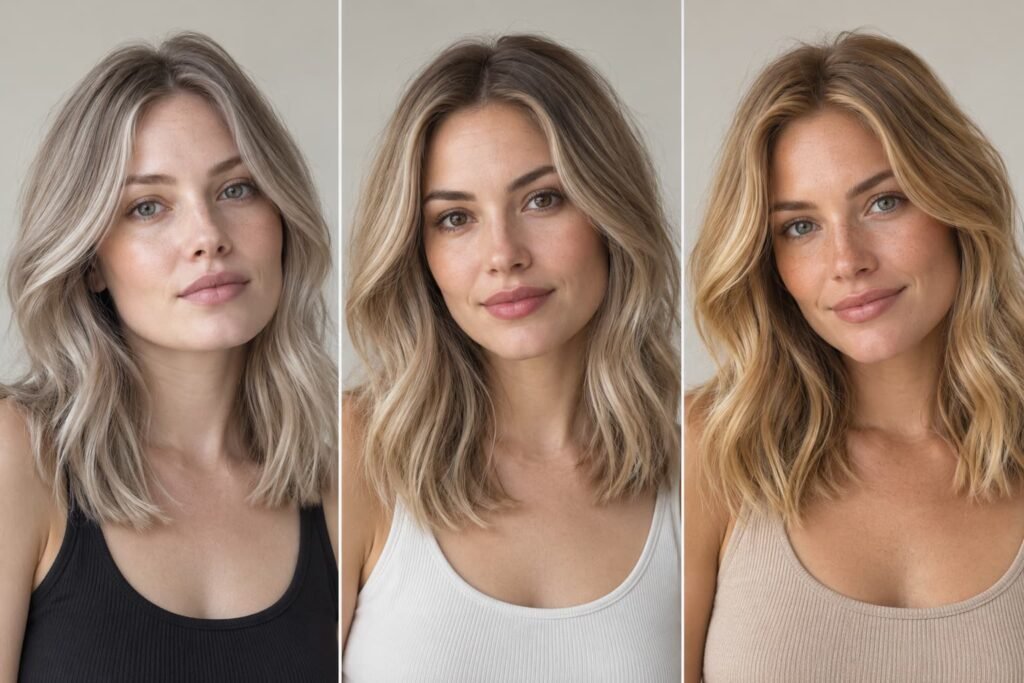
Undertones influence whether a blonde shade appears warmer, cooler, or more neutral.
Two dirty blonde colors can have a similar level of depth but still look different because their undertones are different. One may have a cooler ash direction, while another may contain warmer golden tones.
Looking at undertone is therefore a useful way to compare dirty blonde hair color ideas.
Ash Dirty Blonde Hair
Ash blonde is a cool-toned blonde direction with muted gray or silvery qualities. When these tones appear in dirty blonde hair, the overall color can look cooler and less golden.
A deeper ash dirty blonde may visually sit close to cool light brown because both colors can have a subdued appearance.
Ash tones may be used throughout the hair or placed in selected sections. Lighter blonde pieces can also be added when more contrast is wanted.
The final appearance can vary depending on the starting color, overall depth, tone placement, and lighting.
Beige and Neutral Dirty Blonde Hair
Beige blonde generally balances warmer and cooler tones rather than leaning strongly in either direction.
Within dirty blonde hair, beige tones can create a more neutral-looking result. The color may combine darker blonde depth with softer beige or sandy-looking sections.
Neutral dirty blonde follows a similar idea. It does not need to appear strongly ashy or strongly golden.
For someone who prefers subtle tonal differences, beige or neutral shades are one possible direction. Highlights or deeper pieces may also be added when more visible dimension is preferred.
Golden and Honey Dirty Blonde Hair
Golden and honey tones move dirty blonde in a warmer direction.
Golden blonde contains warm tones, while honey blonde is also commonly described as a warm blonde color. When these tones are combined with a deeper blonde or light brown base, they can create a warmer version of dirty blonde.
The warmer sections may be subtle or more noticeable depending on the amount of contrast in the hair.
This creates a different visual direction from ash dirty blonde. Ash tones are cooler and more muted, while golden and honey tones introduce more visible warmth.
A dirty blonde shade can still keep its deeper overall character while including warmer highlights or lighter sections. How strong that contrast appears depends on the colors and placement used.
Light vs Dark Dirty Blonde Hair
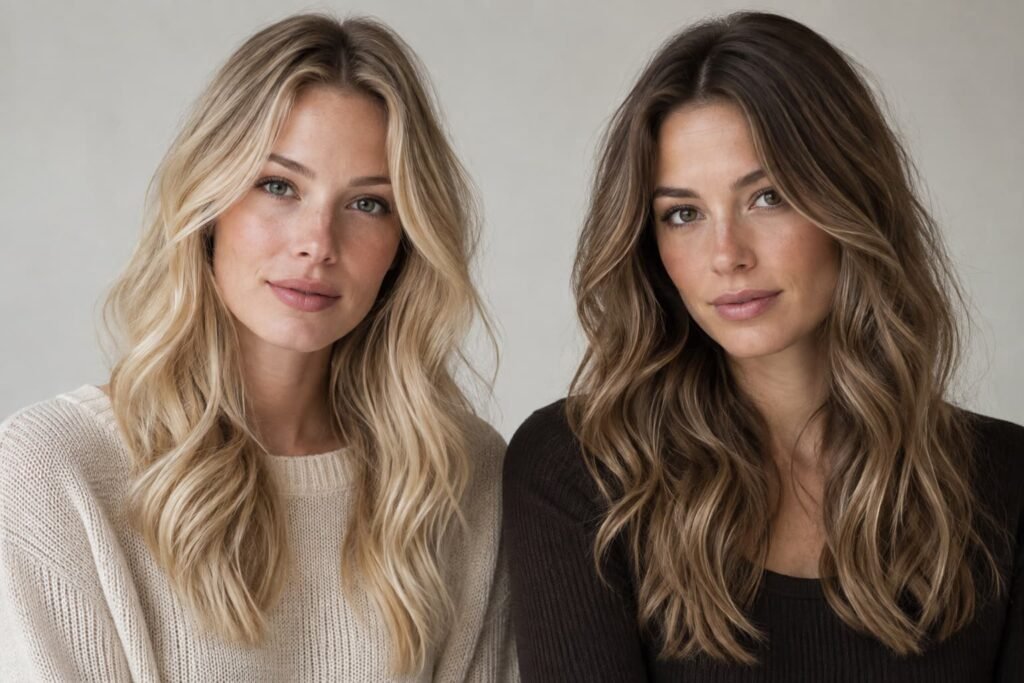
Dirty blonde can range from lighter blonde shades to deeper colors that sit closer to light brown. The difference mainly comes from the overall depth of the color and the balance between lighter and darker tones.
Both light and dark versions can lean warm, cool, or neutral, so depth and undertone are separate parts of the overall color.
Light Dirty Blonde Hair
Light dirty blonde has a brighter overall appearance while still keeping some of the depth associated with dirty blonde hair.
It may combine lighter beige, ash, neutral, or golden blonde with deeper blonde sections. The darker pieces can create visible contrast and keep the color from looking completely uniform.
For a softer look, one option is to keep the difference between the light and dark sections subtle. Brighter blonde pieces against a deeper base can create stronger contrast.
Dark Dirty Blonde Hair
Dark dirty blonde falls closer to the light brown end of the dirty blonde range.
It may include dark blonde, muted beige, ash, or light brown tones. Lighter strands can still be part of the look, but the deeper base usually remains more noticeable.
The color may appear more blonde or more brown depending on its depth, undertone, lighting, and surrounding shades.
Dirty Blonde Hair With Highlights
Highlights are selected strands that are made lighter than the surrounding base color. On dirty blonde hair, they can make lighter tones more visible and add contrast between different sections.
The final effect can vary with the width, brightness, and placement of the highlights. Narrow pieces may appear more blended, while wider or brighter sections can create a stronger difference from the base.
Beige, ash, neutral, or warmer blonde tones are possible color directions depending on the overall look.
Fine Blonde Highlights
Fine highlights use narrow sections of lighter color.
Because the pieces are small, the transition between the dirty blonde base and the lighter strands may appear softer than with wider highlights.
They can be spread through the hair or placed more selectively. The amount and placement can be adjusted depending on whether the preferred look is subtle or more visibly highlighted.
Face-Framing Highlights
Face-framing highlights place lighter sections around the front of the hair.
This placement can make the lighter color more noticeable around the face without requiring the same brightness throughout the rest of the hair.
The contrast can remain subtle with fine strands or become more defined with wider, brighter pieces. One possible option is to repeat some lighter sections through the rest of the hair for a more connected color pattern.
Dirty Blonde Hair With Lowlights
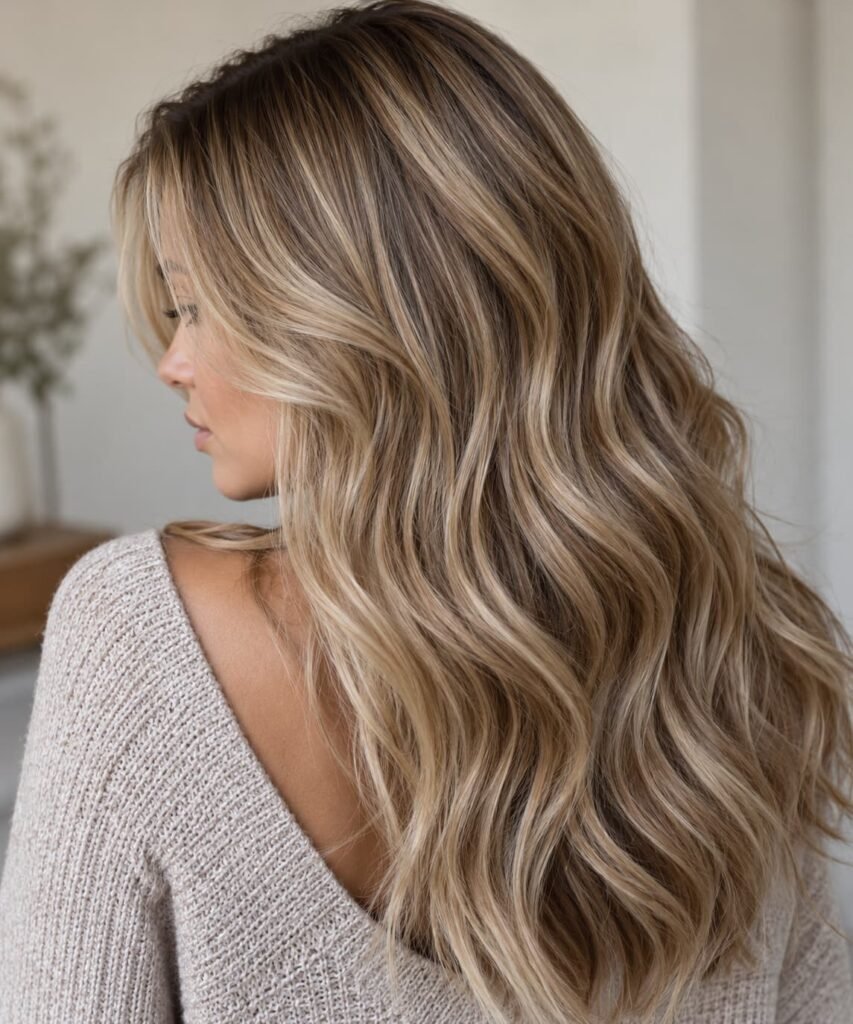
Lowlights are strands colored darker than the surrounding base.
In dirty blonde hair, they can introduce deeper blonde, beige-brown, or light brown sections among lighter tones. This can create more visible depth and separation between shades.
The difference does not need to be dramatic. Softly placed darker pieces may create gentle variation, while a greater difference between the lowlights and lighter strands can make the contrast more noticeable.
Dirty Blonde Hair With Dark Roots
A deeper root area is another possible way to wear dirty blonde hair.
The transition may be subtle when dark blonde roots move into slightly lighter lengths. It can look more defined when the mid-lengths and ends contain noticeably brighter blonde tones.
The roots can blend gradually into the rest of the color or remain more clearly contrasted, depending on the intended style.
Dark roots are not required for dirty blonde hair. They are simply one color-placement option within the broader dirty blonde range.
Dirty Blonde Balayage
Balayage is a highlighting technique that places lighter color through selected sections of the hair rather than creating one uniform all-over shade.
For a dirty blonde look, balayage may combine a deeper blonde or light brown base with lighter beige, neutral, ash, or golden sections. The placement can create a gradual change between deeper and brighter areas.
For a more detailed explanation of the technique and different blonde variations, see the Blonde Balayage Hair guide.
How Hair Length and Texture Change the Look
Hair length and texture can affect how different sections of color are seen.
The same combination of highlights, lowlights, and deeper tones may look different on a short cut, long layered hair, straight strands, waves, or curls. The result also depends on the haircut, styling, and placement of the color.
Short Dirty Blonde Hair
On shorter cuts, the lighter and darker sections are placed within a smaller amount of length.
Highlights around the top or front may therefore become a noticeable part of the overall color pattern. Deeper roots or lowlights can also create contrast against lighter sections.
Both subtle and more defined color placement are possible, depending on the look being created.
Medium-Length Dirty Blonde Hair
Medium-length hair can show a mixture of lighter and darker dirty blonde tones through the lengths.
Highlights may appear through the surface and front sections, while deeper pieces can remain visible between or underneath them.
With layered hair, different shades may become more noticeable as the sections overlap and move. How strong this effect appears depends on the placement and amount of contrast.
Long Dirty Blonde Hair
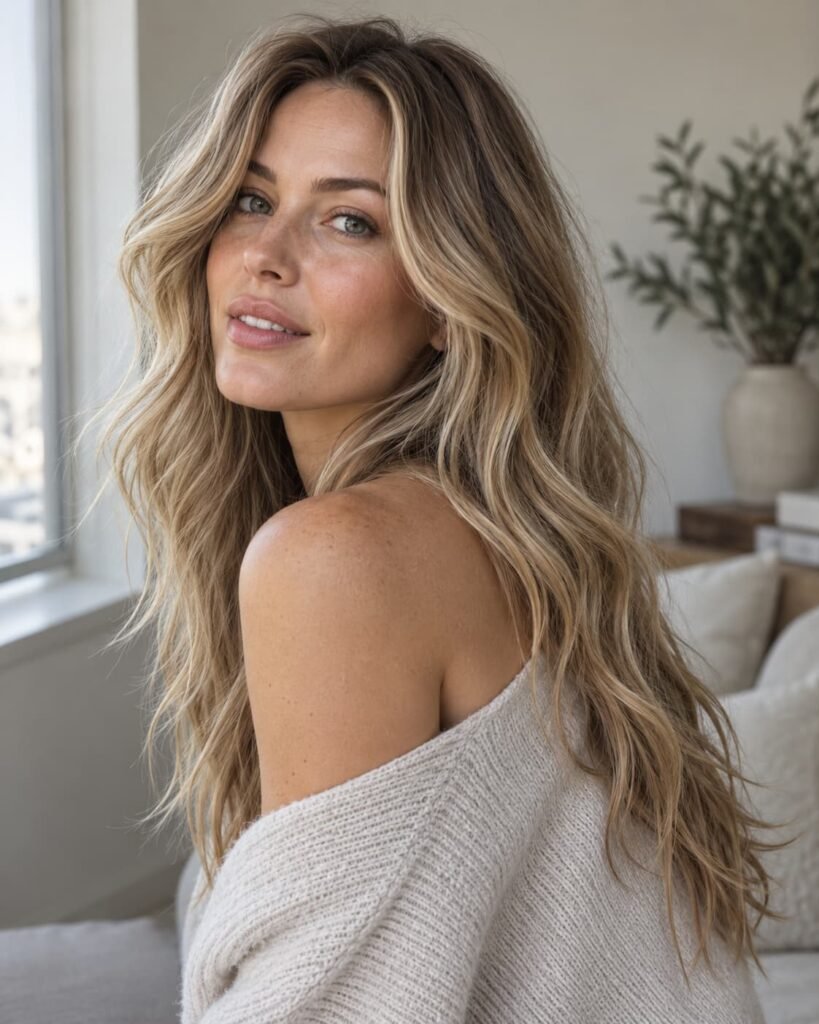
Long hair gives more length for different tones to appear from roots to ends.
The color can stay relatively consistent throughout, or lighter sections may become more noticeable through the mid-lengths and ends. Deeper roots and lighter ends are another possible arrangement.
Layers can also reveal different strands of color as the hair moves. The overall effect can range from softly blended to more clearly dimensional.
Straight, Wavy, and Curly Dirty Blonde Hair
Texture can influence how highlights, lowlights, and tonal differences appear visually.
On straight hair, sections of color may be easier to see in a more continuous direction along the strands.
Wavy hair can show lighter and darker tones across the bends of the hair, which may make the color variation appear more broken up.
On curly hair, different shades may appear across individual curls and overlapping sections rather than as continuous straight lines.
These are general visual differences rather than fixed rules. The final appearance can vary with the texture, haircut, styling, color placement, and level of contrast.
Dirty Blonde Hair With Layers and Bangs
Layers and bangs can change where lighter and darker sections of dirty blonde hair are most visible. They do not change the color itself, but the haircut can affect how different tones appear as the hair falls and moves.
Layered Dirty Blonde Hair
Layers can reveal lighter and darker strands at different points through the hair.
When dirty blonde hair includes highlights, lowlights, or several similar tones, shorter layers may expose sections that would be less visible in a one-length cut. This can make the variation between shades easier to notice.
The amount of contrast matters. Closely related blonde and light brown tones can create a softer effect, while brighter highlights against deeper sections can make the tonal differences more defined.
Long layers may show different shades through the mid-lengths and ends. On shorter layered cuts, the same color variation is concentrated within less length.
The final appearance can vary with the haircut, styling, hair texture, and color placement.
Dirty Blonde Hair With Bangs
Bangs can change where color is most noticeable around the front of the hair.
Curtain bangs can be combined with lighter face-framing pieces along the sides. This is one possible way to connect the fringe with highlights through the rest of the hair.
Full bangs may show more of the overall base color because a larger section of hair falls across the forehead. Highlights can still be added if more variation through the fringe is preferred.
Side-swept and wispy bangs can also show a mixture of lighter and deeper strands depending on where the color is placed.
There is no required color pattern for dirty blonde hair with bangs. The contrast can remain subtle or become more noticeable depending on the preferred look.
Dirty Blonde Compared With Similar Hair Colors
Dirty blonde is close to several blonde and brown color descriptions. These terms are not always separated by strict boundaries, so some shades can reasonably fit more than one label.
Looking at the overall depth and the balance between blonde and brown can help explain the differences.
Dirty Blonde vs Dark Blonde
Dark blonde is a broad way to describe blonde hair with greater depth than lighter blonde shades.
Dirty blonde is more specifically used for a color that falls between blonde and pale or light brown. Because these ranges are close, some dirty blonde shades can also look like dark blonde.
The terms are therefore not complete opposites or separate categories.
A shade described as dirty blonde may also include ash, beige, golden, or light brown variation. Dark blonde, by comparison, can simply describe the overall depth without specifying the same type of tonal mixture.
Dirty Blonde vs Light Brown
Dirty blonde and light brown can overlap visually because dirty blonde itself falls between blonde and pale brown.
A lighter dirty blonde may appear clearly blonde, while a deeper version can look close to light brown. Undertone and lighting can also influence how the shade is perceived.
Cool or muted dirty blonde may appear more subdued, while warmer or lighter sections can make the blonde side of the color more noticeable.
There is no need to treat dirty blonde and light brown as having one exact visual dividing line.
Dirty Blonde vs Bronde
Bronde is a hair color that combines brown with blonde areas.
This makes it different in emphasis from dirty blonde. Dirty blonde describes a color between blonde and pale brown, while bronde specifically refers to the combination of brown and blonde within the overall look.
The two can still overlap visually.
A lighter bronde with plenty of blonde may look similar to dirty blonde. A deeper bronde can show a stronger brunette presence with lighter blonde sections placed through it.
Because both descriptions cover a range of shades, a particular look may sometimes be described using either term.
Dirty Blonde vs Dishwater Blonde
Dirty blonde and dishwater blonde have considerable overlap. Dictionary definitions list dishwater blonde as a synonym for dirty blonde, with both describing hair between blonde and pale brown.
Dishwater blonde is also associated with dark blonde or very light brown that tends to have a cooler, more silvery appearance rather than a strongly golden one.
For this reason, it would be misleading to describe dirty blonde and dishwater blonde as completely separate technical colors.
In beauty descriptions, dirty blonde may be used more broadly for warm, neutral, or cool variations, while dishwater blonde often suggests a cooler and more muted version of the same general color range.
What to Consider Before Choosing a Dirty Blonde Shade
Dirty blonde can vary in depth, undertone, and contrast. Looking at these features separately can help narrow down the type of color you prefer.
Starting hair color: If the hair is being colored, its starting shade and any existing artificial color are practical considerations. The final appearance and the route to a lighter or deeper shade can vary depending on what is already present.
Warm, cool, or neutral appearance: Ash tones create a cooler direction. Golden and honey tones introduce more warmth, while beige or neutral shades sit between those two directions.
Level of contrast: A small difference between lighter and darker sections can create a more blended appearance. Brighter blonde against a deeper base makes the contrast easier to see.
Highlights or lowlights: Highlights introduce lighter sections, while lowlights add darker sections. Either can be used depending on whether the aim is to add brightness, depth, or a mixture of both.
Root depth: Dirty blonde can have roots close to the color of the lengths or a visibly deeper root area. A smaller difference creates a softer transition, while darker roots against brighter lengths create stronger contrast.
Hair length and texture: Color placement can look different on short, medium, and long hair. Straight hair, waves, curls, layers, and bangs can also change how individual sections of color are seen.
These are visual and styling considerations rather than rules. The preferred shade depends largely on the color direction and level of contrast a person wants.
Dirty Blonde Hair Color Maintenance
Maintenance depends first on whether the dirty blonde shade is natural or color-treated.
Naturally dirty blonde hair does not require color maintenance simply to remain dirty blonde. Styling and regular hair care are separate considerations.
For color-treated dirty blonde hair, upkeep can vary with the coloring method, starting shade, amount of contrast, and routine.
Hair color can gradually lose some vibrancy or change in tone over time. Washing habits and other parts of the hair-care routine can influence how quickly these changes become noticeable.
A subtle dirty blonde color with closely related shades may also change differently from a look with brighter highlights, darker lowlights, or a strongly contrasted root.
There is no single refresh schedule that applies to every dirty blonde color. The type of color used and the difference between the starting shade and finished look both affect maintenance needs.
Readers with color-treated dirty blonde hair may also consider a shampoo designed for color-treated hair as part of their regular hair-care routine. Specific product performance depends on the formulation, so broad guarantees should not be assumed.
Common Questions About Dirty Blonde Hair
Can Dirty Blonde Hair Be Warm or Cool?
Yes. Dirty blonde can appear warm, cool, or relatively neutral.
Cool versions may contain ash or muted tones. Warm dirty blonde can include golden or honey tones, while beige and neutral versions may sit between those directions.
The overall appearance depends on the balance of tones within the color.
Does Dirty Blonde Hair Need Highlights?
No. Highlights are not required for hair to be considered dirty blonde.
Dirty blonde can appear fairly even in color or contain natural variation between deeper and lighter strands.
Highlights are simply one option for introducing lighter sections and increasing visible contrast.
Can Dirty Blonde Hair Have Dark Roots?
Yes. A dirty blonde look can include darker roots.
The root color may be close to the lengths for a subtle transition, or noticeably deeper than highlighted mid-lengths and ends.
Root depth changes the color placement and level of contrast, but it is not a requirement for dirty blonde hair.
What Makes Dirty Blonde Hair Look Dimensional?
Dirty blonde hair can appear more dimensional when lighter and darker tones are visible within the same overall color.
Highlights add lighter sections, while lowlights add darker ones. Using both, or combining either technique with the natural or colored base, can create visible differences in depth.
Placement also changes how these tones are seen. Lighter pieces around the face, through the upper layers, or toward the ends may draw attention to different areas of the hair.
The contrast can be subtle or more noticeable. Closely related shades tend to create a softer blend, while a greater difference between the lightest and darkest sections makes the tonal variation easier to see.
How Can Starting Hair Color Affect the Final Look?
Starting hair color is an important factor when creating a dirty blonde shade.
Natural hair has an existing level of depth and underlying pigment. These characteristics can influence how a new color develops, particularly when the hair is being lightened.
For example, hair that already falls within the blonde or light brown range starts from a different color level than medium or dark brown hair. Because of this, the same intended dirty blonde shade may not produce an identical appearance on every starting color.
Previously colored hair can also behave differently from untreated hair. Existing artificial pigment becomes another factor that may affect the final tone and level of brightness.
The finished appearance can therefore vary with the starting depth, existing color, undertone, and placement of lighter or darker sections. A reference image can show a useful color direction, but it should not be treated as a guarantee that the same shade will look identical on different hair.