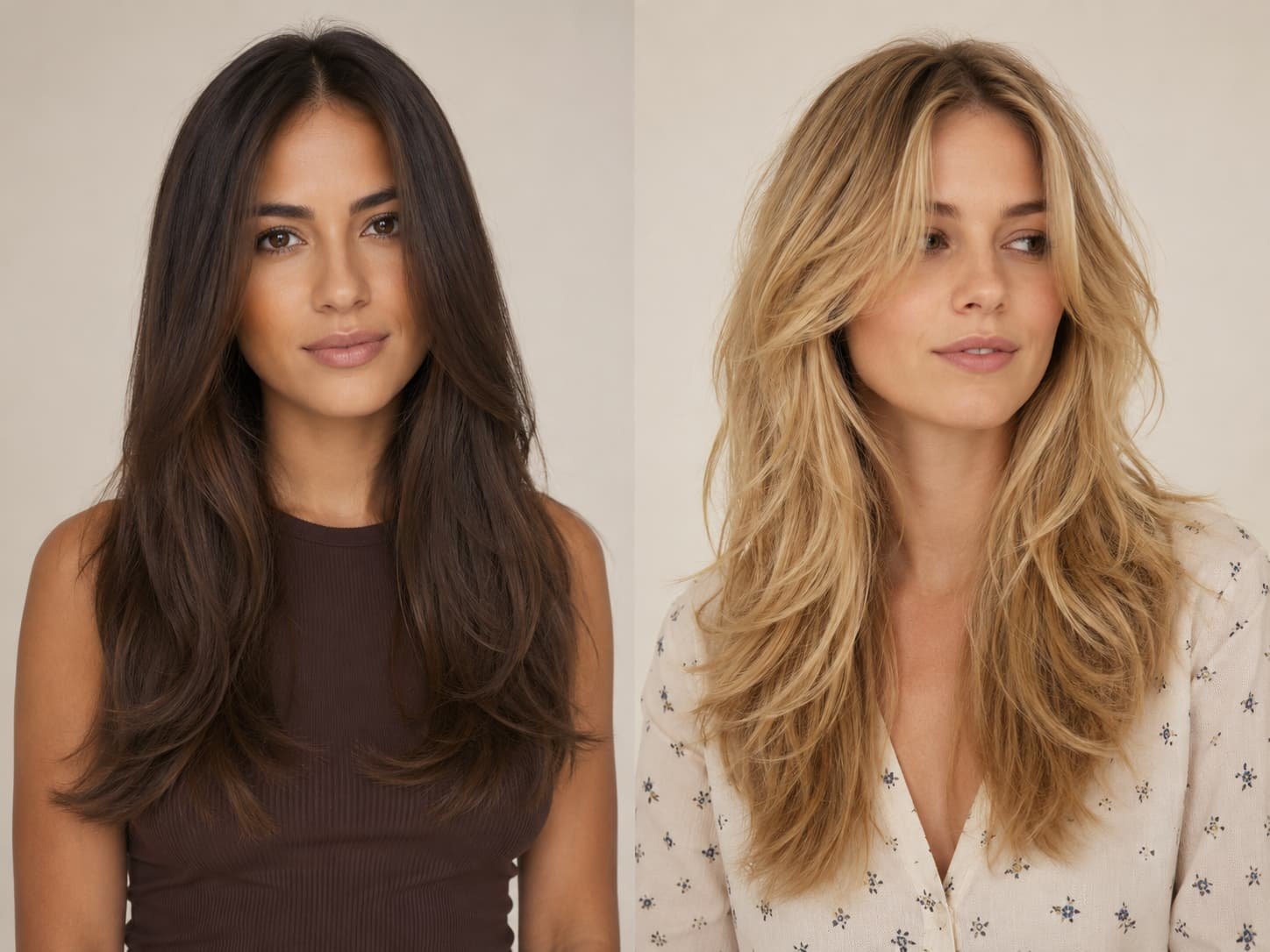
Long layered haircuts can keep much of the overall length while adding shape, movement, and variation through shorter sections. The layers may be concentrated around the face, placed through the lower lengths, or cut higher for a more noticeable layered effect.
The finished look can vary depending on where the layers begin, how much contrast there is between the shortest and longest sections, and whether the hair is straight, wavy, or curly. Some cuts look soft and blended, while others show stronger separation between individual layers.
For anyone considering long hair with layers, it can be useful to compare different layer placements, perimeter shapes, and fringe options before choosing a specific style.
What Is a Long Layered Haircut?
A long layered haircut keeps the overall hair length long while cutting some sections shorter than others.
Instead of every strand ending around the same point, the haircut includes different lengths through the front, sides, back, or lower sections. The amount of layering can be subtle or more noticeable.
Some long layered cuts keep most of the shorter pieces near the ends. Others include face-framing sections, shorter upper layers, or bangs that blend into the rest of the haircut.
How Long Layers Differ from One-Length Hair
One-length hair has a more consistent outer edge because most of the hair finishes around the same perimeter.
The perimeter may still be straight, rounded, U-shaped, or slightly pointed, but there is usually less variation through the interior of the haircut.
Long layers introduce shorter sections above that perimeter. This can create visible separation and movement, especially when the hair is styled with waves, curves, or a blowout-style finish.
A one-length cut often creates a stronger, more uniform outline through the ends. Layered hair can appear softer or more dimensional because different sections fall at different lengths.
Neither approach is automatically better. The choice depends on the shape and amount of layering a person prefers.
Where Layers Can Start on Long Hair
Layers can begin at several different points.
Face-framing pieces may start around the cheekbones, jaw, chin, collarbone, or lower. Layers through the back may begin higher in the haircut or remain closer to the ends.
A higher starting point creates a larger difference between the shortest and longest pieces. Lower layers usually create a more subtle transition.
Someone who wants to keep more length around the face may prefer layers that begin around the chin or collarbone. Shorter starting points can make the layered shape more noticeable.
How Layer Placement Changes the Look
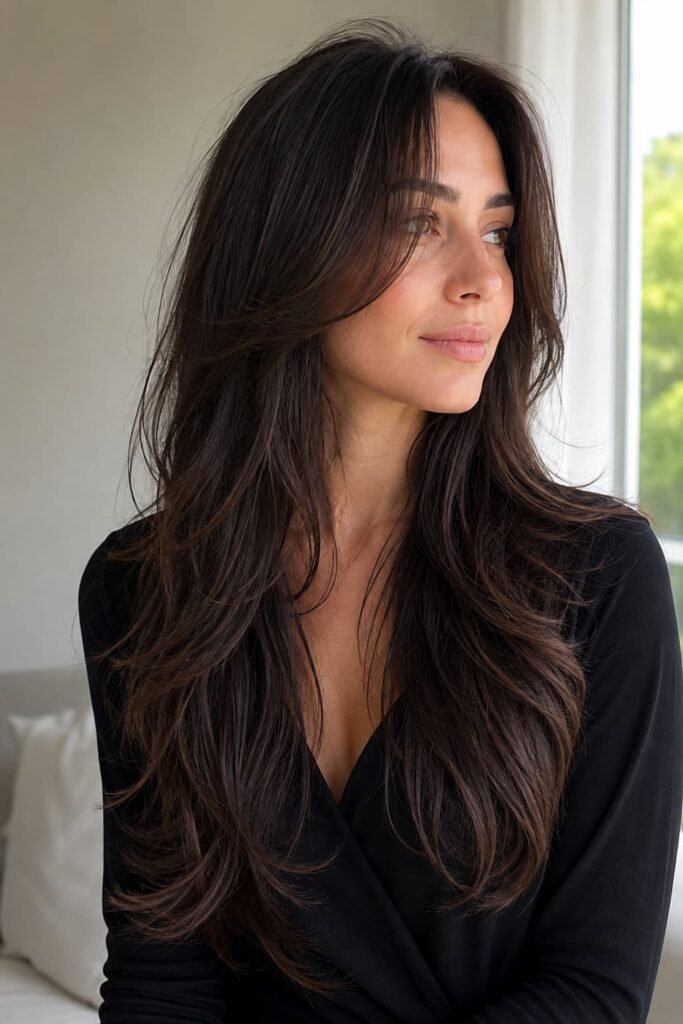
Layer placement affects where the haircut gains shape and how clearly the different lengths can be seen.
Two long layered haircuts can look very different even when the overall length is similar. One may contain only soft layers through the bottom, while another may have shorter front sections and stronger layering higher through the hair.
Subtle Layers Through the Lower Lengths
Subtle layers are placed closer to the ends rather than high through the haircut.
This keeps the upper sections relatively uniform while introducing some variation through the lower lengths. The ends may appear softer and less solid than they would in a completely one-length cut.
This type of layering can be one possible option for someone who wants movement while keeping most of the length and density visible through the lower part of the hair.
Face-Framing Layers Around the Front
Face-framing layers are shorter pieces placed around the front of the haircut.
They may begin around the cheekbones, jaw, chin, or lower and gradually connect with the longer hair behind them.
These sections can make the layered shape easier to see from the front without requiring equally short layers throughout the back.
The effect can be subtle or more defined depending on the starting point and how quickly the front pieces become longer.
Shorter Layers Through the Upper Lengths
Shorter layers placed higher through the hair create more contrast between sections.
They can make the layered structure more visible because the shortest pieces sit farther away from the longest ends.
Depending on the hair texture and styling, these layers may create more separation through the upper and middle sections of the haircut.
This is a more noticeable approach than keeping all the layering close to the bottom.
Blended Layers vs More Defined Layers
Blended layers transition gradually from shorter sections into longer ones.
The differences in length are still present, but the overall shape appears smoother and more connected.
More defined layers create stronger visual separation between sections. The individual lengths may become easier to see, especially when the hair is curled, waved, or styled away from the face.
Some people may prefer a softer blended finish, while others may prefer a more visibly layered shape.
Long Layered Haircut Ideas
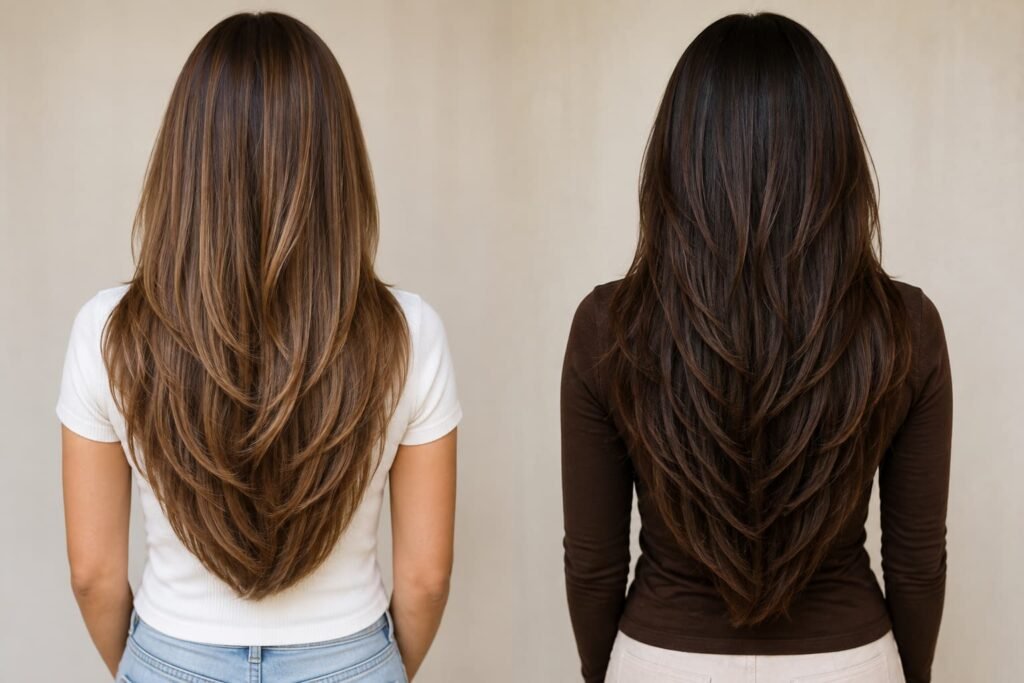
Long layers can be combined with different front sections, perimeter shapes, bangs, and finishing details.
These ideas show how the same overall hair length can create very different appearances depending on how the layers are arranged.
Long Hair with Soft Face-Framing Layers
Soft face-framing layers create a gradual transition around the front of the haircut.
The shortest pieces may begin around the jaw or chin and slowly become longer toward the shoulders and chest.
Because the transition is gentle, the haircut can keep a flowing appearance while adding more shape around the face.
These layers may become more visible when styled away from the face, although they can also be worn with a natural finish.
Long Hair with Chin-Length Front Layers
Chin-length front layers create a stronger frame than layers beginning around the collarbone or chest.
The shorter pieces sit clearly above the longest hair and can blend into longer sections through the sides.
This creates noticeable layering around the front without requiring very short pieces through the entire haircut.
Chin-length sections can also be styled inward, outward, or left to follow the natural texture.
Long Hair with Collarbone-Length Layers
Collarbone-length layers create a lower and more subtle starting point.
They preserve more length around the front while still breaking up a completely one-length shape.
These layers can blend into longer sections through the chest and back with relatively little contrast.
This may appeal to someone who wants visible layering but prefers not to introduce shorter pieces around the cheeks or jaw.
Long U-Shaped Layered Haircut
A U-shaped haircut has a softly rounded perimeter when viewed from the back.
The hair remains longest through the center, while the sides gradually become slightly shorter. The difference is usually curved rather than sharply pointed.
Layers can be added above this outline to create more movement through the lengths.
The result can appear soft and flowing, especially when the transition between the layers and perimeter is gradual.
Long V-Shaped Layered Haircut
A V-shaped haircut becomes progressively longer toward the center of the back.
This creates a more pointed perimeter than a U-shaped cut.
Layers can be placed above the V shape to add separation while keeping the longest section through the center.
The amount of contrast can vary. A gentle V creates a softer point, while a stronger V makes the difference between the sides and center more noticeable.
Long Hair with Rounded Layers
Rounded layers create a curved overall shape rather than sharp separation between sections.
The shorter pieces gradually blend into longer lengths through the sides and back.
This can produce a smooth outline when worn straight and a softer flowing shape when styled with waves or curved ends.
The finished appearance can vary depending on how much layering is used and where the shortest pieces begin.
Long Feathered Layers
Feathered layers create a lighter, more separated appearance through the edges of each section.
They are often easiest to see around the front, where the layers can be styled away from the face.
The ends may appear softer and more directional than they would with a heavier, more solid cutting line.
Feathered layering can be subtle or more noticeable depending on how much separation is created between sections.
Long Hair with Textured Ends
Textured ends create less of a solid line through the bottom of the haircut.
Instead of every section finishing with a strong blunt edge, the ends appear more separated.
When combined with long layers, this can make the lower lengths look lighter and more defined.
The amount of texture should match the desired shape because heavier texturing can change how full the ends appear.
Long Layers with Curtain Bangs
Curtain bangs usually divide near the center and fall toward each side of the face.
With long layered hair, the bangs can gradually blend into face-framing sections rather than ending as a completely separate fringe.
Longer curtain bangs may connect with cheekbone-, jaw-, or chin-length layers.
This creates a continuous transition from the shortest pieces around the face into the longer hair.
Long Layers with Wispy Bangs
Wispy bangs use lighter, more separated sections across the forehead.
They create a clear contrast with the much longer hair below while keeping the fringe visually softer than a dense, straight-across bang.
The bangs can blend into side sections or remain more separate from the face-framing layers.
The final look can vary with hair density, strand thickness, natural texture, and styling.
Long Layers with Side-Swept Bangs
Side-swept bangs move across the forehead toward one side.
They can blend into longer face-framing sections, creating an uneven or asymmetrical shape around the front.
A longer side-swept fringe may connect gradually with the surrounding layers, while a shorter version can create stronger contrast.
This option creates a different front shape from center-parted curtain bangs.
Long Layers Without Bangs
Long layered hair does not need a fringe.
The shortest front pieces can begin around the jaw, chin, collarbone, or even lower, leaving the forehead open.
This keeps the emphasis on face-framing layers rather than bangs.
Longer front sections may also appeal to someone who wants fewer short pieces around the face while still adding visible shape through the haircut.
How Long Layers Look on Different Hair Textures
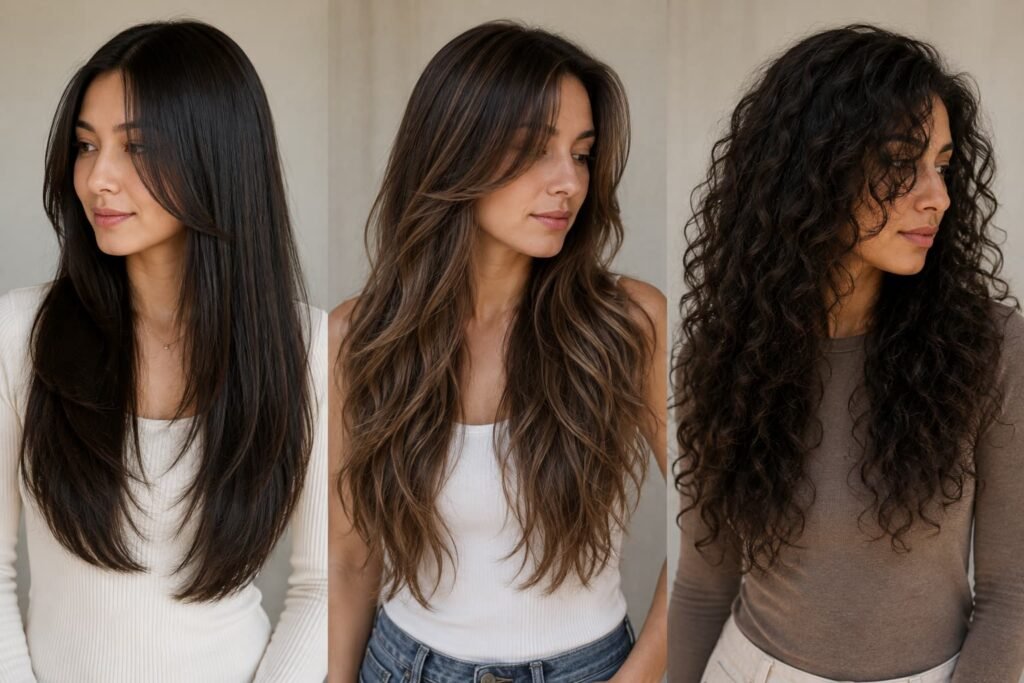
Hair texture can change how clearly layers are seen and how the different lengths fall. A layered cut may look smooth and subtle on straight hair, more separated on wavy hair, or more shaped through the lengths on curly hair.
The same haircut can therefore appear different depending on natural texture and styling.
Long Layers on Straight Hair
On straight hair, differences between the shorter and longer sections can be easy to see because the hair falls with fewer bends through the length.
Soft, blended layers can create a gradual transition, while more defined layers may show clearer separation. Face-framing pieces can also stand out when they finish noticeably above the longest sections.
Subtle layers may look understated when the hair is worn straight. Curved ends, waves, or a blowout-style finish can make the individual sections more visible.
Long Layers on Wavy Hair
Wavy hair can give long layers more visible movement because different sections bend and fall at different points.
Longer, blended layers may maintain a softer overall shape, while shorter sections can create more noticeable separation through the waves. Face-framing layers may also follow the natural bends around the front.
The final appearance can vary with the wave pattern, layer placement, and whether the hair is worn naturally or styled differently.
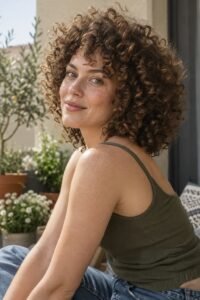
Long Layers on Curly Hair
Long layers can change the overall shape of curly hair by placing different sections at different lengths.
Shorter layers may sit higher in the haircut, while longer curls create length through the lower sections. More gradual layering can produce a softer transition, while greater differences in length can make the layered structure more noticeable.
Because curly hair does not fall in the same way as straight hair, an inspiration photo on one texture may not show exactly how the same layer placement will appear on another. Curl pattern, density, overall length, and styling can all affect the final look.
Long Layers for Different Hair Densities
Hair density and strand thickness are different characteristics. Hair density refers to the amount of hair within a given area of the scalp, while strand thickness refers to the diameter of individual hair fibers.
Both can affect how a layered haircut appears, especially around the perimeter and ends.
Layering Fine or Lower-Density Long Hair
Fine hair and lower-density hair are not the same thing, although either can influence the visual effect of layers.
When a large amount of hair is cut into shorter sections, less of it remains at the longest perimeter. On some hair, this can make the ends appear lighter or less full.
Someone who wants to preserve more visual weight through the bottom may prefer longer layers, subtle face-framing pieces, or a smaller difference between the shortest and longest sections.
These are style options rather than fixed rules. The final appearance depends on the combination of strand thickness, density, texture, length, and layer placement.
Layering Thick or Higher-Density Long Hair
Thicker strands and higher hair density are also separate characteristics.
With more hair visually present through the lengths, layers can create clearer separation between different sections. Long blended layers may maintain a smoother shape, while shorter or more defined layers can make the layered structure more noticeable.
The amount of layering is a matter of the desired appearance. Removing more hair or creating shorter layers does not automatically produce a better result.
U-Shaped vs V-Shaped Layers for Long Hair
U-shaped and V-shaped cuts describe the outer perimeter of long hair when viewed from the back.
Both shapes can be combined with internal layers or face-framing pieces. The main visual difference is whether the lower outline appears rounded or more pointed toward the center.
How a U-Shaped Perimeter Looks
A U-shaped perimeter forms a rounded curve across the back.
The center is longer than the outer sections, but the change in length is gradual. This creates a softer outline rather than a distinct point.
Long layers can sit above the U-shaped perimeter without removing the curved lower shape. A shallow U may look only gently rounded, while a deeper U creates a clearer difference between the center and sides.
How a V-Shaped Perimeter Looks
A V-shaped perimeter becomes longer toward the center of the back, creating a more pointed outline.
The strength of the V can vary. A softer version creates a gradual point, while a more pronounced V shows a greater difference between the side lengths and the longest center section.
Layers can be added above the perimeter to create movement and separation while keeping the V-shaped outline visible.
What to Compare Before Choosing Between Them
The main consideration is the type of back shape you prefer.
A U-shaped cut may appeal to someone who wants a rounded, gradual perimeter. A V-shaped cut may be an option for someone who prefers a more pointed center and a clearer change in length from the sides.
It can also help to compare how much length you want to retain around the outer sections. A stronger V generally creates more contrast between the sides and center than a soft U.
Natural texture and styling can make either perimeter look more or less defined.
Face-Framing Layers and Bangs
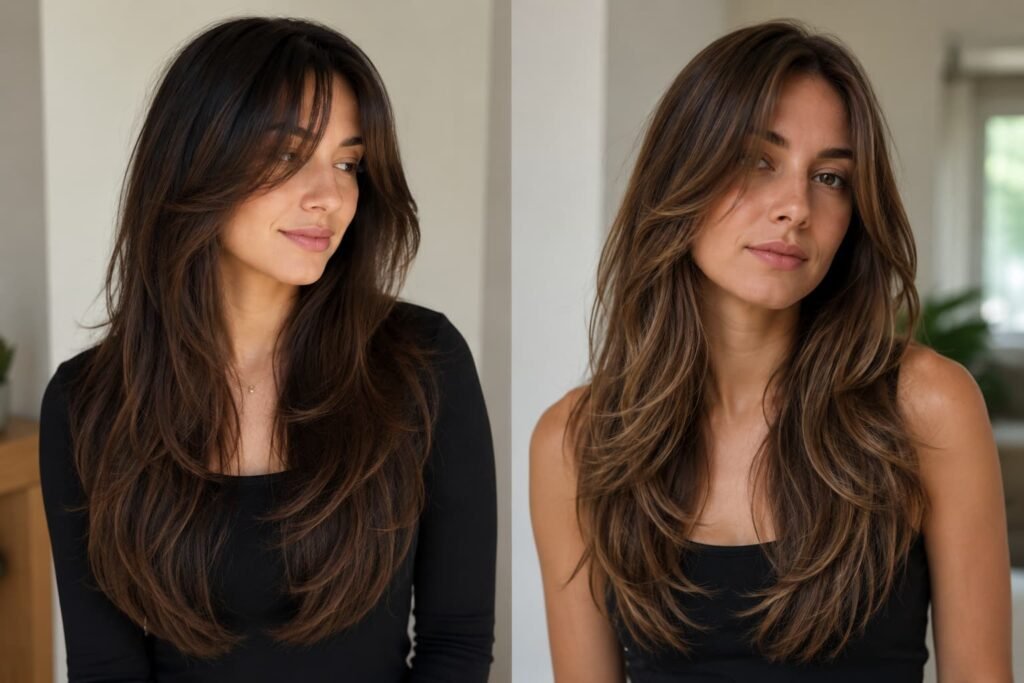
Face-framing layers add shorter sections around the front of long hair. They can be combined with bangs or begin lower around the cheekbones, jaw, chin, or collarbone.
Changing the starting point changes how much contrast appears between the front pieces and the overall length.
Cheekbone, Jaw, Chin, and Lower Starting Points
Cheekbone-level layers create a relatively short face frame and a noticeable difference from long hair through the back.
Jaw-level layers begin lower and can create a more gradual transition into the surrounding lengths.
Chin-length layers keep additional length around the front while still producing a clearly visible face-framing effect.
Collarbone-level or lower layers create a subtler transition because the shortest pieces remain relatively long.
There is no universally correct starting point. Some people may prefer stronger contrast around the front, while others may want the face-framing pieces to blend more closely with the overall length.
Curtain Bangs with Long Layers
Curtain bangs can connect gradually with longer face-framing layers.
The shorter pieces sit near the front, while the outer sections become progressively longer as they blend into the rest of the haircut. This can create a continuous transition instead of a clear break between the bangs and long hair.
Shorter curtain bangs generally create more visual contrast, while longer versions can blend more subtly with the surrounding layers.
Their final appearance can vary with the parting, natural texture, bang length, and styling.
Choosing Face-Framing Layers Without Bangs
Bangs are not necessary for creating a face-framing effect.
The shortest front pieces can begin around the jaw, chin, collarbone, or lower, leaving the forehead open while still adding variation around the front.
Longer starting points may appeal to someone who wants a subtler face frame or fewer short pieces.
The result can range from barely noticeable layering to a clearly defined front shape depending on where the shortest section begins and how it connects with the remaining length.
How Long Layers Look on Different Hair Textures
Hair texture can affect how layers fall and how clearly the different lengths are visible. Straight hair may show the layered outline more directly, while waves and curls can add bends and separation between sections.
This means the same layer placement can create a different visual result depending on the natural texture and styling.
Long Layers on Straight Hair
Long layers on straight hair can create visible changes in length while keeping the overall shape smooth.
Soft, blended layers create a gradual transition between sections. More defined layers can make the difference between shorter and longer pieces easier to see, especially around the face.
When worn straight, subtle layers may remain fairly understated. Curved ends, loose waves, or a blowout-style finish can make the layered shape more noticeable.
Long Layers on Wavy Hair
Wavy hair can show layers through the natural bends and movement of the hair.
Longer layers may create a softer transition through the lengths, while shorter sections can produce more visible separation. Face-framing pieces can also follow the wave pattern around the front.
How noticeable the layers appear can depend on the wave pattern, where the layers begin, and whether the hair is worn naturally or styled.
Long Layers on Curly Hair
Layers can change the overall outline of long curly hair by placing curls at different lengths.
Shorter sections may sit higher in the shape, while longer sections continue through the lower lengths. Gradual layering can create a softer transition, while a larger difference between layer lengths may create a more defined shape.
A haircut shown on straight or wavy hair may not look identical on curly hair. Curl pattern, density, overall length, layer placement, and styling can all influence the finished appearance.
Long Layers for Different Hair Densities
Hair density and strand thickness describe different characteristics. Hair density refers to how much hair is present within an area of the scalp, while strand thickness refers to the diameter of individual hair fibers.
These characteristics can affect how much visual weight remains through the lengths and ends of a layered haircut.
Layering Fine or Lower-Density Long Hair
Fine strands and lower-density hair are not the same thing. Someone can have fine individual strands while still having a relatively large amount of hair overall.
When more sections are cut shorter, less hair remains at the longest perimeter. Depending on the hair, this can make the lower lengths appear lighter or less full.
Someone who wants to keep more visual weight through the ends may prefer longer layers, subtle face-framing pieces, or a smaller difference between the shortest and longest sections.
The result can vary with strand thickness, density, texture, overall length, and layer placement.
Layering Thick or Higher-Density Long Hair
Thick strands and higher hair density can also affect how layers appear.
Long blended layers may create a smoother transition through the length, while shorter or more defined layers can make the separation between sections easier to see.
The amount of layering is a style choice rather than a rule. More layers do not automatically create a better shape, and the finished look can vary depending on the hair and the type of cut.
U-Shaped vs V-Shaped Layers for Long Hair
U-shaped and V-shaped cuts describe the outer outline of long hair when viewed from the back.
Both shapes can include long layers. The main visual difference is whether the bottom forms a rounded curve or becomes more pointed toward the center.
How a U-Shaped Perimeter Looks
A U-shaped perimeter creates a rounded outline across the back.
The center remains longer than the sides, but the transition is gradual. This creates a curved shape rather than a distinct point.
Long layers can sit above the perimeter while the rounded outline remains visible. A shallow U creates a gentle curve, while a deeper U shows more difference between the outer sections and the center.
How a V-Shaped Perimeter Looks
A V-shaped perimeter becomes progressively longer toward the center of the back.
This creates a more pointed outline. The V can be subtle or more pronounced depending on the difference between the side lengths and the center.
Long layers can be added above the perimeter while keeping the longest point through the middle.
What to Compare Before Choosing Between Them
The main difference to consider is the outline you prefer through the back.
A U-shaped cut may appeal to someone who wants a softer, rounded perimeter. A V-shaped cut may appeal to someone who prefers a more pointed center and greater contrast between the sides and middle.
It can also help to consider how much length you want around the sides. A stronger V creates a larger difference between the outer sections and the center than a gentle U.
Waves, curls, and styling can make either shape appear softer or more defined.
Face-Framing Layers and Bangs
Face-framing layers add shorter sections around the front of long hair. They may begin around the cheekbones, jaw, chin, collarbone, or lower.
Bangs are optional. Changing where the shortest front section begins can change how subtle or noticeable the face frame appears.
Cheekbone, Jaw, Chin, and Lower Starting Points
Cheekbone-level layers create a shorter and more noticeable frame around the upper part of the face.
Jaw-level layers begin lower and can blend more gradually into the surrounding lengths.
Chin-length layers keep more length around the front while still creating a visible difference from the longest sections.
Collarbone-level or lower layers create a subtler face frame because the shortest pieces remain relatively long.
There is no single starting point that works for everyone. The choice can depend on how much contrast someone wants around the front and how short they want the first layer to be.
Curtain Bangs with Long Layers
Curtain bangs can blend gradually into longer face-framing layers.
The shorter pieces sit around the front, while the outer sections become longer as they connect with the rest of the haircut. This creates a continuous transition between the bangs and the long layers.
Shorter curtain bangs can create stronger contrast, while longer versions may blend more subtly into the surrounding hair.
The final appearance can vary with bang length, parting, natural texture, and styling.
Choosing Face-Framing Layers Without Bangs
Face-framing layers can also be worn without bangs.
The shortest pieces may begin around the jaw, chin, collarbone, or lower, leaving the forehead open while adding shape around the front.
A lower starting point may appeal to someone who prefers fewer short pieces or a more subtle transition into the overall length.
The face frame can remain understated or become more defined depending on where the first layer begins and how gradually it connects with the rest of the haircut.