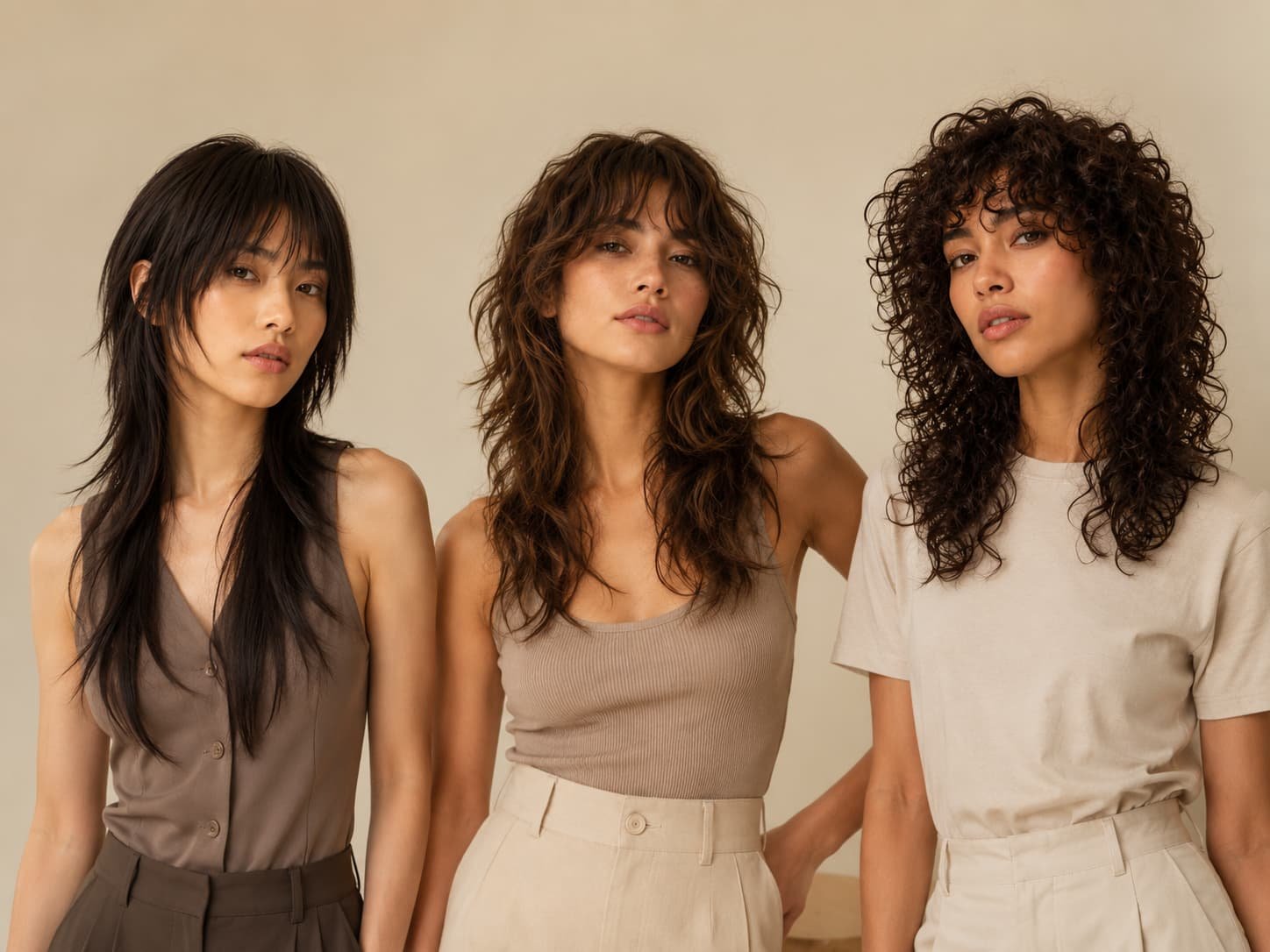
A wolf cut hairstyle combines noticeable layering with a textured, slightly undone shape. It often has shorter layers around the crown and face, while more length is kept through the lower sections and back.
The look can vary considerably. Some wolf cuts have strong, choppy separation between the layers, while others use softer blending for a less dramatic finish. Bangs are common, but they are not essential.
Hair length and natural texture also affect the final appearance. Straight hair may show the individual layers more clearly, while waves and curls can add more visible movement throughout the cut.
What Is a Wolf Cut Hairstyle?
A wolf cut is a layered haircut influenced by elements of both the shag and the mullet. Its main structure usually includes shorter layers through the upper part of the hair, face-framing pieces, and longer sections toward the bottom and back.
The haircut does not follow one fixed shape. A short wolf cut can look compact and choppy, while a longer version may have softer transitions between the upper layers and the remaining length.
The amount of separation between the layers also matters. More contrast can create a stronger, more defined wolf-cut shape, while longer blended layers can give the haircut a softer appearance.
Bangs are frequently included because they can connect the shorter front sections with the layers around the sides. Curtain bangs, wispy bangs, textured fringe, and longer face-framing pieces are all possible options.
How a Wolf Cut Differs From a Shag and Mullet
A wolf cut shares characteristics with both shag and mullet haircuts, which is why the styles can sometimes look similar.
A shag typically focuses on layered movement throughout the hair. The layers may be distributed across the crown, sides, and lengths to create an intentionally textured shape.
A traditional mullet generally has a clearer difference between shorter hair at the front or sides and longer hair at the back.
A wolf cut usually sits somewhere between these two ideas. It can have the choppy layering associated with a shag while keeping extra length through the lower sections and back, similar to a softer mullet-inspired shape.
Modern versions of all three cuts can overlap, so the haircut name alone does not always describe the exact result. Layer placement, fringe style, overall length, and the amount of contrast between shorter and longer sections are more useful details when comparing them.
Main Features of a Wolf Cut
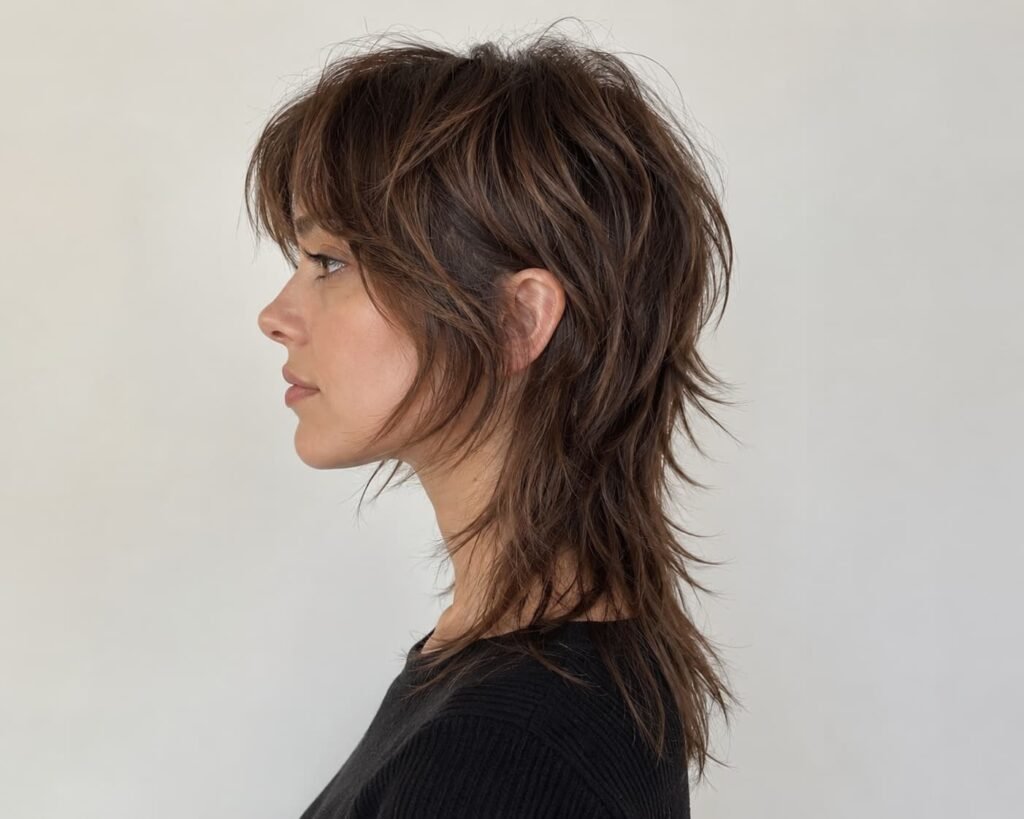
The recognizable shape of a wolf cut comes mainly from how its layers are arranged.
Rather than keeping the hair at a similar length throughout, the cut usually creates a transition from shorter upper layers to longer lower sections. How noticeable that transition appears depends on the chosen version.
Other details, including face framing, bangs, texture, and the finish of the ends, can make the haircut look softer or more defined.
Shorter Crown Layers
Shorter crown layers are one of the main visual features associated with a wolf cut.
These layers sit around the upper part of the head and can create more separation and movement near the crown. When they are cut noticeably shorter than the lower sections, the wolf-cut silhouette tends to appear stronger.
Longer crown layers create a more gradual transition and may suit someone who prefers a softer interpretation of the haircut.
Natural texture also changes how these upper layers appear. Waves or curls may create more visible separation, while straight hair may show the actual cut lines and differences in length more clearly.
Face-Framing Layers
Face-framing layers help connect the shorter upper sections with the rest of the haircut.
They can begin higher around the cheek area or remain longer around the jaw and below. Shorter pieces create a more noticeable layered effect around the front, while longer pieces can blend more gradually into the overall length.
The placement does not need to follow a fixed rule. It can vary according to the desired shape, overall hair length, fringe choice, and natural texture.
Face-framing layers can also be used without traditional bangs. In that version, the front remains more open while still showing the layered structure associated with the wolf cut.
Longer Length Through the Back
Many wolf cuts keep more length through the back and lower sections than around the crown.
This difference in length helps create the elongated shape that distinguishes the style from a more evenly layered haircut.
The contrast can be subtle or noticeable. A softer wolf cut may keep the transition gradual, while a more dramatic version can place shorter crown layers against significantly longer lower sections.
Keeping extra length through the back also allows the wolf-cut shape to be adapted to medium and long hair rather than limiting it to shorter cuts.
Textured or Piecey Ends
Textured ends can make the individual layers of a wolf cut easier to see.
Instead of creating one heavy, uniform outline at the bottom, the ends may appear separated, feathered, or piecey. This can reinforce the intentionally layered character of the haircut.
A more choppy finish creates stronger visual separation between sections. Softer ends can make the layers appear more blended.
Styling also affects this detail. Natural waves, curls, bends, or light separation between sections can emphasize the ends, while a smoother finish may place more attention on the actual shape and length of the layers.
How Wolf Cut Layers Change the Overall Shape
Layer placement strongly influences the appearance of a wolf cut. Shorter, more separated layers can create a choppier outline, while longer layers can produce a softer transition from the crown into the lower lengths.
Hair length and natural texture can also change how clearly those layers appear. The final shape depends on where the shorter sections begin, how much length is kept underneath, and how strongly the layers are separated.
Soft, Blended Layers
Soft layers create a gradual transition between the shorter and longer sections of the haircut.
Rather than making the crown layers stand out sharply, this approach keeps the different lengths more connected. The result can appear less dramatic while still keeping the layered character of a wolf cut.
Longer crown and face-framing layers are one possible choice for someone who prefers subtle separation rather than a strongly choppy finish.
Choppy, More Defined Layers
Choppy layers create clearer separation between different sections of the hair.
Shorter pieces around the crown can make the upper layers more noticeable, while separated ends can emphasize the contrast with the longer sections below.
Straight, wavy, and curly textures can show this layering differently. Straight hair may make differences in length easier to see, while natural bends or curls can create additional visual movement between the layers.
A more defined version may appeal to someone who prefers the deliberately textured side of the wolf-cut look.
Longer Face-Framing Layers
Longer face-framing pieces offer another way to shape the front of a wolf cut.
They may begin around the cheek, jaw, or lower, depending on the desired length and amount of framing. Keeping these pieces longer can create a gradual transition into the rest of the haircut.
This is also one possible approach for someone who wants visible front layers without choosing a traditional fringe.
The pieces can be arranged around a center or side part, so the exact appearance can vary with styling.
Wolf Cut With Bangs
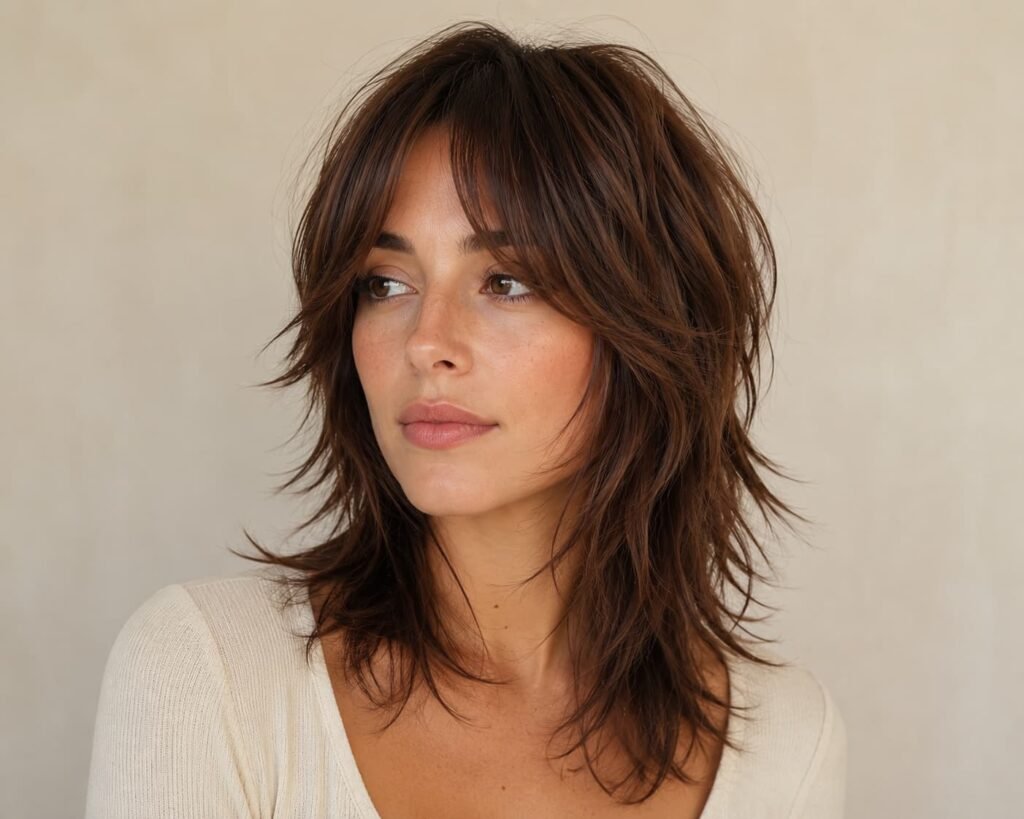
Bangs are common in wolf-cut variations, but they are not required.
Different fringe shapes change how the front of the haircut connects with the crown and side layers. Some versions use light, separated bangs, while others have a fuller and more noticeable fringe.
Wolf Cut With Curtain Bangs
Curtain bangs usually part near the center and become longer toward the sides.
This shape can connect gradually with the face-framing layers of a wolf cut, creating a softer transition between the fringe and the longer hair.
The bangs can be kept relatively short or extended closer to the cheek area. Their exact length and opening can be adjusted according to the preferred look.
Wolf Cut With Wispy Bangs
Wispy bangs use lighter, more separated sections across the forehead.
They can add a visible fringe without creating the heavier outline of a dense or blunt bang. This can complement wolf cuts with softer or more piecey layering.
The fringe may also transition into shorter face-framing pieces along the sides, depending on how connected the front layers are intended to look.
Wolf Cut With Textured Full Bangs
A fuller fringe creates a stronger feature across the front of the haircut.
Adding texture or separation through the ends can help the bangs visually connect with choppy layers around the crown and sides.
The final appearance depends on the fringe length, density, layer placement, and natural hair texture. Some versions may look soft and tousled, while others have a more clearly defined shape.
Wolf Cut Without Bangs
Bangs are not necessary for creating a wolf-cut shape.
Without a fringe, shorter face-framing layers can begin farther down the sides of the face. This keeps the forehead more open while still adding visible layering around the front.
Longer front pieces can also work with different partings, making this a useful option for someone who prefers face framing rather than traditional bangs.
Wolf Cut by Hair Length
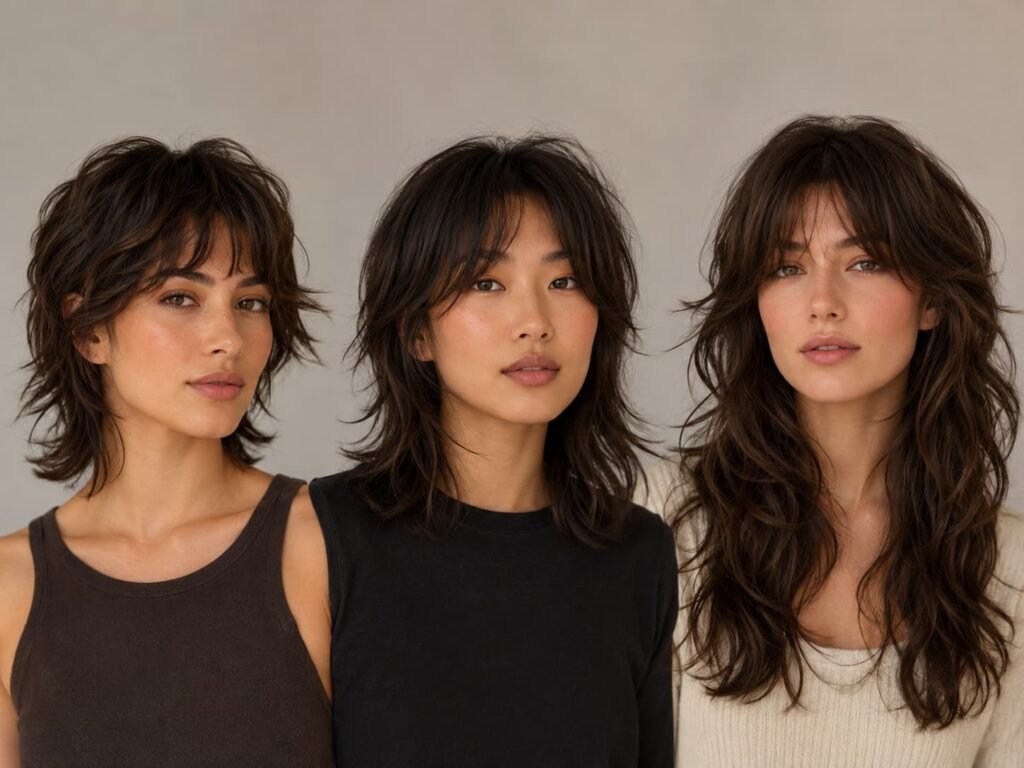
A wolf cut can be adapted to different overall lengths. Changing the length also changes how much space there is between the shorter upper layers and the longest sections.
Short versions tend to create a more compact shape, while medium and long versions allow the layered transition to extend through more length.
Short Wolf Cut
A short wolf cut combines a compact overall length with visible layering through the crown, sides, and lower sections.
Depending on the version, the longer pieces may fall around the jaw, neck, or shoulder area. Shorter crown layers can create a noticeable contrast with the lower sections, especially when the ends are kept piecey.
Curtain bangs, wispy fringe, textured bangs, or an open front can all be considered depending on the preferred shape.
Softer blending creates a less separated finish, while choppier layers make the different lengths more obvious.
Medium-Length Wolf Cut
A medium-length wolf cut provides more room for the crown layers to transition into longer sections.
Shoulder-area and somewhat longer versions can include soft blending, strongly separated layers, or a balance between the two.
Curtain bangs, wispy bangs, and longer face-framing pieces are possible front-shaping options.
The way the layers appear can change with natural texture. Straight hair may show the cut structure clearly, while waves and curls can make the silhouette appear more textured.
Long Wolf Cut
A long wolf cut keeps substantial length while introducing shorter sections around the crown and face.
The difference between the upper layers and the longest pieces can be subtle or pronounced. Longer crown layers create a more gradual shape, while shorter upper layers can make the contrast more visible.
Curtain bangs, wispy fringe, or longer face-framing pieces can be added depending on the desired front shape.
A long version can therefore range from softly layered to noticeably choppy without requiring one fixed interpretation of the haircut.
Wolf Cut for Different Hair Textures
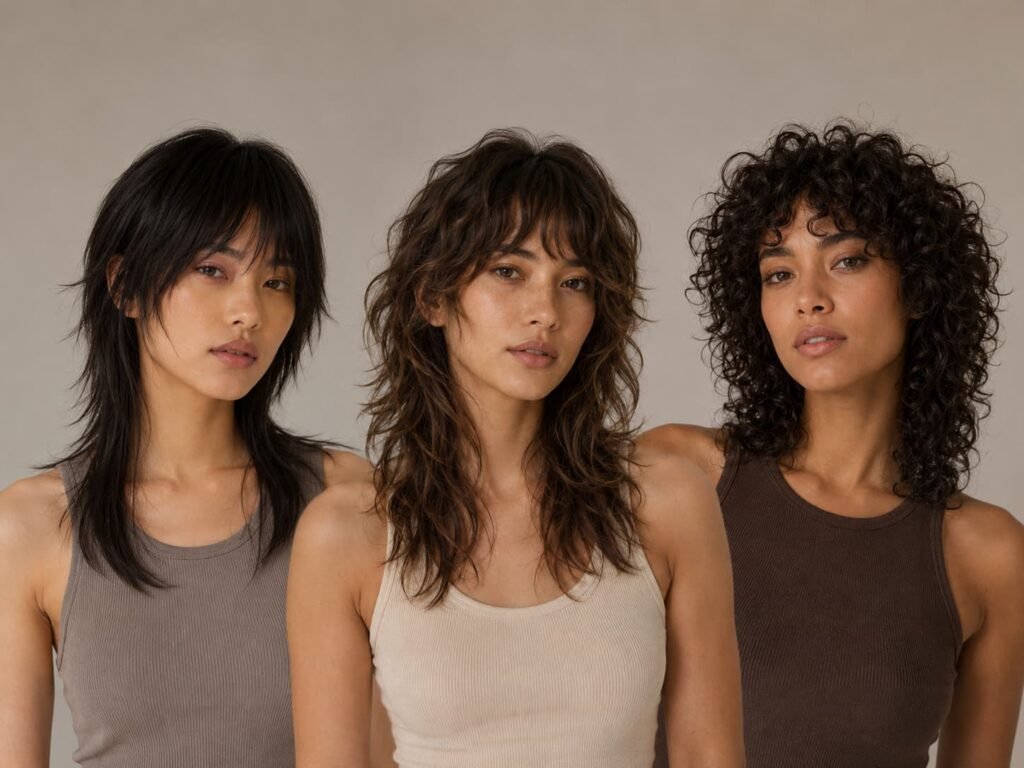
Hair texture can change how the layers of a wolf cut appear. Straight hair may show differences in length more clearly, while waves and curls can create more visible movement through the layered shape.
The final look can vary with the natural texture, overall length, hair density, and placement of the layers.
Wolf Cut for Straight Hair
Straight hair can make the structure of a wolf cut easy to see. Shorter crown layers, face-framing pieces, and longer lower sections may appear more clearly separated when the hair falls smoothly.
A softer version can use longer, blended layers for a gradual transition. A choppier version can create stronger contrast between the upper and lower sections.
The haircut can also be worn with a smooth finish or styled with bends and texture when a more tousled appearance is preferred.
Wolf Cut for Wavy Hair
Wavy hair can bring natural movement to the different layers of a wolf cut.
Shorter sections around the crown and face may follow the wave pattern differently from the longer lengths, which can make the layered structure more noticeable.
The effect can range from softly blended to more textured depending on the wave pattern and amount of separation between the layers.
Short, medium, and long versions are all possible, so the overall silhouette does not need to follow one fixed shape.
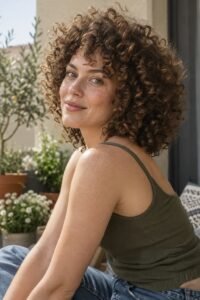
Wolf Cut for Curly Hair
A wolf cut can also be adapted to curly hair.
Shorter layers around the crown can contribute to a fuller, more rounded upper silhouette, while longer sections maintain length through the lower part of the cut. Face-framing curls or a curly fringe can further shape the front.
Curl pattern affects how individual layers sit, so the same layer lengths can appear different from one head of hair to another.
A softer version may use gradual transitions between the layers, while a more defined version can create greater contrast between the crown and longer sections.
Wolf Cut Hairstyle Ideas
Wolf cuts can be interpreted in several ways by changing the layer placement, length, bangs, parting, and finish.
These variations offer different visual directions while keeping the main layered structure associated with the haircut.
Soft Layered Wolf Cut
A soft layered wolf cut uses gradual transitions between the shorter crown pieces and longer sections.
The layers remain visible without creating strong separation between every length. Longer face-framing pieces can continue this softer effect around the front.
Curtain bangs are one possible addition, but the cut can also be worn without a fringe.
Choppy Shag-Inspired Wolf Cut
A choppy wolf cut places more emphasis on separated layers and textured ends.
Shorter pieces around the crown can contrast with longer sections underneath, while uneven-looking or piecey ends reinforce the textured appearance.
This version may appeal to someone who prefers a more defined, intentionally tousled shape rather than softly blended layers.
Long Wolf Cut With Curtain Bangs
A long wolf cut keeps substantial overall length while introducing shorter layers around the crown and face.
Curtain bangs can blend into longer face-framing sections, creating a gradual connection between the fringe and the rest of the haircut.
Longer crown layers can make the result appear softer, while greater contrast between the shortest and longest sections creates a more noticeable wolf-cut shape.
Medium Wavy Wolf Cut
A medium wavy wolf cut combines shoulder-area length with layered movement.
Natural waves can make the different sections appear less uniform, while shorter crown layers help define the upper shape.
Curtain bangs, wispy bangs, or longer face-framing pieces are possible options depending on how much coverage is wanted around the forehead and sides.
Short Textured Wolf Cut
A short textured wolf cut concentrates the layered shape into a more compact length.
Short crown pieces and separated ends can make the different layers easy to see. Extra length may be kept toward the back to maintain the elongated character associated with many wolf cuts.
The front can include bangs or remain open with shorter face-framing pieces.
Curly Wolf Cut With Face-Framing Layers
This variation uses shorter curls around the front to connect the face area with the layered crown.
The front pieces can begin higher or lower depending on the preferred shape, while longer curls continue through the sides and back.
Shorter upper layers can create a more rounded silhouette. Longer transitions provide a softer alternative with less contrast between the sections.
Straight Wolf Cut With Piecey Ends
A straight wolf cut with piecey ends emphasizes the haircut’s layered structure without relying on waves or curls.
Separated ends can make the lower layers appear more defined while a smoother finish through the lengths keeps attention on the shape of the cut.
Bangs, a center part, or a side part can each change the appearance of the front.
Side-Parted Wolf Cut
A side part shifts more of the front hair toward one side.
This can change how the face-framing layers and crown sections fall, creating a less symmetrical front shape.
It can be combined with longer front layers, side-swept bangs, or a textured fringe depending on the preferred look.
Center-Parted Wolf Cut
A center part divides the front sections more evenly.
It can pair naturally with curtain bangs or longer face-framing pieces that fall to either side of the face.
The remaining layers can be softly blended or more choppy, so the parting itself does not determine how dramatic the overall haircut appears.
Wolf Cut With Flipped Ends
Flipped ends add another styling option to a layered wolf cut.
Selected pieces can turn inward or outward, which may make differences between the layer lengths more visible. The effect can be concentrated around the face or extended through the lower sections.
A smoother finish through the rest of the hair can keep the flipped ends as the main styling detail.
How Styling Changes the Look of a Wolf Cut
Styling can change which parts of a wolf cut stand out. A smoother finish may emphasize the shape of the layers, while waves or a tousled texture can make the haircut appear more separated and relaxed.
The result can vary with natural texture, layer placement, and overall length.
Natural Texture
A wolf cut can be worn with the hair’s natural texture.
Straight hair may make differences between the layer lengths easier to see. Waves and curls can create more movement between shorter and longer sections.
How the cut falls naturally will vary from person to person, so the same layer pattern will not look identical on every hair texture.
Soft Waves
Soft waves can add movement through the lengths and help separate individual layers visually.
The waves do not need to be uniform. Loose bends in different sections can create a softer, less structured finish.
They can be worn throughout the hair or focused around the face and longer sections, depending on the preferred look.
Tousled Texture
A tousled finish places more emphasis on separation and an intentionally less polished shape.
Some sections may remain relatively straight while others have bends or waves. Piecey ends can also make differences between the layers easier to notice.
This is one possible styling direction for someone who prefers a more textured version of the haircut.
Smooth or Straight Finish
A wolf cut can also be styled with a smoother or straighter finish.
This approach can draw more attention to the actual layer placement, including shorter crown sections, face-framing pieces, and longer lengths underneath.
A smooth finish can still include some separation through the ends, so the haircut does not need to look completely uniform.
Crown Volume and Flipped Ends
More volume around the crown can make shorter upper layers appear more prominent.
The amount of volume can remain subtle or become a stronger part of the silhouette. Flipping selected ends inward or outward can also make different layer lengths more visible.
These details can be concentrated around the face or carried through the lower sections.
What to Consider Before Choosing a Wolf Cut
There is no single wolf-cut shape that works the same way for everyone.
Before choosing a version, it is useful to think about layer contrast, bangs, overall length, natural texture, density, and how you normally prefer to style your hair.
How Much Layer Contrast You Want
The difference between the shortest and longest sections has a strong effect on the final appearance.
A softer wolf cut uses more gradual transitions. A choppier version creates clearer separation, especially between the crown and lower lengths.
Reference photos can help show whether you prefer subtle layering or a more strongly defined shape.
Whether You Want Bangs
Bangs are optional and can change the front of the haircut considerably.
Curtain bangs create a more open center, wispy bangs provide lighter coverage, and fuller textured bangs create a stronger fringe.
Another option is to leave out traditional bangs and use longer face-framing layers instead.
How Much Length You Want to Keep
A wolf cut can be adapted to short, medium, or long hair.
Keeping more overall length allows the shorter upper layers to contrast with longer sections underneath. A shorter version creates a more compact silhouette.
It can help to decide how much length you want to preserve before deciding how short the crown and face-framing layers should be.
Your Natural Hair Texture and Density
Hair texture and density can affect how the layers appear.
Straight hair may show differences in length clearly, while waves and curls can add movement and change how individual sections fall.
Hair density can also influence the visual balance of a heavily layered cut. The amount of layering can therefore be adjusted rather than relying on one fixed wolf-cut pattern.
How Much Daily Styling You Prefer
Consider how you usually like to wear your hair.
Some versions can be worn closer to the natural texture, while other looks shown in inspiration photos may depend on added waves, bends, volume, or separation.
Looking closely at how a reference style has been finished can help distinguish the haircut itself from the styling used in the photo.
Wolf Cut Maintenance Considerations
A wolf cut changes gradually as the hair grows because the shorter and longer sections no longer keep exactly the same proportions.
How noticeable this becomes depends on the original layer placement, bangs, overall length, and the shape someone wants to maintain.
There is no single maintenance schedule that applies to every version.
How the Layers Can Change as Hair Grows
As shorter crown and face-framing sections grow longer, the contrast between them and the lower lengths can become less noticeable.
A sharply layered cut may therefore develop a softer, more blended appearance over time.
Some people may prefer that transition, while others may choose to reshape the layers when they want a more defined silhouette again.
Keeping Bangs and Face-Framing Pieces Defined
Bangs and shorter front sections also change as they gain length.
Curtain bangs may gradually blend into the side layers, while shorter fringe can begin to resemble longer face-framing pieces.
If a particular front shape is preferred, those sections can be reshaped when needed. Another option is to allow them to grow into the surrounding layers for a softer transition.
Frequently Asked Questions
What is a wolf cut hairstyle?
A wolf cut is a layered haircut that combines elements commonly associated with shag and mullet styles. It often features shorter, choppier layers around the crown with longer sections through the lower lengths and back.
The exact shape can vary. Some versions are strongly textured and separated, while others use softer, more blended layers.
Is a wolf cut the same as a shag?
Not exactly, although the two styles can overlap.
Both use layering and texture, but a wolf cut often has more noticeable contrast between shorter upper layers and longer sections underneath. A shag can have a softer or more evenly distributed layered shape.
Modern interpretations vary, so some haircuts may sit somewhere between the two styles.
What is the difference between a wolf cut and a mullet?
A traditional mullet usually creates a clearer division between shorter hair toward the front and sides and longer hair at the back.
A wolf cut generally uses more layers through the crown, sides, and lengths. This can create a more gradual transition between the shorter and longer sections.
The distinction is not always sharp because modern versions of both haircuts can borrow elements from each other.
Can you get a wolf cut without bangs?
Yes. Bangs are common in wolf-cut styles, but they are not required.
Without a traditional fringe, shorter face-framing layers can shape the front instead. These pieces can remain relatively long or begin higher around the face depending on the preferred look.
Can a wolf cut work with straight hair?
Yes. A wolf cut can be adapted to straight hair.
Straight texture may make differences between the shorter and longer layers easier to see. The hair can be worn with a smooth finish or styled with bends, waves, or more separation when a textured look is preferred.
The final appearance can vary with hair density, overall length, and layer placement.
Can curly hair have a wolf cut?
Yes. Wolf cuts can be adapted to curly hair.
Curl pattern, density, overall length, and the placement of shorter layers can all influence the finished silhouette. Shorter crown layers may create a more rounded upper shape, while longer sections can preserve length through the lower part of the haircut.
The same layer pattern will not look identical on every curl type.
Can a wolf cut be long?
Yes. A long wolf cut keeps substantial overall length while introducing shorter layers around the crown, face, and upper sections.
The difference between the shortest and longest pieces can be subtle or more pronounced. Longer, blended layers create a softer interpretation, while shorter upper layers make the layered contrast more noticeable.
What bangs can be paired with a wolf cut?
Possible options include curtain bangs, wispy bangs, textured full bangs, and side-swept fringe.
Curtain bangs can blend into longer face-framing layers, while wispy bangs create lighter coverage across the forehead. Fuller bangs produce a stronger front shape.
Longer face-framing pieces are another option for someone who does not want traditional bangs.
How can you style a wolf cut?
A wolf cut can be worn with natural texture, soft waves, a tousled finish, or a smoother, straighter look.
Crown volume can make the shorter upper layers more noticeable, while bends or flipped ends can emphasize individual sections. A smoother finish places more attention on the actual layer structure.
The styling approach can depend on natural texture and the appearance someone wants to create.
What should you ask for when getting a wolf cut?
Focus on the details of the haircut rather than relying only on the name “wolf cut.”
Useful points to communicate include the overall length you want to keep, how short you want the crown layers, how much face framing you prefer, whether you want bangs, and whether you prefer soft blending or stronger separation between the layers.
Reference photos can also help communicate the desired length, fringe, texture, and amount of layering more clearly.