
Short fine hair often looks fuller just after styling, only to settle flat around the roots and crown a few hours later. Adding more product rarely fixes the problem and can leave the hair feeling heavy.
To style short fine hair for more volume, keep the roots free of buildup, use a small amount of lightweight volumizing product, and gently blow-dry sections upward rather than flat against the head. Let each section cool in its lifted position, then finish only where extra hold is needed. The result should look natural and feel easy to move.
How to Add Volume to Short Fine Hair: A Simple 5-Step Routine
You don’t need a complicated routine. What matters most is where you place the product and how you dry the roots.
Step 1. Start With Clean, Gently Towel-Dried Hair
Oil and leftover products can weigh down roots. The American Academy of Dermatology recommends shampooing the scalp to remove buildup; rinse thoroughly. If your hair is straight and fine, apply conditioner mainly to the ends. Dry or curly hair may need conditioning through more of the length.
Blot with a soft towel or T-shirt instead of rubbing. Begin styling when your hair is damp but no longer dripping, so you can control the roots.
Step 2. Choose One Lightweight Volumizing Product
A volumizing mousse is useful when the whole style needs body. A root-lifting spray is more targeted if the crown or part is the main problem. You don’t need both.
Apply your chosen product to damp hair, following the label for placement and amount. Start small, especially on a short pixie, where excess product is more noticeable. If the product doesn’t provide heat protection, use a separate lightweight heat protectant before blow-drying.
Step 3. Blow-Dry Against the Hair’s Natural Direction
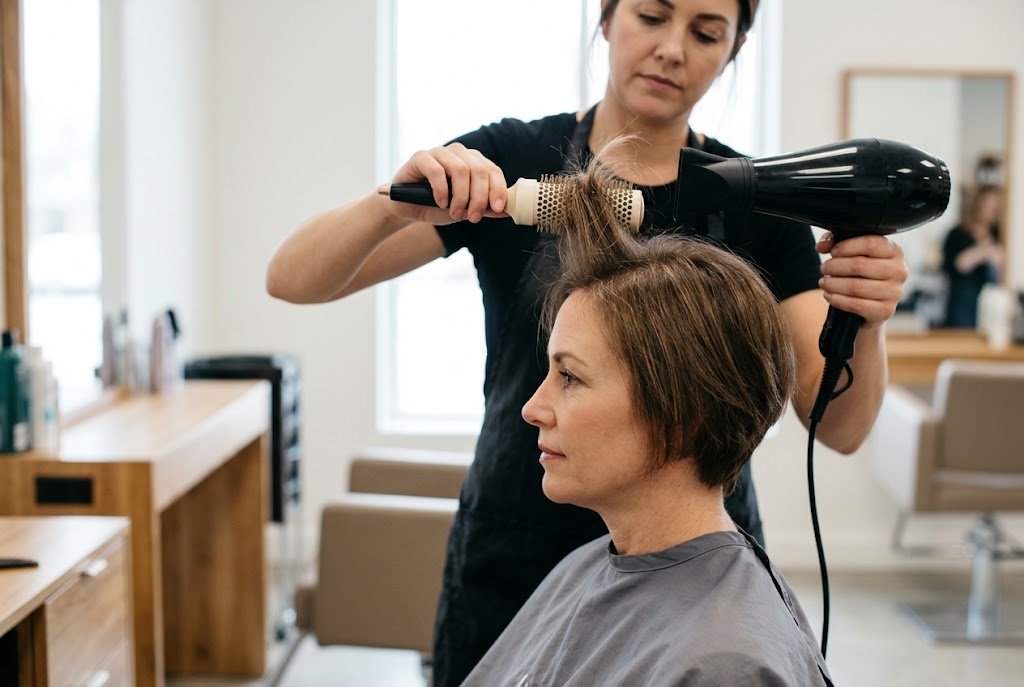
For root lift, raise a small section at the crown with your fingers and direct airflow toward the roots from a safe distance. Guide that section upward or opposite the direction it normally falls. Keep the dryer moving on low or medium heat, rather than holding it against one area.
For a short pixie, fingers may give better control than a brush. For a bob long enough to wrap around a small round brush, lift the hair at its base without pulling tightly. Focus on the crown first; a little height there makes a visible difference.
Step 4. Let the Shape Cool Before Releasing It
When a section is dry, keep it lifted and switch to the cool setting for a few seconds. If your dryer has no cool setting, hold the section in position until it cools naturally.
Warm roots can fall back into place when released. Set the crown and part this way, then leave the sides softer for a balanced shape.
Step 5. Finish Without Weighing Down the Roots
Run your fingers lightly through the finished style. If it already holds its shape, stop there. If it needs support, mist flexible-hold hairspray lightly, using the distance recommended on the can.
Texture spray can add separation to the ends, but it isn’t necessary for every style. Too many finishing products can flatten the roots you just lifted. Aim for hair that moves naturally, not hair that feels coated or stiff.
How to Add Volume to Short Fine Hair Without Heat
Heatless volume starts while your hair is damp. Instead of trying to fluff it after it dries, change how the roots settle as they air-dry.
If you wear a side part, move it slightly toward the opposite side after washing. Let your hair dry there, then flip the part back and loosen the roots with your fingertips. This works best when the top is long enough to change direction; a close-cropped pixie may have too little length for much lift.
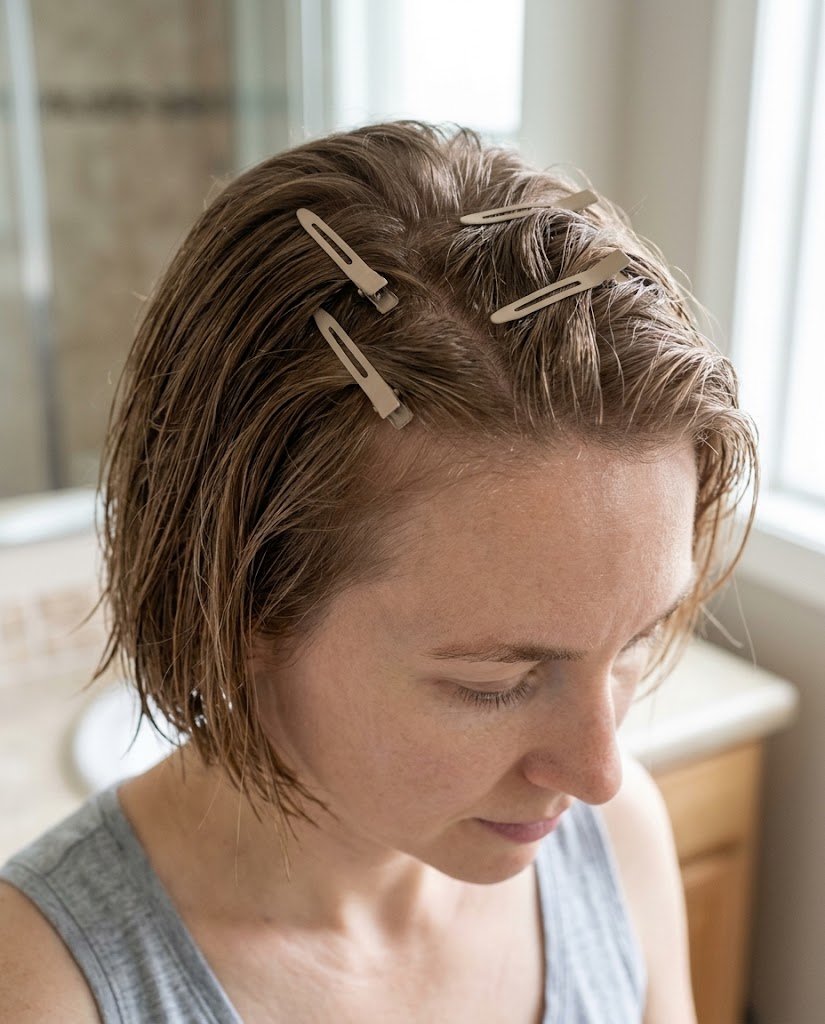
For more height at the crown, gently raise two or three small sections and fasten them near their bases with lightweight, crease-free clips. The clips should support the roots without tugging. Remove them once the hair is fully dry, then arrange the top with your fingers.
If you have natural bends or waves, lightly scrunch the mid-lengths as they dry rather than brushing them smooth. Very straight fine hair may get only modest lift from these methods, and humidity or natural texture can affect how long it lasts. The aim is easy movement, not a dramatic blowout.
Which Styling Products Work Best for Short Fine Hair?
The best product depends on where your hair loses volume, not how many bottles promise a fuller look. Choose based on the finish you want and how your hair behaves after a few hours.
| Product type | Best for |
|---|---|
| Volumizing mousse | Body through the lengths of a soft bob or longer pixie |
| Root-lifting spray | A flat crown or part when the rest of the hair sits well |
| Texture spray | Grip and definition in an already-dry style |
| Dry shampoo | Oily roots that cause second-day hair to separate or lie flat |
| Flexible-hold hairspray | Helping a finished style keep its shape |
For example, if your bob has movement at the ends but the top looks flat by midday, a root-lifting spray makes more sense than coating the lengths with mousse. If the whole style feels limp, a lightweight mousse may be the better starting point.
Texture sprays vary: some feel powdery or dry, while others leave a softer finish. If your hair tangles easily or feels rough afterward, try a lighter formula or use less. Dry shampoo can absorb oil, but it won’t replace washing or create lasting lift on its own.
Heavy creams, oils and waxes may flatten some fine hairstyles, although a tiny amount can suit dry or wavy hair. Judge products by formula, amount and finish, not the word volumizing on the label.
How to Style Different Short Haircuts for More Volume
Short fine hair doesn’t need volume in every direction. Where you create lift depends on the haircut. A pixie often benefits from height at the crown, while a bob can look fuller when the ends stay smooth and defined.

Short Fine Hair With a Pixie Cut
For a pixie with longer hair on top, concentrate on lifting the crown and front sections. Gently push the hair upward with your fingertips, then smooth the outer layer to keep the shape soft.
Avoid separating every strand into tiny pieces, especially if your scalp is visible through the hair. A little definition can create movement, but too much can make fine hair look sparse. Keep the shorter sides neat so the top stands out naturally.
Short Fine Hair With a Bob
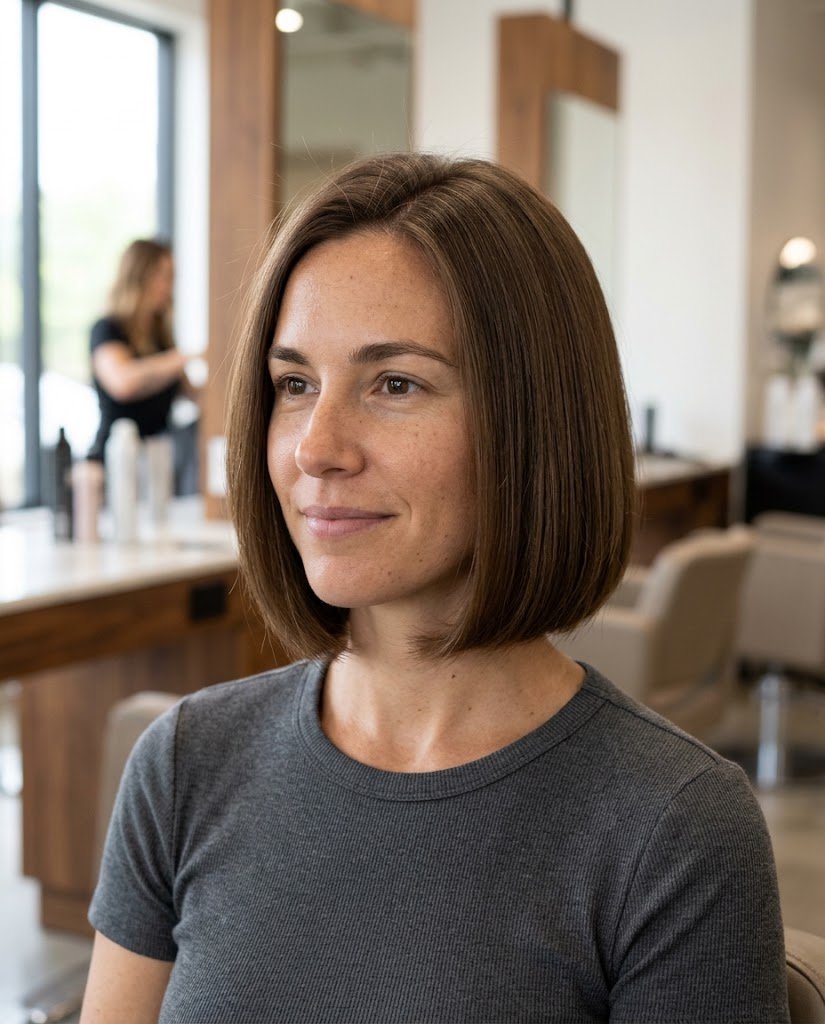
A jaw-length or chin-length bob often looks fuller when the roots have some height and the ends form a clean outline.
While drying, use a small round brush to guide the bottom inch of hair gently inward. You want a soft bend, not a tight curl. For a blunt bob, avoid pulling the ends into thin, separated points, which can make the bottom edge appear less full.

Short Fine Hair With a Bixie or Natural Waves
A bixie haircut combines elements of a bob and pixie, although the lengths and layers vary.
Work with the longer sections rather than forcing every piece into the same shape. If your hair has natural waves, gently cup sections in a diffuser using low airflow and gentle heat. Let the waves settle before touching them to help preserve their definition.
How to Refresh Flat Short Hair the Next Day
Short fine hair can look flat the morning after styling, even when it isn’t oily. Before adding another product, check whether the roots feel greasy or have simply been pressed down during sleep.
If your roots feel oily, apply a small amount of dry shampoo to dry hair, following the label for application distance and waiting time. Gently work it through to remove visible residue. Too much can leave fine hair feeling gritty or coated.
If your hair feels clean but the crown looks flattened, skip the dry shampoo. Lightly dampen your fingertips and loosen the sections pressed down overnight. Let the roots dry in their new position rather than restyling your entire head.
For a pixie, reshape the longer pieces on top. With a bob, refresh the crown while leaving the smooth ends alone.
These small adjustments can help keep fine hair from going flat between washes. Dry shampoo absorbs excess oil, but it doesn’t clean the scalp or replace regular shampooing.
Why Does Short Fine Hair Look Flat Even After Styling?
Short fine hair goes flat for different reasons. Roots that collapse right after styling need a different approach from a crown that loses height by afternoon. Check when it happens and how the hair feels before adding more product.
| What You Notice | What to Check |
|---|---|
| Roots fall flat immediately | Heavy product near the scalp, damp roots, or hair dried downward |
| Crown loses lift later | Humidity, scalp oil, or a style that doesn’t hold its shape |
| Hair looks oily or separated | Scalp oil or rich styling products clumping strands together |
| Hair feels powdery or coated | Dry shampoo residue or accumulated styling product |
| Hair looks frizzy rather than full | Humidity, rough brushing, heat exposure, or dryness |
| Part seems wider | Whether this is longstanding low density or a new change |
Oily roots may need washing, while powdery residue calls for reviewing how often and how much product you use. Frizz is a different problem from flatness; piling on texture spray may make it harder to manage.
To keep volume in fine hair, look for the pattern. If the roots drop straight away, review drying direction and product weight. If they settle later, oil, humidity, and your hair’s natural texture may be involved. A widening part, especially if new, deserves attention beyond styling.
When Is Flat Hair More Than a Styling Problem?
Fine hair describes the diameter of individual strands. Hair density describes how many strands grow across an area of the scalp, so having fine hair doesn’t necessarily mean you’re losing it.
If your part seems to be widening, you’re shedding noticeably more hair than usual, or you see new areas of thinning, contact a dermatologist. Sudden or patchy hair loss deserves prompt assessment rather than waiting to see whether a new styling routine helps.
Products and blow-drying can change how full hair looks temporarily, but they cannot diagnose or treat the reason for hair loss.
Frequently Asked Questions
Can you make short fine hair look fuller without using a blow dryer?
Yes, though the lift is usually softer than a blowout. If the top is long enough, part damp hair on the opposite side and switch it back once dry. You can also loosely clip crown sections while they air-dry. Very short pixies may show less change.
Is mousse or root-lifting spray better for short fine hair?
Mousse suits a bob or longer pixie that needs body throughout. Root-lifting spray is more targeted when the crown falls flat but the lengths look full. Choose based on where you need support, and start with one product to avoid buildup.
Why does my short fine hair lose volume so quickly?
Roots that collapse immediately may have been left damp, dried downward, or weighed down by product. When lift disappears later, scalp oil, humidity, or natural texture may play a larger role. Notice the timing before changing your routine.
Can dry shampoo add volume to freshly washed fine hair?
Some formulas add grip even to clean hair, but dry shampoo is mainly designed to absorb oil. Freshly washed roots often don’t need it. Too much may leave a powdery finish or make strands feel coated, so follow the product directions.
Does teasing fine hair help it hold volume?
Occasional gentle teasing can give the crown temporary height, but repeated backcombing increases the risk of tangles and breakage. If your hair is fragile or knots easily, choose root-lifting methods that don’t rely on teasing for everyday styling.
Final Thoughts on Styling Short Fine Hair
The best way to give short fine hair more volume is to focus on where it falls flat rather than treating every section the same. A lightweight routine may be enough for a pixie, while a bob may need a little more attention to its shape. If your hair feels coated or stiff, simplify the products before adding more.
For haircut-specific ideas, explore our shaggy pixie cut guide.