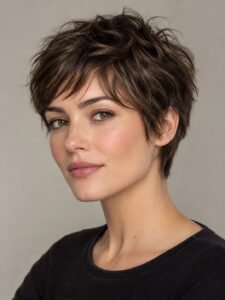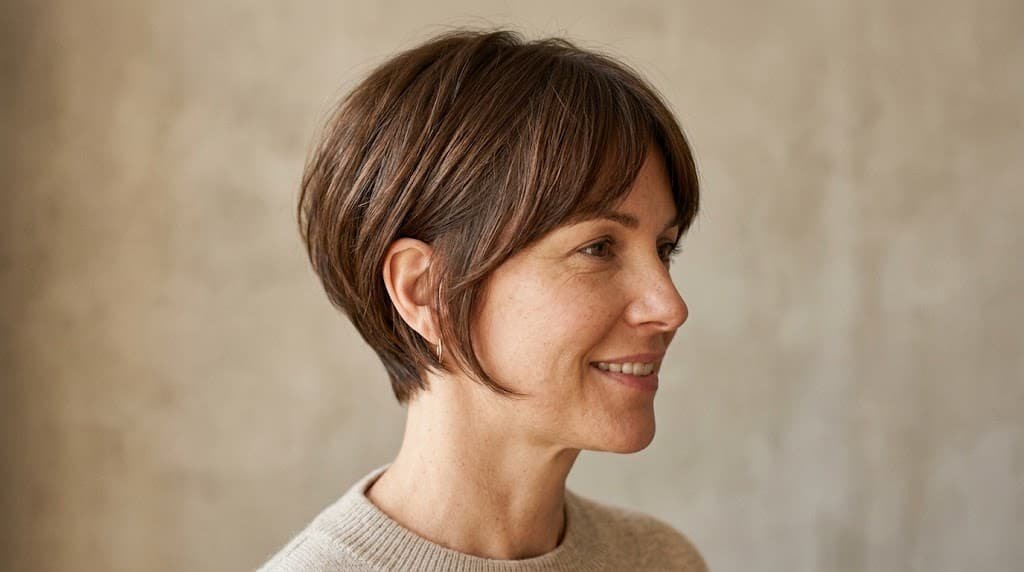



A bixie haircut combines elements of a short pixie cut and a bob. It often features layers, a shaped neckline, and longer sections around the front or sides. Depending on the cut, the overall appearance can be smooth, textured, or slightly tousled.
This hairstyle can be adapted to straight, wavy, and curly hair. The finished shape depends on the length of the layers, the placement of the bangs, and the hair’s natural texture.
Understanding the main features and variations can help you compare different bixie styles and decide which details match your preferences.
What Is a Bixie Haircut?
A bixie is a short hairstyle that combines the cropped proportions of a pixie with some of the length and shape associated with a bob. It commonly has shorter sections around the back or crown and additional length near the face.
Layering is a recognizable feature of many bixies. Some versions have softly blended layers, while others use more noticeable differences in length to create a textured appearance.
There is no single fixed length for this haircut. A shorter bixie may expose much of the ears and neckline, while a longer version can have side sections that reach toward the cheeks or jaw.
What Are the Main Features of a Bixie Cut?
Although individual styles vary, several characteristics are commonly associated with a bixie.
- Mixed lengths: Shorter sections may be combined with longer hair around the front or sides.
- Layered shape: Layers can create movement and influence how the hair falls.
- Face-framing pieces: Longer sections near the forehead or temples may soften the outline.
- Shaped neckline: The back can be tapered, softly layered, or left slightly longer.
- Optional bangs: Side-swept, wispy, or curtain-style bangs can be added.
Not every bixie has all these features. Some have a clearly layered, piecey finish, while others maintain a smoother outline.
How Is a Bixie Different from a Pixie or Bob?
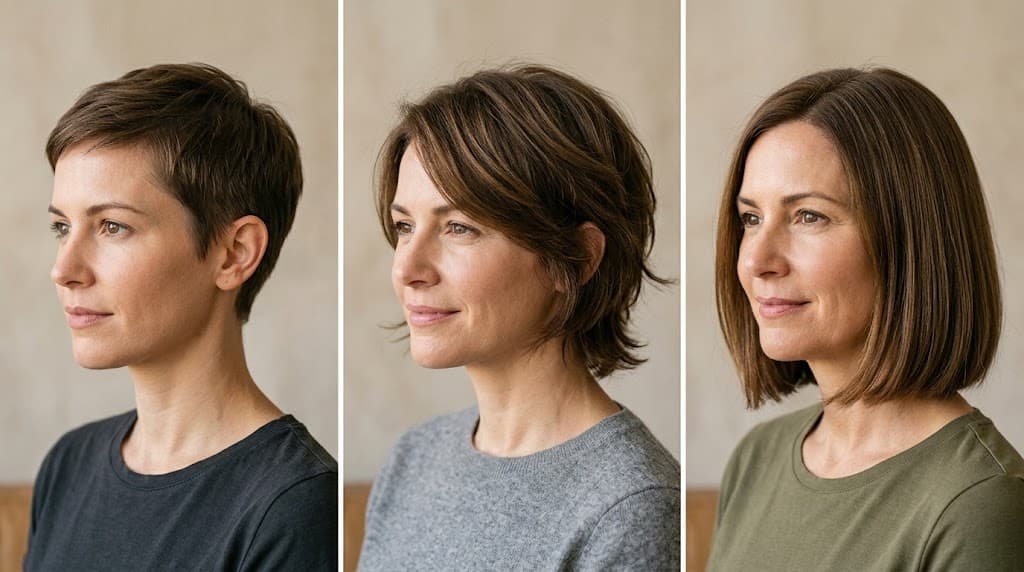
The differences between these haircuts mainly involve their length, layering, and overall shape.
A pixie cut generally has a closely cropped silhouette, often with shorter sides and back. The top may be kept longer for additional styling options.
A bob haircut usually maintains more length around the sides and lower edge. Bobs can be blunt, graduated, or layered, so their appearance varies considerably.
A bixie sits between these styles, combining shorter areas with longer sections that create a softer outline.
| Feature | Pixie Cut | Bixie Cut | Bob Cut |
| Overall length | Generally very short | Short with longer sections | Short to medium |
| Layers | Cropped or layered | Often visibly layered | Blunt or layered |
| Around the ears | Often closely cut | May partly cover the ears | Frequently longer |
| Neckline | Often tapered | Tapered or softly layered | Blunt, graduated, or layered |
| General shape | Compact | Mix of cropped and longer sections | Often has a more continuous lower outline |
These differences are not strict rules. A long pixie may resemble a short bixie, while a heavily layered bob can have a similar silhouette.
What Are the Different Types of Bixie Haircuts?
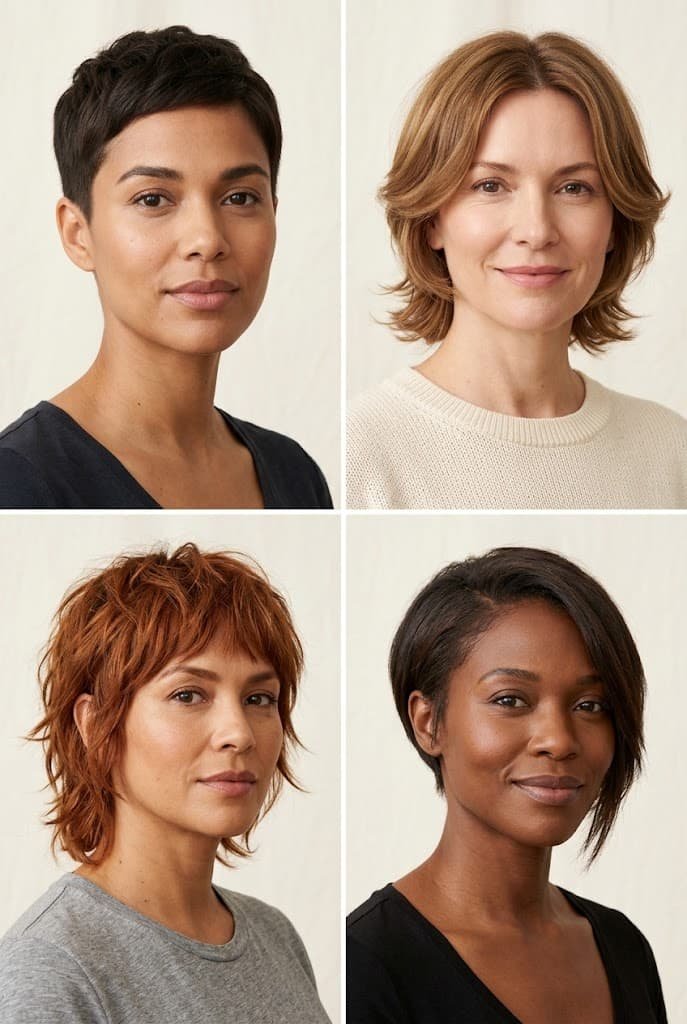
Bixie haircuts can be shaped in several ways. Some emphasize short length, while others focus on layers, texture, or an uneven outline.
The following variations show how different cutting choices can change the appearance.
Short Bixie Haircut
A short bixie has a compact silhouette, with hair kept relatively close around the ears and neckline. The front or crown may include slightly longer sections.
This variation looks closer to a traditional pixie while maintaining some of the softness associated with a layered bob.
A short bixie can have a smooth finish or lightly textured ends. It may appeal to someone who prefers a cropped hairstyle without choosing an equally short length throughout.
Long Bixie Haircut
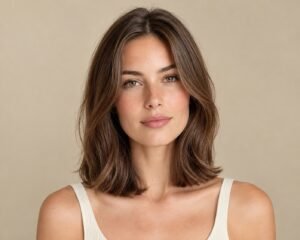
A long bixie keeps additional length around the sides, front, or nape. The longer pieces may extend toward the cheekbones or jaw, creating a shape similar to a short layered bob.
Depending on the length, some sections may be tucked behind the ears or arranged around the face.
This variation offers an option for someone who prefers a short hairstyle but wants to retain more visible length around the sides.
Layered Bixie Haircut
A layered bixie emphasizes the different lengths throughout the hairstyle. Shorter sections may be placed around the crown, with longer layers blending toward the sides.
The depth and placement of these layers affect the finished outline. Subtle layering can create a relatively smooth appearance, while more pronounced layers may produce greater separation.
Because layering is already common in bixies, this variation mainly describes a cut where the layered structure is especially noticeable.
Textured and Shaggy Bixie
A textured bixie features visible separation between sections of hair. The ends may look piecey or slightly uneven rather than forming a smooth, continuous line.
A shaggy bixie generally has more noticeable layers through the crown and sides. Some versions also include an irregular-looking fringe or longer pieces around the nape.
Although the two styles can look similar, a textured finish describes how the hair appears, while a shaggy cut emphasizes the arrangement of its layers.
The result can vary depending on natural hair texture and how the hairstyle is arranged.
Asymmetrical Bixie Haircut
An asymmetrical bixie has intentionally different lengths on either side of the head.
One side may be cut close to the ear, while the opposite side includes longer pieces around the cheek or jaw. The contrast can be subtle or more pronounced.
Some asymmetrical versions have a smooth outline, while others combine unequal lengths with textured layers.
A side part may emphasize the difference between the two sides, although the haircut’s asymmetry comes from its actual lengths rather than the parting alone.
How Do Bangs Change a Bixie Haircut?
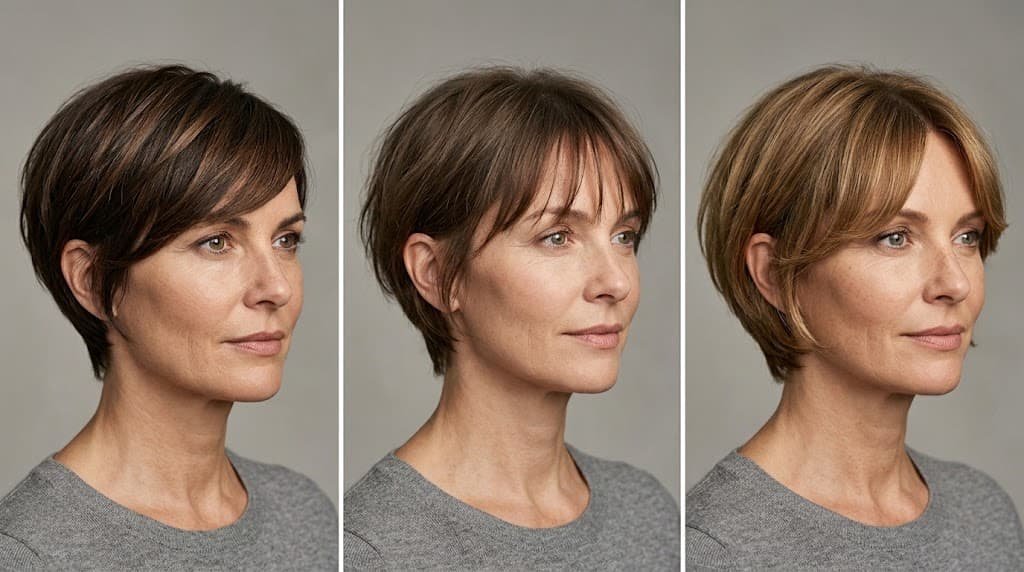
Bangs influence the shape of a bixie around the forehead and temples. Their length, thickness, and direction can change how the hairstyle frames the face.
A shorter fringe creates a more cropped appearance at the front. Longer bangs may blend into the side layers or form separate face-framing sections.
Bixie with Side-Swept Bangs
A bixie with side-swept bangs has a fringe that falls diagonally across the forehead.
The hair may be shorter near the parting and become longer toward one temple. This creates an angled outline that contrasts with the shorter sections around the crown and neckline.
Side-swept bangs can be included in both shorter and longer bixies. They may be worn smooth or arranged into slightly separated sections.
Their final position depends partly on the hair’s natural growth direction and the length of the fringe.
Bixie with Wispy or Curtain Bangs
Wispy and curtain bangs create different shapes around the forehead.
Wispy bangs consist of lighter, separated sections rather than a thick, continuous fringe. They may fall across the forehead or slightly to one side.
Curtain bangs are usually parted near the center, with sections directed toward opposite sides of the face. The outer pieces are often longer, allowing them to blend with the surrounding layers.
Wispy bangs may be an option for someone who wants a lighter-looking fringe. Curtain bangs can create longer face-framing sections around the temples and cheeks.
Both options can be adapted to different bixie lengths.
How Does a Bixie Haircut Look on Different Hair Textures?
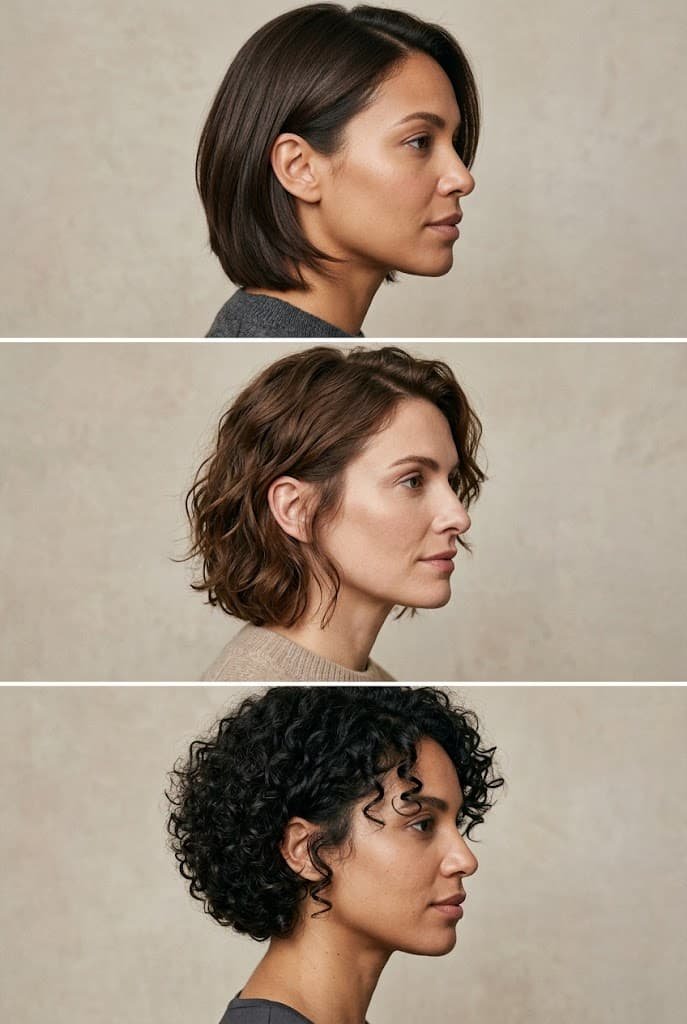
A bixie can look different on straight, wavy, and curly hair. Natural texture affects how the layers fall, how the ends sit, and the overall outline.
Hair density and individual strand thickness also influence the appearance. As a result, similar haircuts may look different from one person to another.
Bixie for Straight Hair
On straight hair, a bixie often has a smooth outline with clearly visible layers.
The hair may lie close to the head or form a slightly rounded shape, depending on how it is cut. Longer front sections can be parted to one side, arranged across the forehead, or tucked behind the ears when the length allows.
Textured ends may create a more separated appearance, while blended layers can maintain a smoother finish.
Bixie for Wavy Hair
A wavy bixie combines shorter layers with the natural bends of wavy hair.
These waves can create curved sections around the crown, sides, and neckline. Depending on the wave pattern, some ends may turn outward while others fall toward the face.
Longer sections may allow waves to form more continuous shapes. Shorter layers can create a more separated outline.
The hairstyle can be worn with its natural wave pattern or arranged into a smoother finish.
Bixie for Curly Hair
A curly bixie maintains a short overall silhouette while allowing curls to shape the crown, sides, and front.
Depending on curl pattern and layer placement, the haircut may appear rounded or have a more distinct layered outline.
Curly hair can look shorter when dry than when wet or stretched because the strands form bends or coils. This natural shrinkage is an important consideration when choosing fringe and side lengths.
A curly bixie may include a shorter fringe, longer face-framing curls, or additional length around the ears.
What Should Fine or Thick Hair Consider?
Fine hair and thick hair are often used to describe different characteristics.
Fine hair refers to individual strands with a relatively small diameter. Hair density describes how many strands are present in a given area. Someone can have fine strands and still have dense hair.
For fine hair, carefully positioned layers and a more defined lower edge may be options when a fuller-looking outline is preferred. Too many short layers can make some styles appear more separated at the ends.
For dense or coarse hair, layers may be used to adjust the shape and distribution of bulk. The amount of layering depends on the hair’s texture, density, and intended silhouette.
Considering these characteristics together is more useful than choosing a bixie based only on whether the hair is described as fine or thick.
How Can You Style and Maintain a Bixie Haircut?
A bixie can be arranged into a smooth, controlled hairstyle or a more relaxed, textured look.
The styling routine depends on the cut, natural texture, and desired finish. Short length does not automatically mean that every bixie requires little styling.
Smooth and Polished Styling
A smooth bixie emphasizes the haircut’s outline and layer direction.
The front can be arranged with a center or side part, depending on its length. A comb or brush may help guide the hair into place, while a small amount of styling product can provide additional hold when needed.
This finish places more emphasis on the haircut’s shape than on individual textured sections.
Tousled and Textured Styling
A tousled bixie has a relaxed appearance, with different sections arranged to show natural movement.
Wavy or curly hair may already have visible bends or curls that contribute to this look. Straight hair can also be arranged into separated sections, although the styling approach may differ.
A light styling product can be an option for adding definition or holding selected sections in place.
The finished appearance depends on the haircut and the hair’s natural characteristics.
Keeping the Shape as It Grows
As a bixie becomes longer, its original outline gradually changes.
The sides may begin covering more of the ears, the neckline may appear less closely shaped, and the fringe can fall differently.
Trimming selected areas can help preserve the intended silhouette. There is no single maintenance schedule that applies to every bixie.
Someone who wants to move toward a longer bob may choose to retain more length through the sides and front while gradually reshaping the back.
What Should You Consider Before Choosing a Bixie?
Before choosing a bixie, focus on the haircut’s proportions and how they relate to your styling preferences.
Reference photographs can help communicate the intended length, layers, and fringe. Comparing photographs of similar natural hair textures may also help clarify how the haircut could appear.
Length Around the Ears and Neck
The length around the ears and neckline has a noticeable effect on the overall shape.
A shorter neckline creates a more cropped appearance. Additional length at the nape can give the haircut a softer, more bob-like outline.
The side sections also matter. Hair cut above the ears creates a different silhouette from longer pieces that extend toward the cheeks.
When comparing haircut photographs, looking at the front, sides, and back can help identify these differences.
Layer Placement and Daily Styling Needs
Layer placement influences how the hair falls and how clearly different sections appear.
Longer, blended layers may create a smoother outline. Shorter, more pronounced layers can produce a more textured shape.
Natural growth patterns, particularly around the crown and forehead, may affect how easily the hair follows a preferred parting or fringe direction.
Before choosing the haircut, consider whether you prefer a smooth finish, visible texture, or enough length to change the front styling.
These preferences can help guide decisions about the layers and overall shape.
Frequently Asked Questions
Is a Bixie Haircut Suitable for Fine Hair?
A bixie can be adapted to fine hair. The final appearance depends on strand diameter, hair density, and layer placement. A more defined lower edge may be an option for someone who prefers a fuller-looking outline.
Can You Get a Bixie with Bangs?
Yes. A bixie can include side-swept, wispy, curtain, or short straight-across bangs. The fringe can blend into the surrounding layers or remain more distinct.
Is a Bixie Haircut High Maintenance?
Maintenance depends on the cut and preferred finish. Some versions can be worn with natural texture, while others require more deliberate styling. Shorter, closely shaped cuts may also need regular reshaping to preserve their outline.
What Happens When a Bixie Grows Out?
As the hair becomes longer, the difference between the cropped and longer sections may become less noticeable. Depending on its original shape and subsequent trims, a bixie may gradually resemble a short layered bob.
Final Thoughts
A bixie haircut combines the short proportions of a pixie with some of the length and shape associated with a bob. It can be adapted through layering, fringe placement, and natural hair texture.
Shorter versions create a more compact silhouette, while longer styles retain additional length around the face. Smooth, textured, wavy, and curly variations offer different visual options.
When choosing a bixie, the most useful details to consider are the length around the ears and neckline, the placement of the layers, and the amount of daily styling you prefer.