Braided bun hairstyles combine braided sections with the shape of an updo. Depending on the braid type, length, placement, and finish, the result can look compact, full, structured, detailed, or more relaxed.
For Black hair, braided buns can be created with cornrows, box braids, knotless braids, feed-in braids, and other braid styles. Some versions begin with braids that lead directly toward the bun, while others use individual braids that are gathered and wrapped after the braiding is complete.
The overall appearance can change depending on where the bun sits, how the braids are arranged, and how much braided length is gathered into the final shape.
What Is a Braided Bun Hairstyle?
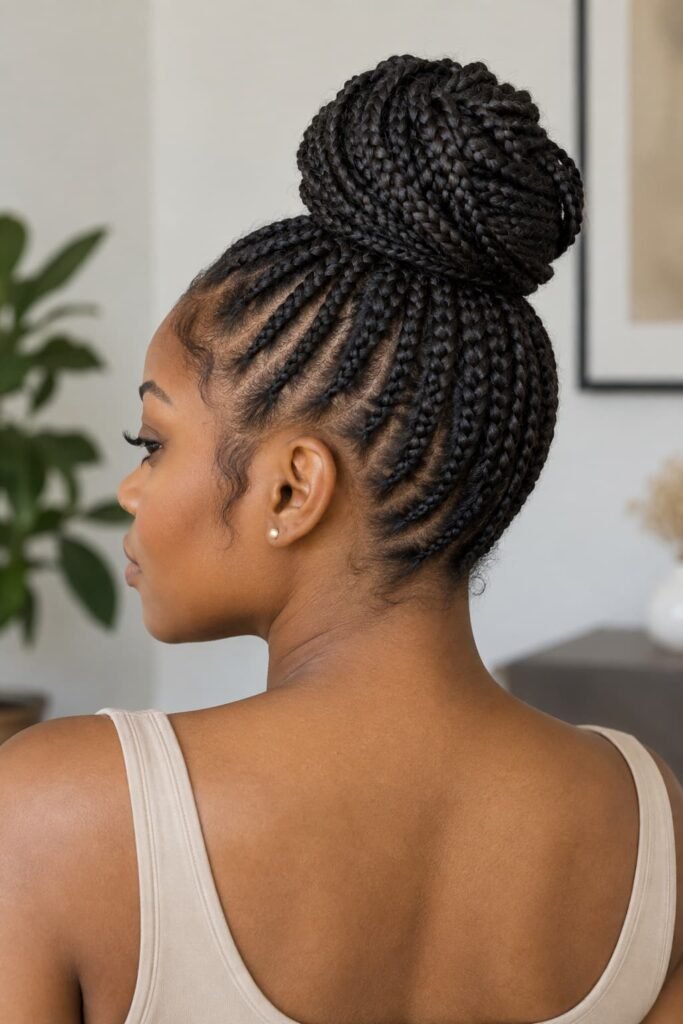
A braided bun hairstyle combines braided hair with a gathered bun.
The braids may begin at the scalp and move toward one gathering point, or they may be individual braids that are brought together afterward. The bun can sit high near the crown, lower near the nape, or somewhere between the two.
Because the braid type, placement, and bun shape can vary, a braided bun describes a group of related styles rather than one fixed look.
How the Braids and Bun Work Together
The braid pattern creates the structure of the hairstyle, while the bun forms the main updo shape.
With cornrow-based styles, the braids can travel across the scalp toward the area where the bun will sit. This makes braid direction and parting an important part of the visible design.
With individual braids such as box braids, the braids remain separate through most of their length. They can be gathered at a chosen point and then wrapped, folded, or pinned into a bun.
Braid thickness can also affect the appearance. Smaller braids may show more individual detail, while thicker braids can create a bolder overall shape.
How Bun Placement Changes the Overall Look
Bun placement can change the silhouette of the hairstyle.
A high bun places more visual emphasis near the top of the head and may make the braid pattern around the sides and back more noticeable.
A low bun keeps the main volume closer to the nape and can create a more understated shape.
A mid-height bun sits between these two placements and may be an option for someone who wants both the braid pattern and the bun to remain clearly visible.
The final appearance can also vary with bun size, braid thickness, braid length, and how closely or loosely the braids are arranged.
Cornrow Braided Bun Styles
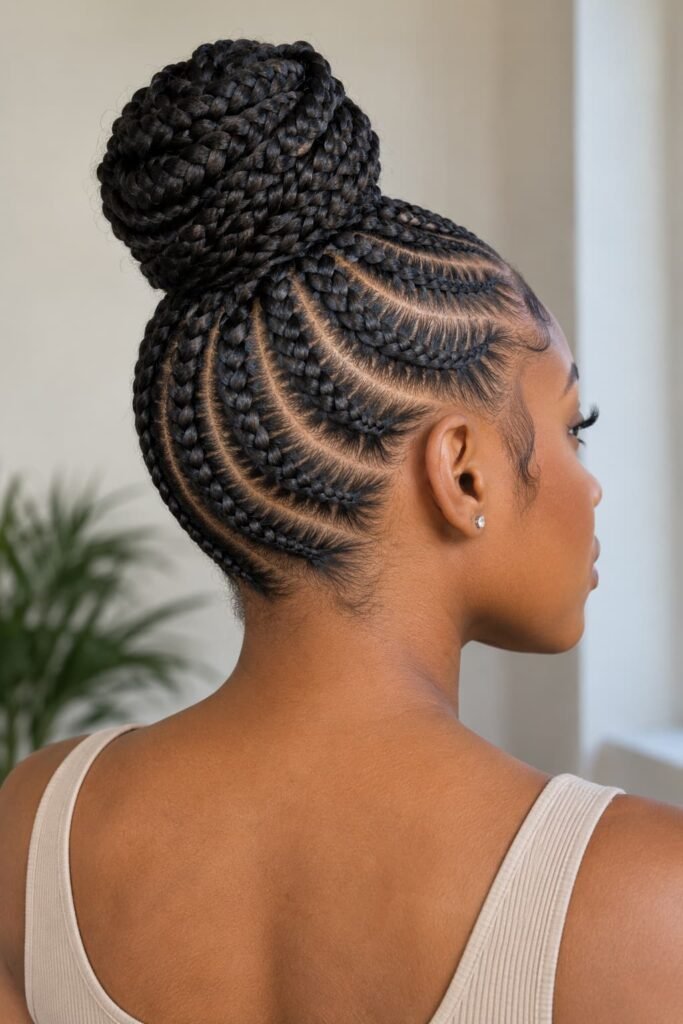
Cornrow braided buns use braids that follow the scalp as part of the hairstyle’s foundation.
The cornrows can run in straight, curved, diagonal, or more detailed patterns before meeting near the bun. Because of this, the scalp pattern can become an important visual feature rather than simply a way to gather the hair.
The remaining braided lengths can then be arranged into the bun, depending on the design and the amount of hair available.
Cornrows Into a High Bun
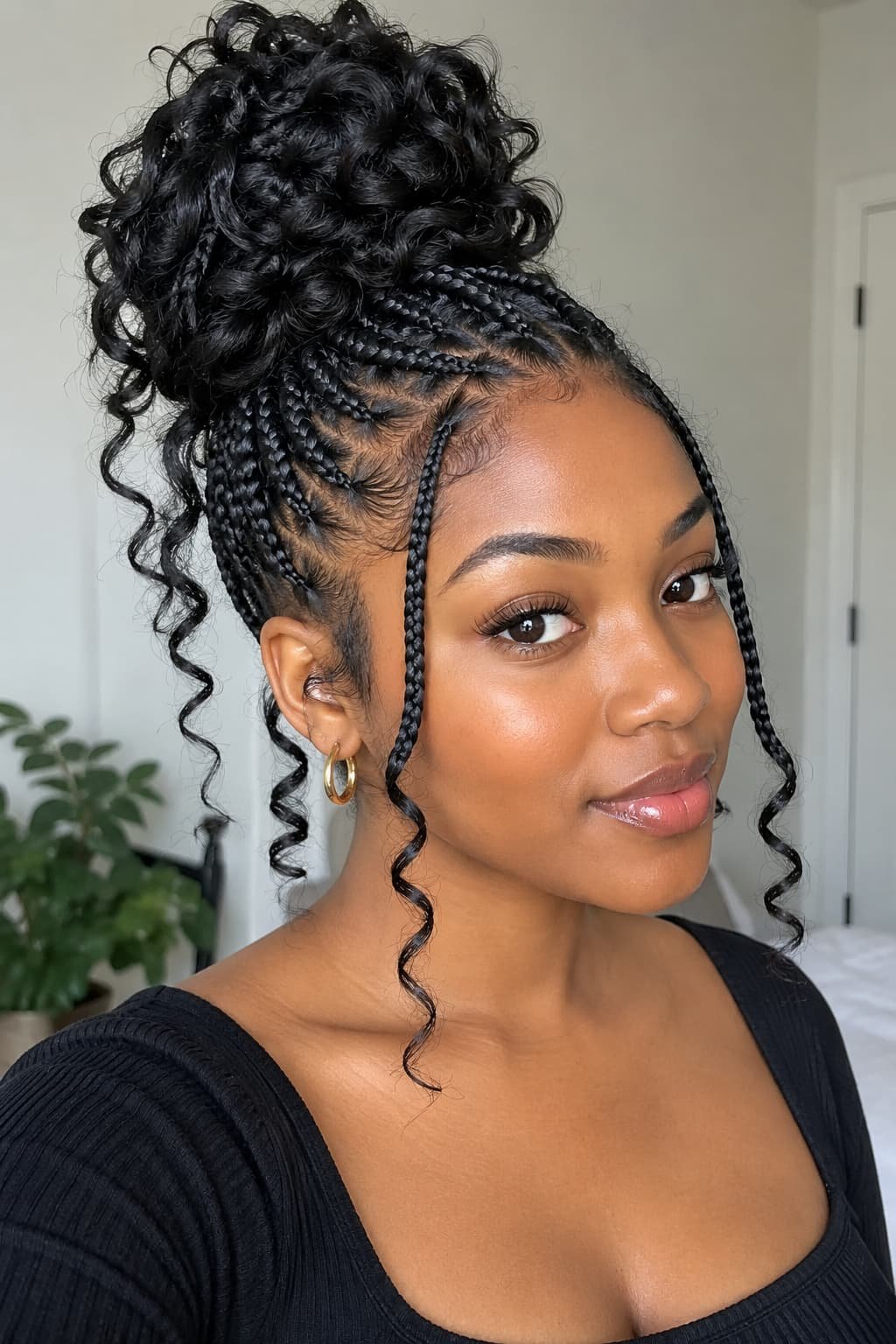
In a high cornrow bun, the braids are directed upward toward the crown or upper part of the head.
Because several braids move toward one gathering point, their direction can become a noticeable part of the hairstyle from different angles.
The cornrows may follow straight lines, curved sections, or a more detailed parting pattern before reaching the bun.
Bun size can vary with braid length, thickness, and whether additional braiding hair is part of the style. A smaller bun can create a compact finish, while a fuller bun may become a stronger visual feature.
Cornrows Into a Low Bun
A low cornrow bun directs the braids toward the lower back of the head near the nape.
This placement keeps the main volume lower than a crown bun and creates a different overall silhouette.
Straight cornrows can create a simple, defined pattern, while curved or angled sections may add more visible detail before the braids meet.
The bun itself can be kept compact or given more volume depending on the braid length and how the braided sections are arranged.
Curved or Patterned Cornrows With a Bun
Cornrows do not have to follow straight lines.
Curved, diagonal, or geometric parting patterns can change the appearance of the hairstyle before the braids reach the bun. These patterns may make the scalp design more noticeable and give the style a more detailed look.
One possible approach is to pair a more detailed braid pattern with a simpler bun so the two elements do not compete visually.
Another option is to keep the cornrow pattern relatively simple and make the bun larger or more sculpted if the bun is intended to be the main visual feature.
Box Braid Bun Styles
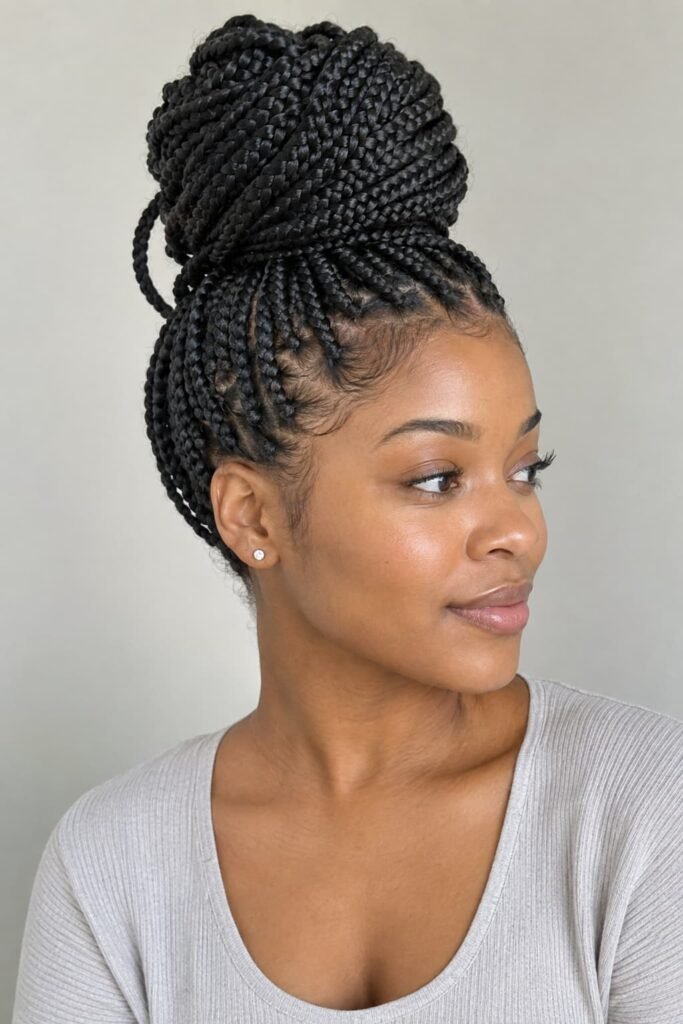
Box braids can be gathered into different bun shapes because the individual braids remain separate through their lengths.
They can be brought together at different points on the head and then wrapped, folded, or arranged into an updo.
The final bun shape can vary with braid length, braid thickness, and the number of braids being gathered.
High Box Braid Bun
A high box braid bun gathers the braids near the top of the head.
The braided lengths can then be wrapped around the gathering point to create a rounded, layered, or fuller shape.
Longer braids may allow more length to be wrapped into the bun, while thicker braids can create a more pronounced structure with fewer individual sections.
A high bun also gathers the braid lengths away from the shoulders and back, changing the hairstyle from a loose braided look into a more concentrated updo.
Low Wrapped Box Braid Bun
A low wrapped box braid bun gathers the braids near the nape.
The lengths can then be wrapped around the base to create a rounded or layered shape.
This placement keeps the bun lower on the head and can create a more subtle silhouette than a high bun.
The final shape may appear compact or fuller depending on braid thickness, length, and how the braids overlap when wrapped.
Half-Up Box Braid Bun
A half-up box braid bun uses only part of the braids to form the bun.
The upper section is gathered near the crown, while the remaining braids stay loose.
This creates a combination of an updo and a loose braided hairstyle.
The bun may be small and compact or slightly fuller, while the remaining braids continue to show their length through the lower part of the style.
This can be one possible option for someone who wants a visible bun while still keeping part of the braided length loose.
Knotless Braids Styled Into a Bun
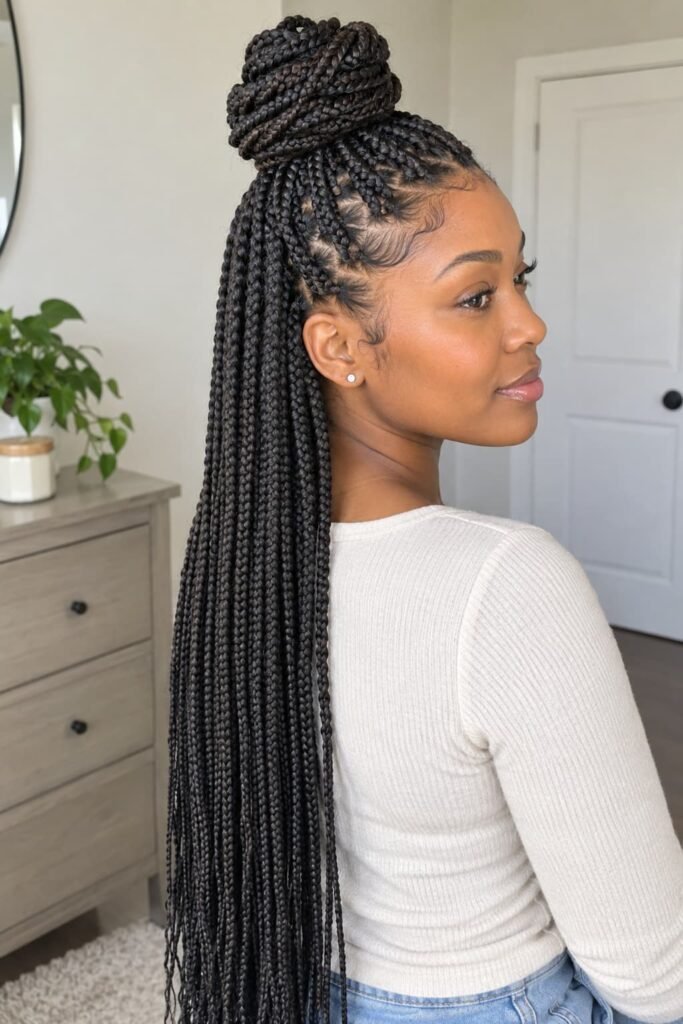
Knotless braids can be gathered into different bun shapes because the individual braids remain separate through their lengths.
They may be arranged into a high bun, a lower bun, or a half-up style. The final shape can vary with braid length, braid thickness, and how many braids are included in the bun.
Knotless High Bun
A knotless high bun gathers the braids near the crown or top of the head.
The braided lengths can be wrapped around the base to create a rounded or layered shape. Longer braids can provide more length to wrap, which may result in a fuller-looking bun.
Some people may prefer a compact wrap with a more defined outline, while others may choose a looser arrangement that shows more of the individual braid texture.
Half-Up Knotless Braided Bun
A half-up knotless bun uses only the upper section of the braids.
The selected braids are gathered near the crown, while the remaining lengths stay loose around the shoulders or down the back.
This creates a mix of an updo and a loose braided style. A smaller bun can keep more attention on the hanging braids, while gathering a larger section may make the bun more noticeable.
Feed-In and Stitch Braids With a Bun
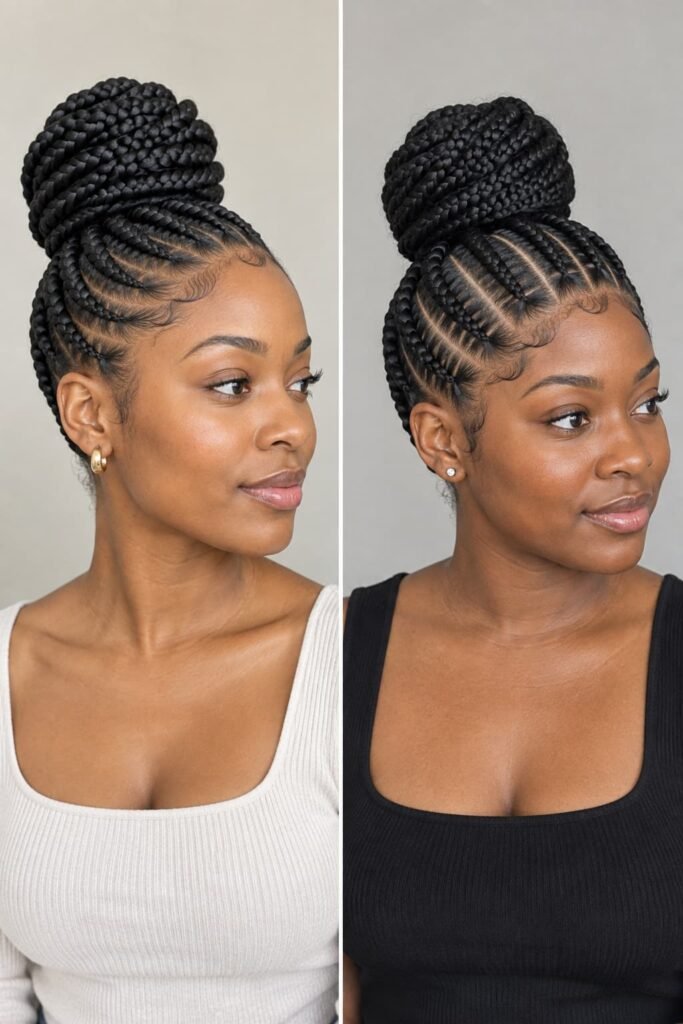
Feed-in and stitch braids can both be incorporated into bun hairstyles, but their visible structure can look different.
Feed-in braids involve gradually adding braiding hair as the braid develops. Stitch braids use clearly separated sections along the braid path, creating a repeated pattern across the scalp.
When either technique is directed toward a gathering point, the remaining braided lengths can be arranged into a bun.
Feed-In Braids Gathered Into a Bun
Feed-in braids can be directed toward the crown, back of the head, or nape before the braided lengths are gathered.
The braid pattern may follow straight lines or include curved and angled sections. Because additional hair is incorporated gradually, the braids can also change in thickness along their length.
Once gathered, the bun can remain relatively compact or appear fuller depending on braid length, thickness, and how the braids are wrapped.
Stitch Braids With a Defined Scalp Pattern
Stitch braids use repeated sectioning to create clearly visible lines along the braid path.
When paired with a bun, this scalp pattern can become an important part of the overall design. Straight stitch braids can create a more linear look, while curved or angled sections may make the pattern more detailed.
The bun can sit high or low depending on the direction of the braids.
One possible option is to pair a detailed stitch pattern with a simpler bun so the scalp design remains easy to see. A larger bun can create a different balance by placing more visual emphasis on the gathered section.
Braided Bun Styles With Curls or Loose Braids
A braided bun does not always have to gather every section into the updo.
Loose curls, individual braids, or selected front pieces can remain outside the bun. These details may change the texture and overall balance of the hairstyle while keeping the braided bun as the main structure.
Braided Bun With Loose Curls
A braided bun with loose curls combines defined braid sections with visible curly pieces.
The curls may sit around the bun, fall from selected sections, or remain loose near the sides or back.
This creates a contrast between the more structured braids and the softer curl texture. The final appearance can vary with curl size, placement, and the amount of hair left loose.
Braided Bun With Face-Framing Braids
Face-framing braids are sections left loose near the front rather than being gathered into the bun.
Depending on their length, they may fall near the temples, cheeks, or farther down the sides of the face.
This can be an option for someone who wants more braid detail visible from the front. Thin sections may create a subtle effect, while thicker braids can make the face-framing detail more noticeable.
Braided Bun With Curly Ends
Some braided styles combine braided lengths with ends that remain curly.
When these braids are gathered into a bun, some of the curl texture can remain visible around or through the updo.
The contrast between the braids and curls may give the bun a more textured appearance. The curls can be concentrated near the bun or allowed to fall from selected sections, depending on the intended look.
How Braid Size and Bun Shape Change the Style
Braid size can change how much individual braid detail is visible in the hairstyle.
A style made with many smaller braids may show more individual braid lines, while larger braids create fewer, more prominent sections. Medium-size braids can create a look somewhere between those two effects.
The shape of the bun also depends on factors such as braid length, thickness, the number of braids gathered, and how they are wrapped.
Small Braids With a Compact Bun
When many smaller braids are gathered together, the bun can show a high level of visible braid texture.
Keeping the bun relatively compact may place more emphasis on the individual braid pattern rather than on overall volume.
The final shape can still vary depending on how much braided length is wrapped into the bun.
Medium Braids With a Defined Bun
Medium-size braids can keep the individual braid pattern clearly visible without creating the same level of fine detail as smaller braids.
When gathered, they can form a rounded or layered bun with noticeable braid texture.
This braid size can be used with high, low, or half-up placements. The appearance will depend on the length and number of braids included.
Larger Braids With an Oversized Bun
Larger braids create broader, more noticeable sections within the hairstyle.
When enough length and volume are gathered, they may form a fuller or oversized bun with a more sculpted outline.
The exact shape can vary with braid thickness, braid length, the number of braids, and whether added hair is part of the style.
Some people may prefer a close wrap for a more compact shape, while others may arrange the braids into a larger bun that becomes the main visual feature.
High vs. Low Braided Buns
The position of the bun can noticeably change the overall shape of a braided hairstyle.
A high bun places the gathered section near the crown, while a low bun keeps it closer to the nape. The better option depends on the braid pattern, available length, and the type of silhouette someone prefers.
How a High Bun Changes the Silhouette
A high braided bun sits near the crown or top of the head.
This placement puts more visual emphasis on the upper part of the hairstyle. It can also make cornrows, feed-in braids, or stitch patterns around the sides and back easier to see when those braids lead upward toward the bun.
The bun itself may be compact or fuller. Its final shape can vary with braid length, thickness, and the number of braids being gathered.
How a Low Bun Creates a Different Shape
A low braided bun sits closer to the nape and keeps the main gathered section toward the back of the head.
Compared with a high bun, this creates a lower and more understated silhouette.
Low buns can be combined with straight cornrows, curved braid patterns, box braids, or other individual braid styles. The bun may be wrapped closely or arranged with more volume depending on the available braid length and the desired finish.
Can You Add Beads, Cuffs, or Other Accessories?
Yes. Beads, braid cuffs, rings, decorative pins, and similar accessories can be added to many braided bun styles.Yes. Beads, braid cuffs, rings, decorative pins, and similar accessories can be added to many braided bun styles.
They may be placed along selected braids, near the front sections, or closer to the bun. Placement can change which parts of the hairstyle receive the most visual attention.
Using Accessories Without Hiding the Braid Pattern
A detailed braid pattern may need only a few accessories to remain clearly visible.
For example, cuffs on selected braids can add contrast while leaving most of the parting and braid direction uncovered.
With a simpler braid pattern, someone may prefer more decorative details around the bun or along several individual braids.
Both approaches are style choices. The amount of decoration can be adjusted according to the overall look someone wants.
What to Consider Before Choosing a Braided Bun
The bun position is only one part of the decision.
Hair length, braid length, braid thickness, added hair, bun size, and the amount of visible scalp pattern can all influence how the finished hairstyle looks and feels.
Hair Length and Available Braid Length
Available length affects how much hair can be folded or wrapped into a bun.
Longer braids provide more length to arrange around the gathering point. Shorter braids may form a smaller bun or work better with a different wrapping method.
Braid thickness and the number of braids also matter, so length alone does not determine how large the finished bun will appear.
Natural Hair vs. Added Braiding Hair
A braided bun can be created with natural hair or with added braiding hair.
Natural hair may provide enough length for the intended braids and bun without extensions.
Added braiding hair is another option when someone wants to change the length, fullness, color, oradded braiding hair scale of the hairstyle. It is not necessary for every braided bun.Added braiding hair is another option when someone wants to change the length, fullness, color, or scale of the hairstyle. It is not necessary for every braided bun.
Bun Weight and Styling Tension
The amount and length of hair gathered into one area can affect how the style feels.
A large bun made from long or thick braids may feel different from a smaller, lighter arrangement. A braided bun should not need to feel painfully tight to stay in place.
If a particular arrangement feels too heavy or tightly pulled, options may include a smaller bun, a looser arrangement, or gathering fewer braids at one point.
How Much Detail You Want in the Scalp Pattern
Some braided buns emphasize the bun itself, while others make the scalp braid pattern a major part of the design.
Straight cornrows can create a simple, defined structure. Curved, diagonal, feed-in, or stitch patterns can add more visible detail before the braids reach the bun.
Someone who wants the braid pattern to remain prominent may prefer a simpler bun. A less detailed braid foundation can also be paired with a larger or more sculpted bun if the gathered shape is meant to stand out.
Frequently Asked Questions
Can Short Black Hair Be Styled Into a Braided Bun?
It may be possible, depending on the available hair length and the type of braided bun being created.
Shorter natural hair may work with a smaller bun or a braid pattern designed around the available length. Added braiding hair is another option when extra length or fullness is wanted.
The possibilities can vary with hair length, density, braid size, and the intended shape.
Can You Create a Braided Bun Without Extensions?
Yes. Extensions are not required when there is enough natural hair to create the intended braid pattern and bun.
A bun made only with natural hair may differ in size or shape from one that includes added braiding hair.
Extensions are an optional way to change length, fullness, color, or overall volume rather than a requirement for the hairstyle.
Can Box Braids Be Put Into a Bun?
Yes. Individual box braids can be gathered and arranged into a bun.
They may be styled high, low, or partially gathered into a half-up bun.
The finished size and shape can vary with braid length, thickness, and the number of braids included.
Can Knotless Braids Be Worn in a Bun?
Yes. Knotless braids can be arranged into high, low, or half-up buns.
Because the braids remain individual through their lengths, they can be gathered and wrapped into different updo shapes.
Braid length, size, and bun placement will influence the final appearance.
Can Cornrows Be Styled Into a Bun?
Yes. Cornrows can be directed toward a gathering point and combined with a bun.
The braids may move upward toward the crown or backward toward the nape. Straight, curved, or patterned sections can all create different visual effects.
In these styles, the direction of the cornrows becomes part of the overall design.
Can a Braided Bun Include Loose Curls?
Yes. Loose curls can be incorporated around the bun, left at the ends of selected braids, or used in sections that remain outside the updo.
This creates a contrast between the defined braid pattern and the softer curl texture.
The amount of visible curl can range from a few small sections to a more noticeable curly finish.
Are Braided Buns Considered Protective Hairstyles?
Braided buns are often grouped with protective styling because the hair can remain braided and gathered rather than being worn completely loose.
However, the term does not guarantee that every braided bun will have the same effect on the hair.
Braid weight, bun placement, and how tightly the style is gathered can vary considerably. A comfortable, less tightly pulled arrangement may therefore be preferable to assuming that a style is gentle simply because it is described as protective.