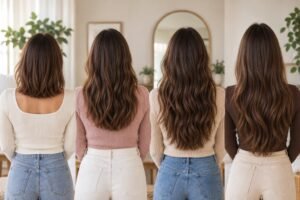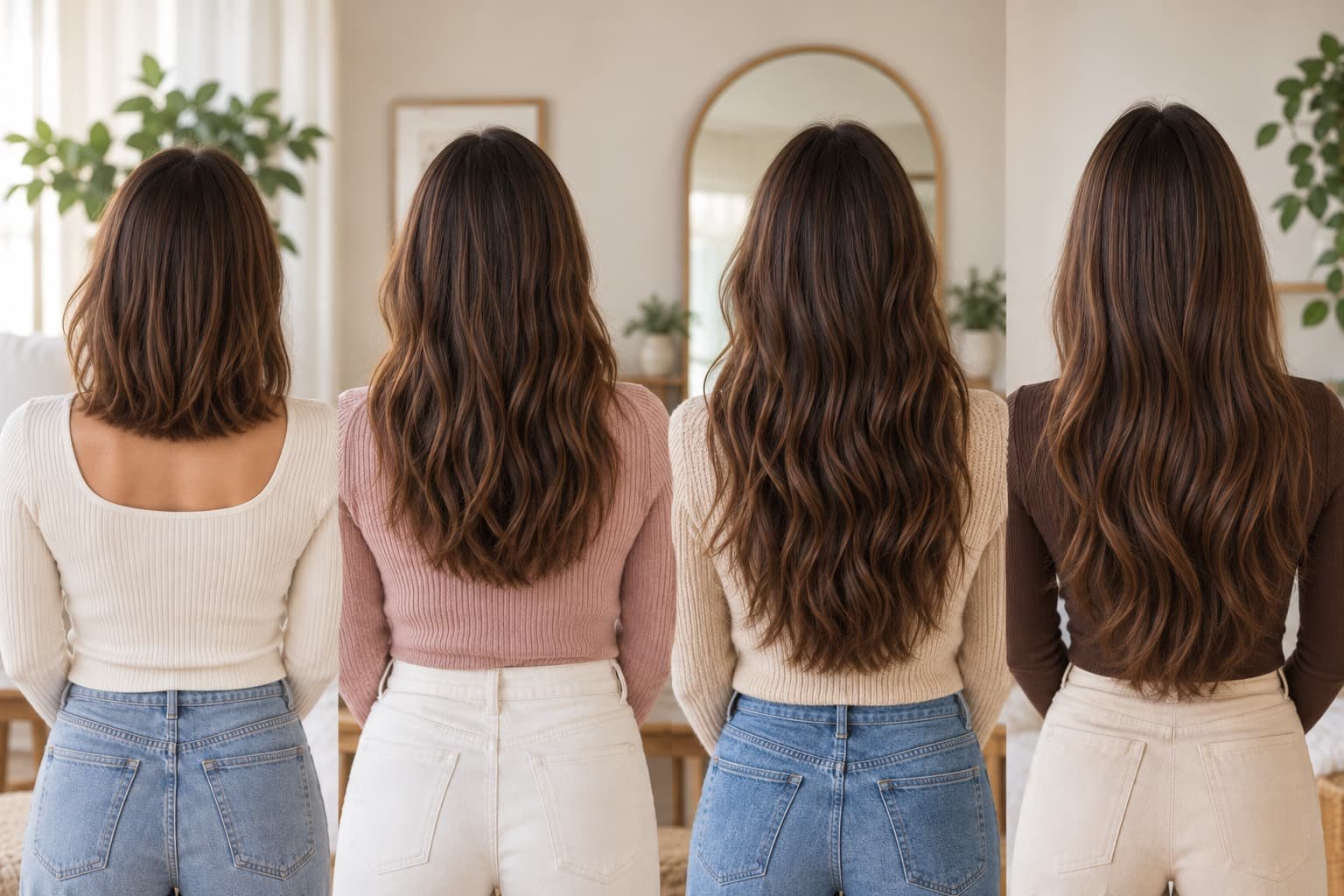
A year can bring a noticeable change in hair length, but the result will not look the same for everyone. Hair grows gradually, and the amount of visible length after 12 months can also be affected by the starting haircut, trims, breakage, texture, and curl pattern.
When looking at 1 year hair growth, it helps to separate new growth from visible length. Hair grows from follicles in the scalp, while the ends are the oldest part of each strand. If some length is trimmed or breaks during the year, the final change in visible length may be different from the total amount of new growth.
Texture can also influence how length appears. Straight hair tends to show its length more directly, while waves, curls, and coils follow curved patterns that can make the visible length look different from the full strand length.
Instead of expecting one exact result, it is more useful to understand average hair growth and how that growth may appear over a full year.
How Much Can Hair Grow in One Year?
Scalp hair grows at an average rate of about 1 centimeter per month. This is a general average, not a monthly target or a guaranteed rate for an individual.
Over a year, gradual growth can add a noticeable amount of strand length. However, the amount of additional length visible at the end of 12 months may be different.
Trims remove some existing length, while breakage can reduce how much length remains. The starting haircut, layers, texture, and styling can also affect how the change looks.
For this reason, hair growth in one year is better understood as a gradual process rather than a guaranteed number of inches or centimeters.
Average Hair Growth Per Month
Scalp hair grows about 1 centimeter per month on average. Hair growth takes place within follicles in the skin rather than at the ends of existing strands.
Because of this, trimming the ends does not directly change the biological growth rate at the follicle. A trim changes the length or shape of existing hair.
Small monthly changes may also be difficult to judge simply by looking in the mirror. Comparing hair over several months can make changes in length easier to recognize.
Individual follicles also move through their own growth cycles. This means the hairs across the scalp are not all at exactly the same stage at the same time.
What That May Mean Over 12 Months
Using the average monthly growth rate as a general reference, 12 months can produce a noticeable difference in strand length.
However, an average should not be treated as a prediction of exactly how long someone’s hair will become. Visible length depends on more than new growth alone.
Starting length can make the change appear different. Added length may noticeably change the outline of a short haircut, while a similar increase on already-long hair may create a less dramatic change in its overall shape.
Hair texture can change the visual result as well. Wavy, curly, and coily strands bend or curve rather than falling completely straight, so their visible hanging length can differ from their full strand length.
For this reason, another person’s one-year photographs are not a reliable standard for predicting an individual result.
Why the Same Number Does Not Apply to Everyone
Average growth figures provide useful context, but they do not predict an exact result for every person.
Hair follicles follow a natural cycle. The anagen phase is the active growth stage. It is followed by a shorter transition stage called catagen and a resting stage called telogen. Individual follicles can be at different stages of this cycle at the same time.
Visible length is also affected by what happens to existing strands. Breakage can shorten a strand even while new growth continues from its follicle.
Haircuts and trims make another visual difference because they remove some existing length. Two people could therefore see different changes in overall hair length during the same period.
For these reasons, 1 year hair growth is better viewed as an individual timeline rather than a fixed before-and-after result.
What Can 1 Year of Hair Growth Look Like?
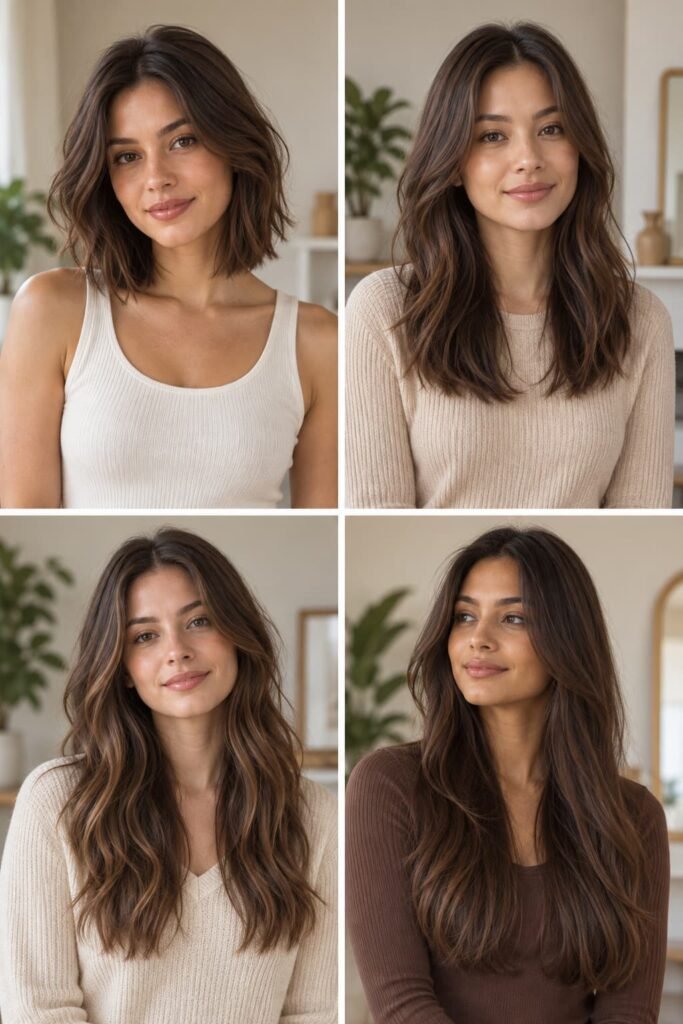
Hair length changes gradually throughout the year. Rather than expecting a dramatic change during a particular month, it is more useful to look at how small changes can accumulate over time.
The starting haircut plays an important role in how those changes appear. On short hair, added length can alter where different sections sit around the ears, jaw, or neck. With medium or long hair, the difference may be easier to notice by comparing the ends against consistent reference points.
Layers can also influence the visual change. Different sections of a layered haircut begin at different lengths, so the overall shape can shift as those sections become longer.
The following timeline describes possible visual changes rather than guaranteed milestones.
Months 1 to 3: Early Length Changes
During the first few months, changes may still look subtle.
With a short haircut, some sections may begin to sit differently as they gain length. Bangs or face-framing pieces may also fall lower than they did at the starting point.
On medium or long hair, a small increase may be harder to recognize without comparing the hair with an earlier photograph or another consistent reference point.
Texture can influence the comparison too. Curls and coils may make a small increase in full strand length less obvious when the hair is worn in its natural pattern.
Months 4 to 6: More Noticeable Length
By the middle of the year, accumulated length may become easier to recognize.
A short haircut may begin to develop a different outline as sections around the ears, jaw, or neck become longer. Layered hair can also look different as shorter sections move farther from their original positions.
With medium or longer hair, comparing the ends against the same reference point, such as the shoulders or upper back, can provide a clearer visual comparison.
Styling should also be considered. Changes in curl pattern, parting, volume, or how the ends are styled can make hair appear shorter or longer. Comparing similar styling conditions can provide a more consistent view of length changes.
Months 7 to 9: How the Overall Shape May Change
During months seven through nine, the difference from the original haircut may become more noticeable.
This can be particularly visible when the starting cut has clearly defined layers, bangs, or a short perimeter. Face-framing pieces that originally sat near the cheek or jaw may fall lower as they become longer.
Longer hair may show less change in its overall silhouette. Instead, the difference may be more noticeable in where the ends fall against the shoulders, chest, or back.
A haircut also does not necessarily keep exactly the same proportions as it becomes longer. Bangs, layers, and perimeter sections start at different lengths, so their relationship to one another can gradually change.
Some people may prefer to reshape their haircut as it becomes longer, while others may prefer to keep the additional length. This is a styling choice rather than something required for hair to continue growing.
Months 10 to 12: Looking at the Full-Year Difference
Near the end of the year, comparing the hair with its original starting point can make the overall change easier to see.
The comparison should consider more than where the ends fall. Starting length, trims, breakage, layers, texture, curl pattern, and styling can all influence the final appearance.
A short haircut may have developed into a noticeably longer shape. Medium-length hair may fall farther below its original reference point. With already-long hair, the overall silhouette may look similar even when the ends have moved lower.
Curly and coily hair can also look different depending on whether it is viewed in its natural pattern or at full strand length. Using similar styling conditions when comparing photographs can make visual changes easier to judge.
There is no single appearance that defines 1 year hair growth. Average growth figures provide useful context, but the visible result after 12 months can vary from one person to another.
Hair Growth and Visible Length Are Not the Same
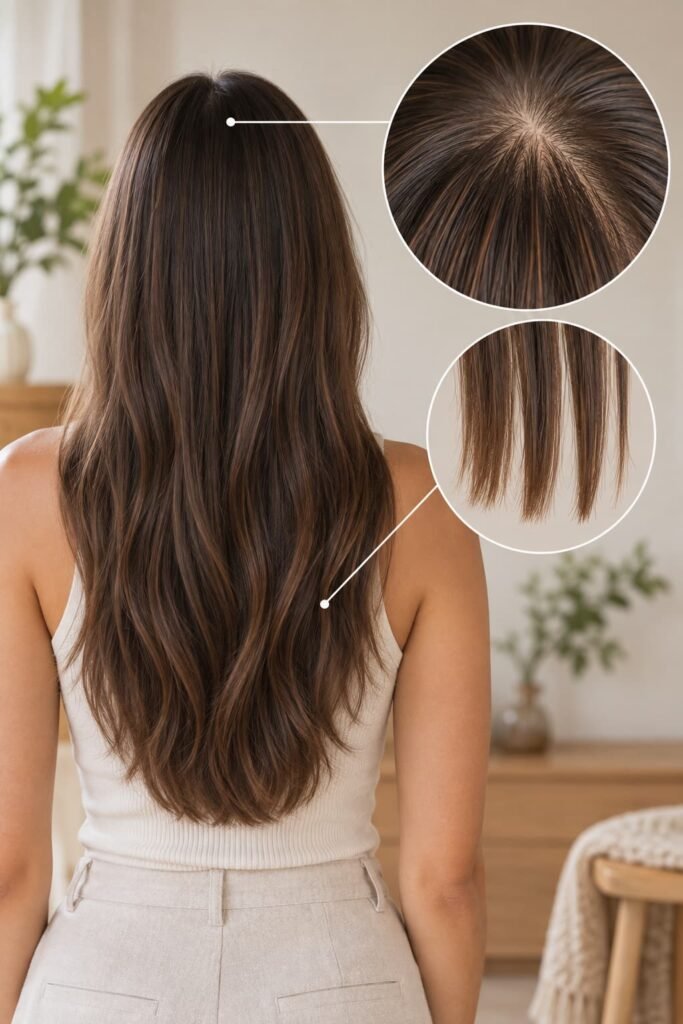
Hair growth and visible length are related, but they are not exactly the same. New hair is produced within the follicle, while visible length describes how far the existing strand extends from the scalp to the ends.
This difference matters when looking at hair over a full year. Hair can continue growing from the follicle while trims or breakage affect the amount of length that remains visible.
How Breakage Can Affect Retained Length
Length retention describes how much of the hair’s length remains over time. When a strand breaks, some of its existing length is lost.
This means new growth at the scalp does not always result in an equal increase in visible length at the ends. Someone may notice new growth while seeing a smaller overall change in hair length.
The amount of breakage can vary, so it should not be assumed that everyone will retain the same amount of length over 12 months.
Why Trims Change Length but Not the Growth Rate
A trim removes part of the existing hair shaft. It may change the length, perimeter, layers, or overall shape of a haircut, but cutting the ends does not directly change how hair grows from the follicle.
This matters when comparing the beginning and end of a one-year period. If some length has been trimmed during that time, the final visible difference may be smaller.
Trims can also reshape a haircut as it becomes longer. For this reason, any length removed during the year should be considered when comparing the starting and final appearance.
How Hair Texture Can Change the Appearance of 1 Year Hair Growth
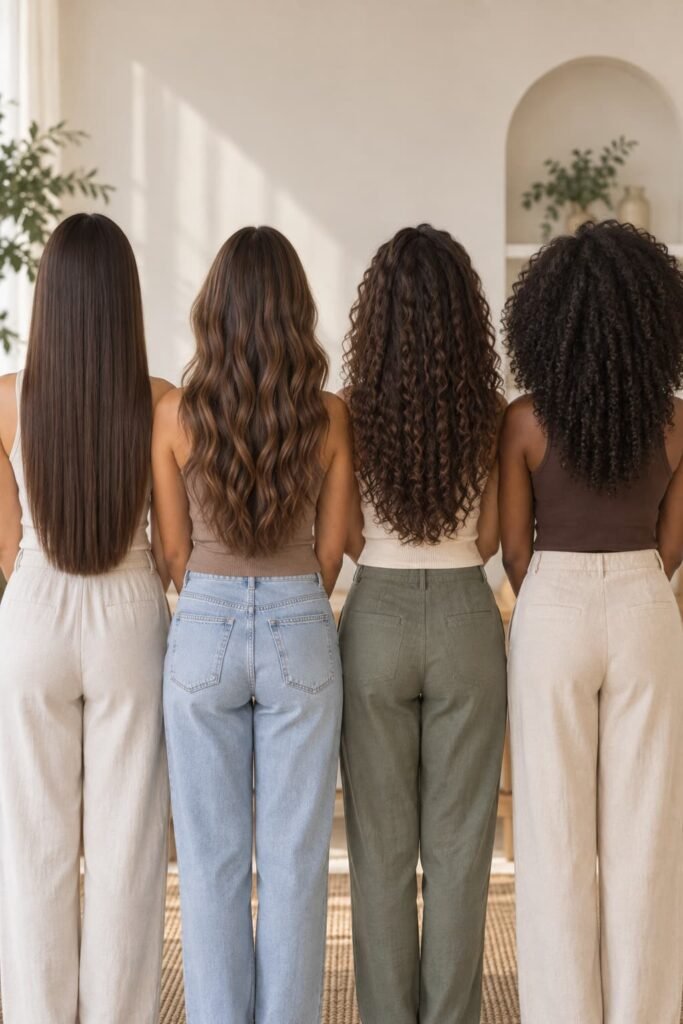
Hair texture can affect how length appears. Straight, wavy, curly, and coily strands have different shapes, so an increase in strand length may not look identical across different textures.
Texture does not provide a reliable way to predict an individual’s growth rate. The main difference discussed here is visual: the shape of the strand influences how its length appears.
When comparing hair length over time, keeping the hair in a reasonably similar state can make visual changes easier to judge. For curly, coily, or wavy hair, a wide-tooth comb can be one optional tool for detangling and arranging the strands before taking comparison photos. The tool should be viewed as a styling aid rather than something that increases the biological rate of hair growth.
Straight and Wavy Hair
Straight hair falls with fewer curves along the strand, which can make its overall length relatively direct to observe.
Wavy hair follows a curved pattern. How far the ends appear to fall can therefore vary with the wave pattern and styling.
When comparing wavy hair over several months, keeping the styling reasonably similar can make visual changes easier to judge.
Curly and Coily Hair
Curly and coily strands follow more pronounced curves, spirals, or coils. Because of this shape, their visible hanging length can differ from their full strand length.
As a result, added length may look different when curly or coily hair is worn naturally compared with when the strands are more stretched.
This does not mean curly or coily hair should be expected to grow a particular amount faster or slower. It simply means strand shape can affect how length appears.
Why Shrinkage Can Make Length Changes Less Obvious
With curly and coily hair, the natural pattern can make the hair appear shorter than its full strand length. This visual difference is commonly described as shrinkage.
Because the strands curve and coil, added strand length may not produce an equal increase in visible hanging length.
Styling can change the appearance further. A tightly defined curl pattern and a more stretched version of the same hair may appear to have different lengths.
For visual tracking, one possible option is to compare the hair in a similar state each time rather than trying to remove natural shrinkage from the comparison.
Why 1 Year Hair Growth Can Look Different From Person to Person
There is no single visual result that everyone should expect after 12 months. Average growth figures provide general context, but the final appearance also depends on the starting length, haircut shape, texture, trims, and how much length remains at the ends.
The natural hair growth cycle is another reason an average should not be treated as an exact prediction.
The Hair Growth Cycle
Scalp hair follicles move through a natural cycle.
The anagen phase is the active growth stage. Catagen is a transition phase, and telogen is a resting stage associated with the later release of the hair from the follicle.
Individual follicles do not all move through these stages at exactly the same time. This allows different hairs across the scalp to be at different points in their cycles.
For a one-year comparison, the important point is simple: an average growth rate provides general information, not a guaranteed individual result.
Starting Length and Haircut Shape
Starting length can strongly influence how added length looks.
On short hair, even a relatively small change can alter the outline of the haircut. Sections around the ears, jaw, or neck may begin to sit differently as they become longer.
With already-long hair, additional length may be more noticeable at the ends while the overall silhouette remains similar.
Haircut shape matters too. Bangs, layers, face-framing pieces, and the perimeter begin at different lengths. As these sections become longer, the proportions of the original haircut can gradually change.
These are visual differences. They do not mean that one haircut or starting length causes hair to grow faster than another.
Breakage and Length Retention
When comparing hair over a year, it is useful to consider both new growth and retained length.
If part of an existing strand breaks, the final increase in visible length may be smaller. Hair that retains more of its existing length may show a greater difference at the ends.
For this reason, biological growth and visible length should not be treated as interchangeable measurements.
Comparing one person’s final result with another person’s can also be misleading. Different starting lengths, haircut shapes, textures, trims, and retained lengths can create very different visual outcomes.
How to Track Hair Length Changes Over 12 Months

Because hair changes gradually, a consistent visual record can make differences easier to notice.
The goal does not have to be an exact scientific measurement. Using similar reference points, photographs, and styling conditions can provide a clearer comparison between the beginning and end of the year.
Use the Same Reference Point
Choose an easy-to-recognize reference point and use it consistently.
Depending on hair length, this could be the jaw, shoulders, collarbone, or a consistent point on the back. The useful reference will depend on where the hair starts.
Layers may need to be considered separately. A short face-framing layer and the longest section at the back begin at different points, so comparing the same section each time provides a clearer visual record.
Keep Photos Consistent
Photos can make gradual changes easier to compare when they are taken under similar conditions.
Keeping the camera angle, posture, parting, and general hair position reasonably similar can reduce visual differences caused by the photograph itself.
Hair styling matters as well. Hair that is curled in one photograph and worn straighter in another may appear to have changed more in length than it actually has.
The photographs do not need to match perfectly. The aim is simply to keep the main conditions similar enough for a useful comparison.
Consider Shrinkage and Styling Differences
Texture and styling can change where the ends appear to fall.
For example, tightly defined curls may look shorter than the same strands in a more stretched state. Waves can also sit differently depending on their definition and styling.
One possible approach is to photograph the hair in a similar natural or styled state each time. This makes it easier to compare visible length without confusing styling changes with changes in strand length.
Over 12 months, several consistent comparisons can provide a clearer picture of 1 year hair growth than relying on two photographs taken under very different conditions.
Small changes in a hair routine can affect how the strands sit when photographs are taken. If a microfiber hair towel is already part of your usual routine, using the same general drying and styling approach for comparison photos may help keep the conditions more consistent. The purpose here is consistency when tracking visible length, not to suggest that a towel changes the hair’s growth rate.
Common Myths About 1 Year Hair Growth
Hair growth is often discussed alongside trims, hairstyles, and changes in visible length. These are related topics, but they do not all describe the same process.
Understanding the difference between growth at the follicle and changes to the existing hair shaft makes several common hair-growth myths easier to understand.
Does Cutting Hair Make It Grow Faster?
Cutting or trimming the ends does not directly make hair grow faster from the scalp. Hair grows from follicles in the skin, while a haircut removes part of the existing hair shaft.
A trim can change the length, shape, and appearance of the ends, but it does not change where biological hair growth takes place.
This distinction matters when comparing hair over a year. If some length is removed during that period, the final difference in visible length may be smaller even though new growth has continued.
Can a Hairstyle Make Hair Grow Faster?
A hairstyle should not be treated as a method for increasing the biological rate of hair growth.
Braids, buns, ponytails, loose styles, and other hairstyles arrange existing strands in different ways. They can change the appearance of the hair, but they do not provide a basis for promising faster growth.
Some styles can also make length look different. A more stretched style, for example, may display more of a curved strand’s full length than the same hair worn in a tighter natural pattern.
That is a difference in appearance, not evidence of faster growth.
Does Faster-Looking Length Always Mean Faster Growth?
No. Hair that suddenly looks longer has not necessarily started growing faster.
Texture and styling can change where the ends appear to fall. The haircut itself can also influence how obvious added length looks.
This is particularly important with before-and-after photographs. Comparing hair worn in different states can create a misleading impression of how much the length has changed.
Using similar styling and viewing conditions provides a more useful visual comparison.
Frequently Asked Questions About 1 Year Hair Growth
How Many Inches Can Hair Grow in One Year?
Scalp hair grows about 1 centimeter per month on average. If that average is used only as a general reference, it works out to roughly 12 centimeters, or about 4.7 inches, across 12 months.
This is not a guaranteed yearly result. Individual growth can vary, and the amount of additional length visible at the ends may also be affected by trims and breakage.
How Much Does Hair Grow in Six Months?
Based on an average of about 1 centimeter per month, six months would equal roughly 6 centimeters, or about 2.4 inches, of growth.
This calculation is a general reference rather than a prediction for an individual. The amount of visible length gained during those six months may not match the amount of new growth exactly.
Can Hair Grow Six Inches in a Year?
It is possible for an individual’s yearly growth to differ from the average, but six inches should not be presented as a result that everyone can expect.
Using an average rate of about 1 centimeter per month gives a general reference of approximately 4.7 inches across 12 months.
Individual results can vary, and visible length at the end of the year may also be influenced by trims and breakage.
Why Does My Hair Seem to Grow but Not Get Longer?
New growth and retained length are not the same measurement.
Hair can grow from the follicle while some existing length is removed through trims or lost through breakage. Texture and styling can also make changes in visible length easier or harder to notice.
Appearance alone cannot explain why an individual’s hair seems not to be getting longer. For a general one-year comparison, it is more useful to consider both new growth and how much length remains at the ends.
Does Curly Hair Take Longer to Show Visible Length?
Curly and coily strands follow curved patterns rather than hanging completely straight. Because of this shape, their visible hanging length can differ from their full strand length.
Added length may therefore be less obvious when the hair is viewed in a tighter natural pattern than when the strands are more stretched.
This visual difference should not be interpreted as proof that curly hair automatically grows more slowly. Curl pattern affects how length appears.
Is Everyone’s Yearly Hair Growth the Same?
No. An average growth rate provides general context rather than an identical result for every person.
Individual follicles follow natural growth cycles, and growth rates can vary. The final appearance after a year can also be influenced by starting length, haircut shape, texture, trims, breakage, and retained length.
Another person’s one-year result is therefore not an exact target for what someone else’s hair should look like after the same amount of time.
What to Expect From Your Own 1 Year Hair Growth
Over 12 months, gradual changes in length can become easier to notice. However, there is no single before-and-after appearance that everyone should expect.
Average scalp-hair growth provides a useful reference, but it cannot predict exactly where an individual’s ends will fall after a year. Starting length, layers, texture, curl pattern, trims, styling, breakage, and retained length can all influence the final appearance.
If you want to follow the change visually, one option is to compare the same sections of hair under reasonably similar conditions. Using a consistent hairstyle, camera angle, and reference point can make gradual differences easier to recognize.
Short hair may show the change through a different overall haircut shape. On longer hair, the difference may be easier to see by looking at where the ends fall. Curly and coily hair may show the change differently depending on how tightly or loosely the strands are sitting when compared.
Most importantly, 1 year hair growth does not need to match someone else’s photographs or reach a particular number of inches. Average growth, full strand length, and visible retained length describe different parts of the picture.
Looking at your own starting point under similar conditions provides a more meaningful way to understand how your hair has changed over 12 months.