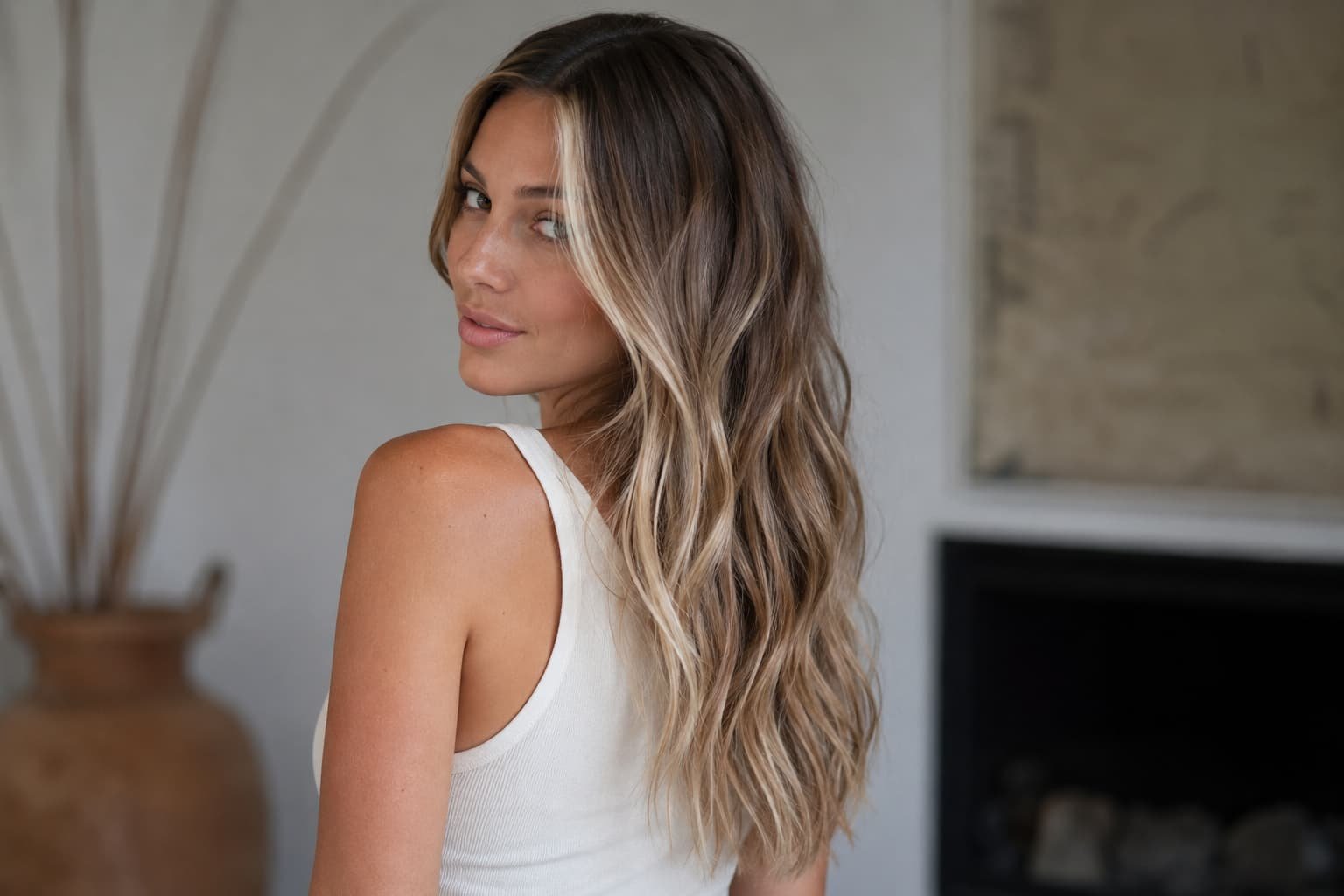
Blonde balayage hair can range from softly blended golden ribbons to pale blonde sections with noticeable contrast against darker roots. The look is flexible because both the blonde shade and the placement of the lighter pieces can be adjusted.
The starting hair color also matters. Blonde balayage on light brown hair may create a more gradual transition, while pale blonde sections on dark brown hair can produce a stronger contrast. Hair length, texture, previous color, and the amount of lightening can also affect the final appearance.
Understanding the technique and the different blonde tones can make it easier to choose a reference look that matches the type of contrast and brightness you prefer.
What Is Blonde Balayage Hair?
Balayage is a hair-coloring technique in which selected sections of hair are painted to create lighter areas rather than applying one uniform color throughout the hair. The technique is commonly associated with freehand placement, allowing the lighter pieces to begin at different points through the hair.
With blonde balayage, blonde tones are introduced into the existing base color. Some looks keep a large amount of the original color visible near the roots and through the interior of the hair. Others use more blonde through the mid-lengths and ends for an overall lighter appearance.
Placement can also vary around the face. Fine blonde pieces may be added near the hairline for subtle brightness, while wider face-framing sections can create more noticeable contrast.
The starting shade has a major influence on the result. A honey blonde placed over a medium brown base may blend relatively softly, while a much lighter blonde against dark brunette hair can create a clearer difference between the base and highlighted sections.
For this reason, blonde balayage is better understood as a customizable color technique rather than one specific finished hairstyle.
Blonde Balayage vs Highlights and Ombre
Balayage, traditional highlights, and ombre can all introduce lighter color into the hair, but they do not create exactly the same visual pattern.
The main differences involve where the lighter color begins, how it is distributed, and how much of the darker base remains visible.
Blonde Balayage vs Traditional Highlights
Traditional highlights usually create lighter strands throughout selected sections of the hair. They are commonly sectioned in a more structured pattern and are often processed using foils.
Blonde balayage generally uses more customized placement. Rather than creating similarly positioned highlighted strands throughout the hair, lighter sections can begin at different heights and become more noticeable toward the lengths and ends.
This can create a softer transition between the base shade and the blonde.
Traditional highlights can also extend closer to the root, depending on the technique being used. Balayage may leave more of the original root color visible, although high-placement balayage can bring lighter pieces much closer to the upper sections of the hair.
Neither method has one fixed appearance. Fine highlights can look very blended, while balayage can be subtle or high contrast depending on the shade, section size, and placement.
Blonde Balayage vs Ombre
Ombre describes a broader transition from a darker upper section to lighter lengths and ends. The change usually becomes more noticeable across a larger portion of the hair as the color moves downward.
Balayage focuses more on individually placed sections. Darker strands can remain between blonde pieces, creating a mixture of light and dark through the lengths.
For example, an ombre look may appear predominantly dark near the roots and predominantly blonde toward the ends. Blonde balayage may instead show ribbons of blonde starting at different heights, with some darker sections continuing farther down the hair.
The two effects can sometimes appear similar, particularly when balayage becomes much lighter toward the ends. The important distinction is that balayage describes the placement technique, while ombre mainly describes the visible dark-to-light color transition.
Blonde Balayage Shades
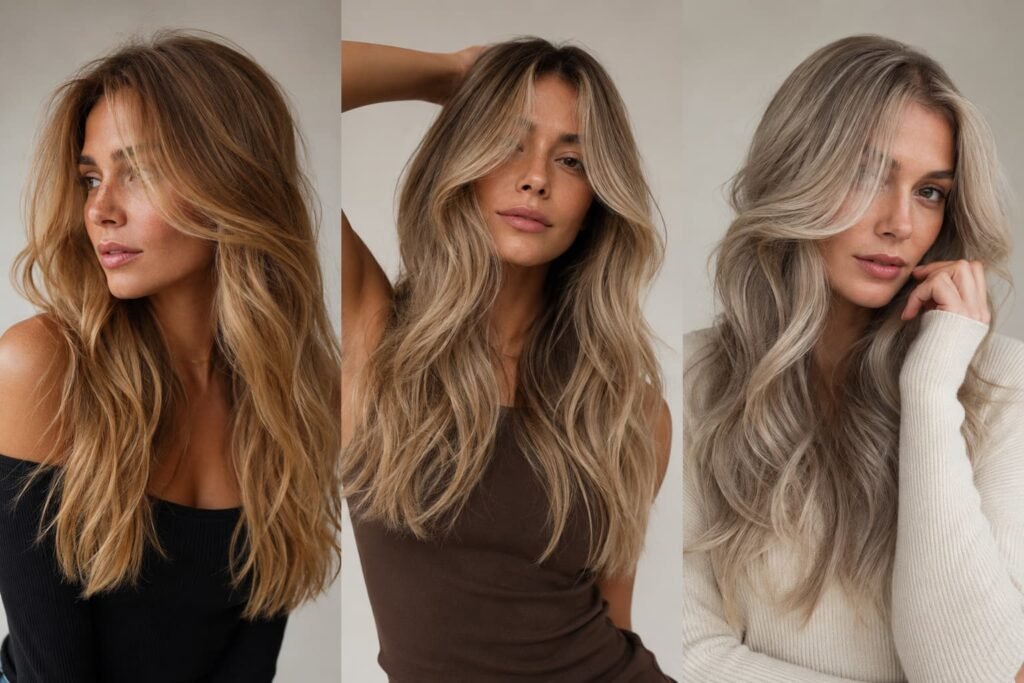
Choosing blonde balayage involves more than deciding how light the hair should become. Blonde shades can have warm, neutral, or cool tones, and each creates a different type of contrast against the starting color.
The same blonde shade may also appear different depending on the base. A golden blonde ribbon can blend gently into some lighter brown shades but stand out more clearly against a deep brunette base.
Honey Blonde Balayage
Honey blonde balayage uses warm blonde tones with noticeable golden character. It is generally deeper than very pale blonde shades and can create a gradual transition when combined with brown hair.
The warmth can be distributed as fine ribbons, concentrated around the face, or carried more heavily through the mid-lengths and ends.
On darker brown hair, honey blonde may create visible warmth without producing the extreme contrast of an icy blonde. On a lighter brown or dark blonde base, the difference between the base and highlighted pieces can appear softer.
Honey blonde can also be combined with deeper caramel and brighter golden sections when a multi-tonal result is preferred.
Golden Blonde Balayage
Golden blonde balayage has a brighter warm appearance with clear yellow-gold tones.
It can make lighter sections more noticeable through the hair, particularly when the golden pieces are brighter than the surrounding base. The effect can remain subtle with fine placement or become more pronounced when larger sections are lightened.
Golden blonde may also be used around the face, through layered ends, or across longer sections of hair to create visible variation between the base and lighter pieces.
It should not be confused with every warm blonde shade. Honey blonde often has a richer, slightly deeper character, while golden blonde can appear brighter and more directly gold.
Caramel Blonde Balayage
Caramel blonde balayage uses deeper warm tones that can sit between lighter brown and blonde, depending on the chosen shade.
Because caramel is usually deeper than pale blonde, it can provide a more gradual color change on brunette hair. The result may show warmth and dimension without making the highlighted sections appear extremely light.
Caramel blonde can be particularly useful as part of a multi-tone balayage. Deeper caramel sections may connect a brown base to brighter honey or golden blonde pieces, creating several levels of color through the lengths.
The exact depth can vary, so one caramel balayage may appear close to warm light brown while another may look noticeably more blonde.
Beige Blonde Balayage
Beige blonde balayage offers a more neutral direction. Beige blonde usually combines elements of warmth and coolness rather than leaning strongly golden or strongly ashy.
This can create a softer, balanced-looking blonde when someone prefers less obvious golden warmth but does not want an especially cool or silvery result.
Against light or medium brown hair, beige blonde pieces can create gentle contrast. Against a deeper base, the difference may become more noticeable, especially when the blonde is taken to a lighter level.
Beige blonde can also vary in tone. Some versions lean slightly warmer, while others have a cooler or sandier appearance.
Ash Blonde Balayage
Ash blonde balayage uses cooler, more muted blonde tones with less visible gold than warmer shades.
The appearance can range from soft, smoky blonde to noticeably cool blonde, depending on the level and tone selected. Ash blonde sections can be used throughout the hair or combined with a deeper root to create more visible contrast.
On brown hair, cooler blonde pieces may produce a different visual effect from honey or golden balayage because the highlighted sections have less warmth.
Ash blonde and beige blonde are not identical. Beige usually has a more neutral balance between warm and cool tones, while ash blonde leans more clearly toward the cool side.
The appearance of cool blonde can also change over time as the hair color and toner change, so maintaining a specific ash tone may involve different considerations from maintaining a warmer blonde.
Icy Blonde Balayage
Icy blonde balayage uses very light, cool-toned blonde sections. It usually has less visible warmth than honey, golden, or caramel blonde and can create a pale, high-contrast effect.
The contrast is especially noticeable when icy blonde is paired with dark brown or deeper blonde roots. Keeping some darker sections between the pale pieces can help preserve visible depth rather than making the entire hairstyle appear uniformly blonde.
Icy blonde may be concentrated around the face for stronger front brightness or extended through the mid-lengths and ends for a lighter overall appearance.
Starting color is an important consideration with this shade. Moving from a dark base to a very pale blonde generally requires more lightening than choosing a deeper blonde tone. Previous color treatments and the current condition of the hair can therefore influence what level of lightness is practical.
Icy blonde is one possible direction for someone who prefers strong cool-toned contrast, but it is not automatically the right choice for every starting color, hair condition, or maintenance preference.
Warm vs Cool Blonde Balayage
Blonde balayage can look very different depending on whether the chosen blonde tone is warm, neutral, or cool. The tone affects the overall mood of the color and how strongly the lighter sections stand out against the natural or existing base.
Warm blonde balayage includes shades with golden, honey, caramel, beige-gold, or slightly buttery tones. These colors usually create a softer, richer appearance and can blend naturally with brown bases that already contain warm undertones.
Cool blonde balayage moves toward ash, icy, pearl, or muted beige tones. These shades reduce the appearance of strong yellow or golden warmth and can create a more muted contrast against darker hair. The final result still depends on how light the hair becomes during the coloring process and how the blonde is toned afterward.
Neutral blonde sits between warm and cool. It may include beige, sandy, or balanced blonde shades that do not appear strongly golden or noticeably ashy. This can be useful when someone wants visible blonde dimension without pushing the color heavily in either direction.
The starting base color also influences how the finished balayage appears. Dark brown hair creates a larger difference between the natural base and blonde sections, while light brown or naturally blonde hair usually allows for a softer transition.
Underlying warmth can also become more noticeable as darker hair is lightened. For this reason, the target blonde shade cannot be considered separately from the starting hair color. A very pale cool blonde generally requires a different level of lightening than a deeper honey or caramel blonde.
How Blonde Balayage Placement Changes the Look
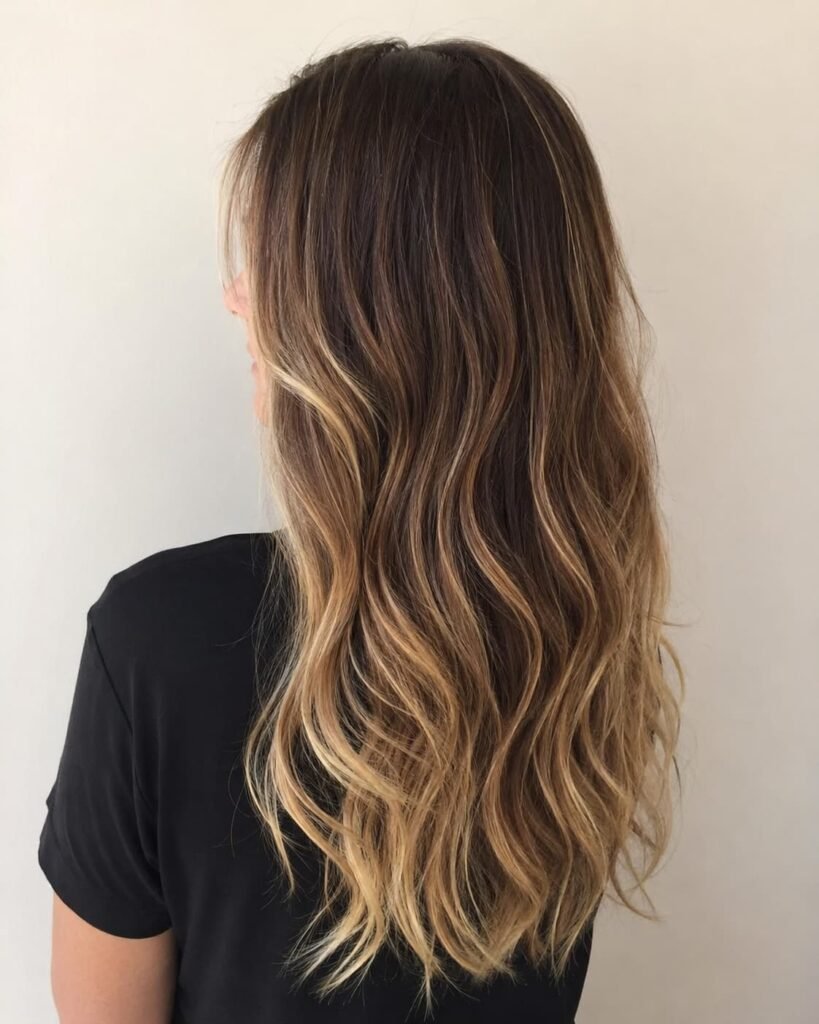
Balayage is not defined by one fixed highlighting pattern. The position, size, and amount of lighter hair can significantly change the final appearance.
Some balayage styles concentrate brightness around the face, while others spread blonde through the lengths or keep most of the natural root color visible. Understanding placement can make it easier to choose between a subtle blended result and a noticeably brighter blonde look.
Face-Framing Blonde Pieces
Face-framing blonde pieces place some of the lightest sections around the front hairline and near the face.
Because these strands are highly visible, they can make the overall color appear brighter even when much of the rest of the hair remains darker. The difference can be subtle with fine beige highlights or more noticeable with wider, lighter blonde sections.
Face-framing pieces can also be combined with balayage through the remaining lengths. This creates stronger brightness at the front while keeping more dimension through the sides and back.
The placement does not have to be symmetrical or extremely bold. Fine sections can create a softer effect, while wider pieces produce clearer contrast between the blonde and the base color.
High-Placement Balayage
High-placement balayage begins closer to the upper part of the hair instead of limiting most of the blonde to the lower lengths.
This placement can make blonde more noticeable from the front, sides, and crown area. Depending on how many sections are lightened, the hair may appear considerably brighter while still keeping some natural depth between the highlights.
Starting the lighter color closer to the root does not necessarily mean creating a solid blonde effect. Balayage can still preserve darker sections and softer transitions so the color maintains visible dimension.
High placement usually creates more immediate contrast than balayage that begins farther down the hair. The exact effect depends on the width of the sections, the blonde level, and how much natural base color is left between them.
Mid-Length to Ends Balayage
Mid-length to ends balayage keeps more of the natural or darker base visible near the roots.
The blonde gradually becomes more noticeable farther down the hair, which can create a softer transition between the base and the lighter sections. This placement is often associated with a more rooted appearance because the upper part of the hair remains comparatively dark.
The contrast can still be strong if the ends are taken to a very light blonde. However, the transition usually feels less immediate because the brightest color is concentrated farther away from the scalp.
This type of placement can work with warm, neutral, or cool blonde tones. The amount of contrast depends more on the difference between the base and blonde level than on placement alone.
Blonde Balayage with Dark Roots
Blonde balayage with dark roots keeps noticeable depth near the scalp while introducing lighter color through the remaining hair.
The darker root area can create stronger contrast and make the blonde sections appear brighter. It can also help separate the different tones visually instead of making the hair look like one solid blonde shade.
The root area may remain close to the natural hair color or be adjusted to create a more blended transition. Some looks use a gradual change from dark roots into medium blonde and then lighter ends, while others keep the difference between the roots and blonde more noticeable.
The width and placement of the blonde sections also affect how dramatic the rooted effect appears. Fine highlights usually produce softer blending, while wider light sections can create more visible contrast.
Partial vs More Extensive Balayage
The amount of hair that receives balayage can change the overall blonde appearance as much as the actual shade.
Partial balayage focuses the lighter color on selected areas. This may include the front sections, top layers, or parts of the lengths. Because more of the original base remains visible, the result usually has stronger natural depth.
A more extensive balayage places lighter sections throughout a larger portion of the hair. This can make the overall color appear brighter and more blonde, especially when the sections are placed close together.
Neither approach automatically creates a better result. The choice depends on whether the goal is subtle dimension, noticeable brightness, stronger contrast, or a larger overall color change.
Blonde Balayage on Different Base Colors
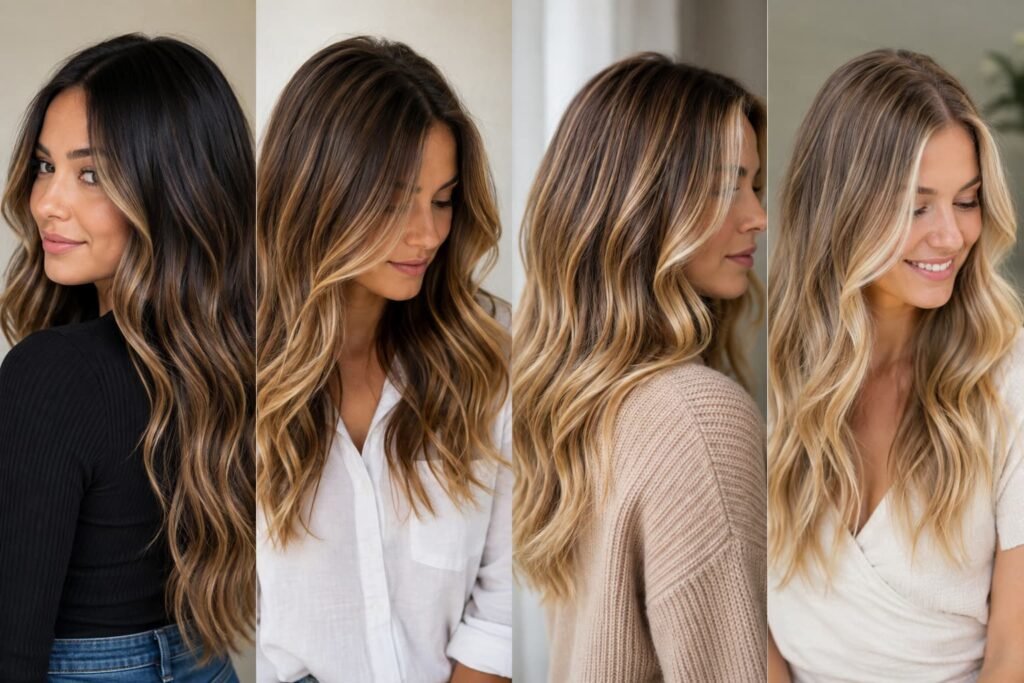
The same blonde tone can look very different depending on the starting hair color.
Base color affects contrast, visible warmth, and how much of the natural shade remains noticeable between highlighted sections. Darker bases usually create stronger contrast, while lighter bases can allow blonde tones to blend more gradually.
Blonde Balayage on Dark Brown Hair
Blonde balayage on dark brown hair creates one of the strongest differences between the base and highlighted sections.
Deeper blonde shades such as caramel, honey, dark beige, or golden blonde can create visible dimension without producing the same level of contrast as very light blonde. Pale beige, ash, or icy blonde sections will generally stand out more strongly against a dark brown background.
The intended blonde level is an important part of planning this combination. A darker blonde keeps the transition closer to the brown base, while a significantly lighter blonde creates a more dramatic separation between the colors.
Placement also changes the result. Blonde concentrated through the ends can preserve more dark brown near the top, while higher placement and face-framing sections can make the overall hairstyle appear much brighter.
Blonde Balayage on Medium Brown Hair
Medium brown hair provides a flexible base for several blonde balayage directions.
Warm honey or golden blonde can create a richer transition, particularly when the brown base already appears warm. Neutral beige blonde can create a more balanced effect, while brighter or cooler blonde sections can increase the visible contrast.
Because medium brown sits between very dark and very light brown, small changes in the blonde level can noticeably affect the final appearance.
A medium or darker blonde may create gentle dimension, while pale blonde pieces can make the overall hair color look much brighter. Keeping some medium brown visible between the highlights can help preserve depth and prevent the color from appearing completely blonde.
Blonde Balayage on Light Brown Hair
Light brown hair usually allows blonde balayage to blend with less contrast than it would on a dark brunette base.
Beige, sandy, honey, or medium blonde pieces can create a gradual transition while keeping much of the original light brown visible. This can work well when the goal is added brightness rather than a dramatic color difference.
Lighter blonde pieces can still create noticeable contrast, especially when they are concentrated around the face or through the ends. However, the difference between the natural base and the highlighted sections may appear softer because the starting color is already relatively light.
Using several nearby blonde tones can also create visible dimension without relying on a sharp difference between dark and light sections.
Blonde Balayage on Naturally Blonde Hair
Balayage is not limited to brunette hair. Naturally blonde hair can also use strategically placed lighter sections to create more visible variation throughout the color.
For example, darker blonde hair can be combined with beige, pearl, sandy, or lighter blonde pieces. The result may be lower in contrast than brunette balayage, but the difference between the shades can still add definition through the layers, front sections, and ends.
Face-framing pieces can make naturally blonde hair appear brighter around the front, while lighter sections through the mid-lengths and ends can create a more dimensional finish.
The effect depends on how much lighter the balayage is compared with the starting blonde. Closely related shades create subtle variation, while noticeably paler sections produce a clearer highlighted effect.
Blonde Balayage for Different Hair Lengths
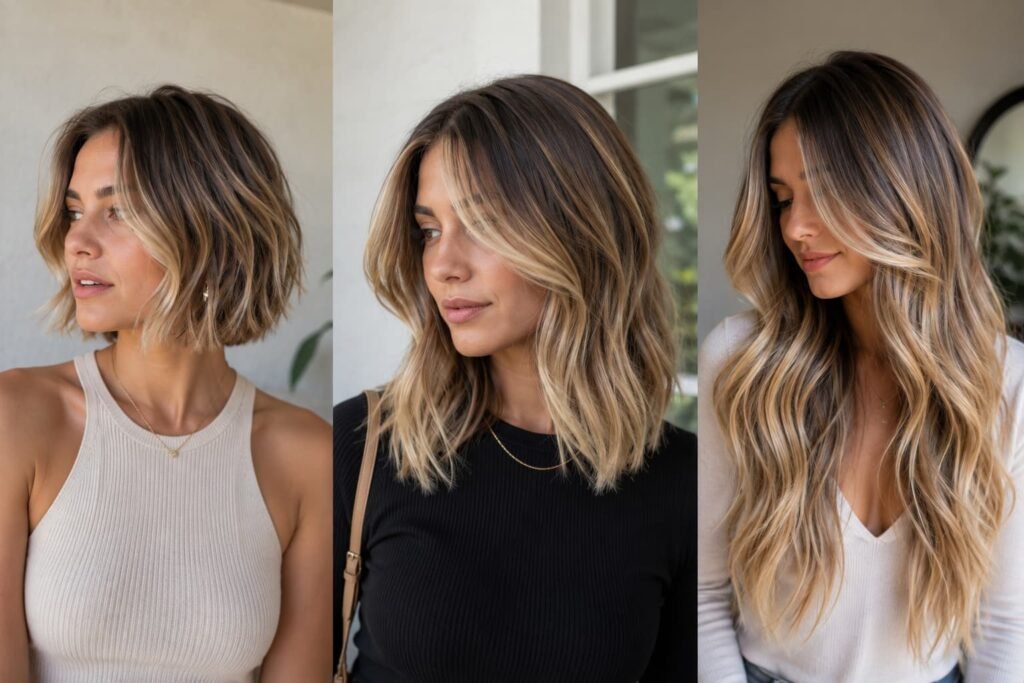
Hair length can influence how balayage placement is distributed through the hair. Shorter cuts provide less distance between the roots and ends, while longer hair gives more space for gradual changes between the base color and lighter sections.
The haircut, blonde level, placement, and amount of highlighted hair also affect the final appearance.
Short Hair
On short hair, individual blonde sections can become especially noticeable because there is less length available for a long transition between darker and lighter color.
The blonde may be placed around the front, through the upper sections, or toward the ends depending on the intended effect. A small number of lighter pieces can create visible contrast while leaving much of the original base color in place.
Short bobs and other cropped cuts may show the position of individual highlights clearly, particularly when the blonde is noticeably lighter than the base.
For a softer look, finer pieces or blonde shades closer to the starting color may be considered. Wider or lighter sections can create stronger visual contrast.
Lob and Medium-Length Hair
Lob and medium-length hair offers enough space for a gradual transition while keeping the overall placement relatively compact.
Blonde can be concentrated around the face, introduced through the mid-lengths, or become more noticeable toward the ends. Because the ends are an important visible part of these cuts, their color can have a strong influence on how blonde the hairstyle appears overall.
Face-framing pieces may also be connected with lighter sections through the lengths and ends. This can create more brightness around the front while maintaining darker areas elsewhere.
Keeping more depth near the roots can produce a rooted effect, while placing lighter pieces higher through the hair may make the blonde more noticeable from the top and sides.
Long Hair
Long hair provides more room for gradual color transitions and varied balayage placement.
Lighter sections can begin softly through the upper lengths, increase through the middle, and become more concentrated toward the ends. Different blonde levels may also be used to create variation between the darker base and the lightest pieces.
Long hair can combine several placement ideas within one look. Brighter face-framing sections, softer highlights through the back, and lighter ends can all be used together.
Length alone does not determine how dramatic the result will be. Blonde shades close to the base color can create subtle variation, while a greater difference between the base and highlighted sections can create more visible contrast.
How Hair Texture and Layers Affect Blonde Balayage
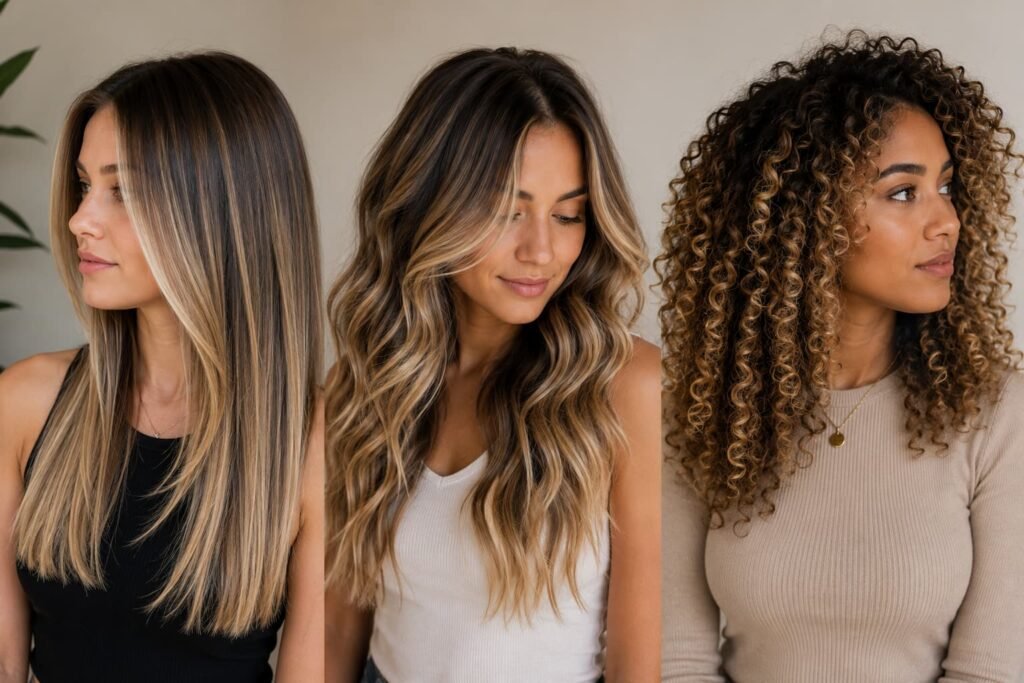
Hair texture affects how highlighted sections are displayed once the hair falls into its natural or styled shape.
Straight strands can show placement in a relatively continuous way, while waves and curls can cause lighter sections to appear and disappear as the hair bends. Layers can also expose different areas of balayage at different lengths.
Straight Hair
On straight hair, individual blonde sections and transitions can appear clearly defined because the hair generally falls in a more consistent direction.
This can make it easier to see where lighter pieces begin, how wide they are, and how they connect with the ends.
Fine highlights may create a more blended appearance, while wider blonde sections can produce a stronger ribbon effect against a darker base.
The final look also depends on the haircut, amount of blonde, placement, and difference between the starting color and highlighted sections.
Wavy Hair
Waves can change how blonde and darker sections appear next to one another.
As the hair bends, a lighter section may become more visible along one part of the wave and less noticeable along another. This can make the color variation appear more pronounced through the movement of the hair.
Wider blonde pieces may create distinct ribbons through the waves, while finer pieces can give a more blended effect.
Lighter mid-lengths and ends may also become more noticeable when waves separate different sections of the hair.
Curly Hair
With curly hair, balayage placement can be planned around the way curls form and move.
A highlighted section may follow the curve of a curl rather than appearing as a straight line through the hairstyle. As curls overlap or separate, different areas of blonde and base color can become visible.
Some people may prefer selected lighter curls for more noticeable contrast, while others may choose a greater amount of blonde for an overall brighter appearance.
The effect can vary according to the curl pattern, haircut, color placement, and the way the curls naturally fall.
Layered Hair
Layers can expose balayage at several different points through a haircut.
Shorter face-framing or upper layers may reveal lighter sections closer to the front and surface of the hair, while longer layers can carry blonde through the mid-lengths and ends.
This can distribute visible brightness across different lengths rather than placing most of the blonde in one area.
Someone who wants the layers to appear more defined may consider lighter pieces through selected shorter sections. For a more blended effect, the blonde can be distributed more gradually through both shorter and longer layers.
Styling Ideas for Blonde Balayage
The way balayage is styled can change how its placement and contrast are displayed.
Waves can reveal different tones as the hair bends, while straight styling can make individual sections and transitions easier to follow. Changing the part can also reposition highlighted pieces around the face.
Soft Waves
Soft waves may make the contrast between blonde and deeper sections more noticeable.
As the hair curves, highlighted pieces can move beside or over darker sections, revealing different parts of the balayage. This can emphasize variation through the mid-lengths and ends.
The amount of contrast still depends mainly on the colors themselves. Blonde that sits close to the base shade can create a subtle effect, while much lighter sections may stand out more clearly.
Different wave patterns can display the color differently as well. Loose waves show longer sections of each color, while smaller bends can divide the highlights into shorter visible areas.
Straight Styling
Straight styling can make balayage placement easier to see from the starting point of each highlight through the ends.
Individual blonde pieces may appear more continuous when the hair falls straight, which can make high placement, mid-length placement, and lighter ends easier to distinguish visually.
Wider highlighted sections may look more defined in a straight style. Finer pieces and closely related shades can create a softer transition.
Blonde Balayage with Curtain Bangs
Curtain bangs can be combined with balayage by connecting lighter front sections with the bangs and nearby face-framing layers.
One option is to keep the bangs softly highlighted while placing brighter blonde beside the face. Another is to carry more noticeable lightness through both the bangs and front layers.
Connecting these areas can create continuity between the front highlights and the rest of the balayage.
The placement can be adjusted according to the length of the bangs, surrounding layers, base color, and the amount of brightness wanted near the face.
Center Part or Side Part
Changing the part can alter where highlighted sections sit around the face.
With a center part, front blonde pieces may appear on both sides of the face. The effect can look more balanced when similar amounts of lightness have been placed on each side.
A side part shifts a larger portion of the hair in one direction. This can make some highlighted pieces more visible while moving others farther from the face or underneath surrounding hair.
For someone who regularly changes between center and side parts, balayage placement can be planned with both styling options in mind.
Blonde Balayage Maintenance Considerations
Blonde balayage may have a softer root transition than some root-to-tip color techniques, but the lightened sections still need ongoing care. Maintenance can involve looking after the lengths, managing changes in tone, and deciding when the color needs refreshing.
The amount of maintenance varies with the starting color, blonde shade, placement, styling habits, and personal preference.
Caring for Lightened Lengths
Lightening changes the hair during the coloring process, so the blonde sections may feel different from untreated hair. Conditioning can be part of a regular care routine for color-treated lengths, particularly if they feel dry or become difficult to manage.
A rinse-out conditioner can be used after shampooing, while a leave-in product may be another option for hair that needs additional softness or easier detangling. Product choice can depend on hair texture, density, and how the hair feels after lightening.
Care products should not be described as permanently repairing chemically changed hair unless there is reliable evidence for that specific claim. A more practical goal is to keep the lengths conditioned, manageable, and protected from unnecessary stress.
Gentle handling can also matter. Avoiding rough towel drying and using care when detangling can reduce additional mechanical stress on already lightened sections.
Managing Tonal Changes
Blonde color can change in appearance over time. Cooler blonde shades may begin to show more yellow or warm tones as the original toner fades.
A toner can be used to adjust the tone of lightened hair without repeating the entire balayage placement. Depending on the formula, it may help shift an overly warm blonde toward a cooler, beige, neutral, or other intended shade.
Purple-toned shampoos and similar products are commonly used when yellow tones become more noticeable in blonde hair. Violet pigment can visually neutralize some yellow warmth, but these products do not lighten the hair.
There is no single schedule that suits every blonde balayage. How often tonal products are needed depends on the shade, product formula, washing routine, hair condition, and how much warmth the person wants to see.
Someone who prefers honey, golden, or caramel blonde may also have less reason to neutralize warmth than someone trying to maintain an ashier or cooler result.
Heat and Sun Exposure
Heat styling can affect the condition of color-treated hair, especially when high temperatures are used frequently.
Using lower heat when possible and reducing unnecessary passes with straighteners or curling tools can limit additional heat exposure. If a styling product claims to provide heat protection , its instructions should be followed according to the product label.
Sun exposure can also affect both the appearance and condition of colored or lightened hair. Practical options include covering the hair with a hat during prolonged sun exposure or using hair products specifically designed for UV-exposed or color-treated hair.
These steps cannot guarantee that blonde color will remain unchanged, but they can be considered as part of a general color-care routine.
How Blonde Balayage Can Grow Out
Blonde balayage often leaves some natural or darker color near the roots rather than placing every lightened section directly against the scalp.
When the blonde begins farther from the root or is blended into the base, new growth may create a softer transition than color that begins directly at the root. The effect depends on the original placement and the difference between the natural color and the blonde.
Lower or more diffused placement can make root growth less obvious, while blonde placed very high around the face or crown may show changes sooner as the hair grows.
A softer root transition does not make balayage maintenance-free. The blonde lengths remain lightened, and their tone can change over time. Some people may want only a tonal refresh between larger color appointments, while others may eventually want additional blonde moved higher through the hair.
How often the color needs attention depends on the placement, desired contrast, natural base, blonde tone, and personal preference rather than a fixed timetable.
What to Consider Before Choosing Blonde Balayage
The starting hair color is one of the first factors to consider. Creating blonde sections on light brown hair is a different color change from taking very dark brown hair to a pale blonde. The greater the difference between the starting color and target shade, the more important the lightening process becomes.
Previous chemical processing should also be considered. Hair that has already been colored, lightened, straightened, or otherwise chemically processed may respond differently from untreated hair. Previous color history should therefore be taken into account when deciding how much additional lightening is appropriate.
The desired amount of contrast can help guide the overall design. Honey or dark blonde against a brunette base may create a gentler difference, while pale blonde against dark brown creates much stronger contrast.
Tone is another choice. Warm blonde includes shades such as honey, golden, and caramel, while cooler options move toward ash, pearl, or icy blonde. Neutral and beige tones fall between these directions.
Placement determines where the blonde will be most visible. Face-framing pieces create brightness around the front, higher placement brings blonde closer to the upper sections, and mid-length-to-ends balayage leaves more of the darker base visible.
Maintenance preferences matter as well. Someone who wants less obvious root growth may prefer a more rooted or lower placement. Someone who wants blonde close to the face and upper sections may accept that those areas can require more attention as the hair grows.
Hair length and texture also affect how the color is displayed. Short hair has less space for a gradual transition, while long hair allows the placement to extend through several lengths. Straight, wavy, and curly textures can each reveal highlighted sections differently.
These factors work together. Choosing blonde balayage is not simply a matter of selecting one blonde shade. The starting base, target color, placement, hair history, length, texture, and preferred level of upkeep all contribute to the final result.
Frequently Asked Questions About Blonde Balayage Hair
Can blonde balayage be done on dark brown hair?
Yes. Blonde balayage can be created on dark brown hair, but the amount of contrast and the achievable blonde level depend on the starting color and how much lightening is involved.
Caramel, honey, or darker beige blonde can create a more gradual difference against dark brown. Pale or cool blonde creates stronger contrast and generally requires the hair to be lifted further.
Can blonde balayage have dark roots?
Yes. Dark roots are common in many blonde balayage looks.
Keeping natural or deeper color near the roots can add visible depth and create contrast with lighter mid-lengths and ends. The transition may be subtle or more noticeable depending on how the blonde is placed.
Is blonde balayage suitable for short hair?
Blonde balayage can be used on short hair. The placement simply needs to work within the available length and the shape of the haircut.
A short bob might use lighter face-framing pieces or blonde through selected upper sections and ends. Because there is less length for blending, individual highlighted pieces may be more noticeable than they would be on long hair.
Does blonde balayage require bleaching?
Balayage describes a color-placement technique rather than one specific chemical formula.
When the goal is to make sections of the hair significantly lighter, a lightener is commonly used. This is especially relevant when creating blonde balayage on a darker base.
The exact process can vary with the starting hair color, previous color history, and desired blonde level, so not every balayage service uses an identical lightening formula.
Is blonde balayage maintenance-free?
No. A softer root transition can reduce how obvious new growth appears, but blonde balayage still requires some maintenance.
The lightened sections may need regular conditioning, and the tone can change as toner or deposited color gradually fades. Some people may also choose to refresh the placement when the blonde has grown farther down the hair.
Maintenance needs vary according to the color, placement, styling routine, and preferred appearance.
Does blonde balayage damage hair?
Blonde balayage can involve chemical lightening, and lightening can change and weaken the hair structure. The amount of effect is not identical for every person or every color service.
Starting condition, previous chemical processing, the amount of lift required, product formulation, and how the lightening process is carried out can all matter.
For that reason, blonde balayage should not be described as damage-free. It is also inaccurate to assume that every balayage service causes the same degree of change.
Can blonde balayage be combined with layers or bangs?
Yes. Blonde balayage can be placed through layered hair and around different types of bangs.
Lighter sections through face-framing layers can make those pieces more visible, while highlights around curtain bangs can connect the front of the haircut with the balayage through the remaining lengths.
The placement can be subtle or more defined depending on the desired amount of brightness.
What is the difference between warm and cool blonde balayage?
Warm blonde balayage includes shades with golden, honey, caramel, or similar warm tones. These colors tend to retain more visible warmth in the finished look.
Cool blonde balayage moves toward ash, pearl, icy, or muted blonde tones and is intended to reduce the appearance of strong yellow or golden warmth.
Neutral and beige blondes sit between these two directions. The finished tone also depends on the starting base, how light the highlighted sections become, and how they are toned afterward.