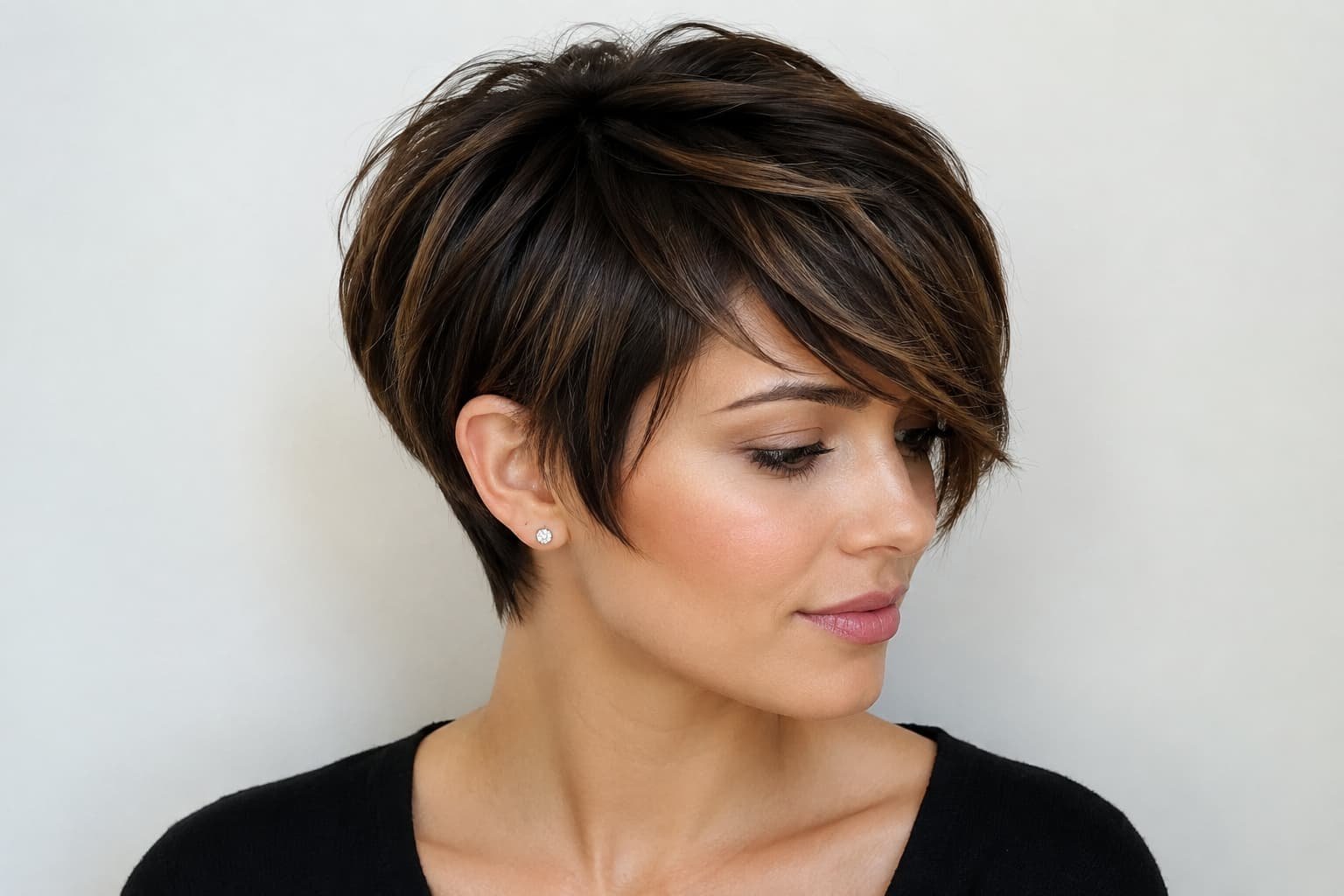
Pixie bob hairstyles combine the cropped feel of a pixie cut with some of the length and structure of a short bob. The result is a flexible short haircut that can look soft, polished, textured, or more defined depending on how it is cut and styled.
Small changes can make a noticeable difference. Layers may add movement, bangs can change the shape around the forehead, and longer front pieces can create a softer frame around the face. The back may be tapered, stacked, rounded, or kept slightly longer, while the overall finish can range from sleek to tousled.
The ideas in this guide are meant to provide visual inspiration rather than suggest that one version will suit everyone. Hair texture, density, preferred length, and styling choices can all affect the final appearance.
What Is a Pixie Bob Hairstyle?
A pixie bob is a short haircut that combines features commonly associated with pixie cuts and bob hairstyles. It usually keeps more length than a closely cropped pixie, especially through the crown, sides, or front, while remaining shorter and more layered than many traditional bobs.
The exact shape can vary. Some pixie bobs have a short, tapered nape with longer pieces toward the front. Others use stacked layers at the back, soft layers through the crown, or a more rounded silhouette. Bangs and face-framing sections can also change how the haircut looks from the front.
Compared with a traditional pixie cut, a pixie bob generally leaves more visible length around at least part of the head. A classic bob, by contrast, often keeps a more consistent length around the sides and back. A pixie bob sits somewhere between these two shapes.
The related term bixie haircut is also used for styles that blend elements of a bob and pixie. The terms can overlap, and there is no single fixed length or silhouette that defines every pixie bob.
Because the shape is adaptable, one pixie bob can look very different from another. Layer placement, fringe, natural texture, hair density, and the amount of length left around the face can all influence the finished style.
20 Chic Pixie Bob Hairstyles to Consider
1. Classic Layered Pixie Bob
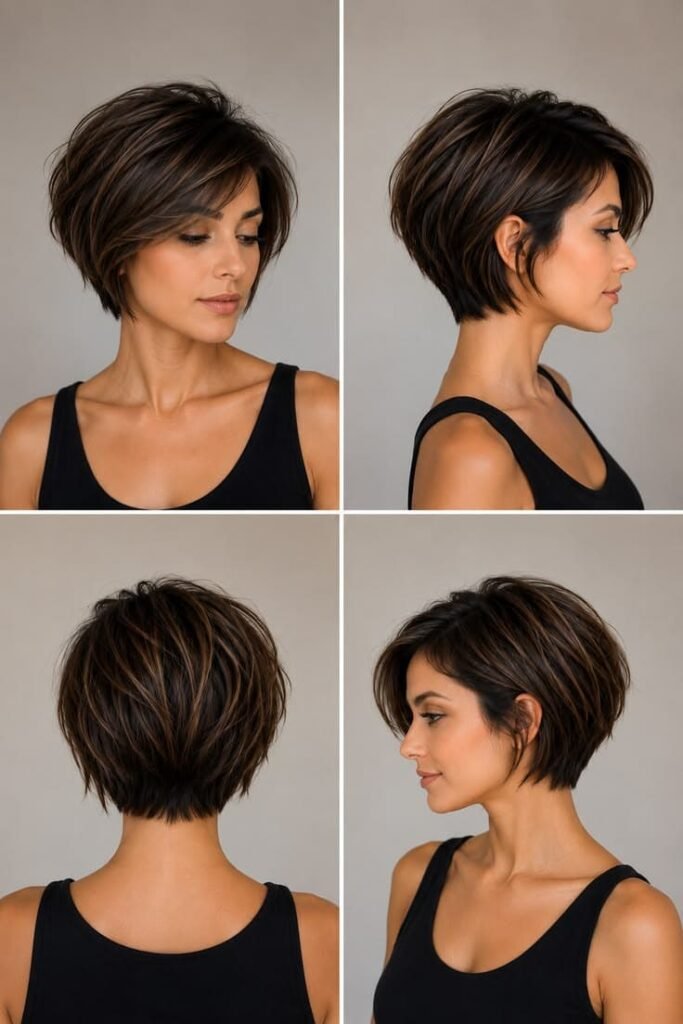
A classic layered pixie bob combines a shorter back with slightly more length through the crown and front. Soft, blended layers help connect these sections and give the haircut a smoother overall shape.
The front can be left a little longer around the face or swept slightly to one side, depending on the preferred look. Compared with a heavily choppy version, this style usually has a softer and more blended appearance.
This variation may appeal to readers who want the cropped character of a pixie while keeping some of the shape and length associated with a short bob. The final look can vary depending on hair texture, density, layer placement, and styling.
2. Short Stacked Pixie Bob
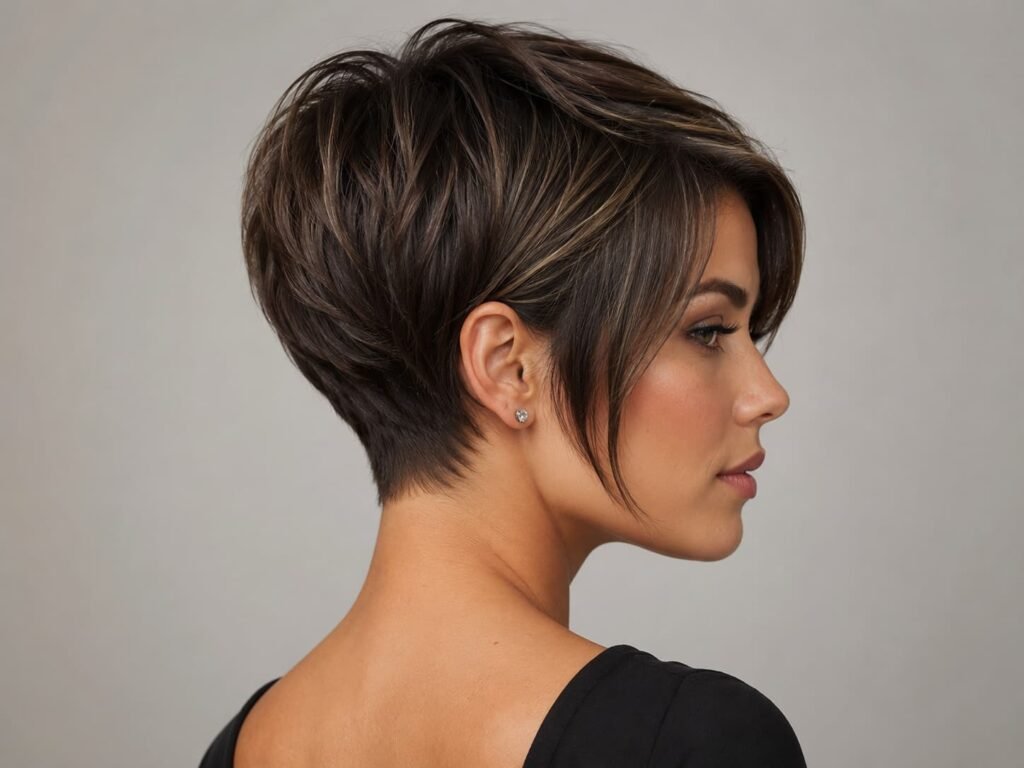
A short stacked pixie bob uses graduated layers through the back, with shorter sections near the nape and gradually longer layers toward the crown. This creates a more defined, rounded outline at the back of the haircut.
The front can be left slightly longer to maintain some of the length associated with a bob. The exact amount of stacking and contrast can vary depending on the chosen shape and hair texture.
3. Long Pixie Bob
A long pixie bob keeps more length through the sides and front than a closely cropped pixie. The back may still be shorter, but the overall silhouette sits closer to a short bob.
Longer front sections can create a softer outline around the face and provide more visible movement. This variation may appeal to someone who wants a short haircut without removing as much length around the front and sides.
4. Textured Pixie Bob
A textured pixie bob uses separated, piecey layers rather than a completely smooth finish. The texture can make individual sections through the crown, sides, and front more noticeable.
The amount of separation can range from subtle to more defined. Natural hair texture, layer placement, and styling can all influence the finished appearance.
5. Pixie Bob With Side-Swept Bangs
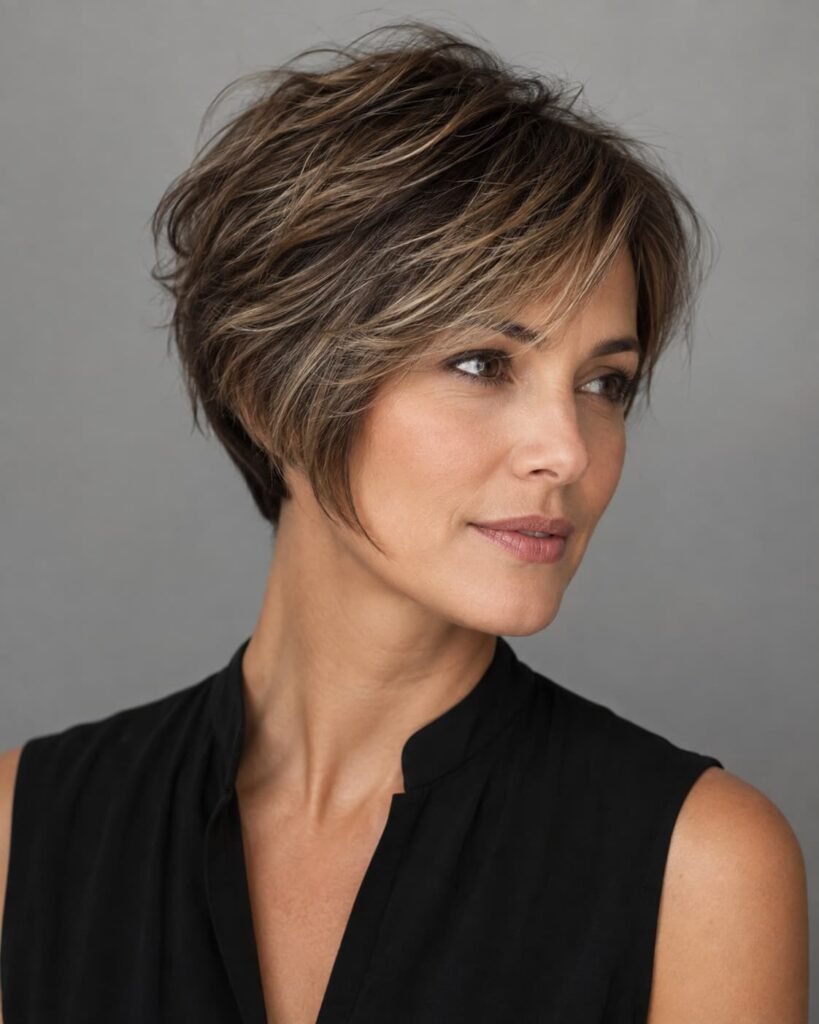
A pixie bob with side-swept bangs keeps more length through the fringe and directs it across the forehead. The bangs can blend into the side layers, creating a gradual transition between the front and the rest of the haircut.
The fringe may be worn smooth or with more visible texture. Keeping extra length at the front is one way to balance a shorter back without changing the overall pixie-bob shape.
6. Pixie Bob With Wispy Bangs
Wispy bangs create a lighter fringe with smaller, separated sections rather than a dense straight-across line. Some of the forehead usually remains visible between the pieces.
Paired with a pixie bob, this type of fringe can give the front a softer and less structured appearance. The final effect can vary with bang length, density, and natural hair texture.
7. Pixie Bob With Curtain Bangs
Curtain bangs are generally longer and divided near the center or slightly off-center, with the sections moving toward either side of the face. In a pixie bob, they can blend into longer face-framing layers. For another short-bob variation that combines a parted fringe with visible wave and texture, see this textured wavy French bob with curtain bangs.
This variation requires enough length through the front for the fringe to separate and connect with the surrounding hair. The result can look more open around the forehead than a full, straight-across fringe.
8. Choppy Pixie Bob
A choppy pixie bob uses more noticeable differences in layer length, creating a less uniform outline. The ends often appear more separated than they do in a softly blended haircut. For more variations built around visible separation and textured ends, explore these cute choppy bob hairstyles.
This can produce a more defined, piecey texture through the crown and sides. How dramatic the effect looks depends on the amount of layering and the way the hair is styled.
9. Sleek Straight Pixie Bob
A sleek straight pixie bob uses a smooth finish that makes the overall outline of the haircut more visible. Angled sections, longer front pieces, and differences in layer length may stand out more when the hair is worn straighter.
A side or off-center part can also change how the shape is distributed across the front. The finished look can vary according to natural texture, haircut structure, and styling.
10. Tousled Pixie Bob
A tousled pixie bob has a looser finish, with sections moving in slightly different directions instead of lying completely smooth. This can make the layers appear more visible and give the haircut a softer, less structured look. A texturizing product such as Not Your Mother’s Beach Babe Sea Salt Spray is one styling option for adding separation and texture when used according to the product directions.
The texture can be subtle or more pronounced depending on the cut and styling. Rather than following one fixed shape, the finished appearance may vary with natural movement and layer placement.
11. Wavy Pixie Bob
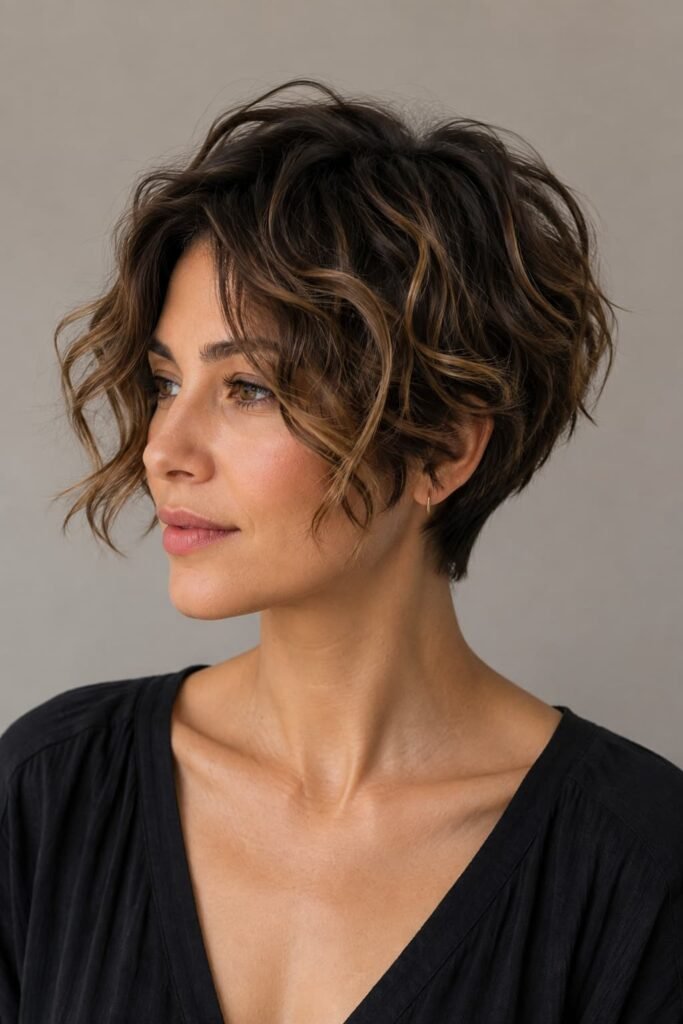
A wavy pixie bob combines a short shape with visible waves through the crown, sides, or front. The natural bends can make the layers look softer and give the haircut more visible movement.
The overall shape can vary with the wave pattern, length, and placement of the layers. Some versions have loose waves throughout, while others keep most of the texture around the front and sides.
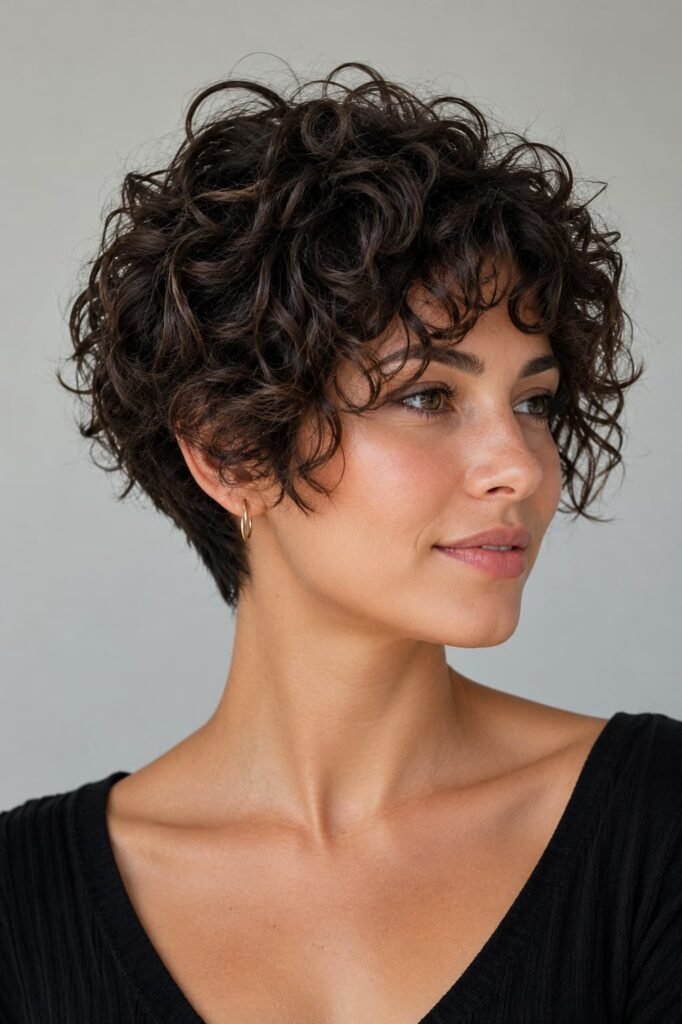
12. Curly Pixie Bob
Curly pixie bob with defined curls and a layered short shape.
A curly pixie bob keeps enough length for curls to remain visible while maintaining the shorter outline associated with this haircut. Layers can be arranged in different ways to shape how the curls sit around the crown, sides, and back.
The finished silhouette can vary depending on curl pattern, density, and how much length is retained. Curly hair may also appear shorter when it contracts into its natural curl pattern, so the same cut can look different across different textures.
13. Asymmetrical Pixie Bob
Asymmetrical pixie bob with one longer front side and a shorter back
An asymmetrical pixie bob deliberately keeps one section longer than another. The difference may appear through one side, the fringe, or a longer front piece.
The contrast can be subtle or more noticeable depending on the chosen lengths. This uneven structure gives the haircut a more directional look without requiring every section to be dramatically different.
14. Feathered Pixie Bob
A feathered pixie bob uses soft, separated layers to create a lighter-looking outline. Rather than ending in one solid line, the layers blend into finer sections around the crown, sides, or front.
This type of layering can add visible movement and give the ends a less heavy appearance than a blunt shape. The final effect can vary with hair texture, density, and the amount of layering.
15. Pixie Bob With Long Front Layers
This variation keeps extra length around the front while the back remains shorter. The longer pieces may fall near the cheekbones or jaw, depending on the overall haircut.
The contrast draws more attention to the face-framing sections and creates a noticeable difference between the front and back. The transition can be softly blended or more clearly angled.
16. Rounded Pixie Bob
A rounded pixie bob follows a curved silhouette through the crown and sides. The shape is generally more compact and controlled than a heavily textured or shaggy version.
It can be worn with a smooth finish to emphasize the rounded outline or with light texture for a softer effect. Hair density, natural texture, and layer placement can influence how defined the shape appears.
17. Shaggy Pixie Bob
A shaggy pixie bob uses loose, varied layers to create a less structured silhouette. The layering is often most noticeable around the crown, sides, and front. Readers who prefer a slightly longer bob-based version can also explore these layered shaggy bob styles.
Instead of forming a smooth, uniform outline, the sections have more separation and movement. This gives the haircut a more relaxed appearance than a sleek or precisely rounded version.
18. Pixie Bob With an Undercut
A pixie bob with an undercut combines longer sections on top with noticeably shorter hair underneath. The shorter area may be placed around the nape, sides, or back depending on the design.
The difference in length creates clear contrast within the haircut. Longer sections can partly cover the undercut, or the shorter area can be made more visible through the way the hair is parted and arranged.
19. Voluminous Pixie Bob
A voluminous pixie bob places visual emphasis on lift and fullness around the crown. Layer placement and styling can make the upper part of the haircut appear fuller without implying any change to the actual density of the hair.
The sides may be kept smoother so the crown shape is more noticeable. How much volume appears will vary with natural texture, density, length, and styling.
20. Side-Parted Pixie Bob
A side-parted pixie bob places the part away from the center, shifting more hair toward one side. This can change the visual balance of the haircut and make longer front sections more noticeable.
A deeper part may also create the appearance of additional lift near the top. The effect can be subtle or more defined depending on the length, texture, and natural direction of the hair.
How Layers, Bangs, and Texture Change a Pixie Bob
Layers, bangs, and texture can change the overall appearance of a pixie bob without changing its basic short shape. These details influence how defined the haircut looks, where movement appears, and how the hair frames the front of the face.
Layers
Blended layers create smoother transitions between different lengths, giving the haircut a more connected outline. Stacked layers place more graduation through the back, which can create a rounded shape around the crown and nape.
Choppy layers have more noticeable differences in length, creating a piecey and less uniform finish. Feathered layers are softer and more lightly separated, which may give the ends a lighter appearance.
How these layers look can vary with natural hair texture, density, and the amount of length kept throughout the cut.
Bangs
Bangs can noticeably change the front shape of a pixie bob. Side-swept bangs move across the forehead and can blend into longer sections near the sides.
Wispy bangs use lighter, separated pieces and usually leave more of the forehead visible. Curtain bangs are generally longer and part near the center or slightly off-center, allowing the fringe to move toward both sides.
The face-framing effect can vary depending on the length of the bangs, natural texture, density, and how the fringe is styled.
Texture
Texture influences how the layers and outline of a pixie bob appear. A sleek finish can make the shape and longer sections look more defined, while a tousled finish creates more visible separation and movement.
Wavy hair can add soft bends through the crown and sides. Curly hair creates its own pattern of shape and volume, so the finished silhouette may differ from a straight or smoothly styled version.
The same basic haircut can therefore look noticeably different depending on natural texture and styling. The final appearance can range from smooth and structured to soft, wavy, curly, or deliberately tousled.
What to Consider Before Choosing a Pixie Bob
Before choosing a pixie bob, consider how the cut may work with your natural texture, hair density, preferred length, and usual styling routine. These factors can influence how the shape and layers appear.
Straight hair may show the outline and individual layers more clearly, while wavy or curly textures can create more visible movement. The final silhouette can vary depending on the natural pattern of the hair and how the layers are placed.
Hair density can also affect the appearance of the cut. Layers may look more defined on some hair types and more blended on others. The amount and placement of layering can be adjusted to create different shapes without assuming that one approach will work the same way for everyone.
Think about how much length you want to keep around the face. Longer front pieces can create a softer frame around the cheekbones or jaw, while shorter sections give the haircut a more cropped appearance.
Bangs are another choice to consider. Side-swept, wispy, or curtain bangs can add framing around the forehead, while a style without bangs keeps the front more open.
The preferred finish matters as well. A sleek pixie bob highlights the outline of the haircut, while a textured or tousled finish makes the layers and movement more noticeable. Crown volume can also appear different depending on the cut, natural texture, and styling.
Because a pixie bob is relatively short, changes in length may become more noticeable as the hair grows. More structured shapes, such as a closely tapered or stacked back, may gradually lose some of their original definition.
Styling and Maintenance Considerations
Styling needs vary with the haircut and natural hair texture. A pixie bob can be worn smooth and defined, lightly textured, wavy, curly, or tousled depending on the shape of the cut and the desired finish.
Smooth styling can make clean lines and longer front sections easier to see. Textured styling may highlight individual layers, while waves or curls can create a softer and more varied silhouette. If heated styling tools are used to create the preferred finish, a heat-protectant product such as CHI 44 Iron Guard Thermal Protection Spray can be applied according to its directions before styling.
Natural texture can influence how easily a particular finish is achieved. Someone with naturally wavy or curly hair may already have visible movement, while straighter hair may naturally show the outline of the cut more clearly.
Maintenance also depends on how precise the haircut is meant to look. Shorter sections around the nape and sides may show changes in length more clearly than longer, loosely layered areas.
There is no single maintenance schedule that applies to every pixie bob. A practical approach is to consider how much change in length and shape you are comfortable with before deciding when the haircut needs reshaping.
Frequently Asked Questions
What is the difference between a pixie bob and a pixie cut?
A pixie bob generally keeps more length than a closely cropped pixie, especially through the crown, sides, or front. It also tends to retain some of the shape associated with a short bob.
A traditional pixie is usually shorter overall. The exact difference can vary because both haircuts can be shaped in many ways.
Is a pixie bob the same as a bixie?
The terms can overlap. Both are commonly used for short haircuts that combine elements of a pixie cut and a bob.
There is no single fixed length or shape for either term. Some versions may look closer to a pixie, while others keep more bob-like length through the sides or front.
Can a pixie bob have bangs?
Yes. Bangs can be included in a pixie bob in several ways, including side-swept, wispy, curtain, or shorter textured fringe.
The type and length of the bangs can change how the front of the haircut looks. The final appearance can also vary with hair texture, density, and the amount of length kept around the face.
Can fine or thick hair be styled in a pixie bob?
A pixie bob can be adapted for different hair densities. However, the same layering or length may look different on finer hair than on denser hair.
Layer placement, natural texture, and styling can influence how much movement, separation, or visible fullness the haircut appears to have. The cut itself does not change the actual density of the hair.
Can wavy or curly hair work with a pixie bob?
A pixie bob can be shaped around wavy or curly hair. Natural bends and curls may give the haircut more visible movement and a different silhouette from a straight version.
With curly hair, curl pattern and shrinkage can affect how the finished length appears. Layer placement can also influence how the curls sit through the crown, sides, and front.
What should you consider before getting a pixie bob?
Consider how much length you want to keep around the front and sides, whether you prefer bangs, and how layered or structured you want the haircut to appear.
Hair texture and density can also influence the final shape. It may also help to think about whether you prefer a sleek, soft, wavy, curly, or tousled finish, since styling can change the overall appearance of the cut.
Final Thoughts
Pixie bob hairstyles can look very different depending on their length, layers, fringe, and texture. Some versions have a sleek, structured outline, while others use waves, curls, shaggy layers, or asymmetry for a softer or more textured appearance.
Instead of assuming that one variation will suit everyone, it is more useful to compare the individual features you prefer. You might be drawn to a shorter nape, longer front sections, soft bangs, visible crown volume, or a smoother overall finish.
Hair texture, density, and styling preferences can also influence how the final shape appears. Using a reference image of the specific length, layers, and fringe you like can make it easier to explain the type of pixie bob you are considering.