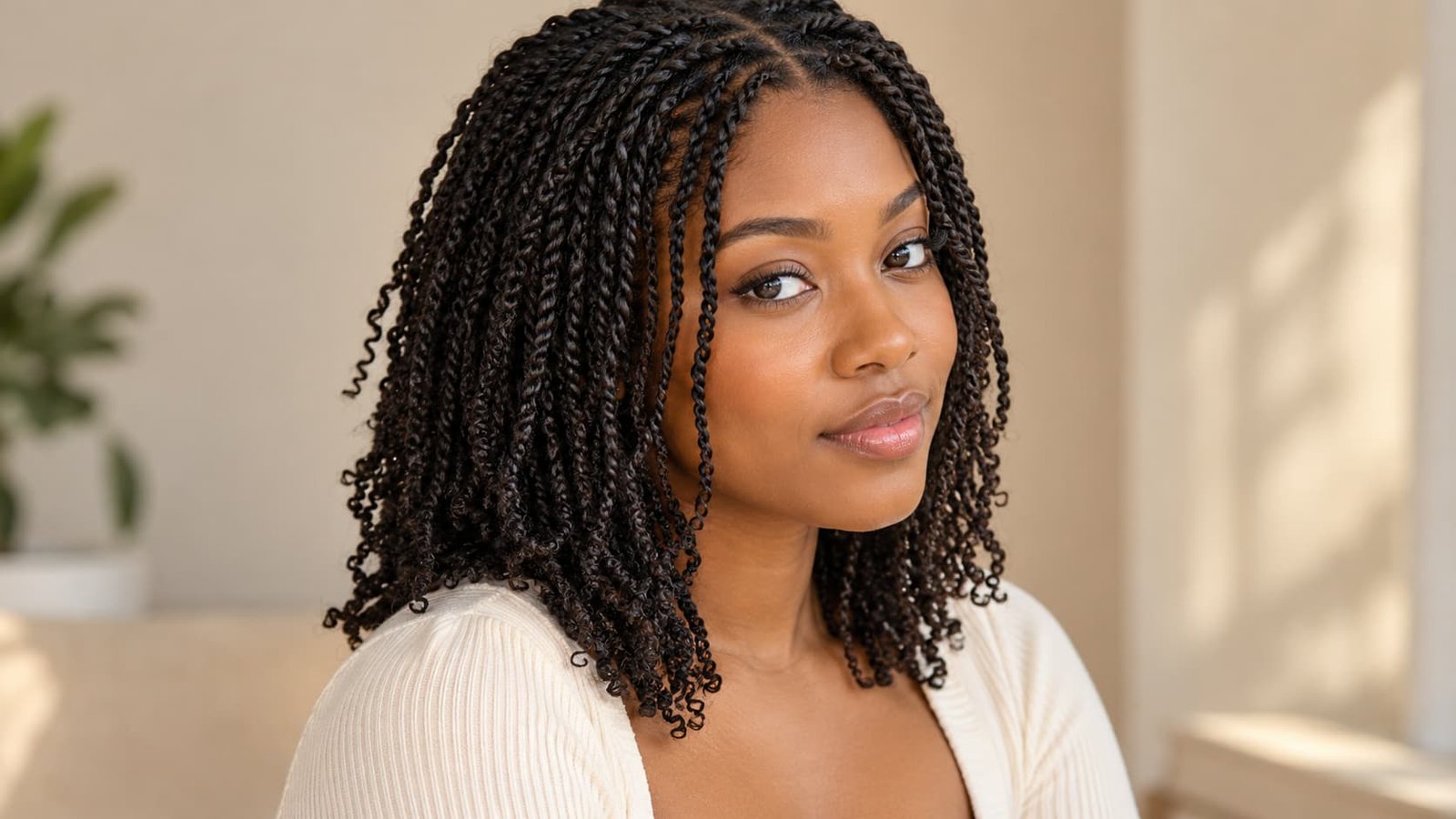
Mini twist hairstyles offer a way to wear natural hair in small, defined twists while keeping different styling options available. They are commonly seen on curly and coily hair, where the natural texture helps create the twisted appearance.
The finished look can vary from short twists that frame the face to longer twists worn loose, gathered into a ponytail, or styled away from the forehead. Section size, parting patterns, and natural shrinkage all influence how the hairstyle appears.
Understanding these differences can help you explore mini twist styles and choose an arrangement that works with your hair length and desired look.
What Are Mini Twist Hairstyles?
Mini twists are small, individual two-strand twists created by dividing hair into sections. Each section is separated into two strands, which are wrapped around each other from near the roots toward the ends.
The word mini refers to the relatively small sections used to create the twists. Unlike larger two-strand twists, mini twists produce numerous finer sections that can hang individually and move with the hair.
They are often created using natural hair without added extensions, although the finished appearance depends on hair density, texture, and length.
One of their main visual characteristics is the combination of visible twist definition and natural volume. Some mini twists form a rounded shape around the head, while longer twists may fall toward the shoulders or beyond.
Unlike mini twists, which hang as individual two-strand sections, cornrows are braids formed close to the scalp as additional hair is incorporated along each braid.
What Do Mini Twist Hairstyles Look Like?
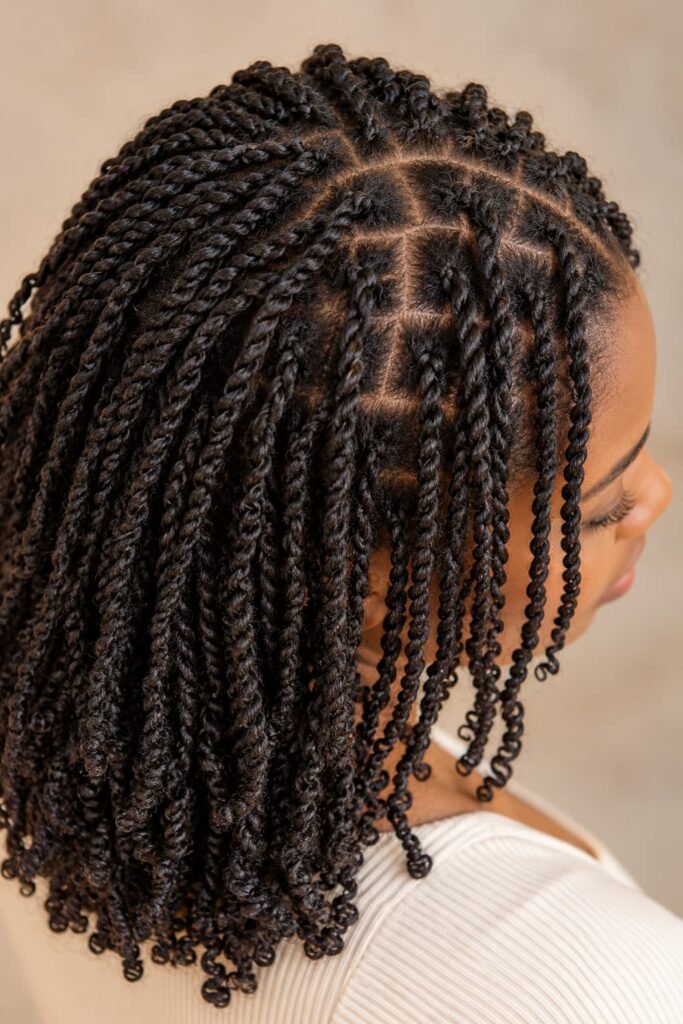
Mini twists have a recognizable rope-like pattern formed by two strands wrapping around each other. However, not every mini twist hairstyle looks the same. The size of each section, the arrangement of the roots, and the natural hair texture can noticeably change the finished appearance.
Small Twist Size and Definition
The size of the individual twists plays an important role in their appearance.
Very small sections create numerous fine twists that may resemble separate, narrow strands from a distance. Slightly larger sections produce more noticeable rope-like patterns, making each twist easier to distinguish.
Twist definition can also vary along the hair. Some twists appear smooth and consistent, while others show more texture, particularly toward the ends.
The number of twists does not determine how full the hairstyle will look on its own. Hair density and strand thickness also contribute to the overall appearance.
Parting Patterns and Overall Fullness
Parting patterns influence how mini twists are arranged at the roots.
Square parts create a structured, grid-like appearance. Triangular parts introduce a different geometric pattern, while irregular or less defined sections can give the hairstyle a more relaxed look.
A center part divides the twists into two visible sides. An off-center part changes the balance and allows more twists to fall toward one side of the face.
Fullness depends on how the twists fall around the head, along with the amount and texture of the hair. Closely arranged twists may create a fuller silhouette, but smaller sections do not automatically produce more volume.
How Natural Hair Texture Affects the Finished Look
Natural hair texture influences the shape, movement, and visible length of mini twists.
Tightly coiled hair may form compact twists with noticeable shrinkage. Looser curl patterns may create twists that hang differently or have ends that are less likely to stay together without additional styling.
The surface of the twists can also vary. Some appear more uniform, while others show a softer, textured finish with small strands following their natural curl pattern.
Shrinkage is particularly important when considering the final length. Hair that reaches the shoulders when stretched may appear shorter after being twisted.
These differences are normal variations in how textured hair behaves rather than signs that one mini twist style is better than another.
What Are the Different Mini Twist Hairstyle Ideas?
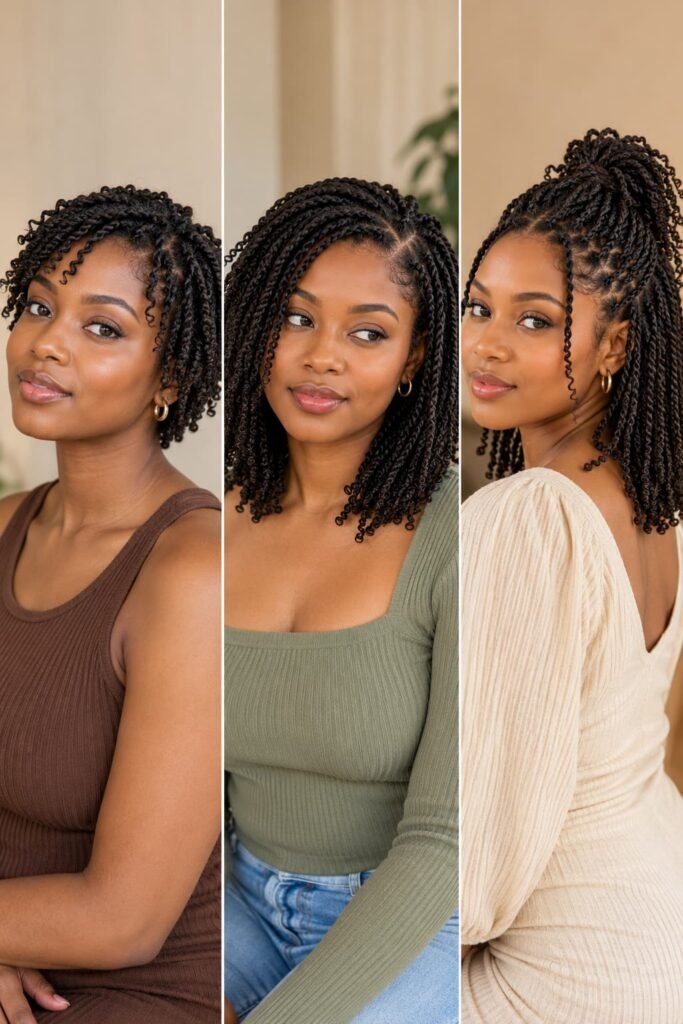
Mini twists can be arranged in several ways depending on their length and how the hair is parted or gathered. The following styles offer different silhouettes, rather than simply changing the name of the same hairstyle.
Short Mini Twists
Short mini twists create a compact hairstyle that generally sits around the head rather than falling far below it.
Depending on the hair’s length and shrinkage, the twists may frame the forehead, sit near the ears, or extend toward the nape. Their individual texture remains visible, especially when the twists are separated into small sections.
This style can have a rounded outline, although the exact shape depends on the haircut underneath and the natural distribution of the hair.
Short mini twists can also be worn with a center or side part to change how the hair frames the face.
Shoulder-Length Mini Twists
Shoulder-length mini twists create a hairstyle with visible movement around the neck and shoulders.
The twists may rest near the shoulders or fall slightly above them, depending on their natural shrinkage. Compared with shorter twists, this length allows the individual sections to hang more freely.
A center part can create an even arrangement on both sides, while a side part changes how the twists fall around the face.
Shoulder-length twists may also be long enough to tuck behind the ears or loosely gather away from the face without changing their original structure.
Long Mini Twists
Long mini twists create an elongated appearance, with individual twists extending below the shoulders.
The additional length makes the twisted pattern visible across a larger portion of the hair. When worn loose, the twists may fall down the back, rest over the shoulders, or be arranged toward one side.
Their overall shape depends on the length and density of the hair. Some long mini twist hairstyles appear full throughout, while others have a narrower silhouette toward the ends.
Long twists also provide more hair to work with when creating gathered styles, although comfortable tension remains important.
Side-Parted Mini Twists
Side-parted mini twists use an off-center division to create an uneven distribution of hair on either side of the face.
The side with more twists may appear fuller, while the opposite side can reveal more of the forehead or hairline. This gives the hairstyle a distinct shape without changing the two-strand twist technique.
The part can be straight, slightly curved, or less defined. Each option affects how the twists fall from the roots.
Side-parted mini twists can be worn at different lengths, making the arrangement useful for changing the appearance of an existing set of twists.
Half-Up Mini Twists
Half-up mini twists combine two different placements within one hairstyle.
The upper section is gathered away from the face, while the remaining twists are left loose around the sides and back. The gathered portion may form a small ponytail or a loosely wrapped bun if enough length is available.
This arrangement creates a clear distinction between the raised upper section and the hanging twists below.
The height and size of the gathered section affect the silhouette. A small section near the crown leaves more twists loose, while gathering a larger portion creates a more pronounced half-up appearance.
For additional inspiration involving this arrangement, explore these half-up, half-down hairstyles.
Mini Twist Ponytail
A mini twist ponytail brings the individual twists together into one gathered section.
A low ponytail sits near the nape and allows the twists to hang down the back. A higher ponytail changes their direction, creating a raised shape with the ends falling from the crown or upper back of the head.
Unlike loose mini twists, the ponytail emphasizes the gathered base and the movement of the twists as a group.
The available length affects how easily the twists can be collected. Shorter sections may not reach the same point without pulling, so a lower or looser arrangement may be more comfortable.
Mini Twists With Curled Ends
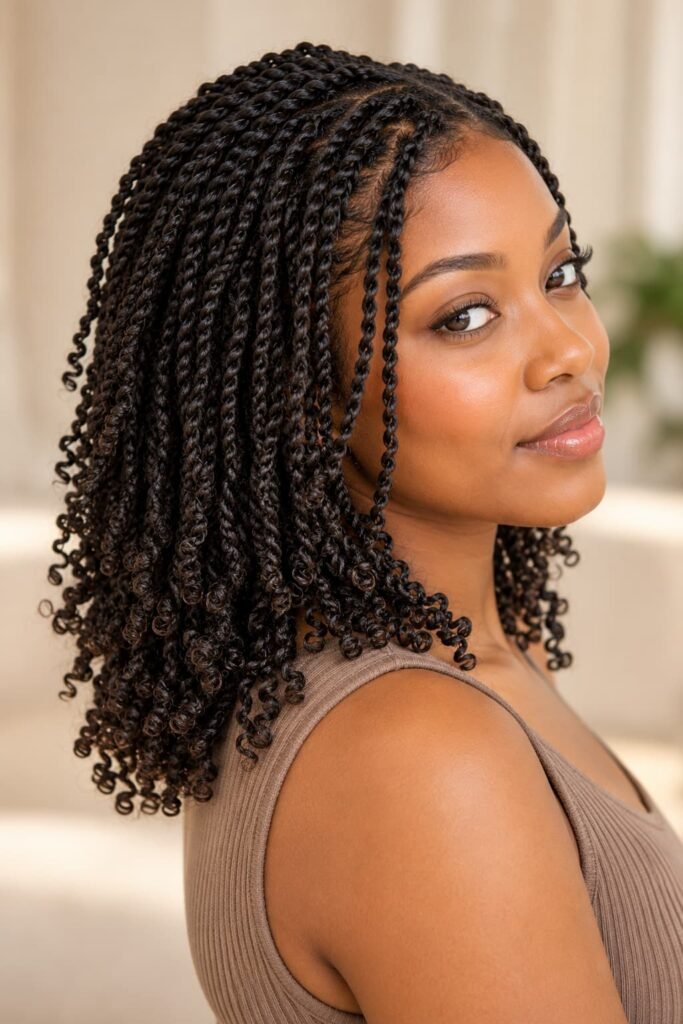
Mini twists with curled ends combine a defined twisted section with a visibly curved or coiled finish.
Instead of maintaining the same rope-like pattern all the way to the tips, the ends form small curls that add a different texture to the lower portion of the hairstyle.
The curls may appear subtle on naturally coily hair or more noticeable when the ends are arranged to form a defined curve.
This creates a contrast between the narrow twists and the softer shapes at the tips.
The final appearance depends on the hair’s natural curl pattern and the method used to finish the ends. Not every texture will produce the same curl shape or hold it in the same way.
How Are Mini Twists Created?
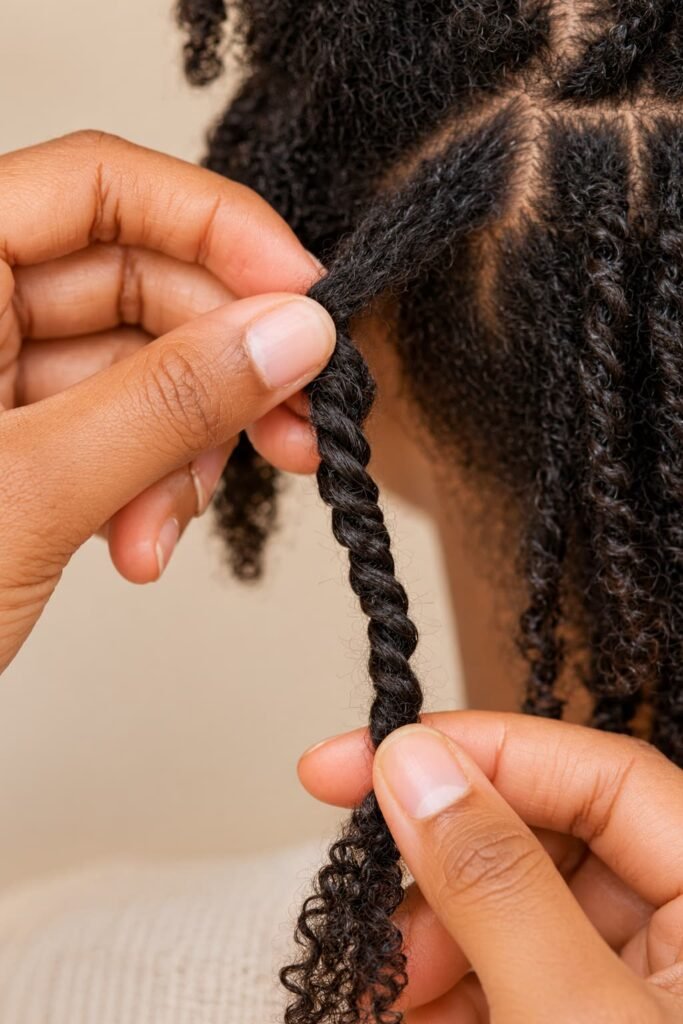
Mini twists are formed by working with small sections of hair and wrapping two strands around each other. The basic method is straightforward, although creating many small twists requires careful sectioning and attention to how the strands are handled.
Preparing and Sectioning the Hair
Mini twists can begin with clean, gently detangled hair. Depending on the hair texture and preferred styling method, the hair may be slightly damp or dry before twisting.
The hair is divided into manageable sections to make the twisting process easier. Each larger section can then be separated into smaller parts using a comb or fingers.
Square or triangular parts create a more defined pattern at the roots, while less structured parting produces a different appearance. The sections do not need to be identical, but their size influences the finished twists.
Keeping the hair separated as each section is completed can also make the process more manageable.
Forming Two-Strand Mini Twists
Once a small section has been prepared, it is divided into two strands.
The strands are wrapped around each other repeatedly, working from near the roots toward the ends. This creates the narrow, rope-like pattern associated with two-strand twists.
The strands should be handled with enough control to form the twist without pulling tightly at the roots.
The process is repeated across the remaining sections until the desired areas of hair have been twisted.
Smaller sections create finer individual twists, while wider sections produce a thicker appearance.
Finishing the Ends Without Excessive Tension
The ends of mini twists may hold their shape differently depending on the hair’s natural texture.
Some curly or coily hair may form small coils at the tips, while looser textures may be more likely to unwind.
The ends can be gently twisted or arranged to follow their natural curl pattern. A suitable styling product may help with definition, although the finished appearance varies.
The twists should be formed without uncomfortable pulling at the roots.
How Does Hair Length and Texture Affect Mini Twists?
Hair length and texture influence how mini twists form, hang, and respond to styling.
Shorter hair may require more attention when separating and twisting individual sections because there is less length available to hold. Longer hair provides more material to work with but may also take additional time to section and twist.
Natural shrinkage can make the finished twists appear shorter than the hair’s stretched length. This is particularly noticeable with some tightly curled and coily textures.
Hair texture also influences how securely the twists hold their shape. Some curl patterns naturally coil around themselves, while looser textures may be more likely to unravel at the ends.
Density and strand thickness affect how many sections can be created and how the twists feel when gathered together.
These characteristics are useful to consider when deciding on section size and a styling method. The same technique may produce different results on different hair types.
How Can You Maintain Mini Twist Hairstyles?
Maintaining mini twists generally involves keeping the hair clean, limiting unnecessary handling, and paying attention to loose strands or tangling. The approach may vary depending on the hair texture, twist size, and how the hairstyle is worn.
Washing Mini Twists Without Disturbing the Style
Hair arranged in mini twists can still be washed. Gentle handling during cleansing may help limit unnecessary loosening of the individual sections.
Rather than rubbing the twists vigorously, the hair can be washed carefully and rinsed thoroughly to remove cleanser and product residue.
After washing, allow the twists to dry adequately. Some sections may become less defined or loosen during the process, depending on the hair texture and how the twists were formed.
Managing Frizz and Loose Strands
As mini twists are worn, small strands of hair may begin to separate from the original sections.
This can create a softer, less defined appearance around the twists, particularly near the roots and ends.
Gentle handling can help avoid unnecessarily disturbing the sections. Some loose strands may be carefully wrapped back into their original twists when appropriate.
If a twist has become noticeably loose, it may be easier to undo and recreate that individual section rather than repeatedly pulling the strands into place.
Frizz does not necessarily mean that the hairstyle has been created incorrectly. The amount of visible frizz varies with hair texture, handling, and environmental conditions.
Removing Mini Twists Carefully
Mini twists should be separated gently when the hairstyle is being taken down.
Each twist can be unwound from the ends toward the roots, following the direction opposite to the original twisting pattern.
Using fingers to separate the strands gradually may make it easier to identify areas where neighboring hairs have become tangled.
If a section is difficult to separate, pulling forcefully may create additional tangling. A suitable detangling product may help provide slip, depending on the hair’s needs.
Once the twists have been undone, the hair can be carefully detangled in manageable sections.
What Should You Consider Before Choosing Mini Twists?
Before choosing mini twists, it helps to think about the amount of detail you want in the finished hairstyle and the effort involved in creating it.
Section size: Very small twists produce a finer pattern but require more individual sections. Slightly larger twists may be easier to separate and work with.
Styling effort: Creating numerous small twists can involve detailed parting and repeated twisting. The effort required varies with hair length, density, and section size.
Comfort: Twists should feel comfortable at the roots. Tight pulling is not necessary to achieve a defined two-strand pattern.
Desired appearance: Consider whether you prefer visible geometric parts, a less structured arrangement, or twists that can be gathered into different styles.
Hair behavior: Natural shrinkage, curl pattern, and the way the ends hold together may affect the final result.
These considerations can help narrow down the styling choices without assuming that one mini twist arrangement will work the same way for everyone.
Frequently Asked Questions About Mini Twist Hairstyles
What Is the Difference Between Mini Twists and Mini Braids?
Mini twists are created by wrapping two strands of hair around each other. Mini braids are generally formed by crossing three strands in a braiding pattern.
Mini twists have a rope-like appearance, while mini braids show a more interwoven structure. Both can be created using small individual sections of hair.
Can You Create Mini Twists Without Extensions?
Yes. Mini twists can be created using natural hair without added extensions.
The finished length and fullness depend on the hair itself, including its density, texture, and shrinkage.
Some other twist hairstyles incorporate added hair, but extensions are not required for traditional mini twists.
Why Do Mini Twists Shrink After Styling?
Mini twists may appear shorter because naturally curly or coily strands tend to contract toward their curl pattern.
When the hair is twisted, its visible length can differ from its stretched length.
The amount of shrinkage varies between individuals and may also differ across sections of the same head of hair.
Can Mini Twists Be Done on Short Natural Hair?
Yes, mini twists can be created on short natural hair when there is enough length to divide and twist the strands.
The finished twists may sit close to the head or form a rounded shape rather than hanging downward.
Very short sections may be more difficult to twist or keep in place, depending on the hair texture.
How Are Mini Twists Different From Flat Twists?
Mini twists are usually created as individual two-strand sections that hang freely from the roots.
Flat twists are formed close to the scalp by incorporating additional hair as the two strands are twisted along a selected path.
The difference is mainly in their construction and placement. Mini twists create separate hanging sections, while flat twists follow the shape of the scalp.
Final Thoughts
Mini twist hairstyles offer different ways to wear natural hair using small two-strand sections. The finished appearance can change with hair length, texture, parting patterns, and how the twists are arranged.
Understanding the basic twisting method and the way different hair textures behave can make it easier to choose a suitable section size and styling approach.
Whether worn loose or gathered into a simple arrangement, mini twists can be adapted to different visual preferences. Gentle handling and comfortable styling remain useful considerations when creating, maintaining, and removing the twists.