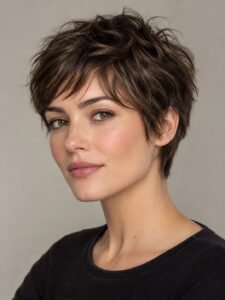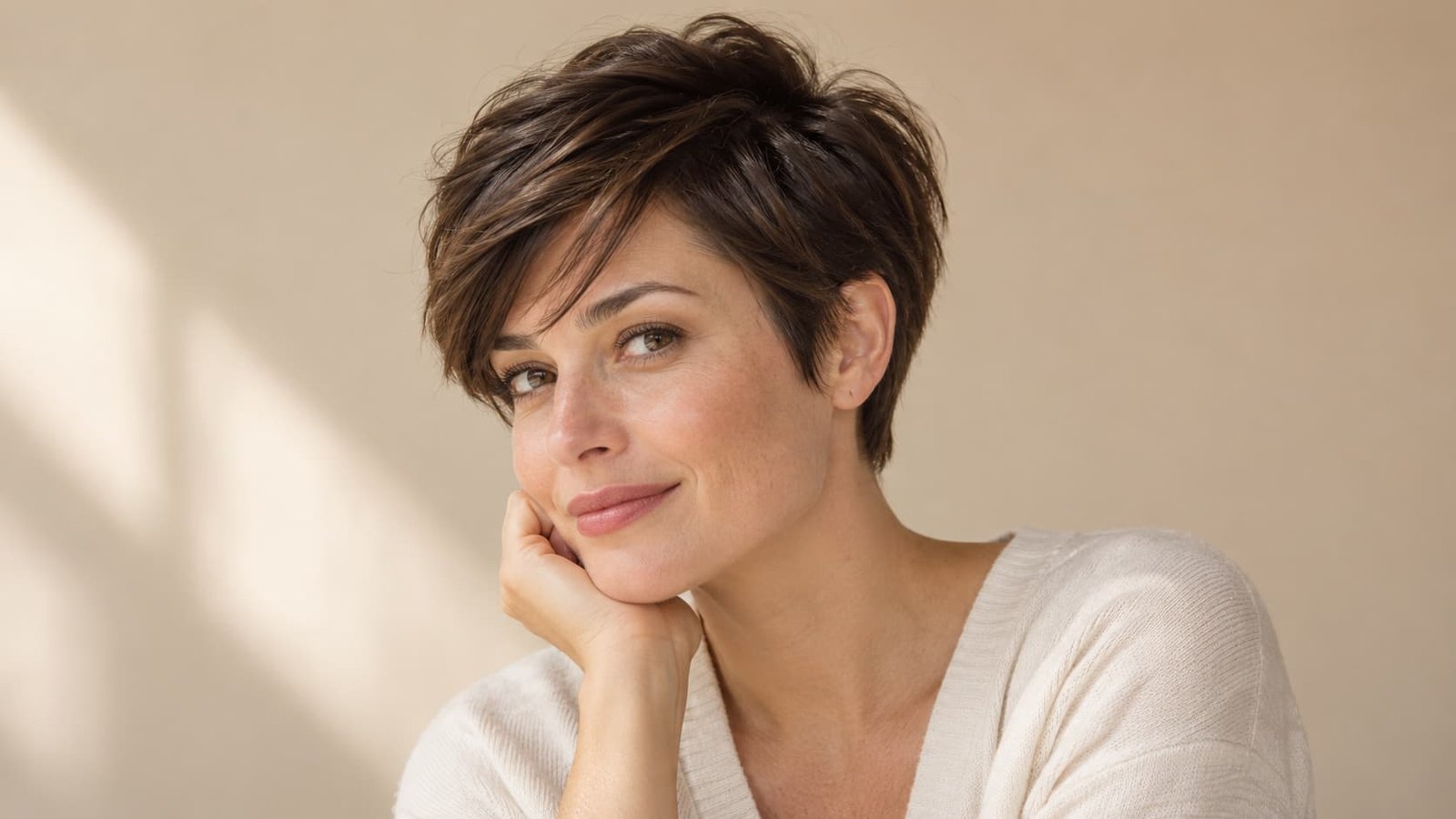

Pixie cuts for thin hair offer several ways to wear short hair while keeping the overall shape balanced. Some styles leave extra length at the crown, while others use soft layers, side-swept bangs, or a gently tapered back to create a different appearance.
Choosing the right pixie cut depends on more than how short you want your hair. Hair density, natural texture, and the areas where you prefer more coverage can all affect the final look.
A well-planned cut may help thin hair appear more defined or fuller in certain areas, but not every pixie style creates the same effect. Understanding the differences can make it easier to find a haircut that suits your hair and styling preferences.
What Are Pixie Cuts for Thin Hair?
A pixie cut is a short hairstyle with closely trimmed or tapered sides and back, usually leaving more length on top. The exact shape can vary, from very short and neat to longer styles with bangs and soft layers.
For thin hair, the placement of that length becomes particularly important. Keeping enough hair around the crown or front can provide coverage, while carefully shaped sides can create a balanced outline.
Some pixie cuts have a smooth, rounded finish. Others use light texture to give the hair more movement. Neither approach is automatically better, as the result depends on the amount of hair and how it naturally falls.
The aim is to find a shape that works with the hair’s existing density rather than relying on heavy styling to create fullness.
How Are Thin Hair and Fine Hair Different?
Thin hair and fine hair are often described as the same thing, but they refer to different hair characteristics.
Thin hair means there are fewer hair strands growing within a particular area of the scalp. This is known as lower hair density. Depending on how the hair is distributed, some areas may show more scalp than others.
Fine hair refers to the thickness of each individual strand. Fine strands have a smaller diameter than medium or coarse strands.
It is possible to have fine hair that is relatively dense, or thicker strands with lower overall density. Some people have both fine and thin hair.
This distinction matters when choosing a pixie cut. Fine strands may lie flat more easily, while hair with lower density may need extra consideration around the crown, temples, or hairline.
How Can a Pixie Cut Change the Appearance of Hair Fullness?
A pixie cut can change how fullness is perceived by adjusting the hair’s length, outline, and direction.
When longer hair hangs close to the head, it may appear flat, particularly if the strands are fine. A shorter shape can reduce the length pulling the hair downward and may allow some natural lift.
A pixie with additional length through the crown can also create a gentle rounded shape. Softly blended sections may help the hair look more connected instead of separating into thin pieces.
However, cutting hair shorter does not increase its density or make individual strands thicker. Very short sides, deep partings, and excessive texturing can sometimes make the scalp more visible.
The visual result depends on finding a suitable balance between length, layers, and coverage.
Which Pixie Cuts Can You Choose for Thin Hair?
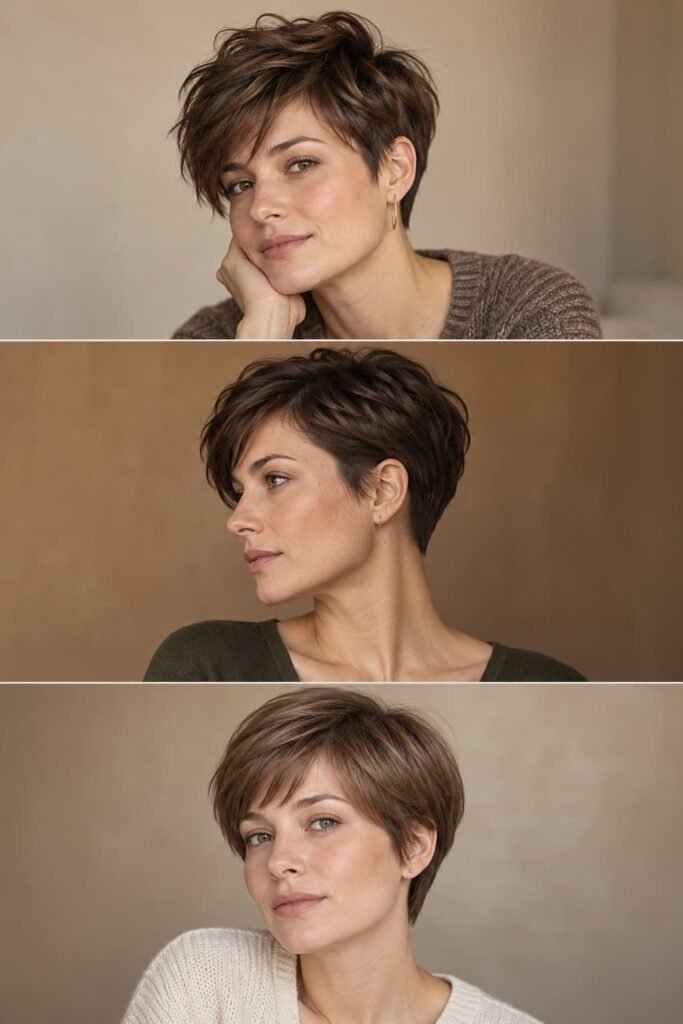
Pixie haircuts come in different lengths and shapes. Some emphasize the crown, while others focus on bangs, a rounded outline, or a shorter, structured finish.
The following variations show how small differences in haircut design can change the overall appearance.
Long-Crown Pixie Cut
A long-crown pixie keeps extra length at the top of the head while the sides and back remain shorter. The longer upper section can be styled with gentle lift, a side part, or a smooth finish.
This difference in length gives the haircut a defined shape without requiring long hair throughout. The crown can appear slightly raised when the strands have enough natural support.
For thin hair, the longer top may also provide additional coverage where density is lower. However, keeping the crown excessively long can cause some hair types to fall flat.
A balanced version usually has enough length to create movement without making the top look disconnected from the shorter sides.
Pixie Cut With Side-Swept Bangs
A pixie with side-swept bangs features a longer front section that falls diagonally across the forehead. The rest of the hair can be softly layered or cut into a neat, tapered shape.
The angled fringe changes how the haircut frames the face. It can soften the appearance of a short hairstyle and create a gentle transition between the top and sides.
For thin hair, side-swept bangs may help provide coverage around parts of the front hairline. A light, naturally falling fringe can also avoid the need to use too much hair from the crown.
The bangs can be worn smooth or slightly separated, depending on the preferred finish and natural texture.
Softly Tapered Pixie Cut
A softly tapered pixie gradually becomes shorter toward the neckline and around the ears, while maintaining more length through the upper sections.
Unlike a sharply cropped undercut, a soft taper creates a gentler transition between different lengths. This gives the haircut a neat outline without a strong contrast between the top and sides.
For hair with lower density, the taper can be adjusted to avoid cutting the sides unnecessarily close to the scalp. Keeping some length around the temples may also provide a softer appearance.
This variation suits a preference for a structured, compact hairstyle with a natural-looking finish.
Rounded Pixie Cut With Minimal Layers
A rounded pixie has a softly curved silhouette that follows the shape of the head. Rather than using many short, separated layers, the haircut maintains a more connected outline.
The hair is usually kept slightly longer around the crown and upper sides, with gentle shaping toward the back.
Minimal layering may help preserve a more continuous appearance when there are fewer strands available. It can also prevent the ends from looking overly wispy.
The rounded shape is especially noticeable on straight or slightly wavy hair, although the result depends on natural texture.
This cut may appeal to someone who prefers a smooth hairstyle with subtle volume instead of a choppy or strongly textured look.
Short Pixie Cut With a Textured Top
A short pixie with a textured top keeps the sides and back fairly close while leaving enough length through the upper section to create visible movement.
The top is shaped into small, lightly separated pieces rather than a completely smooth surface. This gives the haircut a relaxed appearance with more detail through the crown.
For thin hair, controlled texture may help prevent a flat-looking finish. However, removing too much hair during texturizing can make the remaining sections appear sparse.
A softer approach to texturing may be more suitable when scalp coverage is a priority.
This hairstyle can be arranged with the fingers for a casual finish or kept more neatly shaped for a polished appearance.
Pixie Cut With a Longer Front Section
A pixie with a longer front section keeps more length near the forehead while the back and sides remain noticeably shorter.
Unlike a traditional side-swept fringe, the front section may extend toward the eyebrows, temples, or cheek area, depending on the haircut.
The extra length creates a stronger face-framing effect and offers more flexibility in how the hair is arranged. It can fall forward, move toward one side, or be tucked away when long enough.
For thin hair, this variation may be useful when retaining front coverage is more important than having an evenly short haircut.
The longer section should still blend naturally with the rest of the cut. If it is too heavy or disconnected, it may become difficult to style or lie flat against the forehead.
How Do Layers, Bangs, and Hair Texture Affect a Pixie Cut?
Layers, bangs, and natural hair texture influence the shape and appearance of a pixie cut. They affect how the hair falls, how much of the forehead remains visible, and whether the finished style looks smooth, rounded, or textured.
For thin hair, these details can be particularly noticeable because there may be fewer strands available to create the desired shape. Keeping the right amount of length in certain areas can make a difference in how the haircut looks.
How Do Soft Layers Compare With Heavy Texturing?
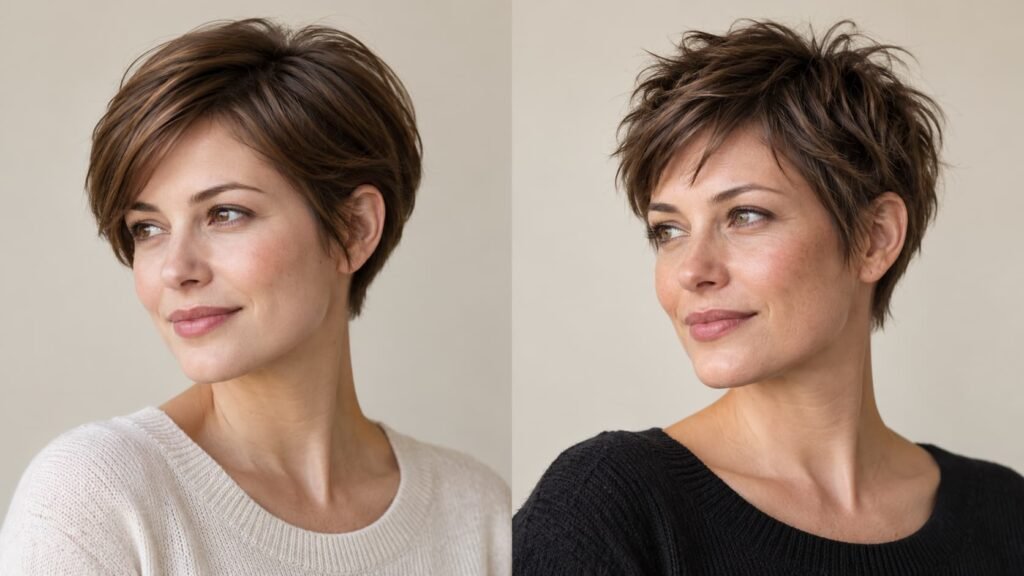
Soft layers create gentle changes in length without making individual sections stand out too much. They can add movement while maintaining a relatively smooth and connected appearance.
This approach may suit thin hair when preserving a fuller-looking outline is important. Light layering around the crown can also allow the hair to move without leaving the ends looking excessively separated.
Heavy texturing creates a more piecey or uneven finish. It may involve cutting into the ends or removing some of the hair’s weight to produce visible separation between sections.
Although this can create an interesting shape, excessive texturizing may make lower-density areas appear more noticeable. The effect depends on how much hair is removed and where the texture is placed.
Soft layering may be preferable for a rounded, blended look, while more noticeable texture can suit someone who wants a slightly choppy appearance.
How Do Different Bang Styles Affect Forehead Coverage?
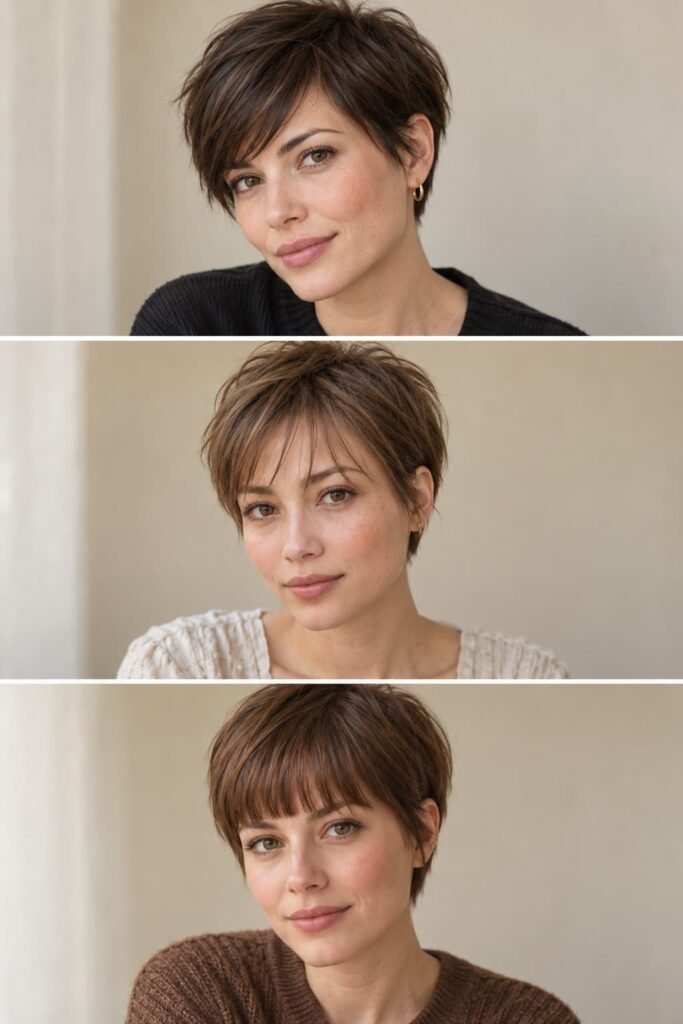
Bangs change how a pixie cut frames the forehead and front hairline. Their length, thickness, and direction determine how much coverage they provide.
Side-swept bangs fall diagonally across the forehead. They can provide partial coverage around the front hairline while creating an angled shape.
Wispy bangs contain smaller, separated sections that give the fringe a lighter appearance. They leave parts of the forehead visible rather than forming a continuous line.
Straight-across bangs create a more defined horizontal shape. Depending on their thickness, they may provide more continuous forehead coverage, but they also require enough hair at the front to create the desired fringe.
Long, face-framing bangs extend toward the temples or sides of the face. They can be arranged in different directions and offer more styling flexibility than a very short fringe.
For thin hair, the most suitable option depends on the amount of hair available near the front and the coverage you prefer. A fringe that requires too many strands from the crown may leave other areas looking less full.
How Does a Pixie Cut Look on Straight, Wavy, or Curly Hair?
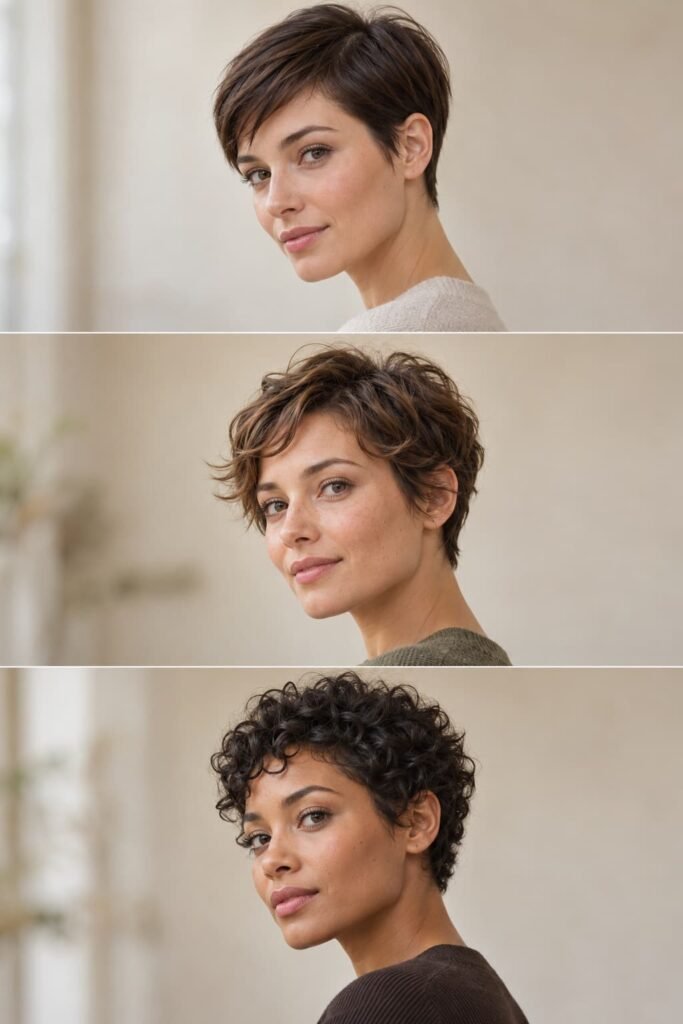
Natural hair texture affects how a pixie cut sits against the head and how its shape appears after styling.
Straight hair often makes the haircut’s outline and layers more visible. A smooth pixie can have a clean, defined shape, while subtle crown layers may introduce gentle movement. Fine, straight strands may also lie close to the scalp, depending on their length and natural direction.
Wavy hair creates natural bends that can soften the transitions between sections. A pixie with enough length to show these waves may have a relaxed appearance without requiring strongly defined layers.
Curly hair can create a rounded or more compact shape, depending on the curl pattern. Because curls may contract as they dry, the visible length can be shorter than it appears when the hair is wet or stretched.
For lower-density hair, natural texture also affects how much of the scalp remains visible. A haircut that looks full on one curl or wave pattern may appear different on another.
Choosing a pixie shape that works with the hair’s natural movement can make everyday styling more manageable.
How Can You Choose the Right Pixie Cut for Thin Hair?
The right pixie cut depends on your hair’s natural characteristics and the appearance you want to achieve. A haircut that looks balanced on one person may sit differently on another, even when both have thin hair.
Rather than choosing a style based only on a reference photograph, consider where your hair has less density, how short you want to go, and how much styling you are comfortable doing.
Consider Hair Density Around the Crown and Hairline
Hair density is not always evenly distributed across the scalp. Some people have fewer strands around the temples, while others notice lower density near the crown or front hairline.
If the crown has less coverage, keeping additional length in the upper sections may allow more flexibility in how the hair is arranged. A very short or heavily textured crown can make the scalp more visible.
When density is lower around the temples, the length of the side sections becomes more important. A closely tapered cut may expose those areas, while a softer outline can retain some coverage.
The direction of hair growth also matters. Cowlicks and natural partings can affect where strands separate, regardless of the haircut.
Understanding these characteristics can help you choose a shape that works with your existing hair rather than trying to recreate a style that requires greater density.
Choose a Length Based on Your Preferred Coverage
Pixie cuts range from closely cropped styles to longer versions that leave hair around the ears, forehead, and crown.
A shorter pixie exposes more of the head’s natural shape and creates a compact appearance. It can be a suitable choice for someone who prefers a neat haircut and does not need additional length for coverage.
A longer pixie provides more options for arranging the hair. The front can be swept to one side, while the crown may retain enough length for a smooth or softly lifted finish.
The sides and back also influence the overall balance. Very short sides create stronger contrast with the top, whereas slightly longer sides give the haircut a softer outline.
Think about which areas you want to keep visible and where you would prefer additional hair coverage before deciding on the final length.
Consider Your Natural Hair Texture and Styling Routine
A pixie cut should fit both your natural hair texture and the amount of time you want to spend styling it.
If your hair naturally falls straight and flat, a cut that depends on a highly lifted crown may require regular blow-drying or styling products to maintain that appearance.
For naturally wavy hair, retaining enough length for the waves to form can make the haircut look softer. Cutting too short may change how those waves appear.
Curly hair requires attention to shrinkage and curl distribution, especially when choosing the length around the front and sides.
Maintenance is another consideration. Short, sharply defined cuts may need more frequent reshaping to preserve their outline, while longer pixies can change noticeably as the hair grows.
Choosing a style that works with your natural texture and daily routine may make it easier to maintain the appearance you prefer.
How Can You Style and Maintain a Pixie Cut on Thin Hair?
Styling a pixie cut on thin hair involves working with its natural movement and keeping the haircut’s shape defined. Small changes in drying, product application, and hair direction can affect how the finished style looks.
Short hair can also change its appearance as it grows, particularly around the ears, neckline, and crown. A simple styling routine and occasional trims can help maintain the intended shape.
Create Gentle Volume Without Heavy Styling Products
Lightweight styling products can help give a pixie cut some lift and movement without making the hair feel weighed down.
A small amount of volumizing mousse or a lightweight styling spray can be applied near the roots. Products that leave a heavy or oily finish may cause fine strands to group together, making some areas appear flatter.
When blow-drying, gently direct the hair upward or away from its usual growth direction to create lift around the crown. Use a comfortable heat setting and avoid holding concentrated heat close to one area for too long.
A soft, natural finish does not require every section to stand upright. Gentle movement through the top can create a balanced shape while keeping the haircut manageable.
Adjust the Parting and Crown Shape
Changing the parting can make a noticeable difference in how a pixie cut frames the face and distributes hair across the scalp.
A side part moves more hair toward one direction, which may provide additional coverage in certain areas. An off-center part can create a similar effect while keeping the overall shape more balanced.
The crown can also be styled in different directions. Gently moving the upper sections away from their usual position may create some lift, depending on the hair’s natural growth pattern.
However, a very defined parting can sometimes reveal more scalp, particularly where hair density is lower. A softer, less structured part may give the hair a more continuous appearance.
Experimenting with small adjustments can help you find a direction that works with your haircut without requiring extensive styling.
Maintain the Haircut as It Grows
Pixie cuts gradually change shape as the hair grows, especially around the neckline, ears, and shorter side sections.
A tapered pixie may begin to lose its defined outline, while a longer pixie can develop additional weight around the sides. Bangs may also become more noticeable as they extend across the forehead.
Occasional trims can help restore the intended shape. The appropriate timing varies according to the haircut, individual hair growth, and how much change in length you are comfortable with.
Between trims, you may be able to adjust the parting or styling direction to accommodate the growing sections.
Gentle handling is also important. Avoid excessive pulling, repeated high-heat styling, or aggressive brushing, particularly if the strands are fine or prone to breakage.
Frequently Asked Questions
Can a Very Short Pixie Make the Scalp More Visible?
Yes. A very short pixie may make the scalp more noticeable, particularly around the crown, temples, or areas with lower hair density.
Shorter sections provide less opportunity to move hair across the scalp for coverage. Keeping slightly more length in selected areas may offer additional flexibility, depending on the natural hair distribution.
Is a Pixie Cut or Pixie Bob Better for Thin Hair?
Neither haircut is automatically better for thin hair.
A traditional pixie is generally shorter and may offer a more compact, structured appearance. A pixie bob retains more length around the sides or front, which can provide additional styling options.
The preferred choice depends on hair density, natural texture, desired coverage, and how short you want the haircut to be.
Does Cutting Thin Hair Short Make It Grow Thicker?
No. Cutting hair does not increase the number of hair follicles or change the natural thickness of individual strands.
A shorter haircut may make the ends look more even or change how the hair sits, which can create the appearance of fullness. However, this is a visual effect rather than an increase in actual hair density.
Can Pixie Cuts Work With Naturally Fine, Straight Hair?
Yes. Pixie cuts can work with naturally fine, straight hair, although the shape and length need to suit how the strands fall.
Softly blended layers, a rounded outline, or a slightly longer crown may create different visual effects without requiring heavy texturing.
Because fine, straight strands can lie close to the scalp, the haircut’s structure and natural growth direction are worth considering before choosing a very short style.
Final Thoughts
Pixie cuts for thin hair offer different ways to balance short length, shape, and coverage. A longer crown, soft layers, side-swept bangs, or a gently tapered outline can each create a different appearance.
The most suitable haircut depends on your natural hair density, texture, preferred length, and everyday styling routine. Some styles provide more flexibility for covering lower-density areas, while others emphasize a shorter, more defined shape.
Choosing a pixie that works with your existing hair characteristics can help you achieve a hairstyle that feels comfortable, looks balanced, and suits your personal preferences.