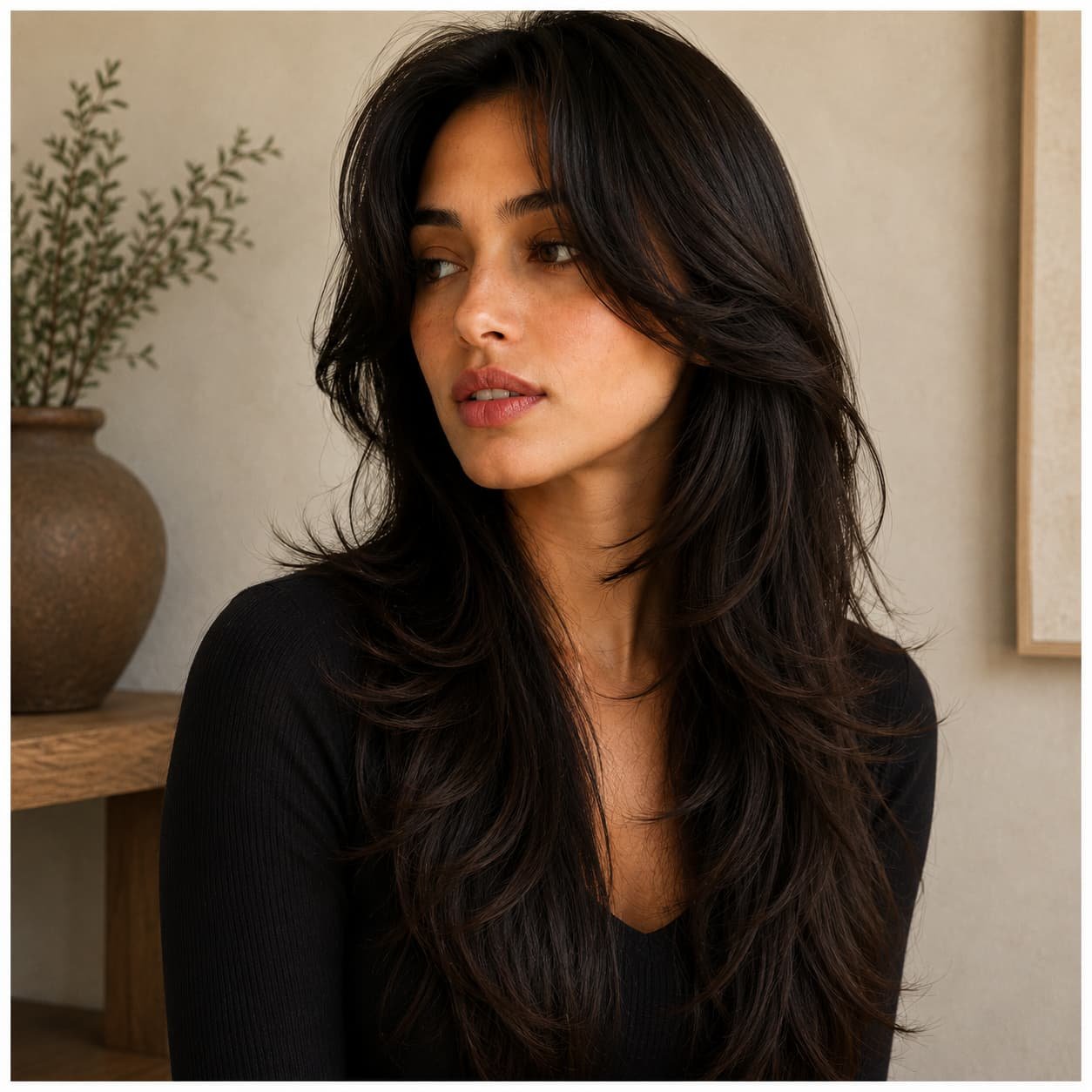
A long butterfly haircut combines shorter face-framing layers with longer sections through the rest of the hair. The contrast between these lengths creates a layered shape while allowing much of the overall length to remain.
The haircut can appear soft and blended or more defined depending on where the shorter layers begin, how gradually they connect with the longer sections, and how the hair is styled. Hair texture, density, parting, and overall length can also affect the finished appearance.
There is no single fixed butterfly-layer pattern. Some versions use shorter front pieces and stronger separation between the layers, while others keep the face-framing sections longer for a more gradual transition.
What Is a Long Butterfly Haircut?
A long butterfly haircut is a layered style that combines shorter sections around the face with progressively longer layers.
The shorter pieces usually form the most noticeable part of the haircut around the front. Longer layers continue through the remaining lengths, helping the different sections blend rather than appear disconnected.
On long hair, the lowest sections can remain substantially longer than the face-framing pieces. This allows the haircut to create visible layering without changing the entire hairstyle to a shorter length.
The amount of contrast is adjustable. Some people may prefer long, softly blended butterfly layers, while others may choose shorter front sections that make the layered structure more noticeable.
What Defines the Butterfly Layer Shape?
The butterfly shape comes from the relationship between shorter and longer layers.
Shorter face-framing pieces form the upper part of the layered structure. These are followed by longer sections that gradually connect with the remaining hair.
The lower sections generally stay longer, creating a noticeable difference between the front layers and the overall length. How strong that difference appears depends on the chosen layer placement.
Styling can also change how visible the structure looks. Curving the shorter layers away from the face can make the different lengths easier to see. A straighter finish or natural texture may create a softer interpretation of the same haircut.
How Is a Butterfly Haircut Different From Regular Long Layers?
A butterfly haircut and a traditional long layered haircut can share several features, but their layer placement and visual emphasis may differ.
Regular long layers can be distributed throughout the hair without making the shorter front sections the main feature. The transition between lengths may also be more gradual.
A butterfly haircut usually places greater visual emphasis on shorter face-framing layers that connect with longer sections below. This contrast between the front and lower lengths helps create the recognizable butterfly-style structure.
The distinction is not always sharp. A butterfly cut with very long, subtle layers can resemble other types of long layered haircuts, particularly when the hair is worn straight or with minimal styling.
Readers who prefer broader layering options rather than a specifically butterfly-inspired structure can also explore the Long Layered Haircuts for Women guide on SR Hair and Nails.
Where Can Butterfly Layers Start on Long Hair?
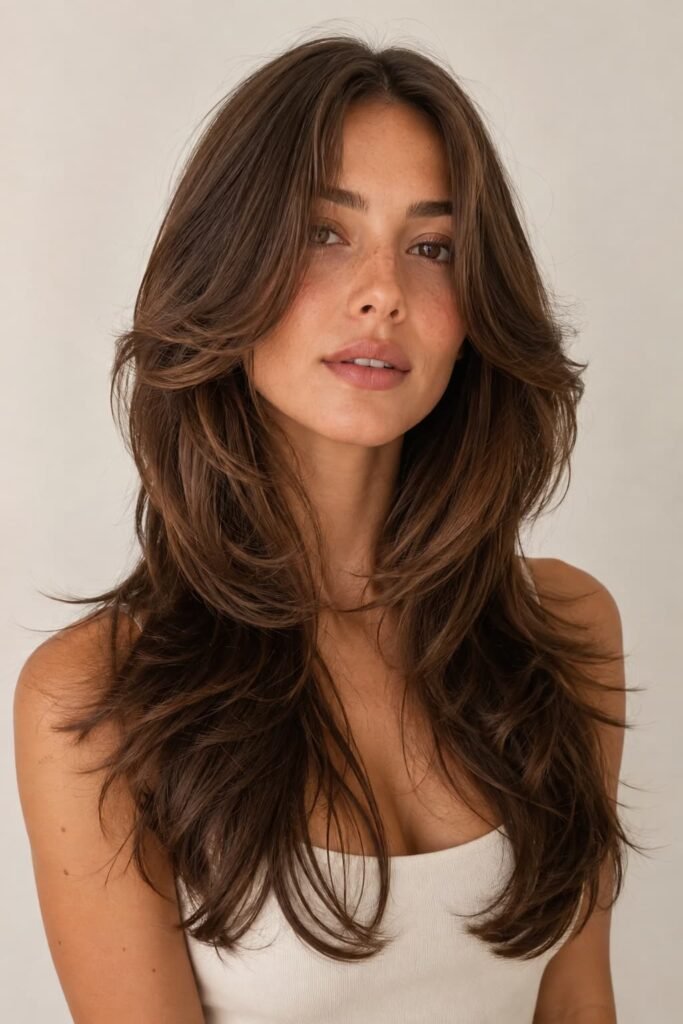
Butterfly layers can begin at different points around the face. There is no single required starting position.
Where the shortest layer begins influences how much contrast appears between the front pieces and the longer sections. Shorter face-framing layers can create a more noticeable difference, while longer starting points can produce a more gradual transition.
Overall hair length, density, natural texture, existing bangs, and styling preferences can all influence how a particular layer placement appears.
Higher Face-Framing Layers
One possible option is to begin the face-framing sections higher around the face.
These shorter pieces create a greater difference between the front layers and the longest sections. The layered structure may therefore appear more defined, particularly when the front pieces are styled away from the face.
The exact starting point does not need to follow one fixed rule. Layers may begin around the cheek area, closer to the jaw, or somewhere between these points depending on the desired appearance.
Higher layers can also look different when worn naturally compared with a rounded or outward-styled finish.
Longer Face-Framing Layers
Another option is to keep the shortest face-framing sections longer.
These layers may begin around the jaw, chin, or farther down toward the shoulders. Because the difference between the shortest and longest pieces is smaller, the transition can appear softer and more blended.
Longer face-framing layers may suit someone who wants the general structure of a butterfly cut without a strong change in length around the upper face.
They can still connect with additional layers through the rest of the hair while keeping the front sections comparatively long.
Long Butterfly Haircut Ideas
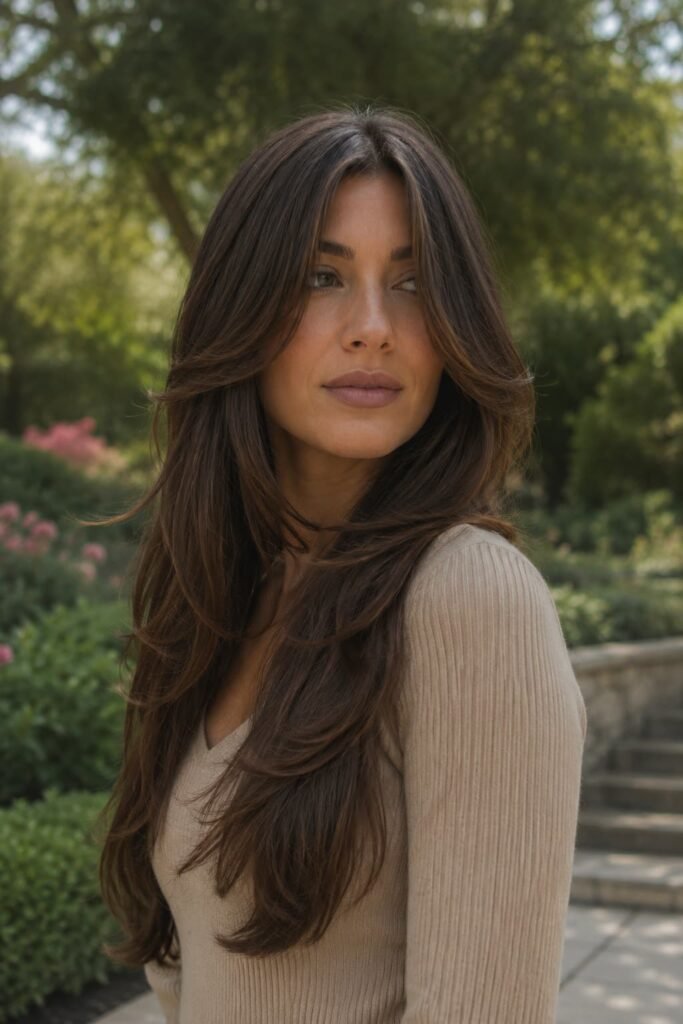
A long butterfly haircut can take different forms depending on the placement and length of the layers. Bangs, natural texture, parting, and styling can also change how clearly the shorter and longer sections are seen.
The following ideas show different ways the basic butterfly-layer structure can be adapted.
Classic Long Butterfly Haircut
A classic version combines shorter face-framing sections with longer layers through the rest of the hair.
The change in length is noticeable around the front, while the lower sections remain substantially longer. This creates a clear shorter-to-longer structure without requiring a short overall haircut.
Styling the front pieces away from the face can make the different layer lengths more visible, although the appearance can vary with texture and styling.
Soft Butterfly Layers on Long Hair
Soft butterfly layers keep the differences between the layer lengths more subtle.
The front sections remain comparatively long and blend gradually into the lower lengths. This can create a softer interpretation without strong separation between each layer.
A straight finish may keep the transition understated, while bends or curved ends can make individual sections easier to see.
Long Butterfly Haircut With Curtain Bangs
Curtain bangs can be incorporated into the shortest part of the haircut.
The fringe can separate around the center or slightly off-center and connect with progressively longer face-framing pieces. This creates a gradual transition between the bangs and the rest of the layers.
Curtain bangs can also vary in length. Longer versions may blend more closely with the surrounding layers, while shorter versions can create stronger distinction at the front.
Long Butterfly Haircut Without Bangs
Curtain bangs are not required.
Without a separate fringe, the shortest face-framing pieces can begin farther down around the face. This leaves the forehead open while maintaining the transition from shorter front layers to longer sections.
This is one possible option for someone who prefers longer pieces around the front.
Long Butterfly Haircut With Long Face-Framing Pieces
Long face-framing sections create a more gradual version of the butterfly shape.
The shortest layers may begin around the jaw, chin, or lower depending on the desired appearance. Keeping these pieces longer reduces the difference between the front and lower sections.
The result may appear more blended than a version with shorter upper layers, especially when the hair is worn with minimal styling.
Dramatic Butterfly Layers
A more dramatic version uses greater separation between the shorter upper layers and the longest sections.
The difference in length can make individual layers more noticeable around the front and upper areas. Styling the shorter sections outward may emphasize that contrast further.
How defined the layers appear will still depend on overall hair length, texture, density, and styling.
Long Butterfly Haircut for Straight Hair
A butterfly cut can be worn on straight hair as well as textured hair.
A smooth, straight finish can show the different layer lengths without relying on waves or curls. The ends can remain relatively straight for a cleaner outline or be given a slight bend to make the face-framing sections more noticeable.
The effect may appear subtler than a rounded blowout, depending on how much the layers differ in length.
Long Butterfly Haircut With Waves
Waves offer another way to display the layers.
Bends through the mid-lengths and ends can make different sections easier to distinguish visually. Loose waves can also create a softer interpretation than a highly rounded or flipped finish.
Natural wave patterns and styled waves will not produce identical results, so the final appearance can vary.
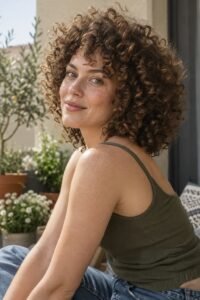
Long Butterfly Haircut for Curly Hair
The butterfly-layer concept can also be adapted to curly hair.
On curly hair, shorter and longer sections may sit differently because curl pattern and shrinkage can affect their visible length. A curly butterfly haircut therefore does not need to reproduce the appearance of a straight or blow-dried version.
The focus can remain on shorter face-framing sections connecting with progressively longer layers while working with the existing curl pattern.
The finished shape can vary with curl pattern, density, overall length, and layer placement.
Long Butterfly Haircut With a Middle Part
A middle part places the front sections on either side of a central division.
This can create a relatively even visual distribution of the face-framing layers. Longer curtain-style sections can also be incorporated into this arrangement, although bangs are optional.
Changing the styling direction of the front pieces can alter how soft or defined the layers appear.
Long Butterfly Haircut With a Side Part
A side part creates a different arrangement of the front layers.
Because more hair is directed toward one side, the face-framing sections may appear less symmetrical than they do with a middle part.
The layers themselves do not necessarily need to be recut to create this change in appearance, making parting one way to vary how the haircut is styled.
Extra-Long Butterfly Haircut
An extra-long butterfly haircut keeps substantial length through the lowest sections while adding shorter layers through the front and upper areas.
The shortest pieces can remain relatively long for a gradual transition or begin higher for stronger separation. Both approaches can retain the basic butterfly-layer structure.
On very long hair, the balance between the shortest layers and lower length can be adjusted according to how subtle or defined the desired effect is.
Butterfly Haircut With Curtain Bangs vs Without Bangs
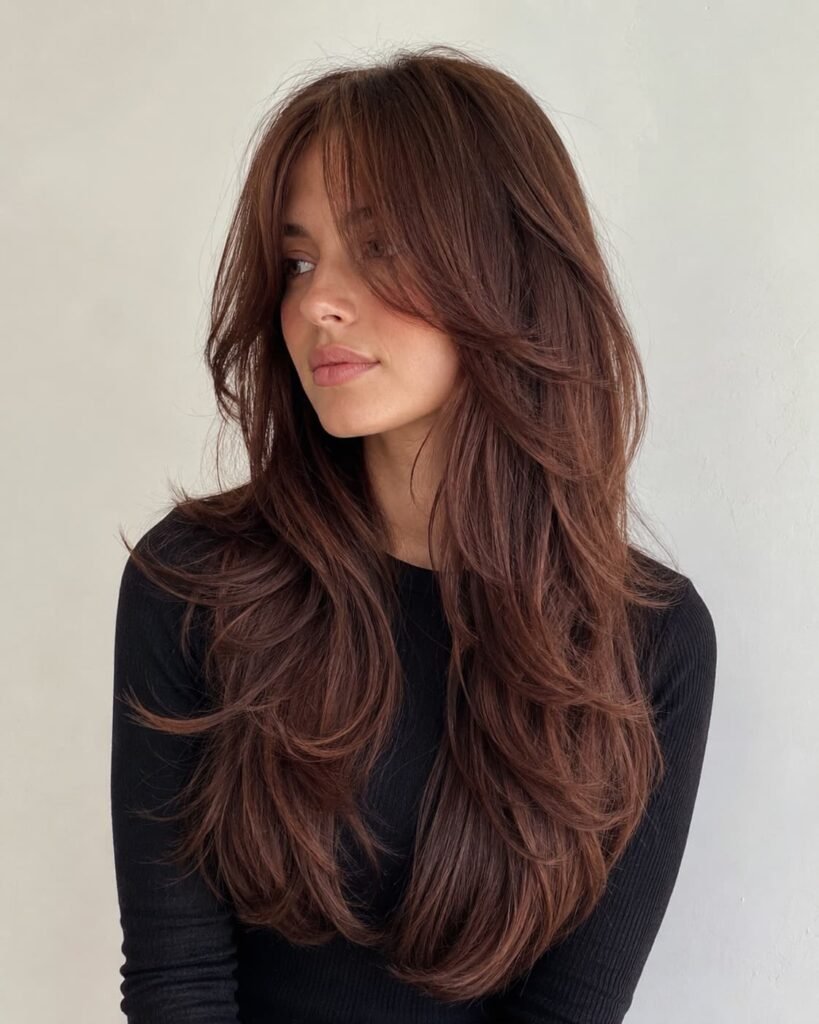
Curtain bangs can be part of a butterfly haircut, but they are optional.
With curtain bangs, the shortest pieces usually begin higher at the front and then blend into longer face-framing layers. This creates a gradual transition from the fringe into the rest of the haircut.
Without bangs, the shortest front layers can begin farther down, such as around the cheek, jaw, chin, or lower. This keeps the forehead open and creates a longer front outline.
The main difference is where the shortest section begins and how much emphasis is placed around the upper face. Both versions can still use the same basic structure of shorter front layers blending into longer lengths.
How Hair Texture and Density Can Affect the Look
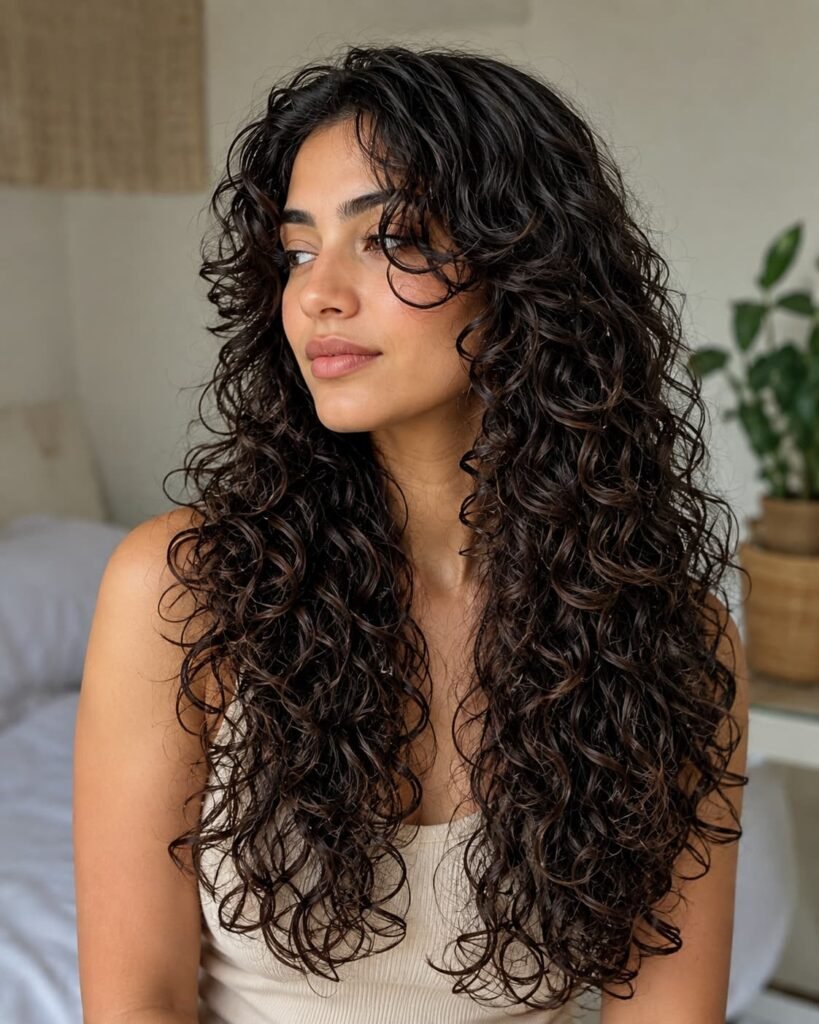
Hair texture and density can change how butterfly layers sit and how noticeable the different lengths appear.
The same general haircut may look different on straight, wavy, curly, fine, or higher-density hair. Layer placement can therefore be adjusted according to the existing hair and desired appearance.
Straight Hair
Straight hair can show the outline of layered sections clearly, especially when there is a noticeable difference between the shortest and longest pieces.
With a smooth finish, the face-framing layers may fall closer to the rest of the hair. Adding a gentle bend at the ends can make individual sections more visible.
A softly layered cut may still look subtle when worn straight, particularly when the front pieces are relatively long.
Wavy and Curly Hair
Waves and curls can change how each layer sits because the hair does not fall in a completely straight line.
On wavy hair, different lengths may appear as overlapping bends through the front and mid-lengths. On curly hair, curl pattern and shrinkage can affect where shorter and longer sections appear to fall.
A butterfly cut on naturally textured hair may therefore have a different silhouette from a smooth blowout version. Layer placement can be adapted to work with the existing wave or curl pattern rather than trying to reproduce one fixed shape.
Fine or Lower-Density Hair
The amount of layering is worth considering when maintaining visual weight through the lower lengths is a priority.
Removing substantial amounts of hair from several sections can make the ends appear less full on some fine or lower-density hair. Keeping more of the lower sections intact and using longer face-framing layers is one possible approach.
The effect varies with starting density, overall length, existing haircut, and amount of layering.
Thick or Higher-Density Hair
Higher-density hair can display noticeable differences between shorter and longer sections.
Additional layering distributes the hair across several lengths, which may make the layered structure easier to see. A softer version can use longer, more blended layers, while a stronger version can create greater separation through the upper and lower sections.
The final appearance depends on layer placement, overall length, texture, and how much hair is included in each section.
How Can a Long Butterfly Haircut Be Styled?
Styling can change how clearly the different layers are seen without changing the haircut itself.
Some finishes emphasize the shorter face-framing pieces, while others allow them to blend more quietly into the longer lengths.
Smooth and Straight
A smooth, straight finish gives the haircut a cleaner outline.
The shorter sections may sit closer to the longer hair instead of curving outward, which can make the layering appear softer. A slight bend at the ends can add more visible definition if desired.
Face-Framing Layers Styled Outward
Styling the front layers away from the face can make the shorter sections easier to distinguish.
The curve can be gentle or more pronounced. Longer front pieces may form a soft sweep, while shorter layers can create a stronger outward shape.
This styling approach changes how the layers are displayed rather than changing their actual placement.
Loose Waves
Loose waves can create bends at different points through the layered lengths.
This may make individual sections easier to see, particularly around the front and mid-lengths. Soft waves can create a more relaxed outline, while more defined bends may emphasize separation between the layers.
Natural waves and styled waves can produce different results, so the finished look can vary.
Rounded Blowout-Style Finish
A rounded blowout-style finish can curve the shorter front and upper layers while the longer sections fall underneath.
This can make the transition between the different lengths more visible. A gentle curve creates a softer result, while stronger outward bends can give the front layers more definition.
This is one styling option and should not be expected to create the same level of volume or shape on every head of hair.
Natural Texture
A butterfly haircut can also be worn with the hair’s natural texture.
Straight hair may show a smoother layered outline, while waves and curls can create their own pattern through the different lengths. The face-framing sections may remain visible without being shaped into a rounded or outward finish.
The final appearance can vary with texture, density, overall length, parting, and amount of layering.
Long Butterfly Haircut vs Wolf Cut
Both butterfly and wolf cuts use layers, but they usually create different overall shapes.
A long butterfly haircut focuses on shorter face-framing layers that connect with longer sections underneath. Much of the overall length can remain, and the transition between the layers can be relatively soft.
A wolf cut commonly uses shorter, choppier layers around the crown and upper sections, with more visible texture and separation through the lengths.
Modern versions can overlap, especially when either haircut is customized. Looking at the placement, length, and amount of separation between the layers is more useful than relying only on the haircut name.
Readers interested in stronger crown layering and a more textured shape can also explore the Wolf Cut Hairstyle guide on SR Hair and Nails.
Long Butterfly Haircut vs Shag
A shag also relies on noticeable layering, but it commonly uses stronger layering through the crown, front, and lengths.
A long butterfly haircut generally places more emphasis on face-framing pieces that flow into longer lower sections. A shag may have a choppier or more separated texture throughout the haircut.
There is no strict boundary between every modern variation, so heavily layered butterfly cuts and softer shags may sometimes look similar.
Can a Butterfly Haircut Keep Long Hair?
Yes. A butterfly haircut can retain substantial overall length while adding shorter layers around the face and upper sections.
The longest pieces can remain well below the shorter layers, which is one of the main features of the long version of this cut.
However, adding butterfly layers still means shortening some sections of the hair. A more dramatic version may require a greater difference between the shortest face-framing pieces and the longest lengths.
How much length remains depends on the starting haircut, desired shortest layer, and amount of layering added through the rest of the hair.
If retaining the lower length is a priority, that preference can be clearly communicated before the haircut.
What to Consider Before Choosing a Long Butterfly Haircut
The term “butterfly haircut” can describe several different layer arrangements. Thinking about the details of the desired shape can make the choice more specific.
Current Hair Length
Starting length affects how much distance there can be between the shortest layers and longest sections.
On very long hair, the front pieces can be considerably shorter while the lower sections remain long. With less overall length, the transition between layers may be more compact.
Desired Shortest Layer
Consider where you want the first noticeable face-framing section to begin.
A higher starting point can create stronger contrast around the front, while longer face-framing pieces may give the transition a softer appearance.
There is no single required starting position.
Subtle or Dramatic Layering
A soft butterfly cut can use longer, blended sections with relatively little separation.
A more dramatic version can use a larger difference between the upper layers and longest pieces. The choice affects the visual structure of the haircut rather than following one fixed formula.
Bangs or No Bangs
Curtain bangs can become the shortest part of the layered structure and connect with longer face-framing pieces.
Without bangs, the first layer can begin farther down around the face. Both approaches can still create a butterfly-inspired shape.
Hair Texture
Straight, wavy, and curly hair can display the same layer lengths differently.
Waves and curls add bends through the hair, while curl shrinkage can affect where individual sections appear to fall. A butterfly haircut on textured hair may therefore have a different outline from the same general cut worn straight.
Hair Density
Density is worth considering when deciding how much layering to add.
Extensive layering removes hair from different sections of the overall length. On some fine or lower-density hair, this can make the lower ends appear less substantial. Longer or fewer layers are one possible option when retaining more visual weight through the ends is preferred.
Higher-density hair can accommodate a different distribution of layers, but the amount and placement should still reflect the desired finished shape.
Preferred Parting
A middle part and a side part distribute the front sections differently.
If one parting is worn most often, it can be useful to consider how the face-framing pieces will sit with it.
Natural Texture or Regular Styling
Butterfly layers can look different when worn naturally compared with a smooth finish, loose waves, or a rounded blowout-style shape.
If an inspiration image relies heavily on outward curves or styled volume, the same haircut may appear softer when left in its natural state.
Appearance of the Lower Ends
Consider how substantial or light you want the lower portion of the haircut to appear.
More layering through the lengths can redistribute the hair across several different endpoints. Keeping more of the lower sections intact can create a different visual outline.
Reference Images
Reference images can help communicate details that a haircut name alone may not explain.
Look for examples that show the desired overall length, shortest face-framing layer, amount of layer separation, fringe, and parting.
It is also useful to notice whether the reference is shown straight, naturally textured, wavy, or with a blowout-style finish. Styling can make the layers appear more or less pronounced.
How to Describe a Long Butterfly Haircut to a Hairstylist
Rather than relying only on the term “butterfly haircut,” describe the specific features you want.
Start with the overall length and explain how much of the longest section you would like to retain.
Then identify where you want the shortest face-framing pieces to begin. This might be around the cheek, jaw, chin, or lower depending on the amount of contrast you prefer.
Clarify whether you want curtain bangs, longer front pieces, or no separate fringe.
It can also help to describe the amount of layer separation you want. Long, blended sections create a softer transition, while a greater difference between the upper and lower layers creates a more defined shape.
Mention your usual parting and how you commonly wear your natural texture. Straight, wavy, and curly hair can display the same layer placement differently.
When using a reference photo, pay attention to how the hair has been styled. A rounded blowout, waves, or outward-curved front pieces can make the layer structure look more pronounced than it may appear without that styling.
Communicating the desired length, shortest layer, bangs, texture, parting, and amount of layer separation gives a clearer description than the haircut name alone.
Frequently Asked Questions
What Is the Difference Between a Butterfly Haircut and Long Layers?
Both haircuts use layers, but the structure is usually different.
A butterfly haircut places more emphasis on shorter face-framing layers with longer sections underneath. Traditional long layers may be distributed more broadly through the hair without creating the same contrast around the front.
The difference can become less obvious when butterfly layers are kept long and softly blended.
Can You Get a Butterfly Haircut Without Curtain Bangs?
Yes. Curtain bangs are optional.
Without bangs, the shortest face-framing pieces can begin farther down around the face and blend into the longer sections. This creates a butterfly-style layered shape while keeping the forehead open.
Does a Butterfly Haircut Remove a Lot of Length?
A butterfly haircut can retain substantial overall length, but some sections need to be shortened to create the layered structure.
The longest pieces can remain long while the face-framing and upper sections are cut shorter. How much hair is removed depends on the starting length, existing haircut, and desired difference between the layers.
Where Should Butterfly Layers Start?
There is no single required starting point.
Face-framing layers may begin around the cheek, jaw, chin, or lower depending on the desired shape. Starting higher can create stronger separation between the front and lower sections, while longer layers can produce a more gradual transition.
Overall length, texture, density, and preferred styling can also affect how the placement appears.
Can Straight Hair Have a Butterfly Haircut?
Yes. A butterfly haircut can be adapted to straight hair.
Straight styling can make the different layer lengths easier to see, although softly blended sections may appear more subtle. Curving the face-framing pieces or ends can make the layered shape more noticeable if that finish is preferred.
Can Curly Hair Have Butterfly Layers?
Yes. Butterfly-style layering can be adapted to curly hair.
Curl pattern and shrinkage can affect where individual layers appear to fall, so the same layer lengths may look different on curly hair than on straight hair.
The cut can be adjusted around the existing curl pattern rather than trying to reproduce the exact appearance of a smooth blowout.
Can Butterfly Layers Be Subtle?
Yes. Butterfly layers do not have to create a dramatic difference in length.
Keeping the face-framing pieces longer and using more gradual transitions can create a softer interpretation of the haircut. Stronger separation between shorter and longer sections produces a more defined layered shape.
Do Butterfly Layers Need to Be Styled Every Day?
Not necessarily.
The haircut can be worn with straight, wavy, curly, or other natural texture. Styling the shorter layers outward or adding waves can make the layered structure more noticeable, but those finishes are optional.
How the haircut looks without deliberate styling depends on natural texture, density, layer placement, and overall length.
What Is the Difference Between a Butterfly Haircut and a Wolf Cut?
Both use noticeable layering, but they generally create different silhouettes.
A butterfly haircut typically combines shorter face-framing layers with longer sections underneath, often creating a softer transition through the lengths.
A wolf cut generally uses shorter, choppier layers around the crown and upper sections, with stronger emphasis on texture and separation.
Customized versions can overlap, so the exact placement and shape of the layers are more informative than the haircut name alone.
How Do You Ask for a Butterfly Haircut on Long Hair?
Explain the specific features you want rather than relying only on the name of the haircut.
Useful details include how much overall length you want to keep, where you want the shortest face-framing pieces to begin, whether you want curtain bangs, and whether you prefer soft or more noticeable layer separation.
It can also help to mention your usual parting and natural texture. Reference images can show the desired length and layer placement more clearly, especially when you also notice whether the example has been styled with waves, outward curves, or a blowout-style finish.
Final Thoughts
A long butterfly haircut combines shorter face-framing layers with longer sections, creating a layered shape while allowing substantial overall length to remain.
The haircut can be adapted through the placement of the shortest layer, bangs, amount of separation, parting, texture, and styling. Some versions look soft and blended, while others create a more noticeable contrast between the upper and lower sections.
Focusing on these individual details is more useful than relying on the haircut name alone. The final appearance can vary according to the starting hair, chosen layer structure, and styling.