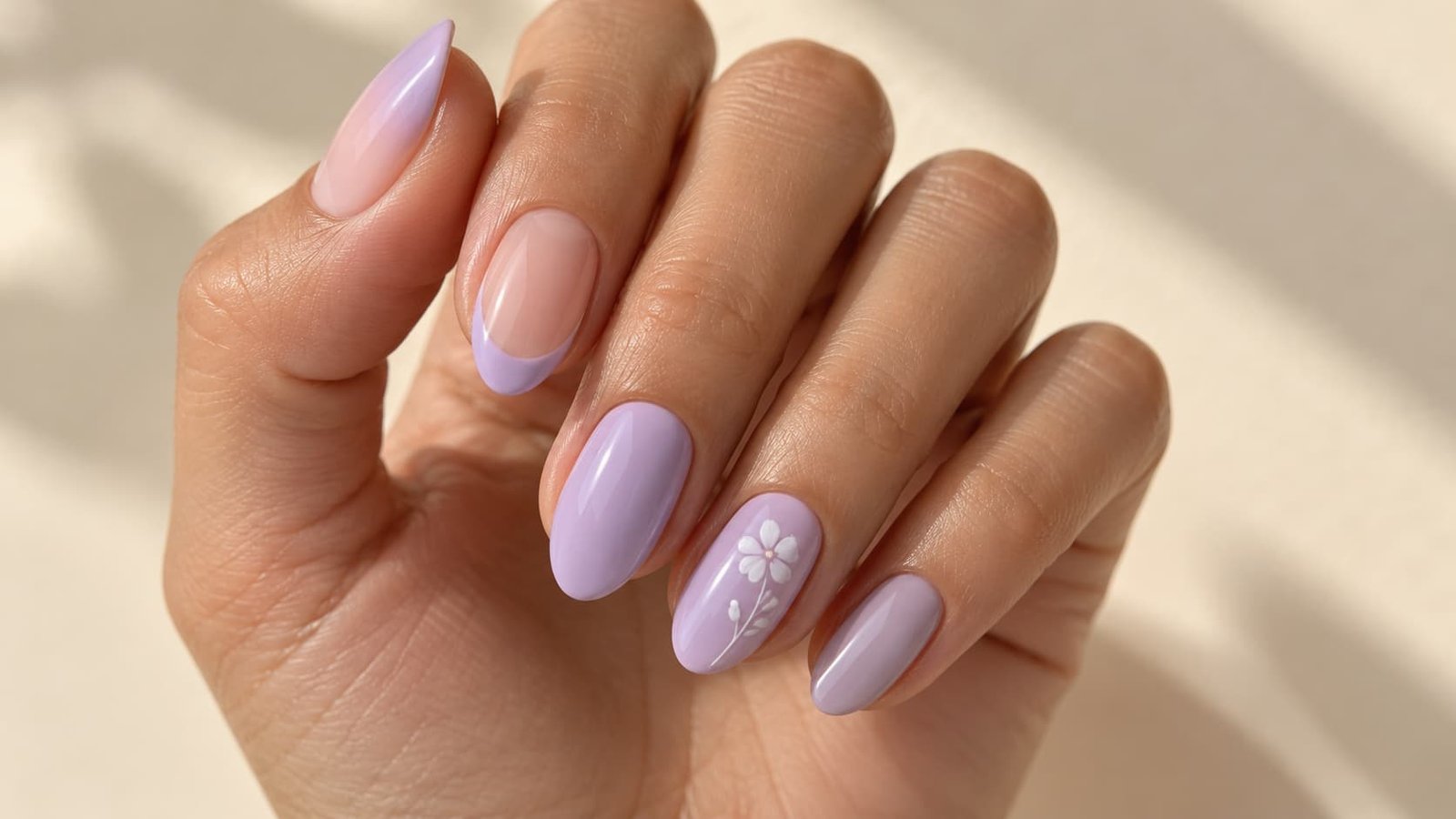







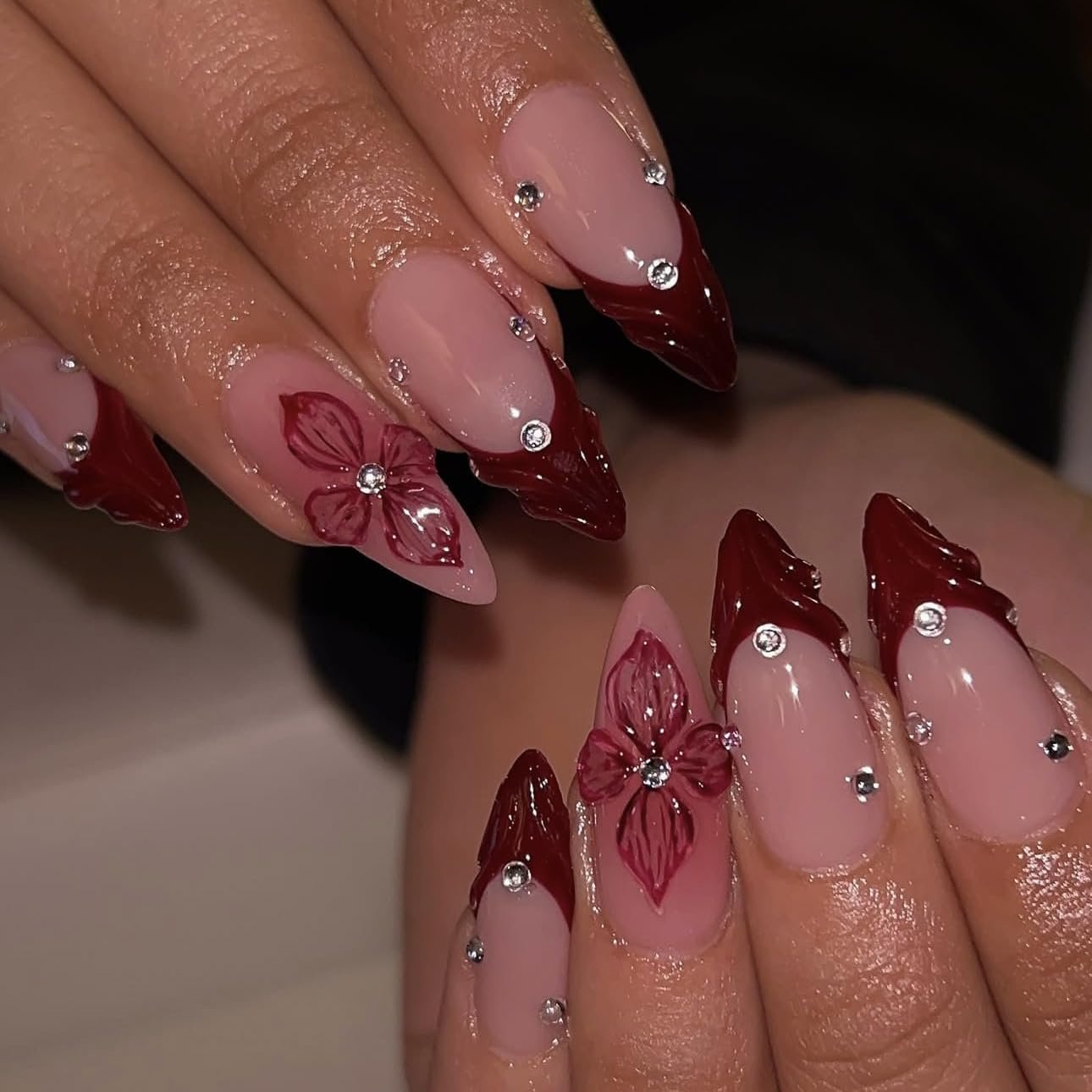
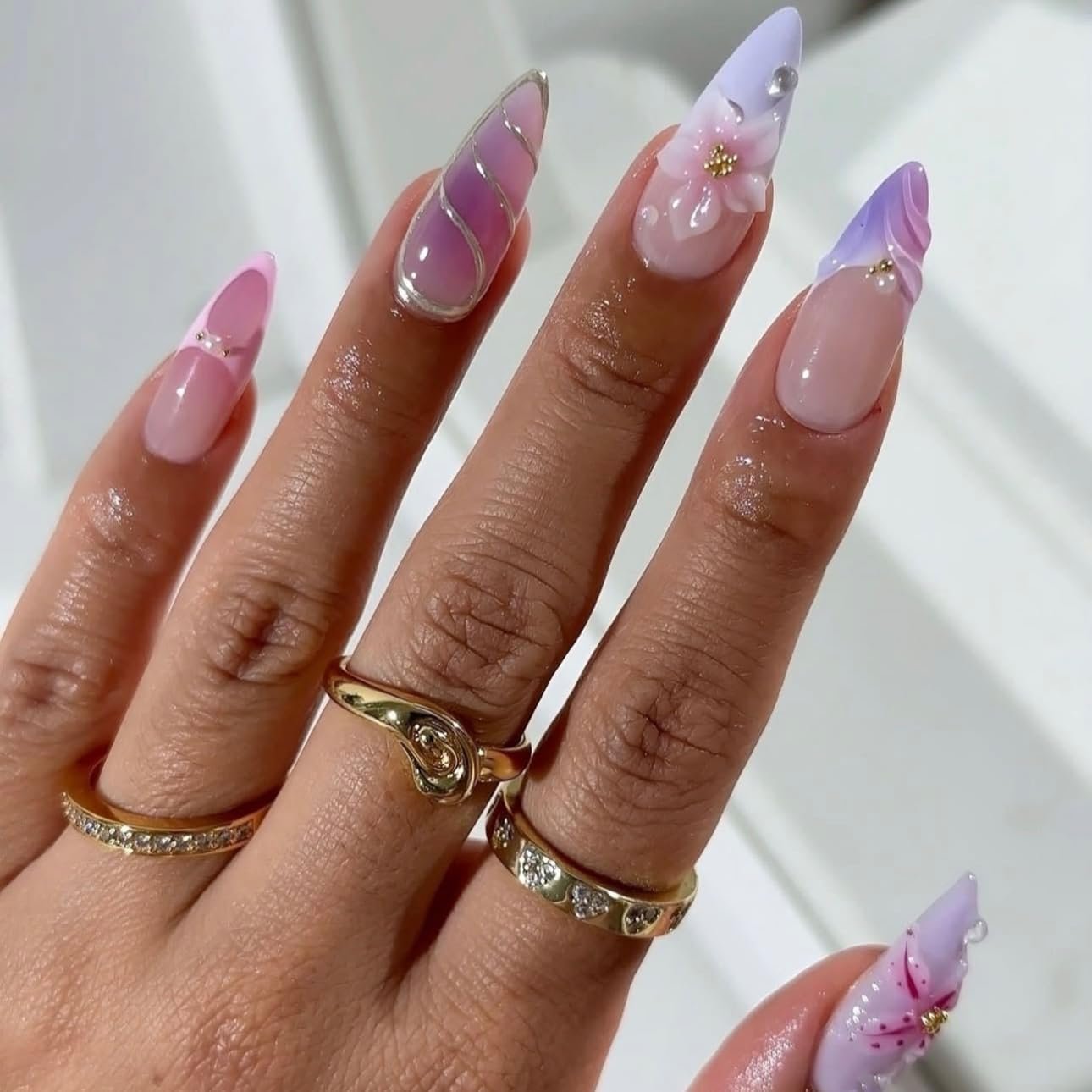
Lilac nails offer a soft purple look that can be kept simple or combined with decorative details. From pastel polish to French tips, ombre gradients, and floral accents, there are several ways to incorporate this color into a manicure.
The appearance depends on the shade, finish, and placement of the color. A pale lilac manicure may look subtle, while contrasting shades or defined patterns can make the design more noticeable.
What Are Lilac Nails?
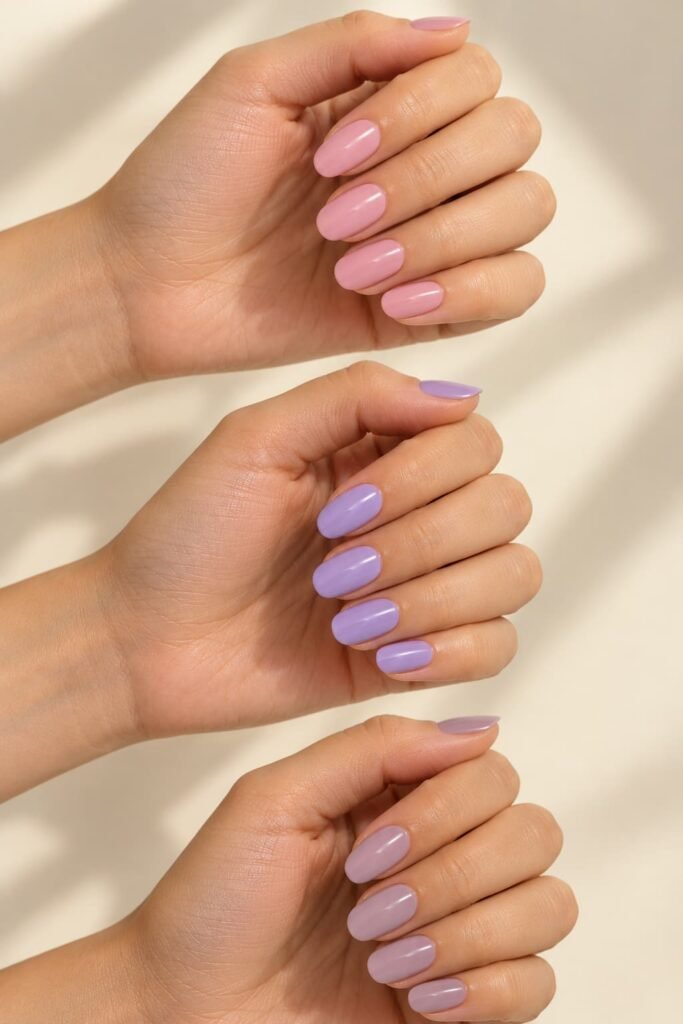
Lilac nails feature a pale purple color that often has a slight pink undertone. The shade takes its name from lilac flowers and belongs to the lighter range of purple colors.
Not every lilac polish looks identical. Some shades appear closer to pastel pink-purple, while others have cooler violet tones. Muted versions may also contain subtle gray undertones.
Lilac can cover the entire nail or appear as a smaller detail within French tips, geometric patterns, or decorative artwork.
How Are Lilac and Lavender Nail Colors Different?
Lilac and lavender are both light purple colors, and their appearances can overlap.
Lilac generally leans toward pink-purple, while lavender is often described as a cooler shade with more noticeable blue undertones.
For example, a pink-toned lilac may appear rosier beside a cool lavender shade. However, the difference is not always easy to identify.
Nail polish collections may also use these color names differently. Comparing the actual shades is more useful than relying on their names alone.
Pink-Toned, Cool-Toned, and Dusty Lilac Shades
Lilac comes in several variations that can change the overall color palette of a manicure.
Pink-toned lilac has a noticeable rosy undertone. It can be paired with blush pink, cream, or other light shades for a gentle color combination.
Cool-toned lilac leans more toward violet or blue-purple. White, silver, and cool gray offer possible accents alongside this shade.
Dusty lilac has a muted appearance with subtle gray tones. It can be combined with taupe, mauve, or deeper purple for a less saturated palette.
These variations provide different options depending on whether you prefer a light pastel color or a more muted purple.
Which Lilac Nail Designs Can You Choose?
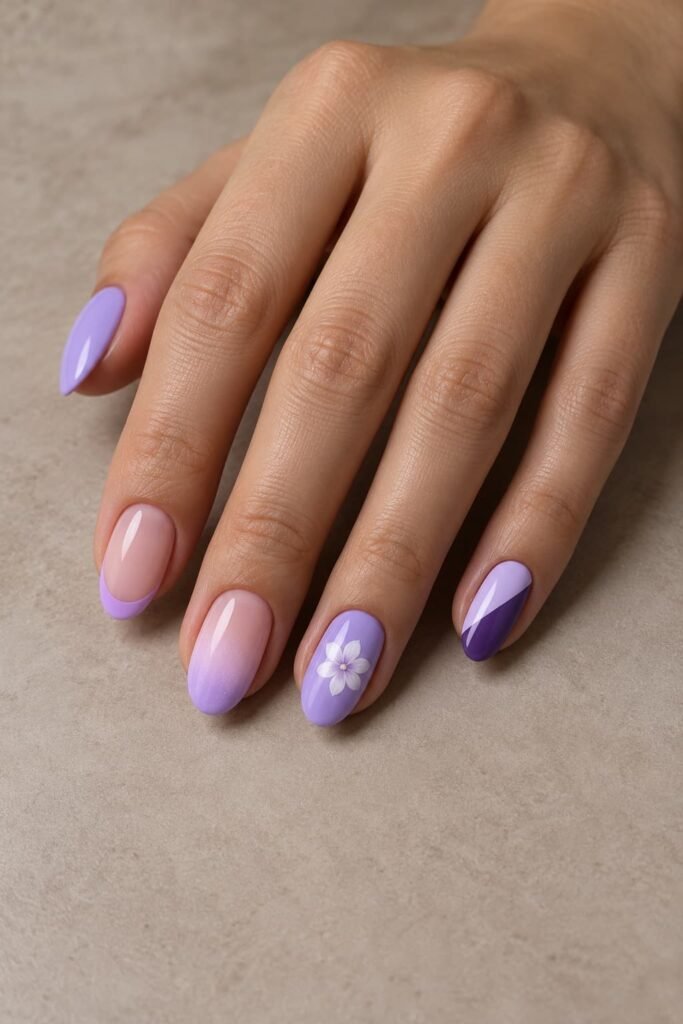
Lilac can be used as a full nail color or as part of a decorative pattern. The placement of the polish and the type of artwork can change the appearance without requiring many different shades.
The following designs offer distinct ways to use lilac.
Solid Lilac Nails With a Clean, Simple Look
Solid lilac nails use one shade across the entire nail surface without additional patterns.
A light pastel lilac provides a soft color appearance, while a deeper shade makes the purple more noticeable.
The polish can have a fully opaque appearance or a softer translucent look, depending on its coverage.
This design can be used on short square nails, rounded nails, or longer almond shapes because it does not depend on having extra space for artwork.
Lilac Micro French Tips on a Sheer Base
Lilac micro French tips feature a narrow purple line along the free edge of each nail.
Most of the surface remains clear-looking or is covered with a sheer pink or neutral shade. This makes the thin lilac tip the main colored detail.
On short nails, the line can follow the natural curve of the tip. On almond or oval nails, it may follow the more tapered outline.
Keeping the tips narrow creates a different appearance from a traditional wide French manicure.
For other ways to arrange curved, angled, and asymmetrical tips, explore these abstract French tip nail designs.
Lilac and Pink Ombre Nails
Lilac and pink ombre nails combine two colors through a gradual transition.
One option begins with pale pink near the base and blends into lilac toward the tip. The colors meet through a soft gradient rather than a clearly defined line.
Baby pink creates a closely related pastel combination, while a brighter pink may produce more visible contrast.
The arrangement can also be reversed, with lilac near the base and pink toward the tip.
Longer nails provide more visible space for an extended gradient, while shorter nails can feature a smaller blended area.
Lilac Negative-Space Nail Art
Negative-space nail art combines painted sections with areas that remain clear or have a transparent-looking base.
For a lilac design, a curved purple line might run along one side of the nail, leaving the remaining surface visually open.
Another possibility is a diagonal lilac section separated from another painted area by a clear-looking gap.
The shapes may be curved, angular, or asymmetrical.
Using one or two sections creates a minimal pattern, while several separate shapes can produce a more detailed geometric appearance.
Lilac Floral Accent Nails
Lilac floral accent nails combine purple polish with small flower patterns on selected fingers.
One arrangement uses solid lilac on most nails and a white flower on the ring fingernail. A pale yellow center can introduce another color without changing the main palette.
Another option features a sheer base with several lilac petals placed near one corner of the nail.
The flowers can remain small and widely spaced or become a more noticeable feature on an accent nail.
For additional variations involving petals, floral placement, and different nail shapes, see these flower nail designs.
Two-Tone Lilac Color-Block Nails
Two-tone color-block nails divide the surface into separate areas with clearly visible boundaries.
For example, one half of a nail may feature pastel lilac, while the other half uses deeper purple.
The division can run diagonally, vertically, or across the nail.
Lilac can also be combined with white or muted pink for a lighter two-tone design.
Unlike ombre, color blocking keeps the shades separate rather than blending them together.
A noticeable difference between the colors makes the division easier to see, while closely related purple shades create a softer contrast.
What Colors Go Well With Lilac Nails?
Lilac can be paired with neutral shades, other pastels, or darker colors. Soft pink and white offer gentle combinations, while deeper purple and metallic silver create more noticeable differences.
The amount of each color also affects the design. A small accent keeps lilac as the main shade, while alternating nails give the supporting colors more space.
Lilac With White and Soft Pink
White provides a light contrast against lilac and can be used for thin French tips, small outlines, or decorative details.
Bright white creates a more defined separation between the colors. Milky white offers a softer appearance alongside pale purple.
Soft pink is another option, particularly with lilac shades that have rosy undertones.
One possible arrangement uses three solid lilac nails, one blush pink nail, and one nail with a small white accent.
Another combines lilac and pink in separate sections of the same design.
Lilac With Mint Green and Butter Yellow
Mint green and butter yellow create two different pastel combinations with lilac.
Mint green has a pale green appearance that may lean slightly toward blue. It can be used alongside lilac on alternating nails or as small decorative curves.
Butter yellow provides a warmer contrast. The color can appear in small flower centers, narrow French tips, or clearly separated color sections.
Using yellow only for accents keeps lilac more prominent. Giving both colors equal space creates a more colorful manicure.
For a broader selection of pastel combinations, explore these cute spring nail ideas.
Lilac With Silver and Deeper Purple
Silver introduces a reflective detail rather than another pastel shade.
It can appear as a thin metallic outline, fine glitter near the tips, or a small accent over a lilac background.
Deeper purple creates contrast through a difference in shade.
For example, pale lilac can be paired with dark violet French tips or geometric sections.
Another option uses mostly light lilac nails with one deeper purple accent nail.
Both combinations allow lilac to remain the main color while introducing a more noticeable detail.
How Do Different Finishes Change the Look of Lilac Nails?
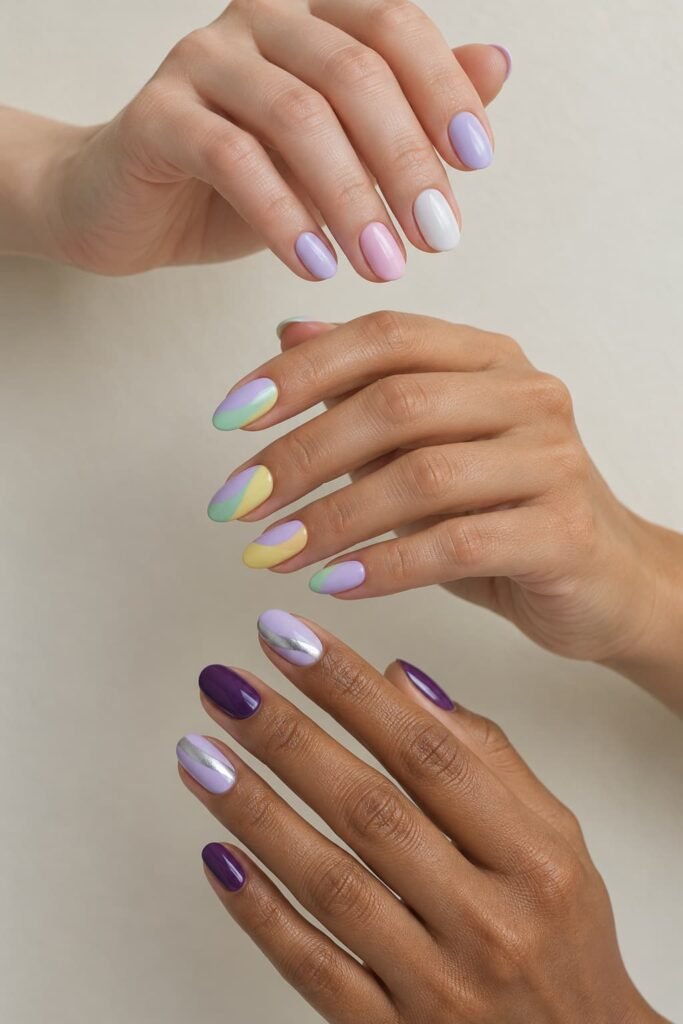
The same general lilac shade can appear different depending on its coverage and surface finish.
Some polishes create a translucent appearance, while others provide solid color. Glossy, matte, and reflective finishes also change how light appears on the surface.
Sheer and Milky Lilac vs. Opaque Lilac
Sheer lilac polish allows some of the underlying nail color to remain visible. Rather than completely covering the nail, it creates a light purple tint.
Milky lilac has a cloudy, softened appearance. Its coverage can vary, with some shades appearing more translucent than others.
Opaque lilac provides fuller coverage, making the purple color appear more solid across the nail.
Sheer lilac may be used as a light background for small decorative details, while an opaque shade can stand alone as the main manicure color.
Milky lilac offers another option for someone who prefers a softly clouded color effect.
Glossy and Matte Lilac Finishes
Glossy lilac nails reflect light across the polished surface, creating a shiny appearance.
This finish can be paired with a solid pastel shade, French tips, or other painted patterns.
Matte lilac has a less reflective surface. The reduced shine changes the appearance of the color without requiring additional artwork.
A muted lilac shade with a matte finish may look more subdued, while a similar shade with a glossy finish shows stronger highlights.
The choice depends on whether you prefer a shiny or low-shine appearance.
Pearly and Chrome-Effect Lilac Nails
Pearly lilac nails feature soft reflections that may appear white, pink, or violet depending on the finish and lighting.
This effect adds a gentle shimmer to the surface without requiring separate painted patterns.
Chrome-effect finishes are more reflective. Some create a metallic-looking surface, while others have a softer glazed appearance.
A light lilac color with pearly reflections may retain much of its pastel appearance. A stronger silver-toned chrome effect can make the surface look more metallic.
These finishes can cover every nail or appear only on selected accent nails.
How Can Lilac Nail Designs Be Adapted to Different Shapes and Lengths?
Lilac can be used on short, medium, and long nails. The shape influences the outline of a design, while the length determines how much space is available for decorative details.
A simple color application needs little extra space. Larger patterns and extended gradients can make use of longer nail surfaces.
Short Square and Rounded Lilac Nails
Short square nails have a relatively straight free edge, while rounded nails follow a softer curved outline.
Both shapes can feature solid lilac polish, small dots, or narrow French tips.
On square nails, a thin purple line may follow the flatter edge. Rounded nails can feature a small curved accent near the tip.
If additional artwork is preferred, one nail could include a tiny white flower against a lilac background.
Keeping the details proportionate to the nail surface can help individual elements remain visible.
Medium-Length Oval and Almond Lilac Nails
Oval nails have smoothly rounded tips, while almond nails taper toward a narrower rounded point.
Medium-length versions provide space for gradients and decorative lines that follow the nail’s outline.
A pink-to-lilac ombre can extend from the base toward the tip. Alternatively, a sheer background with lilac French tips can emphasize the curved shape.
A narrow line along one side of the nail is another option for adding detail without covering most of the surface.
Longer Coffin-Shaped Lilac Nails
Coffin-shaped nails have tapered sides and a flat tip. Their distinctive outline becomes easier to see with additional length.
The extended surface offers room for larger color sections and decorative patterns.
One option combines solid lilac with a deeper purple section near the tip. Another uses diagonal color blocking with lilac and white.
A small silver accent can also be added alongside a solid purple background.
However, longer nails do not require detailed artwork. An opaque lilac shade can keep the focus on the tapered nail outline.
What Should You Consider Before Choosing a Lilac Nail Design?
Start with the shade itself. Pink-toned lilac, cool violet-lilac, and dusty lilac have different undertones, so comparing the actual colors can help narrow your choices.
Next, think about contrast. White and soft pink offer lighter combinations, while deeper purple and metallic silver make individual details more noticeable.
Coverage is another consideration. Sheer polish allows some of the underlying nail color to show, while opaque polish creates a more solid appearance. Milky lilac offers a softly cloudy alternative.
Nail length also affects the space available for artwork. Shorter nails can feature narrow tips and small accents, while longer nails offer more room for gradients and geometric sections.
Finally, consider the amount of decoration you prefer. A solid color creates a simple manicure, while floral accents, French tips, and color blocking introduce different patterns.
Comparing shade, coverage, finish, and design placement can help you choose a manicure that matches your preferred appearance.
Frequently Asked Questions About Lilac Nails
Can Lilac and Lavender Be Used Together in One Manicure?
Yes, lilac and lavender can be combined in the same manicure. Lilac often has pinkish undertones, while lavender may appear slightly cooler or more blue-purple.
You can alternate the shades across different nails or use one color as a base and the other for French tips or small details.
Choosing shades with noticeable differences can help each color remain visually distinct.
Does Lilac Nail Polish Need an Opaque Base?
No, a fully opaque colored base is not necessary for every lilac design.
A sheer lilac polish can create a translucent purple appearance, while an opaque shade provides fuller color coverage.
For French tips or small decorative accents, a clear-looking or soft pink background is another option.
The choice depends on whether you prefer a translucent appearance, a neutral background, or solid color.
Can Lilac Be Used Only on Accent Nails?
Yes, lilac can appear on one or two accent nails while the remaining nails feature another shade.
For example, a manicure might combine milky white nails with a solid lilac ring fingernail.
Small lilac flowers or geometric details over a neutral background are other possibilities.
This approach introduces purple without applying it across every nail.
Final Thoughts
Lilac nails offer several design possibilities, from a simple pastel manicure to styles with contrasting colors and decorative details.
The shade can be paired with soft neutrals for a subtle appearance or deeper colors for more contrast. Sheer, matte, glossy, and reflective finishes provide additional ways to change the look.
When choosing a design, consider the lilac undertone, nail length, and amount of decoration you prefer. A solid shade with one small accent can be just as visually distinctive as a manicure with more detailed artwork.