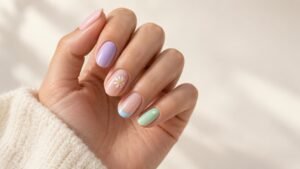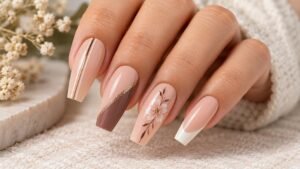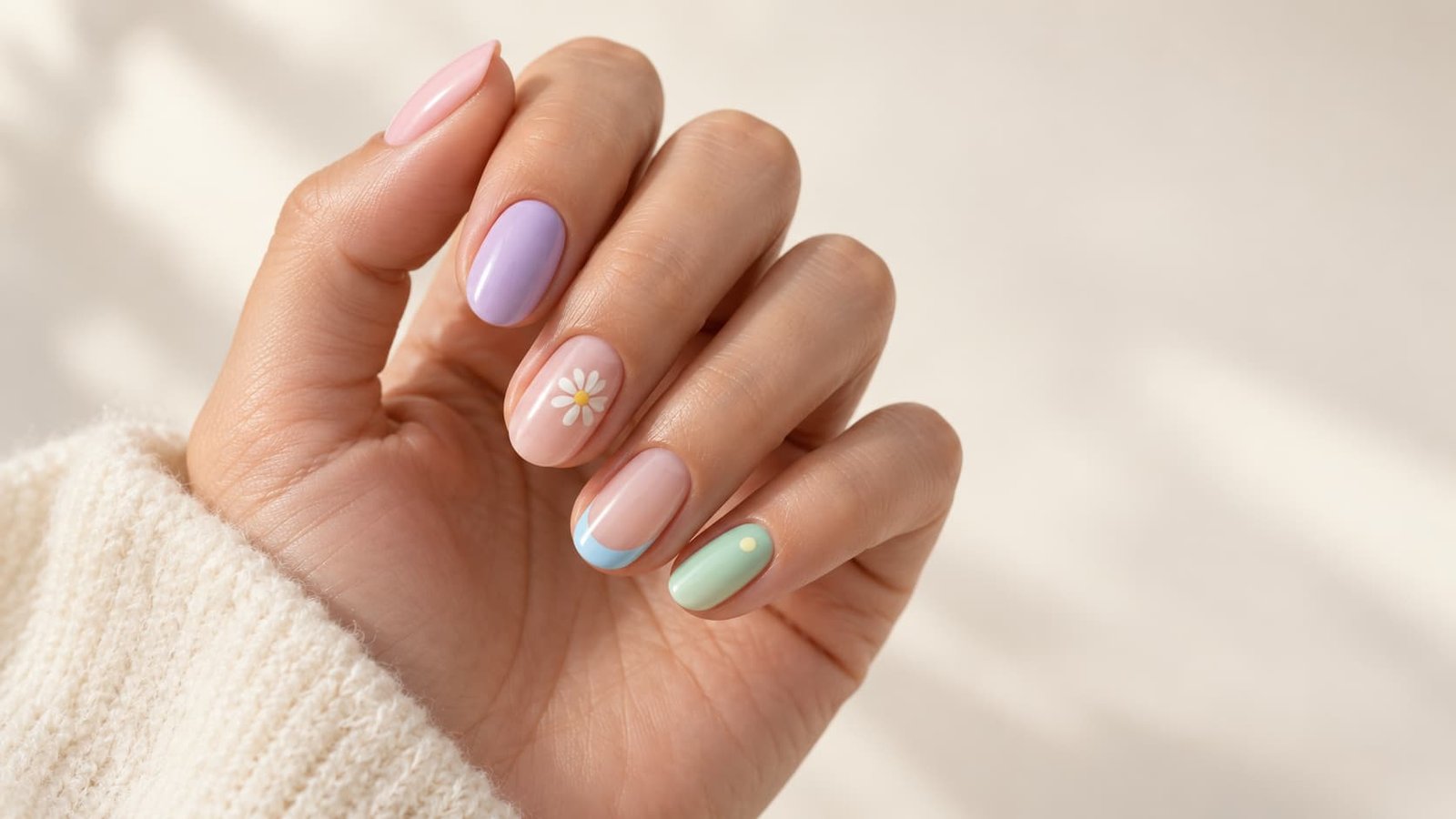
Cute spring nails often use light colors, small decorative details, and designs with plenty of visible space. Pastels are one possible direction, but a spring manicure does not have to follow one fixed color palette or design style.
A spring-inspired look can be as simple as a pale base with a thin colored French tip. It can also include small flowers, dots, curved lines, or a carefully placed accent nail. The final appearance can vary depending on nail length, shape, finish, color choices, and the amount of detail used.
This guide looks at color combinations and design approaches that can help create a light, fresh spring manicure without making the nails feel visually crowded.
What Makes a Nail Design Feel Spring-Inspired?
There is no single design that defines a spring manicure. Instead, the seasonal effect can come from the combination of color, pattern, spacing, and finish.
Soft colors can create a lighter overall appearance, while small decorative details can add a playful or delicate element. French tips, floral motifs, dots, curved lines, and open areas of the nail are all possible ways to build a spring-inspired design.
Some people may prefer a minimal manicure, while others may choose more detailed nail art. Both approaches can work when the colors and decorative elements feel visually coordinated.
Soft and Light Color Palettes
Soft pink, peach, lavender, lilac, baby blue, mint green, pale yellow, cream, and milky neutral shades are useful options for a spring color palette.
These shades can be worn as solid colors or incorporated into French tips, floral designs, abstract patterns, and small accent details.
A single soft shade may create a clean and simple appearance. Using two or three coordinating colors can introduce more variation without requiring detailed nail art.
One possible combination is a pale pink base with small lavender details. Another is a baby blue manicure with subtle white accents.
The colors do not need to match exactly. Choosing shades with a similar softness can help the overall manicure look more visually connected.
Small Seasonal Details and Open Space
Small decorative elements can add interest without covering the full nail.
Possible details include tiny flowers, petals, dots, curved lines, hearts, or simple leaf shapes. They can appear near the tip, along one side of the nail, or only on selected accent nails.
Open space can also become part of the design. A clear, nude-looking, sheer, or milky base can leave more of the nail visually open while allowing colored details to stand out.
Nail length can affect how much room is available for artwork. Shorter nails provide less surface area, so smaller motifs or fewer elements may create a cleaner appearance.
Longer nails provide more room for larger patterns or additional details, although a design does not need to use all of the available space.
Which Colors Work Well for Cute Spring Nails?
Spring nail colors can range from muted neutrals to several pastel shades in the same manicure.
There is no single palette that will suit every preference. Some people may prefer barely-there pinks and creams, while others may like lavender, blue, green, or yellow accents.
A useful approach is to choose a main color first and then decide whether the manicure needs one or two supporting shades.
Soft Pink, Peach, and Milky Neutrals
Soft pink can work as either the main color or a subtle background for additional nail art.
A pale pink base can be paired with thin French tips, small flowers, dots, or another pastel accent. Peach can introduce a warmer tone, while milky pink, cream, or a sheer neutral can create a softer background.
These shades can also be combined.
One possible design is a milky neutral base with peach-colored tips and a small pink accent on selected nails. Another option is to keep every nail in the same soft shade and let the finish provide most of the visual interest.
For a more detailed manicure, one or two accent nails can include small artwork while the remaining nails stay simple.
Lavender, Lilac, and Baby Blue
Lavender, lilac, and baby blue can introduce noticeable color while keeping the overall palette relatively soft.
Lavender or lilac can be used for solid nails, French tips, floral details, or small abstract sections. Baby blue can be paired with pale pink, cream, or a sheer neutral base for contrast.
These shades can also appear together.
For example, alternating lavender and baby blue micro French tips over a neutral-looking base can create a multicolor design without requiring additional patterns.
Another option is to use one shade as the main color and reserve the second shade for a small accent.
Keeping the placement simple may help the different colors remain visually distinct.
Mint Green and Pale Yellow
Mint green and pale yellow can add a slightly brighter element to a soft spring palette.
Mint can be used as a full nail color, French tip, or small accent over a neutral base. Pale yellow can be combined with cream, soft pink, green, or white-looking details.
These colors can also support simple floral designs.
For example, a pale yellow flower with a small green leaf detail can add a seasonal motif without covering most of the nail.
When mint and yellow are used together, one possible approach is to let one color lead the design while the other appears in smaller details.
Multicolor Pastel Combinations
A multicolor pastel manicure can combine several shades without requiring a complex pattern.
Pink, lilac, baby blue, mint, and pale yellow can appear across different nails, or they can be limited to French tips over a neutral base.
If several colors are already being used, simpler artwork may help prevent the manicure from feeling overly busy.
One nail might use a solid pastel shade, another a thin French tip, and another a small floral or dot detail. The exact combination can vary depending on the desired level of detail.
Using every available spring color is not necessary. A smaller palette of two or three coordinated shades can create a more restrained look, while a broader pastel mix can give the manicure a more playful appearance.
Which Designs Work Well for Cute Spring Nails?
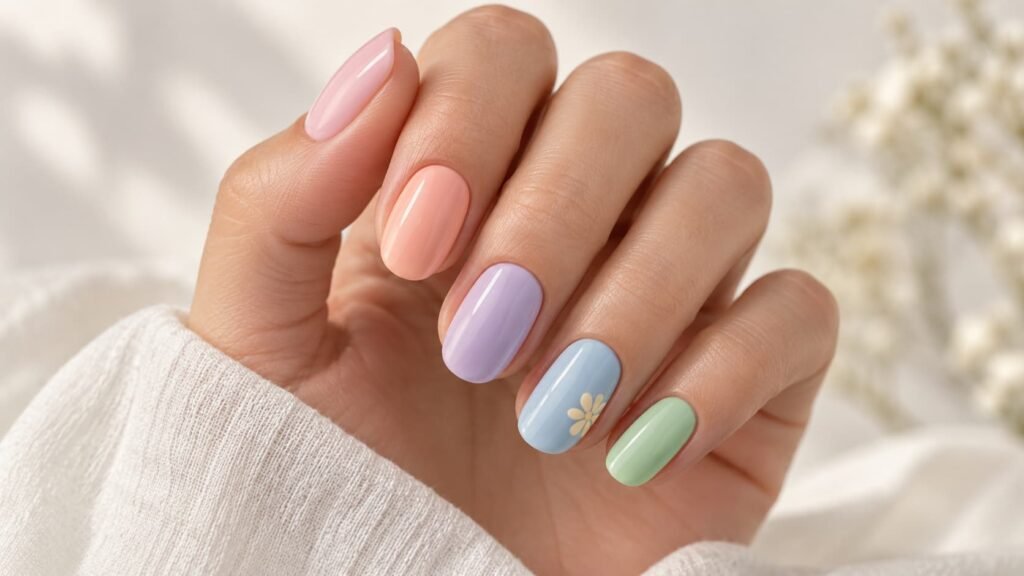
Spring nail designs can be simple, playful, or more detailed. A clear visual focus can help keep the manicure from feeling overly busy.
Flowers, French tips, dots, abstract shapes, butterflies, and small fruit motifs are all possible choices. The final look can vary depending on the base color, nail length, nail shape, finish, and amount of detail.
Small Floral and Daisy Designs
Small floral details can fit naturally into a spring-inspired manicure.
Daisies may be placed near the tip, along one side of the nail, or used on selected accent nails. Other floral designs can use simple petals, small leaves, or a single flower rather than covering the full nail.
A pale pink, cream, lavender, sheer, or milky base can leave visible space around the artwork and make the floral detail easier to notice.
On shorter nails, smaller flowers or a few petals may be easier to place without filling most of the surface. Longer nails provide more room for larger floral motifs or additional details, although a minimal design can work at any length.
Pastel French Tips and Micro French Tips
Pastel French tips can introduce spring colors while leaving much of the nail visually open.
Instead of using the same color on every tip, the manicure can alternate between soft pink, lilac, baby blue, mint, and pale yellow. A sheer, nude-looking, or milky base can keep the colored edge as the main feature.
Micro French tips use a thinner line along the free edge of the nail. This can create a more understated appearance than a wider tip.
A wider French tip makes the color more noticeable, while a thinner tip can create a lighter visual effect. The final look can vary depending on nail length and shape.
Polka Dots and Small Graphic Details
Polka dots can add pattern without requiring detailed artwork.
The dots can be evenly spaced, grouped on one side, or used only on selected nails. One or two accent colors may be enough if the goal is to keep the design simple.
Other graphic details can include small hearts, curved lines, short stripes, arches, or simple geometric shapes.
These details may appeal to readers who want something more decorative than a solid manicure but less detailed than floral or illustrated nail art.
Soft Abstract and Negative-Space Designs
Abstract nail art can include curved lines, soft color blocks, irregular shapes, or overlapping areas of color.
Pastel shades can be combined in this type of design without requiring every section of the nail to be filled.
Negative-space nail art leaves part of the nail or base visually open while color or pattern appears only in selected areas.
For example, one nail may include a curved lavender section near the tip, while another has a pale blue shape along one side. Keeping the number of shapes limited can create a cleaner overall composition.
Small Butterfly or Fruit Accents
Butterflies and fruit motifs can give spring nails a more playful appearance.
Small butterfly details may be used on one or two accent nails instead of across the entire manicure. Soft pink, lavender, pale blue, or yellow can be used if they fit the chosen palette.
Fruit motifs can include small cherries, strawberries, lemons, or berries. Because these designs can be more visually noticeable than simple dots or lines, they may work better as limited accents rather than repeated details on every nail.
A pale or neutral-looking base can give the motif more visible space around it.
How Can You Combine Colors and Designs Without Making Nails Look Too Busy?
A spring manicure can include several colors and decorative elements, but they do not all need to appear with the same intensity.
One practical approach is to decide which part of the manicure should draw the most attention. If the color palette is already varied, the artwork can stay simple. If the nail art is detailed, fewer colors may create a more controlled look.
Use One Main Color With Supporting Accents
Choosing one main color can give the manicure a clear visual direction.
For example, lavender can appear on most nails while pale yellow is limited to small flowers or French-tip details. Another option is a soft pink base with mint and white accents.
Supporting shades do not need to appear equally on every nail. Small repeated touches can connect the design without making each nail identical.
Keep Detailed Artwork to Selected Nails
Detailed artwork can be limited to selected accent nails.
One or two nails may carry the main floral, butterfly, or abstract design, while the remaining nails use a solid shade, sheer base, or simple French tip.
For example, two nails could feature small flowers while the others use pale pink with thin lavender tips.
This creates a clear difference between simple and detailed nails without repeating the same design across every finger.
Match the Size of the Design to the Nail Length
Nail length affects how much visible space is available for artwork.
Short nails have less surface area, so smaller flowers, thin tips, tiny dots, or simple side details may be easier to fit without covering most of the nail.
Medium and longer nails provide more room for larger flowers, layered abstract sections, butterflies, or multiple details.
More space does not mean more decoration is necessary. Longer nails can still use very simple designs if a minimal look is preferred.
Which Nail Shapes Suit Spring Designs?
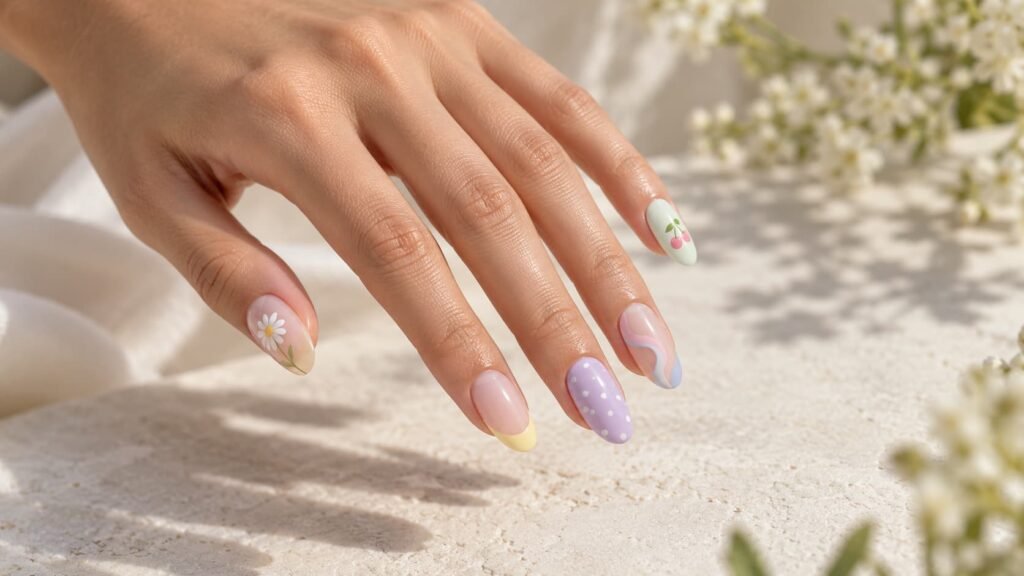
Spring nail art can be adapted to different nail shapes.
The shape mainly affects the outline of the nail and how much space is available for design placement. Personal preference, natural nail shape, nail length, and the chosen artwork can all influence the final appearance.
Almond and Oval Nails
Almond and oval nails both use curved outlines, but almond nails taper more noticeably toward the tip.
These shapes can be paired with floral details, curved French tips, abstract lines, or small side accents.
The tapered outline of an almond shape can create a visually elongated effect on some hands. Oval nails may give a softer, more rounded appearance.
Either shape can support a minimal or more detailed design depending on nail length and personal preference.
Short Round and Square Nails
Round and square shapes can both be used at shorter lengths.
Round nails have curved edges, while square nails have straighter sides and a flatter tip.
Small flowers, dots, narrow French tips, and simple graphic details can be adapted to either shape.
Square nails provide a straight edge that can suit clean French-tip placement, while round nails may pair naturally with curved lines and softer shapes.
Coffin Nails
Coffin nails taper toward the tip and finish with a flatter edge.
When worn at a longer length, this shape can provide more visible space for decorative details such as flowers, butterflies, abstract color sections, or wider French tips.
A coffin shape can also be kept simple with one pastel shade, a sheer base, or limited accent artwork.
The amount of detail does not need to depend on nail size alone. A longer nail can still have a restrained design if that better matches the desired look.
How Does Nail Length Affect a Spring Nail Design?
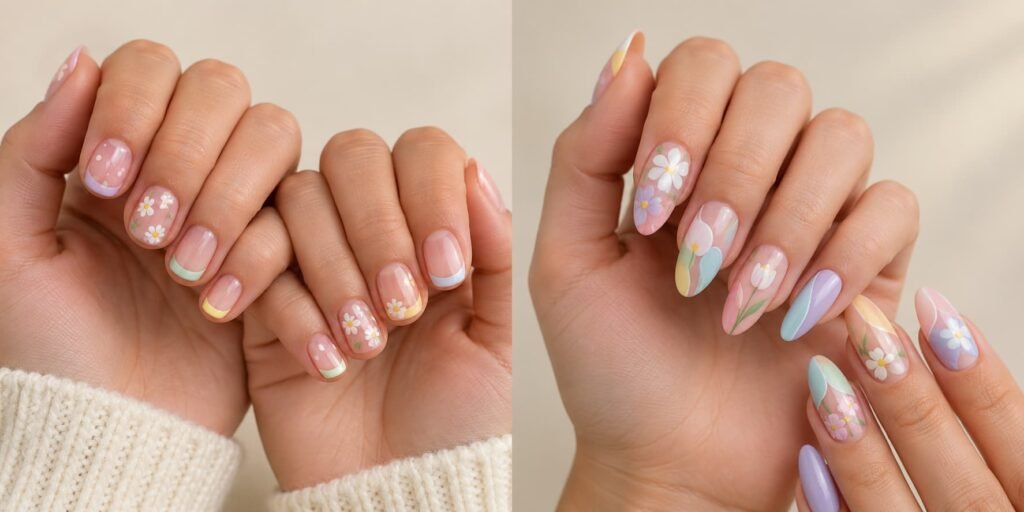
Nail length affects how much visible space is available for color, pattern, and decorative details.
A design that appears clear on a longer nail may need to be simplified on a shorter one. This does not mean short nails need to look plain. It simply means the scale and placement of the design may need to change.
Short Spring Nails
Short spring nails can work well with small, focused details.
Thin French tips, tiny flowers, small dots, short curved lines, and simple side accents can fit into a smaller nail area without covering most of the surface.
A sheer, milky, or pale base can also create a lighter visual effect. If several colors are used, smaller areas of color may be easier to place than larger patterns.
One possible option is a soft pink base with a tiny flower on one or two nails. Another is a set of short nails with alternating pastel micro French tips.
Medium and Longer Spring Nails
Medium and longer nails provide more room for larger motifs and layered designs.
Floral artwork can include additional petals or leaves, while abstract designs can use several shapes or color sections. Butterfly details, wider French tips, and mixed accent designs can also be easier to place when there is more surface area.
More space does not mean the manicure needs more decoration. Longer nails can still use a simple design, such as one pastel shade, a thin tip, or a small accent near the base of the nail.
The amount of detail can depend on the overall look you prefer.
Which Finishes Work Well With Spring Nail Colors?
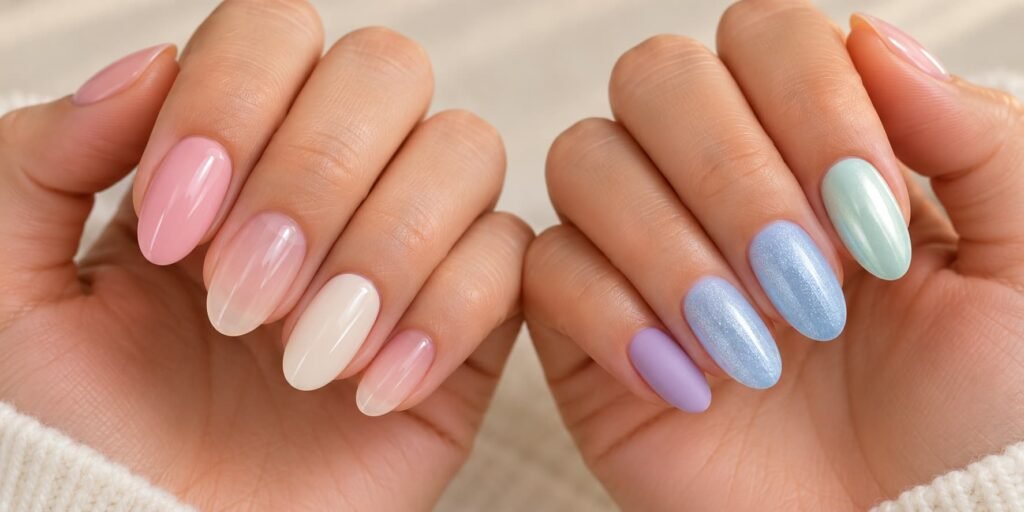
Finish can noticeably change the appearance of a nail color.
A soft pink with a glossy finish may look more reflective, while a similar shade with a matte finish can appear softer and less shiny.
Glossy and Sheer Finishes
A glossy finish reflects light and can make color more noticeable.
It can be paired with solid colors, French tips, floral details, or multicolor designs.
Sheer finishes allow some of the base underneath to remain visible. This can create a lighter appearance and work well with small flowers, thin tips, or minimal artwork.
A sheer pink or neutral-looking base can also give colored details more visual space.
Milky and Soft Matte Finishes
A milky finish has a soft, slightly cloudy appearance rather than looking fully clear or fully opaque.
Milky pink, cream, or pale neutral shades can work as a base when the goal is to keep the manicure subtle.
Matte finishes reduce visible surface shine. This can give pastel shades a softer or more muted appearance.
A matte finish may suit solid colors, simple graphic details, or designs where the color itself is the main visual feature.
Subtle Shimmer or Pearl Accents
Shimmer and pearl effects can add light reflection without making the manicure highly decorative.
A small amount of shimmer can appear over a pastel base, on selected accent nails, or only at the tips.
Pearl-style accents can also be combined with milky or pale colors when a softer reflective effect is preferred.
If the manicure already includes several colors or detailed artwork, limiting shimmer to selected areas may help keep the design visually controlled.
Simple vs Detailed Cute Spring Nail Designs
Spring nail designs can range from minimal to more decorative.
The difference mainly comes from how much color, pattern, and artwork appears across the nails.
Minimal Spring Nail Ideas
Minimal spring nails usually focus on one main visual element.
This could be a pale solid shade, a thin pastel French tip, one tiny flower, a few dots, or a small curved line.
A neutral-looking or sheer base can leave more visible space around the detail.
One possible look is a milky pink base with pale yellow micro tips. Another is a soft lavender manicure with one small white flower on selected nails.
Minimal designs may appeal to people who prefer a quieter or more understated manicure.
More Decorative Spring Nail Ideas
A more decorative spring manicure can combine several design elements.
These may include flowers, butterflies, abstract shapes, color blocking, mixed French tips, or accent nails with different artwork.
One approach is to give each element a clear role.
For example, one nail can feature a floral design, another a pastel tip, and the remaining nails can stay solid or sheer. This creates variety without repeating the same detail on every nail.
A decorative manicure can also use several colors, although a smaller coordinated palette may create a more connected overall look.
What Should You Consider Before Choosing a Spring Nail Look?
Before choosing a design, it can help to think about nail length, shape, color preference, and the amount of detail you want.
The same artwork can look different on different nail shapes because the visible surface area and outline change.
Nail Length and Natural Nail Shape
Shorter nails have less space for artwork, while longer nails provide more room for larger details.
The natural nail shape can also affect how a design is placed. A curved pattern can follow the outline of an oval or almond nail, while a straighter French edge may appear more defined on a square shape.
There is no single nail shape that suits every spring design. The final look can vary depending on nail structure, length, design placement, and personal preference.
Preferred Level of Detail
Some people may prefer a manicure with one clear feature, while others may like several decorative elements.
If you prefer a minimal look, one or two small details may be enough.
If you want something more decorative, flowers, pastel tips, and accent nails can be combined in the same manicure.
The design does not need to be equally detailed on every nail.
Color Balance and Overall Appearance
When several shades are used, it can help to decide which color should be the main focus.
One approach is to choose one main shade and use the others as smaller accents.
Another option is to use several pastels while keeping the design placement simple.
If the artwork is detailed, fewer colors may make the design feel more controlled. If the patterns are minimal, a wider color palette may be easier to use without making the manicure feel crowded.
Frequently Asked Questions
What Colors Are Good for Cute Spring Nails?
Soft pink, peach, lavender, lilac, baby blue, mint green, pale yellow, cream, and milky neutrals are all possible spring color options.
They can be used alone or combined in small groups. The final choice depends on the appearance you prefer and how many colors you want to include.
Can Short Nails Work With Spring Nail Designs?
Yes. Short nails can support many spring designs when the artwork is scaled to fit the available space.
Small flowers, thin French tips, dots, simple color blocks, and limited accent details are all possible options.
Are Pastel Colors Necessary for Spring Nails?
No. Pastels are one possible direction, but they are not required.
Spring-inspired nails can also use brighter shades, neutral bases, or a mix of soft and stronger colors. The seasonal effect can come from the combination of color, pattern, spacing, and design placement.
What Spring Nail Designs Work Well With Almond Nails?
Almond nails can be paired with curved French tips, floral details, abstract lines, soft color sections, or small side accents.
Because the shape tapers toward the tip, designs that follow the outline can create a visually connected appearance.
Can You Mix Several Spring Colors in One Manicure?
Yes. Several colors can be used in the same manicure.
One option is to place a different pastel shade on each nail. Another is to keep the base neutral and use different colors only on the tips or in small details.
Using fewer patterns can help keep the focus on the color palette.
What Is a Simple Spring Nail Design That Does Not Look Too Busy?
A sheer or milky base with one small detail is a simple option.
This could be a thin pastel French tip, a tiny flower, a few dots, or one accent nail.
Using one main color with one supporting shade can also create a restrained and easy-to-read design.