Braided buns combine braided sections with the shape of an updo. The finished style can look sleek, structured, soft, bold, or detailed depending on the braid type, bun placement, and finishing touches.
For Black hair, braided bun ideas can include cornrows, box braids, knotless braids, feed-in braids, stitch-style braids, and other braided looks. Some styles place the bun high on the crown, while others position it lower near the nape.
Readers who prefer leaving part of the hair loose can also explore half-up half-down hairstyles for a different type of updo.
What Is a Braided Bun Hairstyle?
A braided bun is an updo that combines braids with hair gathered, folded, or wrapped into a bun.
In some versions, individual braids are created first and then gathered into the bun. In others, scalp braids lead toward the area where the bun is formed.
Because the braid technique, direction, and bun shape can vary, a braided bun can take many different forms.
Main Features of a Braided Bun
Three of the most noticeable elements are the braid pattern, braid size, and bun placement.
Braids can run straight back, curve toward the crown, follow a side part, or form more decorative patterns. They may be small and detailed or larger and more prominent.
The bun can also be compact, wide, rounded, tall, or loosely arranged. A high bun can add more visual height at the crown, while a low bun keeps the shape closer to the nape.
How Braid Type and Bun Placement Change the Look
Different braid types create different visual effects.
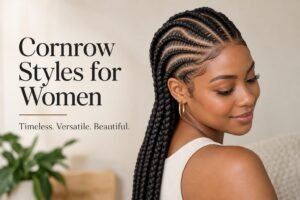
Cornrows sit close to the scalp and can make the direction of the braid pattern a major part of the design. Box braids keep the individual braids visible before they are gathered into the bun. Knotless braids can create a similar wrapped-bun effect while giving the root area a different appearance.
Placement matters as well.
A high braided bun can make the bun a stronger focal point and add height to the overall silhouette. A low bun can create a lower-profile shape that some people may prefer for a softer or more understated look.
Neither placement is automatically better. The choice depends on the braid style, desired appearance, bun size, and personal preference.
Braided Bun Hairstyle Ideas for Black Hair
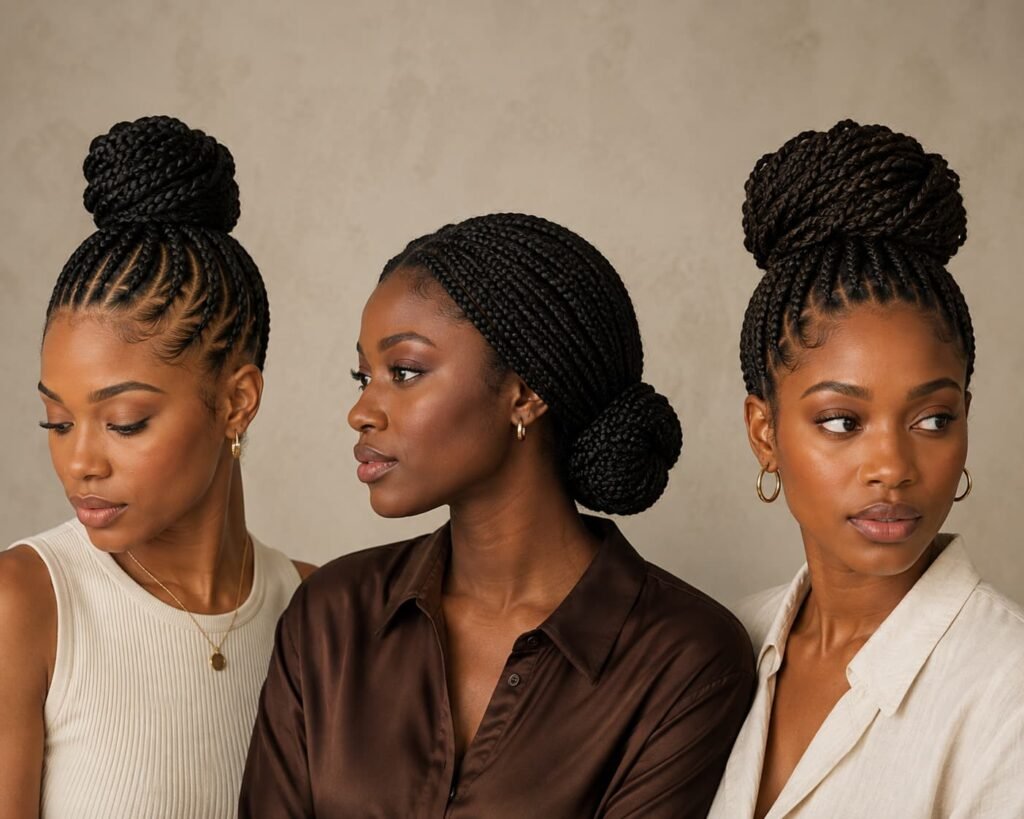
Braided buns can vary considerably in braid technique, placement, proportions, and finishing details. The following ideas offer meaningfully different ways to approach the style.
1. Classic Cornrows Into a High Bun
This look uses cornrows directed toward the crown, where the remaining braided length is gathered into a high bun.
Straight sections can keep the design simple, while curved or angled rows can add more visual detail.
The bun can stay compact for a neat shape or be made wider or taller when a more noticeable crown-focused look is preferred.
2. Low Cornrow Braided Bun
A low cornrow bun shifts the main visual focus toward the nape.
The cornrows can move backward or diagonally toward the lower part of the head before meeting at the bun. This creates a different silhouette from a crown-level updo.
Straight rows can keep the appearance minimal, while curved sections can make the braid pattern more noticeable.
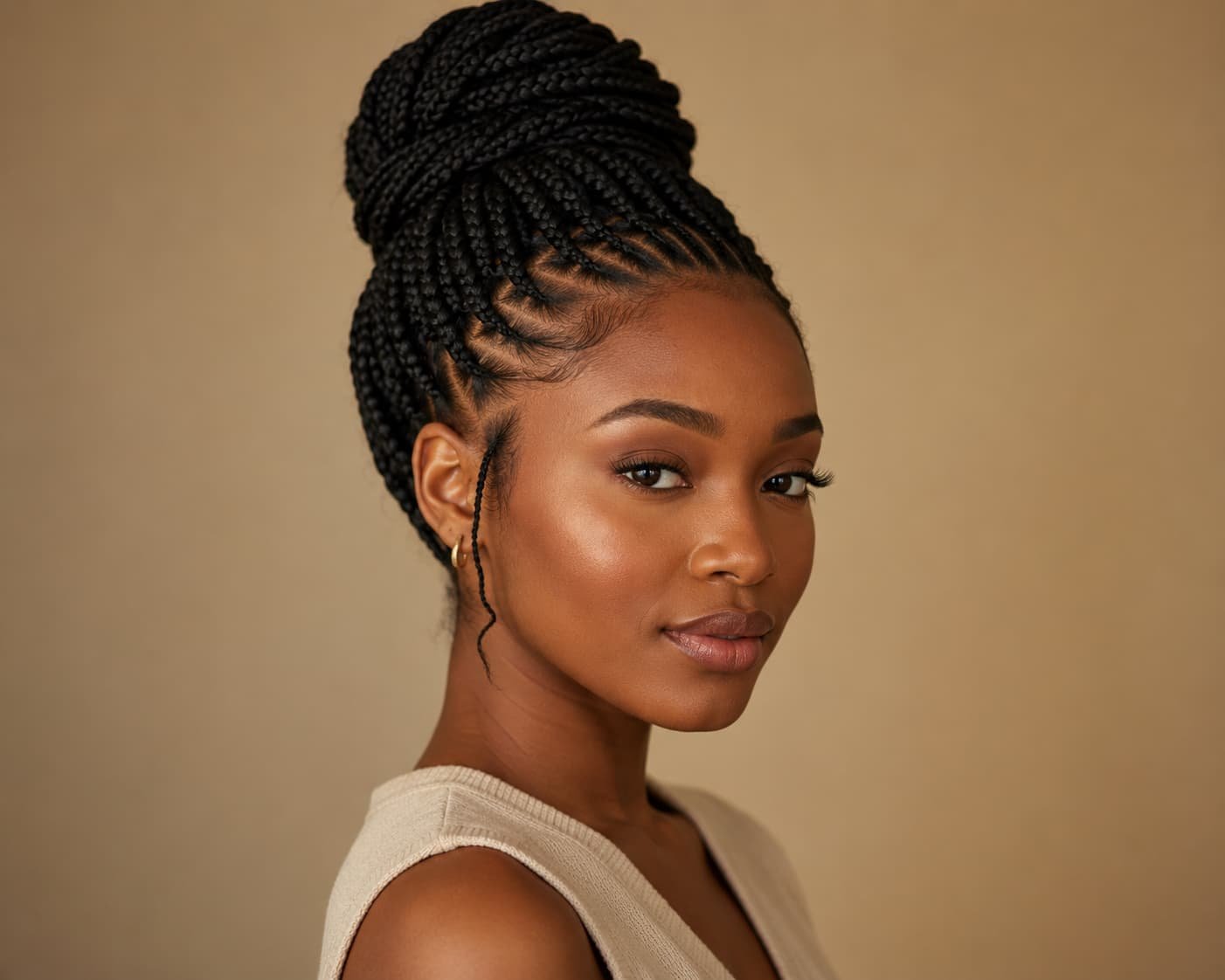
3. Box Braids Wrapped Into a High Bun
Box braids can be gathered at the crown and wrapped into a high bun.
Because the individual braids remain visible, the bun can have a more textured surface than a style built mainly from scalp braids.
Braid size can also influence the appearance. Smaller braids may create more visible detail within the wrapped shape, while larger braids can make each section of the bun stand out more clearly.
A few braids can be left loose near the front when a less uniform finish is preferred.
4. Low Box-Braid Bun
A low box-braid bun gathers the individual braids closer to the nape.
The braids can be wrapped into a rounded shape, arranged more flatly, or positioned slightly to one side.
A center part can create a more symmetrical front view, while a side part can give the style a more asymmetrical appearance.
This option keeps most of the visual weight lower on the head rather than concentrating it at the crown.
5. Knotless Braids With a High Bun
Knotless braids can be gathered into a high bun for a look that keeps individual braids visible while adding height at the crown.
The bun can be wrapped into a compact shape or arranged more broadly, depending on the amount of hair and the desired proportions.
Leaving one or two braids near the face can also change the finish from fully pulled back to slightly more relaxed.
Smaller and larger braids can produce different visual effects, so the final appearance may vary with braid size.
6. Knotless Braids Styled Into a Low Bun
A low bun offers another way to arrange knotless braids.
The braids can be gathered near the nape and wrapped into a rounded or slightly flattened bun. A middle part can create a balanced front view, while a side part may give the style more asymmetry.
A few loose braids or curly pieces can be included around the face when a softer finish is preferred.
7. Feed-In Braids Into a Braided Bun
Feed-in braids can be directed toward a shared point before the remaining length is arranged into a bun.
The pattern can stay simple with straight sections or become more decorative through curved lines, alternating directions, or different braid widths.
The bun can sit high, mid-level, or low. Changing its position can noticeably alter the overall shape of the hairstyle.
8. Stitch Braids With a High Bun
A stitch-braid-inspired high bun can place strong emphasis on clean-looking parting lines and the direction of the braids.
Directing the sections toward the crown can create a structured visual pattern before the hair reaches the bun.
The bun itself can remain simple so that the braid pattern stays prominent, or it can be made larger when a stronger top-heavy silhouette is preferred.
The number and width of the braids can also change how detailed the design appears.
9. Goddess Braids With a Curly Bun
This variation combines braids with visible curly pieces around or within the bun.
The contrast between braided sections and loose curls can give the hairstyle a softer, more textured appearance.
Curls may be concentrated mainly in the bun or left around the face as framing pieces.
A smaller amount of loose texture can keep the effect subtle, while more visible curls can make the updo appear fuller and less uniform.
10. Jumbo Braids With an Oversized Top Bun
Jumbo braids use larger braid sections, which can give the hairstyle a bold, clearly defined look.
When gathered into an oversized top bun, the larger braids can make the wrapped structure easy to see.
A taller bun can create a more vertical silhouette, while a wider bun may spread the visual volume across the crown.
The overall effect can also change depending on the braid direction, bun size, and whether the front is fully pulled back or includes loose details.
11. Small Braids With a Structured High Bun
Small braids can give a high bun a detailed appearance because more individual braided sections remain visible in the finished shape.
The braids may be wrapped into a compact bun for a more defined outline or arranged with a little more width for a softer shape. Changing the bun’s position can also alter the overall proportions.
This option may appeal to someone who wants the braid pattern and the bun to share the visual focus.
12. Braided Bun With Loose Curly Details
Adding loose curls creates contrast between the structured braids and softer texture.
Curly pieces can appear around the bun, near the temples, or as face-framing details. A few curls may provide a subtle accent, while more visible texture can make the updo appear less uniform.
This is one possible option for combining a defined braided shape with looser finishing details.
13. Braided Bun With Face-Framing Braids
One or two braids can be left loose at the front instead of gathering every section into the bun.
These braids may hang straight, follow the shape of the face, or include small decorative accessories.
The loose sections can break up a fully pulled-back appearance while leaving the main structure of the bun unchanged.
14. Side-Parted Braids Into a Low Bun
A side part introduces asymmetry to a low braided bun.
The braids can follow the direction of the part before gathering near the nape. A more pronounced side part makes that asymmetry easier to notice, while a less defined part creates a subtler difference.
Keeping the bun simple can allow the front parting and braid direction to become the main details.
15. Curved Cornrows Leading Into a Bun
Curved cornrows can make the direction of the braids an important part of the overall design.
Instead of traveling straight toward the bun, the rows can follow sweeping or rounded paths before meeting at the gathering point.
The spacing, number, and direction of the cornrows can all change the visual complexity of the finished hairstyle.
16. Braided Bun With Decorative Parting
Decorative parting can add detail between the braids before they reach the bun.
Sections may use straight, angled, curved, triangular, or other geometric-looking lines. The parting can remain subtle or become one of the strongest features of the hairstyle.
Pairing detailed parting with a simple bun is one way to keep the design balanced, while a larger bun can create a more noticeable overall look.
17. Double Braided Buns
Double braided buns divide the hairstyle into two main updos rather than gathering everything into one central bun.
The buns may sit high, lower toward the back, or slightly to either side. Braids can lead directly into each bun or be created first and wrapped afterward.
This produces a clearly different silhouette from a single braided bun and can create a more playful or graphic appearance.
18. Side Braided Bun
A side braided bun places the main updo away from the center.
It can sit near one side of the nape or slightly higher toward the back of the head. Directing the braids toward the same area can make the asymmetrical placement feel intentional.
Some people may prefer this option when they want something different from a centered high or low bun.
19. Braided Bun With Beads
Braiding hair beads can provide small decorative accents within a braided bun hairstyle.
They may be added to loose front braids, selected sections near the bun, or a few braids throughout the style.
Using fewer beads creates a more restrained detail, while a larger number makes the accessories more visually prominent. The final effect depends on their size, placement, and the surrounding braid pattern.
20. Braided Bun With Hair Cuffs
Braid hair cuffs provide another way to add decorative detail without changing the basic bun shape.
They can be placed along selected cornrows, near the front of the hairstyle, or on individual braids that lead toward the bun.
A few cuffs may create a subtle metallic accent, while additional cuffs can make the decorative details more noticeable.
High vs Low Braided Buns
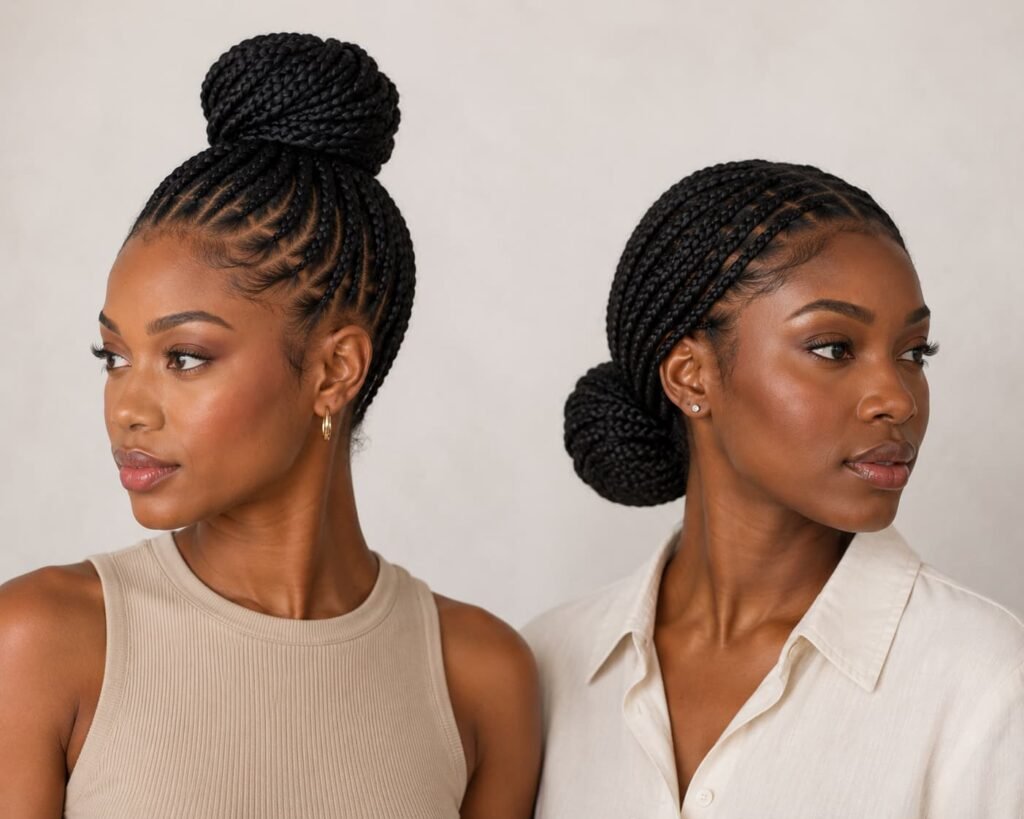
Bun placement changes where the main visual weight of the hairstyle appears.
A high braided bun emphasizes the crown, while a low bun keeps the shape closer to the nape. The better choice depends on the preferred silhouette, braid pattern, bun proportions, and personal style.
How a High Bun Changes the Silhouette
A high bun places the main shape near the crown.
This can create a taller-looking silhouette and make the bun a prominent feature of the hairstyle.
The bun may be compact and rounded or larger and wider depending on how the braids are arranged. Cornrows or feed-in-style braids leading upward can also make the braid direction more visible.
How a Low Bun Creates a Softer, Lower-Profile Look
A low bun keeps the main shape near the back of the neck rather than at the crown.
This creates a lower-profile silhouette. Some people may prefer this placement when they want a more understated or formal-looking updo.
The bun can be centered, shifted slightly to one side, or combined with a side part for additional asymmetry.
How Braid Size Changes a Braided Bun
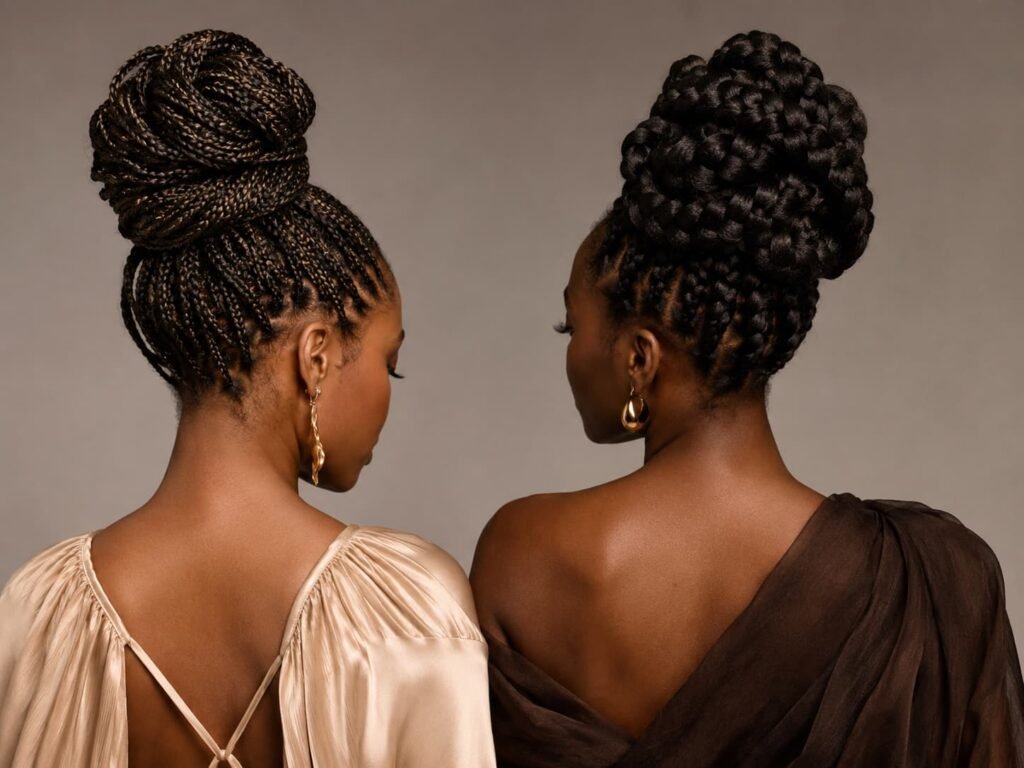
Braid size changes the amount of visible detail within the hairstyle.
Smaller braids create more individual lines, while larger braids make each section easier to distinguish.
Small and Medium Braids
Small and medium braids can create a more detailed surface when wrapped into a bun.
Multiple individual sections may be layered or arranged in different directions, which can give the updo a more intricate appearance.
Medium braids can provide visible braid definition without creating the same bold proportions as jumbo sections.
Jumbo Braids and Larger Buns
Jumbo braids use larger individual sections, making the wrapped braid pattern more noticeable.
Depending on the length and amount of hair included, they can also be arranged into a larger-looking bun.
The result may appear more sculptural because fewer, thicker braided sections form the overall shape.
Details That Can Change the Final Look
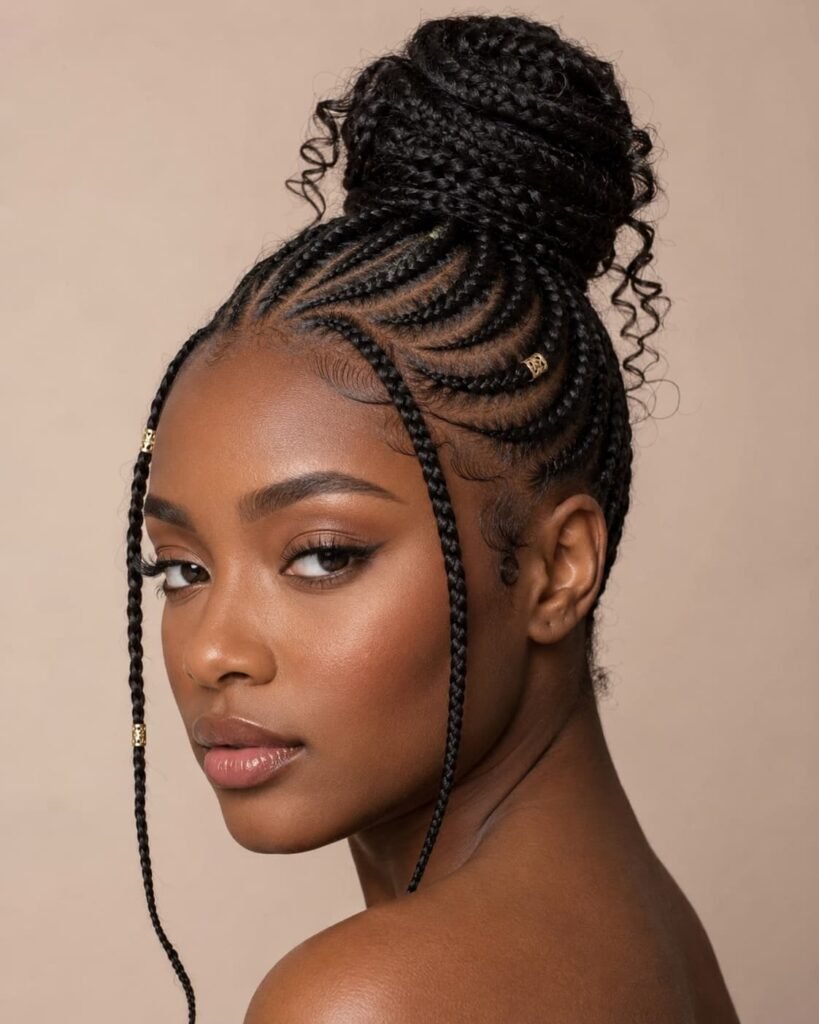
Two braided buns with a similar basic structure can look quite different once the parting, loose pieces, texture, and accessories are changed.
These details provide ways to personalize the appearance without necessarily changing the main braid-and-bun concept.
Straight, Curved, and Geometric Braid Patterns
Straight-back braids create a direct visual path toward the bun.
Curved braids introduce rounded lines, while angled or geometric-looking parting can make the scalp pattern more noticeable.
Depending on the design, the braid pattern can remain a subtle background detail or become one of the main features of the hairstyle.
Curly Ends and Face-Framing Pieces
Curly sections can provide visible contrast against more structured braids.
They may appear inside the bun, around its edges, or near the face.
Loose face-framing braids can create a similar contrast by interrupting a completely pulled-back outline. The appearance will vary with their number, length, texture, and placement.
Beads, Cuffs, and Other Hair Accessories
Beads, cuffs, decorative hair pins, and clips can add small areas of contrast, texture, or shine.
They may be concentrated on a few selected braids rather than used throughout the entire hairstyle.
Minimal accessories can keep the overall design simple, while more noticeable placement can make decoration a stronger part of the finished look.
What to Consider Before Choosing a Braided Bun
The desired braid type, bun size, placement, hair length, and overall silhouette are useful factors to think about before choosing a style.
The same idea can look noticeably different when those elements change.
Hair Length, Density, and the Use of Extensions
The amount and length of hair available can influence how large or compact a bun appears.
Different hair densities can also produce different visible proportions once the braids are gathered.
Some braided styles use braiding hair extensions when additional visible length or volume is wanted. The resulting size and shape will depend on the braid technique and amount of hair included.
Bun Size and Placement
A large high bun creates a different silhouette from a compact bun placed near the nape.
Someone who prefers more height may be drawn to a crown-level bun, while a lower placement keeps the visual focus toward the back of the head.
Centered and off-center buns also create different levels of symmetry.
Comfort and Styling Tension
Comfort is a practical consideration with any updo.
How a braided bun feels can vary depending on its size, weight, placement, and how firmly the hair is gathered.
A style that feels overly tight or uncomfortable may need to be adjusted rather than treated as something that should simply be tolerated.
Casual vs More Formal Styling
Braided buns can be kept simple or made more decorative depending on the desired appearance.
A low bun with minimal accessories may create a more understated look. A high bun with detailed parting, curls, beads, or cuffs can make the styling details more noticeable.
There are no fixed rules connecting a particular braided bun to one occasion. Clothing, accessories, personal taste, and the overall styling can all affect whether a look feels casual or more formal.
Frequently Asked Questions About Braided Bun Hairstyles
Can Cornrows Be Styled Into a Bun?
Yes. Cornrows can be directed toward the area where the bun will sit, with the remaining braided length gathered into the updo.
The bun can be positioned high near the crown, low near the nape, or between the two. Straight rows create a different visual effect from curved or patterned cornrows, so the braid direction can be an important part of the finished design.
Can Box Braids Be Put Into a Bun?
Yes. Box braids can be gathered and arranged into different bun shapes.
A high bun places more of the visual volume near the crown, while a low box-braid bun keeps it closer to the nape. The final proportions can vary with braid length, braid size, and the amount of hair included in the bun.
Can Knotless Braids Be Worn in a High Bun?
Knotless braids can often be arranged into a high bun when their length and the overall braid style allow them to be gathered comfortably.
The braids may be wrapped into a compact bun or arranged into a wider shape. Leaving a few braids loose near the front is another option for changing the appearance without altering the main updo.
What Is the Difference Between a Cornrow Bun and a Box-Braid Bun?
The main difference is how the braids are arranged before they reach the bun.
A cornrow bun usually includes braids that follow the scalp toward the gathering point, making the direction and parting pattern more visible. A box-braid bun is generally formed by gathering individual braids and wrapping or arranging them into the updo.
Because of this, the two styles can create noticeably different textures and silhouettes.
Can Short Hair Be Used for a Braided Bun?
It can be possible, depending on the starting length, braid technique, and intended bun size.
Shorter natural hair may create a more compact result. Some braided styles also incorporate added hair when more visible length or volume is desired.
The finished shape can vary, so short hair does not automatically lead to one particular type of braided bun.
Can You Add Curls to a Braided Bun?
Yes. Curly details can be combined with braids in several ways.
Loose curls may appear inside the bun, around its edges, or near the face. A few curly pieces can provide subtle contrast, while more loose texture can make the updo appear softer and less uniform.
What Accessories Can Be Added to a Braided Bun?
Beads, hair cuffs, decorative pins, and clips are some possible options.
Accessories can be concentrated near the front, added to selected braids, or placed around the bun. A few small accents can keep the design understated, while more noticeable accessories can become a stronger part of the overall look.
Is a High or Low Braided Bun Better for a Formal Look?
Neither is automatically better.
A low braided bun can create a more understated, lower-profile silhouette, while a high bun places more visual emphasis near the crown.
Either can be styled for a more formal appearance. Braid pattern, bun size, accessories, clothing, and personal preference can all influence the final look.