Mocha Brown Hair Color is a brunette shade that can range from medium brown to deeper brown. It is often associated with a rich, balanced appearance, but mocha is not one exact standardized hair color.
Some mocha shades look neutral, while others lean warmer or cooler. The depth and undertone can also change how the color appears in different lighting.
This flexibility gives mocha brown several possible looks, from softer medium brunette shades to deeper, more defined brown tones.
What Is Mocha Brown Hair Color?
Mocha brown is generally used to describe a rich brunette color in the medium to deeper brown range.
A classic mocha shade may have a fairly neutral appearance, but warmer and cooler versions are also possible. Warmer mocha colors may contain softer chocolate or caramel-influenced tones, while cooler versions may have more muted or smoky brown tones.
Because hair-color names are not always used in exactly the same way, two shades labeled mocha brown may not look identical. Looking at the actual depth and undertone gives a clearer idea of the finished color than relying on the shade name alone.
What Does Mocha Brown Hair Look Like?
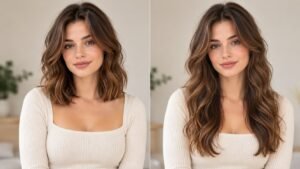
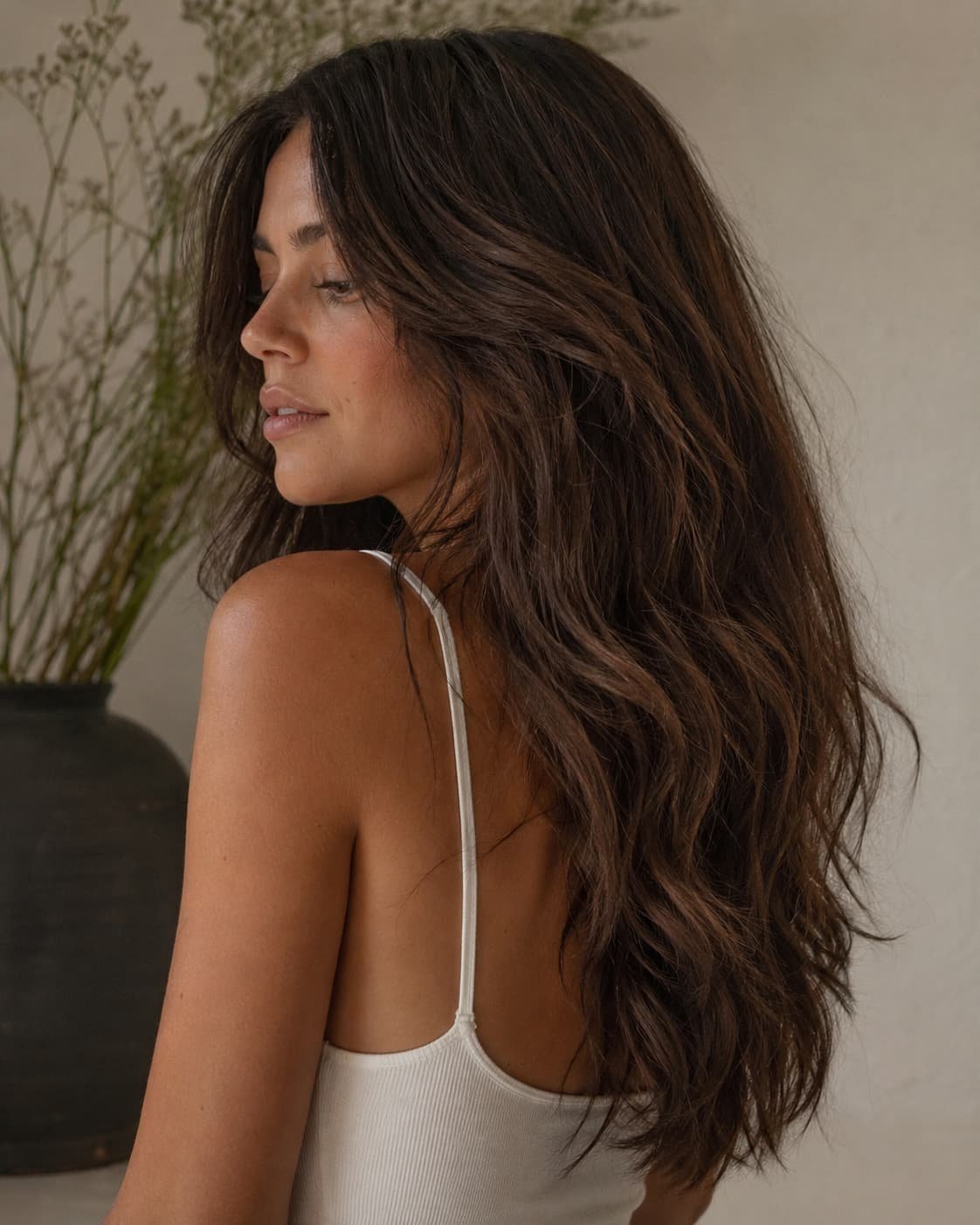
Mocha brown usually appears clearly brunette rather than blonde or black. Depending on its depth, it can look like a softer medium brown or a richer dark brunette.
Neutral versions may have a balanced brown appearance. Warm mocha shades can show more chocolate or softly golden-brown character, while cool versions may appear more muted or smoky.
Lighting can change how these tones are seen. A darker mocha may look deeper and more uniform in lower light, while brighter light can make subtle differences in the brown tones easier to notice.
Hair texture and styling can also affect the visual result. Straight hair may show the color in broader, smoother sections. Waves and curls create more changes in light and shadow, which can make tonal variation more noticeable.
Mocha brown can be worn as an even all-over color or combined with other brunette tones when more visible dimension is preferred.
Is Mocha Brown Warm, Cool, or Neutral?
Mocha brown can be neutral, warm, or cool.
A neutral mocha brown has a more balanced brown appearance without strongly noticeable warm or cool tones.
A warm mocha brown may include chocolate, caramel, chestnut, or other warmer brown influences. These can give the color a softer or richer warmth.
A cool mocha brown may include muted, smoky, or ash-influenced brown tones with less obvious golden or reddish warmth.
This means the word “mocha” alone does not tell you everything about a hair color. The undertone is an important part of understanding how a particular mocha shade may look.
Main Characteristics of Mocha Brown Hair
Mocha brown is mainly recognized by its brunette base, adjustable depth, and ability to lean warm, cool, or neutral.
The color can look relatively even or more dimensional depending on how different brunette tones are placed throughout the hair.
These differences allow mocha brown to create several visual effects without leaving the brunette color family.
Depth and Brunette Base
Many mocha brown shades sit within the medium to deeper brunette range, although lighter and darker variations are also used.
A medium mocha usually keeps the brown color easy to see without becoming extremely dark. A deeper mocha can create a richer brunette appearance and may look closer to other dark brown shades in lower lighting.
The starting hair color can influence how a chosen shade appears. Hair that begins very light, medium, or dark may not produce exactly the same visual result from the same color choice.
For that reason, mocha brown is more useful to think of as a group of related brunette shades rather than one fixed level of brown.
Undertones and Dimension
Undertones affect whether mocha brown appears warmer, cooler, or more neutral.
Chocolate and caramel-influenced tones can bring more warmth to a mocha base. Muted or smoky brown tones can create a cooler appearance. A balanced combination may keep the shade closer to neutral.
Dimension describes visible differences between darker and lighter areas of the hair.
One possible option is to keep the mocha base mostly even for a smooth brunette look. Another option is to add subtle lighter or darker brown sections so more tonal variation becomes visible.
The contrast does not need to be strong. Closely related brunette tones can create a softer effect, while a greater difference between the base and lighter pieces can make the dimension more noticeable.
Light, Medium, and Dark Mocha Brown Hair
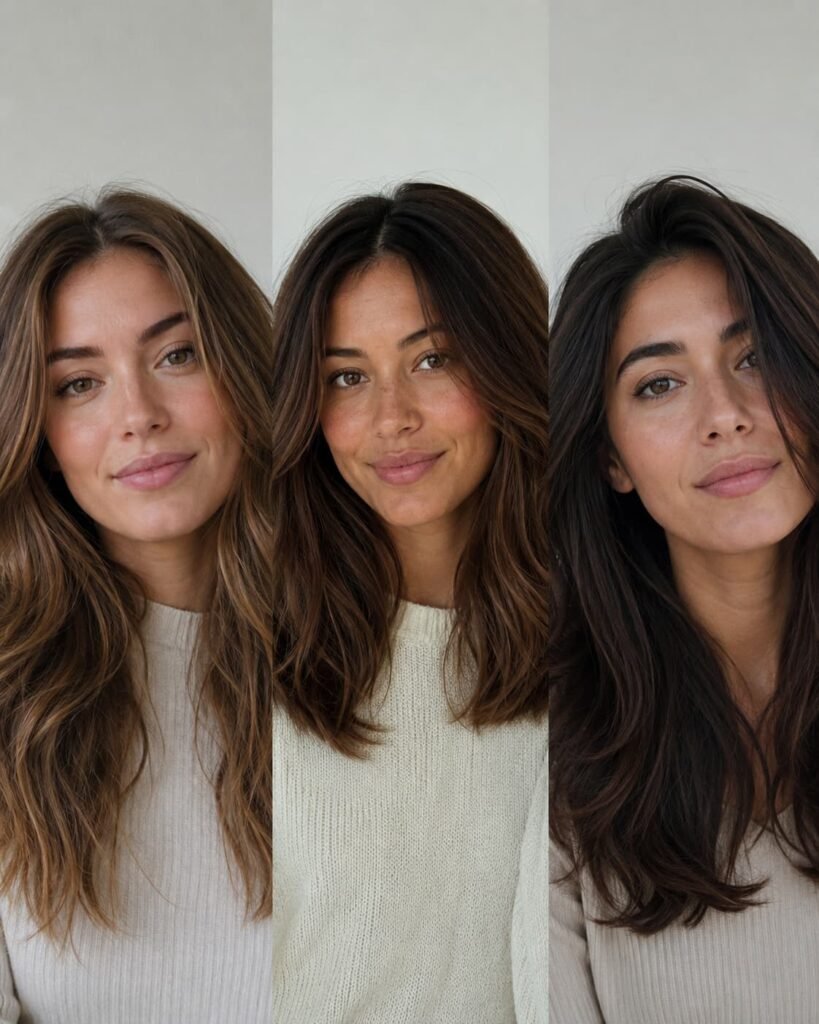
The depth of mocha brown can change the overall character of the color.
A lighter mocha creates a softer brunette appearance. Medium mocha keeps more balanced brown depth, while dark mocha creates a deeper and stronger brunette look.
The boundaries between these categories are not exact. Shade names can vary, so the visible depth and undertone are more useful than the label alone.
Light Mocha Brown
Light mocha brown is a softer version of the mocha brunette family.
It keeps a brown base but has less depth than medium or dark mocha. Depending on the undertone, it may appear neutral, softly chocolate-toned, beige-brown, or slightly warm.
Bright lighting can make a lighter mocha look even softer and can bring out subtle differences between its brown tones.
This shade may appeal to someone who prefers a lighter brunette look without moving fully into blonde or very pale brown territory.
Subtle darker or lighter brunette pieces are also one possible styling option when more visible dimension is wanted.
Medium Mocha Brown
Medium mocha brown sits around the middle of the mocha brunette range.
It can provide clear brown depth without looking extremely light or very dark. The shade may stay fairly neutral or lean warmer or cooler depending on its undertones.
Medium mocha can be worn as an even brunette color or combined with low-contrast variations of brown.
Changes in lighting may make its undertones and subtle tonal differences more noticeable.
Dark Mocha Brown
Dark mocha brown creates a deeper brunette appearance.
In softer or lower lighting, it may look close to other deep brown shades. Under brighter light, its warmer, neutral, or cooler undertones may become easier to see.
A dark mocha shade can be kept relatively uniform for a solid brunette effect. Another possible option is adding slightly lighter brown sections to create more visible contrast and dimension.
Dark mocha should not automatically be treated as identical to espresso brown or black-brown. Hair-color names can overlap, but espresso is commonly associated with a particularly deep brunette appearance.
The final look can vary depending on the chosen depth, undertone, starting hair color, lighting, and color placement.
Who May Suit Mocha Brown Hair Color?
Mocha brown offers several options because the shade can vary in depth and undertone. It may appear neutral and balanced, softly warm, cool and muted, or deeper and more dramatic.
Rather than treating mocha brown as suitable for one specific skin tone, age, face shape, or hair type, it is more useful to consider the overall color effect someone prefers.
A lighter or more neutral mocha can create a softer brunette look. A deeper mocha can create stronger contrast, while warmer or cooler undertones can change the character of the brown.
Personal preference is important. Skin undertone can be one consideration, but it does not create a strict rule for choosing hair color.
Choosing Between Warm, Cool, and Neutral Mocha
Warm, cool, and neutral mocha shades can create noticeably different brunette looks.
A warm mocha may include chocolate, chestnut, caramel, or softly golden-brown influences. These tones can give the color a warmer overall appearance.
A cool mocha may contain smoky, muted, or ash-influenced brown tones with less noticeable golden or reddish warmth.
Neutral mocha stays closer to a balanced brown. It may appeal to someone who does not want the color to lean strongly warm or cool.
The desired level of contrast can also influence the choice. A deeper mocha may create a stronger visual difference between the hair and face, while a lighter brown can create a softer effect.
These are styling considerations rather than fixed rules. Some people may prefer colors that closely relate to their natural coloring, while others may deliberately choose more contrast.
Considering Skin Undertone and Overall Contrast
Skin undertone can help when comparing different mocha shades, but it should be treated as a visual guide rather than a requirement.
For example, someone may prefer a warm mocha because they like chocolate or caramel tones near the face. Another person may prefer a cooler mocha because muted brown shades fit their personal color preferences.
It is also possible to use contrast intentionally. A warm complexion does not automatically require warm brown hair, and a cool complexion does not automatically require cool brown hair.
Hair depth can affect the overall contrast as well. Deeper brunette shades tend to create a more defined frame around the face, while lighter browns can produce a softer transition.
The final appearance can vary with skin tone, natural hair color, lighting, makeup, clothing colors, and personal style. These factors are useful for comparing ideas, but none of them determines one universally correct mocha shade.
How Mocha Brown Compares With Similar Brown Shades
Mocha brown is closely related to other brunette colors, including chocolate, espresso, and caramel.
These names are useful for describing general color directions, but they are not completely standardized. Individual shades can overlap, so depth and undertone are often more useful than the name alone when comparing colors.
Mocha Brown vs Chocolate Brown
Mocha brown and chocolate brown can look similar, especially when mocha has a warm undertone.
Chocolate brown is commonly associated with a rich brunette color and often contains noticeable warm tones. Depending on the shade, those tones may appear softly golden, reddish-brown, or caramel-influenced.
Mocha brown has more flexibility in its undertone. It can lean warm like chocolate brown, but it can also look neutral or cool.
Someone who prefers a clearly warm brunette may consider chocolate brown. Someone looking for a brown shade that can move between warm, neutral, and cool directions may prefer exploring different mocha variations.
Because the two color families can overlap, the actual shade is more informative than the label by itself.
Mocha Brown vs Espresso Brown
Espresso brown generally refers to a deeper brunette direction.
It often has a dark, rich appearance and may look especially deep in lower lighting. Cool-toned espresso variations are also common.
Mocha brown is usually positioned in a somewhat lighter or more flexible brunette range. Some mocha shades are medium brown, while dark mocha can move closer to espresso in depth.
The main difference is therefore not absolute. Espresso generally emphasizes deeper brown, while mocha covers a wider range of medium-to-deep brunette tones and may show warm, neutral, or cool influences.
For someone comparing the two, looking at the actual depth and undertone will give a clearer picture than relying only on the color name.
Mocha Brown vs Caramel Brown
Caramel brown is commonly associated with warm, golden-brown tones and is often used to add lighter contrast to brunette hair.
Classic caramel shades usually appear brighter and warmer than a medium or dark mocha base. However, caramel can also be adapted with more muted or cooler tones, so it should not be treated as exclusively warm.
Mocha brown generally keeps more brunette depth. It may include caramel-influenced tones, but the overall color usually remains deeper than a typical caramel highlight or lighter caramel-brown shade.
The two can also be combined as a style option. A mocha brunette base with lighter caramel-toned sections can create more visible warmth and contrast.
When comparing the shades on their own, mocha usually emphasizes brunette depth, while caramel more often emphasizes lighter, warmer-looking brown tones.
Ways to Add Dimension to Mocha Brown Hair
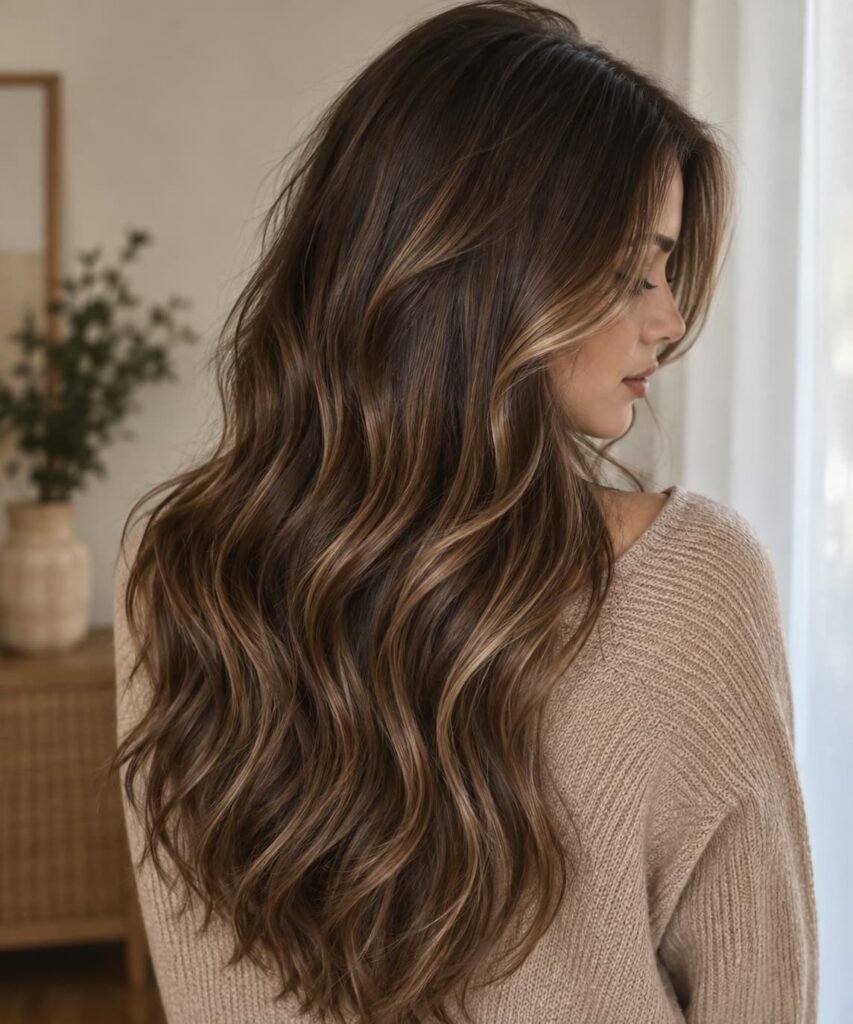
Mocha brown can be worn as an even all-over brunette shade, or it can be combined with lighter and darker brown tones for more visible dimension.
How noticeable that dimension looks depends on the amount of contrast between the base color and the added tones.
Mocha Brown With Highlights
Highlights can introduce lighter sections through a mocha brown base without changing the overall brunette direction.
Chocolate-toned pieces can keep the color close to the base for a subtle effect. Beige-brown highlights are another option for a softer, more neutral contrast, while caramel tones can introduce more noticeable warmth.
Smaller differences between the base and highlights can create a blended look. Lighter or more distinct sections can make the contrast easier to see.
The exact combination is a style choice. Mocha brown does not require highlights to have depth or character.
Mocha Brown Balayage
Balayage is another way to combine a mocha base with lighter brunette tones.
With this approach, lighter color can be placed through the mid-lengths and ends rather than creating the same pattern from roots to ends. This can produce a gradual change between the deeper base and lighter sections.
Chocolate, beige-brown, caramel, or other related brunette shades can be used depending on the amount of warmth and contrast preferred.
A mocha balayage does not need to become very light. Keeping the added tones close to the base can create a more subtle brunette result.
Face-Framing Mocha and Brown Tones
Lighter color near the front of the hair can create more visible contrast around the face.
One subtle option is to use a slightly lighter mocha or chocolate brown. This keeps the front sections close to the main brunette shade.
Beige-brown or caramel-toned pieces can create a more noticeable difference when a brighter effect is preferred.
The amount of contrast is flexible. Face-framing color can be soft and blended or more defined depending on the chosen shades and placement.
How Hair Length and Texture Can Change the Look
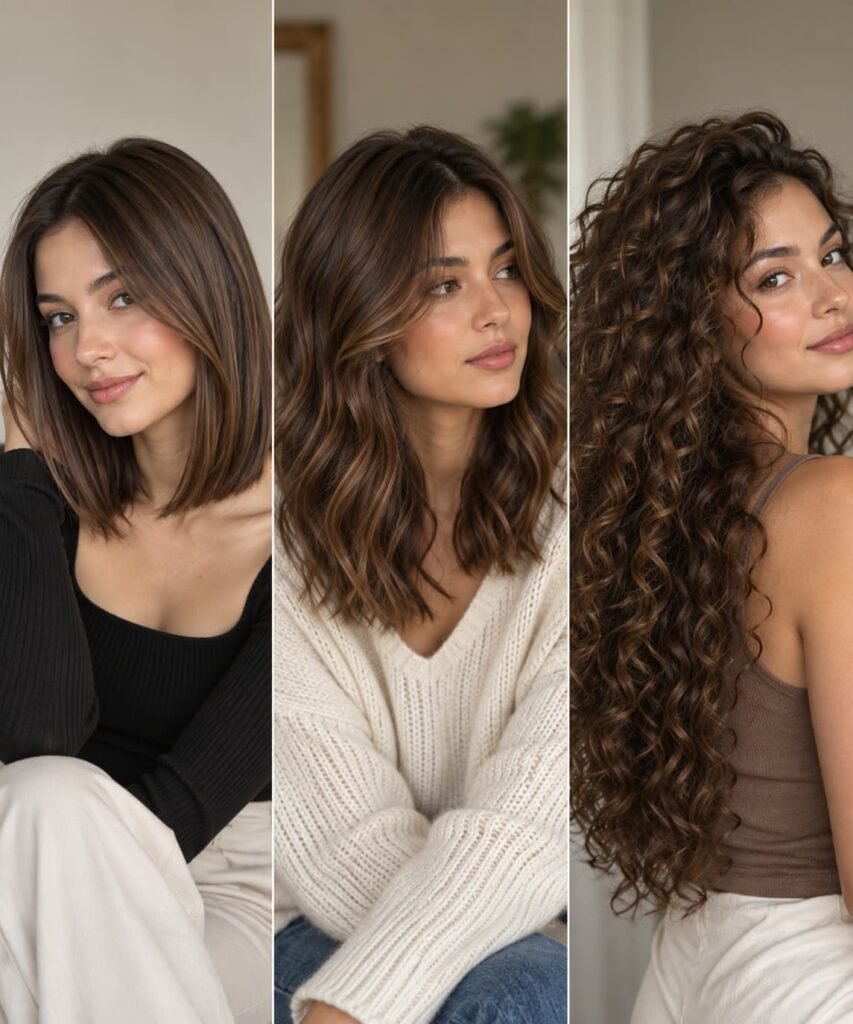
Hair length and texture do not change the basic identity of a mocha shade, but they can affect how the color is seen.
Straight, wavy, and curly hair reflect light differently because the surface and direction of the strands are different. This can make tonal variation more or less noticeable.
Straight Hair
Straight hair can show mocha brown in smooth, continuous sections.
An all-over color may appear relatively even, while highlights or other contrasting pieces can look more clearly defined.
When several similar brunette tones are used, the result can remain subtle. A greater difference between shades will make individual sections more noticeable.
Wavy or Curly Hair
Waves and curls create bends throughout the hair, producing changing areas of light and shadow.
This can make different brunette tones easier to notice as the hair moves. Highlights, lowlights, and blended shades may appear differently from one section of a curl or wave to another.
Even an all-over mocha shade can show natural-looking shifts in brightness because of the shape and movement of the hair.
Short, Medium, and Long Hair
Mocha brown can be used across short, medium, and long hairstyles.
On shorter cuts, an even brunette color or a few contrasting sections can create a clear, simple color pattern.
Medium and long hair provide different ways to place highlights, balayage, or lighter front sections across the length.
Hair length alone does not determine whether mocha brown will look subtle or bold. The depth, undertone, haircut, texture, and amount of color contrast all influence the final appearance.
What to Consider Before Choosing Mocha Brown Hair
The first thing to consider is the depth of brown you prefer.
Light mocha creates a softer brunette appearance, while medium mocha keeps more visible brown depth. Dark mocha produces a deeper overall look.
Undertone is another important choice. Warm mocha may include chocolate, chestnut, or caramel-influenced tones. Cooler versions may appear more muted or smoky, while neutral mocha stays closer to a balanced brown.
The starting hair color also matters because it can influence how a new shade develops and appears. The same target color may not produce an identical visual result on different starting shades.
It is also useful to decide how much contrast you want. An all-over mocha shade can create a more uniform brunette look. Highlights, balayage, or lighter face-framing pieces can add more visible tonal variation.
Hair length and texture can influence how those differences are displayed, but they do not create one correct choice.
When comparing mocha brown ideas, look at the actual depth, undertone, and color placement rather than relying only on shade names. Terms such as light mocha, dark mocha, chocolate mocha, or caramel mocha can vary between color ranges and examples.
Basic Maintenance Considerations for Mocha Brown Hair
Colored mocha brown hair can gradually lose some of its original intensity. How the color changes can depend on the type of color used, washing habits, heat exposure, and the overall hair-care routine.
Products intended for color-treated hair are one possible option for regular washing and conditioning. The needs of the hair can vary, so there is no single routine that applies to every mocha brown shade.
Water temperature is another simple consideration. Very hot water can contribute to color fading, so lukewarm water may be a more suitable choice when washing colored hair.
Heat styling can also affect color over time. If blow-dryers, straighteners, or curling tools are part of the styling routine, a heat-protectant product is one possible step to consider.
Maintenance can also differ depending on whether the hair has an all-over color, highlights, or balayage. Rather than following one fixed schedule, it is more useful to consider the type of color and how its appearance changes over time.
A Color-Safe Shampoo is another option for the conditioning step, especially when the routine is built around products intended for colored hair.
Frequently Asked Questions
What Color Is Mocha Brown Hair?
Mocha brown is generally a medium brunette shade, although lighter and darker versions are also possible.
It can have warm, cool, or more balanced undertones. Some versions include chocolate or caramel-influenced warmth, while others have a more muted or smoky appearance.
The exact shade can vary, so the name “mocha brown” does not refer to one identical color in every hair-color range.
Is Mocha Brown Hair Warm or Cool?
Mocha brown can be warm or cool.
Warm versions may show chocolate, caramel, chestnut, or other warm brown tones. Cooler mocha shades may have smoky or muted brown influences.
Some mocha shades sit between these directions and appear more neutral.
Is Mocha Brown the Same as Chocolate Brown?
Not exactly, although the two shades can overlap.
Chocolate brown commonly refers to a rich brunette color that often has warm undertones. Mocha brown may also look warm, but it can lean neutral or cool as well.
Comparing the actual depth and undertone is more useful than relying only on the color name.
Is Mocha Brown Darker Than Caramel Brown?
Mocha brown is generally deeper than a typical caramel brown shade.
Caramel brown is commonly associated with lighter, warmer brown and golden tones, while mocha usually keeps more medium-to-deep brunette depth.
Individual shades can vary, so some lighter mocha and darker caramel colors may look closer than their names suggest.
Can Mocha Brown Hair Have Highlights?
Yes. Highlights can be added to a mocha brown base when more visible tonal variation is preferred.
Chocolate or similar brunette tones can create softer contrast. Beige-brown or caramel-toned pieces are other options when a lighter or warmer effect is wanted.
The amount of contrast can remain subtle or become more noticeable depending on the chosen shades and placement.
What Is the Difference Between Light and Dark Mocha Brown?
The main difference is depth.
Light mocha has a softer and brighter brunette appearance, while dark mocha creates a deeper brown look. Medium mocha sits between the two.
Both light and dark versions may lean warm, cool, or neutral, so depth and undertone should be considered separately.
Does Mocha Brown Work With Different Hair Textures?
Mocha brown can be used on straight, wavy, curly, and other hair textures.
Texture does not change the basic hair color, but it can affect how the shade appears. Straight hair may show broader, smoother areas of color, while waves and curls create more changes in light and shadow.
Those changes can make highlights or subtle differences between brunette tones easier to notice.
The final appearance can vary depending on texture, haircut, color placement, undertone, and lighting.