Ponytail hairstyles for long hair can range from simple and smooth to soft, textured, braided, or more detailed designs. Long hair gives the ponytail enough length to become a noticeable part of the overall hairstyle rather than simply a way to tie the hair back.
There is no single ponytail that is best for everyone. The final look can vary depending on hair texture, density, layers, bangs, ponytail placement, and personal style preferences. Some people may prefer a high ponytail with a lifted shape, while others may like the softer appearance of a low or wavy ponytail.
Details such as braids, twists, bubble sections, or a wrapped base can also change a basic ponytail without completely changing the hairstyle. Understanding these differences can make it easier to choose a ponytail that matches the type of finish you want.
What Makes a Ponytail Work Well With Long Hair?
Long hair provides more visible length below the ponytail base. This gives room for waves, curls, braids, twists, and other details to remain noticeable throughout the style.
The appearance of a ponytail is influenced by more than hair length alone. Placement, texture, layers, bangs, and the amount of volume can all change the final shape.
A ponytail can look smooth and controlled or soft and loose. Neither finish is automatically better. The choice mainly depends on the appearance you want and how your hair naturally behaves when gathered.
How Ponytail Height Changes the Overall Look
The position of the ponytail can make a clear visual difference.
A high ponytail sits closer to the crown. Because the lengths fall from a higher point, this placement can create a more lifted and noticeable silhouette. Long hair may also appear especially flowing from this position.
A mid-height ponytail sits closer to the middle of the back of the head. It can provide a balanced appearance that is neither as lifted as a high ponytail nor as low and relaxed as a nape-level style.
A low ponytail sits close to the nape of the neck. This placement can create a softer, more understated shape. It can be worn with smooth hair, waves, curls, a center part, or loose front sections.
The placement does not need to remain the same every time. Changing the height is one of the simplest ways to make a familiar ponytail look different.
How Hair Texture and Layers Affect the Finish
Hair texture can strongly affect how the ponytail looks.
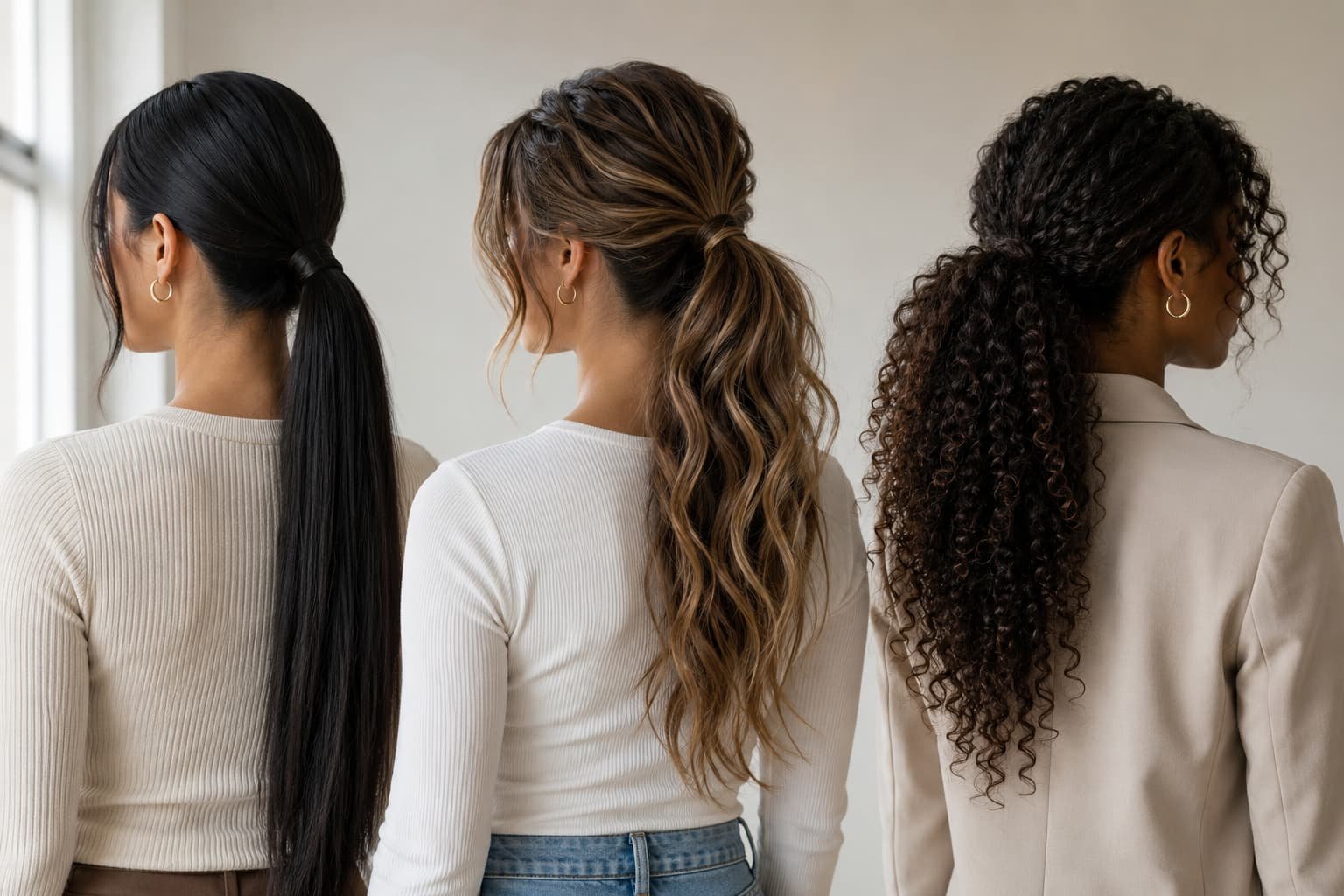
Straight hair may create a more defined outline and allow the full length of the ponytail to remain easy to see. Wavy hair can introduce movement through the lengths, while curly and coily hair may create a fuller and more textured shape.
Density also influences the appearance. A ponytail made from denser hair may naturally form a larger shape, while lower-density hair may create a narrower silhouette. Styling choices such as waves or gentle texture can change the visible fullness, but the result can vary between individuals.
Layers can add another dimension. Long layers may create movement at different points through the ponytail, while shorter face-framing layers may stay loose around the front.
This does not necessarily mean layered hair is difficult to wear in a ponytail. The loose sections can become part of the style rather than needing to disappear completely.
Ponytail Hairstyles for Long Hair to Consider
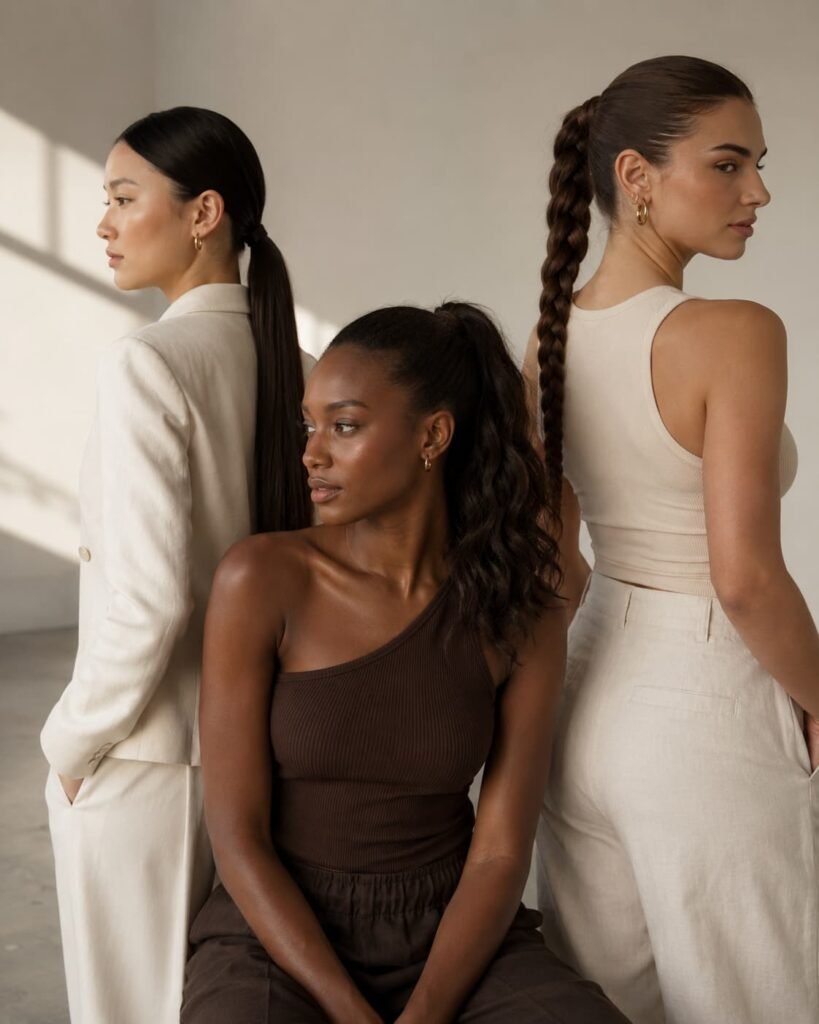
There are many ways to style a long ponytail without making every option look almost identical. Ponytail height, hair texture, parting, braids, twists, and sectioning can each create a visibly different result.
The following ideas focus on meaningful variations rather than small changes in wording.
High Ponytail for a Lifted Look
A high ponytail gathers the hair toward the upper back of the head, usually close to the crown.
With long hair, the higher starting point allows the lengths to fall behind the head and shoulders. This can create a lifted silhouette and make the ponytail itself a strong part of the hairstyle.
Straight hair can give a high ponytail a cleaner outline. Waves or curls can create more movement and visible texture through the lengths.
The front does not always need to be completely smooth. Some people may prefer a softer finish with loose front pieces or natural texture around the hairline.
The ponytail should also feel comfortable rather than unnecessarily tight. A high position and extreme tension are not the same thing.
Low Ponytail for a Soft, Relaxed Finish
A low ponytail sits near the nape and creates a noticeably different shape from a high ponytail.
This style can work well when you want the hair to remain visually simple while still showing its length. Long straight hair can create a smooth flowing line, while waves can make the lower ponytail appear softer and more relaxed.
Parting can also change the front of the style. A center part creates a balanced division, while a side part shifts the visual emphasis toward one side.
Face-framing layers or longer bangs may be left loose instead of being forced into the ponytail. This can make the transition between the front and tied-back hair look softer.
Sleek Ponytail for a Smooth, Defined Style
A sleek ponytail focuses on a smooth surface and a clearly defined shape.
The hair is generally gathered with fewer loose sections around the top and sides. The ponytail itself may remain straight or have a small amount of controlled movement.
A sleek ponytail can be positioned high, in the middle, or low. A high version creates a stronger lifted shape, while a low sleek ponytail can appear more understated.
A center or side part can also be included, particularly with lower placements.
The word sleek describes the visible finish rather than a specific hair type. The exact result can vary depending on natural texture, density, layers, and how the hair is styled.
Wavy Ponytail for More Movement
A wavy ponytail keeps visible bends or waves through the hanging lengths.
Long hair gives the waves more space to show, especially when the ponytail falls well below the shoulders. Larger waves may create a softer flowing effect, while more defined waves can introduce stronger texture.
The ponytail may be worn high for a more lifted silhouette or lower for a relaxed shape.
Layers can make the waves appear at slightly different lengths, which may create more visible movement throughout the ponytail.
Loose face-framing sections can also be paired with this style when a softer front is preferred.
Curly Ponytail for Visible Texture and Volume
A curly ponytail allows the curl pattern to remain an important visual feature.
Instead of focusing on a completely straight or smooth length, the curls create shape and dimension throughout the ponytail. The appearance can vary considerably depending on curl pattern, hair density, length, and shrinkage.
A high placement can position more curl volume toward the crown and upper back of the head. A low placement keeps the curls closer to the nape and shoulders.
The front can remain smooth or textured depending on preference. Curly hair does not need to be styled into one particular finish for a ponytail to look intentional.
Long curls may also create a rounded or flowing ponytail shape rather than a narrow straight line.
Braided Ponytail for Added Detail
A braided ponytail combines a gathered hairstyle with a braid through the hanging length.
One possible option is a simple three-strand braid beginning directly below the ponytail base. This creates a clear change from a loose ponytail while still keeping the hair gathered.
The braid may be kept defined or gently loosened for a softer appearance. Long hair gives more space for the braid pattern to remain visible.
A braided ponytail can also start from different heights. A high braided ponytail creates a stronger vertical shape, while a low braid can look more relaxed.
This variation can be especially useful when you want the length to remain controlled while still adding a noticeable design detail.
Bubble Ponytail for a Sectioned Style
A bubble ponytail divides the length into several rounded sections.
The hair is first gathered into a ponytail. Additional ties are then placed at intervals down the length, and the hair between them can be gently expanded to create the bubble-like shape.
Long hair provides enough space for several sections, which makes the structure easier to see.
The bubbles can be relatively subtle or more pronounced depending on how much each section is expanded. Keeping the spacing visually balanced can create a cleaner overall result.
This style looks clearly different from a standard ponytail because the length is divided rather than left loose.
Hair-Wrapped Ponytail for a Finished Base
A hair-wrapped ponytail changes the appearance of the base rather than the entire length.
After the ponytail is secured, a small section of hair can be separated and wrapped around the hair tie. This hides the visible elastic and creates a more continuous transition between the head and ponytail.
The technique can be used with high, mid-height, or low placements.
It also works with different finishes. A straight ponytail may look more defined with a wrapped base, while a wavy or curly version can keep more texture through the lengths.
Because the change is concentrated at the base, this is one possible option for making a simple ponytail look slightly more detailed without adding a braid or multiple sections.
Side Ponytail for an Asymmetrical Look
A side ponytail places the gathered hair toward one side rather than directly at the center back.
A low side ponytail can bring more of the length over one shoulder, making the ponytail visible from the front. This can be useful when the length itself is an important part of the hairstyle.
Straight hair creates a more defined shape, while waves or curls can give the side ponytail additional movement.
A side part may complement the asymmetrical placement, although it is not required. A center part can create contrast between a balanced front and off-center ponytail.
The exact placement can vary, but keeping the ponytail lower often allows long hair to fall more naturally over the shoulder.
Twisted Ponytail for Subtle Detail
A twisted ponytail introduces detail without creating a full braid.
One option is to twist sections from the sides of the head toward the back before joining them into the ponytail. This adds texture near the base while allowing most of the length to remain loose.
Another approach is to create twists within the ponytail itself.
The size and number of twisted sections can change the overall result. Larger twists may look softer and more noticeable, while smaller twists can create finer detail.
Long hair offers enough length for the twist to remain visible without making the hairstyle feel crowded.
Textured Ponytail for a Looser Finish
A textured ponytail focuses on movement and a less rigid finish.
The crown may have some visible lift rather than sitting completely flat, and the ponytail itself can include waves, curls, or natural texture.
Small sections may remain loose around the face, particularly when the haircut includes layers or bangs.
This style does not need every strand to follow the same direction. Slight variation through the lengths is part of the overall appearance.
A textured ponytail can be positioned high or low, although a mid or lower placement may create a particularly relaxed silhouette.
The final result can vary depending on natural hair texture and density, so textured does not describe one exact shape.
Voluminous Ponytail for a Fuller-Looking Shape
A voluminous ponytail is designed around the appearance of a larger, fuller silhouette.
This may come from natural density, curls, waves, texture, or gentle lift near the ponytail and crown. It does not mean that the hair itself has become permanently thicker.
With long hair, volume can appear both near the base and through the hanging lengths. Waves may create a wider shape, while curls can add more visible dimension.
Layers may also affect how the volume is distributed because different sections can fall at slightly different lengths.
Some people may prefer more volume near the crown, while others may want the ponytail itself to be the main focus. The final appearance depends on the haircut, natural texture, density, and styling choices.
Ponytail hairstyles for long hair can therefore range from smooth and minimal to textured and highly detailed. Choosing between them is mainly about deciding where you want the ponytail to sit, how much texture or movement you want to show, and whether you prefer the length to remain loose, braided, twisted, or divided into sections.
How Do Layers and Bangs Change a Long Ponytail?
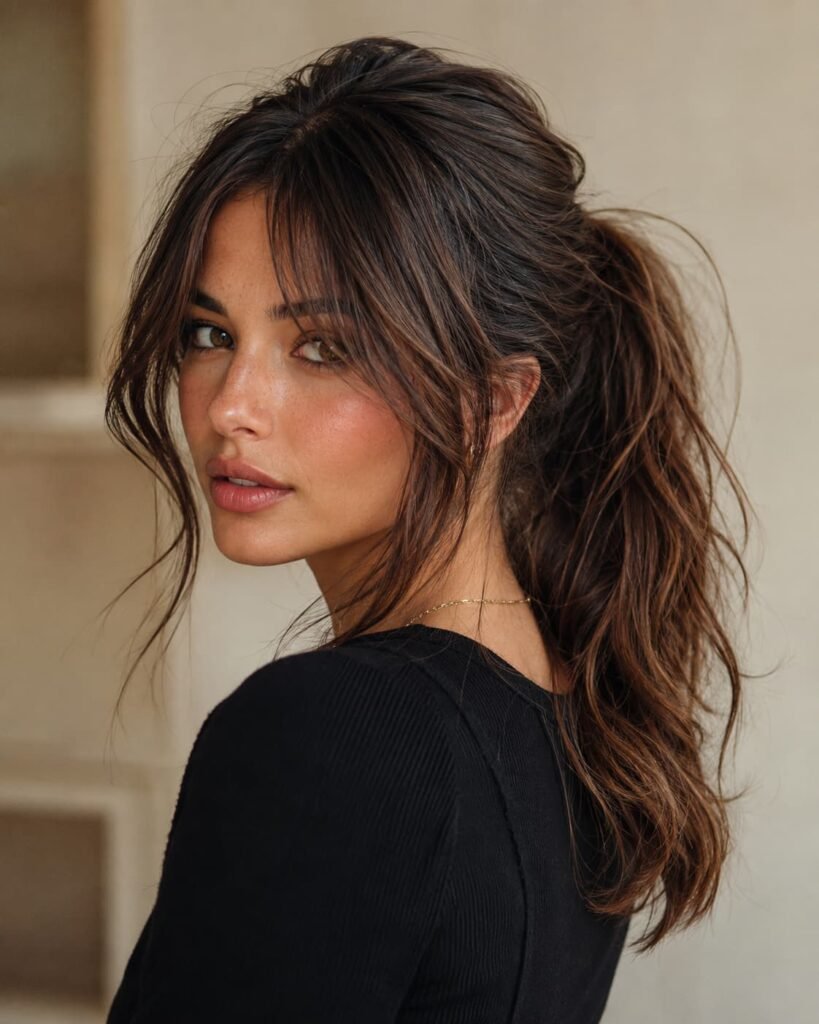
Layers and bangs can change the outline of a long ponytail, especially around the face and through the hanging lengths. Shorter sections may remain outside the ponytail, while longer layers can blend into the tied hair.
The final look can vary depending on the length and placement of the layers, the type of bangs, natural texture, and where the ponytail sits on the head.
Ponytails With Long Layers
Long layers can give a ponytail a less uniform outline because the hair ends at different lengths.
Shorter layers may sit higher within the ponytail, while longer sections create most of the visible length. On wavy or curly hair, these differences may appear softer because the texture adds bends and shape through the ponytail.
On straighter hair, the different layer lengths may be easier to notice.
Ponytail height can also affect where shorter pieces sit. Depending on the haircut, a high ponytail may leave some layers loose around the sides or underneath, while a lower placement may gather them differently.
Loose layered pieces can also be left as part of the hairstyle when a softer finish is preferred.
Ponytails With Face-Framing Pieces
Face-framing pieces are shorter front sections that can remain outside the ponytail.
Their position depends on the haircut. Some may fall around the cheeks or jaw, while longer sections can reach closer to the shoulders.
These pieces can create a softer transition between the tied-back hair and the front of the hairstyle. Some people may prefer only a few loose strands, while others may leave more of the front layers visible.
Straight sections can create a more defined appearance. Waves, curls, or natural texture can add more movement around the face.
Face-framing pieces can be paired with high, mid-height, or low ponytails, so this detail is not limited to one ponytail placement.
Ponytails With Curtain or Side Bangs
Curtain and side bangs can remain visible when the rest of the hair is gathered into a ponytail.
Curtain bangs generally separate near the center and fall toward each side of the face. Longer curtain bangs may blend into face-framing layers, while shorter versions can remain more clearly separated from the rest of the hair.
Side bangs create a more uneven front shape because the hair is directed more strongly toward one side.
Both types can be combined with smooth, wavy, curly, or textured ponytails. The final appearance can vary depending on bang length, natural texture, and how much front hair is left outside the ponytail.
How Hair Texture Changes the Appearance of a Ponytail
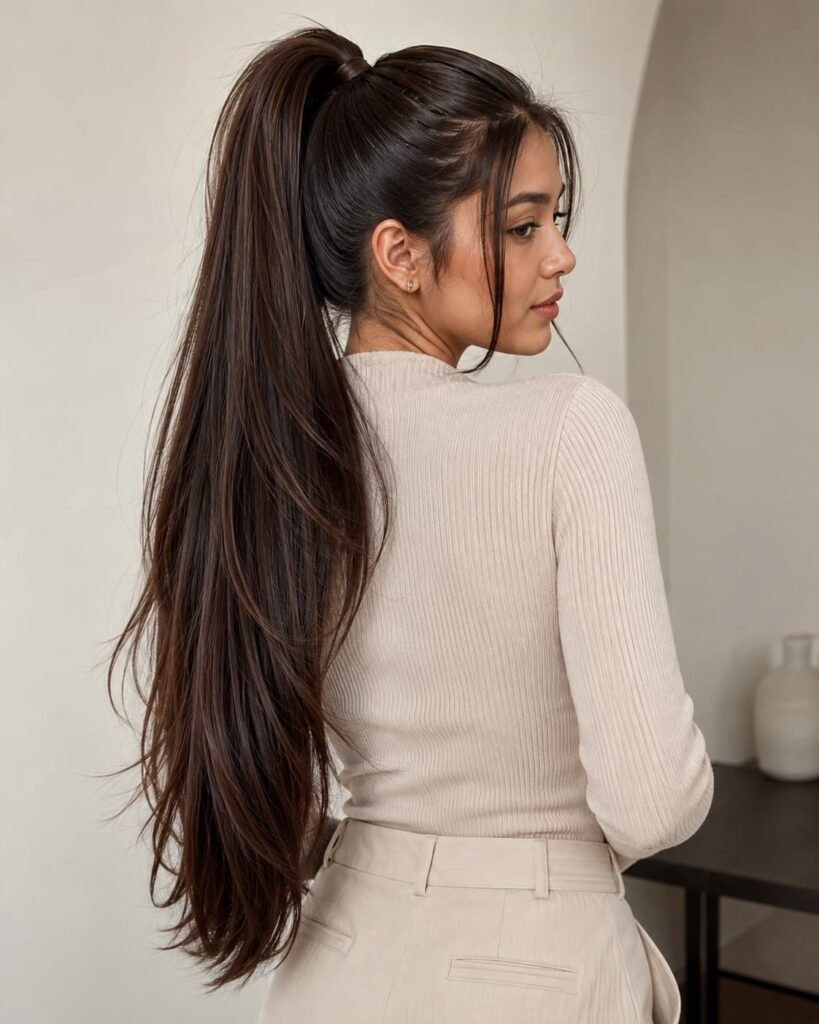
The same ponytail placement can look different on straight, wavy, curly, and coily hair.
Straight hair often creates a more defined outline. Wavy hair introduces visible bends and movement, while curly and coily textures can create a more dimensional shape.
Length, density, layers, and the natural hair pattern can also influence the final silhouette.
Straight Long Hair
Straight long hair can create a clean, flowing ponytail shape.
Because the lengths have fewer visible bends, details such as a wrapped base, braid, center part, or smooth finish may be easier to see.
A high ponytail can create a more lifted line from the crown, while a low ponytail keeps the shape closer to the nape and back.
Straight hair does not need to be styled completely smooth. Long layers, loose front pieces, or a slightly relaxed crown can create a softer finish.
Wavy Long Hair
Wavy long hair can add visible movement through a ponytail.
Gentle waves may create a soft, flowing shape, while more defined waves can make the texture a stronger part of the hairstyle.
A high placement can combine height at the base with movement through the lengths. A lower ponytail may create a more relaxed silhouette closer to the shoulders.
Layers can also make individual waves fall at different points, adding more variation through the ponytail.
Curly and Coily Long Hair
Curly and coily long hair can create a ponytail with strong texture and a more varied silhouette.
The exact shape can differ depending on curl or coil pattern, hair density, length, layers, natural shrinkage, and ponytail placement. Some ponytails may appear more rounded, while others may have a longer or more flowing shape.
A high ponytail places more of the visible texture toward the upper back of the head. A low ponytail keeps the curls or coils closer to the nape and shoulders.
The front can remain textured as well. Bangs, curls, coils, or shorter face-framing sections may be left visible when a softer or more natural-looking finish is preferred.
Keeping the existing texture visible is one possible styling approach rather than a requirement. The final look can be adjusted according to the hair’s natural pattern and the type of ponytail being created.
How to Choose Between a High, Mid, and Low Ponytail
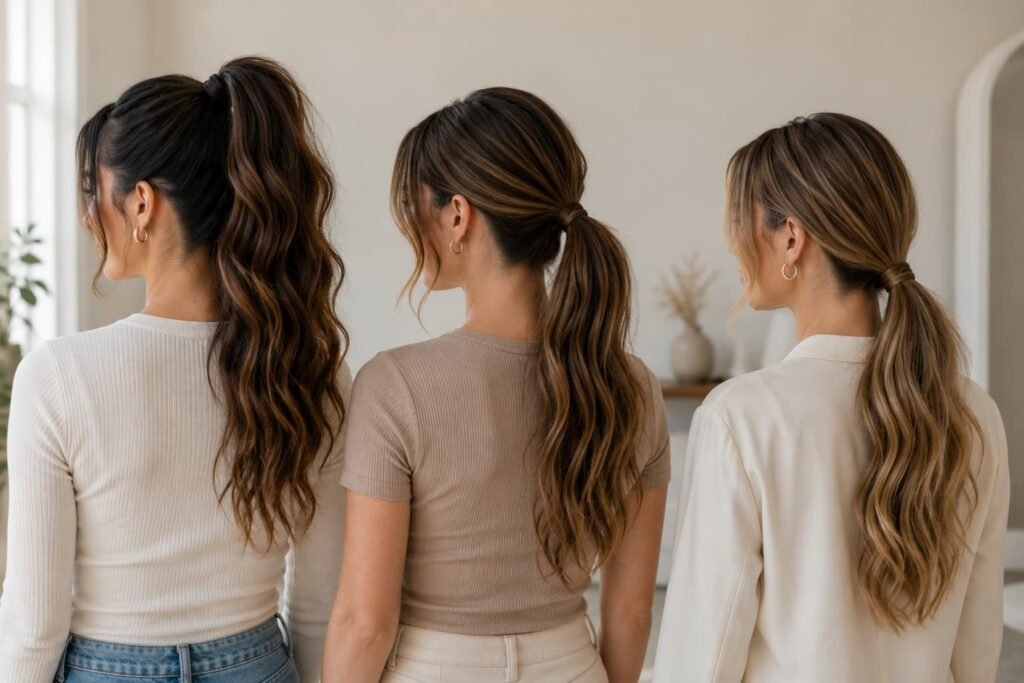
Ponytail placement can change the overall shape and balance of the hairstyle. A high ponytail places more visual focus near the crown, a mid-height ponytail sits closer to the center of the head, and a low ponytail keeps the gathered hair near the nape.
The placement you choose can depend on your haircut, natural texture, layers, and the type of finish you prefer.
High Placement
A high ponytail sits closer to the crown and creates a more elevated silhouette.
On long hair, the ponytail falls from a higher starting point, which can make the length more noticeable from the back and sides. Straight hair may create a cleaner outline, while waves or curls can add more movement through the hanging lengths.
Shorter layers may not always reach the ponytail base, so some sections can remain loose around the sides or underneath.
A high placement can be one option when you want the ponytail itself to become a strong visual part of the hairstyle.
Mid-Height Placement
A mid-height ponytail sits around the middle of the back of the head.
This position falls between a high ponytail and a low nape-level style, creating a balanced shape without placing the ponytail close to either extreme.
Straight, wavy, curly, and coily textures can all create different results at this height. A smoother finish may look more defined, while natural texture or loose sections can create a softer appearance.
This placement can also work well when you want the length to remain visible without creating as much height near the crown.
Low Placement
A low ponytail sits close to the nape of the neck.
Because the hair begins from a lower point, the lengths can fall down the back or move over one shoulder if the ponytail is placed slightly to the side.
A low ponytail can be combined with a center part, side part, waves, curls, a smooth finish, or loose front sections.
Some people may prefer this placement when they want a simple or softer-looking silhouette. Small details around the part, base, or front of the hairstyle can change the final appearance.
Simple Ways to Add More Detail to a Long Ponytail
A simple ponytail can be changed with a few visible details while keeping the main hairstyle easy to recognize.
Parting, braids, twists, a wrapped base, or loose front sections can each create a different effect without requiring an entirely new hairstyle.
Change the Hair Part
Changing the part can alter the front of the hairstyle even when the ponytail remains in the same position.
A center part divides the front more evenly, while a side part directs more hair toward one side. The difference may also change how bangs or face-framing layers sit around the face.
Parting is often more visible with a low or mid-height ponytail, although it can also be included with higher styles.
The choice between a center and side part mainly depends on the type of front shape you prefer.
Wrap Hair Around the Base
A small section of hair can be wrapped around the ponytail base to cover the visible hair tie.
This detail creates a smoother transition between the gathered hair and the hanging ponytail without changing the length or texture.
A wrapped base can be added to high, mid-height, or low ponytails. It can also be paired with straight, wavy, curly, or textured hair.
This is one possible option when you want to make a basic ponytail look slightly more finished.
Add a Braid or Twist
Braids and twists can add visible structure to a ponytail.
The full ponytail can be braided after it is tied, or a smaller braid can be added along one section of the length. Another option is to twist sections from the sides before bringing them into the ponytail.
The amount of detail can vary. A full braid creates a more noticeable change, while a smaller twist or braided section can remain subtle.
Long hair provides more length for these details to remain visible through the hairstyle.
Leave Out Face-Framing Sections
Shorter front pieces can be left outside the ponytail instead of gathering every section into the hair tie.
These pieces may come from long layers, curtain bangs, side bangs, or other face-framing sections.
They can remain straight, wavy, curly, or follow the natural texture of the hair. Some people may prefer only a few loose strands, while others may leave more of the front layers visible.
The final effect can vary depending on the haircut, ponytail height, and amount of hair left around the face.
What to Consider Before Choosing a Ponytail Style
Before choosing a ponytail, consider how your hair naturally falls and what type of finish you want. Length, layers, texture, density, and ponytail placement can all change the final appearance.
A smooth low ponytail, for example, can look very different from a high textured ponytail even when both are created on the same length of hair.
Hair Length and Layer Placement
Long hair gives a ponytail more visible length below the hair tie. The shape can still vary depending on how the hair is cut.
Hair with fewer layers may create a more even outline, while layered hair can show different lengths through the ponytail. Shorter sections may also remain loose around the sides, underneath, or near the face.
Where the layers begin can make a difference as well. Longer face-framing pieces may blend into the ponytail, while shorter sections may stay outside it.
Changing the ponytail height can also change where these pieces fall.
Natural Texture and Density
Natural texture influences the visible shape of a ponytail.
Straight hair may create a smoother outline, while wavy hair can add bends and movement. Curly and coily textures can create a more rounded or textured silhouette.
Density can also affect how full the ponytail appears. Hair with greater density may form a larger shape, while lower-density hair may create a more streamlined outline.
These differences do not make one texture or density better for ponytails. They simply create different visual results.
Desired Finish and Amount of Volume
Think about whether you prefer a smooth, relaxed, textured, or fuller-looking finish.
A sleek ponytail keeps the surface more defined, while a textured style allows more visible movement through the crown and lengths. Waves and curls may create a wider-looking silhouette, while straighter lengths can produce a cleaner outline.
Volume can also appear in different areas. Some people may prefer more lift near the crown, while others may want more visible fullness through the ponytail itself.
The final appearance can vary with texture, density, layers, and placement.
Comfort and Hair Tension
Appearance is only one consideration. The ponytail should also feel comfortable when worn.
A high ponytail may feel different from a mid-height or low style because the hair is gathered at a different point. Long or dense hair may also feel different depending on placement.
If a ponytail feels uncomfortable, adjusting the position or loosening the style slightly is one possible option.
There is no need to make a ponytail extremely tight simply to create a defined shape.
Frequently Asked Questions About Ponytail Hairstyles for Long Hair
What are easy ponytail hairstyles for long hair?
High, mid-height, and low ponytails are simple options that can be adjusted in several ways.
A center part, side part, wrapped base, loose front sections, natural waves, or a simple braid can change the look without making the hairstyle overly complicated.
Can layered long hair be styled in a ponytail?
Yes. Layered long hair can be gathered into a ponytail, although shorter sections may not always reach the main hair tie.
These pieces may remain loose around the face, sides, or underneath depending on the haircut and ponytail height.
Longer layers can also create different lengths through the ponytail, giving the outline more variation.
What ponytail styles work with curtain bangs?
Curtain bangs can be paired with high, mid-height, or low ponytails.
The bangs can remain loose around the front while the longer hair is tied back. Longer curtain bangs may blend into face-framing layers, while shorter versions can stay more separate.
They can be combined with straight, wavy, curly, sleek, or textured ponytails depending on the look you prefer.
How can a simple ponytail look more detailed?
Small changes can give a basic ponytail more visual detail.
One option is to wrap a small section of hair around the base to cover the hair tie. You can also add a braid or twist, change the hair part, or leave a few face-framing pieces loose.
Texture can make a difference too. Waves or curls can change the appearance without altering the basic ponytail structure.
What is the difference between a high and low ponytail?
The main difference is placement.
A high ponytail sits closer to the crown, so the hanging hair begins from a higher point. This creates a more elevated silhouette.
A low ponytail sits closer to the nape and creates a lower, softer shape.
Neither placement is better for everyone. The choice depends on the appearance and level of comfort you prefer.
Can wavy or curly long hair be worn in a ponytail?
Yes. Wavy and curly long hair can be worn in many ponytail styles.
Waves may add movement through the lengths, while curls can create a more textured and dimensional shape. The final appearance can vary depending on the natural pattern, length, density, layers, and ponytail placement.
The front can also keep some of its natural texture instead of being styled completely smooth.
Final Thoughts on Ponytail Hairstyles for Long Hair
Ponytail hairstyles for long hair can range from simple high and low styles to braided, bubble, wavy, curly, twisted, and textured variations.
Instead of looking for one style that works for everyone, consider the type of appearance you want. Ponytail height, natural texture, layers, bangs, density, and desired volume can all influence the final look.
Small changes can also create noticeable differences. Changing the part, leaving out face-framing pieces, wrapping hair around the base, or adding a braid or twist can give a basic ponytail a different finish.
Long hair provides enough visible length for many of these details to stand out, making the ponytail a flexible option that can be styled in smooth, soft, textured, or more detailed ways.