Auburn hair sits between brunette and red, combining brown depth with visible red warmth. The balance can shift considerably, which is why auburn hair color ideas range from soft reddish brown to deeper red-brown, copper-infused shades, and dimensional brunette combinations.
The color does not have to be worn from roots to ends. Auburn can also appear through highlights, balayage, face-framing sections, fine ribbons, or ombre placement. This gives someone the option of keeping much of their existing brunette color or making auburn the main feature.
The final appearance can vary with the starting hair color, shade depth, undertone, coloring technique, hair texture, and lighting. Looking at these elements separately can make it easier to compare different auburn directions.
What Is Auburn Hair Color?
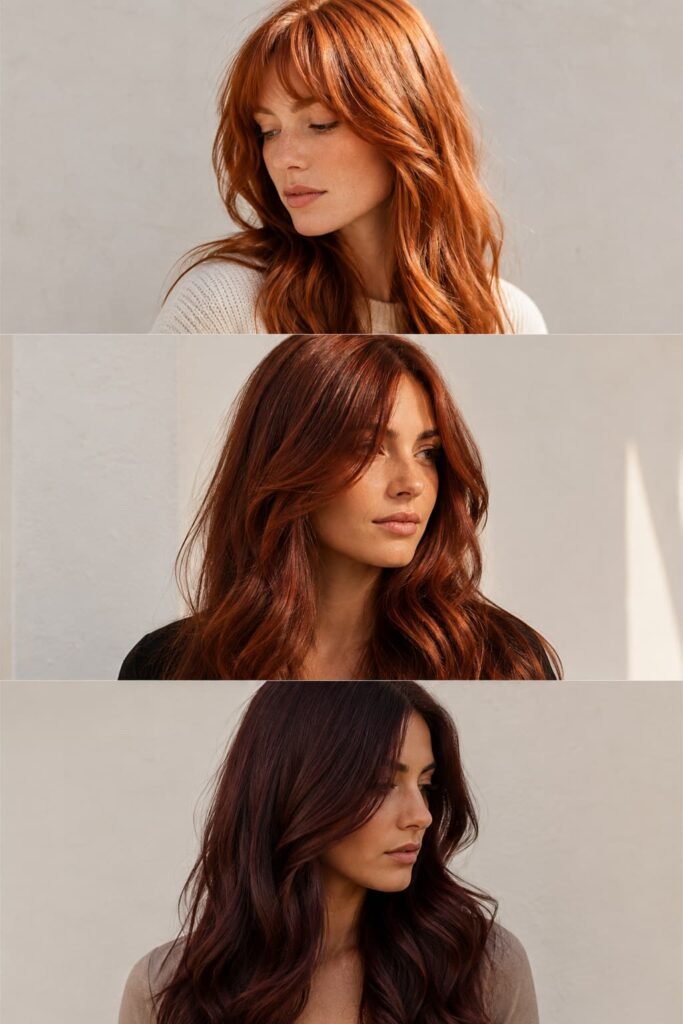
Auburn is generally a red-brown hair color. Some versions contain enough brown to look close to brunette, while others have stronger red or copper tones.
This range is one reason the word “auburn” can describe several noticeably different colors. A deep auburn may look predominantly brown in softer lighting and show more red when light hits the hair. A lighter auburn can move closer to copper while still retaining some brown depth.
Auburn can be used as an all-over color or combined with darker and lighter tones to create dimension.
How Auburn Differs From Copper, Burgundy, and Mahogany
Auburn, copper, burgundy, and mahogany all belong to related red or red-brown color families, but their dominant tones are different.
Auburn generally balances brown with red. It may range from medium reddish brown to a deeper red-brown shade.
Copper usually appears brighter and warmer, with more orange, golden, or vivid red tones and less obvious brunette depth.
Burgundy tends to move toward deeper wine-red, berry, or violet-influenced tones. Compared with many auburn shades, it commonly looks cooler and more saturated.
Mahogany usually combines deep brown and red, sometimes with a subtle violet or wine-toned quality. It can look close to dark auburn, so the distinction may be subtle in some color formulations.
Hair-color names are not completely standardized. A shade called “mahogany auburn” by one brand or salon may look somewhat different from a similarly named shade elsewhere. Reference images can therefore be more useful than relying on the shade name alone.
Light, Medium, and Dark Auburn Explained
The depth of auburn changes how much contrast and red warmth are visible.
Light auburn combines a lighter brown base with red or copper warmth. It can look brighter and softer than traditional deep red-brown shades.
Medium auburn usually keeps brown and red in a more balanced range. This is often what people picture when they think of classic auburn hair.
Dark auburn places the red tones over a deeper brunette base. The color may look primarily brown in some lighting, with red reflections becoming more noticeable as the hair moves or catches brighter light.
None of these depths represents a single exact formula. Within each category, the color can lean more brown, red, copper, or muted depending on the intended result.
Auburn Hair Color Ideas to Consider
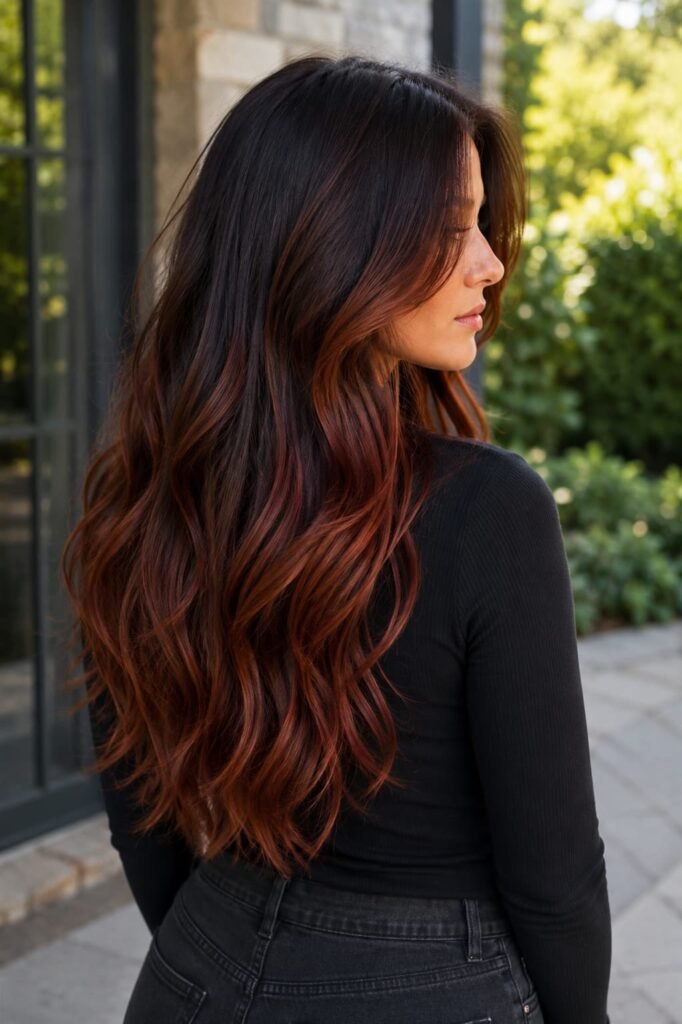
The following ideas show how changing the color depth, undertone, placement, or technique can create meaningfully different versions of auburn hair.
1. Classic Medium Auburn
Classic medium auburn balances warm brown and red without pushing strongly toward either very dark brunette or bright copper.
This color can work as a fairly consistent root-to-end shade, making the red-brown combination the main feature rather than using obvious highlights.
On straight hair, the shade may look smooth and uniform. Waves or curls can reveal slightly different red and brown reflections as light reaches different sections of the hair.
This is a useful reference point for someone who wants recognizable auburn without moving to the lightest or darkest end of the color range.
2. Dark Auburn Brown
Dark auburn brown keeps brunette depth dominant while adding noticeable red warmth.
Instead of looking like bright red hair, the color may initially read as deep brown. Red tones can become more visible in brighter lighting or through the mid-lengths and ends.
This direction may appeal to someone who wants to stay close to a dark brunette appearance while introducing a warmer red-brown dimension.
The amount of visible red can be adjusted. A muted version may remain quite subtle, while a richer dark auburn can show stronger red reflections throughout the hair.
3. Light Auburn
Light auburn moves toward the brighter side of the red-brown spectrum.
The brown base is lighter, while red and sometimes copper warmth becomes easier to see. The finished shade may range from a soft light reddish brown to a more noticeable warm auburn.
It differs from pure copper because some brunette depth remains in the color.
Starting hair color matters when considering this direction. Someone beginning with very dark hair may require a different coloring process than someone whose hair is already light brown or blonde.
4. Copper Auburn
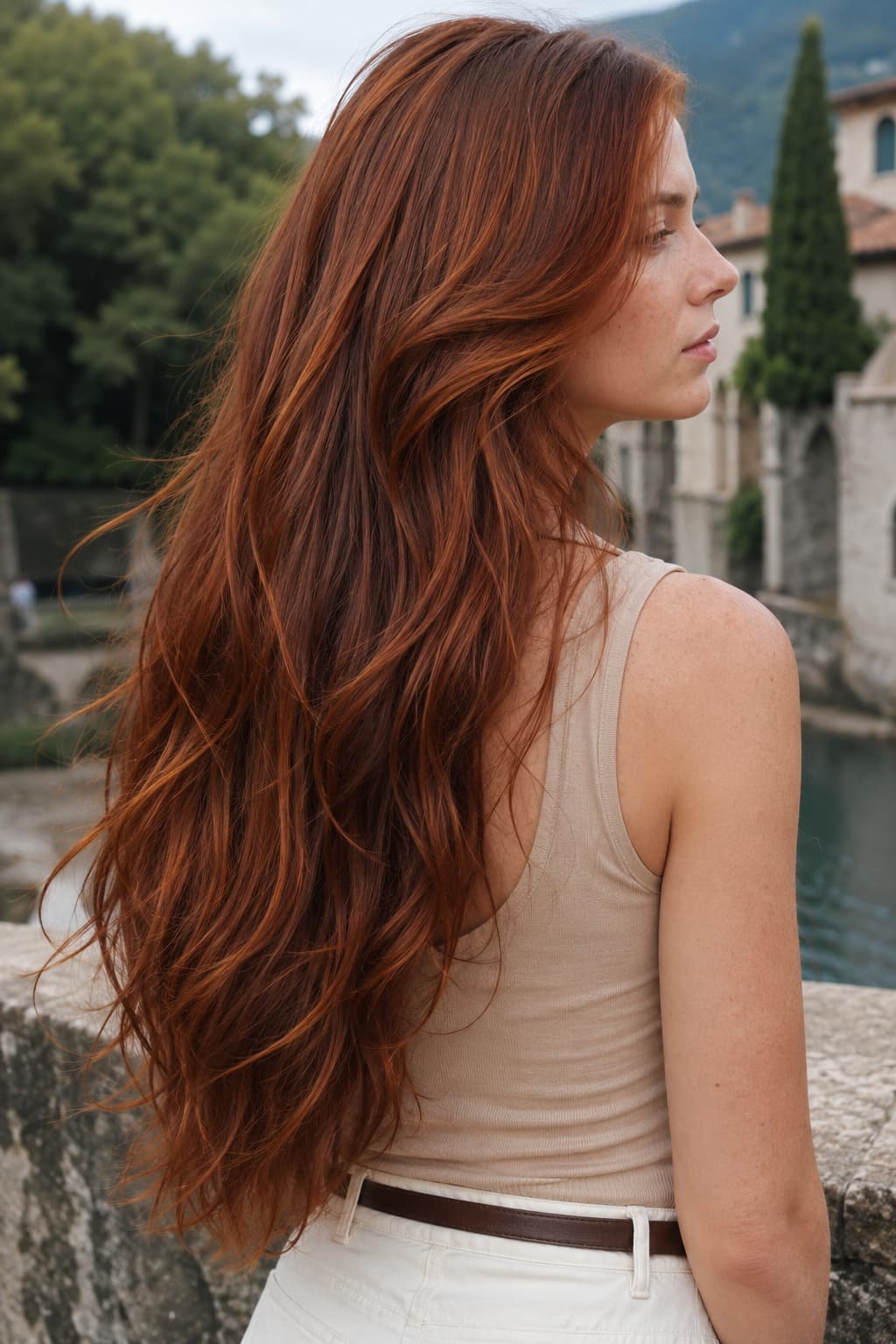
Copper auburn combines the brown-red character of auburn with stronger copper warmth.
The result may show orange-red or golden-red reflections while still retaining enough brown depth to distinguish it from a fully copper shade.
The copper influence can be subtle or prominent. A brown-dominant version can appear like auburn with warm copper reflections, while a brighter version may sit much closer to copper hair.
Waves and layered styles can make the variation between deeper auburn and brighter copper tones easier to see.
5. Chocolate Auburn
Chocolate auburn starts with a rich brown foundation and adds controlled red warmth.
Compared with classic medium auburn, this version usually emphasizes brown more heavily. The red is used to warm the brunette base rather than becoming the dominant color.
This can create a deeper dimensional effect, especially when the auburn tones are visible through selected sections rather than applied as one completely uniform shade.
Chocolate auburn may be considered by someone who prefers rich brunette hair but wants a warmer red-brown direction.
6. Mahogany Auburn
Mahogany auburn moves deeper and slightly cooler than many copper-influenced auburn shades.
It combines brown and red with a darker, richer finish. Depending on the color formulation, a subtle wine or violet influence may also be visible.
This gives mahogany auburn a different character from copper auburn. Copper versions emphasize orange-red warmth, while mahogany versions generally appear deeper and less golden.
Because dark auburn and mahogany can overlap visually, reference photos are useful when deciding how much brown, red, or cooler depth is preferred.
7. Deep Red-Brown Auburn
Deep red-brown auburn gives the red component more presence while maintaining enough brown to keep the shade within the auburn family.
Unlike dark auburn brown, where brunette depth remains the strongest visual feature, this variation makes the red more noticeable across the overall color.
It can look particularly rich on medium to dark bases because the deeper foundation supports the red without creating a very bright finish.
The balance can still vary. Some versions may appear like dark brunette with red reflections, while others can look clearly red-brown from a distance.
8. Soft Auburn Brown
Soft auburn brown is a more muted alternative to vivid red-brown hair.
The color keeps a natural-looking brown foundation with a restrained amount of warm red. Instead of creating strong contrast, the tones are blended closely together.
This may suit someone who likes the idea of auburn but does not want red to become the main feature.
The effect can be especially subtle when the auburn depth stays close to the existing brunette base. Hair movement and lighting may reveal the warmer tones more clearly than a straight-on view.
9. Auburn Balayage on Brunette Hair
Auburn balayage allows much of a brunette base to remain visible while adding red-brown color through selected lengths.
Instead of coloring the hair uniformly from the roots, auburn can be concentrated through the mid-lengths, ends, or specific surface sections.
The contrast can be adjusted according to the desired result. Dark brown hair with deep auburn balayage can appear softly blended, while brighter auburn or copper-red sections can create a more noticeable difference.
Balayage placement also allows the brunette roots and auburn lengths to remain visually distinct without creating a sharp horizontal color change.
10. Auburn Highlights on Dark Brown Hair
Auburn highlights introduce individual red-brown sections through a dark brunette base.
Fine highlights can add subtle warmth without changing the overall dark appearance dramatically. Wider sections can make the auburn color easier to see and create stronger contrast.
Placement matters. Highlights around the upper layers can make the auburn more noticeable, while pieces distributed through the mid-lengths and ends can create a softer dimensional effect.
This approach differs from all-over auburn because the original dark brown remains an important part of the finished look.
11. Fine Auburn Ribbons
Fine auburn ribbons use narrow sections of red-brown color rather than larger, more obvious highlights.
The pieces can be distributed through a brunette base so that auburn appears intermittently as the hair moves.
Because the sections are narrow, this technique can create a more blended appearance than chunky highlights or high-contrast face-framing color.
The auburn ribbons can stay close to the depth of the base for subtle warmth or become slightly brighter to make the individual pieces more visible.
12. Auburn Face-Framing Highlights
Face-framing highlights concentrate auburn color around the front sections of the hair.
Instead of spreading the same amount of red-brown color throughout the entire head, this placement makes the auburn more noticeable near the hairline and front layers.
The rest of the hair can remain brunette, dark auburn, or another related shade.
For a softer effect, the face-framing pieces can stay close to the depth of the base. For more contrast, brighter auburn or copper-auburn sections can be used.
The visual effect will also depend on the haircut. Curtain bangs, front layers, and longer framing pieces can each display the color differently.
13. Auburn Ombre
Auburn ombre creates a gradual transition between a darker root area and warmer red-brown lengths.
For example, brunette roots can move into auburn through the middle of the hair before becoming more noticeable toward the ends.
This differs from scattered highlights because the color change follows a broader progression through the length rather than appearing as individual highlighted pieces.
The transition can remain subtle by using closely related brown and auburn tones, or it can create more contrast by moving from deep brunette roots to brighter copper-auburn ends.
Longer hair provides more space for a gradual transition, although ombre can also be adapted to medium lengths.
14. Auburn with Copper Highlights
Auburn with copper highlights combines a red-brown base with lighter, warmer pieces.
The auburn provides depth, while copper introduces brighter orange-red or golden-red accents. This creates more tonal separation than a single auburn shade.
Copper pieces can be placed around the face, through the upper layers, or selectively through the lengths.
Using only a few copper sections can keep the overall appearance predominantly auburn. Increasing the amount or brightness of the copper can shift the look toward a warmer and more vivid finish.
This option is distinctly different from copper auburn all-over color because the contrast between the auburn base and copper highlights remains visible.
15. Auburn with Subtle Caramel Accents
Auburn can also be combined with small amounts of caramel-toned color.
In this variation, auburn remains the main red-brown shade while caramel adds lighter golden-brown contrast. The combination is less red-focused than auburn with copper highlights because caramel contributes brown and golden warmth rather than strong red-orange tones.
Fine caramel sections can be placed around the face or through selected lengths to break up a deeper auburn base.
The amount of caramel matters. A few accents can add lightness while keeping auburn dominant, whereas extensive caramel highlighting may shift the overall look toward a brunette-highlighted color instead.
For someone comparing warm multidimensional options, this approach shows how auburn can be combined with lighter brown tones without relying entirely on red or copper contrast.
How Auburn Looks on Different Hair Lengths
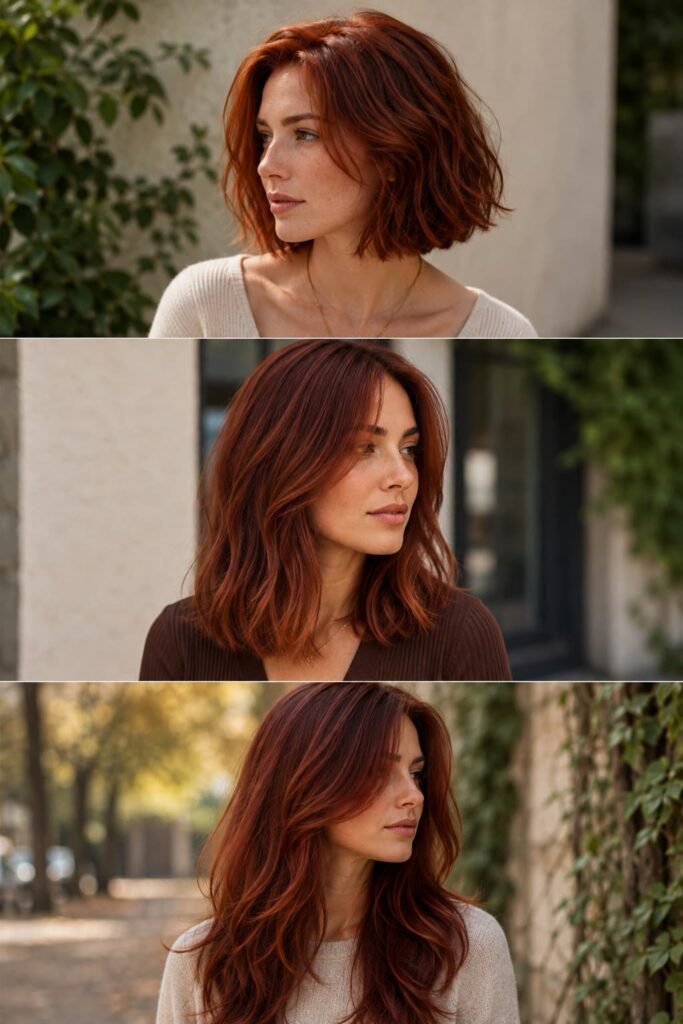
Hair length can change how auburn color is displayed. Short cuts may give the color a more concentrated appearance, while longer hair provides more space for tonal transitions, highlights, and lighter ends.
The haircut itself also matters. Layers, blunt ends, bangs, and face-framing sections can affect where different auburn tones become most visible.
Auburn on Short Hair and Bobs
Auburn can give short hair a clear, defined color focus because there is less length separating the roots from the ends.
On a blunt bob, an all-over auburn shade can create a fairly consistent red-brown appearance. A layered or textured bob may reveal more variation as shorter pieces move over darker or lighter sections underneath.
Highlights can also be adapted to short hair. Fine auburn pieces through a brunette bob may add warmth while keeping much of the darker base visible.
For a stronger contrast, brighter copper-auburn sections can be placed through the front or upper layers. A more subtle version may keep the highlighted pieces close to the depth of the base color.
Auburn on Medium-Length Hair and Lobs
Medium-length hair provides enough space for both solid auburn color and more gradual placement techniques.
A lob can show an even auburn shade from roots to ends, but it can also work with darker roots, balayage, face-framing color, or lighter sections through the ends.
Layers may make tonal differences easier to see because individual sections can catch the light separately. On a more blunt medium-length cut, the color may appear smoother and more continuous.
Someone who wants to keep part of a brunette base may prefer auburn through selected mid-lengths and ends rather than changing the entire head to one shade.
Auburn on Long Hair
Long hair provides more space for gradual shifts in color.
Auburn can be worn as one consistent shade, but longer lengths can also display balayage, ombre, highlights, and darker-to-lighter transitions clearly.
For example, deep brunette roots can move into medium auburn through the lengths, with slightly brighter red or copper tones toward the ends. Another option is to keep the overall color dark and introduce fine auburn pieces throughout the length.
Long layers can make these tonal differences more noticeable as the hair moves. A one-length cut may create a more continuous block of color.
The amount of dimension is a style choice rather than a requirement. Long auburn hair can be simple and uniform or built around several related tones.
How Hair Texture Can Change the Appearance of Auburn
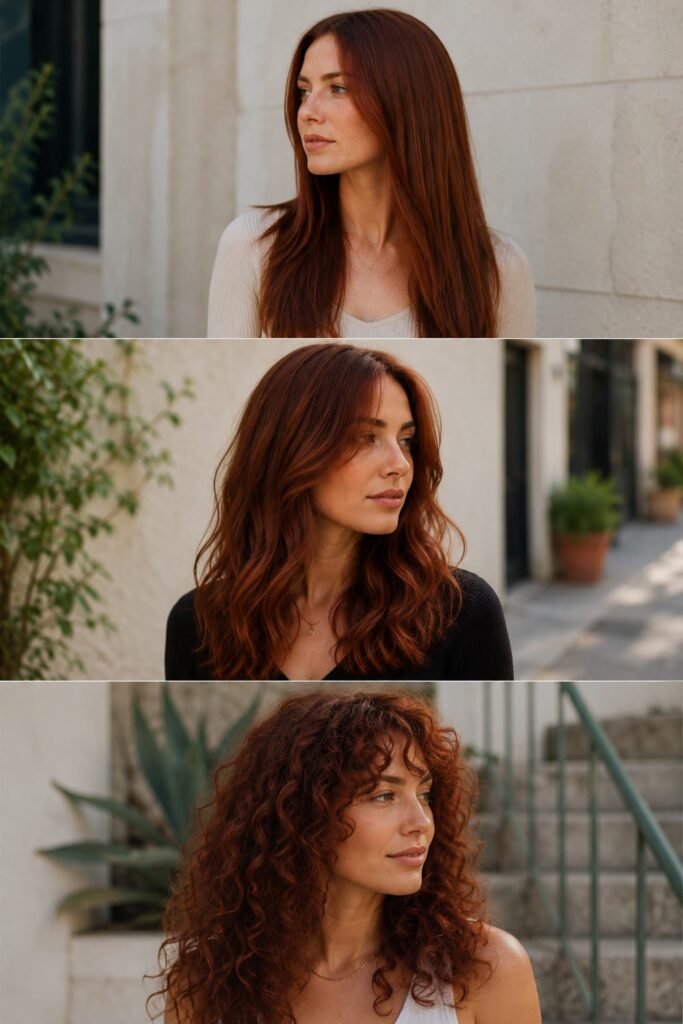
Hair texture does not determine whether someone can wear auburn, but it can affect how the color is visually displayed.
Straight, wavy, and curly hair reflect light differently, and the placement of highlights or balayage may appear more or less defined depending on how the hair is styled.
Straight Auburn Hair
Straight hair can show color placement clearly, especially when the surface is smooth.
An all-over auburn shade may appear fairly even from roots to ends. Fine highlights, face-framing pieces, or darker roots can create more visible separation when the hair is worn straight.
Straight styling can also make the transition between different color sections easier to see. For this reason, precise highlight placement may appear more defined than it does on heavily textured styles.
A muted auburn brown can create a softer result, while copper or lighter red pieces can create stronger contrast against a deeper base.
Wavy Auburn Hair
Waves can make tonal variation more noticeable because different sections of hair catch the light at different angles.
Auburn balayage, fine ribbons, and highlights may appear more dimensional when the hair has bends and movement. Deeper sections can sit beside brighter red-brown or copper pieces without looking like one flat shade.
Soft waves can work with both subtle and high-contrast color. The final effect depends more on the actual shade placement than on the wave pattern itself.
Someone who wants visible dimension may prefer a combination of closely related auburn tones rather than one uniform color.
Curly Auburn Hair
Curly hair can display color through individual curls and sections, creating a different visual effect from straight hair.
Highlights may appear as separate ribbons around particular curls, while all-over auburn can show varying levels of red and brown as the curls turn toward and away from the light.
Placement becomes especially important when the goal is to make certain pieces more visible. Face-framing curls, upper sections, and the ends can each be used to display lighter or brighter auburn tones.
The final appearance can vary with curl pattern, haircut, color placement, and styling. There is no single highlighting pattern that works the same way on every type of curly hair.
Auburn Hair Color Ideas for Brunettes
Brunette hair provides several ways to introduce auburn without making every section of hair the same red-brown shade.
The approach can range from a small tonal change to a much stronger contrast. Starting depth, previous color, and the desired brightness can affect what coloring process may be needed.
Keeping a Dark Brunette Base
Keeping a dark brunette base allows brown to remain the dominant color while auburn adds warmth through selected areas.
One possible option is to retain the natural-looking root depth and add deep auburn through the lengths. This can create a noticeable red-brown shift without removing all of the original brunette character.
Another option is to use auburn only around the front, through the ends, or across selected surface sections.
A deep auburn close to the brunette base can create a softer transition. A brighter red or copper-auburn shade will produce more visible contrast.
This approach may appeal to someone who likes dark hair and wants auburn to act as an accent rather than the main color.
Adding Auburn Through Highlights
Highlights allow auburn to be added in separate sections while leaving the brunette base visible between them.
Very fine highlights may create subtle warmth, particularly when the auburn shade is close in depth to the brown underneath.
Larger or brighter highlights can produce a more defined red-brown effect. Placement around the face may make the color more noticeable from the front, while highlights through the lengths can distribute the warmth more evenly.
The amount of contrast is flexible. Auburn highlights do not need to be dramatically lighter than the brunette base to be visible.
For someone comparing options, it can help to decide whether the goal is a mostly brunette result with red warmth or a more obvious mix of brown and auburn.
Using Balayage for a More Blended Transition
Balayage can be used to introduce auburn through selected areas rather than applying one shade evenly from roots to ends.
A brunette base can remain visible near the roots while auburn becomes more noticeable through the mid-lengths and ends. The placement can be kept soft or made more contrasting depending on the desired appearance.
Deep auburn balayage may blend closely with dark brown hair, while brighter copper-auburn pieces can create a stronger difference.
This approach is distinct from traditional-looking highlights because the color can be distributed more gradually across the lengths rather than appearing as repeated sections from near the roots downward.
The exact result depends on the starting base, chosen auburn depth, placement, and overall color plan.
How to Choose an Auburn Shade
Choosing an auburn shade is mainly about deciding how much brown, red, brightness, and contrast you want to see.
Instead of looking for one shade that is supposedly right for everyone, it is more useful to compare the desired result with the existing hair color and preferred level of change.
Consider Your Starting Hair Color
Starting hair color can influence how an auburn shade appears and what may be required to reach it.
Someone with medium or dark brown hair may be able to stay relatively close to their existing depth by choosing a deep or brown-dominant auburn.
A significantly lighter or brighter auburn may require a different approach, particularly when the starting hair is very dark.
Lighter starting hair may show red and copper tones more readily, but the final balance still depends on the chosen color and application method.
Previously colored hair can add another variable because existing artificial pigment may affect the result. For a major color change, the previous color history is worth considering rather than judging the expected result from an inspiration image alone.
Decide How Much Red You Want
Not every auburn shade contains the same amount of visible red.
For a mostly brunette appearance, consider dark auburn brown, chocolate auburn, or another muted red-brown direction.
Classic auburn places brown and red in a more noticeable balance.
For stronger warmth, copper-auburn or a brighter red-brown shade can move the color further toward the red side of the spectrum.
Thinking in terms of red intensity can be more useful than relying only on shade names, since names such as “auburn,” “mahogany,” and “chestnut” can vary between color ranges.
Choose Between Subtle and High-Contrast Color
A subtle auburn look usually keeps the chosen red-brown shade relatively close to the existing base.
For example, deep auburn ribbons through dark brunette hair may create visible warmth without a dramatic change in depth.
Higher contrast can come from brighter highlights, lighter face-framing sections, copper accents, or a stronger difference between the roots and ends.
Neither approach is automatically better. Some people may prefer a blended change that stays close to their original color, while others may want the auburn sections to be immediately noticeable.
Reference images can help define what “subtle” or “bold” means for the specific look being considered.
Compare All-Over Color, Highlights, and Balayage
The coloring method changes where auburn appears and how much of the existing base remains visible.
All-over auburn color makes red-brown the main shade across most or all of the hair. It may be suitable for someone who wants a more complete color change rather than isolated auburn sections.
Auburn highlights keep parts of the existing base visible while adding separate red-brown pieces. The highlights can be fine and subtle or more defined.
Auburn balayage can keep more depth near the roots and introduce auburn gradually through selected lengths and ends. The transition may appear soft or more noticeable depending on the chosen shades and placement.
The most suitable direction depends on the starting color, desired contrast, amount of auburn wanted, and personal maintenance preferences. Comparing these elements before choosing a color can make it easier to identify the type of auburn look that matches the intended result.
Styling Ideas That Can Show Auburn Dimension
Styling can change how auburn tones are seen without changing the actual hair color. Movement, bends, curls, and smooth surfaces can reveal highlights, darker sections, and warmer reflections in different ways.
The most useful style depends on the haircut, texture, color placement, and the type of finish someone prefers.
Soft Waves
Soft waves can make different auburn tones easier to notice because sections of hair face the light at different angles.
On dimensional color, waves may show the contrast between a deeper brunette or auburn base and lighter red-brown, copper, or caramel pieces. Balayage can also become more visible through the bends of the hair.
A softer wave pattern may create a blended appearance, while more defined waves can separate individual highlighted sections more clearly.
This styling option can work particularly well when the goal is to show tonal variation rather than make the hair look like one continuous block of color.
Sleek Straight Styles
Straight styling can give auburn hair a smoother, more uniform appearance.
On an all-over color, this may emphasize the overall depth and red-brown tone. When highlights or face-framing pieces are present, straight hair can make their placement easier to see.
A sleek finish may also show the transition between darker roots and lighter lengths more clearly than a heavily textured style.
Someone who prefers a clean, defined appearance may favor straight styling, while someone who wants more visible movement may prefer waves or curls.
Loose Curls
Loose curls can show several auburn tones within the same hairstyle.
As curls turn in different directions, deeper and lighter sections may become more noticeable. Copper highlights, auburn ribbons, or balayage can appear across individual curls rather than blending into one flat shade.
Larger curls may create broad areas of visible color, while smaller curls can break the shade into more detailed sections.
The final effect depends on the curl pattern and where the color has been placed.
Braids and Half-Up Styles
Braids can place different strands beside one another, which may make tonal differences easier to see.
A braid containing brunette, auburn, and lighter red-brown sections can show how those colors interact throughout the length.
Half-up hairstyles offer another way to display dimension. Pulling back the upper sections can reveal color underneath while still keeping some of the front and lower lengths visible.
These styles may be useful when the hair contains hidden highlights, darker underneath sections, or lighter pieces through the ends.
Auburn Hair Color Maintenance Considerations
Maintenance depends on more than the shade name alone.
An all-over auburn color, subtle brunette highlights, and a balayage with darker roots can each grow out and change in appearance differently. Starting hair color, color placement, styling habits, washing routine, and the products used can also affect the overall appearance over time.
There is no single maintenance schedule that applies to every auburn look.
Root Contrast and Color Placement
Root contrast becomes more noticeable when the colored hair differs clearly from the natural or existing root shade.
For example, someone with naturally dark brown hair who chooses a much lighter auburn may notice a stronger distinction as new growth appears. A deep auburn that stays close to the natural brunette depth may create a softer visual difference.
Color placement also matters.
All-over color brings auburn close to the root area, while balayage can leave more of the original root color visible. Highlights can fall somewhere between these approaches depending on where they begin and how densely they are placed.
Someone who prefers less obvious root contrast may want to consider a shade or placement that stays closer to the existing base.
Heat Styling and Color-Treated Hair
Frequent high-heat styling can affect both the condition and appearance of color-treated hair.
If blow-dryers, straighteners, or curling tools are part of the regular styling routine, using them thoughtfully and following the instructions for any heat-protection product may help reduce unnecessary heat exposure.
The amount of heat required can vary with hair texture, tool type, and the desired style. More heat is not automatically better.
Auburn hair does not need to be styled with heat to show dimension. Air-dried texture, braids, twists, and other low-heat or heat-free styles can also display different tones.
Why Maintenance Can Vary by Coloring Method
Different coloring methods create different patterns of new growth and color change.
All-over color places the chosen shade across most or all of the hair, including near the root area. As the natural hair grows, the difference between the existing color and new growth may become visible.
Highlights leave parts of the original base between colored sections. Depending on their placement and contrast, new growth may appear more blended than with one uniform root-to-end shade.
Balayage can maintain more of the natural or existing root color while placing auburn through selected lengths. This can create a different grow-out appearance from color applied directly through the root area.
Maintenance also depends on how much contrast exists between the chosen auburn and the starting hair color. A subtle change and a high-contrast transformation should not be expected to look or age in exactly the same way.
What to Consider Before Going Auburn
Choosing auburn involves more than selecting a shade from an inspiration photo.
Starting color, previous coloring, desired depth, amount of red, placement, and maintenance preferences can all influence which direction makes sense.
Previous Hair Color
Previous hair color can affect how a new shade develops.
Hair that has already been colored may respond differently from untreated hair, especially when the new goal is significantly lighter or different in tone.
For example, changing from a deep artificial brunette to a noticeably lighter auburn may involve different considerations than adding deeper auburn tones to naturally medium-brown hair.
Because previous color can affect the process, it is useful to consider the full color history rather than focusing only on the current visible shade.
Major changes involving previously colored hair may be more complex than subtle tonal adjustments.
Desired Lightness or Depth
Auburn can range from relatively light and copper-influenced to deep red-brown.
Before choosing a specific direction, decide whether the goal is to stay near the existing depth or make the hair noticeably lighter or darker.
Someone with dark brunette hair who wants a subtle result may prefer deep auburn or brown-dominant red tones.
Someone seeking a brighter appearance may be drawn to light auburn, copper-auburn, or lighter highlighted sections.
The starting color can influence how easily a particular level of brightness can be reached, so inspiration photos should be treated as visual references rather than guaranteed outcomes.
Maintenance Preferences
Maintenance preferences can help narrow down the coloring method.
Someone comfortable with noticeable root contrast may prefer an all-over auburn shade that differs clearly from the natural color.
Someone who wants to keep more of their existing brunette base may prefer highlights, balayage, or selected face-framing sections.
The amount of contrast also matters. A color close to the natural depth may grow out less noticeably than a much lighter or more contrasting shade.
There is no universally low-maintenance auburn technique. The practical choice depends on the starting color, placement, desired appearance, and styling routine.
Using Reference Photos for Color Discussions
Shade names alone can be difficult to interpret because terms such as auburn, copper, mahogany, chestnut, and red-brown can overlap.
Reference photos can make the desired color easier to communicate.
When choosing examples, look beyond the overall hair color. Notice:
- How dark or light the base appears
- How much red is visible
- Whether the red leans copper, neutral, or deeper
- Where highlights begin
- Whether the roots remain dark
- How much contrast exists between sections
- Whether the example uses all-over color, highlights, or balayage
It can also help to compare several images rather than relying on one photo. Lighting, styling, starting color, and image editing can all affect how a hair color appears in a photograph.
Frequently Asked Questions
Is auburn hair more red or brown?
Auburn contains both red and brown.
Some shades are brown-dominant and may look close to brunette with red warmth. Others contain stronger red or copper tones and appear more noticeably red.
Because auburn covers a range of shades, there is no fixed red-to-brown balance that applies to every auburn color.
What is the difference between auburn and copper hair?
Auburn generally combines brown and red, while copper usually emphasizes brighter orange-red or golden-red tones.
A dark auburn may contain considerable brunette depth, whereas bright copper may have much less visible brown.
The two colors can overlap. Copper-auburn, for example, keeps some red-brown depth while introducing stronger copper warmth.
Is auburn the same as burgundy?
No. They are related red-toned colors, but they usually have different overall appearances.
Auburn generally combines warm red with brown.
Burgundy usually moves toward deeper wine, berry, or violet-influenced red tones.
Very deep auburn and some burgundy shades can look similar under certain lighting, so the distinction is not always sharp.
Can brunettes have auburn hair?
Yes. Auburn can be incorporated into brunette hair in several ways.
A brunette base can be changed toward an overall red-brown shade, or part of the brown can remain visible through highlights, balayage, face-framing pieces, or auburn-toned lengths.
Someone who wants a subtle change may prefer an auburn depth close to the existing brunette shade. Brighter red or copper tones can create stronger contrast.
Can brown hair have auburn highlights?
Yes. Auburn highlights can be placed through brown hair while leaving much of the brunette base visible.
Fine highlights may create subtle red warmth, while wider or brighter pieces can make the auburn more noticeable.
The effect depends on the shade difference, placement, starting color, and amount of highlighted hair.
Does dark hair need to be lightened for auburn?
Not always.
If the goal is a deep auburn that remains close to the starting depth, significant lightening may not be necessary in every case.
A much lighter or brighter auburn may require a different coloring process, particularly on very dark hair. Previous permanent color can also affect what is possible.
Because starting conditions vary, one coloring approach should not be assumed to work for every person.
What is the difference between light and dark auburn?
Light auburn contains less overall depth and may show more noticeable copper or brighter red warmth.
Dark auburn combines red tones with a deeper brown base and may look closer to brunette, particularly in softer lighting.
There are many shades between the two, so light and dark auburn should be viewed as parts of a spectrum rather than two fixed colors.
Can auburn hair include highlights or balayage?
Yes. Auburn does not need to be worn as one solid shade.
Highlights can add lighter or more defined red-brown pieces through an existing base. Balayage can introduce auburn gradually through selected lengths while allowing darker roots or brunette sections to remain visible.
Copper, deeper red-brown, or lighter warm-brown tones can also be combined with auburn when the goal is a more dimensional color.
The most suitable combination depends on the starting color, desired contrast, and preferred overall appearance.