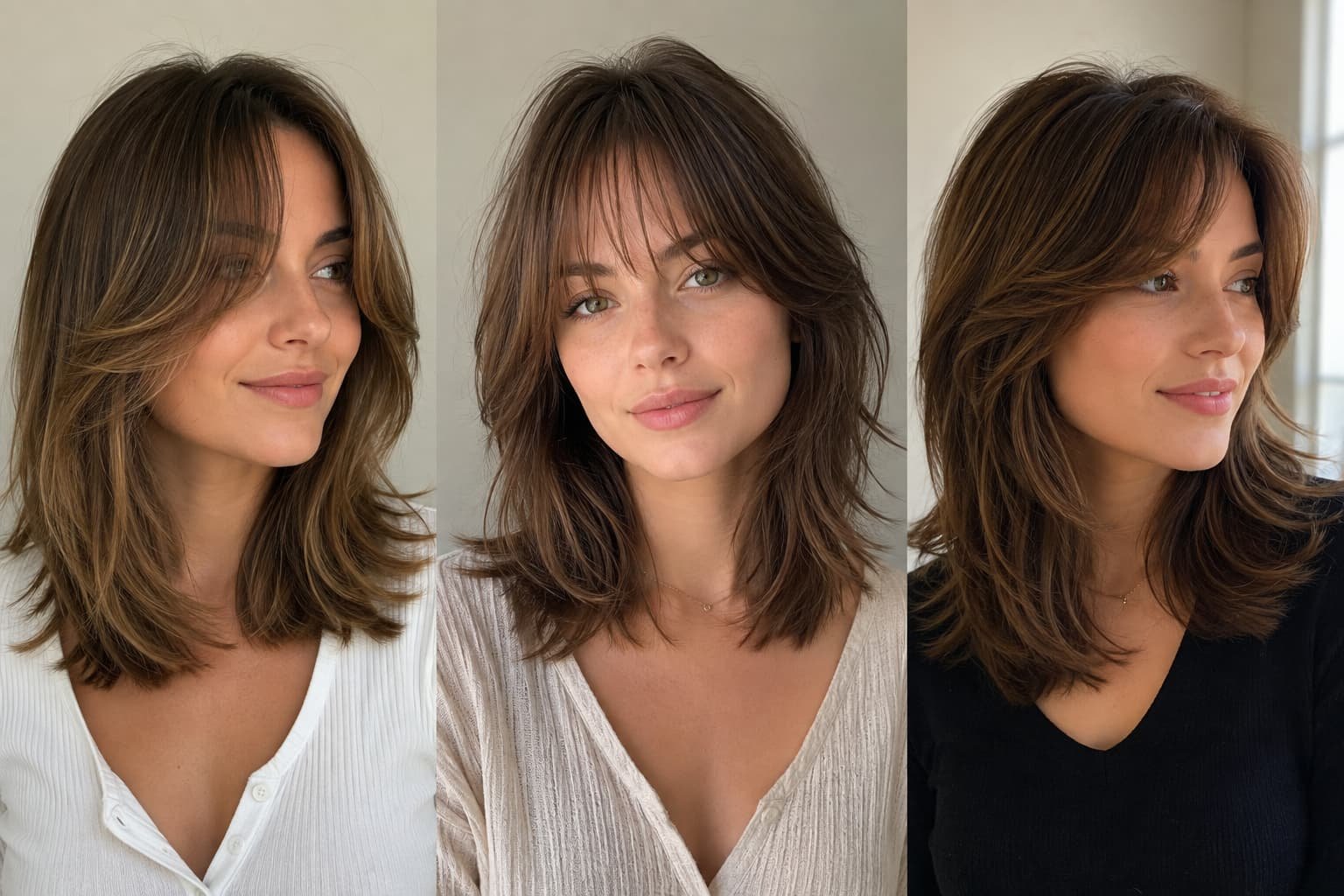
Medium length layered hair combines an in-between length with shorter sections placed through the haircut to create shape, movement, and visible texture. The layers can look soft and blended or more defined depending on their length, placement, and the natural texture of the hair.
A medium layered cut can be created on straight, wavy, or curly hair, but the finished appearance will not be identical on every texture or density. Some people may prefer long layers for a smoother outline, while others may like shorter layers that create more visible separation.
What Is Medium Length Layered Hair?
Medium length layered hair keeps the main length around the shoulder or collarbone area while introducing sections of different lengths.
The layers may sit mainly around the face, begin through the lower lengths, or continue through more of the haircut. This creates a different shape from a one-length cut, where the ends follow a more uniform line.
Layering is not one specific hairstyle. The placement and length of the layers can be adjusted to create anything from a subtle shape to a more textured finish.
How Medium Length Is Usually Defined
There is no single fixed measurement that defines medium-length hair. In hairstyle discussions, the term commonly includes lengths around the shoulders, collarbone, or slightly below.
Examples may include:
-
- shoulder-length hair
- collarbone-length hair
- slightly below-the-collarbone hair
Natural texture can also affect where the hair appears to fall. Waves and curls may sit differently from straight hair, so the visible finished length can vary.
For haircut planning, describing where you want the ends to fall is usually clearer than relying only on the term “medium length.”
What Layers Change in the Overall Shape
Layers introduce different lengths within the haircut, which changes how the overall shape appears.
Longer layers tend to create a more gradual transition between sections. Shorter layers create a larger difference between lengths, making the layered shape more noticeable.
Placement also matters. Shorter pieces near the front can emphasize the face-framing shape, while layers that begin farther down the hair can keep more of the haircut looking uniform.
The final effect depends on the combination of layer placement, natural texture, density, and styling. A layered cut may appear smooth on one person and more separated or textured on another.
Main Types of Layers for Medium Length Hair
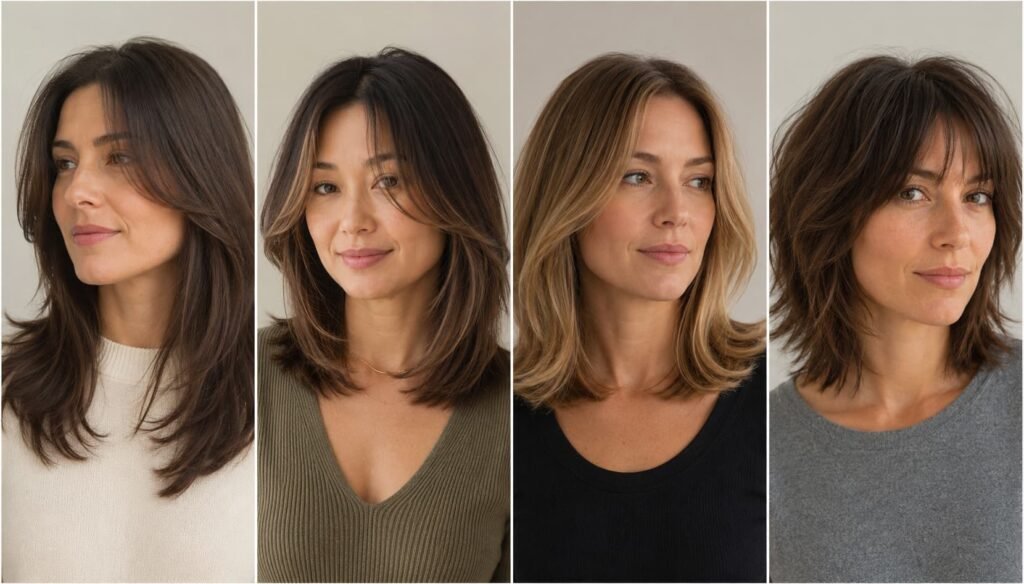
Medium hair can be layered in several ways. The main differences come from where the shortest pieces begin, how much length separates each layer, and whether the sections blend softly or remain more visible.
Knowing these differences can make it easier to choose the amount of layering that matches the look you want.
Long Layers for Subtle Movement
Long layers keep the shorter sections relatively close to the main length of the haircut.
Because the difference between sections is smaller, the transition often appears softer and less dramatic than it does with shorter layers. This is one possible option for someone who wants some visible movement while keeping much of the overall length.
Long layers may begin around the chin, shoulders, or lower sections depending on the haircut. They can be worn straight, softly waved, or styled with a rounded finish.
Face-Framing Layers Around the Front
Face-framing layers are shorter pieces placed around the front of the haircut. They gradually connect with the longer sections rather than forming a separate full fringe.
The shortest pieces may begin near the cheekbones, jawline, chin, or lower. Each starting point creates a different visual effect, so there is no single placement that suits everyone.
Face-framing pieces can be used without adding strong layering throughout the rest of the hair. They can also be paired with curtain bangs, wispy bangs, or no bangs.
The final look can change depending on the parting, texture, and length of the front pieces.
Soft Blended Layers
Soft blended layers create a gradual transition between shorter and longer sections.
Instead of showing clear steps between each length, the layers connect more smoothly. This can create a subtle layered appearance for someone who does not want strong separation through the haircut.
The layers may be concentrated through the lower lengths or extended farther upward while still keeping the overall shape blended.
Straight styling can show the smooth transition clearly, while soft waves may make the individual sections more noticeable.
Choppy Layers for More Visible Texture
Choppy layers create stronger visual separation between different lengths.
The sections may appear more defined or piecey than soft blended layers, especially when the haircut is worn with waves, bends, or a tousled finish.
This type of layering can create a more textured look, but the result can vary considerably with hair density and natural texture. Someone who prefers a fuller, more uniform outline may choose less separation, while someone who wants clearly visible layers may prefer a more defined approach.
Feathered Layers with a Lighter Finish
Feathered layers create soft, flowing sections that can be styled to curve or sweep away from the face.
On medium hair, the feathered shape may be concentrated around the front or continue through the sides and lower lengths. The layers can remain subtle or become more noticeable depending on how much length separates them.
Styling can also change the appearance. A smoother finish may keep the layers understated, while outward bends or a rounded blowout-style finish can make the layered shape easier to see.
Feathered layers are one option for readers who prefer a softer transition rather than the stronger separation of a choppy cut.
How Hair Length Changes the Layered Look
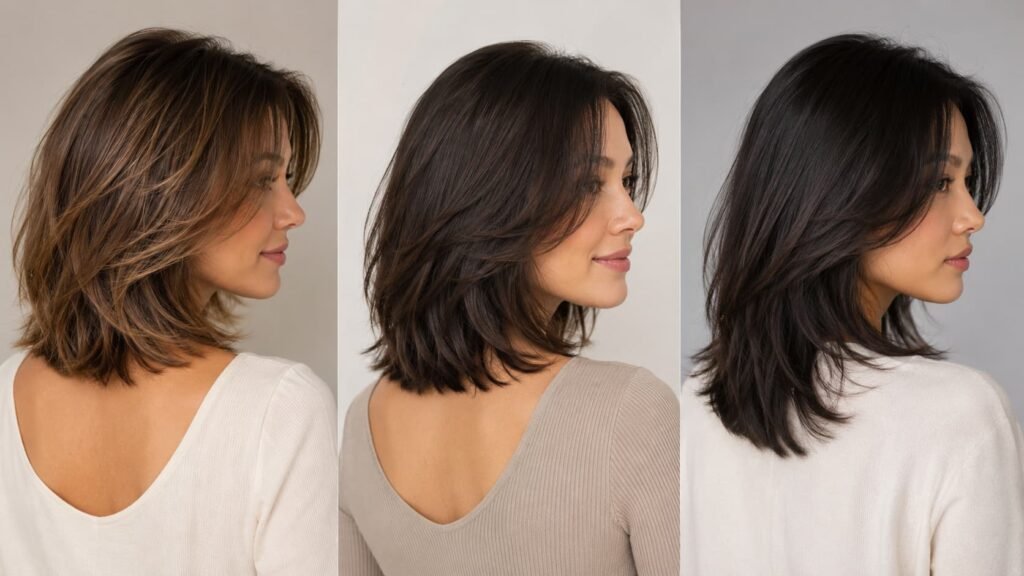
The overall length of the hair can change how layers appear and how much space there is between shorter and longer sections.
A shoulder-length cut may create a more compact layered shape, while collarbone-length or slightly longer hair allows room for more gradual transitions. Natural texture, density, and styling can also influence how visible the layers appear.
Shoulder-Length Layered Hair
Shoulder-length hair falls around the shoulder area and is one of the shorter ways to wear medium hair.
At this length, long layers can keep the shape relatively smooth, while shorter layers can create more visible separation. Face-framing pieces may also be added around the front without heavily layering the rest of the haircut.
Some people may prefer cheekbone- or chin-level pieces for a more noticeable frame, while others may choose longer sections for a softer transition.
Because the ends sit close to the shoulders, they may curve inward, flip outward, or fall more evenly depending on natural texture and styling.
Collarbone-Length Layered Hair
Collarbone-length hair provides more space between the shortest layers and the ends.
It can be worn with long blended layers, shorter face-framing pieces, or a combination of both. This length may appeal to someone who wants visible layering while keeping more overall length than a shoulder-length cut.
Soft waves can make the different sections easier to see, while straighter styling may create a smoother outline.
A collarbone-length cut may also fall within the broader lob category, although the final shape depends on the perimeter, layer placement, and overall length.
Slightly Longer Medium Hair with Layers
Hair that falls slightly below the collarbone can support longer and more gradual layering.
The shorter sections may begin around the chin or lower, allowing them to blend into the remaining length without creating a strongly layered appearance.
This can be one possible option for someone who wants to keep more visible length while adding shape through the front or lower sections.
Straight styling may make long layers look more blended, while waves, bends, or curved ends can make the different lengths more noticeable.
Medium Length Layered Hair with Bangs
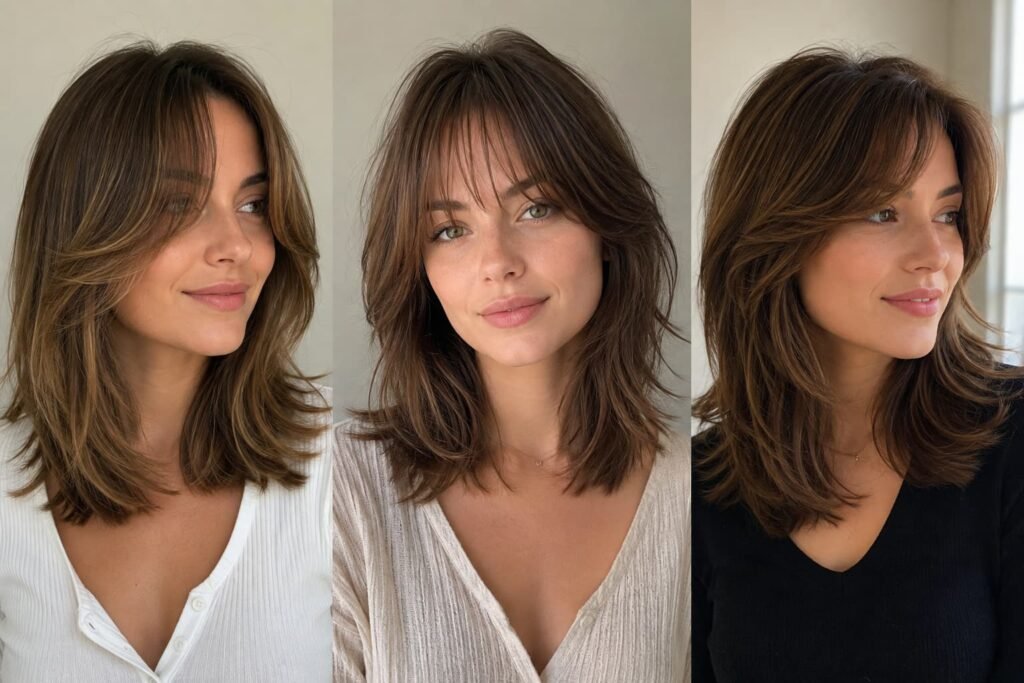
Bangs can change the front shape of a layered haircut without changing the main length.
Different fringe styles create different levels of coverage and separation around the forehead and face. Some blend closely into face-framing layers, while others create a more distinct front section.
The final appearance can vary with natural texture, density, growth pattern, parting, and styling preferences.
Curtain Bangs with Face-Framing Layers
Curtain bangs are a longer fringe style that is commonly parted near the center and becomes longer toward the sides.
When paired with face-framing layers, the fringe can transition gradually into the longer sections around the cheeks, jawline, or chin.
This combination may suit someone who wants the bangs to connect with the rest of the haircut rather than form a strong horizontal line across the forehead.
The exact length can vary. Shorter versions may sit closer to the brows or upper cheek area, while longer curtain-style pieces can extend farther down the sides of the face.
Wispy Bangs with Soft Layers
Wispy bangs use lighter, more separated sections of hair across the forehead.
They can be combined with soft blended layers when a less dense fringe is preferred. The overall effect is usually more delicate than a full blunt bang.
The fringe may fall relatively straight, curve slightly, or separate into smaller pieces depending on texture and styling.
Some people may prefer this combination when they want noticeable bangs without making the front of the haircut appear heavily structured.
Side-Swept Bangs with Medium Layers
Side-swept bangs are directed across the forehead toward one side.
They can gradually connect with face-framing layers, creating a different front shape from center-parted curtain bangs.
The fringe may be shorter and more clearly defined or long enough to blend closely with the surrounding layers.
How it falls can vary with the natural part, hair growth pattern, texture, and styling.
Medium Layers Without Bangs
Medium layered hair does not require bangs.
Without a fringe, shorter front pieces can begin around the cheekbones, jawline, chin, or lower. This allows the haircut to have face-framing shape while leaving the forehead open.
Some people may prefer longer front layers if they want fewer short sections around the face or a more gradual transition into the overall length.
A layered cut without bangs can be worn with a center part, side part, straight finish, waves, or natural texture. The final look depends on the placement of the layers and how the hair naturally falls.
How Hair Texture Affects Medium Layers
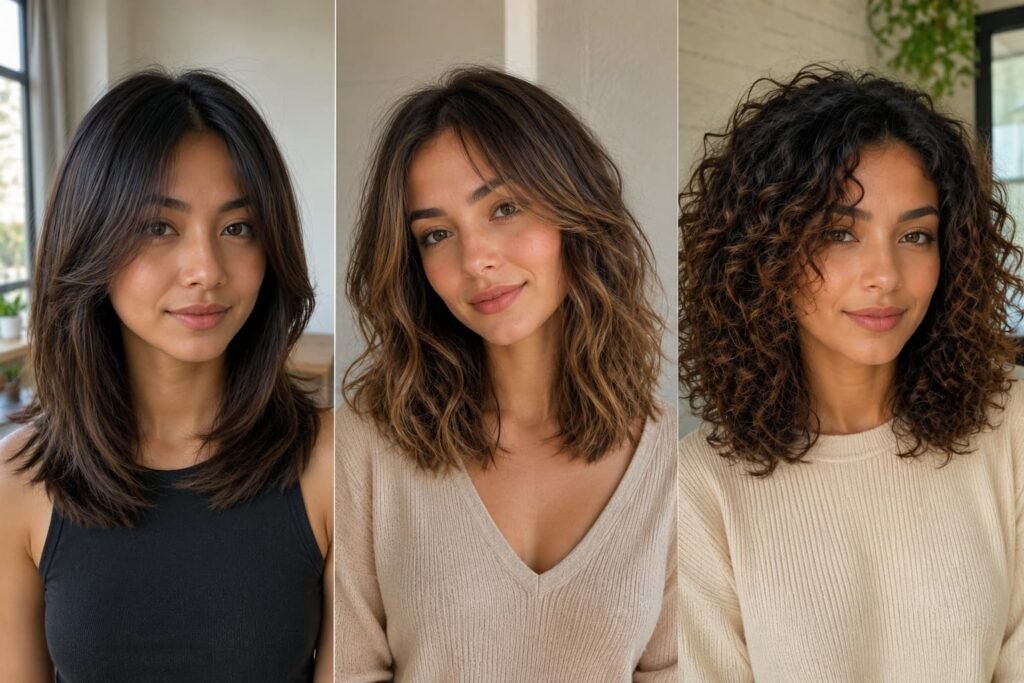
Natural texture can change how layered sections fall and how clearly the different lengths are visible. The same layer placement may look smooth on straight hair, more separated on wavy hair, or more rounded and varied on curly hair.
Because of this, texture is worth considering when choosing the length and placement of layers. The finished shape can also vary with hair density and styling.
Medium Layered Hair for Straight Hair
On straight hair, the differences between shorter and longer sections can be relatively easy to see.
Long, blended layers can create a gradual transition through the lengths, while shorter or choppier layers may produce a more defined, piecey appearance. Face-framing pieces can also add detail around the front without requiring strong layering throughout the entire haircut.
Someone who prefers a smoother outline may choose subtle layers. More noticeable layers are another option when greater separation is wanted.
Straight layered hair can be worn sleek or styled with bends, waves, or curved ends to make the different lengths more visible.
Medium Layered Hair for Wavy Hair
Natural waves can give layered hair a softer, more textured appearance.
Long layers may blend with the existing wave pattern, while shorter sections can create more visible differences between the layers. Because wave patterns can vary across the head, the haircut may not fall in exactly the same way on every section.
Longer face-framing pieces can create a gradual transition around the front. Shorter pieces are another option when a more noticeable frame is preferred.
The finished shape will depend on the natural wave pattern, density, layer placement, and styling.
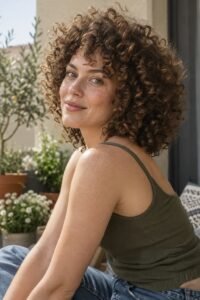
Medium Layered Hair for Curly Hair
Curly hair can show layers differently because curl patterns vary in shape and how much they contract when dry.
Shorter sections may sit higher than expected once the curls settle, while longer layers can create a more gradual change between lengths. This makes the placement of each layer important when planning the overall silhouette.
Some people may prefer longer layers for a softer transition, while others may like shorter sections that make the layered shape more noticeable.
When choosing inspiration, photos showing a similar curl pattern and overall length may be more useful than relying only on examples shown on straight hair.
How Hair Density Can Affect Layer Placement
Hair density describes the overall amount of hair, while strand thickness refers to how fine or coarse each individual strand is. These are separate characteristics.
Both can influence how a layered haircut appears. A heavily layered cut may leave a different visual outline on lower-density hair than it does on very dense hair.
There is no single layering approach that works for every density. The amount of layering can instead be chosen according to how full, blended, or separated the finished haircut should appear.
Layering Considerations for Finer Hair
Fine strands and lower hair density are not the same thing, although either can influence the visual fullness of a haircut.
Longer or more subtle layers may be one option when the goal is to keep a more solid-looking perimeter. Face-framing pieces can also add shape around the front without creating extensive layering through the rest of the hair.
More defined layers may create stronger separation between sections. Some people may prefer that texture, while others may want to keep more of the lower length visually connected.
The final appearance can vary with strand thickness, density, natural texture, and the amount of layering.
Layering Considerations for Thicker or Denser Hair
Dense hair can also be worn with either subtle or clearly defined layers.
Long layers may create a more gradual change through the lengths, while shorter layers can make the different sections easier to see. Neither approach is automatically better.
Someone who prefers a smoother outline may choose longer, blended sections. Someone who wants the layers to play a stronger visual role may prefer more noticeable differences in length.
The amount of layering should reflect the desired shape rather than following a fixed rule based only on density.
Long Layers vs Shorter Layers on Medium Hair
Long and shorter layers create different proportions within a medium haircut.
Long layers keep the shorter sections closer to the main length, which usually creates a more gradual transition. Shorter layers increase the difference between sections and can make the layered structure more visible.
The choice depends mainly on how subtle or defined the finished haircut should look.
When Long Layers Create a Softer Shape
Long layers keep more of the hair close to the overall length.
This can create a smoother transition between sections and may suit someone who wants a layered effect without a strongly separated outline.
They are also one possible choice for keeping more visible length around the sides and lower sections.
When worn straight, long layers may look relatively blended. Waves, bends, or curved ends can make the different lengths easier to notice.
When Shorter Layers Create More Separation
Shorter layers create a larger difference between the shortest and longest sections.
This can make the shape appear more textured or clearly layered. The effect may become more noticeable with waves, curls, or styling that separates the sections.
Layers that begin higher around the sides or upper part of the haircut can also change the overall silhouette more than layers placed mainly near the ends.
The final result can vary with texture and density, so a heavily layered cut will not look the same on every head of hair.
Where Should Face-Framing Layers Start?
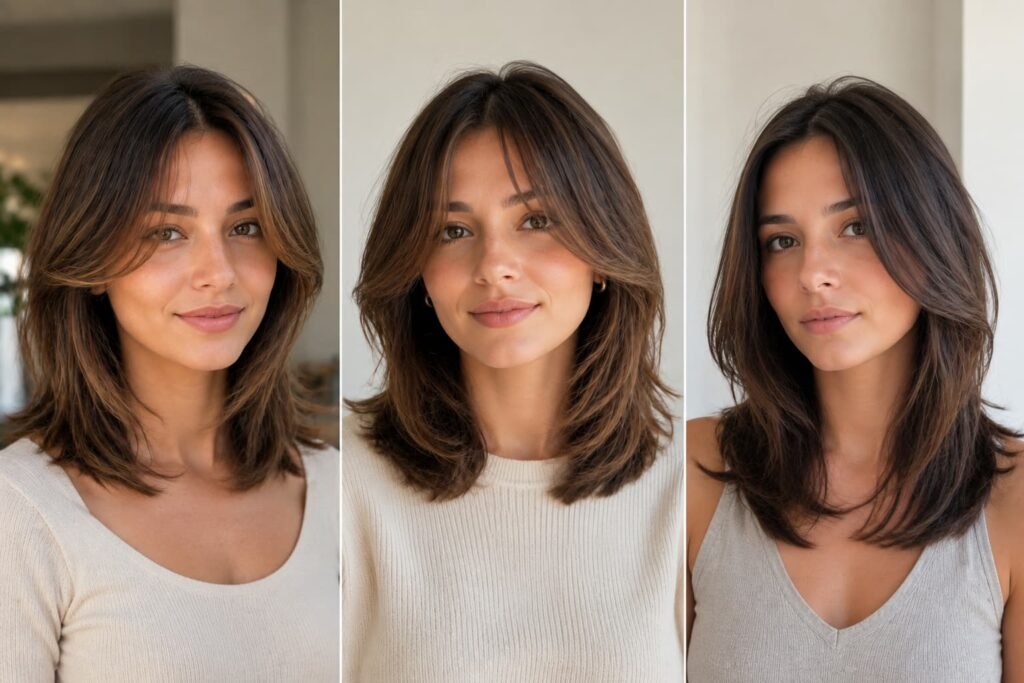
There is no single correct starting point for face-framing layers.
The shortest front section can begin around the cheekbones, chin, or below the chin. Each option creates a different amount of contrast between the front pieces and the overall length.
Natural texture, parting, bangs, and the desired amount of face framing can all influence the choice.
Cheekbone-Level Layers
Layers starting around the cheekbone area create a relatively noticeable frame around the upper part of the face.
They can blend into curtain bangs or be worn without a separate fringe. Because these pieces are shorter, they may stand out more clearly from the main medium length.
This placement is one option for someone who wants the front layers to be an obvious feature of the haircut.
Chin-Length Face-Framing Pieces
Chin-length layers keep more length around the front while still creating visible separation.
They can blend into longer layers through the sides and work with either a center or side part.
This placement may appeal to someone who wants clear face framing without bringing the shortest pieces as high as the cheekbones.
Longer Layers Beginning Below the Chin
Face-framing sections beginning below the chin create a more gradual transition into the remaining length.
Because the shortest pieces stay relatively long, the front can appear more blended than it does with cheekbone- or chin-level layers.
This is one possible option for someone who wants subtle shaping while keeping more length around the face.
Waves, curved ends, or a rounded blowout-style finish can make these longer front layers more noticeable.
How Hair Texture Affects Medium Layers
Natural texture can change how layers fall and how clearly the different lengths can be seen. Straight hair may show a smoother outline, while waves and curls can create more variation in the shape.
The finished look also depends on layer placement, hair density, and how the hair is styled.
Medium Layered Hair for Straight Hair
On straight hair, shorter and longer sections can be relatively easy to see because the hair tends to fall in a more direct line.
Long, blended layers may create a gradual transition through the lengths. Shorter or choppier layers can create more visible separation and a more textured outline.
Face-framing pieces can also add shape around the front without requiring heavy layering throughout the rest of the hair.
Someone who prefers a smoother finish may choose subtle layers, while more defined sections are an option for a stronger layered look.
Medium Layered Hair for Wavy Hair
Natural waves can make layered sections look soft and textured.
Long layers may blend into the existing wave pattern, while shorter layers can make individual sections stand out more clearly.
Wave patterns can vary across the head, so the layers may not fall in exactly the same way on every section. This can make the finished shape look more relaxed and less uniform than it does on straight hair.
Longer face-framing pieces can create a gradual transition around the front, while shorter pieces can make the framing more noticeable.
Medium Layered Hair for Curly Hair
Curly hair can show layers differently because curls may contract as they dry and different sections can have different curl patterns.
Shorter layers may sit higher than longer ones once the hair is dry. Longer layers can create a more gradual change through the overall shape, while shorter layers may make the layered silhouette more noticeable.
The final result can vary with curl pattern, density, layer length, and natural movement.
When choosing inspiration, images with a similar curl pattern and overall length may give a more useful idea of how the haircut could look.
How Hair Density Can Affect Layer Placement
Hair density describes how much hair is present overall, while strand thickness describes the diameter of individual hairs. They are separate characteristics.
Both can influence the appearance of a layered haircut. The same amount of layering may create a different outline on lower-density hair than it does on denser hair.
There is no single layering pattern that suits every density. The amount of layering can be chosen according to whether a smoother, fuller-looking, or more separated shape is preferred.
Layering Considerations for Finer Hair
Fine hair and lower-density hair are not the same thing, although either can affect the way the ends appear.
Longer or more subtle layers may be one option for keeping the lower outline relatively connected. Face-framing pieces can also add shape without adding extensive layers throughout the haircut.
More noticeable layers can create greater separation between sections. Some people may prefer this textured effect, while others may want to keep more of the length visually together.
The final appearance can vary with strand thickness, density, natural texture, and layer placement.
Layering Considerations for Thicker or Denser Hair
Denser hair can be worn with either subtle or more visible layers.
Long layers may create a gradual transition through the lengths, while shorter layers can make the different sections easier to see.
Someone who prefers a smoother outline may choose longer, blended layers. A more defined layered shape is another option when stronger separation is preferred.
The amount of layering should reflect the desired appearance rather than following a fixed rule based only on density.
Long Layers vs Shorter Layers on Medium Hair
Long and shorter layers create different proportions within the haircut.
Long layers keep the shorter sections closer to the main length, creating a more gradual transition. Shorter layers create a greater difference between sections and can make the layered structure more visible.
Neither approach is automatically better. The choice depends on how subtle or defined the finished haircut should look.
When Long Layers Create a Softer Shape
Long layers keep more of the hair close to the overall length.
This can create a smoother transition between sections and may suit someone who wants visible movement without a strongly separated outline.
Long layers are also one option for keeping more length through the sides and lower sections.
When worn straight, they may appear relatively blended. Waves, bends, or curved ends can make the different lengths more noticeable.
When Shorter Layers Create More Separation
Shorter layers create a larger difference between the shortest and longest sections.
This can make the haircut appear more textured and clearly layered. The effect may become more noticeable with waves, curls, or styling that separates the ends.
Layers beginning higher through the sides or upper sections can also change the overall silhouette more than layers placed mainly near the ends.
The final result can vary with hair texture and density.
Where Should Face-Framing Layers Start?
There is no single correct starting point for face-framing layers.
The shortest front pieces may begin around the cheekbones, chin, or below the chin. Each placement creates a different amount of contrast between the front sections and the main length.
Natural texture, parting, bangs, and the desired amount of face framing can all influence the choice.
Cheekbone-Level Layers
Layers beginning around the cheekbones create a more noticeable frame around the upper part of the face.
They can blend into curtain bangs or be worn without a separate fringe. Because these pieces are shorter, they may stand out more clearly from the main medium length.
This placement is one option for someone who wants the front layers to be a visible part of the haircut.
Chin-Length Face-Framing Pieces
Chin-length layers keep more length around the front while still creating clear shaping.
They can blend into longer layers through the sides and can work with either a center or side part.
This placement may appeal to someone who wants noticeable face framing without bringing the shortest sections as high as the cheekbones.
Longer Layers Beginning Below the Chin
Face-framing pieces beginning below the chin create a more gradual transition into the rest of the haircut.
Because the shortest sections remain relatively long, the front can look more blended than it does with cheekbone- or chin-level layers.
This may be one option for someone who wants subtle shaping while keeping more length around the face.
Waves, curved ends, or a rounded blowout-style finish can make these longer front layers easier to see.
Frequently Asked Questions
What is considered medium length layered hair?
Medium length hair commonly falls around the shoulders, collarbone, or nearby lengths. A layered version includes shorter sections that blend into the main length instead of keeping every section at the same level.
The exact finished length can look different depending on natural texture and how the hair falls when dry.
Are long layers or short layers better for medium hair?
Neither is automatically better.
Long layers keep the shorter sections closer to the overall length, which can create a softer, more gradual transition. Shorter layers create a greater difference between sections and can make the layered shape more noticeable.
The better option depends on whether you prefer a subtle, blended look or more visible separation.
Do face-framing layers work without bangs?
Yes. Face-framing layers do not require bangs.
The shorter front pieces can begin around the cheekbones, chin, or lower and blend into the rest of the haircut. This allows you to add shape around the front while keeping the forehead open.
Can medium length straight hair have layers?
Yes. Straight medium hair can be cut with long layers, soft blended layers, face-framing pieces, or more defined sections.
Straighter textures may show the differences between layer lengths clearly. Longer layers can create a smoother transition, while shorter sections may make the layered shape easier to see.
Can wavy or curly medium hair be layered?
Yes. Both wavy and curly medium hair can be layered.
Natural texture affects how the different sections sit once the hair is dry. Waves may create softer movement, while curls can make the differences between shorter and longer sections appear more pronounced.
The final shape can vary with texture, density, and layer placement.
Do layers always make hair look fuller?
No. Layers do not guarantee a fuller appearance.
The visual result depends on factors such as hair density, strand thickness, natural texture, and how much layering is added. Some layer patterns may create the appearance of more movement, while stronger layering can make the ends look more separated.
What is the difference between shoulder-length and collarbone-length layered hair?
Shoulder-length hair ends around the shoulder area, while collarbone-length hair falls slightly lower.
The additional length of a collarbone cut gives more space for longer, gradual layers. A shoulder-length cut creates a shorter overall shape and may make shorter layers appear more noticeable.
Both lengths can include face-framing pieces, bangs, long layers, or more textured sections.
How can medium layered hair be styled without changing the haircut?
The same layered cut can look different depending on the styling.
Straight styling can create a smoother finish, while loose waves or curved ends can make the layers more visible. Flipped ends can create stronger separation through the lower sections, and natural-texture styling can show how the layers interact with existing waves or curls.
Changing the part can also alter how the front layers fall.
What should I show a hairstylist when asking for medium layers?
Reference images can help communicate the shape you want. When possible, choose examples with a similar hair texture and a length close to your preferred result.
It can also help to explain:
- where you want the overall length to fall
- where you want the shortest layer to begin
- whether you want face-framing pieces
- whether you prefer soft or more defined layers
- whether you want bangs
- how noticeable you want the layers to be
Specific details usually communicate the desired haircut more clearly than simply asking for “medium layers.”