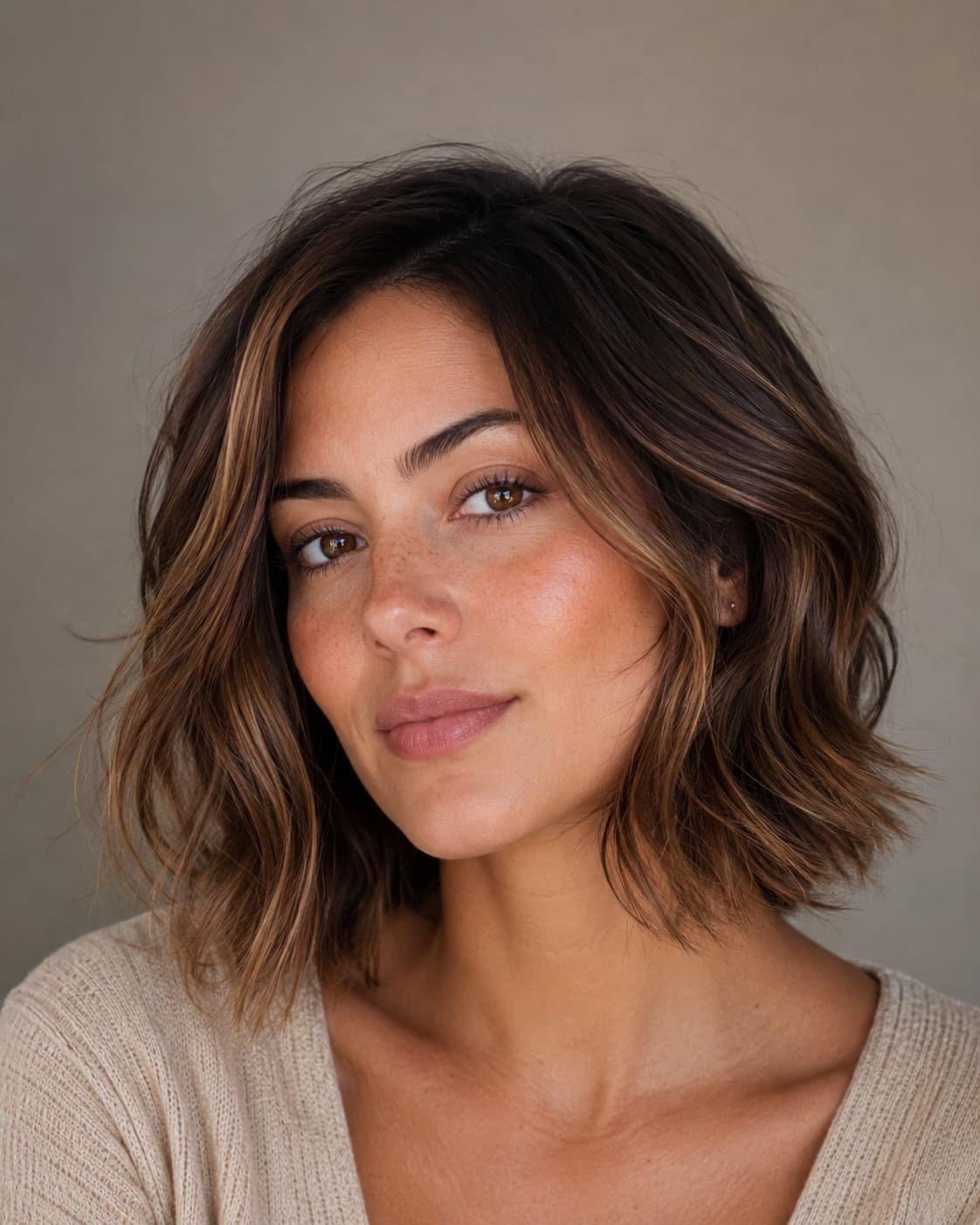
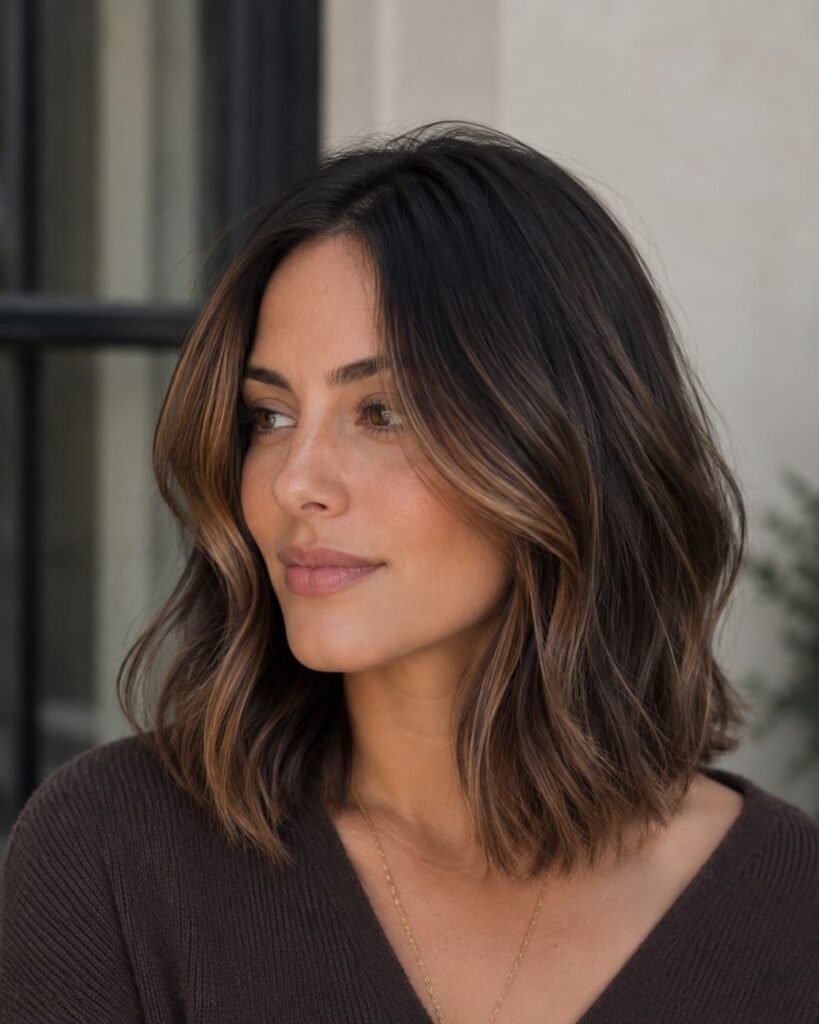
A brown balayage bob combines the shape of a bob haircut with brunette balayage, using softly blended brown tones that can range from subtle to more noticeable. Depending on the shades and placement, the colour can stay subtle with closely related browns or create more noticeable contrast with caramel, chestnut, or lighter face-framing pieces.
These brown balayage bob hairstyle ideas explore different combinations of colour, length, layers, texture, and placement. The final appearance can vary depending on the starting hair colour, haircut shape, natural texture, styling, and level of contrast.
What Is a Brown Balayage Bob?
A brunette balayage bob is a bob haircut paired with balayage colour in brunette or complementary shades. Balayage is a freehand highlighting technique in which colour is painted onto selected sections of hair, allowing the placement and intensity to vary throughout the hairstyle.
On brown hair, the colour palette can remain within similar brunette shades or include lighter tones such as caramel, chestnut, mocha, or beige-brown. A smaller difference between the base and lighter sections can create a more subtle appearance, while greater contrast makes the colour placement easier to see.
The shape of the bob also influences how the colour appears. A blunt cut creates a more defined outline, while layers can separate sections of hair and make tonal changes more visible. Waves can reveal alternating darker and lighter pieces, while a straight finish may show the colour transition in a smoother way.
Shorter bobs give the colour less length to travel through, while a longer bob or lob provides more space for gradual placement through the mid-lengths and ends.
Main Visual Characteristics
A brown balayage bob can include several levels of brown rather than one uniform shade. A deeper brunette base may be combined with lighter sections through the mid-lengths, ends, or front of the haircut.
Face-framing pieces are one possible placement choice. They can be kept close to the base colour for a softer effect or made lighter for more visible contrast around the front.
Contrast also changes the overall look. Brown-on-brown balayage creates a more understated difference between shades, while caramel or lighter brown sections against a deeper brunette base can make the colour pattern more noticeable.
Styling can change how these tones are displayed. Straight hair may show the placement in broader, smoother sections, while waves and textured finishes can expose different light and dark pieces as the hair bends and moves.
Because the shade, contrast, placement, haircut, and styling can all vary, a brown balayage bob can range from softly blended to more defined and high-contrast without requiring one fixed look.
Brown Balayage Bob Hairstyle Ideas
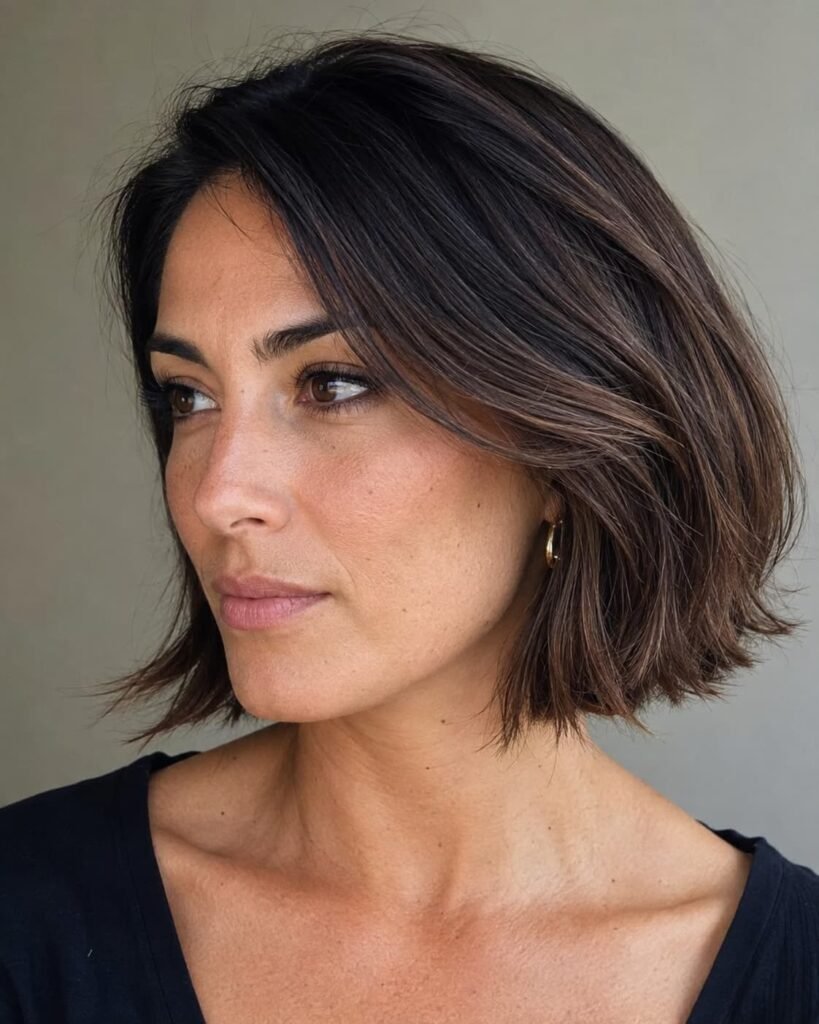
The ideas below focus on meaningful differences in brown tone, contrast, colour placement, bob length, layering, and styling finish. They are visual options rather than rules, and the final appearance can vary with the starting colour, haircut, texture, and styling.
1. Soft Brown-on-Brown Balayage Bob
A brown-on-brown balayage keeps the shades relatively close together. A deeper brunette base can be combined with medium brown, chocolate, or similar tones to create gentle colour variation rather than a strong light-to-dark change.
The lighter sections may be placed through the mid-lengths, ends, or selected pieces around the front. This approach can suit someone who prefers a more understated balayage effect.
2. Caramel Brown Balayage Bob With Face-Framing Pieces
Caramel-toned sections can introduce a warmer-looking contrast against a brown base. Concentrating some of the lighter colour around the front makes those face-framing pieces more visible. For a longer-hair version of this warm brunette combination, explore Dark Brown Hair with Caramel Highlights.
The transition can remain softly blended into the sides and ends, or the front pieces can be made more noticeable for stronger contrast. The amount and position of the lighter colour will influence how prominent the face-framing effect appears.
3. Chocolate Brown Balayage Bob With Layers
A layered bob combines shorter and longer sections within the haircut, which can expose different areas of colour as the hair moves. Chocolate and medium-brown balayage can keep the palette within brunette tones while adding visible variation.
Soft bends or textured styling may make the individual layers and colour sections easier to distinguish. A straighter finish can give the same colour combination a smoother appearance.
4. Ash Brown Balayage Blunt Bob
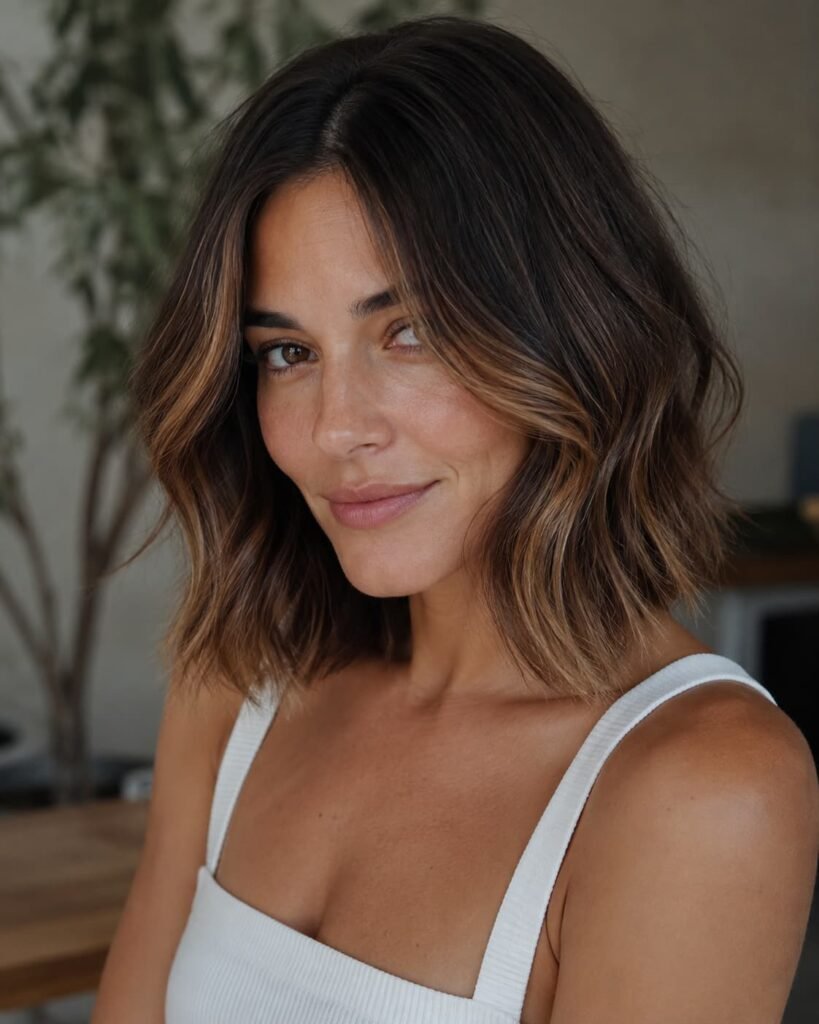
Ash brown refers to a cooler-looking brown colour direction with less obvious golden warmth. Combined with a blunt bob, it creates a contrast between softly changing colour and a more defined haircut outline.
The balayage may stay close to the darker base for a muted effect or include lighter cool-brown pieces for clearer separation. Straight styling can make both the blunt perimeter and the colour placement easier to see.
5. Warm Chestnut Balayage Wavy Bob
Chestnut-inspired brown tones can bring a warmer colour direction to a brunette bob. These shades may be placed through selected mid-lengths, ends, or front pieces rather than applied uniformly throughout the haircut.
Loose waves can reveal different sections of the balayage as the hair bends. Depending on the placement, some areas may appear deeper while others show more of the warmer brown colour.
6. Mocha Brown Textured Balayage Bob
A mocha-inspired balayage can combine deep and medium brunette tones without relying on very light highlights. This creates an option for readers who prefer visible tonal variation while keeping the overall colour predominantly brown.
A textured bob can separate the hair into more noticeable pieces, allowing different shades to appear across the layers and ends. The contrast can remain subtle or become more defined depending on the chosen tones.
7. Dark Brown Balayage Bob With Lighter Ends
This variation keeps more of the deeper brown colour through the upper section while placing additional brightness toward the lower lengths and ends.
Medium brown, caramel, or beige-brown tones can be used to create different levels of contrast. On a blunt bob, lighter ends may draw more attention to the perimeter, while layers can distribute the colour across several lengths.
8. Chin-Length Brown Balayage Bob
A chin-length bob provides less overall length than a lob, so the placement of each lighter section can have a noticeable effect on the finished look.
Colour may be concentrated around the front, placed through selected side sections, or carried toward the ends. A close brown-on-brown blend can create a subtle result, while lighter pieces against a deeper base can make the balayage more visible.
9. Brown Balayage Lob With Soft Waves
A lob keeps more length than a shorter bob, providing additional space for colour changes through the mid-lengths and ends.
Soft waves can display several brunette tones throughout the hairstyle. Chocolate, caramel, chestnut, or beige-brown sections are possible colour directions, with the level of contrast depending on how different they are from the base. For a lob focused specifically on layers and warmer highlighted pieces, see this layered lob with caramel highlights.
10. Straight Brown Balayage Bob
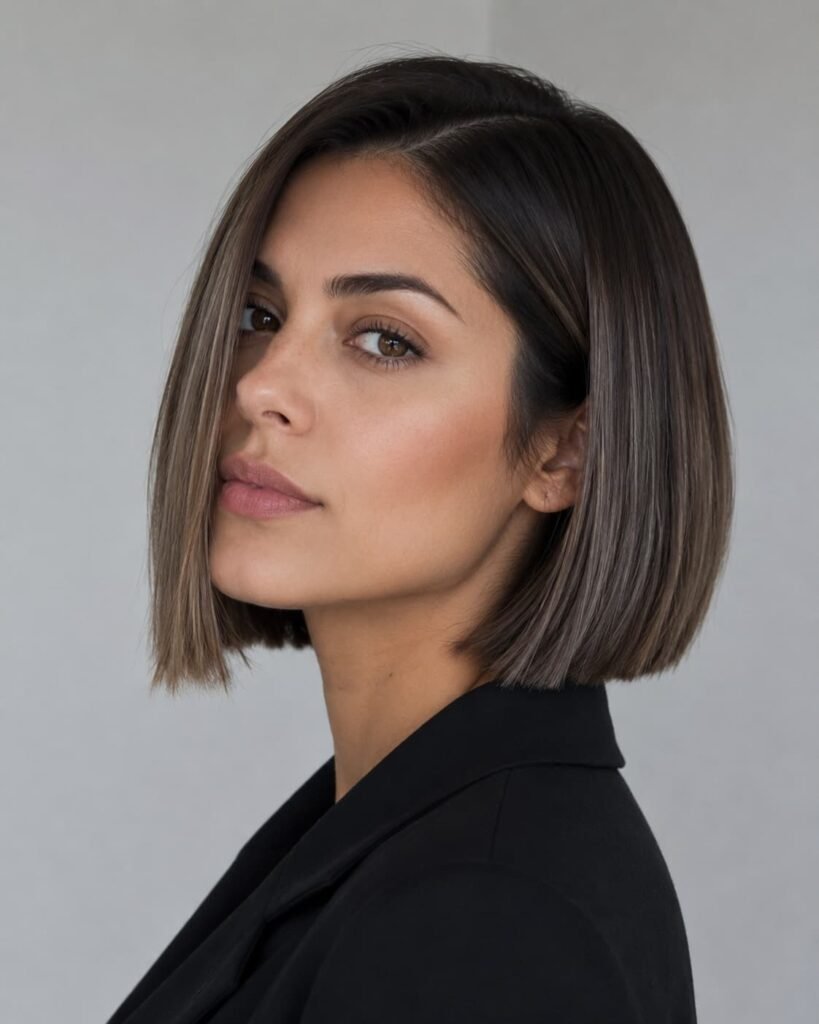
A brown balayage bob with straight styling displays the colour differently from a wavy or textured finish. The transition between darker and lighter sections may appear smoother because the hair is not broken up visually by bends or curls.
A darker base with gradually lighter mid-lengths or ends is one possible option. Face-framing pieces can also be included if more contrast is wanted around the front of the haircut.
11. Brown Balayage Bob With Curtain Bangs
Curtain bangs add shorter, parted sections around the front of the hairstyle. Balayage can be incorporated into these pieces or blended into the longer sections beside them. For a cut-focused variation that combines a shorter bob, waves, texture, and a parted fringe, explore this textured wavy French bob with curtain bangs.
Keeping the front colour close to the brunette base can create a softer effect. Lighter front pieces can make the contrast more noticeable. The overall appearance will also depend on the length and shape of the bangs.
12. High-Contrast Brunette Balayage Bob
A high-contrast balayage uses a clearer difference between the brunette base and the lighter sections. Dark brown hair may be paired with lighter brown, caramel, or beige-toned pieces for a more defined colour pattern.
The lighter sections can be concentrated around the face, distributed through the lengths, or focused toward the ends. Because the difference between shades is stronger, their placement tends to be more visually noticeable.
This approach creates a different effect from a subtle brown-on-brown blend, but neither option is automatically better. The choice depends on the amount of contrast and overall colour appearance a person prefers.
How to Choose a Brown Balayage Direction
Choosing a bob balayage in brunette tones involves deciding how much contrast, warmth, and brightness you want to see. Similar brown shades can create a quiet, blended effect, while lighter pieces against a deeper brunette base can make the colour placement more noticeable.
Placement matters too. Lighter colour around the front creates a different visual effect from brightness concentrated through the mid-lengths or ends.
Subtle vs Higher-Contrast Colour
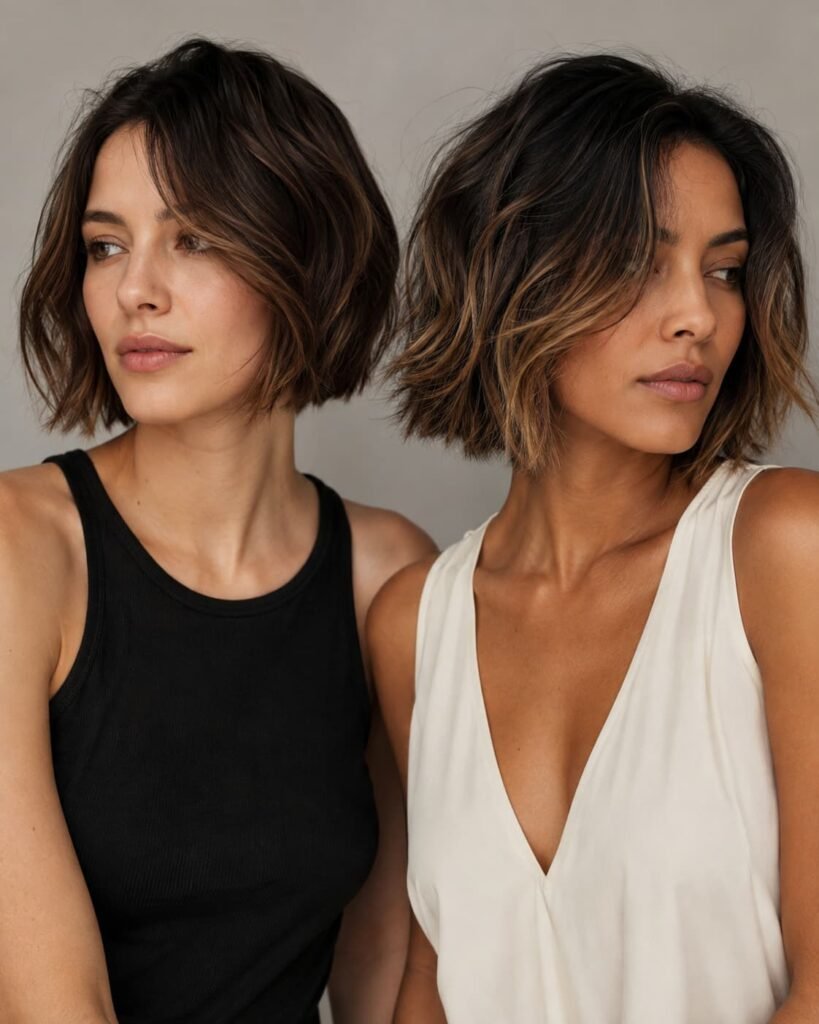
A subtle brown balayage uses shades that stay relatively close to the base colour. Deep brown hair, for example, may be combined with medium brown or chocolate-toned sections for a softer difference between shades.
A higher-contrast look creates more separation between the base and the lighter pieces. Caramel, beige-brown, or lighter brunette sections may appear more noticeable against a dark brown base.
Neither direction is better for everyone. Some people may prefer a closely blended brunette look, while others may prefer more visible light and dark sections.
Warm, Neutral, and Cooler-Looking Brown Tones
Brown balayage can include warmer, more neutral, or cooler-looking tones.
Caramel and chestnut shades can bring warmer golden, bronze, or reddish-brown notes into a brunette colour palette.
Chocolate and mocha shades can keep the overall appearance strongly brunette, although the exact warmth or coolness depends on the individual shade.
Ash-brown tones generally have a cooler appearance with less obvious golden or red warmth.
Shade names can vary between colour ranges, and lighting can also change how a colour looks in photographs. When comparing inspiration images, it can be more useful to look at the overall warmth, depth, and contrast rather than relying on the shade name alone.
Face-Framing Colour vs Lighter Ends
Face-framing placement concentrates some of the lighter colour around the front sections of the haircut. The difference can be subtle or more noticeable depending on how light those pieces are compared with the base.
Colour placed mainly through the mid-lengths and ends creates another effect. More of the upper section can remain brunette while lighter tones become increasingly visible lower in the haircut.
Both placements can also appear in the same style. For example, a bob may have brighter front pieces with softer colour blended through the remaining lengths. This is one possible option for someone who wants more emphasis around the front without using the same level of brightness throughout.
What to Consider Before Choosing a Brown Balayage Bob
A reference image can help define the type of look you prefer, but it should be treated as inspiration rather than an exact prediction. Starting colour, existing colour, haircut shape, texture, placement, and styling can all influence the visible result.
Your Starting Hair Colour
Current hair colour is an important starting point when considering a colour change. This includes previously applied colour, not only natural hair colour.
A deeper brown base can create a clearer visual difference when paired with noticeably lighter pieces. When the base and added tones are closer together, the finished contrast may appear softer.
Previous colour can also affect what is possible during a future colouring service. For that reason, a reference photo is most useful for showing the colour direction, placement, and level of contrast you like rather than guaranteeing an identical result.
Bob Length and Shape
Bob length changes the amount of hair available for colour placement.
A chin-length bob gives the balayage a shorter area to work across, so the darker and lighter sections may appear closer together.
A blunt bob has a more defined perimeter, which can make colour placed near the ends easier to notice.
A layered bob places sections of hair at different lengths, allowing different areas of colour to become visible as the hair moves.
A long bob or lob provides more length for colour placement through the mid-lengths and ends.
These are visual differences rather than rules. The preferred combination depends on the haircut shape and colour effect a person wants.
Hair Texture and Styling Preference
Styling can change the way the same colour placement is displayed.
A straight finish may show darker and lighter sections in broader, smoother areas. Waves can reveal different pieces as the hair bends, while a more textured finish can create greater separation between individual sections. If heated styling tools are used to create these finishes, a heat-protectant product such as CHI 44 Iron Guard Thermal Protection Spray can be applied according to its directions before styling.
One finish is not automatically better for showing balayage. They simply present the colour differently.
When collecting reference images, looking at examples styled in a way similar to how you prefer to wear your hair can give a clearer picture of the overall appearance.
Maintenance Expectations
Maintenance can vary depending on the colour placement, amount of contrast, starting colour, and the type of result being maintained. For routine cleansing and conditioning, a system formulated for color-treated hair, such as L’Oréal Paris EverPure Moisture Shampoo & Conditioner Kit, is one product option when used according to its directions.
A subtle brunette blend and a look with much brighter sections may develop differently as the hair grows. More noticeable face-framing colour may also create different upkeep preferences from colour placed mainly through the lengths and ends.
The haircut has its own maintenance considerations as well, separate from the colour. A defined bob shape and a longer, softer bob do not necessarily require the same approach to keeping their shape.
There is no single maintenance schedule that applies to every brown balayage bob. It is more useful to consider how much contrast and colour change you want and how much ongoing upkeep you are comfortable with.
Frequently Asked Questions
Can Balayage Work on a Short Bob?
Yes. Balayage can be adapted to shorter bob lengths. Because a short bob provides less length for colour placement, the lighter sections may appear closer together than they would on longer hair.
The colour can be placed around the front, through selected sections, or toward the mid-lengths and ends. The final appearance can vary depending on the starting colour, bob length, placement, and level of contrast.
What Is the Difference Between a Subtle and High-Contrast Brown Balayage Bob?
A subtle brown balayage uses shades that stay relatively close to the brunette base. Medium brown, chocolate, or similar brunette tones can create a softer transition between darker and lighter sections.
A higher-contrast version uses a more noticeable difference between the base and lighter pieces. Caramel, beige-brown, or lighter brunette sections can stand out more clearly against deeper brown hair.
Neither approach is better for everyone. The choice depends on how soft or noticeable you want the colour difference to appear.
Does Brown Balayage Look Different on Straight and Wavy Hair?
It can. Straight styling may display the colour in smoother, broader sections, while waves can reveal different light and dark pieces as the hair bends.
A more textured finish can separate individual sections further. These styling differences change how the colour is displayed rather than changing the balayage itself.
Can a Brown Balayage Bob Include Face-Framing Highlights?
Yes. Lighter sections can be placed around the front of a brown balayage bob.
These pieces may stay fairly close to the brunette base for a subtle effect or be lighter for more visible contrast. Face-framing colour can also be combined with softer balayage through the remaining lengths and ends.
What Should You Look for in a Brown Balayage Reference Photo?
Start with the details rather than the overall hairstyle. Look at the base shade, colour contrast, warmth or coolness, placement of lighter sections, bob length, layers, and styling texture.
It can also help to compare images that show a similar haircut length and styling finish to the look you are considering.
Reference photos are best treated as inspiration rather than an exact prediction. Starting colour, existing colour, haircut shape, texture, placement, and lighting can all affect how the finished colour appears.
Final Thoughts
A brown balayage bob can range from a closely blended brunette look to a style with more noticeable caramel or lighter brown sections. The overall appearance depends on choices such as brown shade, contrast, colour placement, bob length, layers, and texture.
A chin-length blunt bob with subtle brown-on-brown colour can look very different from a softly waved lob with brighter face-framing pieces, even though both fit within the same general style.
When comparing brown balayage bob hairstyle ideas, focus on the individual details you prefer instead of expecting one reference photo to be reproduced exactly. This makes it easier to identify the colour direction, haircut shape, and level of contrast that suit the look you want.