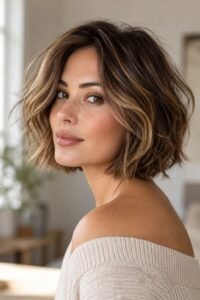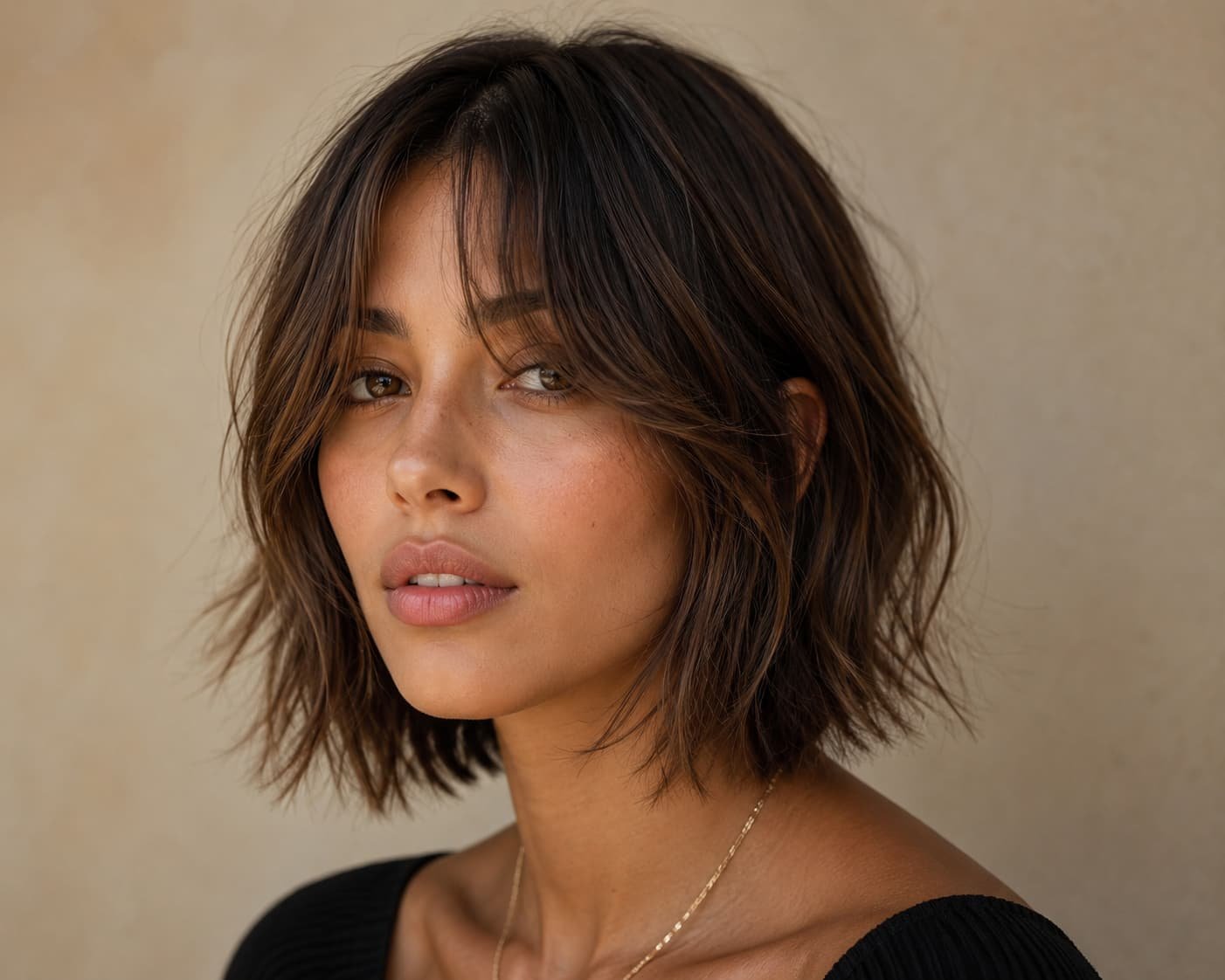
A choppy bob combines the familiar shape of a bob with visible layering, textured ends, and a less uniform finish. Depending on the length, amount of layering, and styling, the haircut can look soft and relaxed, more defined and piecey, or somewhere between the two.
There is no single version of a choppy bob. Some cuts use subtle layering mainly around the ends, while others include more noticeable layers throughout the shape. Bangs, face-framing pieces, waves, and different partings can also create distinctly different looks.
This guide explores cute choppy bob hairstyles and explains how changes in length, layering, texture, bangs, and styling can affect their overall appearance.
What Is a Choppy Bob Hairstyle?
A choppy bob is a bob haircut that incorporates visible texture and layering rather than relying entirely on one smooth, even-looking edge. The ends may appear piecey, separated, or deliberately irregular depending on the structure of the cut and the way it is styled.
Choppy bobs can also vary in length. Shorter versions may sit around the jaw or chin, while longer variations can extend toward the shoulders. Because of this, the term “choppy bob” describes the texture and structure of the cut rather than one exact length.
A choppy bob does not necessarily have to look messy. Straighter styling can create a cleaner finish while allowing individual layers and ends to remain visible. Waves or tousled styling can create a softer, more relaxed appearance.
The amount of layering makes another noticeable difference. Subtle layers can preserve more of the traditional bob outline while adding separation near the ends. More pronounced layers can create a more broken-up and visibly textured silhouette.
The Main Features of a Choppy Bob
One of the defining characteristics of a choppy bob is visible layering. Different sections of the haircut may end at slightly different points instead of forming one completely uniform line.
Textured or piecey ends are also common. Rather than appearing as one continuous blunt edge, individual sections can look more separated. This effect can be understated or more noticeable depending on the cut and styling finish.
Length changes the overall shape as well. A jaw- or chin-length version creates a shorter, more compact outline, while a longer choppy bob keeps additional length around the lower sections.
Bangs are optional. Wispy bangs can introduce a softer textured detail, while curtain bangs can blend into longer face-framing pieces. A more visibly choppy fringe can emphasize the textured character of the haircut. The style can also be worn without bangs for a simpler front shape.
Parting can change the visual balance of the cut. A center part creates a relatively even division between both sides, while a side part shifts more hair toward one side.
Styling also affects how the layers appear. A straighter finish may make individual ends easier to distinguish, while waves can visually blend the layers into a softer shape. The exact result can vary with natural hair texture, density, length, and styling method.
These differences allow two choppy bobs of a similar length to have noticeably different overall appearances.
How Choppy Layers Change the Shape and Texture
Choppy layers break up the continuous outline commonly associated with a more uniform bob. Because sections can finish at different lengths, the ends may appear more separated and textured.
The final look depends largely on where the layers are positioned and how noticeable they are.
A bob with light layering concentrated near the lower sections can maintain a relatively clean overall outline while introducing some visible texture at the ends. This is one possible approach for someone who prefers a more subtle choppy effect.
More noticeable layering through the sides and back can create greater separation between different sections of the haircut. With tousled styling, that separation may become even more visible.
Face-framing layers offer another way to change the shape. Shorter pieces around the front can create a gradual transition between the main bob length and the hair surrounding the face. Their appearance depends on where those pieces begin, how they connect with the rest of the cut, and whether a fringe is included.
Natural hair texture can also influence how the layering appears. On straighter hair, individual ends may remain more visually distinct. On wavy hair, bends in the hair can interact with the layers and create a softer, less uniform outline.
Hair density can affect the final appearance too, which is why the same layering pattern may not look identical on everyone. Some people may prefer subtle layering, while others may want more visible separation throughout the cut.
Rather than describing one exact haircut, choppy bob covers a range of bob shapes built around textured ends and visible layering. The result can range from softly separated and polished to tousled, shaggy, or strongly piecey depending on the chosen cut and styling.
Cute Choppy Bob Hairstyles to Explore
Choppy bobs can take on different shapes depending on the length, placement of the layers, type of fringe, and styling finish. Some versions keep the classic bob outline fairly clean, while others use more visible layering and separated ends for a looser, more textured appearance.
The following ideas show meaningfully different ways this haircut can be interpreted.
1. Chin-Length Choppy Bob
A chin-length choppy bob keeps the overall cut short, with the perimeter sitting around the chin area. Textured layers and separated ends can make the outline look less uniform than a traditional blunt bob.
The amount of layering can vary. Subtle layers may preserve a cleaner shape, while more noticeable layers can create stronger visual separation through the ends.
Straight styling can highlight the outline of the cut, while a tousled finish may create a softer, more relaxed appearance. This can be one option for someone who prefers a shorter bob with visible texture.
2. Soft Choppy Bob With Face-Framing Layers
This variation combines a textured bob with shorter pieces around the front of the hair. The face-framing sections can begin at different lengths and gradually blend into the main bob.
Softer layering creates a more blended effect than heavily separated choppy sections. The front pieces can also add detail around the face without requiring a full fringe.
Some people may prefer this approach when they want visible texture while keeping the overall shape relatively soft.
3. Choppy Bob With Wispy Bangs
A choppy bob with wispy bangs combines textured layers with a lighter-looking fringe. Wispy bangs are generally less dense in appearance than a heavier, straight-across fringe, allowing small sections of hair to remain visibly separated.
The bangs can be paired with either subtle or more pronounced layering through the rest of the bob. Their length and density can also change how prominent the fringe appears.
This combination may suit someone who wants bangs to become part of the textured look without creating a very solid front section.
4. Choppy Bob With Curtain Bangs
Curtain bangs usually separate near the center and become longer toward the sides. When combined with a choppy bob, they can transition into longer face-framing pieces around the front. For another short-bob variation combining waves, texture, and a parted fringe, see this textured wavy French bob with curtain bangs.
A lightly layered version can create a softer overall shape, while more separated ends can make the texture more noticeable.
This is one possible option for someone who prefers longer fringe around the face rather than a shorter straight-across bang.
5. Tousled Wavy Choppy Bob
A tousled wavy choppy bob combines visible layering with a less polished styling finish. Waves and bends can change how individual layers overlap, which may make the haircut appear softer and less uniform.
Light layering can create a subtle effect, while stronger choppy sections may remain more noticeable through the sides and ends.
The final look can vary considerably depending on natural hair texture, the amount of layering, and how the hair is styled.
6. Sleek Choppy Bob With Piecey Ends
A choppy bob can also be styled with a smoother overall finish. In this variation, the main shape remains relatively sleek while the lower sections show clearly separated or piecey-looking ends.
This creates a contrast between the cleaner surface of the hair and the textured perimeter.
Compared with a heavily tousled version, this approach can place more visual emphasis on the shape and placement of the layers. It may appeal to someone who prefers defined texture without an intentionally messy finish.
7. Shaggy Choppy Bob
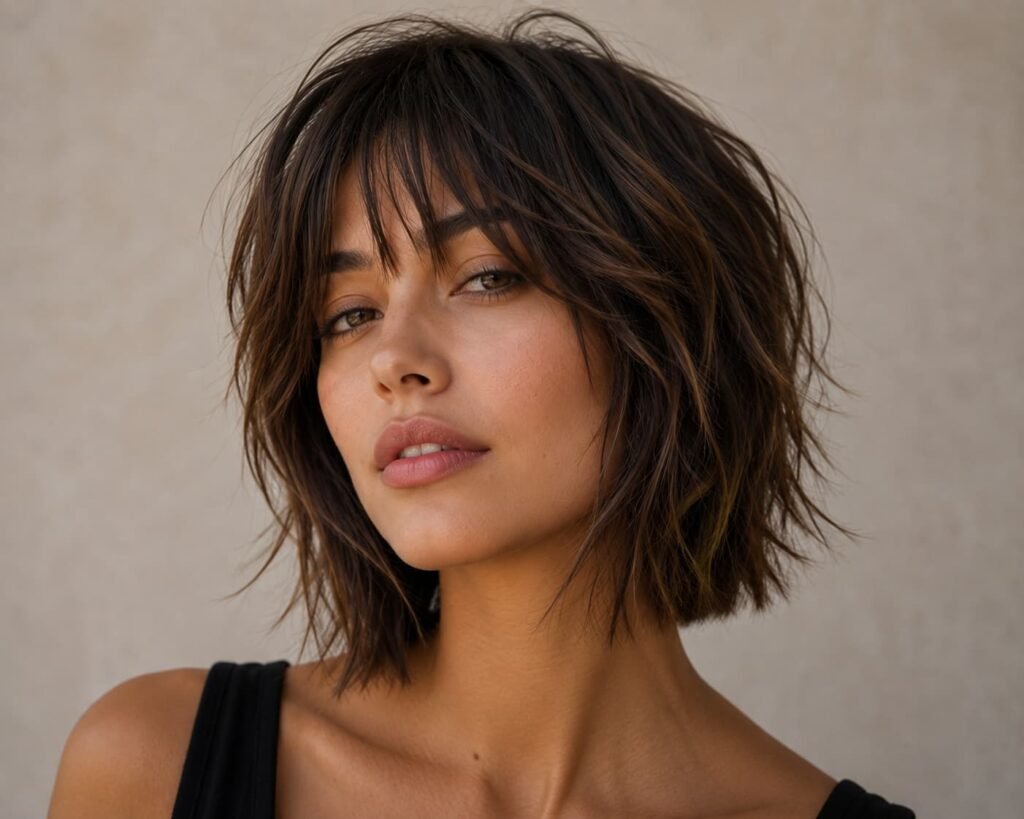
A shaggy choppy bob generally uses more visible layering throughout the haircut rather than limiting texture to the perimeter. For more examples focused on crown layers, textured ends, bangs, and different bob lengths, explore these layered shaggy bob styles.
Shorter sections can appear through the upper and side areas, while longer pieces help maintain the recognizable bob shape. This creates a more broken-up silhouette than a softly layered bob.
The amount of separation can vary, so a shaggy bob may look relatively soft or noticeably piecey depending on the cut and styling.
8. Angled Choppy Bob
An angled bob uses a graduated outline in which the length changes from the back toward the front. The front sections may be left longer than the back, creating a directional shape.
Adding choppy layers introduces visible texture within that outline. A lightly textured version can keep the angle fairly defined, while stronger layering can soften the transition between different sections.
The difference between the front and back can also be subtle or more pronounced depending on the preferred shape.
9. Asymmetrical Choppy Bob
An asymmetrical choppy bob uses intentionally different lengths on the two sides of the haircut. One side may extend lower than the other, making the uneven silhouette a central part of the design.
Textured layers can add further separation through the ends without removing the asymmetrical structure.
The difference between the sides can be slight for a more understated effect or more noticeable for a stronger contrast. A side part is one possible styling choice that can emphasize the uneven shape, but it is not required.
Unlike a standard choppy bob, where most of the unevenness comes from layers and textured ends, an asymmetrical version also uses different overall lengths to define its shape.
10. Rounded Choppy Bob With Textured Layers
A rounded choppy bob combines a curved overall silhouette with textured layers. Instead of creating a completely blunt perimeter, the layers break up the outline and give the ends more visible separation.
The amount of texture can vary. Subtle layers can keep the rounded shape more defined, while more noticeable layering can create a looser finish.
This may be an option for someone who likes the curved shape of a rounded bob but wants a little more texture through the cut.
11. Choppy Bob With a Deep Side Part
A deep side part shifts more of the hair toward one side, changing how the front sections and layers fall.
With a choppy bob, this can make the two sides appear less visually balanced even when the underlying haircut is similar in length. The effect may be subtle with smoother styling or more noticeable when the layers are tousled.
A deep side part is one styling option for someone who prefers an off-center look rather than a middle part.
12. Center-Parted Choppy Bob
A center part divides the hair near the middle and can display the front sections more evenly on both sides.
This approach can work particularly well with face-framing pieces or curtain bangs because the shorter front sections can fall away from the center in both directions.
The finish does not have to be completely symmetrical. Natural texture, layering, and styling can still make each side fall slightly differently.
13. Subtly Layered Choppy Bob
A subtly layered choppy bob keeps much of the recognizable bob outline while introducing smaller differences in length through selected areas.
The texture is less pronounced than in a heavily layered version. Instead of creating strongly separated sections throughout the cut, the layering may be most noticeable around the ends.
This can be one possible choice for someone who wants a cleaner bob shape with a softer, less blunt-looking perimeter.
14. Heavily Layered Choppy Bob
A heavily layered choppy bob uses more noticeable changes in length throughout the haircut. Shorter and longer sections create greater visual separation than they would in a subtly layered bob.
Depending on the placement of the layers and the styling finish, the cut can appear tousled, shaggy, or distinctly piecey.
The same layering pattern will not necessarily look identical on different hair because natural texture, density, and overall length can influence the final appearance.
15. Longer Choppy Bob or Choppy Lob
A lob, short for long bob, keeps more overall length than a shorter bob. In a choppy version, that longer shape is combined with textured layers or separated ends.
The additional length can accommodate different details, including face-framing pieces, subtle layering, or waves. A straighter finish may keep the overall outline more visible, while a wavy or tousled finish can make the layers appear softer.
A choppy lob may be worth considering for someone who likes the texture of a choppy bob but prefers a longer haircut closer to the shoulder area.
How Hair Texture Can Change a Choppy Bob
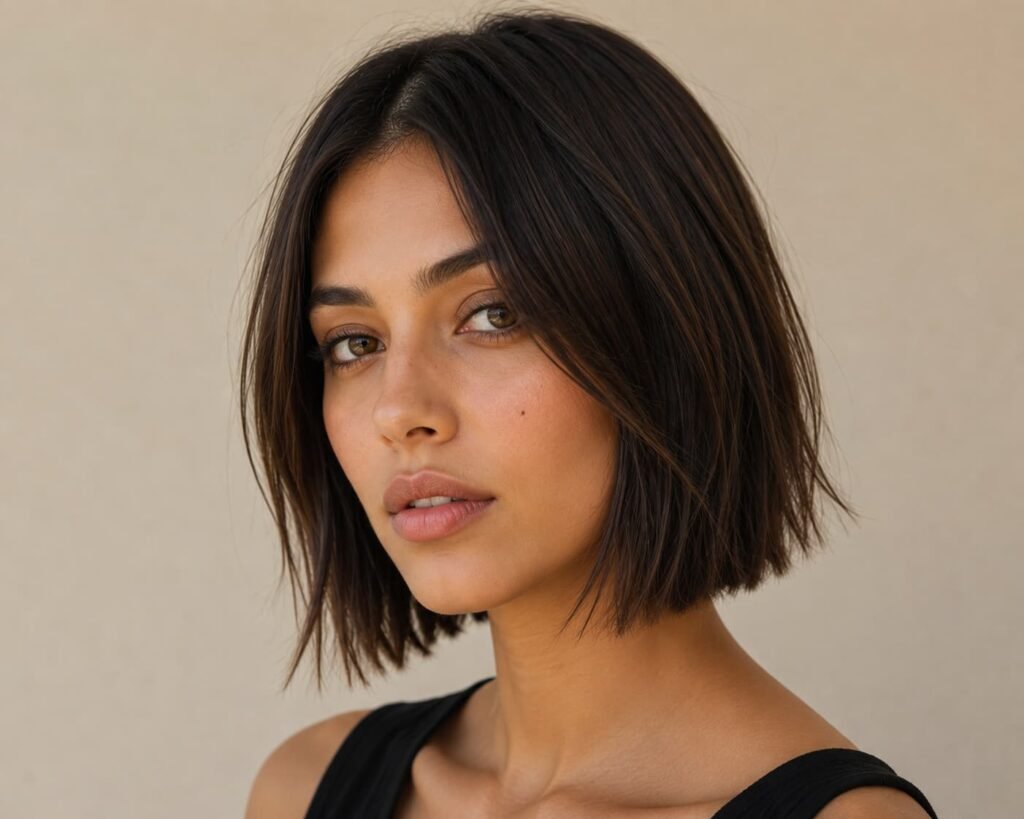
Natural hair texture affects how the layers, ends, and overall outline of a choppy bob are displayed. The same basic cut can appear more defined on straighter hair and more blended when natural waves change how the sections fall.
Hair density, layer placement, length, and styling can also influence the finished appearance.
Choppy Bobs on Straight Hair
On straight hair, differences between shorter and longer sections can be relatively easy to see. Textured ends may appear more defined, especially when the hair is worn with a smooth finish.
Subtle layering can keep more of the bob’s clean outline, while stronger layering can create greater separation between individual sections.
A straighter choppy bob may be worth considering for someone who wants the shape of the haircut and its textured ends to remain visually noticeable.
Choppy Bobs on Wavy Hair
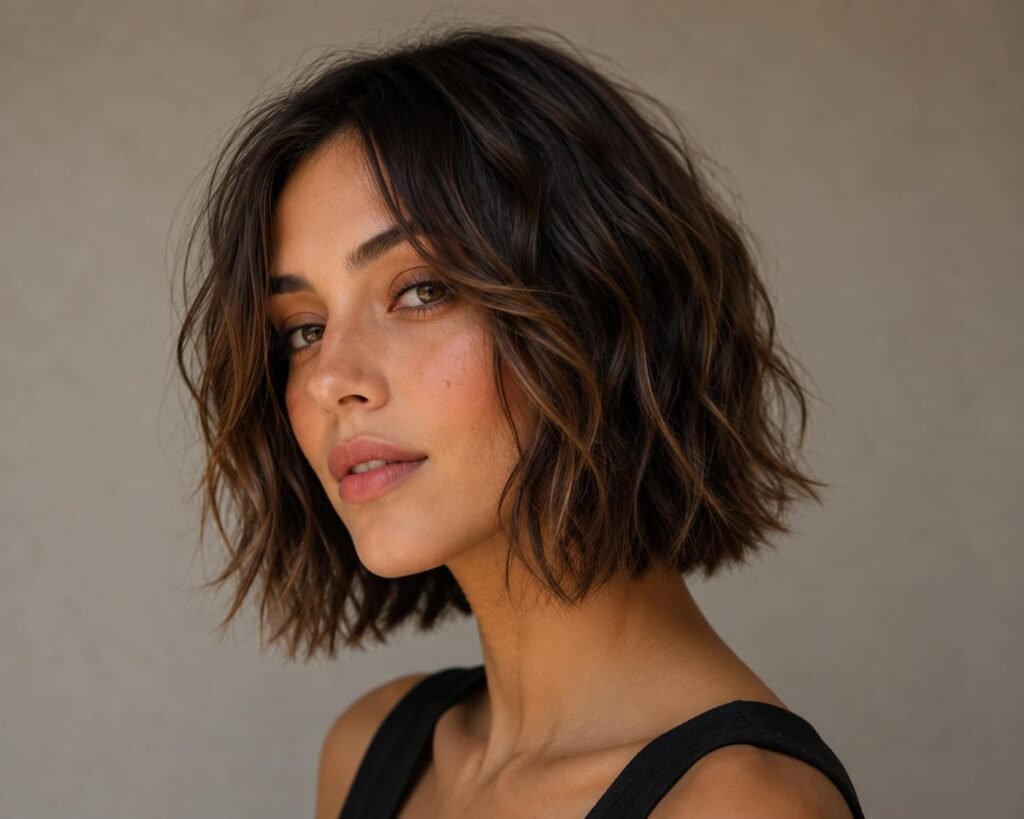
Wavy hair can give a choppy bob a softer, less uniform outline because bends in the hair change how the layers overlap and fall.
With lighter layering, the natural wave pattern may remain the dominant feature. More noticeable layers can introduce additional separation and variation through the sides and ends.
The finished look can vary depending on the wave pattern, length of the cut, density, and placement of the layers.
Layering Considerations for Fine Hair
With fine hair, the amount of layering is worth considering carefully because it changes the visible structure of the perimeter.
A cut with fewer or softer layers can retain more of a continuous outline, while additional layering creates greater separation between sections. Neither approach is automatically better.
Someone who wants a choppy effect while keeping a more substantial-looking perimeter may prefer lighter layering. A more visibly layered version is another option when texture and separation are the main goal.
Layering Considerations for Thick Hair
On thicker hair, the placement and amount of layering can noticeably change the silhouette of a choppy bob.
More layering can create greater separation between sections and a less solid-looking outline, while restrained layering can preserve more of the bob’s structured shape.
Natural texture and density vary considerably, so one layering pattern will not produce the same appearance on everyone. The preferred approach depends on whether the goal is a cleaner outline, softer texture, or a more visibly piecey finish.
How Length Changes the Overall Look
Length affects both the silhouette of a choppy bob and how much space there is for layering, waves, bangs, and face-framing pieces.A shorter version keeps the textured perimeter close to the jaw or chin, while longer versions extend farther down and allow the layers to spread across more length.
Jaw- and Chin-Length Choppy Bobs
Jaw- and chin-length versions keep the haircut compact, with the lower edge sitting around the jaw or chin area.
Because the overall length is short, textured ends and differences between layers can become noticeable elements of the shape. A smooth finish may emphasize the perimeter, while waves or tousled styling can create a less uniform appearance.
This may be an option for someone who wants a clearly short bob with visible texture. Readers comparing even shorter bob-based cuts can also explore these pixie bob hairstyles for cropped variations with different layers, bangs, and textures.
Medium-Length Choppy Bobs
A medium-length choppy bob keeps more hair than a jaw- or chin-length version while remaining shorter than a typical long bob.
The extra length provides room for face-framing pieces, bangs, waves, and gradual layers. Subtle layering can maintain a cleaner silhouette, while more pronounced layers can create a looser, more separated finish.
This length can be useful inspiration for someone who wants a bob that sits between a compact short cut and a shoulder-nearing lob.
Longer Choppy Bobs and Lobs
A lob, or long bob, extends the bob shape toward the shoulder or collarbone area.A choppy lob combines that additional length with textured ends or visible layers. The longer shape can accommodate extended face-framing pieces, gradual layering, waves, or a straighter finish.
A choppy lob may be worth considering for someone who likes the textured character of a shorter bob but prefers to keep more overall length.
How Bangs and Face-Framing Pieces Change the Style
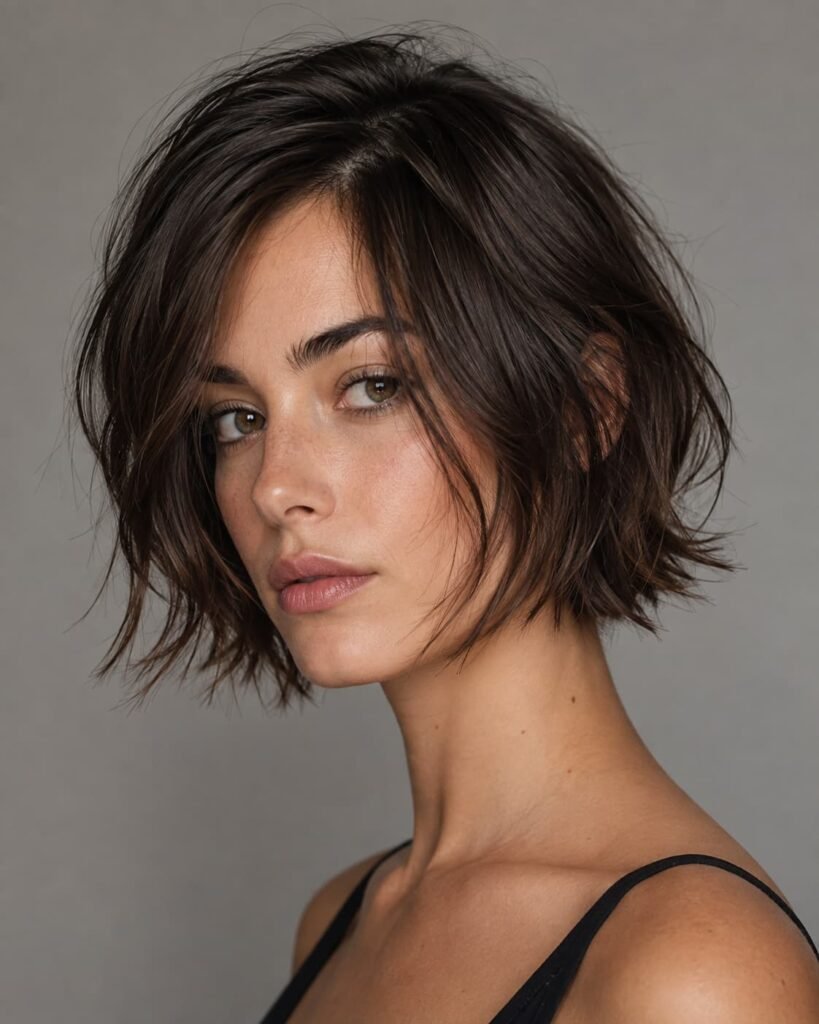
Bangs and face-framing pieces can noticeably change the front shape of a choppy bob. Their length, density, and placement influence how they connect with the rest of the layers and how much texture appears around the face.
Some versions use a light fringe, while others rely on longer face-framing sections or no bangs at all. The choice depends mainly on the desired appearance, natural texture, and preferred parting.
Wispy Bangs for a Softer Look
Wispy bangs have a lighter, more separated appearance than a dense, blunt fringe. Paired with a choppy bob, they can complement textured ends without creating a solid-looking section across the forehead.
The fringe can be kept relatively short or allowed to extend farther toward the sides. Longer pieces may blend into the surrounding face-framing layers for a more gradual transition.
This can be one option for someone who wants visible bangs while keeping the front of the haircut light and textured.
Curtain Bangs for More Face-Framing Movement
Curtain bangs typically open near the center, with shorter sections toward the middle and longer pieces extending toward the sides.
With a choppy bob, those longer outer sections can connect with face-framing layers and create a gradual transition into the rest of the haircut.
A softly blended version can create a more relaxed appearance, while greater separation through the ends can emphasize the choppy texture. This may suit someone who prefers longer fringe rather than a short, straight-across bang.
Choppy Fringe for a More Textured Finish
A choppy fringe uses visibly separated or uneven-looking sections instead of forming one smooth line across the forehead.
This type of fringe can repeat the textured character of a choppy bob, particularly when the haircut also includes piecey ends or noticeable layering.
The effect may be subtle or more defined depending on the length, density, and amount of separation in the fringe. Natural hair texture and styling can also influence how clearly those sections appear.
Choppy Bobs Without Bangs
A choppy bob does not require bangs. Without a fringe, the front sections can remain longer and connect directly with the main length of the haircut.
Some versions keep the front close to the overall bob length, while others introduce longer face-framing pieces for additional shape around the face.
Going without bangs can also leave more freedom to switch between center and side partings. The haircut can still look sleek, softly textured, wavy, or heavily layered depending on the rest of the cut and styling.
Styling and Maintenance Considerations
A choppy bob can take on a cleaner, softer, tousled, or more piecey appearance depending on the cut and styling. Parting, natural texture, layer placement, and the way the ends are finished can all influence the final look.
Maintenance is not the same for every choppy bob. The length, fringe, amount of layering, natural texture, and desired finish can affect how much styling or reshaping someone prefers over time.
Sleek Versus Tousled Styling
A sleeker finish can make the outline of the bob and individual textured ends easier to see. It may also place more visual emphasis on face-framing pieces and the shape of the perimeter.
Tousled styling creates a less uniform appearance. Waves, bends, and separated sections can make the layers look softer and more relaxed. A texturizing product such as Not Your Mother’s Beach Babe Sea Salt Spray is one option for adding separation and a tousled finish when used according to the product directions.
Neither finish defines the haircut. Depending on the cut and natural texture, the same choppy bob may be styled in different ways.
How Much Texture Do You Want to Emphasize?
Light separation around the ends can preserve a relatively clean bob shape. More noticeable differences between the layers can create a piecey, shaggy, or deliberately tousled appearance.
The haircut itself matters as much as the styling. A bob with only light layering will have a different structure from one with shorter, more defined layers throughout.
Before choosing a variation, it can help to decide whether you prefer texture as a small detail or as one of the main features of the haircut.
Consider Your Natural Hair Texture and Density
Natural texture and density can influence how the shape and layers of a choppy bob appear.
On straighter hair, individual ends and changes in length may remain more visible. Waves can change how the sections overlap, giving the layers a softer or less uniform appearance.
Density can also affect the overall silhouette. For that reason, the same layering pattern will not necessarily create an identical look on different people.
Rather than assuming a particular choppy bob is best for one hair type, consider how much layering and separation you want in relation to your natural hair.
Think About How Much Styling You Prefer to Do
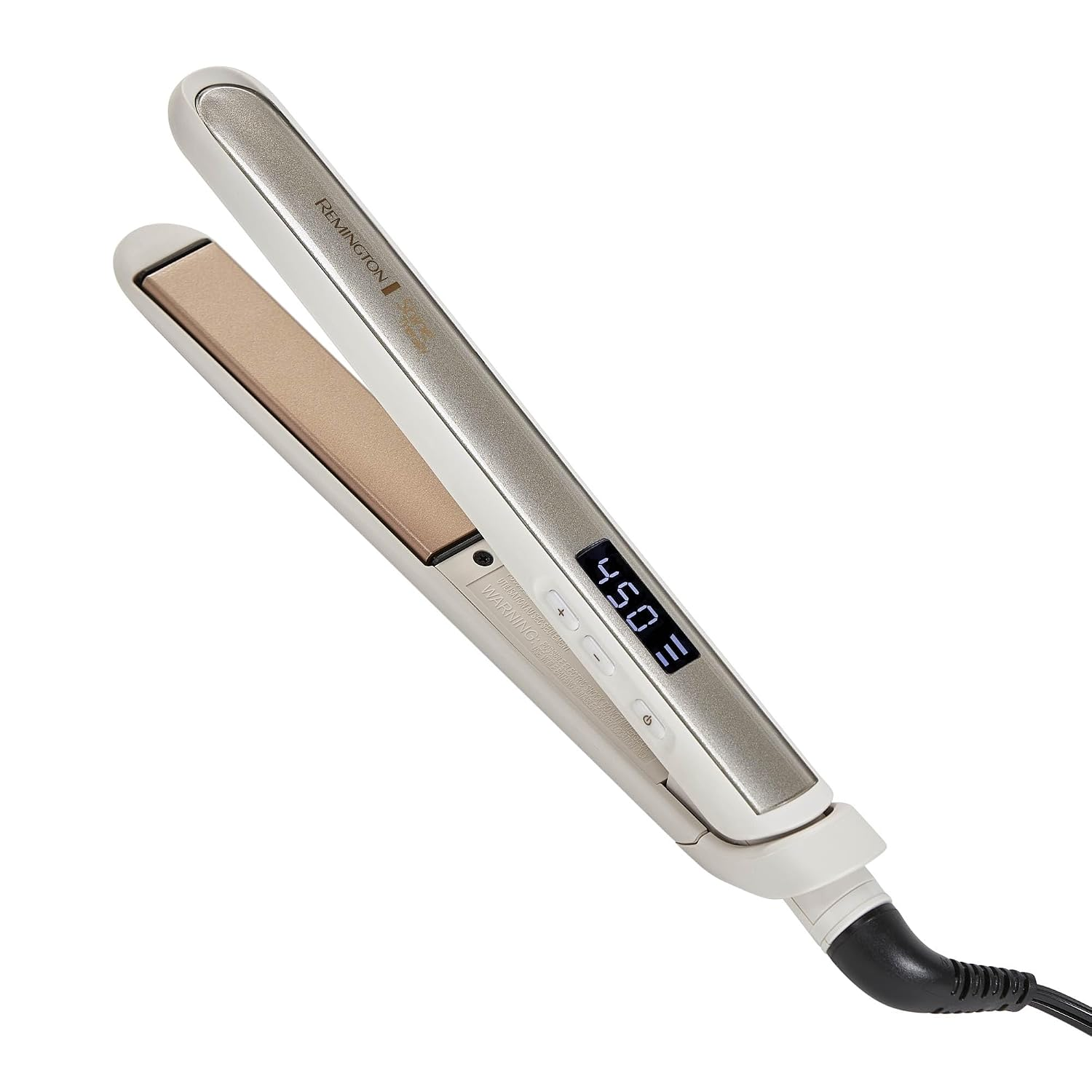
Someone who prefers minimal styling may want a version that works closely with their natural texture. Someone who enjoys changing their hairstyle may prefer a cut that can shift between smoother, wavy, tousled, or more defined finishes. If heated styling tools are used to create these looks, a heat-protectant product such as CHI 44 Iron Guard Thermal Protection Spray can be applied according to its directions before styling.
There is no single maintenance level for all choppy bobs. Practical styling needs can vary with the haircut, fringe, natural texture, and desired appearance.
What to Consider Before Choosing a Choppy Bob
“Choppy bob” describes a broad family of textured bob haircuts rather than one exact shape. Length, layering, fringe, and styling can produce noticeably different results.
Thinking about those details before choosing a cut can help narrow the options.
Decide on Your Preferred Length
A jaw- or chin-length bob creates a compact silhouette, while a medium-length version retains more hair around the lower sections. A longer bob or lob extends closer to the shoulders.
Length can also affect how much room there is for longer face-framing pieces, waves, and gradual layering.
Comparing similar choppy styles at several lengths can make it easier to identify the silhouette you prefer.
Choose Between Subtle and More Defined Layers
Not every choppy bob needs strongly visible layers.Subtle layering can introduce separation around the ends while keeping much of the classic bob outline. More defined layering creates larger differences between sections and can make the texture a stronger part of the hairstyle.
Consider whether you prefer a cleaner shape with restrained texture or a more visibly layered and piecey appearance.
Consider Whether You Want Bangs
Bangs can significantly change the front of the haircut.
Wispy bangs provide a lighter-looking fringe, curtain bangs extend into longer sections toward the sides, and a choppy fringe can repeat the separated texture found elsewhere in the bob.
A version without bangs keeps the front sections longer and can place more emphasis on the parting or face-framing layers.
Comparing the same general bob shape with and without fringe can help show how much difference bangs make to the overall look.
Use Reference Photos to Explain the Look You Want
The term “choppy bob” can describe several different combinations of length, layers, bangs, and texture. Reference photos can make those preferences easier to communicate.
Look for images that clearly show the length, amount of layering, fringe, parting, and styling finish you like. It can also help to identify features you would rather avoid, such as very short layers, a heavy fringe, or a strongly angled perimeter.
A reference image does not guarantee an identical result, since natural texture, density, and other individual characteristics can affect how a haircut appears. Its main value is showing the specific visual direction you have in mind.
Frequently Asked Questions
What is the difference between a choppy bob and a layered bob?
A layered bob is a broad type of bob haircut that uses different lengths within the cut. A choppy bob is a more textured variation in which the layers or ends are usually more visibly separated.
A layered bob can have smooth, blended transitions, while a choppy version typically places more visual emphasis on piecey sections and textured ends. There can be overlap between the two styles.
Can a choppy bob work with fine hair?
A choppy bob can be an option for fine hair, but the amount and placement of layering can affect the final appearance.
Fewer or softer layers can preserve a more continuous-looking perimeter, while stronger layering creates greater separation between sections. Someone who wants visible texture without a heavily broken-up outline may prefer a more restrained approach.
The final look can vary with hair density, natural texture, length, and styling.
Can thick hair be worn in a choppy bob?
Yes, a choppy bob can also be adapted for thick hair.
Subtle layering can preserve more of the structured bob shape, while more noticeable layers create greater separation throughout the cut. The exact effect depends on natural texture, density, length, and where the layers are placed.
There is no single layering pattern that will create the same result on everyone with thick hair.
Can a choppy bob be worn straight?
Yes. Waves and tousled styling are not required for a choppy bob.
With straighter styling, the perimeter, differences in length, and textured ends may appear more defined. A smoother finish can therefore give the haircut a cleaner appearance while still showing its layered structure.
What is the difference between a choppy bob and a shaggy bob?
Both haircuts can include visible layers, textured ends, and a relaxed finish, so there can be considerable overlap.
A choppy bob generally keeps a recognizable bob silhouette while adding separated layers or textured ends. A shaggy bob usually places stronger emphasis on layering throughout the haircut, often including shorter sections through the upper areas.
A heavily layered choppy bob can therefore look quite similar to a short shag.
Can you add bangs to a choppy bob?
Yes. A choppy bob can be combined with different types of fringe.
Wispy bangs can create a lighter-looking front section, curtain bangs can extend into longer face-framing pieces, and a choppy fringe can repeat the separated texture used elsewhere in the haircut.
Bangs are optional, and a choppy bob can also be worn with longer front sections and no fringe.
What is a long choppy bob called?
A longer bob is commonly called a lob, which is short for long bob.
A choppy lob combines that longer bob shape with visible layering, textured ends, or both. It may be an option for someone who likes the texture of a shorter choppy bob but wants to keep more overall length.