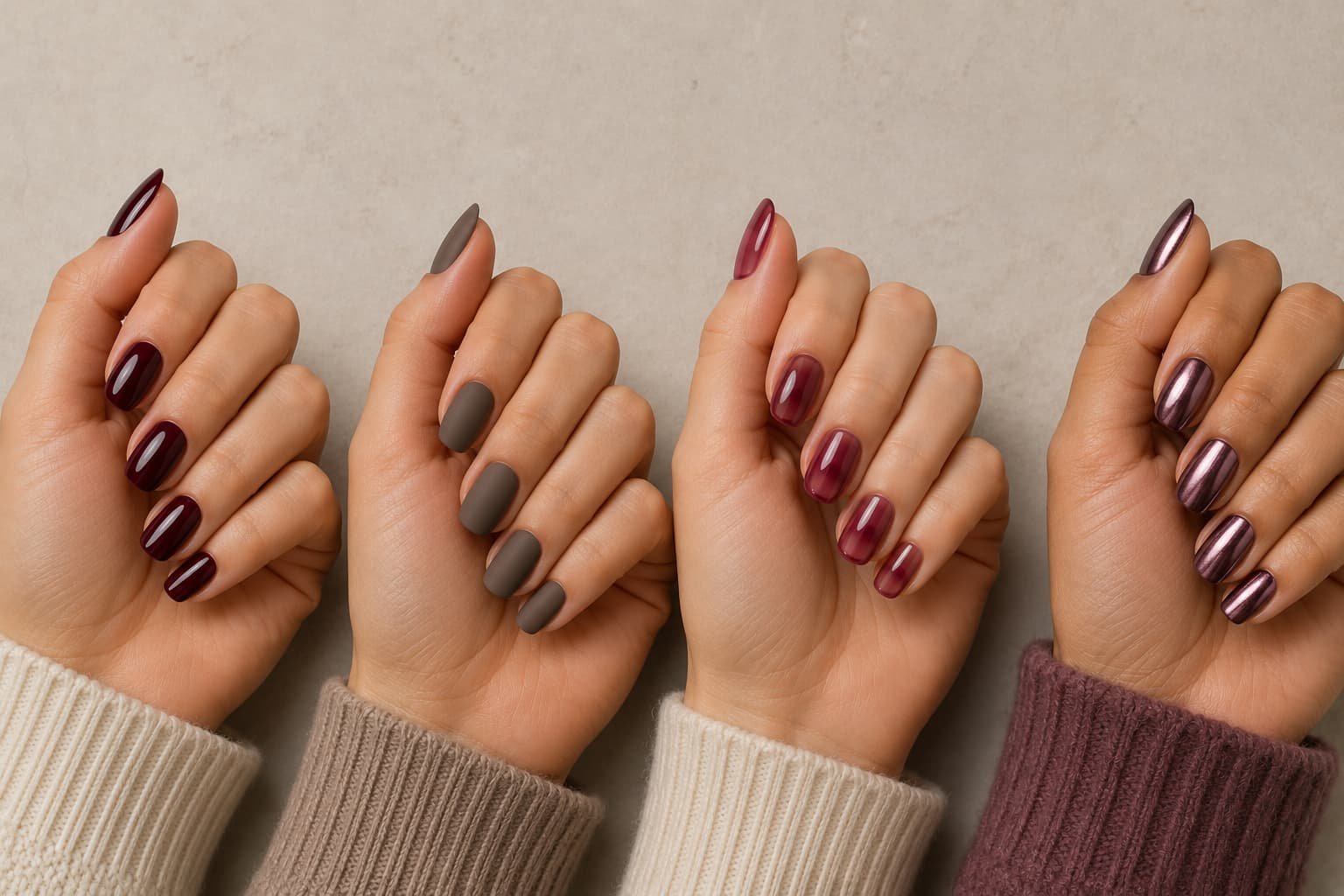
September nail ideas can sit comfortably between lighter late-summer colors and the richer shades often associated with early fall. You might keep the manicure soft with cream or muted pink, introduce warmer neutrals such as caramel and brown, or choose deeper colors such as burgundy, olive, plum, or navy.
The designs can be simple or detailed. Solid colors, French tips, subtle florals, translucent finishes, metallic accents, and abstract patterns all offer different visual directions.
There is no required September manicure style. The most useful approach is to choose colors, finishes, and details that create the seasonal look you want.
What Makes a Nail Design Feel Right for September?
September nail inspiration can combine lighter colors with warmer or deeper shades.
A manicure might use a neutral base with dark tips, one muted color across every nail, or several coordinated shades. The final appearance can vary depending on nail length, shape, finish, color placement, and the amount of detail.
Moving From Late-Summer Colors Into Early-Fall Shades
Light colors can still be part of a September manicure.
Cream, beige, soft pink, muted blue, and warm nude can form the main palette or provide a background for deeper accents. Burgundy, brown, olive, plum, and navy can then be introduced through French tips, half-moons, accent nails, or small decorative details.
For example, a neutral base with burgundy tips keeps most of the manicure light while adding a richer color around the edge.
Cream and chocolate brown can create a warmer contrast, while dusty blue and navy provide a cooler alternative.
Another option is to use a different shade on each nail while keeping the colors visually connected. This can add variety without requiring detailed nail art.
Light, Warm, and Deeper Color Directions
A lighter September palette might include cream, beige, muted pink, soft blue, or warm nude.
For a warmer look, caramel, rust, taupe, chocolate brown, and muted metallic details can be considered.
Deeper color options include burgundy, plum, dark red, navy, and olive.
These shades can be worn individually or combined. The same color palette can also appear different depending on whether the finish is glossy, matte, translucent-looking, or reflective.
September Nail Colors to Consider
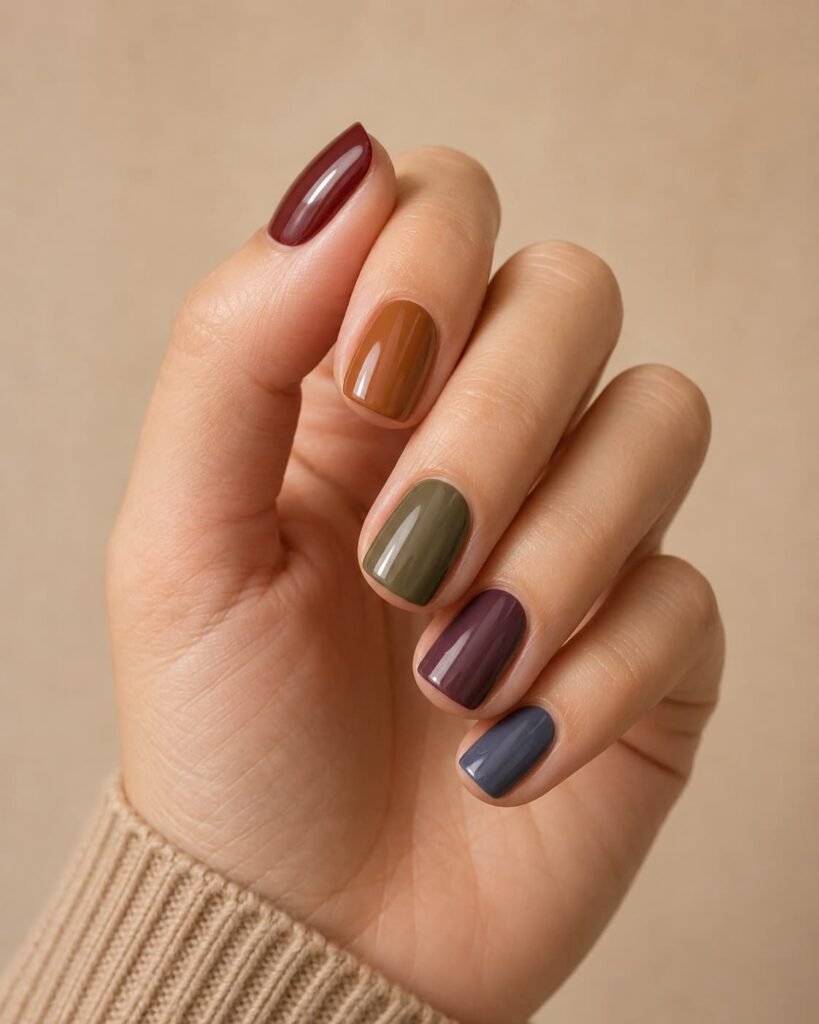
There is no fixed September nail-color palette. Different shades can create different interpretations of the move from late-summer styling toward early-fall color.
Burgundy and Wine Red
Burgundy and wine red provide deeper alternatives to brighter red shades.
They can cover the entire nail or appear only on selected areas, including French tips, half-moon details, abstract shapes, or accent nails.
Burgundy can also be paired with cream, nude, brown, or metallic-looking accents.
A glossy finish creates more visible reflection, while a matte finish reduces shine and changes the overall visual effect.
Chocolate Brown and Caramel
Chocolate brown creates a rich, warm-looking manicure, while caramel offers a lighter shade from the same broad color family.
A single chocolate brown shade can keep the manicure simple and place most of the attention on color and finish.
For more variation, caramel can be combined with taupe, beige, cream, or deeper brown.
Several related brown tones can also be used across the manicure without adding complex patterns.
Brown-and-cream combinations are worth mentioning briefly here, but detailed versions are better explored separately rather than repeated throughout a broader September guide.
Olive and Muted Green
Olive offers an earthy color direction that differs from red and brown palettes.
It can be used as a solid color, French tip, side-tip detail, abstract section, or accent nail.
Cream, beige, brown, and metallic-looking details can provide contrasting colors around an olive base.
Lighter muted greens can create a softer palette, while darker olive shades provide stronger contrast.
Sage green belongs within this broader muted-green direction, but detailed sage manicure variations do not need to be repeated in a general September article.
Plum and Berry Tones
Plum, berry, mauve, and deeper purple shades offer another route into richer seasonal color.
A deeper plum can create stronger contrast, while mauve or muted berry tones provide a softer alternative.
These shades can be worn as solid colors or used for French tips, accent details, or translucent-looking designs.
Cream, nude, soft pink, and metallic accents are possible supporting colors if you want additional contrast.
Taupe, Beige, and Cream
Taupe, beige, and cream can work well for a more neutral manicure.
They can be worn alone or used as a base for darker tips, fine lines, small florals, geometric details, or metallic accents.
Taupe can provide a deeper muted neutral, while cream keeps the palette lighter. Beige can vary between warmer and cooler neutral tones depending on the exact shade.
These neutrals can also provide visual balance when paired with colors such as burgundy, plum, olive, or navy.
Dusty Blue and Navy
September nail ideas do not need to rely only on warm shades.
Dusty blue provides a softer cool-toned option, while navy introduces a deeper color.
The two can be used together or combined with cream, nude, grey-toned neutrals, or silver-colored details.
A dusty blue base with navy tips is one possible two-tone design, while solid navy nails offer a simpler alternative.
September Nail Design Ideas
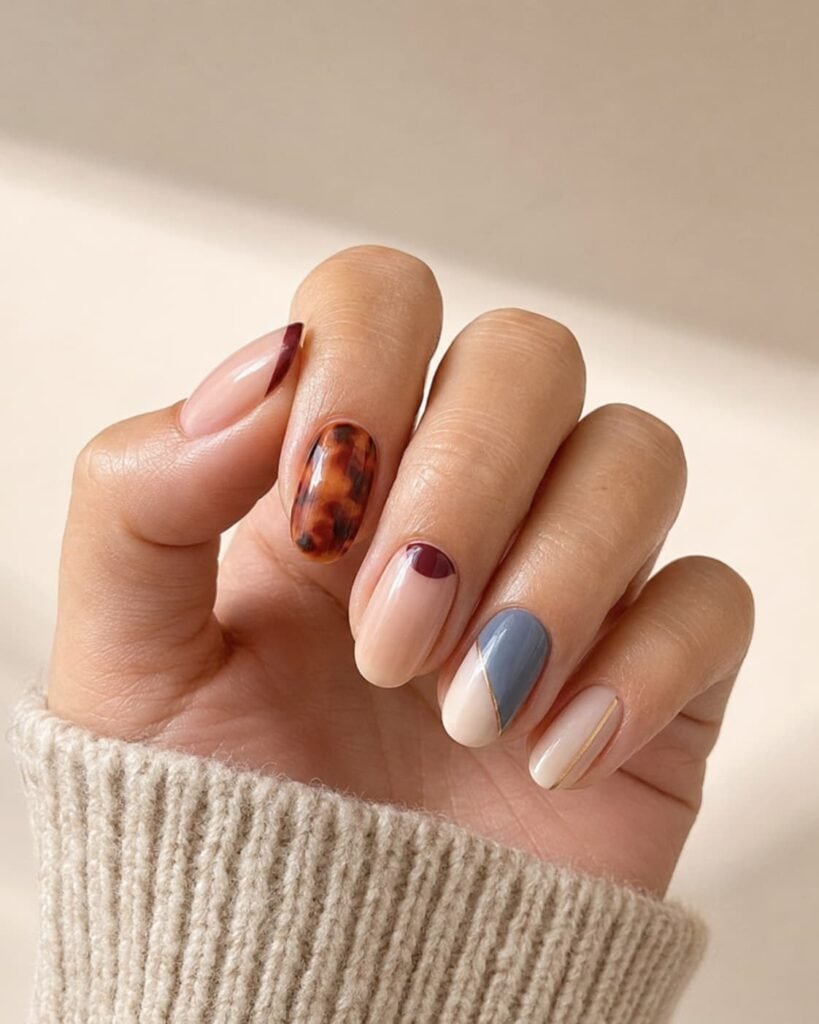
The ideas below differ through color placement, finish, pattern, and overall visual style rather than repeating the same manicure with minor changes.
1. Burgundy Micro French Tips
A micro French manicure uses a very narrow line of color along the outer edge of the nail.
For a September version, burgundy can replace the traditional white tip. A sheer-looking, nude, or pale pink base keeps most of the nail light while adding a deeper shade around the edge.
The tip can remain very fine for a minimal design or become slightly wider if you want the burgundy to stand out more.
This is one possible option for someone who prefers a subtle shift toward deeper seasonal colors.
2. Chocolate Brown Solid Nails
A solid chocolate brown manicure relies on color and finish rather than decorative art.
The same shade can be used across every nail for a consistent appearance.
A glossy surface adds visible reflection, while a matte-looking finish creates less shine. Either approach changes the appearance without changing the underlying color.
Chocolate brown can be adapted to different nail lengths and shapes, although the final look can vary with the proportions of the nail.
For a little more variation, one or two nails can use a lighter brown or caramel shade instead of introducing a separate pattern.
3. Olive Green Side-Tip Nails
A side-tip design places color toward one side of the nail rather than following the entire outer edge of a traditional French manicure.
Olive green can be used for the angled section over a sheer or neutral-looking base.
The colored area can stay narrow for a restrained look or become wider for stronger contrast.
Cream, beige, or a small metallic-looking detail can also be added if you want another color without making the design too busy.
4. Berry Jelly-Effect Nails
Jelly-effect nails have a translucent-looking appearance rather than the dense coverage associated with an opaque color.
Berry, wine-red, or plum tones can be interpreted through this finish for a lighter-looking version of deeper seasonal shades.
The same finish can cover every nail, or it can be combined with a neutral accent nail or minimal decorative detail.
The final appearance can vary depending on the base color, level of transparency, lighting, and reflective finish.
This makes berry jelly-effect nails visually different from a standard solid burgundy or plum manicure.
5. Tortoiseshell-Inspired Accent Nails
Tortoiseshell-inspired nail art typically uses irregular areas of amber, caramel, brown, and deeper tones to create a layered pattern.
For a September manicure, one possible approach is to use the pattern on one or two accent nails and keep the remaining nails in solid caramel, chocolate brown, or neutral shades.
Using the pattern selectively can create a noticeable contrast between detailed and simple nails without repeating the same design across the entire manicure.
6. Nude Nails With Burgundy Half-Moons
Half-moon nail art places a curved area of color near the base of the nail.
A nude or sheer-looking base with burgundy half-moons can create a design that keeps most of the nail neutral while concentrating deeper color near the lower edge.
The burgundy area may be kept narrow for a subtle look or made wider for stronger contrast.
7. Dusty Blue and Cream Color Blocking
Color blocking uses separate areas of color to create a defined graphic design.
Dusty blue and cream can be arranged in straight, diagonal, curved, or asymmetrical sections. A nude or transparent-looking area can also be left between the colors if you prefer more visible separation.
This combination offers a cooler September color direction compared with palettes built mainly around brown, red, or olive.
8. Plum Chrome-Effect Nails
Chrome-effect nails have a reflective surface that can change how the underlying color appears in different lighting.
A plum base paired with a chrome-like finish creates a different visual effect from a standard opaque purple manicure.
The reflective finish can cover every nail or be limited to selected accent nails. The final appearance can vary depending on the plum shade and the type of reflective effect used.
9. Neutral Nails With Fine Metallic Lines
Beige, nude, taupe, or cream can provide a simple background for fine metallic-looking details.
Thin lines may run diagonally across the nail, follow one side, curve through the center, or appear only on selected accent nails.
Gold-colored lines can add a warmer visual contrast, while silver-colored details create a cooler combination.
Keeping the metallic areas small allows the neutral base to remain the main part of the design.
10. Muted September Floral Nails
Floral nail art can be adapted through color rather than changing the basic floral theme.
For a softer September palette, one possible combination is cream, burgundy, dusty pink, muted yellow, olive, or brown over a neutral-looking base.
The flowers can be placed near the tip, along one side of the nail, or on only one or two accent nails.
Smaller floral details may suit readers who prefer a restrained design, while larger or more numerous flowers can create a more decorative look.
11. Matte Taupe With Glossy Details
Matte and glossy finishes can be combined within the same color palette to create contrast without adding several shades.
A taupe manicure might use a matte-looking base with glossy French tips, curved lines, geometric shapes, or small accent details.
Because the color remains similar across the nail, the difference in surface finish becomes the main visual feature.
This is one possible option for someone who prefers subtle detail rather than a multi-color design.
12. Abstract Rust and Cream Nails
Abstract nail art can use curved shapes, irregular blocks, waves, or asymmetrical areas rather than a repeated pictorial pattern.
Rust and cream can be combined over a nude or transparent-looking base, with open areas left between the colors.
Some nails may contain more rust while others use more cream. Keeping the same small group of shades across the manicure can help the different designs feel visually connected.
This creates a warm color direction without relying on leaves, pumpkins, or other literal fall motifs.
13. Deep Red Reverse French Nails
A reverse French design places the main colored detail near the base of the nail rather than along the outer tip.
Deep red or burgundy can be used for the curved lower section while the rest of the nail remains nude or sheer-looking.
The colored area can be narrow for a minimal design or slightly wider when stronger contrast is preferred.
This placement offers a different way to use deep red while leaving much of the nail neutral.
14. Navy Nails With Minimal Silver Accents
Navy provides a cool-toned alternative to warmer September shades such as burgundy, brown, and olive.
A solid navy manicure can be paired with small silver-colored details, such as a fine line, narrow tip, tiny dot, or simple accent on one nail.
Another option is to keep most nails completely navy and use the metallic detail only once or twice across the set.
This keeps the design simple while adding a small reflective element.
15. Mixed Early-Fall Color Nails
A mixed-color manicure uses several shades across the same set rather than repeating one color on every nail.
One possible September palette could combine burgundy, olive, cream, chocolate brown, and muted blue. Each nail may use a different solid shade while keeping the overall palette coordinated.
A more neutral version might combine cream, beige, caramel, taupe, and deeper brown.
The manicure can remain completely solid-color, or one or two nails may include a small accent detail. This approach creates variety mainly through color rather than repeated patterns.
Simple September Nails for a More Minimal Look
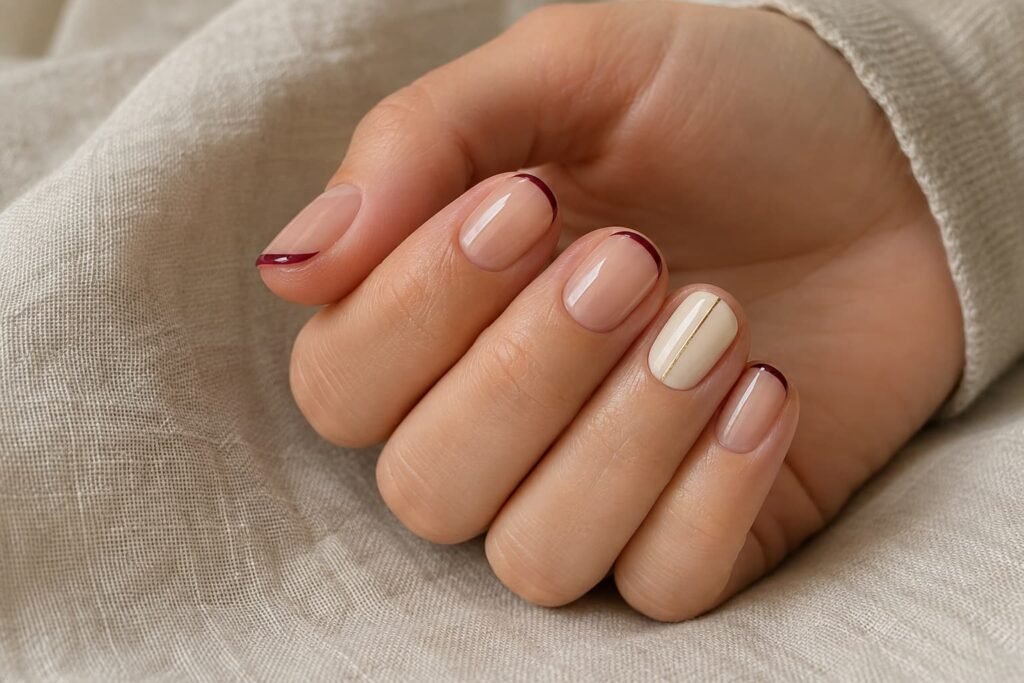
A September manicure does not need detailed nail art. Color, placement, and finish can provide enough visual interest on their own.
If you prefer a simpler look, solid shades, fine French tips, or a small number of accent nails can keep the design clean and easy to coordinate.
Solid Seasonal Colors
Using one shade across every nail is one of the simplest manicure options.
Deeper colors such as burgundy, chocolate brown, olive, plum, taupe, navy, or muted red can create a richer appearance. Cream, beige, muted pink, and dusty blue can keep the palette lighter.
The finish can also change how the color looks. A glossy surface reflects more light, while a matte finish creates a flatter, less reflective appearance.
Micro French Tips
Micro French tips use a very narrow band of color along the outer edge of the nail.
For a September-inspired version, possible tip colors include burgundy, brown, olive, plum, navy, or muted blue.
A sheer or neutral-looking base keeps most of the nail light while allowing the colored edge to remain visible.
The tip can stay very fine for a subtle look or become slightly wider if you prefer stronger contrast.
One or Two Accent Nails
Another minimal option is to keep most nails in one solid shade and add detail to only one or two nails.
Possible accent ideas include a fine metallic-looking line, a small floral design, tortoiseshell-inspired patterning, a contrasting color, or a simple geometric shape.
Limiting the decorative elements can add variation while keeping the overall manicure visually simple.
September Nail Ideas by Nail Length
Nail length changes the amount of visible space available for patterns, tips, and decorative details.
It does not make one type of manicure better than another. Instead, the same design may need different proportions depending on the available nail surface.
Short September Nails
Short nails can work well with designs that use compact, clearly defined details.
Solid burgundy, brown, olive, taupe, navy, or neutral shades are simple options. Small details such as micro French tips, half-moons, fine metallic lines, tiny florals, or basic color blocking can also be considered.
Keeping the design relatively focused may help individual elements remain easier to distinguish on a smaller nail surface.
Medium-Length September Nails
Medium-length nails provide more space for both simple and decorative designs.
French tips can be slightly wider, while florals, tortoiseshell-inspired accents, abstract curves, reverse French details, and mixed finishes can occupy more of the nail.
Two or more colors can also be divided into separate areas without requiring a highly detailed pattern.
If you prefer a simpler style, a solid-color manicure can still work just as well.
Long September Nails
Longer nails provide a larger surface for color placement and nail art.
Possible options include wider French tips, layered abstract shapes, larger floral details, multiple color blocks, or a mix of solid and patterned nails.
Negative space or contrasting sections may also become more noticeable because there is more room between design elements.
Detailed artwork is optional. A single shade such as burgundy, chocolate brown, olive, plum, or navy can also keep the design simple and color-focused.
Nail Shapes That Can Change the Look of September Designs
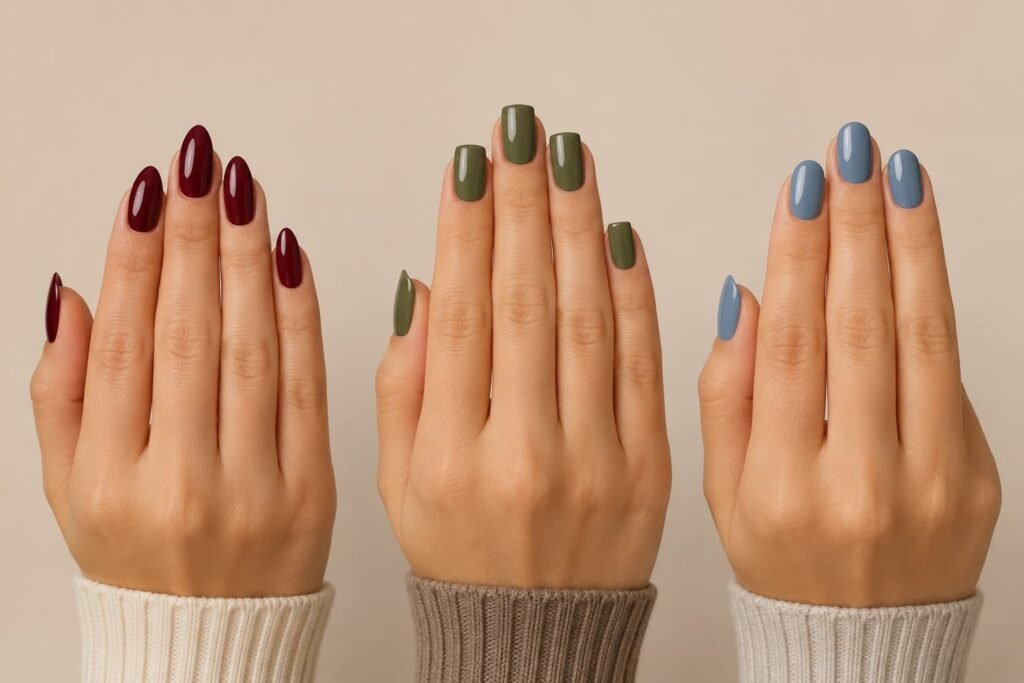
Nail shape affects the outline of the manicure and can change how tips, curves, and patterns are positioned.
The same design can look different on almond, square, squoval, or oval nails because the edges and proportions are not the same.
Almond September Nails
Almond nails taper toward the tip and end in a softly rounded point.
This outline can give French tips, side details, curved lines, and flowing abstract patterns a more tapered visual direction.
A burgundy French tip, for example, can follow the curved edge of the shape. An olive side-tip can emphasize one side of the taper.
Solid colors, translucent-looking finishes, and metallic accents can also be adapted to almond nails.
Square and Squoval September Nails
Square nails have straighter sides and a flatter outer edge. Squoval nails keep a similar overall shape but have softer corners.
These outlines can pair visually with straight French tips, geometric sections, color blocking, and other designs that use defined edges.
A dusty blue and cream color-block design, for example, can follow the straighter lines of a square nail.
Solid burgundy, brown, navy, or neutral colors are also possible if you prefer less decorative detail.
Oval September Nails
Oval nails have a rounded outline without the stronger taper seen in almond shapes.
Curved French tips, small florals, rounded half-moons, and softer abstract lines can follow this outline naturally.
Solid colors or small metallic details can also be used when you want the shape and color to remain the main visual features.
The final appearance can vary depending on nail length, width, color placement, and the amount of detail.
Glossy, Matte, Jelly, or Metallic Finishes?
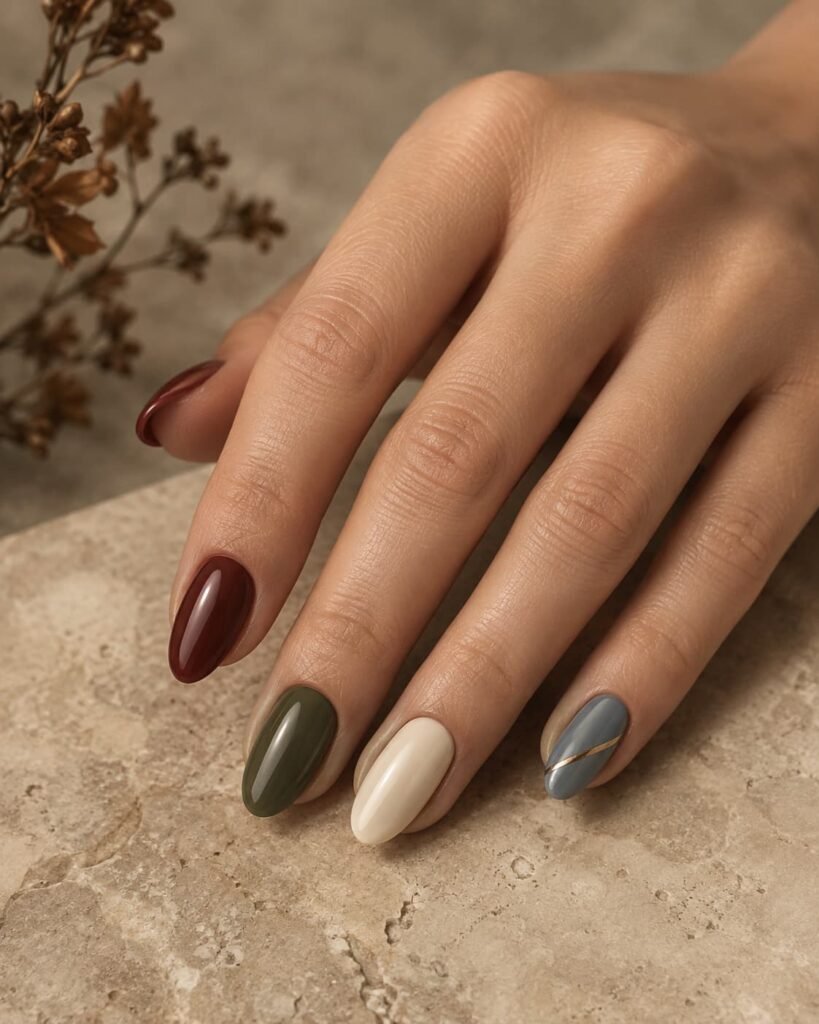
Finish affects how light interacts with the surface of a manicure and can noticeably change its appearance.
The same color can look different when presented with a glossy, matte, translucent-looking, or highly reflective finish.
Glossy September Nails
A glossy finish creates a smooth, reflective-looking surface.
It can be used with both lighter and deeper shades, including cream, nude, burgundy, brown, olive, plum, or navy.
Gloss can also be paired with French tips, abstract patterns, florals, or solid-color manicures.
If the color is intended to be the main feature, a glossy finish can add reflection without requiring extra nail art.
Matte September Nails
A matte finish has less visible shine than a glossy surface.
Colors such as burgundy, chocolate brown, plum, olive, taupe, or navy may look different when the reflective quality is reduced.
Matte and glossy areas can also appear together in the same manicure. For example, a matte taupe base could be paired with glossy tips, lines, or curved details in a similar shade.
This creates contrast through finish rather than through several colors.
Translucent and Jelly-Effect Finishes
Jelly-effect nails have a more translucent appearance than fully opaque color.
Berry, red, plum, brown, and other shades can be used with this type of finish.
The color may appear lighter or more layered depending on the base shade and degree of transparency.
A jelly-effect manicure can cover every nail or be combined with a neutral accent nail or small decorative element.
Chrome and Metallic Accents
Chrome-like and metallic-looking finishes create a more reflective appearance.
They can cover the entire nail or appear in smaller areas such as French tips, fine lines, curved accents, or selected nails.
Plum with a chrome-like finish is one possible deeper option, while beige or nude nails with fine gold- or silver-colored lines create a more restrained metallic look.
The final appearance can vary depending on the base color, placement, lighting, and reflective finish.
How to Choose Between Light and Dark September Nails
Choosing between lighter and deeper colors mainly depends on the overall appearance you want.
Cream, beige, muted pink, taupe, and dusty blue can create a softer palette. Burgundy, chocolate brown, plum, olive, navy, and deep red offer richer color options.
You can also combine both directions. A light or sheer-looking base with darker French tips is one way to introduce deeper color without covering the entire nail.
A single-color manicure can keep the design simple, while several coordinated shades can add more variety. Detailed nail art is not necessary for a mixed-color look.
The amount of decoration can also change the overall style. Fine lines, micro French tips, or one accent nail can keep the manicure minimal. Florals, abstract shapes, color blocking, or mixed finishes can create a more decorative appearance.
Warm-looking palettes may include shades such as caramel, rust, brown, burgundy, or olive. Cooler combinations might use dusty blue, navy, plum, or silver-colored accents.
Nail length and shape can affect how much space is available for tips, patterns, and other details. A narrow French tip may appear differently on a short square nail than on a longer almond shape, for example.
The final look can vary with color placement, nail proportions, finish, and the amount of detail used.
September Nails That Transition Into October
September nail ideas can move gradually from lighter combinations toward deeper fall colors.
This does not require Halloween artwork or other occasion-specific designs. Color alone can create a noticeable shift.
Burgundy, Plum, and Deep Red
Burgundy, plum, and deep red can be paired with lighter shades such as nude, soft pink, mauve, or cream.
For a lighter September look, these deeper colors might appear only on French tips, half-moons, or selected accent nails.
If you prefer more depth later in the season, the same shades can cover a larger part of the manicure.
For example, a nude manicure with burgundy tips could be followed by a design that uses burgundy or plum more prominently.
Brown, Olive, and Taupe
Brown, olive, and taupe provide another possible color direction.
Cream, beige, caramel, or muted green can be combined with deeper brown or olive details for a lighter contrast.
A darker version might use chocolate brown, deeper olive, or richer taupe across more of the manicure.
These shades can be worn individually or combined within a neutral and earthy-looking palette.
Darker French Tips and Minimal Metallic Details
French tips can introduce deeper colors while leaving much of the nail light or neutral.
Possible tip colors include burgundy, navy, plum, chocolate brown, olive, and deep red.
Fine gold- or silver-colored lines, narrow metallic-looking tips, or one reflective accent nail can add another visual element without changing the manicure into an occasion-specific design.
This keeps the focus on color, placement, and finish rather than Halloween imagery.
Frequently Asked Questions
What nail colors work well for September?
Possible September nail colors include burgundy, chocolate brown, caramel, olive, plum, berry, taupe, cream, beige, dusty blue, navy, muted pink, and deep red.
There is no fixed September palette. You can choose lighter shades, deeper colors, or a combination of both depending on the look you prefer.
Are September nails more summer or fall?
September nail inspiration can include elements of both late-summer and early-fall styling.
For readers in the Northern Hemisphere, September includes the seasonal transition from summer into fall. A manicure can therefore combine lighter shades with richer colors rather than following only one palette.
Possible combinations include cream with brown, muted pink with burgundy, or dusty blue with navy.
Do September nails have to be dark?
No. Dark colors are only one option.
Cream, beige, soft pink, nude, dusty blue, and other lighter shades can also be used for September nails.
If you want some deeper color without a fully dark manicure, burgundy, olive, plum, brown, or navy can be limited to French tips or accent nails.
Can you still wear light nail colors in September?
Yes. Nail color is a personal styling choice rather than a seasonal requirement.
Light neutrals, muted pinks, soft blues, cream, and similar shades can be worn on their own or combined with deeper colors.
Pairing a lighter base with darker tips or accents is one possible way to create a transitional look.
What are simple September nail ideas for short nails?
Simple options for short nails include solid burgundy or brown, neutral colors, micro French tips, small half-moons, fine metallic-looking lines, basic color blocking, or one small accent nail.
Because short nails provide a smaller visible surface, compact details may be easier to distinguish than very layered designs.
What colors can transition from September into October?
Burgundy, plum, chocolate brown, olive, taupe, navy, and deep red can all be used in both September and later fall color palettes.
One option is to use these shades as small accents in September and make them more prominent later if you prefer a deeper look.
Can French-tip nails work for a September manicure?
Yes. French-tip designs can be adapted with colors such as burgundy, brown, olive, plum, navy, muted blue, or deep red.
The tips can be narrow, curved, angled, asymmetrical, or slightly wider depending on the design.
A sheer or neutral-looking base can keep most of the nail light while allowing the tip color to provide contrast.
What is the difference between September nails and general fall nails?
September nail ideas can focus on the transition between lighter late-summer colors and deeper early-fall shades.
General fall nail inspiration covers a broader part of the season and may include darker palettes or more explicitly autumn-themed designs.
For September, combinations such as cream with burgundy, dusty blue with navy, or beige with olive offer one way to create a transitional appearance without requiring a fully dark palette.