



Long 4C hair has tightly coiled strands and a natural shape that can be styled in many ways. Caring for this texture often involves gentle cleansing, conditioning, careful detangling, and choosing styles that are comfortable to maintain.
A simple routine can help keep the hair manageable and reduce unnecessary friction during styling. The right approach depends on your hair’s individual needs, the products you use, and how you prefer to wear your natural texture.
What Is Long 4C Hair?
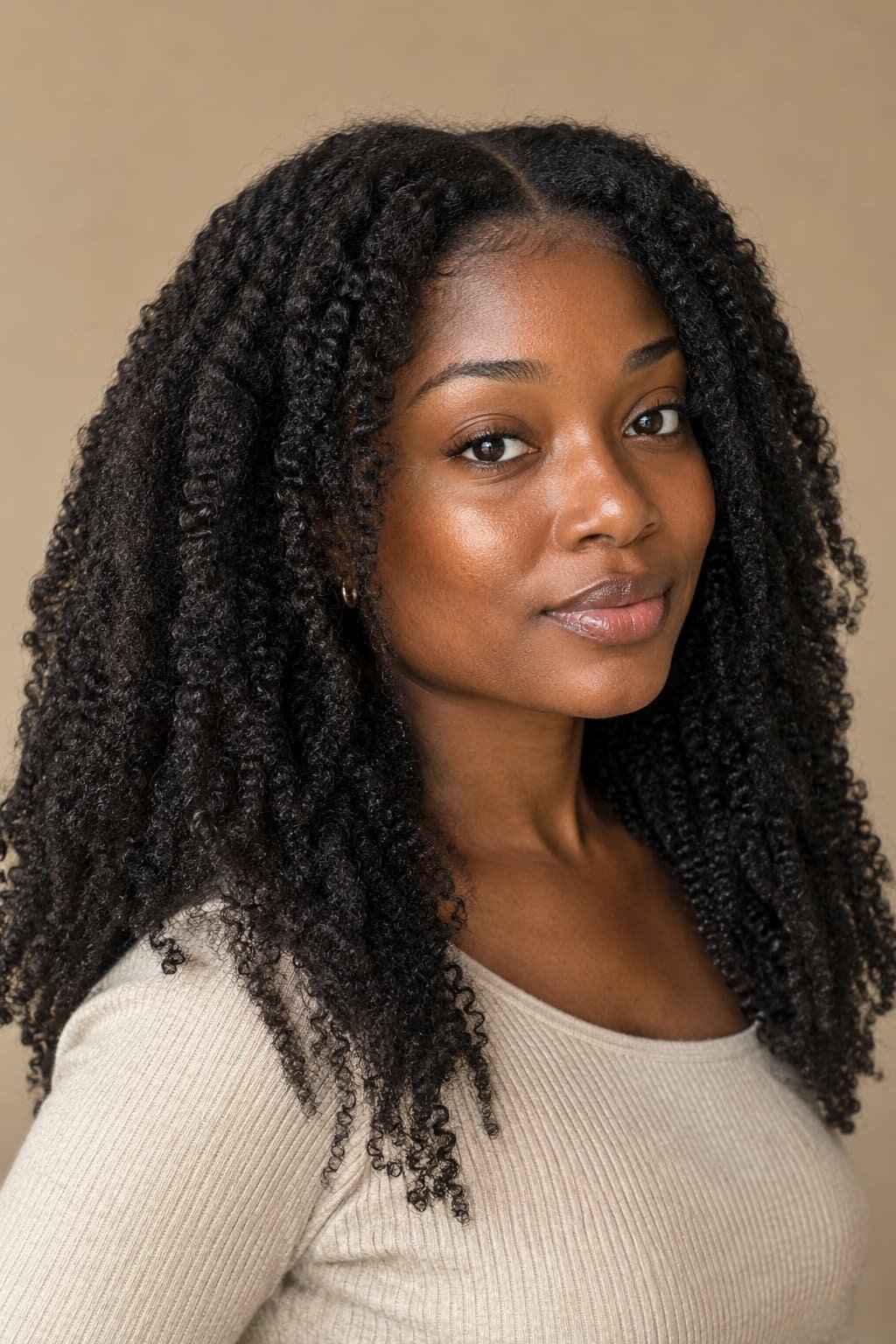
Type 4C hair is a tightly coiled hair texture in which the coil pattern may be less visible without stretching. Individual strands can vary in thickness, density, and appearance, so not all 4C hair looks the same.
Shrinkage is another characteristic of tightly coiled hair. As the hair dries and returns to its natural shape, its visible length can become shorter than its stretched length. This is a normal feature of textured hair.
Long 4C hair can be worn loose, gathered into a puff, arranged in twists, or styled into braids and buns. The most suitable option depends on the desired look, available styling time, and comfort.
How to Keep Long 4C Hair Moisturized
Conditioning can help improve softness, reduce friction, and make tightly coiled hair easier to manage. The goal is to find a routine that leaves the hair feeling comfortable without relying on excessive amounts of styling products.
The American Academy of Dermatology recommends choosing hair-care products suited to your texture, applying shampoo mainly to the scalp, and using conditioner after washing. provides additional information about these practices.
Choosing the Right Shampoo and Conditioner
Choose a shampoo that cleans your hair effectively without leaving it feeling excessively dry. Washing frequency can vary depending on product buildup, how quickly your hair becomes dirty, and your usual styling routine.
Apply shampoo primarily to the scalp and massage gently rather than rubbing it vigorously through the lengths. During rinsing, allow the lather to pass through the rest of the hair.
Follow with a conditioner appropriate for your hair’s needs. Conditioner can help soften the strands and improve slip, making detangling easier. Applying it through the lengths and ends may be useful when those areas feel dry or become tangled.
Using Leave-In Conditioners and Hair Creams
A leave-in conditioner can be useful when you want additional softness and easier styling between washes. Hair creams are another option for arranging twists, defining textured styles, or creating a smoother finish.
Start with a small amount and distribute it through manageable sections. Adjust the quantity according to how your hair feels and how the product performs. A heavier cream is not automatically better than a lighter leave-in conditioner.
Oils can be used as an optional addition to a hair-care routine, depending on personal preference and the product. However, oils and creams do not replace cleansing and conditioning. You do not need to use every type of product to care for long 4C hair.
Avoiding Excessive Product Buildup
Using several styling products without cleansing regularly can leave residue on the hair. This may make the strands feel coated or cause products to accumulate visibly.
To keep your routine manageable, use products in amounts appropriate for your hair and wash when needed. If ordinary cleansing does not remove persistent residue, a clarifying shampoo may be an option when suitable for your hair and scalp.
Pay attention to how your hair responds rather than adding another product whenever it feels less manageable. A straightforward routine built around cleansing, conditioning, and gentle styling is a reasonable starting point for long 4C hair.
How to Detangle Long 4C Hair Gently
Detangling long 4C hair is easier when you work patiently and avoid pulling through knots. Tightly coiled strands can wrap around one another, so rushing the process may cause unnecessary breakage. A little preparation and a consistent technique can make the task more manageable.
Detangling Hair in Small Sections
Divide your hair into several manageable sections before you begin. If your hair is dense or particularly prone to tangling, smaller sections may be easier to handle than larger ones.
Apply a suitable conditioner or detangling product if needed to provide slip. Gently loosen visible knots with your fingers, starting near the ends and gradually working toward the roots. Once a section is detangled, loosely twist or braid it to keep it separate while you work on the remaining hair.
Avoid forcing your fingers or comb through a stubborn knot. Take your time and gently separate the strands instead.
Using Fingers or a Wide-Tooth Comb
Finger detangling allows you to feel individual knots and separate them gradually. It can be useful when you want to work through tangles without immediately introducing a comb.
A wide-tooth comb is another option, particularly when used with conditioner or a product that provides enough slip. Begin at the ends and move upward in short, gentle strokes, holding the hair above the knot to limit pulling.
Neither method is automatically best for everyone. You can use your fingers first and follow with a wide-tooth comb if you prefer a more thoroughly separated finish. Choose the method that works comfortably for your hair.
How to Retain Length and Reduce Breakage
Growing longer hair and retaining length are not the same thing. Hair length can increase while breakage makes the ends appear thinner or prevents the overall length from becoming more noticeable.
For long 4C hair, gentle handling, suitable conditioning, and thoughtful styling can help reduce avoidable breakage. Results vary, so focus on consistent care rather than expecting a particular length within a set period.
Protecting the Ends of Your Hair
The ends are the oldest part of each hair strand and have been exposed to everyday handling for longer than the roots. Paying attention to them can be useful when managing longer natural hair.
Condition the lengths and ends as appropriate, and avoid repeatedly pulling, twisting, or brushing them unnecessarily. When wearing loose hair, consider how often the ends rub against clothing, bags, or other surfaces.
Loose twists, braids, and buns are possible styling choices when you want to keep the ends gathered. They should remain comfortable and should not require excessive tension.
Reducing Damage During Daily Styling
Repeated manipulation can place unnecessary stress on hair, particularly when detangling involves pulling or when styles are installed too tightly. Gentle techniques and suitable accessories can make everyday styling easier.
Consider these practical habits:
- Use a wide-tooth comb or your fingers when detangling.
- Avoid pulling tightly on the hairline when gathering your hair.
- Choose soft hair ties that do not snag or catch strands.
- Limit unnecessary heat styling and follow the instructions for any heat-styling products you use.
- Loosen or change a style if it feels uncomfortable or pulls excessively.
You do not need to avoid every styling tool or hairstyle. The aim is to choose methods that suit your hair and minimize unnecessary stress during regular styling.
Knowing When to Trim Your Hair
Trimming may be helpful when the ends have visible splits, persistent tangles, or uneven damage. It is not necessary to remove a fixed amount of hair simply because a certain number of weeks or months has passed.
If your ends repeatedly catch on one another or look noticeably frayed, a small trim may help remove damaged portions. The amount to remove depends on the condition of the ends and the appearance you want to maintain.
Trimming does not make hair grow faster at the roots. Its purpose is to remove selected portions of the hair shaft, not to change the rate of growth.
Protective Hairstyles for Long 4C Hair
Protective hairstyles can gather the hair and reduce the need for repeated daily styling. However, a style is not automatically protective just because the hair is braided, twisted, or tucked away. Tension, installation technique, and maintenance also matter.
Choose styles that feel comfortable and allow you to care for your hair as needed. The following options offer different appearances without requiring the same styling technique.
Two-Strand Twists for Natural Texture
Two-strand twists are created by dividing a section of hair into two parts and wrapping the strands around one another. They can be worn in small sections for a detailed look or in larger sections for a fuller, more relaxed appearance.
Twists can be styled across the head, gathered into a bun, or arranged into a simple updo. They can also be unraveled once dry to create a twist-out with a different shape and texture.
Use manageable sections and avoid twisting too tightly at the roots. The finished style should feel comfortable rather than pulling on the scalp or hairline.
Flat Twists and Loose Braids
Flat twists are created close to the head, giving the hairstyle a more defined pattern than individual two-strand twists. They can follow straight lines, curves, or other parting designs, depending on the look you prefer.
Loose braids offer another option for keeping sections organized. They may be worn individually, gathered into an updo, or arranged in a simple pattern. The size and placement of the sections change the overall appearance.
Both styles can be adapted to different lengths, but the technique should suit your hair and comfort level. Avoid excessive tension, especially around the edges, and do not continue wearing a style that causes pain.
Low Buns and Comfortable Updos
A low bun gathers the hair near the nape of the neck, creating a simple style that works for everyday wear or more polished occasions. Depending on your length, you can wrap the hair into a compact bun or leave some volume visible.
Other updos can combine twists, loose braids, or gathered sections to create different shapes. A soft scrunchie or gentle hair tie may help hold the style without the snagging associated with some tight accessories.
Keep the style secure enough to stay in place but loose enough to remain comfortable. If you notice pulling or discomfort, adjust the arrangement rather than tightening it further. Changing your style occasionally can also help you avoid repeatedly stressing the same areas of your hair.
How to Maintain Long 4C Hair Between Wash Days
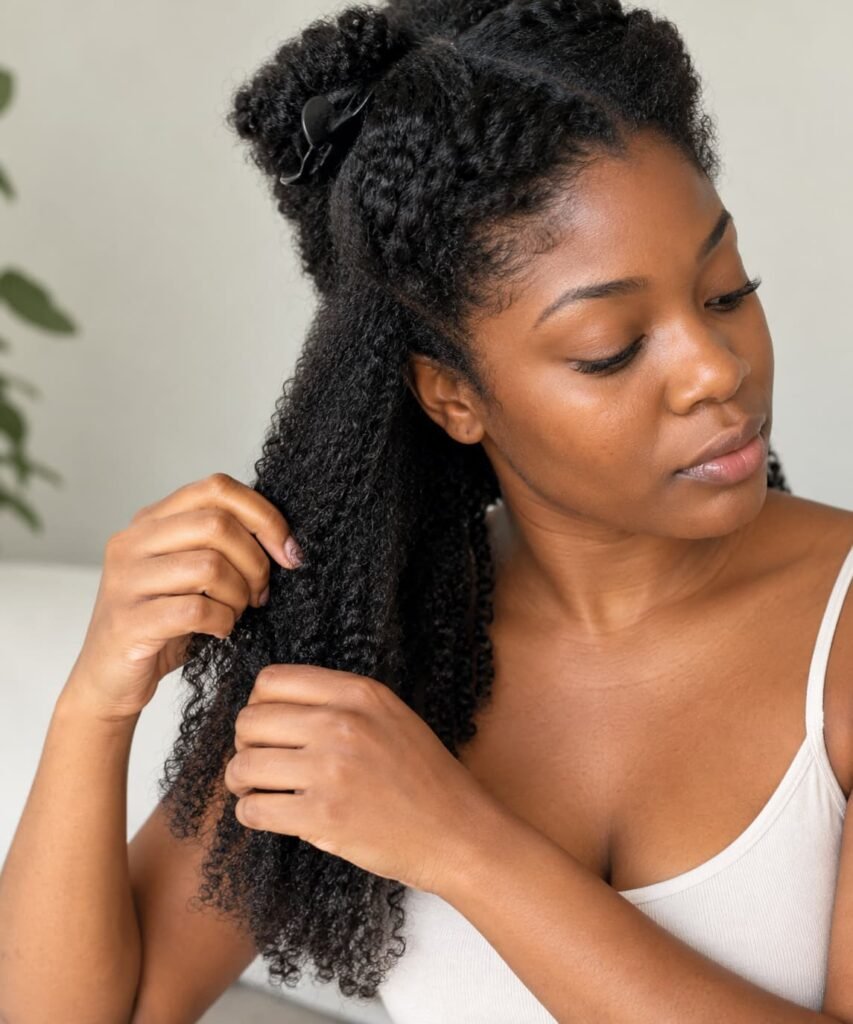
A simple between-wash routine can help keep long 4C hair manageable without adding unnecessary steps. Adjust your routine according to how your hair feels, the products you use, and the style you are wearing.
If your hair feels dry, try lightly misting it with water and applying a small amount of leave-in conditioner if it suits your hair. Use styling creams and oils according to your needs, rather than adding more products automatically. Too much product can build up on the hair, so cleanse it when needed.
At night, you can loosely twist or braid your hair and cover it with a satin or silk scarf or bonnet. A satin or silk pillowcase is another option. These methods can help reduce friction while you sleep.
When refreshing your hairstyle, work gently through any tangles instead of pulling or forcing the strands apart. If a style becomes difficult to manage, simplify it or choose a different one.
Choosing Hairstyles for Your Hair Length and Texture
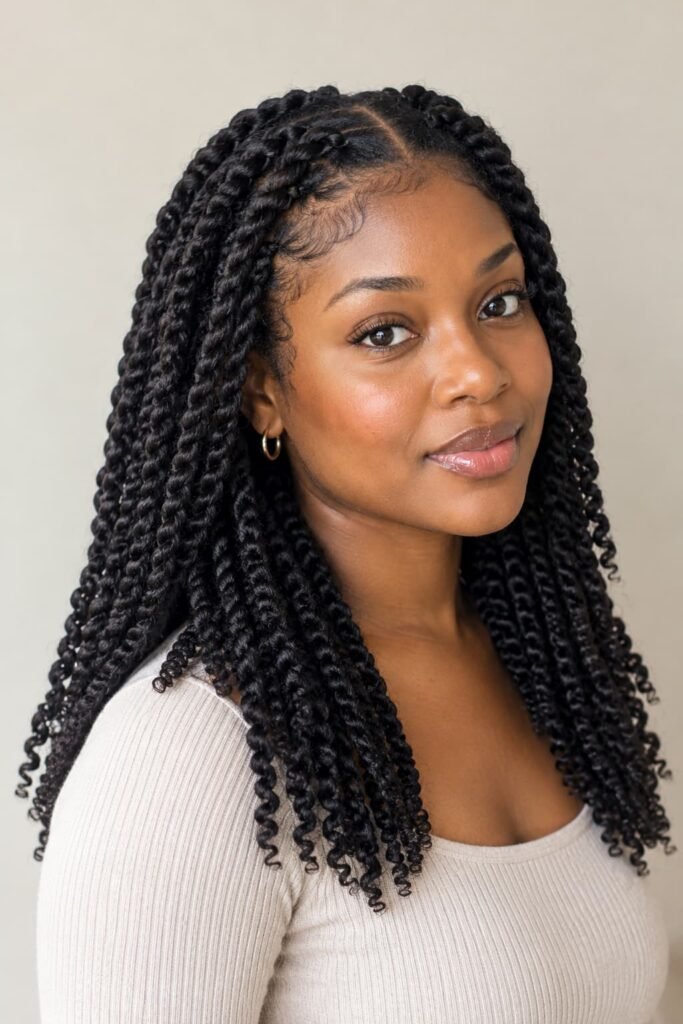
The right hairstyle depends on your preferred look, hair length, and how much time you want to spend styling. Two-strand twists, flat twists, braid-outs, loose braids, and buns are options to consider for long 4C hair.
Think about how a style will look, how easy it will be to maintain, and whether it feels comfortable. You can experiment with different styles to find options that fit your routine.
Working With Natural Shrinkage
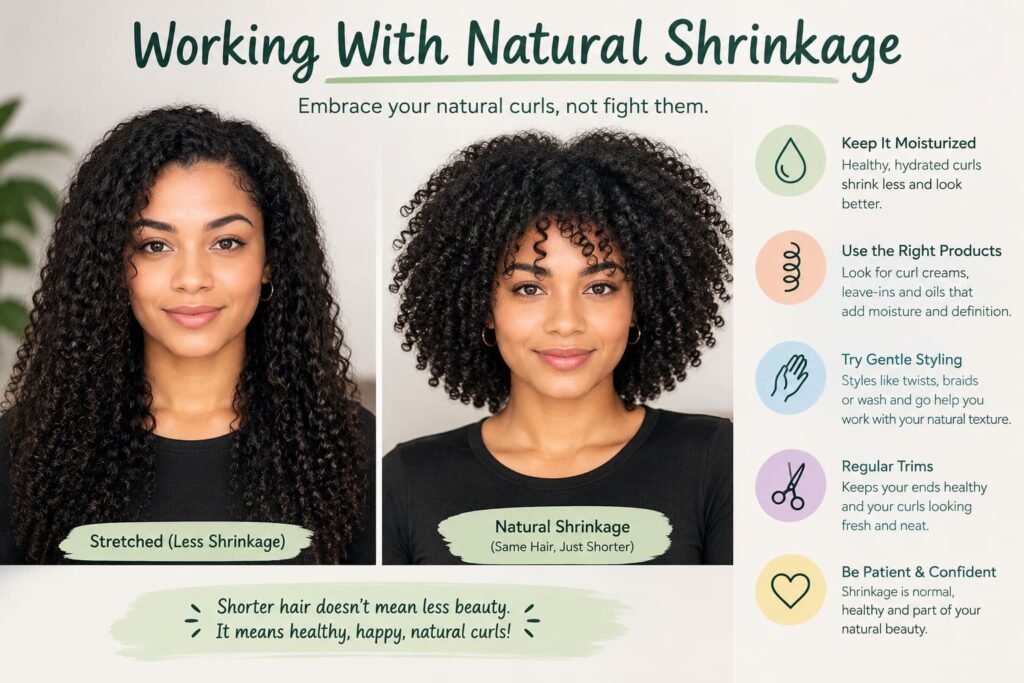
Shrinkage is a common feature of tightly coiled hair. As your hair dries, it can contract into its natural coil pattern and appear shorter than when stretched. This change in appearance does not necessarily mean that your hair has lost length.
If you enjoy wearing your hair in its natural shape, you can embrace the volume and definition of your coils. If you prefer a longer-looking style, twist-outs, braid-outs, and gentle stretching techniques are alternatives to explore.
The results will vary depending on your hair and styling method. You do not need to eliminate shrinkage to enjoy your natural texture.
Considering Styling Time and Maintenance
Some hairstyles take more time to install and refresh than others. Twists, braids, and simple buns may be convenient options, depending on your styling skills and preferences.
Consider your usual schedule before choosing a style. If you prefer a low-maintenance look, select something that is easy for you to refresh without repeatedly restyling your hair. If you enjoy trying different looks, you can alternate between twists, braid-outs, and loose updos.
Keep your styling comfortable. Avoid pulling your hair tightly, and do not continue wearing a style that causes discomfort. The best option is one that suits both your desired appearance and your everyday routine.
Frequently Asked Questions About Long 4C Hair
Does 4C Hair Shrink as It Dries?
Yes. Tightly coiled hair can contract as it dries, making it appear shorter than when stretched. The amount of shrinkage varies from person to person. It is a change in the hair’s appearance, not necessarily a sign of lost length.
How Often Should You Wash Long 4C Hair?
There is no single schedule that suits everyone. The British Association of Dermatologists recommends adjusting washing frequency to your hair type and products, with cleansing when excess product buildup or unwanted oiliness occurs. Its guidance for natural Afro-textured hair suggests a routine that may include washing every one to three weeks, depending on individual needs.
Which Hairstyles Work Best for Long 4C Hair?
Two-strand twists, flat twists, braid-outs, loose braids, and buns are all options. The best choice depends on your preferred appearance, available time, and hair length. Choose styles you can maintain comfortably, and avoid excessive tension when styling.
How Can You Reduce Breakage in 4C Hair?
Handle your hair gently, detangle it in manageable sections, and use conditioner to help make combing easier. A wide-tooth comb and a careful approach can help reduce unnecessary pulling. Protecting the ends during styling and avoiding excessive tension are also useful practices. These steps can help limit avoidable handling damage, but results depend on your hair and routine.
Final Thoughts
Caring for long 4C hair does not require a complicated routine. Gentle handling, suitable cleansing and conditioning, and hairstyles that fit your lifestyle can help make your hair easier to manage.
Your ideal routine may look different from someone else’s. Pay attention to what works for your hair, experiment with styles you enjoy, and make adjustments when your needs change. The goal is to build a practical routine that lets you wear and care for your natural coils with confidence.