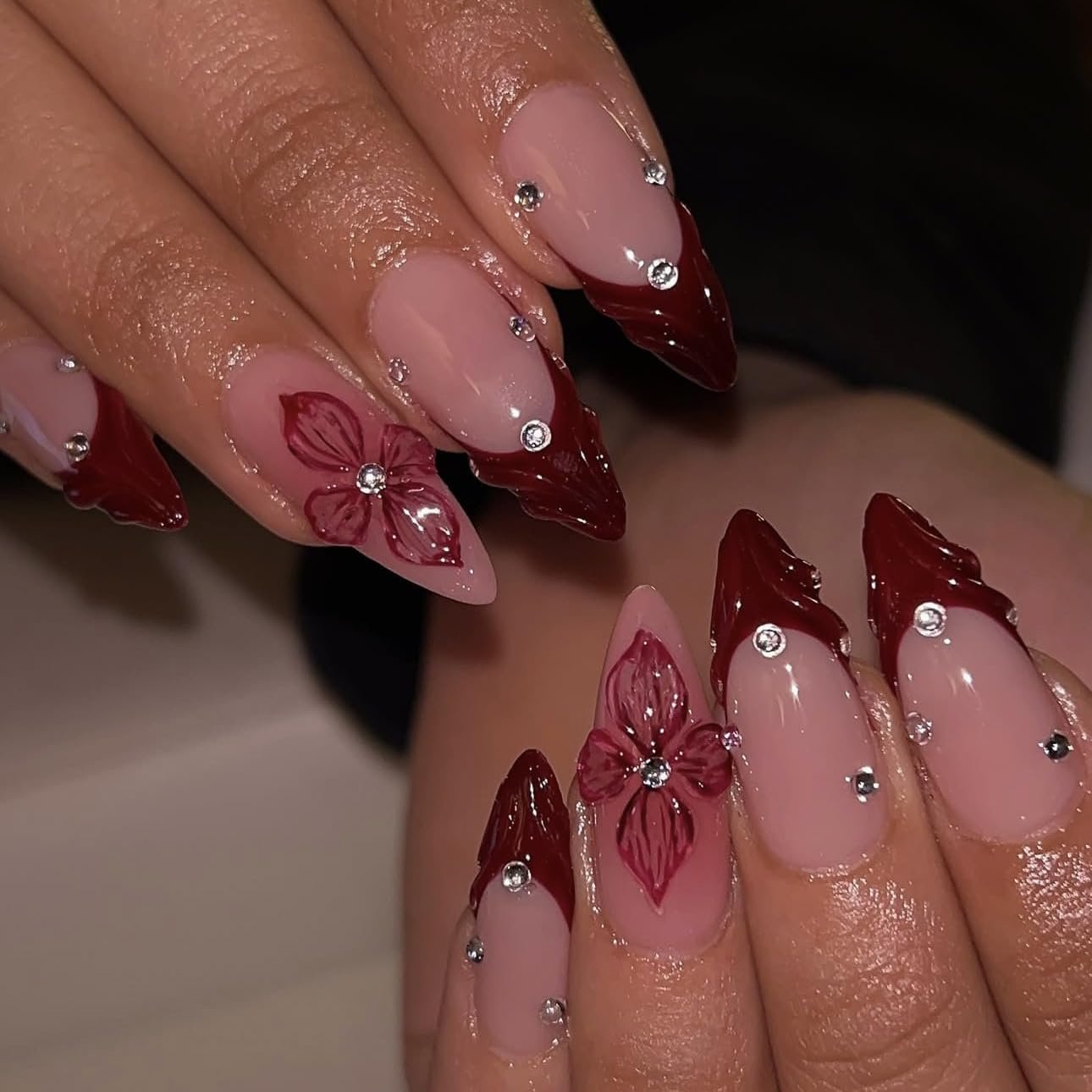
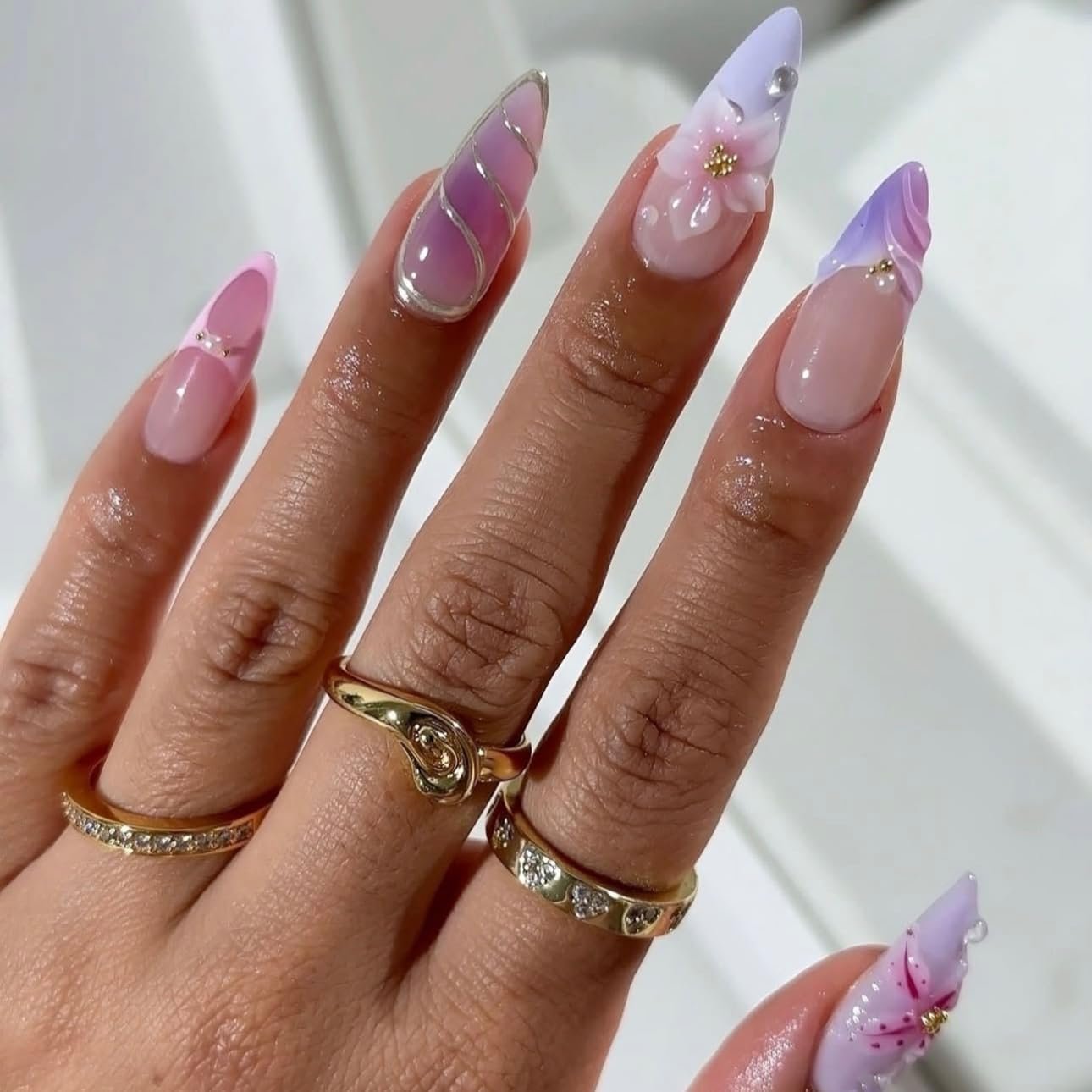
Removing a manicure is not always as simple as wiping away regular nail polish. Acrylic, gel, and dip powder are different nail systems, and the right removal method depends on what is actually on the nail.
If you are wondering how do you soak nails off, acetone is commonly part of the removal process for acrylic nails, soak-off gel polish, and dip powder. However, not every nail enhancement is designed to soften or dissolve with acetone.
Identifying the product first can help you choose the appropriate removal method and avoid peeling, prying, or aggressively filing material that is still firmly attached.
What Does It Mean to Soak Nails Off?
Soaking nails off means using a solvent, usually acetone, to soften a compatible nail product so it can be removed more easily.
The aim is to allow the coating or enhancement to loosen rather than pulling it away from the natural nail.
This method is commonly associated with acrylic nails, soak-off gel polish, and dip powder. The exact removal process can vary between nail systems.
It is also important to understand that the word gel does not automatically mean a product can be soaked off. Some gels are designed for acetone-based removal, while others are intended to be filed.
When the brand or product system is known, check its removal instructions before starting.
Which Nail Products Can Be Soaked Off?
Before reaching for acetone, try to identify whether the manicure is acrylic, soak-off gel, dip powder, hard gel, or a type of builder gel.
Acrylic Nails
Acrylic nail enhancements can commonly be softened with acetone during removal.
Some acrylic removal methods include carefully reducing part of the artificial product before soaking. Whether this preparation is needed depends on the system and its removal directions.
The focus should remain on the acrylic material rather than aggressively filing into the natural nail.
Once the acrylic has softened sufficiently, remove only the material that releases without excessive force. Firmly attached acrylic should not be pulled or pried away.
Soak-Off Gel Polish
Soft gel polish, often called soak-off gel, is designed for acetone-based removal.
Depending on the product, the sealed top layer may need to be lightly filed before soaking. This preparation step does not apply universally to every gel system.
Once a compatible gel has softened according to its removal instructions, it may begin to loosen from the nail.
Not every product described as gel should be removed this way.
Dip Powder Nails
Dip powder manicures are commonly removed with acetone.
Some dip systems instruct users to lightly reduce or file the sealed surface before soaking. This can expose the product underneath, but the preparation can vary between systems.
If dip powder remains firmly attached, avoid peeling it away simply because another area has started to loosen.
Hard Gel and Builder Gel
Hard gel is different from soak-off gel polish. Traditional hard gel is generally treated as a file-off system rather than a soak-off product.
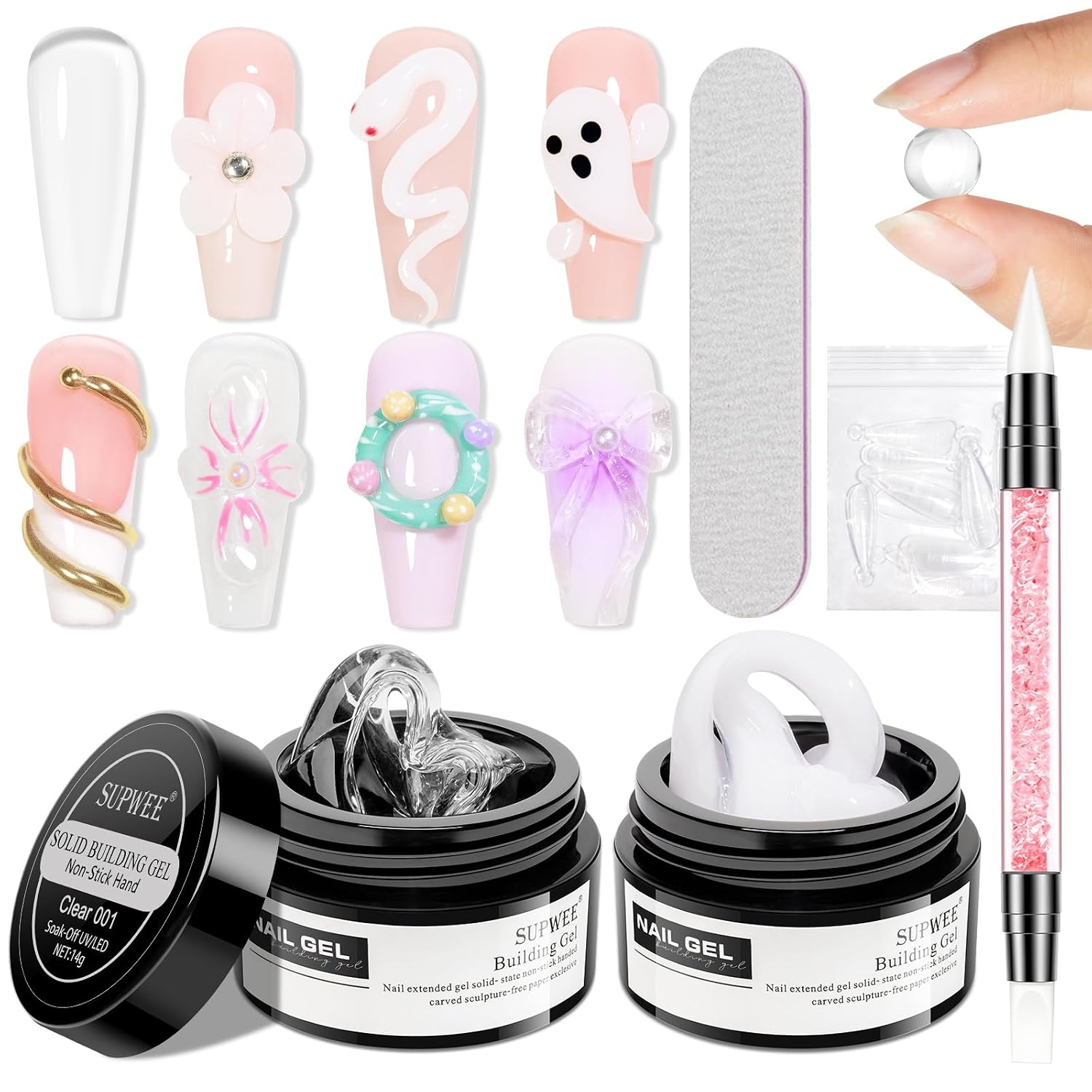
Builder gel is a broader category. Some builder gels are formulated for soak-off removal, while others are designed to be filed down.
Builder gel should therefore not automatically be treated as either soak-off or file-off.
Check the exact product or its removal instructions before choosing a method. If a gel product does not soften as expected, avoid aggressive scraping or forcing it away.
What You Need to Soak Nails Off
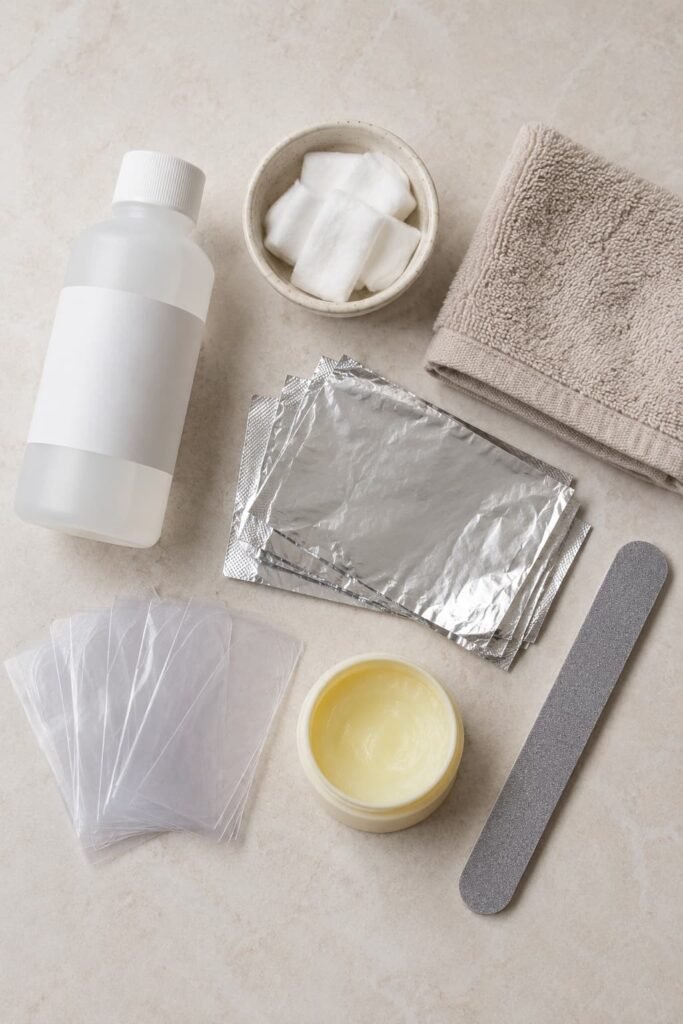
The supplies can vary depending on the nail system, but a basic soak-off setup may include the following.
Acetone
Acetone is commonly used for removing soak-off gel polish, dip powder, and acrylic enhancements.
A non-acetone nail polish remover should not automatically be treated as an equivalent substitute. A remover intended mainly for regular nail lacquer may not remove an artificial nail system in the same way.
Acetone is flammable. Keep it away from flames, sparks, cigarettes, heaters, hot surfaces, and other possible ignition sources.
Do not heat acetone in an attempt to speed up removal.
Cotton
Cotton balls, cotton pads, or small cotton pieces can hold acetone against the nail.
Using pieces close to the size of the nail can help keep the acetone focused on the product rather than covering more surrounding skin than necessary.
Foil or Suitable Nail Wraps
Plastic food wrap, foil, or purpose-made removal wraps can be used to hold acetone-soaked cotton against the nail, depending on the removal method.
The wrap should keep the cotton securely positioned without feeling excessively tight.
Nail File
A hand file may be useful when a product’s removal directions call for reducing a sealed top layer or part of an enhancement before soaking.
Not every acrylic, dip, or gel system requires the same filing step.
Avoid filing aggressively into the natural nail while reducing an artificial product.
Petroleum Jelly
A small amount of petroleum jelly can be applied around the skin near the nail before acetone is used.
This can help limit direct acetone contact with the surrounding skin. Avoid covering the nail product itself because the remover needs to reach that surface.
Towel or Work-Surface Protection
Acetone can damage some surfaces.
Protect the work area before opening the acetone and keep the container stable while working.
How Do You Soak Nails Off Step by Step?
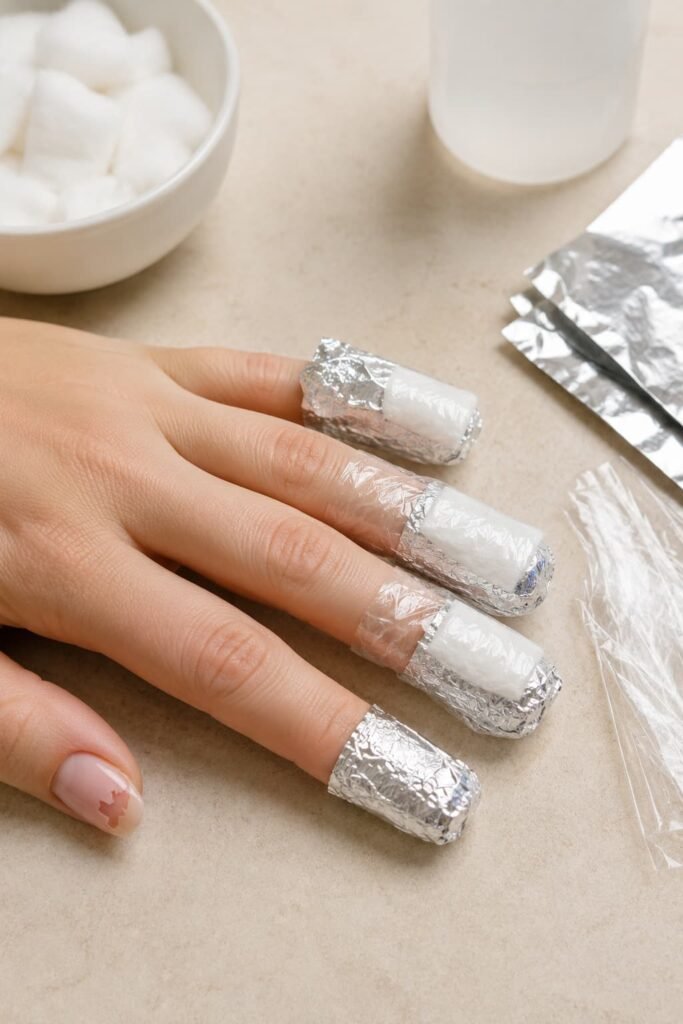
The basic process is similar for several soak-off systems, but preparation and removal details can vary.
Step 1: Identify the Nail System
Determine whether you have acrylic nails, soak-off gel polish, dip powder, hard gel, or builder gel.
Acrylic, dip powder, and soak-off gel commonly use acetone-based removal. Hard gel is generally file-off, while builder gel can fall into either category.
If the product is unclear, check its name or ask the salon that applied it before choosing a removal method.
Step 2: Check the Product Removal Instructions
When the brand or nail system is known, check its removal directions.
Some products require surface filing before soaking, while others use a different preparation process.
Product-specific instructions are more reliable than assuming every acrylic, gel, or dip manicure should be removed in exactly the same way.
Step 3: Prepare the Nail Surface if Required
Some systems have a sealed surface that needs to be lightly reduced before acetone is applied.
The purpose is to work on the artificial coating or enhancement, not to file deeply into the natural nail.
Do not automatically file every manicure. Follow the preparation method for the specific product whenever possible.
Step 4: Apply Acetone-Soaked Cotton
Saturate a piece of cotton with acetone and place it directly over the nail product.
Keeping the cotton close to the size of the nail can reduce unnecessary contact with the surrounding skin.
Petroleum jelly may be applied around the nail area before the cotton is positioned. Avoid covering the product being removed.
Step 5: Secure the Wrap
Secure the cotton so it remains against the nail.
Plastic food wrap, foil, or a suitable removal wrap may be used depending on the method.
Keep the acetone away from flames, sparks, heaters, cigarettes, and hot surfaces during the entire removal process.
Step 6: Allow the Product to Soften
Keep the acetone in contact with the nail according to the directions for the product or system being removed.
There is no single soak time that applies to acrylic, gel polish, dip powder, and builder gel.
Removal can vary depending on the specific nail system, application, preparation, and manufacturer instructions.
Check whether the material has actually softened rather than relying on one universal time.
Step 7: Check Whether the Product Releases Easily
Remove the wrap from one nail and inspect the product.
Material that has softened sufficiently may loosen more easily.
Avoid digging into the natural nail or aggressively scraping product that remains firmly attached.
If the material is still hard, first check that it is actually designed for soak-off removal before applying more acetone.
Step 8: Re-Soak Only Compatible Product
If part of a confirmed soak-off enhancement remains firmly attached, reapplying acetone-soaked cotton may allow the remaining material to soften further.
Follow the product instructions rather than increasing force.
If the material does not soften as expected, stop and confirm the nail system. A file-off product requires a different removal approach.
How to Soak Off Acrylic Nails
Acrylic enhancements can commonly be softened with acetone, but removing acrylic may involve different preparation from removing a thin layer of gel polish.
Some acrylic removal methods include carefully reducing part of the artificial material before soaking. The amount of filing required can depend on the system.
After the necessary preparation, acetone-soaked cotton can be placed over the acrylic and secured with a suitable wrap.
Once the acrylic has softened, remove only material that releases without excessive force.
If sections remain firmly attached, check that the removal method matches the acrylic system before continuing. Do not substitute peeling or prying for the proper removal process.
How to Soak Off Gel Nails
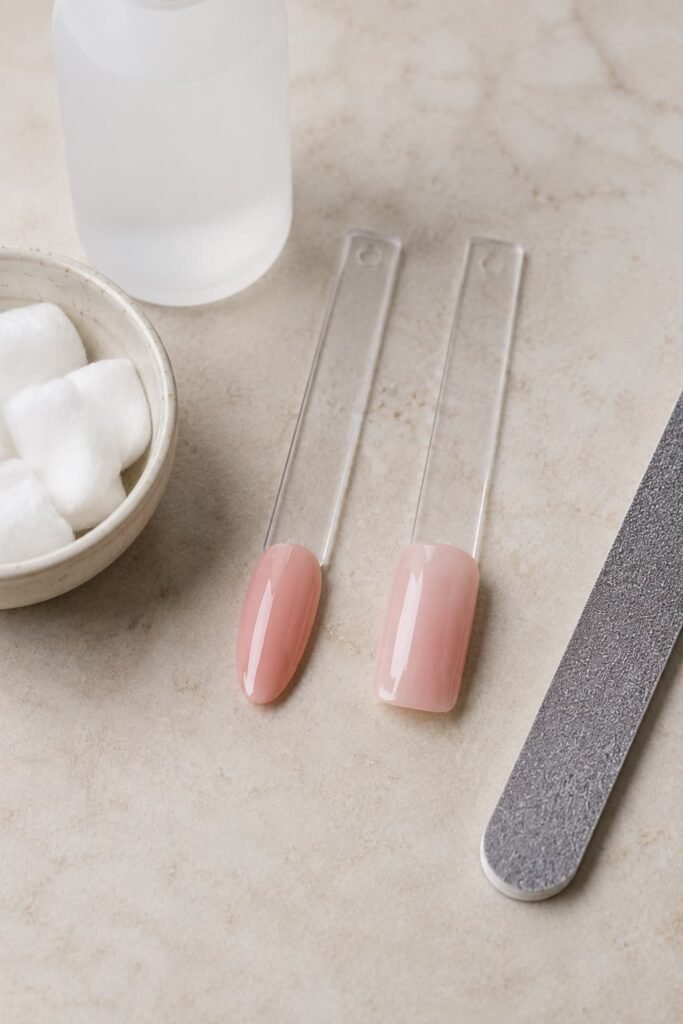
The term gel nails can describe several different products, so identifying the exact gel system is especially important.
Some gels are formulated to soften with acetone. Others are intended to be removed mainly through filing.
Soak-Off Gel Polish
Soak-off gel polish is designed for acetone-based removal.
Depending on the product, the sealed surface may need to be lightly filed before acetone is applied.
Acetone-soaked cotton can then be positioned over the nail and secured with a suitable wrap.
Once the gel has softened according to its removal instructions, check whether it releases without aggressive scraping.
If it remains firmly attached, first confirm that it is a soak-off product before applying additional acetone.
Avoid peeling the gel simply because one edge has started to lift.
Why Hard Gel Is Different
Hard gel should not automatically be treated like soak-off gel polish.
Traditional hard gel is generally treated as a file-off system rather than a soak-off product, so acetone should not be assumed to remove it.
Builder gel creates another distinction. Some builder gels are soak-off products, while others are file-off formulas.
For this reason, gel, builder gel, and hard gel should not be treated as interchangeable terms during removal.
If the exact product cannot be identified confidently, professional removal may be a more appropriate option.
How to Soak Off Dip Powder Nails
Dip powder manicures are commonly removed using acetone, but the preparation can vary by system.
Some dip products instruct users to lightly file or reduce the sealed top layer before soaking. If the product directions call for this step, focus on the dip material rather than aggressively filing the natural nail.
After the required preparation, place acetone-soaked cotton over the nail and secure it with a suitable wrap.
Check whether the dip material has softened before trying to remove it.
If sections remain hard or firmly attached, do not peel or pry them away. Confirm the removal directions before continuing.
There is no single soak time that applies to every dip powder system.
Why Won’t My Nails Soak Off?
If a nail product remains hard or firmly attached after contact with acetone, several practical reasons may explain what is happening.
The Top Layer Is Still Sealed
Some acrylic, gel, and dip systems require part of the sealed surface to be reduced before soaking.
If that preparation is required but has not been completed, the remover may not reach the product as intended.
This does not mean every manicure should automatically be filed.
The Nail Product Is Thick
The amount and thickness of artificial product can vary.
Some enhancements may require different preparation from a thin layer of soak-off gel polish.
Avoid using thickness as a reason to file aggressively into the natural nail.
The Cotton Is Not Staying in Contact With the Nail
For a wrap method, the acetone-soaked cotton needs to remain positioned against the nail product.
If the cotton is not held securely against the product, the wrap method may not work as intended.
The Product May Be File-Off Rather Than Soak-Off
Not every artificial nail product is designed for acetone removal.
Traditional hard gel is generally file-off, and some builder gels also require filing.
If a gel product remains hard, check the exact product before applying additional acetone or attempting to scrape it away.
Common Mistakes to Avoid When Soaking Nails Off
A compatible soak-off product needs an appropriate removal process. Force should not be used as a shortcut.
Peeling or Prying Off Attached Product
A lifted edge does not necessarily mean the entire enhancement has released.
If material remains firmly attached, avoid peeling or prying it away. Recheck the removal instructions instead.
Aggressively Scraping the Nail Surface
If a layer is difficult to remove, increasing pressure with a tool is not the answer.
For a confirmed soak-off system, follow its removal directions. If the product is file-off, use the appropriate method instead.
Over-Filing
Some removal methods include reducing a top layer or part of an enhancement.
Avoid filing aggressively into the natural nail while reducing the artificial material.
If you cannot clearly distinguish where the enhancement ends and the natural nail begins, continuing to file at home may not be appropriate.
Assuming Every Gel Product Is Soak-Off
Soak-off gel polish, builder gel, and hard gel do not all use one removal method.
Identify the specific gel system before deciding whether to soak or file.
Heating Acetone
Do not heat acetone to try to make removal faster.
Acetone is highly flammable and should be kept away from flames, sparks, cigarettes, heaters, hot surfaces, and other ignition sources.
Cotton Wraps vs Direct Acetone Soaking
Acetone can be used with compatible nail products in more than one way.
With the cotton-wrap method, acetone-soaked cotton is placed directly over each nail and held in position with a wrap. This keeps the solvent focused on the nail area and can limit unnecessary contact with surrounding skin.
Some removal methods instead involve placing the fingertips directly in acetone, which exposes a larger skin area to the solvent.
When practical, keep acetone contact focused on the area required for removal and follow the instructions for the specific nail system.
Can You Soak Nails Off Without Acetone?
It depends on the product.
Regular nail polish and artificial nail enhancements do not necessarily use the same type of remover.
Acrylic enhancements, dip powder, and soak-off gel commonly use acetone as part of their removal process. Non-acetone nail polish remover should not automatically be treated as an equivalent substitute.
Some nail systems may have a different manufacturer-approved removal method, while file-off products such as traditional hard gel use a different approach.
Household methods involving hot water, oil, soap, or similar ingredients should not be presented as direct equivalents to acetone unless the specific nail system supports that method.
If the appropriate remover is unavailable, avoid peeling or forcing the enhancement away.
What to Do After Soaking Nails Off
After the compatible nail product has been removed, wash the hands with mild soap and water to remove acetone and product residue.
Dry the hands gently, including the area around the nails.
A moisturizer or small amount of petroleum jelly can then be applied to the nail area and surrounding skin if it feels dry after acetone exposure.
If artificial material remains firmly attached, avoid scraping, peeling, or aggressively filing it simply to leave the nail completely bare.
Check whether the remaining material belongs to a soak-off or file-off system and use the appropriate removal method.
When Professional Removal May Be More Appropriate
At-home soaking can be practical when the nail system is known and designed for acetone-based removal. In other situations, professional removal may be more appropriate.
Consider this option if you do not know whether the product is acrylic, soak-off gel, hard gel, builder gel, or another type of enhancement. Using a removal method that does not match the nail system may result in unnecessary soaking or filing.
Professional removal may also make sense when traditional hard gel may be present or when controlled filing is difficult because you cannot clearly distinguish the enhancement from the natural nail.
If acrylic, dip, or gel remains firmly attached after you have followed the appropriate removal instructions, avoid responding with more aggressive scraping, prying, or filing.
If removal becomes painful or the surrounding skin becomes significantly irritated, stop soaking, scraping, or filing.
Frequently Asked Questions
How Long Should You Soak Nails in Acetone?
There is no single acetone soak time that applies to every nail enhancement.
The appropriate process can vary between acrylic, soak-off gel, dip powder, and different builder-gel systems.
Follow the removal instructions for the specific product when they are available, and check whether the material has softened instead of relying on one fixed time.
Can Acrylic Nails Be Soaked Off With Acetone?
Yes. Acetone is commonly used as part of acrylic nail removal.
Some acrylic systems may also require part of the artificial material to be carefully reduced before soaking.
Remove only acrylic that has softened and releases without excessive force.
Can Gel Nails Be Soaked Off?
Some can and some cannot.
Soft or soak-off gel polish is designed for acetone-based removal. Traditional hard gel is generally treated as a file-off system rather than a soak-off product.
Identify the exact gel system before choosing the removal method.
Can Dip Powder Nails Be Soaked Off?
Yes. Dip powder is commonly removed using acetone.
Some systems also instruct users to reduce or file the sealed surface before soaking.
Preparation can vary, so follow the removal directions for the specific dip system when possible.
Can Builder Gel Be Soaked Off?
It depends on the builder gel.
Some builder gels are formulated as soak-off products and can be removed with acetone according to their product instructions. Others are designed to be filed off.
Check the specific product rather than assuming all builder gels are removed the same way.
Why Are My Nails Not Coming Off After Soaking?
Several factors may be involved.
The system may require surface preparation before soaking, the amount and thickness of artificial product may differ from a thin gel-polish application, or the cotton wrap may not be positioned securely.
The product may also be a file-off system rather than a soak-off product.
If it remains hard, identify the nail system before applying more acetone or using additional force.
Do You Have to File Nails Before Soaking Them Off?
Not always.
Some acrylic, dip, and gel removal methods include reducing a sealed top layer or part of the artificial enhancement before acetone is applied.
Other products use different preparation methods.
Do not treat filing as an automatic step for every manicure.
Should You Peel Off Gel, Acrylic, or Dip Nails After Soaking?
Do not peel or pry away material that remains firmly attached.
A compatible soak-off system should be allowed to soften according to its removal directions.
A lifted edge does not necessarily mean the entire enhancement is ready to come off.
Can You Soak Nails Off Without Acetone?
That depends on the nail product.
Acrylic, dip powder, and soak-off gel commonly use acetone-based removal. Some products may use a different approved method, while traditional hard gel is generally file-off.
Do not assume a household mixture or non-acetone polish remover is an equivalent substitute for every artificial nail system.
Is Soaking Better Than Filing for Nail Removal?
Neither method is universally better.
The correct choice depends on the nail system. Acrylic, dip powder, and soak-off gel commonly use acetone-based removal, although preparation can vary.
Traditional hard gel is generally treated as a file-off product, while builder gel can fall into either category.
The important point is to match the removal method to the product rather than choosing soaking or filing simply because one seems easier.