
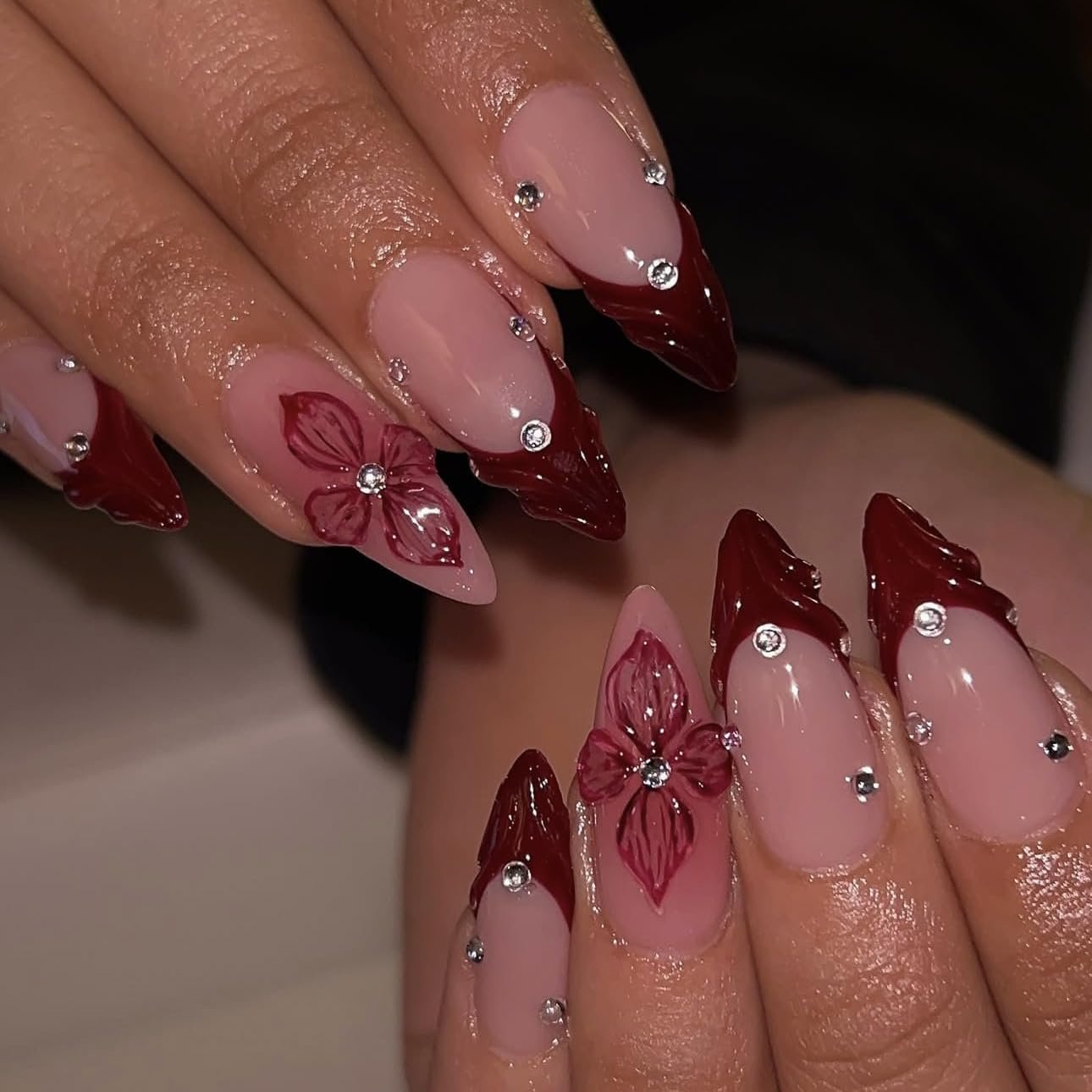
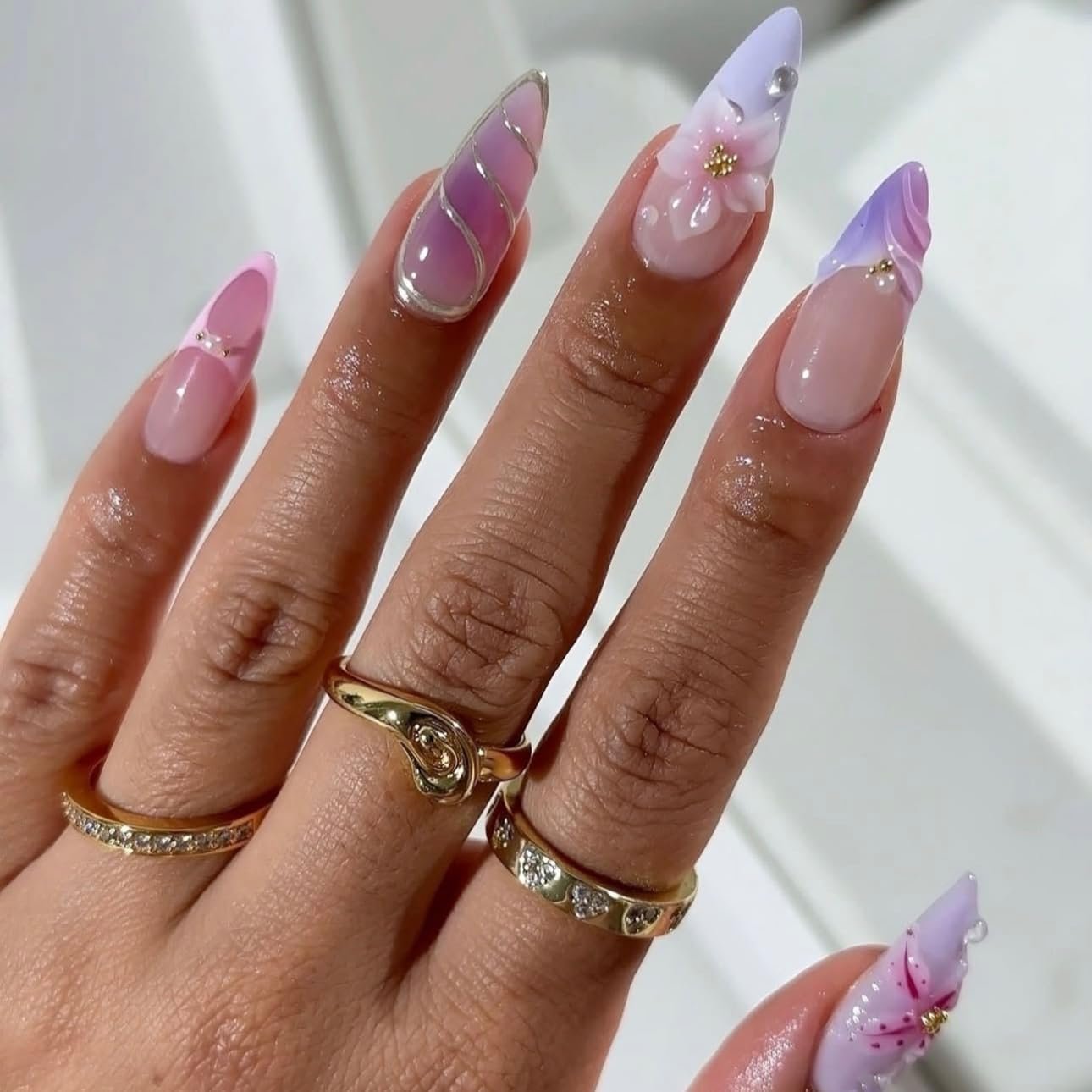
Acrylic nails offer many ways to express personal style through colours, patterns, shapes, and decorative details. Some designs feature soft, neutral shades, while others use bold colours, artistic patterns, or sparkling accents. The right choice depends on the look you prefer, your desired nail shape and length, and the occasion.
Exploring different acrylic nail designs can help you understand the options before choosing a manicure. From French tips and ombre gradients to marble patterns and metallic finishes, each style has its own visual character.
What Are Acrylic Nail Designs?
Acrylic nail designs are decorative styles created on acrylic nail enhancements. Traditional acrylic enhancements use a liquid monomer and polymer powder that combine to form a material that can be shaped and filed. The finished surface can feature nail polish, coloured acrylic, painted patterns, or decorative details.
The design itself can be simple or elaborate. A single nude shade creates a different appearance from a multicoloured gradient or a set featuring detailed artwork.
Several elements influence the overall look, including nail shape, length, colour combination, pattern, and finish. Understanding these elements makes it easier to compare designs and choose one that reflects your personal style.
What Are the Most Popular Types of Acrylic Nail Designs?
Acrylic nail art includes several familiar styles. Some focus on colour transitions, others emphasize patterns, and some use reflective finishes or raised decorations. The following designs offer different ways to personalise a manicure.
Classic French Tip Acrylic Nails
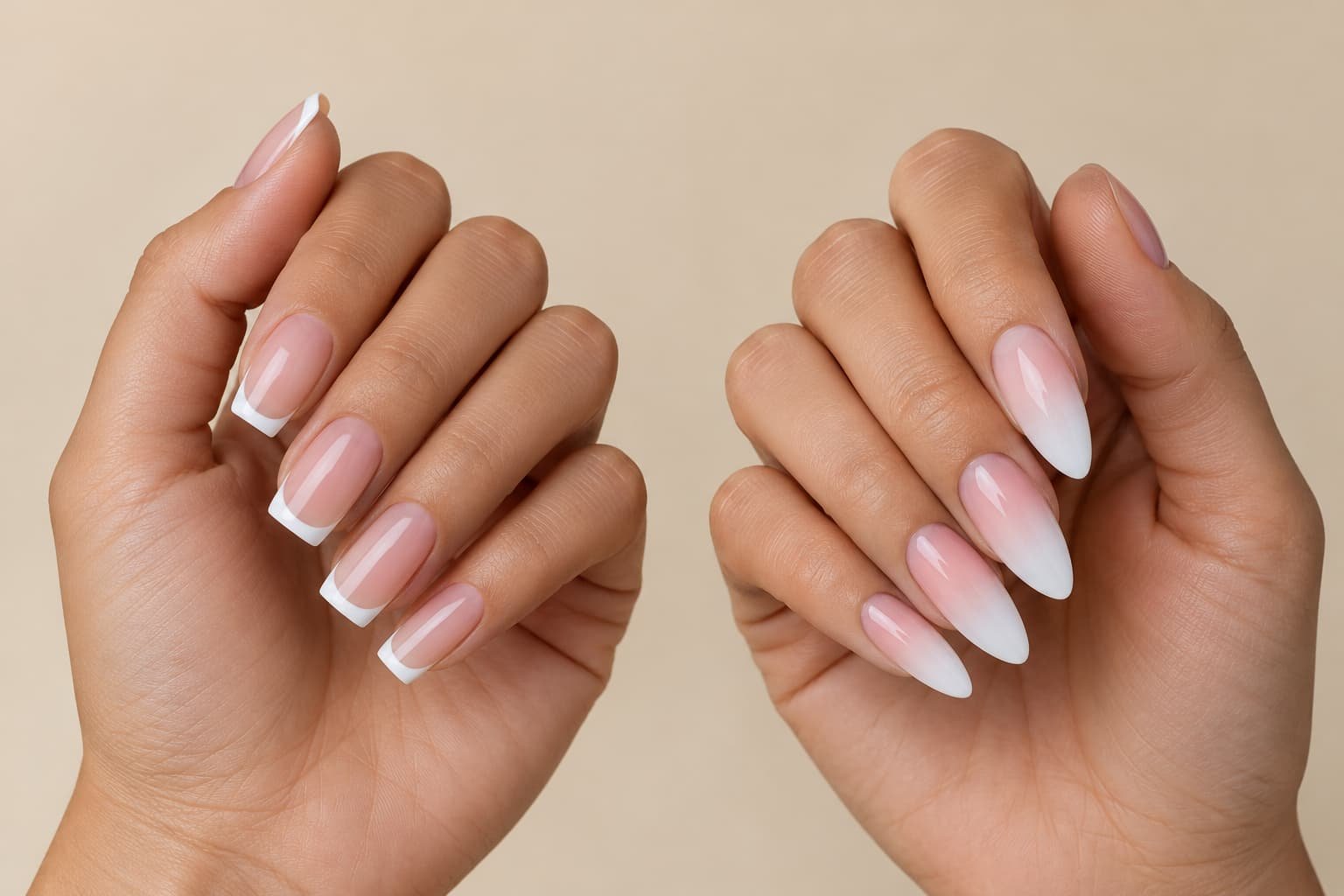
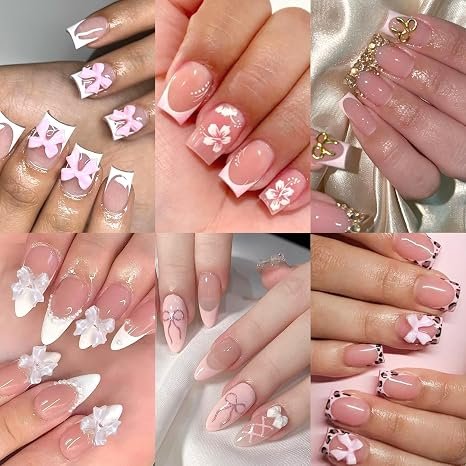
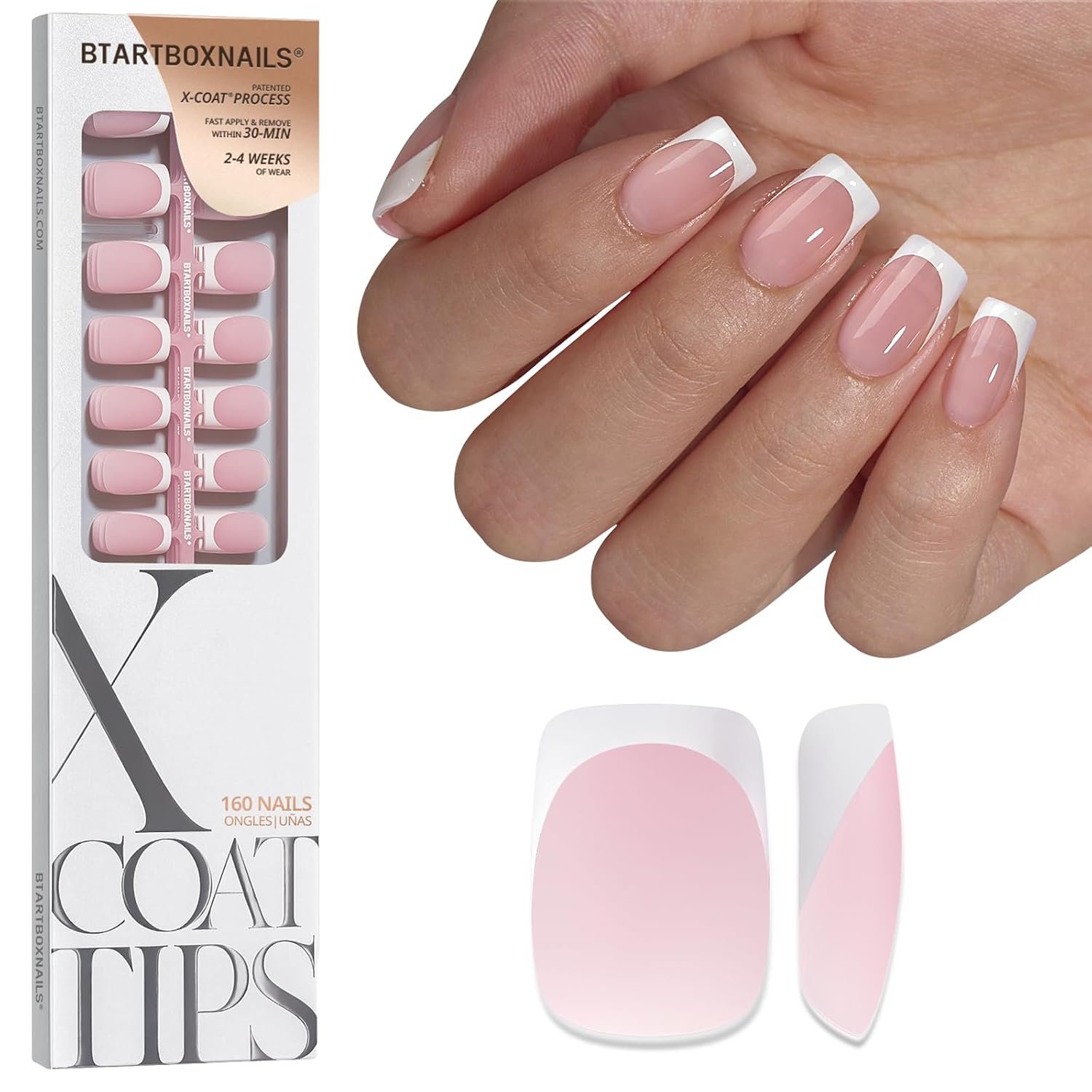
French tip acrylic nails feature a base colour with a contrasting tip. The traditional style uses a sheer pink or nude base with white tips, creating a simple, defined appearance.
Several variations offer different visual effects:
- Classic French tips: White tips paired with a pink or nude base.
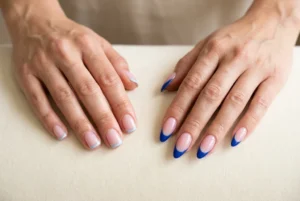
- Coloured French tips: Red, blue, green, or pastel tips instead of white.
- Micro French tips: A thin line of colour along the nail edge.
- Double French tips: Two curved lines create a layered design.
- Glitter French tips: Sparkling details add decoration to the nail edges.
The shape of the tip can also change the overall appearance. A curved tip creates a softer outline, while a sharply defined tip offers a more graphic look.
French tips can be paired with square, almond, oval, or coffin-shaped acrylic nails. Neutral bases suit understated designs, while contrasting colours create a more noticeable effect.
Ombre Acrylic Nail Designs
Ombre nails feature a gradual transition between two or more colours. The shades blend into one another rather than meeting at a sharp dividing line.
Pink fading into white is one example. Other combinations include brown and beige, lavender and pink, or blue and white. Each pairing creates a different visual effect depending on the colours used.
Ombre designs can also incorporate other details. A nude-to-white gradient offers a soft appearance, while a purple-to-pink transition creates a more colourful look. Adding glitter near the tips introduces sparkle without changing the basic gradient.
The gradient can cover the entire nail or appear alongside other decorative elements. For example, a few gradient nails can be paired with solid-colour nails for a varied manicure.
Floral Acrylic Nail Art
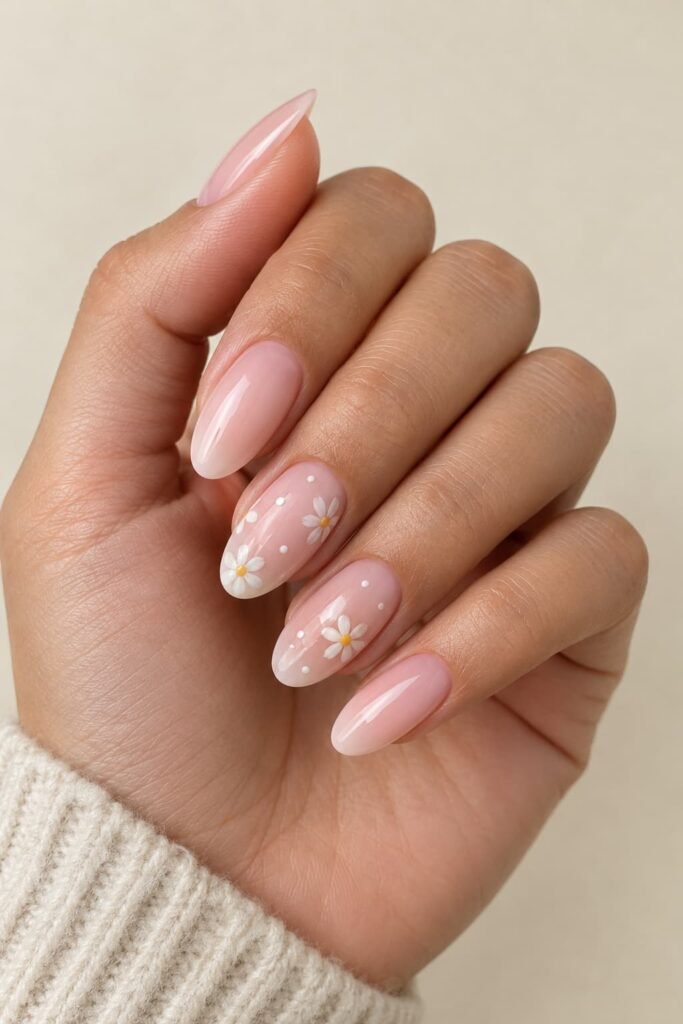
Floral acrylic nail art features flowers, petals, leaves, and other botanical details. Designs can range from small, simple motifs to detailed arrangements that cover much of the nail.
Different approaches create distinct looks:
- Daisy patterns: Small flowers with contrasting centres on a light or neutral base.
- Rose artwork: Layered petals that create a detailed floral appearance.
- Botanical designs: Fine leaves and stems arranged across the nail.
- Tropical flowers: Larger blooms in bright, contrasting colours.
- Abstract florals: Simplified petals and irregular shapes for an artistic effect.
The placement of the artwork matters as much as the pattern itself. A single flower near the tip creates a different look from a design that extends across the entire nail.
Floral artwork can be placed on selected nails while the others feature a coordinating solid shade. This is one option for people who enjoy decorative details but prefer not to cover every nail with a pattern.
Colours can also be chosen to suit a seasonal theme. Pastel flowers may work well for a spring-inspired manicure, while burgundy, brown, or deep green backgrounds offer options for an autumn-inspired look.
Chrome and Metallic Acrylic Nails
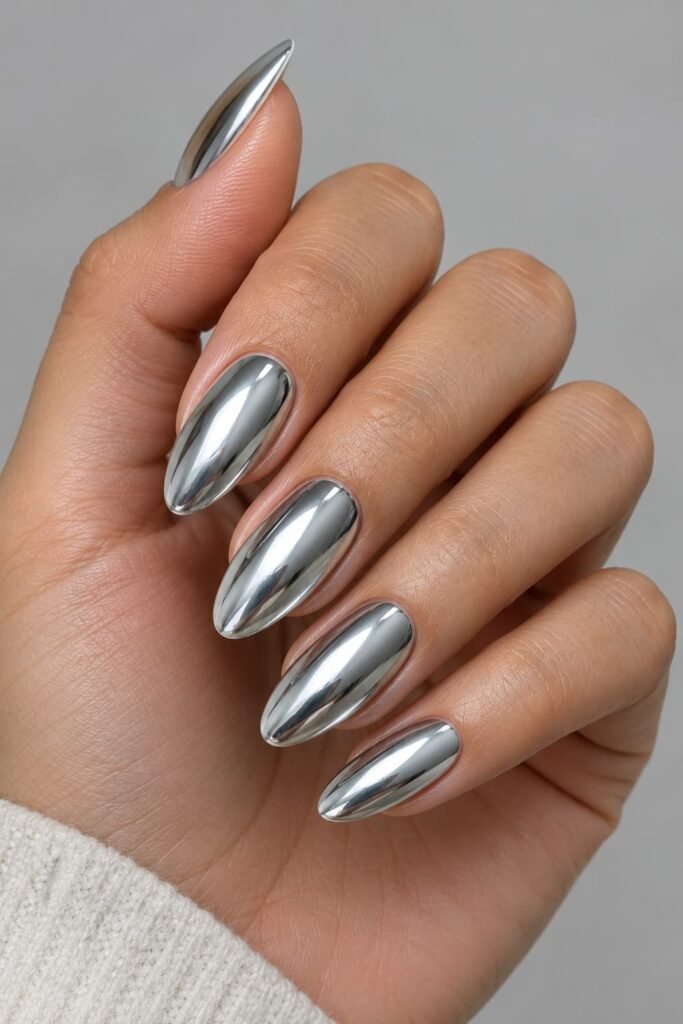
Chrome and metallic nail designs are defined by their reflective appearance. Depending on the pigment and base colour, the finish can create silver, gold, pink, purple, or pearlescent effects.
Different finishes produce different visual results. Silver and gold create a pronounced metallic look, while pearl finishes offer a softer sheen. Coloured chrome can add a reflective layer to a bright or dark base.
Chrome can be applied across the entire nail or used as a smaller decorative feature.
For example, metallic French tips add shine along the edges, while a single chrome accent nail contrasts with solid-colour nails. A full metallic manicure creates a more uniform appearance.
Chrome and glitter are visually different. Chrome generally produces a smooth, reflective surface, while glitter creates sparkle through visible particles. The two can also be combined for a more decorative design.
Marble Acrylic Nail Designs
Marble nail designs recreate the irregular veins and flowing patterns associated with natural stone. They typically use a base shade with contrasting lines that form an uneven, layered pattern.
Different colour combinations create different effects:
- White and grey marble: A light base with soft grey veining.
- Black and white marble: High contrast between the base and the pattern.
- Brown and cream marble: Warm, earthy tones with irregular lines.
- Green marble: Deep green shades paired with lighter veins.
- Pink marble: Soft pink tones with white or darker accents.
Marble artwork does not need to cover every nail. Using the pattern on one or two nails and a coordinating solid shade on the others creates a different visual balance from a full set of marble nails.
The veins can be fine and delicate or broad and prominent. Choosing between these approaches helps determine whether the finished design looks subtle or dramatic.
Unlike repeated geometric patterns, marble designs use irregular lines, so the pattern can vary from nail to nail.
Minimalist Acrylic Nail Designs
Minimalist acrylic nail designs use simple shapes, limited colours, and small decorative details. They offer an option for people who prefer a clean appearance without extensive nail art.
Examples include nude nails with a thin black line, milky white nails with tiny dots, or pale pink nails with a small metallic accent. Simple geometric patterns and delicate stars can also add detail without covering the entire nail.
Minimalist designs can differ through placement and spacing. A single line near the tip creates a different effect from a small design near the cuticle area. Similarly, one accent nail provides a focal point while the remaining nails stay simple.
Colour choice also influences the appearance. Black details on a nude base create clear contrast, while white details on a pale pink base produce a softer combination.
These designs can be adapted to different acrylic nail lengths. On shorter nails, a small pattern or thin line can provide detail without making the design feel crowded. Longer nails offer additional space for geometric arrangements or more elaborate line work.
Glitter and 3D Acrylic Nail Art
Glitter acrylic nails use reflective particles to add sparkle to a manicure. The glitter can cover the entire nail, appear near the tips, or blend gradually into another colour.
Different placements create distinct designs. Full-coverage glitter creates an all-over sparkling effect, while glitter concentrated at the tips adds a decorative edge. A glitter gradient combines a softer base with increasing sparkle toward one end of the nail.
Colour combinations also change the overall look. Silver glitter with black creates strong contrast, while gold glitter with beige or nude tones offers a warmer appearance. Holographic glitter adds reflections in several colours.
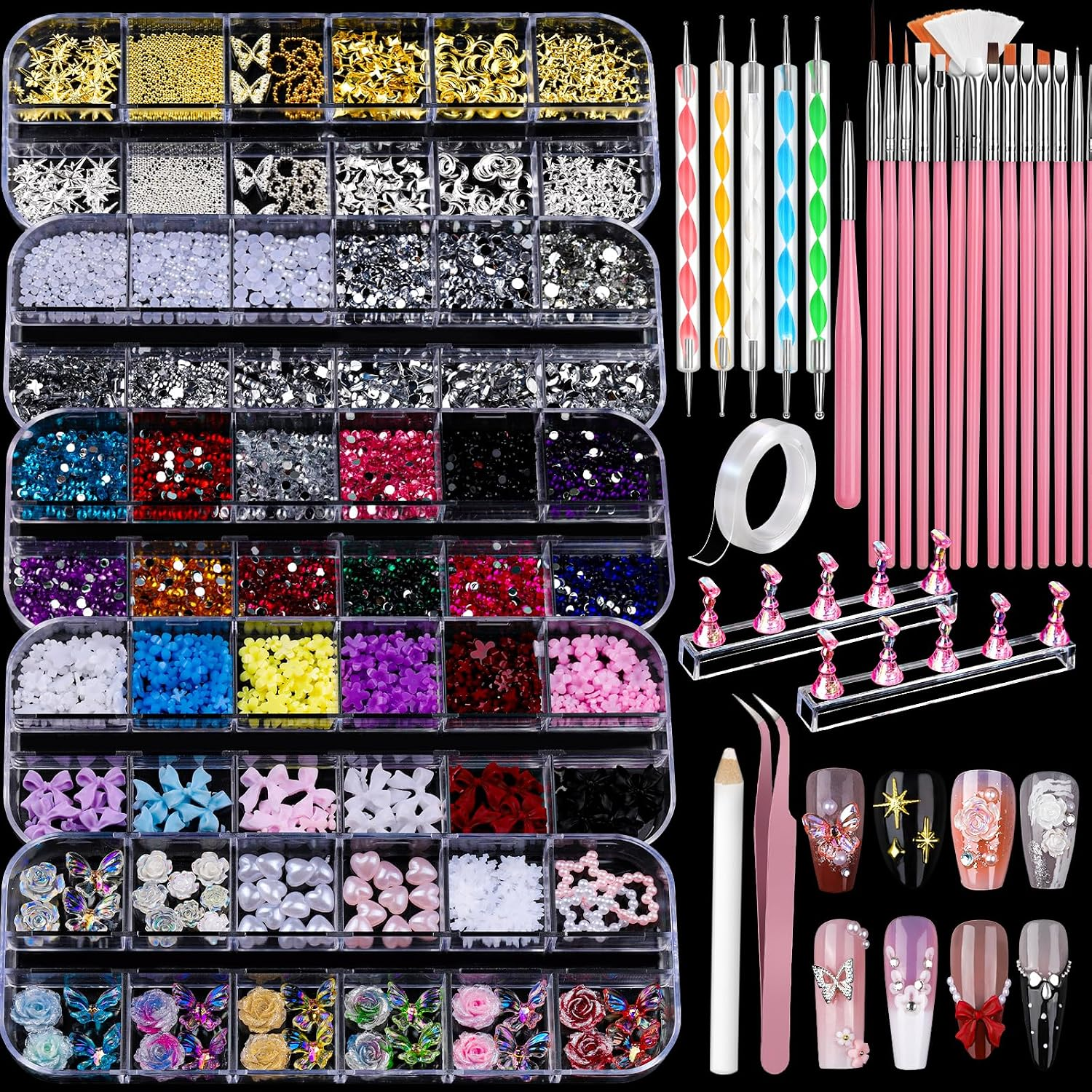
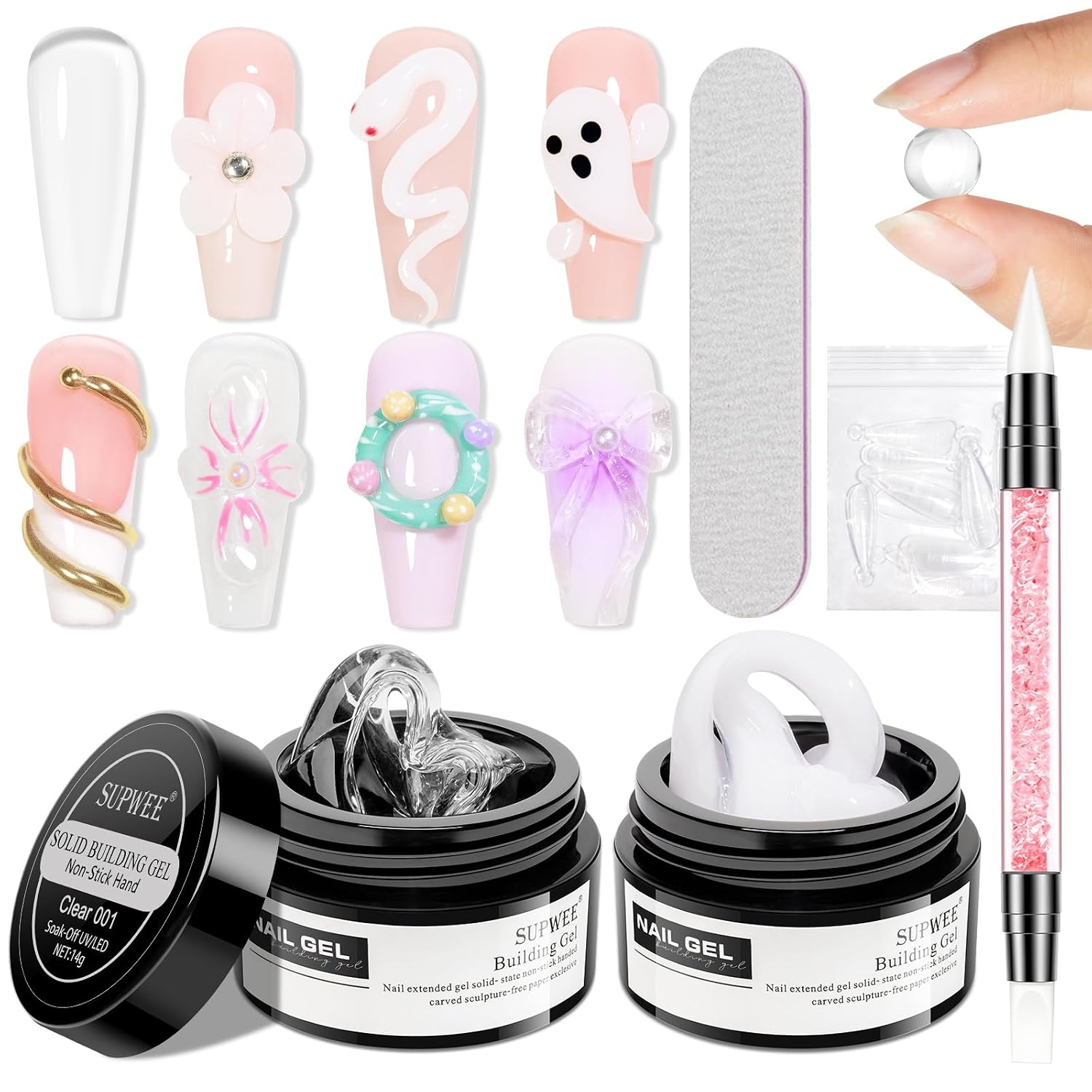
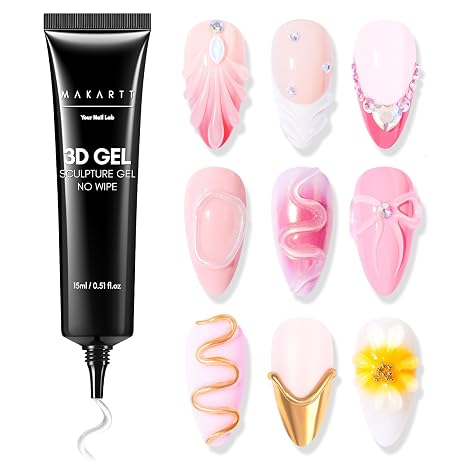
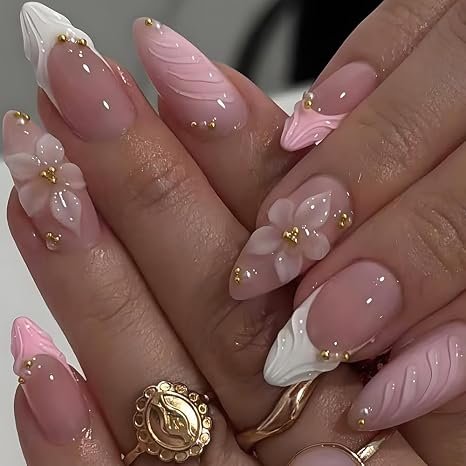
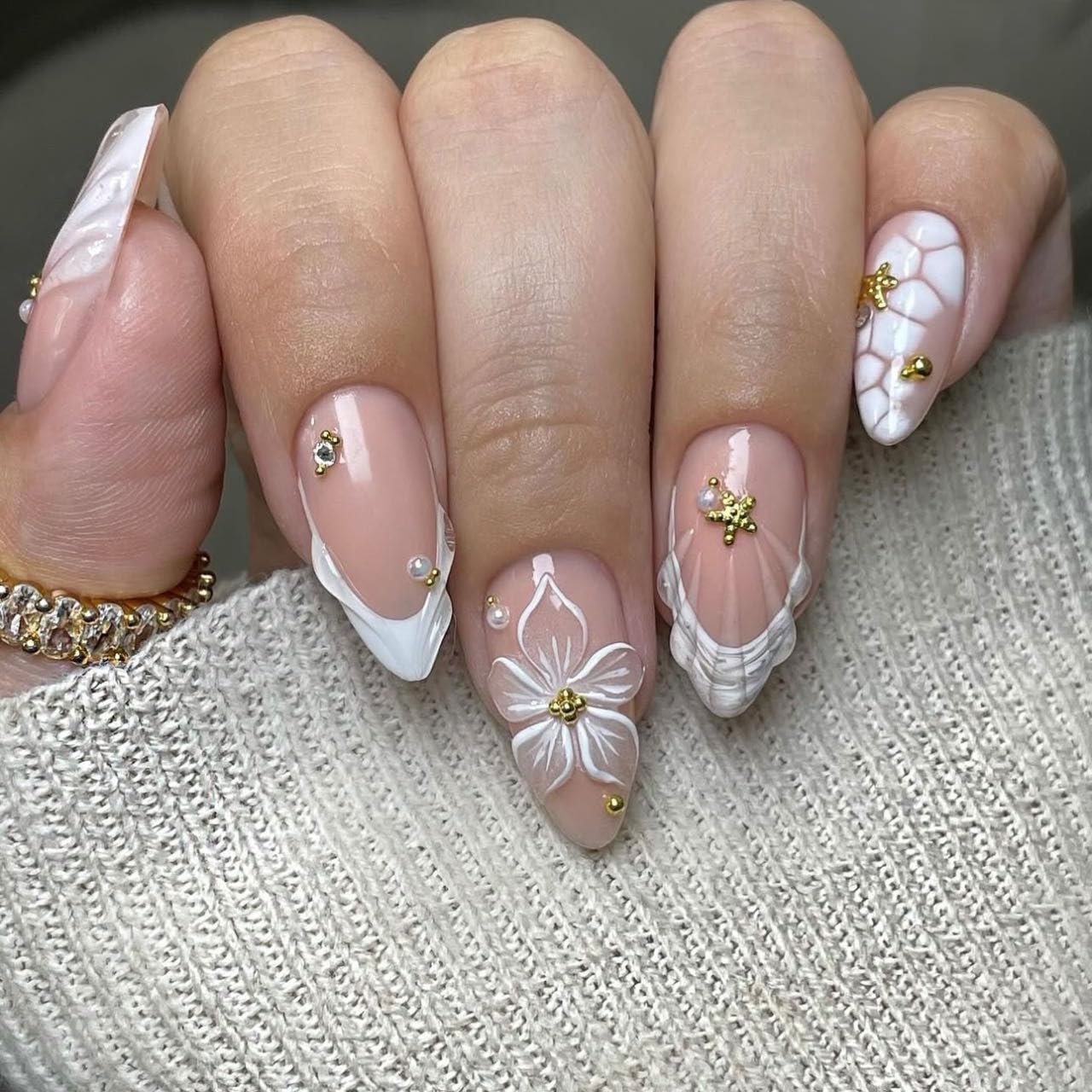
Three-dimensional nail art uses raised decorative elements rather than a flat pattern. Examples include sculpted flowers, bows, pearls, crystals, and small charms.
Glitter and 3D details can be combined with French tips, solid colours, or ombre designs. For example, a set might feature simple nude nails with one sculpted floral accent and a small amount of glitter on another nail.
The size and placement of raised decorations influence the overall appearance. Small details create a more restrained look, while larger sculpted elements make the artwork a central feature of the manicure.
Which Nail Shapes Work Well With Acrylic Designs?
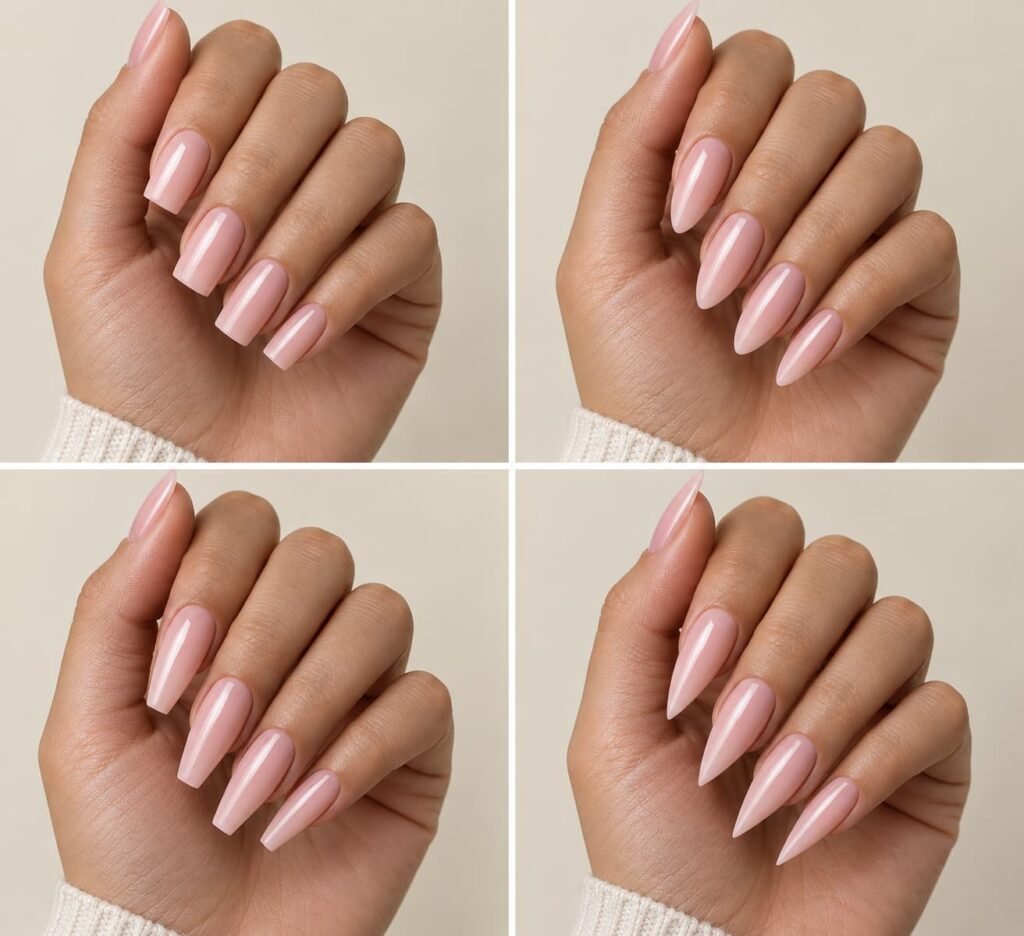
Nail shape affects how an acrylic manicure looks. Some shapes have straight edges, while others feature rounded sides or tapered tips. The right option depends on the outline you prefer and the type of design you want.
Square and Squoval Nails
Square nails have straight sides and a flat tip, creating a defined outline. They work well with classic French tips, geometric patterns, and solid colours. A French manicure on square nails can emphasize the straight edge, while a single accent nail adds detail without making the entire set look busy.
Squoval nails combine the straight tip of a square shape with softened corners. This creates a slightly rounded outline that suits simple nail art, pastel colours, and delicate patterns. Squoval nails are an option if you like the appearance of square nails but prefer less angular corners.
Almond and Oval Nails
Almond nails taper towards a softly rounded point, creating an elongated outline. This shape pairs well with ombre gradients, floral artwork, and curved French tips. Designs that follow the curve of the nail can complement its tapered appearance.
Oval nails have rounded sides and a curved tip. Their softer outline works with neutral shades, minimalist patterns, and traditional French manicures. Small decorative details can add interest without taking attention away from the shape.
Although almond and oval nails have similar curved outlines, almond nails taper more noticeably towards the tip.
Coffin and Ballerina Nails
Coffin nails have tapered sides and a flat tip, creating a shape that resembles a coffin. Ballerina nails have a similar outline and are often used as an alternative name for this shape.
Their relatively broad, flat tips provide space for French tips, colour-block patterns, marble artwork, and glitter gradients. Longer versions can accommodate detailed designs across the nail surface.
For a more understated appearance, a nude base with thin French tips offers an alternative to elaborate artwork. Bold colours and contrasting patterns create a more noticeable look.
Stiletto Nails
Stiletto nails have long, tapered sides that meet at a pointed tip. Their distinctive outline can make the nail shape a central part of the overall design.
Chrome finishes, contrasting French tips, and geometric patterns can complement this shape. For decorative styles, crystals or small painted details can be placed along the nail to emphasize its pointed outline.
Stiletto nails can also be worn in a single colour. A solid shade keeps the focus on the shape itself, while more elaborate artwork introduces additional visual detail.
How Does Nail Length Affect Acrylic Nail Designs?
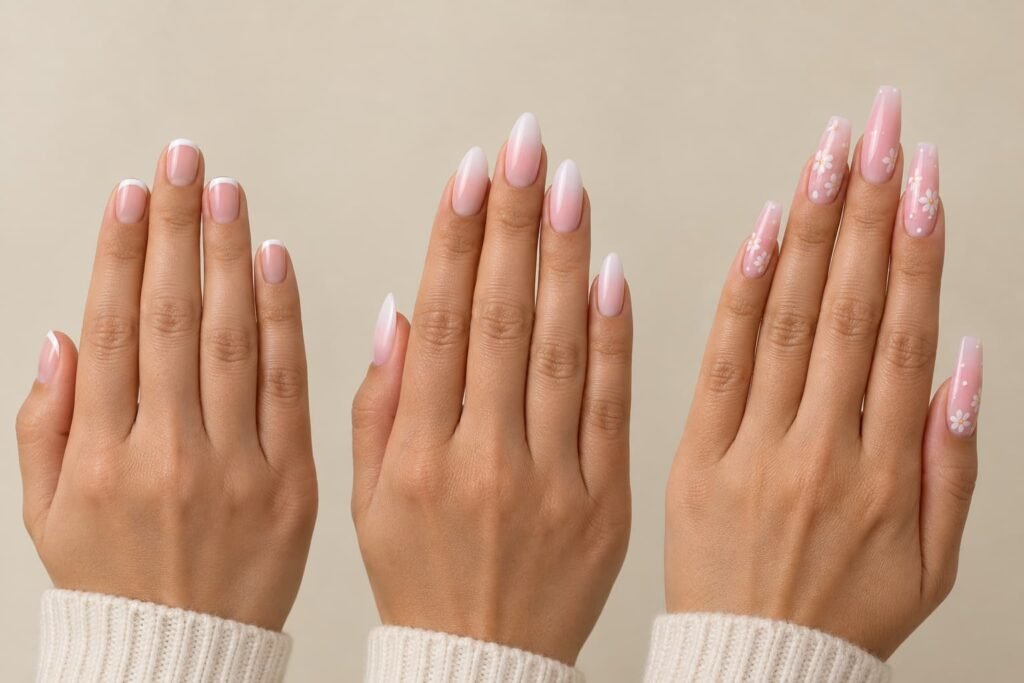
Nail length influences the space available for patterns, gradients, and decorative elements. A design that looks detailed on a long nail may need to be simplified for a shorter one.
Acrylic Designs for Short Nails
Short acrylic nails can feature French tips, solid colours, tiny floral patterns, and minimalist line art. Smaller designs provide options for adding detail when there is less space available.
A thin French tip creates a different effect from a thick contrasting edge. Similarly, a single small flower can add detail without covering the entire nail.
Neutral shades, pastel colours, and simple geometric patterns are also options for short nails. However, short nails do not need to be limited to understated designs. Bright colours and contrasting patterns can work just as well when they suit the preferred look.
Acrylic Designs for Medium-Length Nails
Medium-length acrylic nails offer room for a wider range of patterns without the length of an extended manicure.
French tips, ombre gradients, marble effects, and floral accents are all possible options. For example, a pink-to-white gradient can cover the nail surface, while a small floral design on one nail introduces a contrasting detail.
This length also allows different designs to be combined across the set. Some nails can feature patterns, while others use a matching solid colour.
Acrylic Designs for Long Nails
Long acrylic nails provide more surface area for detailed artwork and decorative arrangements. Designs can include intricate floral patterns, multicolour gradients, marble veining, and geometric compositions.
The nail shape becomes particularly noticeable at longer lengths. Coffin nails provide a broad, flat tip, while almond and stiletto shapes create a more tapered outline.
Long nails can also accommodate larger decorative elements, such as sculpted flowers or crystal arrangements. If you prefer a less elaborate manicure, a single colour or simple French tip can keep the design visually clean.
The amount of decoration is a personal choice. Longer nails offer more space for nail art, but they do not require more elaborate designs.
How Do You Choose Colours and Finishes for Acrylic Nails?
Colour and finish influence how a design appears. The same nail art can look different when paired with a light base, a dark background, or a reflective surface.
Neutral and Nude Colour Combinations
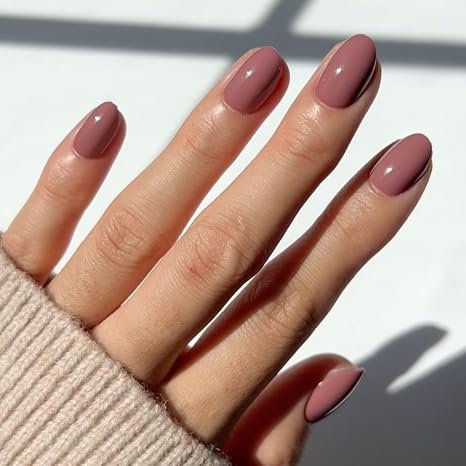
Neutral shades include beige, cream, taupe, soft pink, and milky white. These colours can be used individually or combined to create a coordinated manicure.
A nude base with white French tips is a classic option. Beige paired with brown creates a warmer colour combination, while pale pink and milky white offer a softer contrast.
Neutral shades can also serve as a background for small decorative details. Thin metallic lines, delicate flowers, or tiny geometric shapes can add interest without introducing several competing colours.
The best shade depends on the look you want. Choosing colours that complement your preferred palette can help create a cohesive design.
Bold and Contrasting Colours
Bold colours create more noticeable contrast. Combinations such as black and white, red and pink, purple and orange, or blue and silver can make nail art stand out.
Colour blocking is one way to use contrasting shades. It involves placing distinct colours in separate sections of the nail rather than blending them together.
Another option is to use a bright colour for French tips while keeping the base neutral. This introduces colour without covering the entire nail in a strong shade.
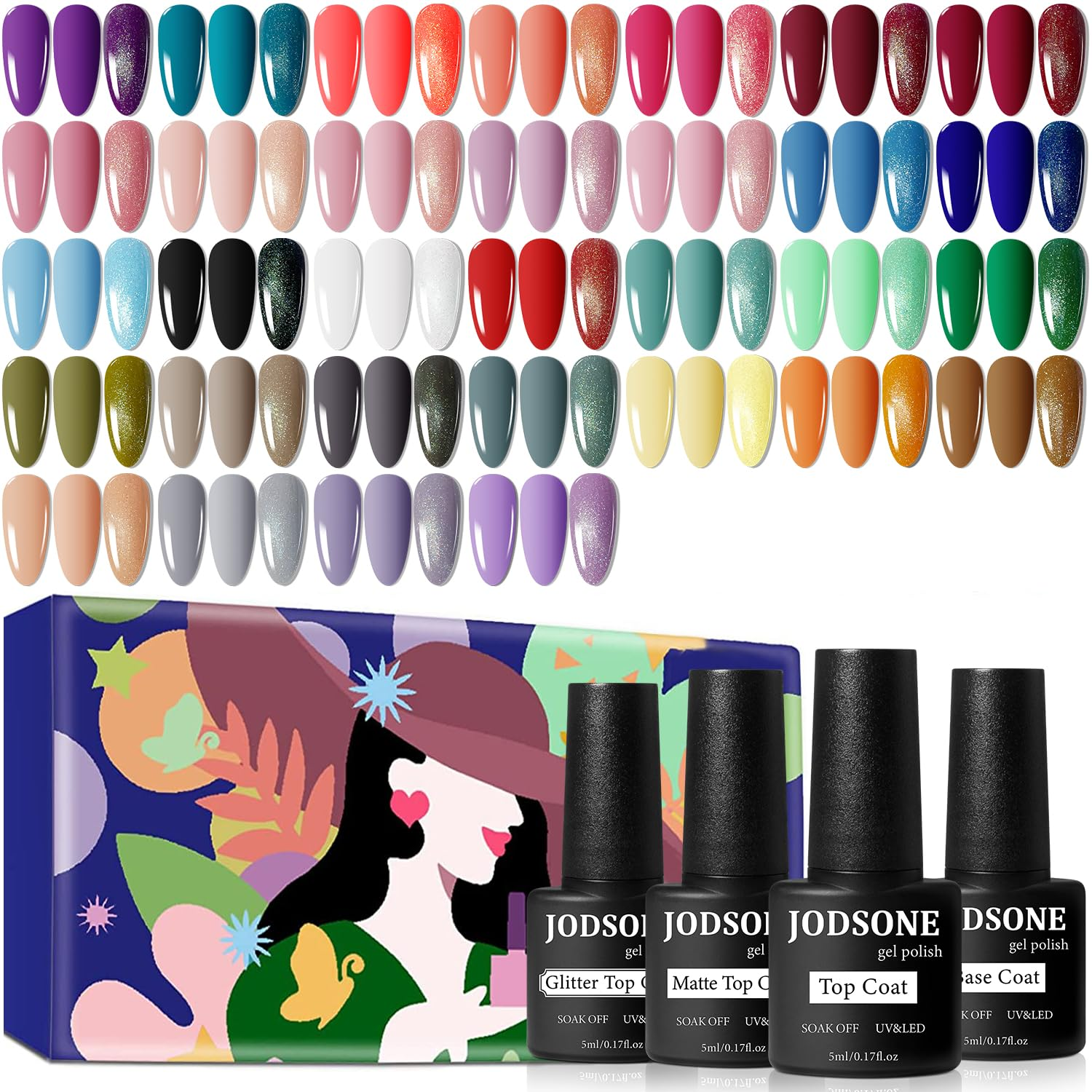
For a multicoloured manicure, the colours can be arranged across different nails rather than combined on every nail. This allows each shade to remain distinct while creating an overall coordinated look.
Glossy, Matte, and Chrome Finishes
The finish changes the appearance of the nail surface, even when the underlying colour remains the same.
Glossy finishes have a shiny surface that reflects light. They can be used with solid colours, French tips, gradients, and detailed nail art.
Matte finishes reduce surface shine and create a flatter appearance. A matte black manicure, for example, looks different from a glossy black one. Matte and glossy finishes can also be combined in a single design to create contrast.
Chrome finishes produce a reflective, metallic appearance. Depending on the pigment and base colour, the result may look silver, gold, pearlescent, or brightly coloured.
Chrome is visually different from glitter. Glitter contains visible sparkling particles, while chrome generally creates a smoother reflective effect.
These finishes can be used individually or combined with other design elements. A glossy base with matte details, for example, creates a different visual effect from a fully matte manicure.
How Can You Choose the Right Acrylic Nail Design?
Start by considering the appearance you want to create. If you prefer a simple manicure, consider a classic French tip, a neutral colour, or minimalist line art. If you enjoy detailed nail art, floral patterns, marble effects, or decorative accents offer more variety.
Next, consider the shape and length of your nails. Thin lines and small motifs can suit shorter nails, while longer nails provide additional space for intricate patterns. These are design possibilities rather than strict rules, so choose the arrangement you find appealing.
Colour is another useful starting point. You might prefer a coordinated neutral palette, a combination of contrasting shades, or a single bold colour. The finish can then help define the final look.
It can also help to consider the occasion. A simple manicure may suit an everyday look, while chrome finishes, glitter, or detailed artwork may fit a celebration or special event.
If you are unsure which style to choose, collecting a few reference images can help you compare shapes, colours, and patterns before deciding on a design.
What Should You Know Before Getting Acrylic Nails?
Before choosing a design, consider how its shape, length, and decorative details fit your everyday activities.
Long extensions and pointed shapes create a different look from short, rounded nails. If you regularly type, handle small objects, or perform tasks that require precise finger movements, consider whether your preferred length and shape will be practical for those activities.
It is also worth deciding how much detail you want. Intricate patterns and raised embellishments create a more decorative appearance, while solid colours and simple designs have fewer visual elements. Larger decorations may catch on clothing, so their placement is worth considering.
Reference images can help you communicate a particular look. Images showing the preferred shape, colour combination, and finish can make it easier to compare design options.
Frequently Asked Questions About Acrylic Nail Designs
Which Acrylic Nail Designs Are Most Popular?
Commonly chosen acrylic nail styles include French tips, ombre nails, floral nail art, chrome finishes, marble patterns, and glitter accents. Neutral colours offer a subtle look, while bright shades, contrasting colours, and decorative details create a bolder style. The right design depends on your personal taste and the look you want to achieve.
Can Acrylic Nails Be Short and Simple?
Yes, acrylic nails can be short and simple. Short square, squoval, and oval shapes pair well with solid colours, nude polish, French tips, or small accent designs. These styles offer an understated appearance without the need for long extensions or elaborate nail art.
Which Acrylic Nail Shapes Look Natural?
Short oval, rounded, and squoval shapes can create a natural-looking style. Soft pink, nude, and sheer colours can complement these shapes for a subtle finish. For a natural-looking design, choose a length and shape that suit your preferences rather than adding elaborate decorations.
How Long Do Acrylic Nails Usually Last?
Acrylic nail enhancements need maintenance as the natural nails grow. The American Academy of Dermatology advises that people wearing artificial nails for more than a few weeks will need touch-ups approximately every two to three weeks. This is a general maintenance guideline, not a guarantee that every set will last for the same period. The condition of the manicure and individual circumstances can vary.
How Can You Maintain Acrylic Nails?
Keep your acrylic nails clean and avoid using them to open packages or handle objects that could put pressure on them. Cuticle oil can be included in your regular nail-care routine. Follow the care instructions provided for your manicure, and avoid pulling or picking off acrylic enhancements.
Final Thoughts
Acrylic nail designs offer many ways to express your personal style, from simple nude finishes and classic French tips to colourful ombre effects and detailed nail art. Choosing a design comes down to your preferred colours, nail shape, length, and the overall look you want. Whether you prefer a minimal style or something more decorative, there are plenty of options to explore and make your own.