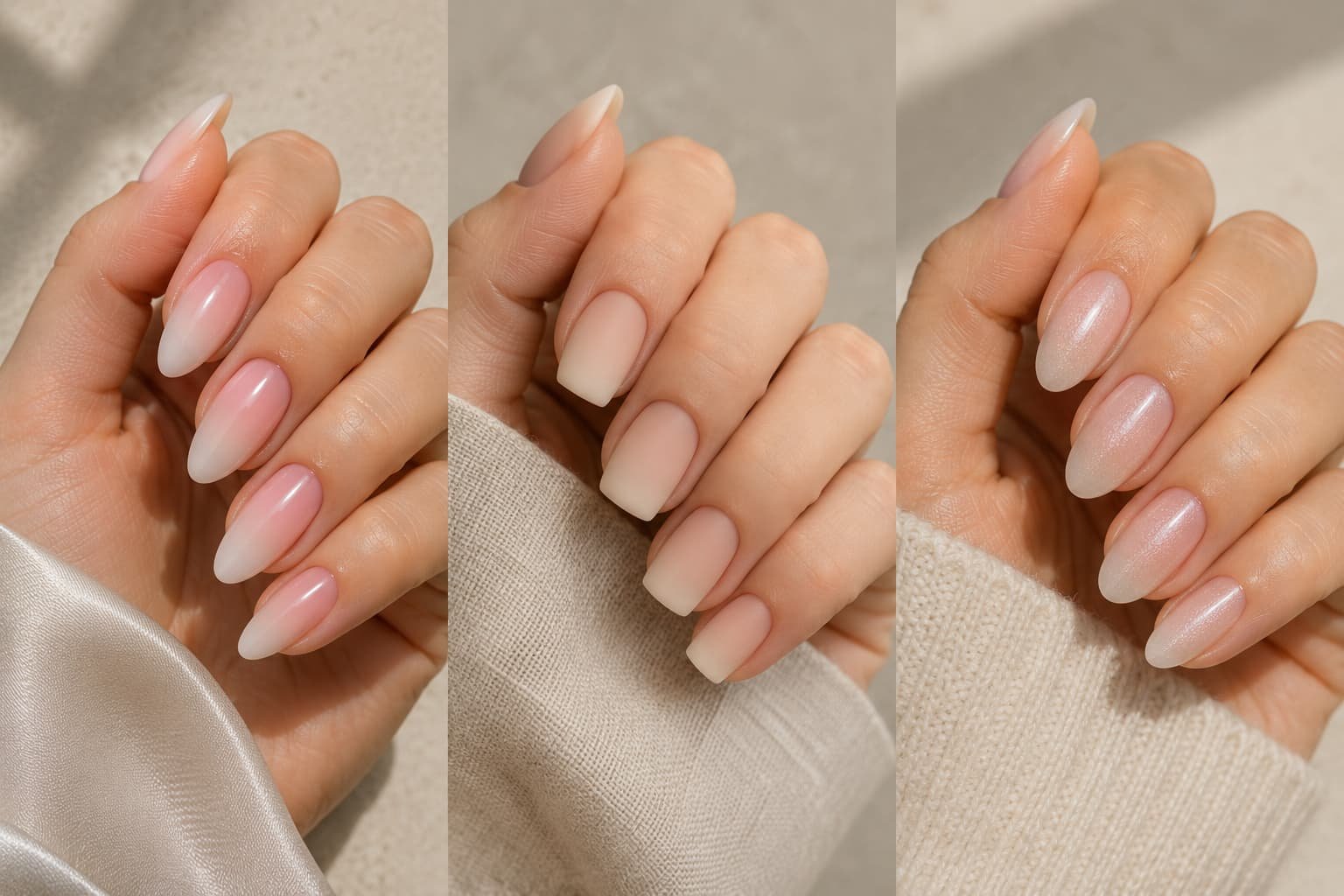
Natural ombre nails use soft colour transitions to create a subtle, blended look. Instead of a sharp line between shades, one colour gradually fades into another.
Neutral pinks, nude tones, beige, cream, ivory, peach, and milky white can all work within this style. The final appearance can vary depending on the colours, level of contrast, nail shape, length, and finish.
Some natural ombre designs closely resemble a soft French manicure, while others move beyond the traditional pink-and-white combination. This gives plenty of options for anyone who prefers understated nails with a visible but gentle colour transition.
What Defines Natural Ombre Nails?
Natural ombre nails are defined by a gradual colour transition and a generally restrained palette. The shades may sit close together visually, creating a softer effect than a high-contrast gradient.
A design might begin with sheer pink or nude near the base and gradually become lighter toward the tip. Other combinations can use beige and cream, peach and soft white, or similar blush tones.
The word natural usually refers to the appearance of the manicure. It does not necessarily mean the design must be created only on natural nails. The same visual idea can be adapted to different manicure types.
Natural Ombre vs. French Ombre Nails
French ombre commonly blends a pink or nude base into a white or off-white tip. Unlike a traditional French manicure, the transition is diffused rather than separated by a clearly defined tip line.
Natural ombre nails can include this pink-to-white style, but they are not limited to it. Nude and ivory, beige and cream, peach and soft white, or blush and sheer nude can also create a natural-looking gradient.
French ombre is therefore one way to create a natural-looking ombre manicure, while other neutral combinations can create a similar soft effect without following the classic French palette.
Main Visual Characteristics of a Natural Ombre Look
A gradual colour transition is a defining visual feature of ombre nails. The shades move into one another rather than meeting at a hard boundary.
Low-contrast colours may create a more understated effect. For example, pale pink fading into milky white can appear softer than a deeper nude fading into bright white.
Sheer and muted shades can also make the gradient appear more delicate. A translucent blush base may leave more visual depth, while a more opaque shade can make the colour change easier to see.
Placement also changes the appearance. Some designs keep most of the base colour visible and introduce the lighter shade near the tip. Others begin the transition closer to the centre of the nail.
Neither approach is automatically better. The final look can vary depending on how noticeable the gradient is meant to be.
Natural Ombre Nail Colours to Consider
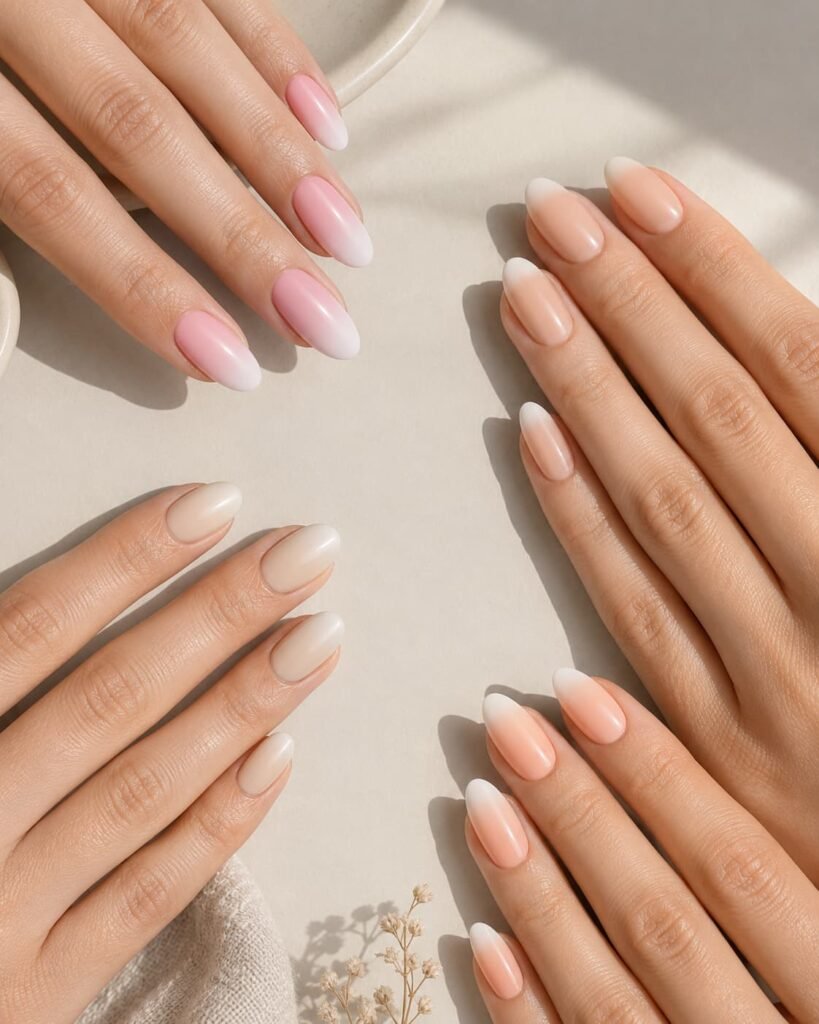
Colour choice influences how subtle or noticeable the gradient appears. Shades that are close in tone may create less contrast, while more distinct colours can make the fade easier to see.
Soft Pink and Milky White
Soft pink and milky white can create a light, French-inspired gradient.
The pink may remain more visible near the base while the milky white develops toward the tip. Compared with a brighter opaque white, a milky shade can give the transition a softer-looking edge.
A sheer pink base may create a more delicate appearance, while a deeper blush can make the fade more noticeable.
This combination may suit someone who likes French-style colours but prefers a less defined division between the base and tip.
Nude and Ivory
Nude and ivory can create a neutral alternative to a stronger pink-and-white contrast.
A nude base may gradually fade into ivory toward the tip. The result can appear warmer, cooler, or more neutral depending on the undertones of the individual shades.
Nude polish can lean beige, peach, pink, brown, or cooler in tone, so comparing the actual colours is more useful than relying on the shade name alone.
Beige and Cream
Beige and cream can create a low-contrast gradient with little visible pink.
A medium beige base may transition into pale cream, while two lighter shades can create an even more restrained effect.
This pairing keeps much of the attention on the gradual colour change rather than on a bright tip.
Peach and Soft White
Peach can introduce a warmer-looking element to a neutral ombre palette.
A pale peach base may fade into soft white or ivory toward the tip. A lighter peach can keep the difference subtle, while a deeper peach may make the base colour more noticeable.
A sheer version is another possible option for someone who wants a softer overall effect.
Blush Pink and Sheer Nude
Blush pink and sheer nude can create a very subtle colour combination because the shades may sit close together visually.
A sheer nude base can gradually move into blush pink, or the placement can be reversed depending on the desired effect.
This combination may suit someone who wants the colour transition to remain understated.
12 Natural Ombre Nail Ideas
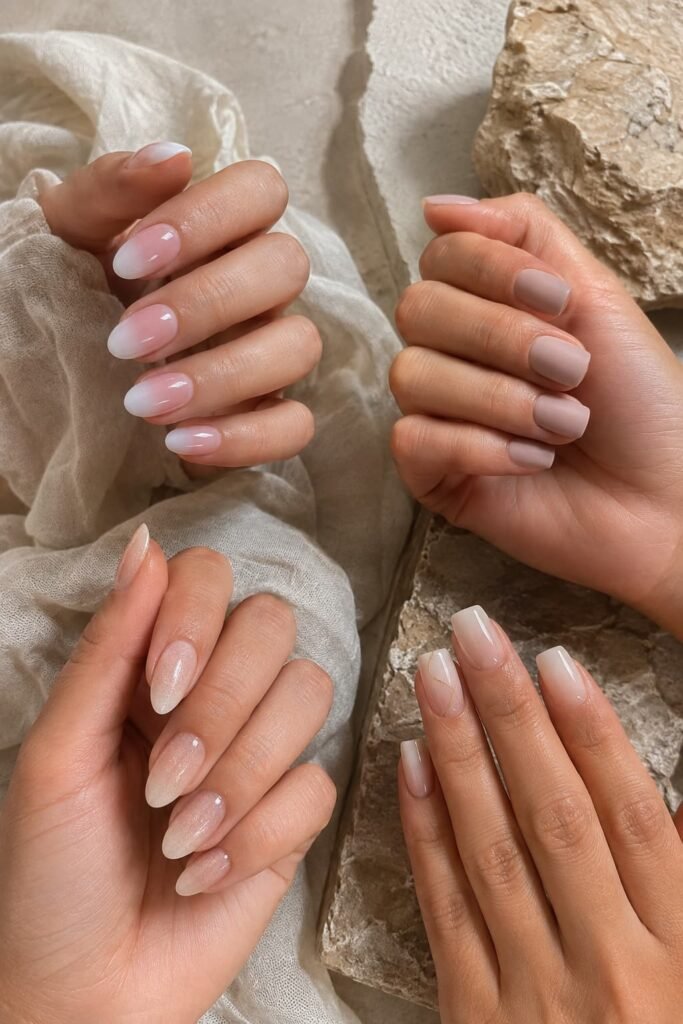
Natural ombre designs can vary through colour placement, nail shape, finish, and decorative details. The following ideas use those differences rather than relying only on minor shade changes.
1. Classic Pink-to-White French Ombre
A pink-to-white gradient can create a soft French-inspired look without the defined tip line of a traditional French manicure.
The pink can stay visible through the lower portion of the nail before blending gradually into white. A more diffused transition can make the two shades appear more connected.
This option may suit someone who prefers familiar French colours with a softer division between them.
2. Sheer Nude With an Ivory Tip Fade
A sheer nude base can be paired with an ivory fade concentrated toward the outer part of the nail.
Keeping more of the nude visible gives the design a restrained appearance, while the lighter edge provides enough contrast for the gradient to remain noticeable.
The effect can vary depending on whether the nude shade leans beige, pink, peach, or cooler in tone.
3. Milky Pink Soft-Fade Ombre
Milky pink ombre focuses on translucent-looking shades rather than a strong base-to-tip contrast.
A pale pink can gradually fade into an even lighter pink or milky white. Because the colours may sit close together visually, the transition can remain subtle.
This approach keeps the colour palette soft while still giving the nail a visible gradient.
4. Beige-to-Cream Side Fade
A beige-and-cream combination can also be arranged with the gradient moving slightly across the nail rather than only from base to tip.
The directional change gives the design a different visual structure while keeping the palette neutral.
A low-contrast pairing may keep the effect understated.
5. Peach-to-Milky White Diagonal Fade
A pale peach base can transition diagonally into milky white or ivory.
Changing the direction of the fade gives the manicure a different appearance from a traditional straight base-to-tip gradient.
This may appeal to someone who wants a warmer neutral palette with a little more visual movement.
6. Natural Ombre With Fine Pearl Shimmer
Fine pearl shimmer can add a reflective effect while allowing the underlying gradient to remain visible.
A nude, blush, or milky pink base can be paired with a delicate pearlescent finish.
Keeping the shimmer subtle may allow the neutral colour transition to remain the main visual feature.
7. Matte Nude Ombre Nails
A matte finish changes the surface appearance of a nude ombre design without changing the basic gradient.
Beige, nude, blush, and ivory can all be adapted to this finish. Reduced shine gives the colours a flatter-looking surface compared with a glossy version.
The final appearance can vary depending on the contrast between the base and tip shades.
8. Short Squoval Natural Ombre Nails
Short squoval nails combine straighter sides with softened corners.
Because a shorter nail has less space for the transition, a compact fade between two close shades may help keep both colours visible.
Soft pink and milky white, nude and ivory, or beige and cream are possible combinations.
9. Almond Natural Ombre With a Light Tip
Almond nails taper toward a softly rounded point.
A lighter ombre shade near the tip can draw attention toward the tapered end of the nail. Nude fading into ivory or blush fading into milky white are two possible combinations.
The tapered outline can create a visually elongated appearance on some hands, although the effect can vary.
10. Square Nude Ombre With Fine Gold Accents
Square nails have straighter edges, which can give the manicure a more structured visual outline.
A beige or pink-toned nude gradient can be paired with a thin gold line, small foil-style accent, or restrained metallic detail on selected nails.
Keeping the metallic element limited allows the gradient to remain visible.
11. Natural Ombre With Minimal White Line Art
A neutral gradient can provide a background for fine white line art.
Curved lines, small abstract marks, or simple geometric details can be placed on selected nails without covering most of the fade.
This may suit someone who wants more detail than a plain ombre design while keeping the artwork visually light.
12. Accent-Nail Ombre With Subtle Shimmer
An accent-nail approach can keep most of the manicure simple while adding extra detail to one or two nails.
For example, most nails may use a nude-to-milky gradient, while selected nails include fine shimmer over the same palette.
Using the shimmer selectively can create contrast without introducing a completely different colour scheme.
How Nail Shape Changes the Look of Natural Ombre Nails
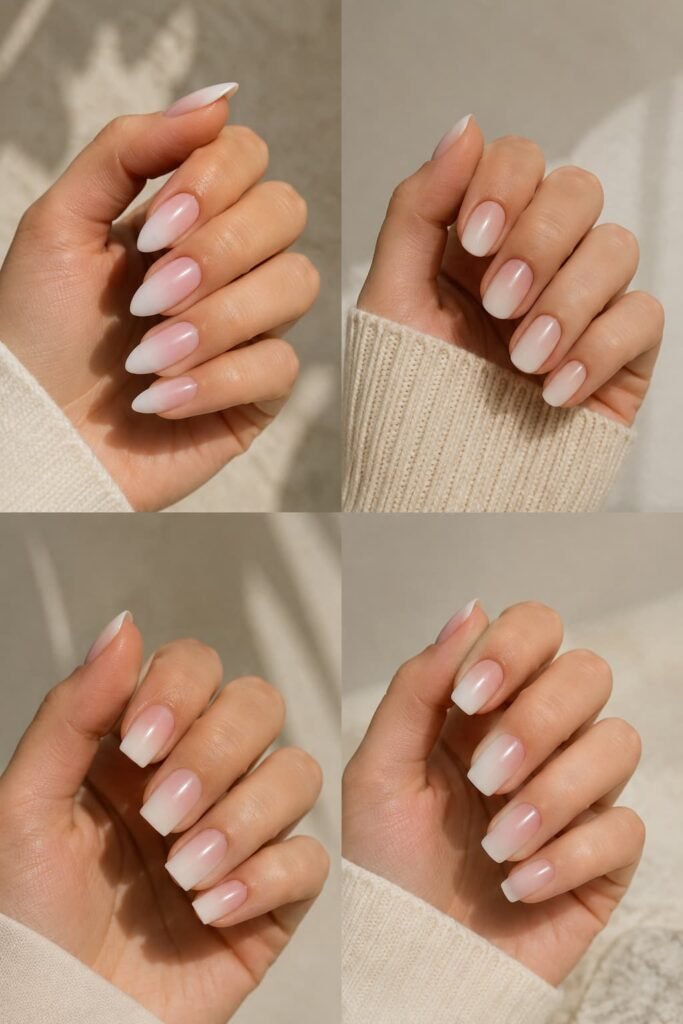
Nail shape changes the outline that frames an ombre gradient. The colours may stay the same, but curved, tapered, or straighter edges can make the fade appear different.
The final effect can vary depending on natural nail shape, chosen length, colour placement, and contrast.
Almond Natural Ombre Nails
Almond nails taper toward a softly rounded point. The tapered outline can create a visually elongated appearance on some hands, although the effect can vary.
A lighter shade near the tip can emphasise the tapered end of the nail. Soft nude fading into ivory or blush fading into milky white are possible combinations.
Some people may prefer a subtle transition, while others may choose a more visible light tip.
Oval Natural Ombre Nails
Oval nails have curved sides and a rounded tip.
A gentle gradient can follow those curved lines without creating a sharp visual break. Pale pink, sheer nude, cream, and milky white can all be used in this type of design.
A low-contrast fade may give the manicure a softer appearance, while a lighter tip can make the gradient easier to notice.
Square Natural Ombre Nails
Square nails have straighter sides and a flatter tip.
A lighter shade near the free edge may appear more defined within this straighter outline. Nude-to-ivory and pink-to-white are two possible combinations.
A softer gradient can create less contrast against the straight edges while keeping the ombre effect visible.
Squoval Natural Ombre Nails
Squoval nails combine straighter sides with rounded corners.
This shape can carry both subtle and more visible gradients. The flatter edge gives the tip a straighter outline, while the rounded corners make the shape less angular than a square nail.
Sheer pink, nude, beige, cream, and milky white can all be adapted to this shape depending on the desired contrast.
Natural Ombre Nails for Short and Longer Lengths
Nail length affects how much space is available for the gradient. Shorter nails create a more compact area for the fade, while additional length provides more room for the colours to transition.
Neither length is automatically better. The choice depends on the preferred appearance, natural nail shape, and amount of detail.
Short Natural Ombre Nails
Short nails have less space between the base and tip, so the gradient may appear more compact.
Closely related shades such as blush and milky pink, nude and ivory, or beige and cream may create a softer transition within the shorter area.
Greater contrast can also work, although the fade may appear more concentrated because there is less surface area.
Simple finishes and limited accent details may suit someone who wants the gradient to remain the main feature.
Medium and Longer Ombre Nails
Medium and longer nails provide more space for a gradual transition.
The fade may begin closer to the base, move through the centre, or remain concentrated near the tip. Additional space can also accommodate fine shimmer, metallic details, or line art.
A longer nail does not automatically produce a better ombre effect. Some people may prefer the compact look of shorter nails, while others may prefer the extra design space of a medium or longer shape.
Glossy, Matte, and Shimmer Finishes
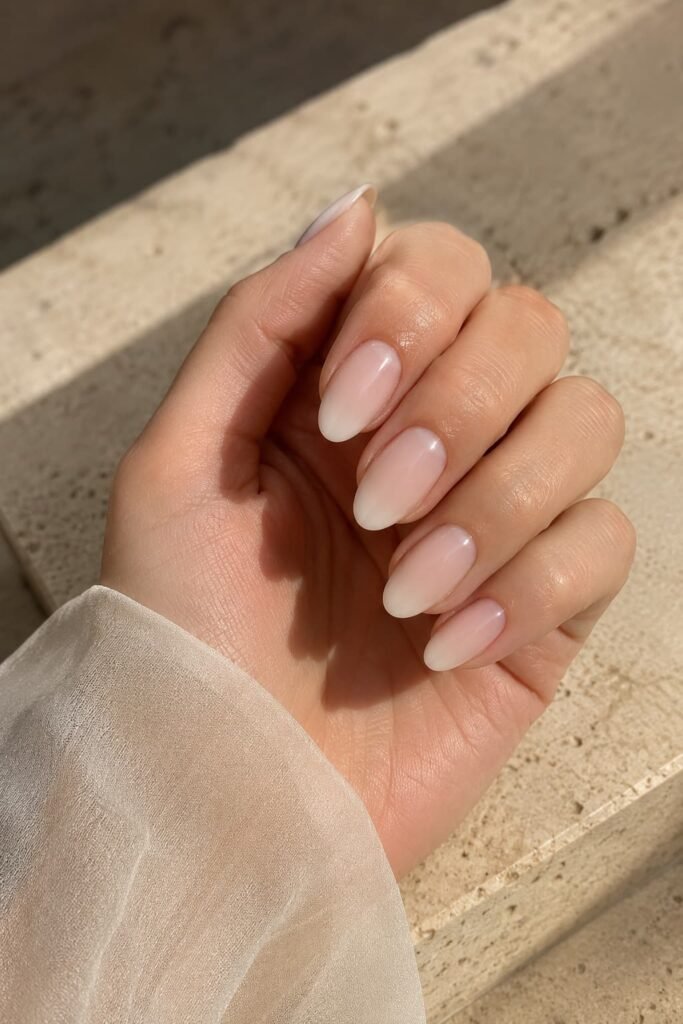
The finish can change how the same ombre colours appear without changing the underlying gradient.
Glossy Natural Ombre
A glossy finish reflects light across the nail surface, which can make a subtle gradient appear more noticeable.
Soft pink, nude, beige, and milky white can all be paired with this finish. Reflected light may make the transition between closely related shades easier to see.
Some people may prefer gloss when they want the gradient to remain simple but visibly reflective.
Matte Natural Ombre
A matte finish reduces visible shine and gives the gradient a flatter-looking surface.
The same nude-to-ivory or pink-to-white combination can appear different under a matte finish because less light is reflected from the surface.
Matte ombre may suit someone who prefers a softer, less reflective appearance.
Pearl and Fine Shimmer Ombre
Pearl and fine shimmer finishes can add a reflective effect across the gradient.
A soft shimmer can be used with nude, blush, cream, or milky tones while allowing the base colours to remain visible.
A very fine shimmer may keep the overall effect restrained, while a stronger reflective detail can make the design appear more decorative.
Minimal vs. Detailed Natural Ombre Designs
Natural ombre nails can remain simple or include decorative elements. The difference comes mainly from how much additional detail is placed around or over the gradient.
Keeping the Look Minimal
A minimal design can use two closely related colours with little or no added artwork.
Blush and milky pink or beige and cream are possible pairings. Using one consistent finish across the nails can give the manicure a more uniform appearance.
With little added decoration, the colour transition remains the main visual feature.
Adding Subtle Details
Fine gold lines, small pearl-style accents, delicate white artwork, or light shimmer can add detail to a neutral gradient.
These accents can appear on selected nails rather than across the full manicure if a more restrained design is preferred.
With fewer accents, the colour blend may remain more visually prominent. Additional decoration can shift more attention toward the nail art.
What to Consider Before Choosing a Natural Ombre Look
Several visual choices can change the final appearance, including contrast, nail shape, length, finish, and decorative detail.
Choose the Level of Contrast
Natural ombre designs can range from barely noticeable fades to clearer base-to-tip transitions.
Blush fading into milky pink or beige fading into cream may create less contrast when the shades are visually close. Pink fading into white or a deeper nude fading into ivory may create a more noticeable transition.
Neither approach is automatically better. The choice depends on how subtle or defined the gradient is meant to appear.
Consider Nail Length and Shape
Available nail space affects how the gradient is distributed.
Short nails provide a smaller area for the transition, while medium and longer nails provide more space for a gradual fade.
Shape also changes how the design is framed. Almond and oval nails have curved or tapered outlines, while square and squoval nails introduce straighter edges.
The final look can vary depending on how the gradient is placed within the chosen shape.
Decide How Much Detail You Want
A plain ombre base keeps most of the attention on the colour transition.
Shimmer, fine metallic lines, pearl-style details, or simple artwork can make the manicure more decorative.
Some people may prefer one small accent on selected nails, while others may choose details across the manicure. The amount of decoration is a styling choice rather than a requirement of the ombre look.
Compare Neutral Undertones
Nude, blush, beige, peach, ivory, and white shades can vary in undertone.
Comparing the actual colours together can help determine whether a combination appears warmer, cooler, or more neutral. Shade names alone do not always describe the undertone accurately.
Colours with similar undertones may create a more closely blended palette, while greater differences between the shades can make the gradient more noticeable.
Frequently Asked Questions About Natural Ombre Nails
What are natural ombre nails?
Natural ombre nails use a gradual colour transition between soft, neutral, or natural-looking shades.
The fade may move from pink or nude near the base into ivory, cream, or milky white toward the tip. Beige, peach, blush, and other muted shades can also be used.
The word “natural” usually describes the visual style rather than requiring the manicure to be created only on natural nails.
Are natural ombre nails the same as French ombre nails?
Not exactly.
French ombre commonly uses a pink or nude base that gradually fades into a white or off-white tip.
Natural ombre nails can include this style, but they can also use combinations such as beige and cream, peach and ivory, or blush and sheer nude.
What colours can be used for natural ombre nails?
Possible colours include soft pink, nude, blush, beige, peach, cream, ivory, and milky white.
Closely related shades may create a softer gradient, while more contrast between the colours can make the fade easier to see.
The final appearance can vary depending on the specific shades and finish.
Can natural ombre nails work on short nails?
Yes. Ombre designs can be adapted to shorter nails.
Because a short nail has less space between the base and tip, the gradient may appear more compact. A two-shade fade such as nude and ivory or blush and milky pink may help keep the transition visible within the shorter nail area.
The result can vary depending on shape and colour contrast.
Which nail shapes can be paired with natural ombre?
Natural ombre can be paired with almond, oval, square, squoval, and other nail shapes.
A tapered almond shape frames the gradient differently from a flatter square tip, while oval and squoval shapes have more rounded edges.
There is no single shape that suits everyone. Nail length, natural nail shape, personal preference, and the desired appearance can all influence the final look.
Do natural ombre nails have to be pink and white?
No. Pink and white is a familiar French-inspired combination, but it is only one option.
Nude and ivory, beige and cream, peach and soft white, or blush and sheer nude can also create a natural-looking gradient.
What is the difference between milky nails and ombre nails?
A milky look generally describes a soft, semi-opaque or subtly translucent finish. Ombre describes a gradual transition between shades.
The two can be combined. For example, a milky pink base may fade into soft white to create a milky ombre effect.
Can natural ombre nails include shimmer or subtle nail art?
Yes. A neutral ombre base can include shimmer, fine metallic details, white line art, pearl-style accents, or other restrained decoration.
A small accent may allow the gradient to remain more visually prominent, while additional details can make the overall manicure appear more decorative.
The choice depends on the preferred level of contrast and detail.