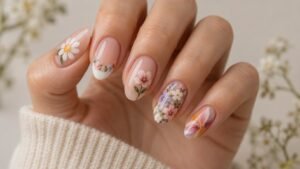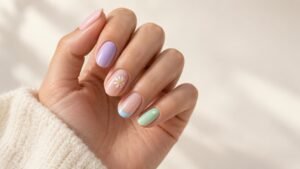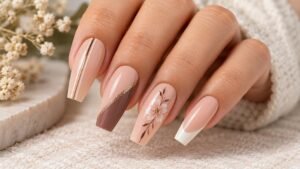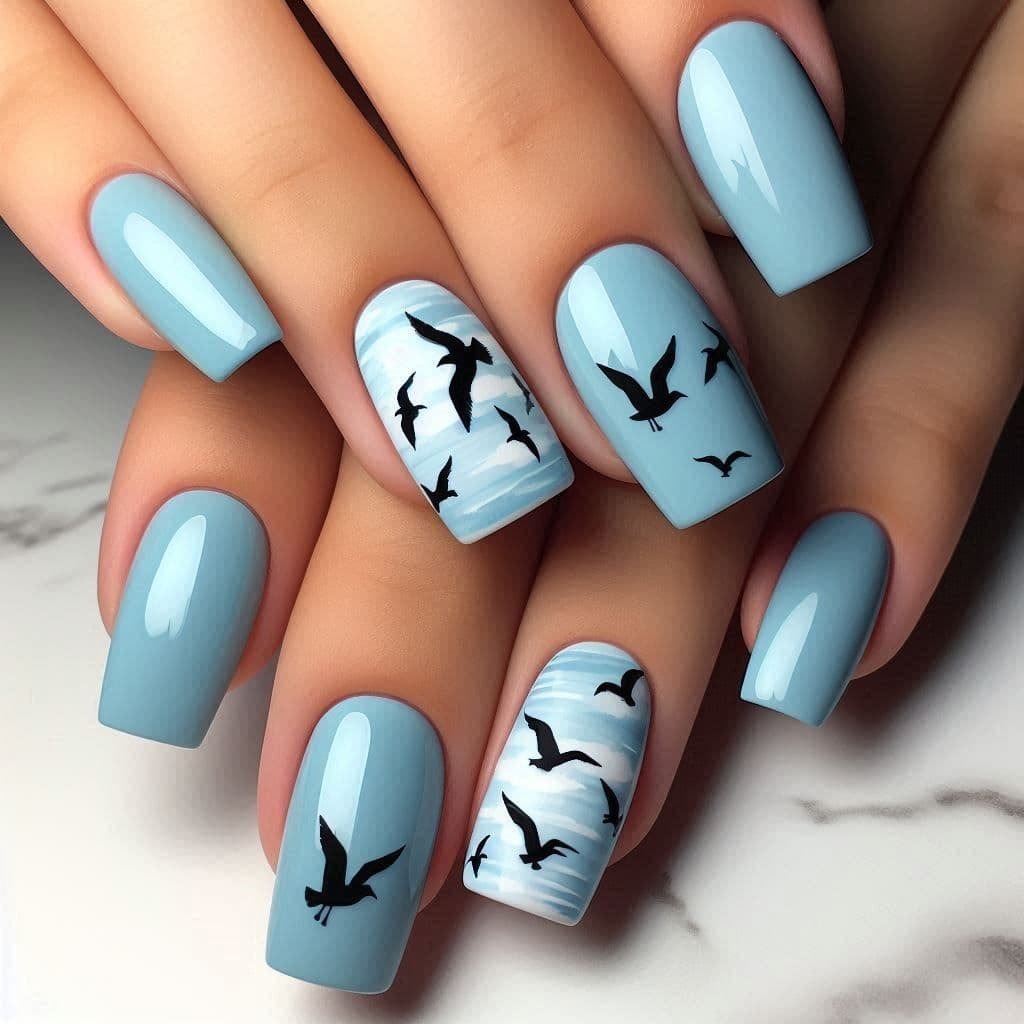
Beautiful nails in 2026 can include a wide range of visual styles, from simple solid-color manicures to designs featuring French tips, patterns, metallic details, or textured accents. There is no single color, shape, or level of detail that defines a beautiful manicure because nail design is largely influenced by individual visual preferences.
Color can influence the overall visual character of a manicure, while nail shape and length affect its silhouette. Short square or rounded nails create a more compact outline, while oval and almond shapes have softer, more tapered edges. Glossy, sheer, jelly, metallic, and textured finishes can also give similar colors or designs noticeably different appearances.
Some people may prefer neutral shades with minimal details, while others may choose stronger colors, mixed patterns, or decorative accents. Instead of following one fixed formula, a nail look can be built around preferred colors, shapes, lengths, finishes, and levels of detail.
Nail Colors to Explore in 2026
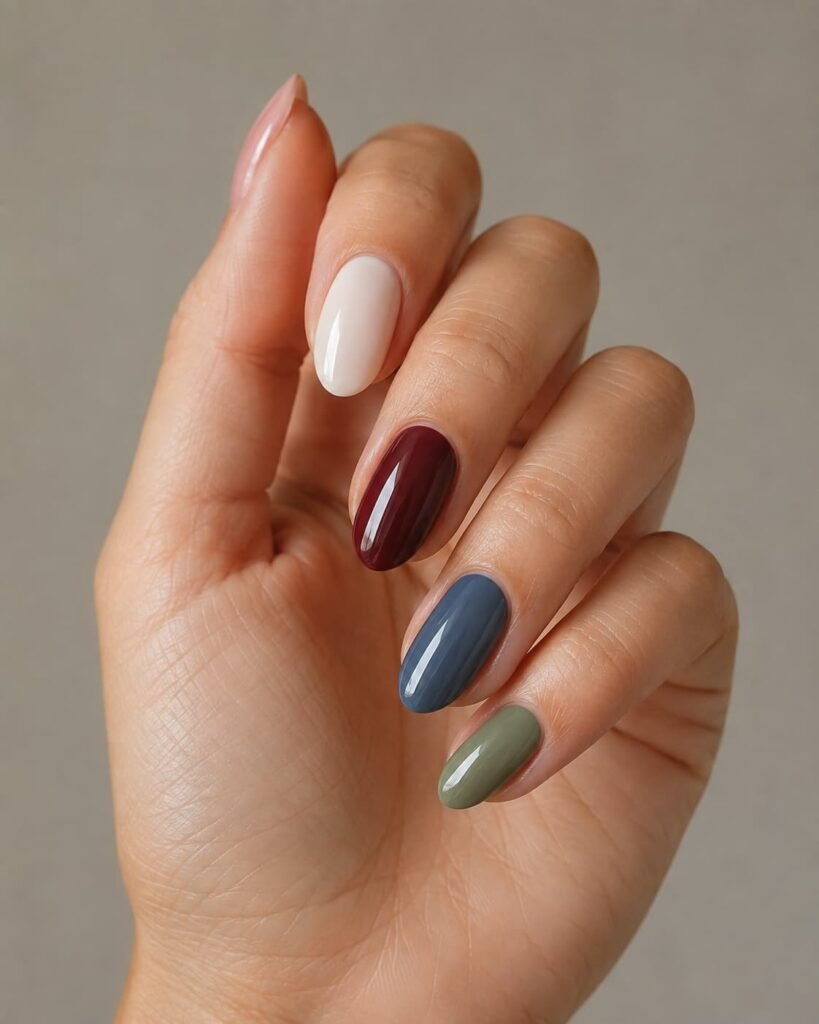
Oval nails in sheer pink, milky white, burgundy, blue, and sage green
Color can change the overall visual character of a manicure even when the nail shape and design remain simple. For a 2026-inspired look, color options can range from translucent neutrals and deeper reds to blues, greens, and brighter accents.
Rather than treating one shade as the right choice for everyone, these color groups can serve as starting points for different visual styles.
Sheer and Milky Shades
Sheer pink, translucent nude, and milky white create a softer, more understated appearance than fully opaque colors. Depending on the opacity of the polish, part of the natural-looking nail may remain visible. One product example for a sheer pink finish is OPI Bubble Bath Nail Lacquer.
These shades can be used alone for a simple look or paired with details such as narrow French tips, fine lines, dots, or subtle metallic accents. For readers who prefer a sheer white finish instead of pink, Essie Marshmallow Nail Polish is another product example.
Soft and Natural Neutrals
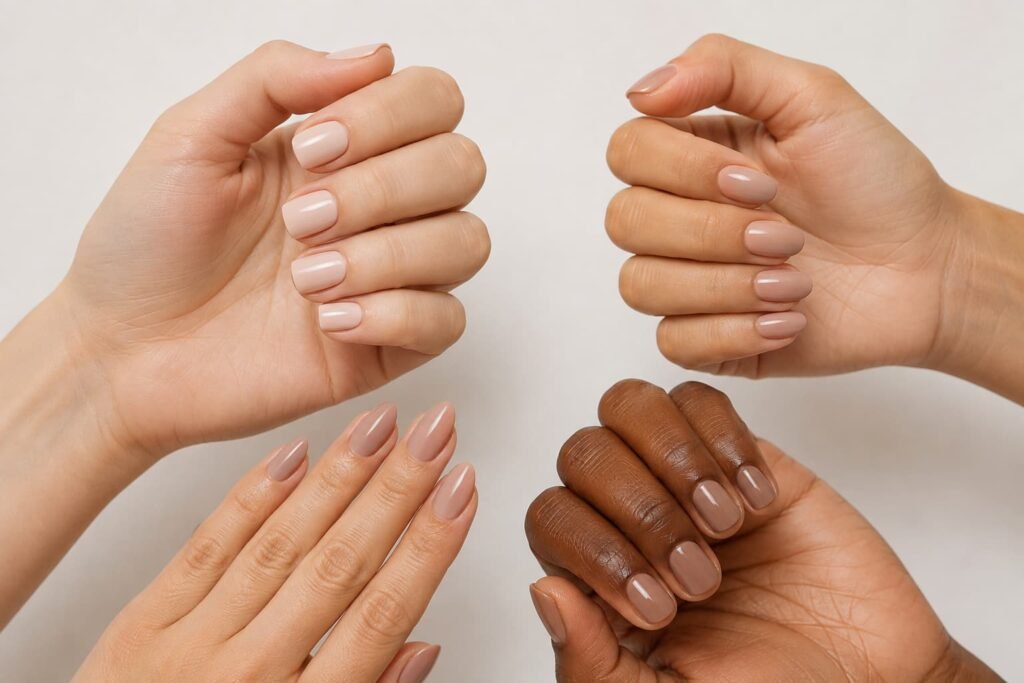
Beige, muted pink, taupe, soft brown, and similar neutral shades provide a restrained color direction. Their appearance can look warmer or cooler depending on the individual shade and finish.
Neutral colors can also provide a simple background for decorative elements. A contrasting tip, small accent, or delicate pattern can add detail without covering the entire nail.
Red and Burgundy Tones
Red ranges from brighter shades to deeper burgundy and wine-inspired colors. Brighter reds can create more noticeable color contrast, while deeper red tones can give a manicure a darker, more subdued appearance.
These colors can be used as a solid manicure or combined with French tips, small patterns, or selected accent details.
Blue and Green Shades
Blue and green offer a broad range of visual options. Pale blue, deeper navy-inspired shades, muted sage, teal, and richer green tones can each create a different color direction. Readers who prefer a deep blue manicure with a tapered shape can explore these navy blue almond nails for French-tip, glitter, ombre, and metallic design ideas.
A single shade can be used across the manicure for a more consistent look. Blue or green can also appear on tips, accent nails, fine lines, or small graphic details when more variation is preferred. For a softer green palette, these sage green nail ideas show solid colors, French tips, floral details, and other design variations.
Bright Accent Colors
Bright colors do not need to cover every nail to become part of a design. Pink, orange, yellow, blue, green, and other vivid shades can be introduced through smaller areas of the manicure.
Colored French tips, dots, thin lines, abstract shapes, or selected accent nails are possible ways to introduce stronger color while keeping other parts of the design simpler.
Nail Shapes That Create Different Looks
Nail shape changes the outline of a manicure and can influence how a color or design appears. The same artwork can have a different visual effect on a short square nail compared with an almond or oval shape.
There is no single nail shape that is suitable for everyone. Nail length, natural nail outline, and personal visual preferences can influence the shape someone chooses.
Short Square Nails
Square nails have a relatively straight free edge and defined sides. On shorter nails, this creates a compact, structured outline.
This shape can be paired with solid colors, narrow French tips, small dots, fine lines, or other scaled-down details. Slightly softened corners can create a less angular variation of the square shape.
Soft Oval Nails
Oval nails have curved edges and a rounded tip, giving them a softer outline than a sharply squared shape.
They can be combined with sheer finishes, solid colors, French-inspired designs, gradients, florals, or other decorative details. The final appearance can vary depending on nail length and the amount of taper at the sides.
Almond Nails
Almond nails taper gradually along the sides and end in a softly rounded point. This gives the shape a more tapered silhouette than square or rounded nails.
Longer almond nails provide more visible surface area for gradients, French tips, fine lines, mixed colors, or detailed nail art. Shorter almond variations can use similar ideas at a smaller scale. A solid-color manicure is another option when the shape itself is intended to remain visually prominent. For a warmer neutral interpretation of this tapered shape, see these brown almond nails.
Short Rounded Nails
Short rounded nails follow a curved outline around the tip rather than creating a straight edge or pronounced point. This creates a compact shape with softer edges.
Small-scale designs such as micro French tips, tiny dots, simple florals, fine stripes, or solid colors can be adapted to this outline. Adjusting the size and placement of individual details to the available nail space can help keep the design visually clear.
Beautiful Nail Design Ideas for 2026
Nail designs can combine color, pattern, texture, and different finishes in many ways. The ideas below are presented as visual inspiration and can be adapted according to nail length, shape, preferred colors, and level of detail.
1. Micro French Tips
Micro French tips use a narrow line along the free edge of the nail. A neutral or sheer base can be paired with white, red, blue, green, metallic, or contrasting tips.
Because the colored edge is narrow, much of the base can remain visible. The design can stay minimal or include small details such as dots or fine lines.
2. Sheer Nails With Minimal Details
A sheer pink, nude, or milky base can be paired with small design elements instead of full-coverage artwork.
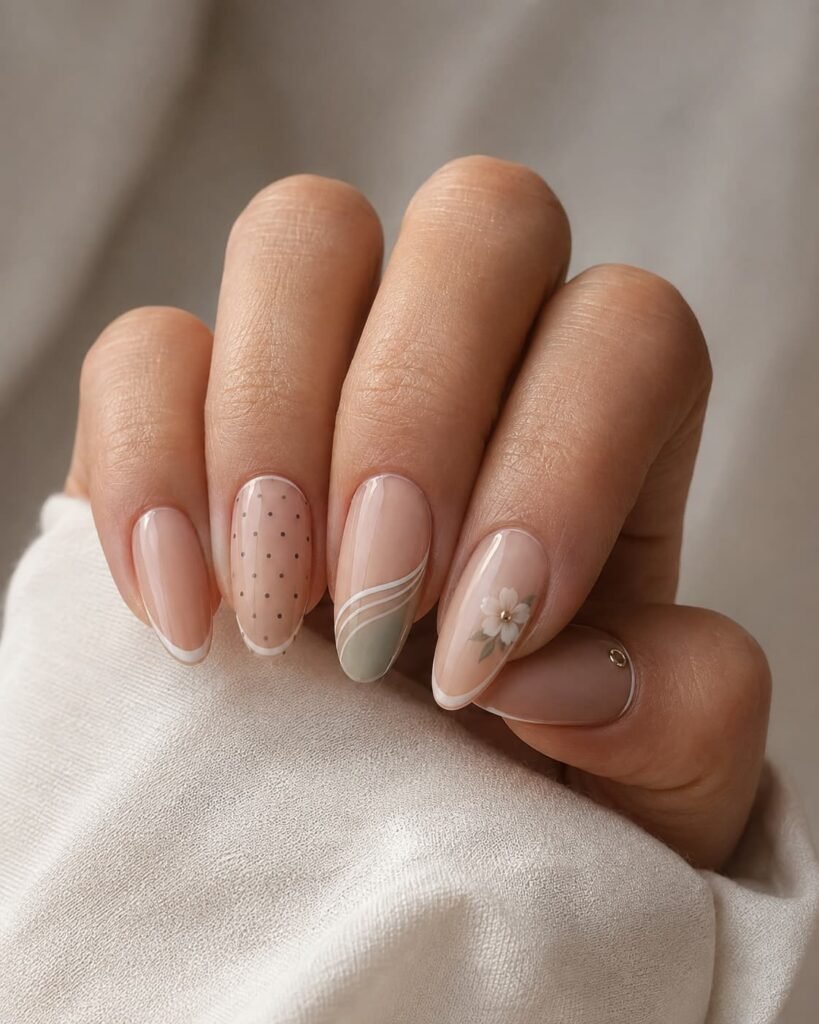
Fine lines, tiny dots, metallic accents, or a single detail on selected nails are possible ways to add decoration while keeping much of the base visible.
3. Tiny Polka Dot Designs
Polka dots can range from one small dot on each nail to repeated patterns across the surface.
A single contrasting color can create a simple graphic look, while several shades can create a more colorful design. Dots can also appear alongside French tips or on selected accent nails.
4. Fine Striped Nail Art
Thin stripes can introduce patterns without covering the entire nail. Lines may be vertical, horizontal, diagonal, curved, or positioned close to the tip.
Using related colors can create a more restrained design, while contrasting shades can make the lines more visually noticeable.
5. Jelly-Look Nails
Jelly-look nails use translucent color rather than a completely opaque finish, creating a see-through effect.
Pink, red, blue, green, or neutral shades can each give the design a different visual character. Small details, French-inspired tips, or other accents can also be placed over a translucent base.
6. Soft Metallic Accents
Metallic elements can be added to only part of a manicure rather than covering every nail.
A silver- or gold-toned line, narrow tip, curved detail, or small reflective accent can be placed over a neutral or colored base. For a stronger warm-color combination, these red and gold nail ideas show several ways metallic gold details can be paired with red shades. Another option is to limit the metallic finish to selected nails.
7. Minimal Floral Details
Small floral motifs can provide a lighter alternative to dense, full-nail patterns.
A single flower can be positioned near the tip, center, or base of a nail. Floral details can also appear on selected nails while the remaining nails use sheer or solid colors.
8. Mismatched Nail Designs
A mismatched manicure uses different colors, patterns, or details across individual nails rather than repeating one identical design.
For example, one nail can feature a French tip, another a dot pattern, and another a solid color. Repeating some colors or design elements can visually connect the different nails.
9. Textured Accent Nails
Textured designs use raised or dimensional-looking details that contrast with flatter nail surfaces.
Raised lines, sculptural details, or other dimensional accents can appear on selected nails or across a larger part of the manicure. The amount of texture can vary depending on the visual effect preferred.
10. Aura-Inspired Gradients
Aura-inspired designs use softly blended areas of color, often with one shade concentrated toward the center and another surrounding it.
Related colors such as pink and nude can create a subtle transition, while contrasting shades such as blue and orange can produce a more noticeable gradient. Different color combinations can change the character of the same basic design. Readers looking for a more traditional edge-to-edge color transition can also explore these natural ombre nails.
11. Negative-Space Nail Art
Negative-space nail art intentionally leaves part of the natural-looking or transparent base visible as part of the design.
Curved lines, geometric shapes, partial French tips, or areas of color can be positioned around the open space. This approach allows the visible base to become part of the overall composition.
12. Glossy Solid-Color Nails
A single glossy color offers a simpler alternative to patterned or textured nail art.
Sheer pink, burgundy, blue, green, brown, red, or brighter shades can create different visual effects depending on the nail shape and length. Using one color also keeps more attention on the shade, finish, and overall nail outline.
How Different Nail Finishes Change the Look
Finish can change the way a nail color or design appears even when the shape and artwork stay the same. Some finishes emphasize shine and reflection, while others create a softer, more translucent, or more dimensional effect.
Glossy Finishes
A glossy finish adds visible shine and reflection to the nail surface.
It can be used with neutral shades, deeper colors, bright tones, French tips, or detailed nail art. On a simple manicure, the reflective surface can keep more visual attention on the color and nail shape rather than additional decoration.
Sheer and Jelly Finishes
Sheer finishes allow part of the natural-looking nail or base to remain visible through the color. Jelly finishes use a similar translucent effect but often appear more glass-like because of their clear, tinted appearance.
These finishes can work with soft pink, nude, red, blue, green, or other colors. They can be worn alone or combined with fine lines, small dots, French-inspired tips, or other minimal details.
Metallic and Chrome-Look Details
Metallic and chrome-look finishes introduce reflective elements that can create stronger visual contrast against matte-looking, sheer, or solid-color areas.
They do not need to cover every nail. A metallic tip, thin line, curved accent, or selected nail can add reflective detail while leaving the rest of the manicure simpler.
Textured Finishes
Textured nail designs may use raised, layered, or dimensional-looking elements rather than relying only on flat color.
The amount of texture can vary from a small accent to a more decorative design across several nails. Combining textured details with smoother-looking surfaces can create visible contrast within the same manicure.
Beautiful Ideas for Short and Longer Nails
Nail length changes the amount of visible space available for color and design. This does not mean that one length is better than another. It simply affects how large, detailed, or spread out certain design elements can appear.
Designs That Can Work on Short Nails
Many nail-art ideas can be adapted to short nails when the details are scaled to the available space.
Micro French tips, tiny dots, narrow stripes, small floral motifs, solid colors, sheer finishes, and simple negative-space designs are possible options. Keeping individual elements relatively small can help the design remain visually clear on a shorter nail surface.
Short square, rounded, or oval shapes can also create different visual effects even when they use the same color or pattern.
Designs With More Space on Longer Nails
Longer nails provide more visible surface area for larger patterns and more detailed arrangements.
Gradients, extended French tips, layered lines, mixed patterns, floral designs, aura-inspired effects, and textured details can use the additional space in different ways.
A longer nail does not need to be heavily decorated. Solid colors, sheer finishes, or minimal accents can also place more visual attention on the nail shape and overall silhouette.
Minimal vs. Detailed Nail Designs
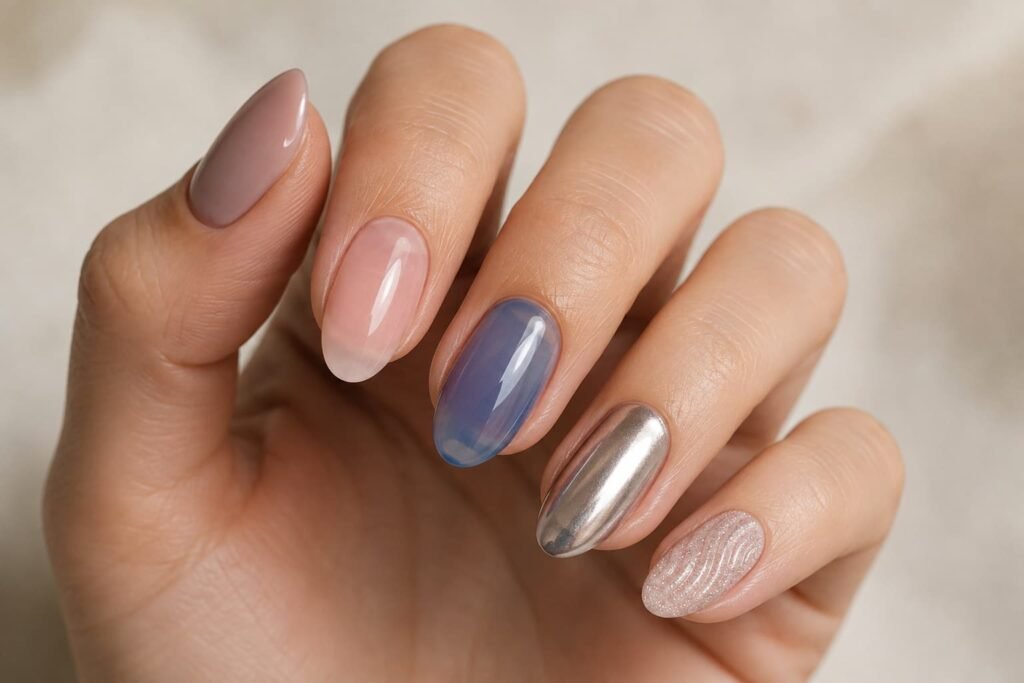
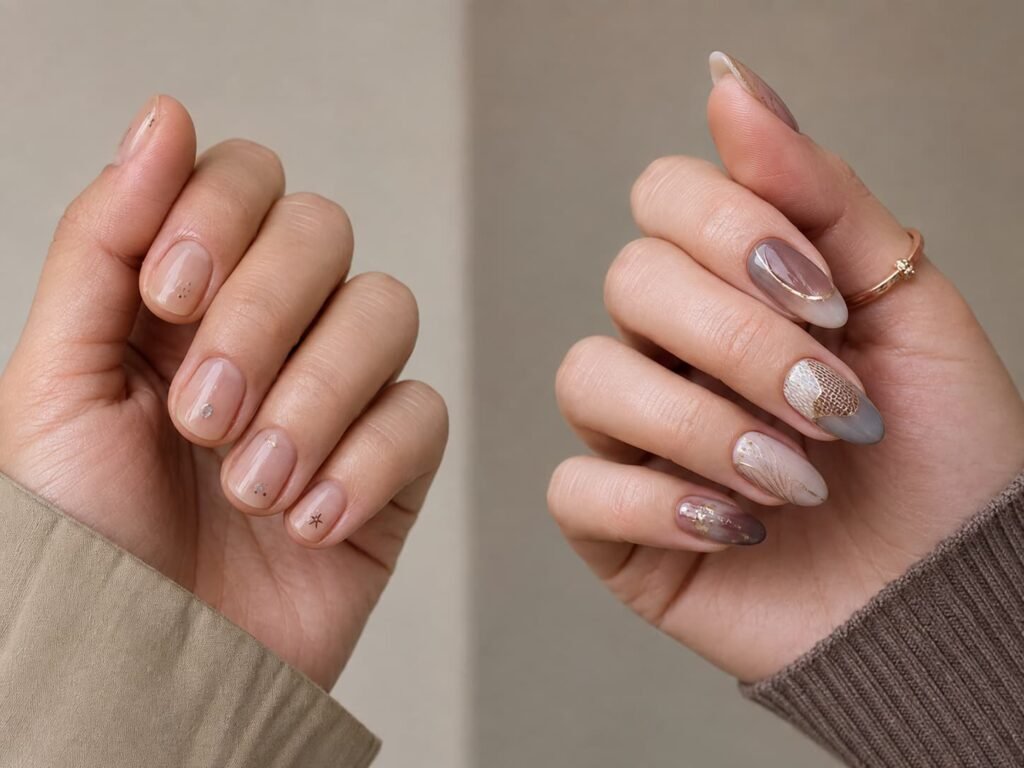
Minimal sheer nail design beside a more detailed manicure with gradients, patterns, and metallic accents.
Minimal and detailed nail designs create different visual effects, and neither approach is automatically more suitable than the other.
The choice can depend on preferred colors, nail length, shape, finish, and how much pattern or decoration someone wants in the overall look.
Keeping the Look Simple
A minimal design usually uses fewer visual elements.Examples include one solid color, a sheer base, a narrow French tip, a single line, a few small dots, or one subtle accent. Limiting the color palette and keeping individual details small can create a more restrained appearance.
Adding More Color, Pattern, or Texture
A more detailed manicure can combine several elements within the same design.
Multiple colors, stripes, dots, gradients, florals, metallic details, textured accents, or different artwork across individual nails can create a more decorative result. The elements do not need to appear on every nail to become part of the overall design.
Combining Minimal and Statement Nails
A manicure can also combine simple nails with one or more detailed accents.
For example, most nails might use a solid or sheer color while selected nails feature a pattern, metallic detail, gradient, or textured element. Repeating one or two colors across the set can help visually connect the simpler and more decorative parts of the design.
How to Choose a Nail Design
One way to approach a nail design is to consider its main visual elements separately. Nail shape, length, color, finish, and level of detail can all influence the final appearance.
Rather than looking for one design that is right for everyone, it can be more useful to choose elements that match personal visual preferences.
Consider the Nail Shape
Start by looking at the overall nail shape, such as square, rounded, oval, or almond.
Different shapes create different outlines, so the same color or artwork can appear different when placed on another shape. Simple designs, French tips, gradients, dots, or patterns can all be adjusted to suit the available nail surface.
Think About Preferred Nail Length
Nail length affects how much visible space is available for a design.
Short nails can work with scaled-down details such as micro French tips, small dots, fine lines, or solid colors. Longer nails provide more surface area for larger patterns, gradients, mixed designs, or textured accents.
Nail length does not determine a design’s overall visual appeal, which remains a matter of personal preference. It mainly changes how individual design elements can be arranged across the available nail surface.
Choose a Color Palette
A color palette can help visually connect different parts of a manicure.
Some people may prefer neutrals, sheer pinks, or milky shades for a more restrained look. Others may choose deeper reds, blues, greens, metallic tones, or brighter accent colors.
Using one main color with one or two supporting shades is one possible approach. A mismatched manicure can also include several coordinated colors when more variation is preferred.
Decide Between Subtle and Detailed Artwork
The amount of decoration can change the overall visual character of a manicure.
A subtle design might use one solid color, a narrow French tip, a small accent, or a few fine lines. A more detailed design can combine patterns, gradients, florals, metallic elements, or textured details.
Another option is to keep most nails simple and use selected nails for more decorative artwork.
Consider the Finish
Finish can change how a color or design appears.
Glossy finishes emphasize shine, while sheer and jelly finishes create a more translucent appearance. Metallic or chrome-look details add reflective elements, while textured designs may introduce raised, layered, or dimensional-looking details.
A finish can be used across the entire manicure or limited to selected areas as part of the design.
Use Inspiration Without Copying Another Design Exactly
Reference images can help identify visual elements such as colors, shapes, patterns, placement, or finishes.
Instead of reproducing another manicure exactly, individual elements can be changed. For example, the color palette, nail shape, pattern placement, finish, or accent details can be adjusted.
Changing elements such as color, shape, placement, or finish can create a distinct interpretation rather than an exact copy.
FAQs About Beautiful Nails in 2026
What nail colors can I explore in 2026?
You can explore a wide range of colors depending on the look you prefer. Sheer pinks, milky whites, soft neutrals, reds, burgundy tones, blues, greens, and brighter accent colors can all be used in different nail designs.
The overall appearance can change depending on the finish, nail shape, and whether the color is used across the whole manicure or only as an accent.
What nail shapes work with different nail designs?
Square, rounded, oval, and almond shapes can all be paired with different types of nail art.
Simple designs such as solid colors, French tips, dots, and fine lines can be adapted to many shapes. Larger gradients, mixed patterns, or more detailed artwork may use the available nail surface differently depending on the length and outline.
There is no single shape that is right for every design or every person.
Can short nails have detailed nail art?
Many nail-art ideas can be adapted to short nails when the details are scaled to the available space.
Micro French tips, tiny dots, narrow stripes, small florals, simple gradients, and negative-space designs are possible options. Keeping individual elements relatively small can help the design remain visually clear.
What is a micro French manicure?
A micro French manicure uses a very narrow line along the free edge of the nail instead of a wider traditional-looking French tip.
The tip can be white, neutral, bright, metallic, or another contrasting color. The narrow edge leaves more of the base visible and can be paired with sheer, nude, or other colored finishes.
What is the difference between glossy, jelly, and chrome-look nails?
A glossy finish adds visible shine and reflection to the nail surface.
A jelly finish uses translucent color, so some of the underlying nail or base may remain visible. This can create a tinted, see-through appearance.
Chrome-look nails have a more reflective, metallic appearance. Chrome details can cover the whole nail or be used only on tips, lines, or selected accents.
Do all nails in a manicure need to use the same design?
No. A manicure can repeat the same design across every nail or use different but coordinated details.
For example, one nail might have a French tip, another a dot pattern, and another a solid color. Repeating certain colors, finishes, or design elements can help visually connect the different nails.
How can I make a nail design look more minimal?
One approach is to reduce the number of colors, patterns, and decorative elements.
A sheer or solid base, narrow French tip, single line, a few small dots, or one accent nail can create a more restrained appearance. Keeping the color palette limited and leaving more of the base visible are also possible ways to simplify the overall design.