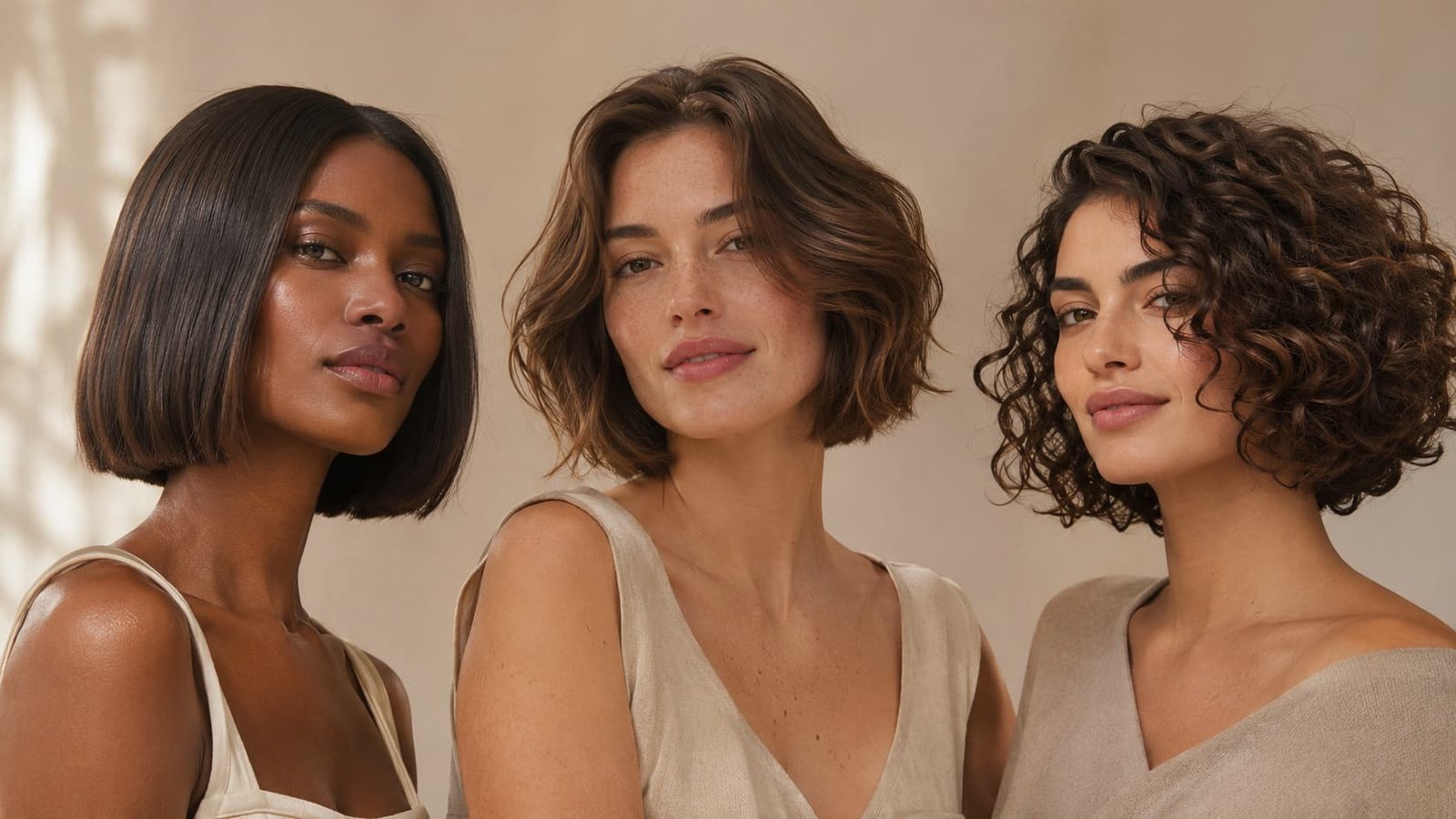

Neck length haircuts offer a middle ground between short hairstyles and longer, shoulder-length cuts. They usually fall around the nape of the neck, creating a shape that can look neat, softly layered, or naturally textured. The exact appearance depends on the haircut, hair texture, and how the ends are styled.
There are many ways to wear this length. A blunt bob creates a defined outline, while soft layers add movement. Bangs can change how the hair frames the face, and curls or waves can give the same haircut a different silhouette.
Below are 25 neck length haircuts for women, with ideas for different textures, layering preferences, and styling choices.
What Is a Neck Length Haircut?
A neck length haircut generally ends around the nape or lower part of the neck. It is usually longer than a chin-length cut but shorter than a style that reaches the shoulders.
The term describes the length rather than one specific haircut. A classic bob, graduated bob, layered shag, or short wolf cut may all fall within this range.
Hair texture can also influence how the length appears. Straight hair often shows the cutting line clearly, while waves create bends that may make the ends sit slightly higher. Curly hair can appear shorter when dry because of its natural curl pattern.
The shape of the haircut matters as much as the length. Some styles have an even outline, while others use layers, graduation, or longer front sections to create a different look.
25 Neck Length Haircuts for Women
1. Classic Blunt Neck Length Bob
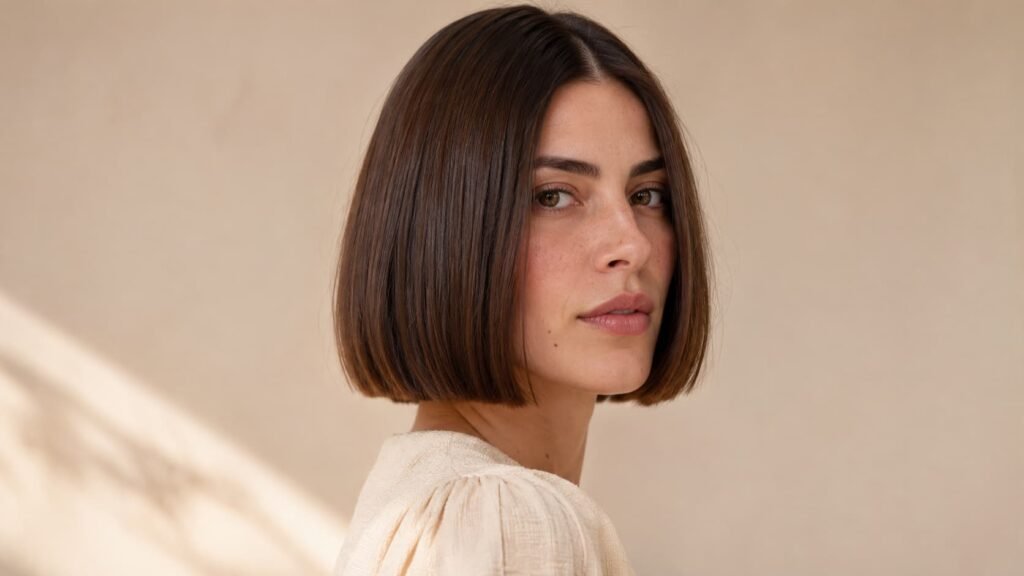
A classic blunt bob has a clean, even cutting line that falls around the neck. The ends remain relatively uniform, giving the haircut a simple and structured appearance.
This style makes the overall outline easy to see, particularly on straight hair. A center part creates a balanced look, while a side part changes how the hair falls around the face.
Some people with fine hair may prefer a blunt perimeter because the even ends can create the appearance of greater fullness. The effect varies with hair density and styling.
2. Softly Layered Neck Length Bob
A softly layered bob includes gentle differences in length throughout the hair. Unlike a blunt bob, its ends do not form one completely uniform line.
The layers blend into the overall shape, creating subtle movement without a strongly textured finish. This can be useful for someone who likes the outline of a bob but prefers a softer appearance.
The amount of layering can vary. Light layers may be barely noticeable, while slightly shorter sections can make movement more visible.
3. Graduated Bob with a Shorter Nape
A graduated bob has a shorter back that gradually transitions into longer sections. The cutting pattern often creates a rounded or slightly built-up shape around the back of the head.
At neck length, the nape may be more exposed while the side sections sit lower. This difference gives the haircut a defined profile.
Graduation can be subtle or pronounced. A gentle graduation creates a softer shape, while stronger graduation makes the contrast between the back and sides more noticeable.
4. Angled Bob with Longer Front Pieces
An angled bob features shorter hair at the back and longer sections toward the front. The cutting line gradually slopes forward rather than remaining level.
The angle can be subtle, with only a small difference between the front and back, or more noticeable for a defined shape.
Straight styling often makes the diagonal outline easier to see. Soft waves can create a less structured appearance while keeping the longer front sections visible.
5. Asymmetrical Neck Length Bob
An asymmetrical bob has an intentionally uneven outline, with one side longer than the other.
For example, one side may end near the jaw while the opposite side reaches farther down the neck. This creates a distinct shape when viewed from the front.
Unlike an angled bob, which generally becomes longer toward the front on both sides, an asymmetrical bob uses different lengths on the left and right.
The difference can be small or dramatic, depending on the preferred look.
6. Rounded Neck Length Bob
A rounded bob has a curved silhouette that follows the shape of the head. The sides and back are arranged to create a smooth, gently rounded outline.
Some versions feature light graduation at the back, while others use subtle layers to shape the ends.
This cut may appeal to people who prefer a softer outline instead of the sharp edges of a blunt bob.
The final shape can vary depending on the hair’s natural volume, density, and styling.
7. Neck Length Bob with Curtain Bangs
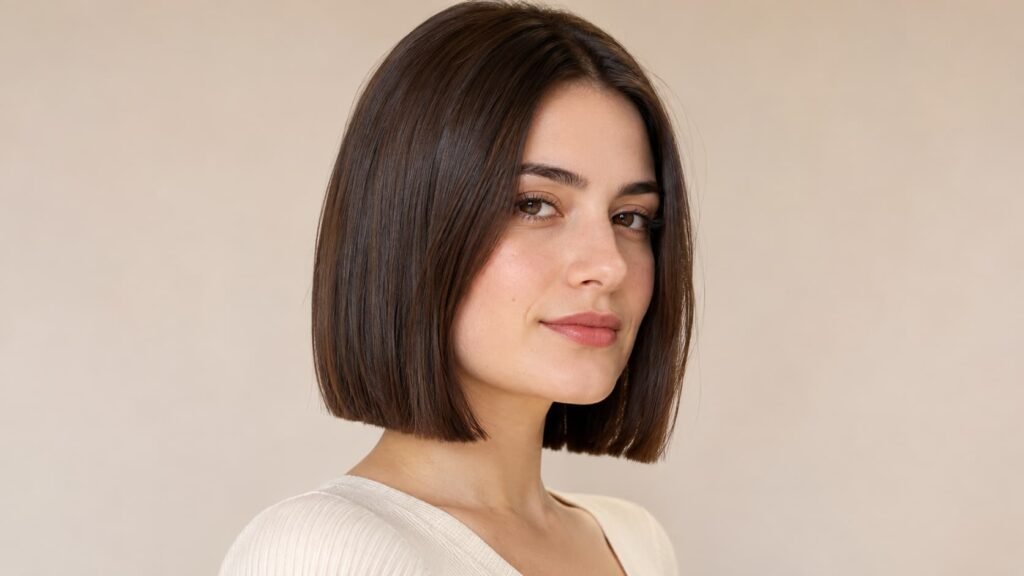
Curtain bangs are divided near the center and fall toward both sides of the face. They are often shorter toward the middle and gradually become longer near the temples or cheekbones.
When paired with a neck length bob, they introduce a soft, face-framing detail without changing the overall length of the haircut.
Longer curtain bangs can blend into the side sections, while shorter versions create a more noticeable fringe.
Their appearance depends on the parting, hair texture, and the way the bangs are styled.
8. Neck Length Bob with Full Straight Bangs
Full straight bangs create a defined fringe across the forehead. They are usually denser than wispy bangs and form a stronger visual line.
Combined with a neck length bob, they create two clear shapes: the horizontal fringe and the longer hair around the sides and neck.
The bangs may end above the eyebrows, around eyebrow level, or slightly lower, depending on the desired appearance.
This style can look particularly structured when the rest of the bob has a blunt perimeter.
9. Neck Length Haircut with Wispy Bangs
Wispy bangs are lighter and more separated than a full fringe. Small sections of hair fall across the forehead, leaving some space between the strands.
They can be paired with a layered bob or a haircut with relatively even ends.
The lighter fringe creates a less solid line across the forehead and can blend naturally into textured hairstyles.
The final appearance varies depending on the amount of hair used for the bangs and the way the strands fall.
10. Side-Parted Bob with Side-Swept Bangs
This haircut combines a side part with bangs that sweep diagonally across the forehead.
The fringe usually begins on one side and gradually blends into the longer hair near the temple.
A deep side part can create an asymmetrical appearance even when the bob itself has a balanced cutting line.
The bangs may be short and defined or longer and softer. Their placement changes how the front sections frame the face.
11. Neck Length Bob with Face-Framing Layers
Face-framing layers are shorter sections placed around the front of a haircut. They may begin near the cheekbones or jaw and gradually blend into the longer hair.
In a neck length bob, these layers change the outline around the face without necessarily adding many layers at the back.
This design differs from a fully layered bob because the shorter pieces are concentrated near the front.
The layers can be subtle or more visible, depending on the amount of contrast between the front and back sections.
12. Choppy Neck Length Bob
A choppy bob has deliberately uneven-looking ends and visible separation between sections.
Instead of soft, blended layers, this haircut uses more noticeable changes in length to create a piecey appearance.
The result can look relaxed and textured, particularly when styled with loose bends or slightly separated ends.
Choppy layers can be distributed throughout the hair or concentrated near the lower sections.
The cutting pattern influences how pronounced the texture appears.
13. Neck Length Shag with Feathered Layers
A neck length shag features multiple layers, often with shorter sections around the crown and longer pieces toward the neck.
Feathered layers have softly tapered ends that create a light, separated appearance. They give the haircut a different outline from a classic bob.
Some versions include a wispy fringe that blends into the shorter side layers.
The shag shape can appear more defined on straight hair or naturally tousled on wavy hair.
For a more detailed look at this cutting style, explore these layered shaggy bob styles.
14. Short Wolf Cut with Longer Nape Layers
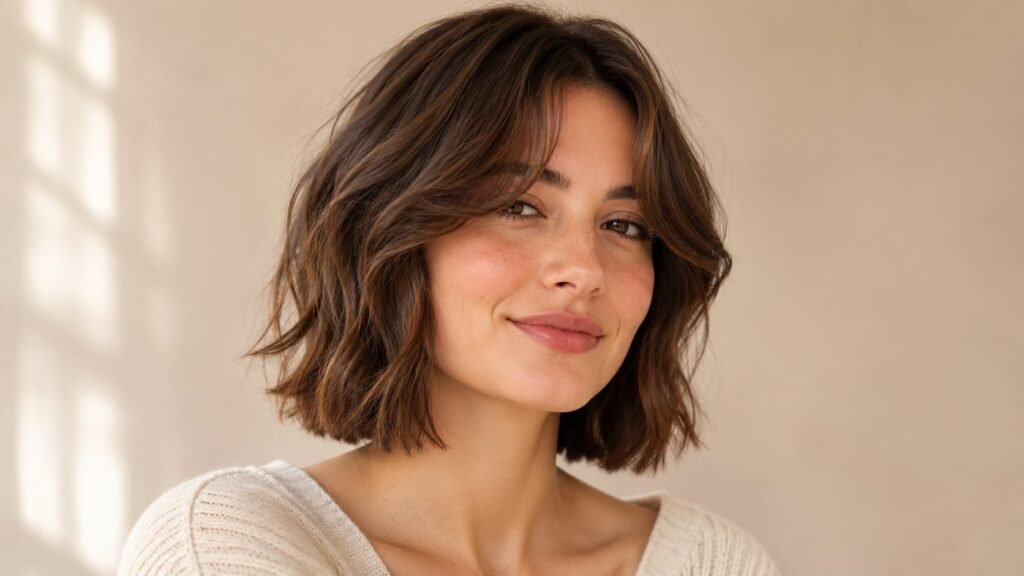
A short wolf cut combines shorter layers around the crown with longer sections that extend toward the nape. This creates a noticeable difference between the upper and lower parts of the haircut.
Unlike a traditional bob, which usually has a more consistent outline, a wolf cut features visible layers and textured ends. The longer back sections give the style its distinctive shape.
On straight hair, the difference between the layers may appear more defined. Wavy hair can create a softer, more tousled finish, while curly hair may produce a rounded shape with visible separation between the curls.
This haircut may appeal to women who prefer a textured appearance rather than a smooth, uniform cut. The amount of layering can be adjusted depending on hair density and the desired silhouette.
15. Neck Length Bixie with a Tapered Back
A neck length bixie combines the shorter layers commonly associated with a pixie cut and the longer outline of a bob. Its tapered back gradually becomes shorter toward the nape, while the sides retain more length.
The contrast between the shorter back and longer front sections gives this haircut a defined shape without requiring a blunt cutting line.
Straight hair can highlight the tapered outline, while wavy hair may create a softer, less structured appearance. On curly hair, the shape can look more rounded depending on the curl pattern and layer placement.
Women who prefer a shorter haircut with some length around the ears and neckline may consider this variation.
For additional ideas, explore the bixie haircut guide.
16. French-Inspired Bob with Soft Texture
A French-inspired bob typically features a simple outline with a relaxed, slightly textured finish. While many traditional versions sit near the chin, a longer interpretation can extend toward the neck.
This haircut may include subtle layers, lightly separated ends, and a soft fringe. The overall appearance is less structured than a sharply angled or heavily graduated bob.
On straight hair, a little texture can soften the cutting line. Naturally wavy hair may create a gently tousled appearance, while curly textures can give the haircut a more rounded silhouette.
Some women may prefer this style because it combines a recognizable bob shape with a less polished finish. The exact result depends on the haircut’s length, fringe, and natural texture.
17. Neck Length Bob with Flipped-Out Ends
A neck length bob with flipped-out ends features hair that curves away from the neck rather than inward toward it.
The outward movement is the main visual characteristic. It creates a noticeable change in the hairstyle’s outline without requiring a completely different haircut.
Straight hair may show a smooth, defined flip, while wavy hair can produce a softer outward curve. Curly hair may create a less uniform finish as individual curls turn in different directions.
The flip can be subtle or more pronounced. This look may appeal to women who want to change the appearance of a classic bob through styling rather than significant layering.
18. Sleek Neck Length Bob with a Center Part
A sleek neck length bob focuses on smooth hair, a defined cutting line, and a center part that divides the front sections evenly.
The haircut often features blunt or lightly layered ends. Its clean outline creates a structured appearance, especially when the hair falls straight.
On naturally straight hair, the shape may be clearly visible without adding much texture. Wavy or curly hair can also be styled into a smoother finish, although the appearance and styling needs will vary.
A center part emphasizes the balance between both sides of the haircut. Women who prefer a polished, simple hairstyle may find this variation appealing.
19. Tousled Neck Length Bob with Loose Waves
A tousled neck length bob features loose waves that create movement throughout the hair. The waves usually have a relaxed, irregular pattern rather than a perfectly uniform shape.
This finish can soften the appearance of a blunt bob or make the layers of a textured cut more noticeable.
Naturally wavy hair may already have a similar pattern, while straight hair may need additional styling to create visible bends. Curly hair can produce a different look depending on the size and arrangement of the curls.
The placement of the waves also matters. Waves concentrated around the middle lengths create a different silhouette from those that begin closer to the roots.
This variation may suit women who prefer a casual, softly textured appearance.
20. Rounded Curly Neck Length Bob
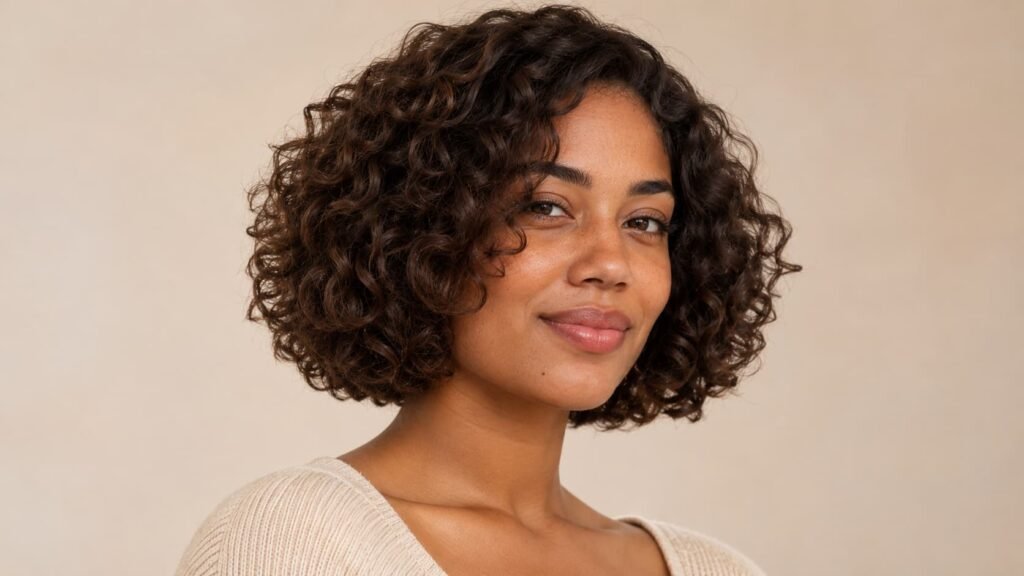
A rounded curly bob has a curved silhouette that follows the shape of the head. The curls form a fuller-looking outline around the sides, while the ends fall near the neck.
Unlike a sleek bob with a continuous cutting line, this haircut gets much of its visible shape from individual curl groupings.
On loosely curled hair, the silhouette may appear soft and flowing. Tighter curls can create a more compact outline, depending on hair density and the amount of shrinkage.
The length should be considered in its natural dry state because curls can appear shorter than they do when stretched.
This haircut offers one possible option for women who prefer a rounded shape that highlights their natural curl pattern.
21. Layered Neck Length Cut for Defined Curls
A layered neck length cut for curly hair features shorter and longer curl sections arranged throughout the hairstyle.
Unlike a rounded curly bob, which focuses on a continuous curved silhouette, this variation creates more visible differences between the layers.
Shorter curls may sit around the crown, while longer sections extend toward the neckline. This arrangement can change the distribution of visible volume and highlight individual curl shapes.
The appearance varies with curl type, density, and layering. Loose curls may form flowing sections, while tighter curls can produce a more compact shape.
When choosing this style, it can be helpful to consider how the layers will appear when the curls are completely dry.
22. Neck Length Cut with a Blunt Perimeter for Fine Hair
This haircut features a relatively even cutting line around the lower ends, with minimal visible layering.
A blunt perimeter can create the appearance of a more substantial edge because the ends are arranged along a similar length.
For some women with fine hair, this shape may produce a fuller-looking outline. However, the visual effect depends on overall hair density, natural texture, and styling.
Straight fine hair may emphasize the clean lower edge, while fine wavy hair can create a softer finish.
Fine hair refers to the thickness of individual strands, not necessarily the amount of hair on the head. This distinction matters when comparing haircut photographs.
For additional ideas, read about styling short fine hair.
23. Neck Length Cut with Internal Layers for Thick Hair
A neck length haircut with internal layers features shorter sections placed within the hair while keeping much of the outer cutting line intact.
Unlike a choppy bob, where the layers are intentionally visible, internal layering may create more subtle differences in how the hair falls.
On thick straight hair, the haircut can maintain a defined outer shape. Wavy hair may show more movement between the sections, while curly hair can form a different layered silhouette.
The amount and placement of internal layers influence the finished appearance. Stronger layering may create more noticeable separation, while subtle layering keeps the overall outline more consistent.
This option may appeal to women who prefer the look of a bob but want some variation within its shape.
24. Neck Length Bob with Softly Tapered Ends
A softly tapered bob features ends that gradually become lighter-looking rather than forming a strong, blunt cutting line.
The tapering may be concentrated around the front sections or distributed along the lower edge of the haircut.
This creates a softer outline without requiring the pronounced layers of a shag or wolf cut.
On straight hair, tapered ends can make the cutting line look less defined. Wavy hair may create additional separation, while curly textures can produce a different finish depending on the curl pattern.
Women who prefer a gentle, less structured bob may consider this style. The amount of tapering can be adjusted to create subtle or more visible texture.
25. Neck Length Cut with Disconnected Layers
A neck length haircut with disconnected layers features clearly different lengths that do not blend smoothly into one another.
For example, the upper section may end closer to the jaw, while longer pieces continue toward the nape. This creates a noticeable contrast between the sections.
Unlike a softly layered bob, the separation is an intentional part of the design.
Straight hair may show the difference between the layers clearly. Wavy or curly hair can soften the contrast or make certain sections more prominent.
This haircut may appeal to women who prefer an unconventional silhouette with visible structure.
The amount of disconnection can vary, allowing the haircut to have either a subtle two-level appearance or a stronger contrast between the upper and lower sections.
How to Choose a Neck Length Haircut
Choosing a neck length haircut involves more than finding an attractive photograph. Hair texture, density, layering, bangs, and personal styling preferences can all influence how the finished haircut appears.
A particular cut may look different on two people, even when the same general length and shape are used.
Understanding these differences can help when comparing styles and selecting a reference image.
Consider Your Hair Texture and Density
Hair texture influences how a haircut falls and how clearly its shape appears.
Straight hair often shows blunt cutting lines, angles, and graduation more clearly. Wavy hair creates natural bends that may soften these outlines, while curly hair can produce a shorter-looking silhouette because of its curl pattern.
Hair density also affects the visual appearance.
Fine hair describes strands with a smaller diameter, while thick hair can refer to larger strand diameter or, in everyday language, a greater amount of hair. Hair density specifically refers to how many strands are present within an area of the scalp.
A blunt bob may create the appearance of fuller ends on some fine hair types. More noticeable layering may create additional visual movement, but the result depends on the individual haircut.
Looking at photographs of women with similar hair textures may provide a more useful reference than choosing a style based only on its name.
Decide Between Blunt Ends and Layers
Blunt ends and layered ends create different visual effects.
A blunt haircut has a relatively uniform lower edge. This can give a neck length bob a clean, defined appearance.
Soft layers introduce small differences in length. They may make the hair appear more fluid or create gentle movement around the sides and ends.
Stronger layers produce more visible separation. Haircuts such as shags and wolf cuts use this contrast as part of their overall shape.
The choice depends on the silhouette you prefer.
A person who likes a structured appearance may prefer blunt ends, while someone who wants a more textured outline may consider layered variations.
Choose Bangs and Face-Framing Details
Bangs and face-framing layers can change how a neck length haircut looks from the front.
Curtain bangs separate toward both sides of the face, often blending into the longer sections near the temples.
Full bangs create a more defined line across the forehead. Wispy bangs have a lighter, separated appearance, while side-swept bangs introduce an angled detail.
Face-framing layers offer another option. These shorter sections can begin near the cheekbones or jaw and gradually blend into the rest of the haircut.
Some people may prefer longer front pieces that can be moved away from the face. Others may like the more noticeable appearance of a full fringe.
There is no single bang style that suits everyone. The final effect depends on facial proportions, hair texture, and personal preferences.
Consider Your Styling Preferences
Different haircut shapes can create different styling needs.
A blunt bob has a defined cutting line, while a layered shag may be intended to show more natural-looking separation between the sections.
A sleek finish often emphasizes smoothness and a polished outline. A tousled style focuses on visible bends, texture, and movement.
Some people may prefer wearing their natural waves or curls, while others enjoy changing the appearance of their hair with different styling techniques.
It is also useful to consider whether the desired haircut allows for half-up styles, hair clips, or a small ponytail.
Shorter layers around the face or nape may affect which styles are possible.
No haircut is completely maintenance-free, and the amount of styling involved can vary depending on hair texture and the desired finish.
Neck Length vs. Chin Length vs. Shoulder Length Haircuts
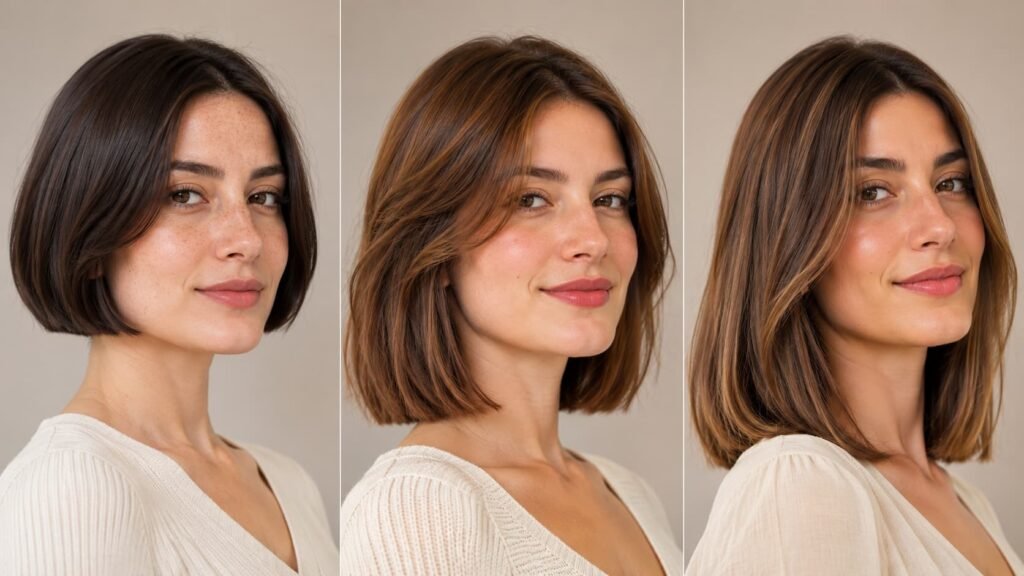
Neck length, chin length, and shoulder length haircuts describe different general positions where the hair ends.
The exact boundaries are flexible because head and neck proportions, haircut shapes, and hair textures vary.
| Haircut Length | Where the Hair Generally Falls | Visual Characteristics |
| Chin length | Around the chin or jawline | Often creates a shorter outline around the face, with the neck more exposed |
| Neck length | Around the nape or lower neck | Falls between chin and shoulder length, with room for blunt, layered, or graduated shapes |
| Shoulder length | Near or around the shoulders | Creates a longer outline, with the ends reaching close to the shoulder area |
A chin-length bob usually ends near the jaw, while a neck length bob extends farther down.
Shoulder-length hair falls lower and may offer different styling possibilities depending on layering and density.
An angled haircut can combine more than one length. For example, the back may sit near the nape while the front sections extend toward the shoulders.
Hair texture also influences the visible length. Curly hair may appear shorter when dry, while straight hair generally shows the cutting length more directly.
Another related style is the clavicut haircut, which is commonly associated with hair that falls around the collarbone.
Styling Ideas for Neck Length Hair
The same neck length haircut can take on different appearances depending on how the hair is parted, arranged, and styled.
A few simple changes to the finish can highlight different features of the underlying cut.
Smooth and Straight Styling
A smooth, straight finish emphasizes the cutting line and overall shape of the haircut.
This appearance can work particularly well with blunt, angled, and asymmetrical bobs because the edges remain clearly visible.
A center part creates a balanced outline, while a side part introduces a different arrangement around the face.
The ends may be styled completely straight or slightly inward for a softer appearance.
Natural hair texture influences the final result, so achieving a smooth finish may involve different styling approaches for different people.
Soft Waves and Tousled Texture
Soft waves introduce bends that can change how a haircut falls around the neck.
On a blunt bob, waves may soften the uniform cutting line. On a layered haircut, they can make the shorter and longer sections more noticeable.
The size of the waves affects the finished look.
Loose, wider bends create a gentle flowing appearance, while smaller or more irregular waves produce stronger texture.
A tousled finish usually has less uniformity than carefully arranged waves.
Women who prefer a relaxed appearance may choose this styling direction, although the final effect depends on natural texture and the haircut’s underlying shape.
Flipped Ends and Rounded Finishes
The direction of the ends can noticeably change the silhouette of neck length hair.
Flipped-out ends curve away from the neck. This creates a more outward-facing shape along the lower edge.
Rounded finishes, by comparison, often feature ends that curve inward toward the neck or face.
An inward curve can emphasize the rounded outline of a bob, while an outward flip introduces a different visual direction.
These finishes can be created on several haircut shapes, although the result may vary depending on layering, hair density, and natural texture.
Frequently Asked Questions
What Is Another Name for a Neck Length Haircut?
A neck length haircut may be described as a neck-grazing cut or a nape-length hairstyle. Depending on its shape, it may also be called a short bob, layered bob, or graduated bob. These terms describe different cutting styles rather than one identical haircut. The name usually depends on the overall length, layering, and shape of the ends.
Are Neck Length Haircuts Suitable for Fine Hair?
Neck length haircuts can be an option for women with fine hair. A blunt bob may create the appearance of fuller ends, while subtle layers can add visible movement. Stronger layering may produce a more separated finish. The final appearance depends on individual strand thickness, hair density, natural texture, and styling preferences.
Can Neck Length Haircuts Have Bangs?
Yes, neck length haircuts can include curtain bangs, wispy bangs, straight bangs, or side-swept bangs. Curtain bangs part toward both sides of the face, while full bangs create a more defined line across the forehead. Wispy bangs offer a lighter, separated appearance. Each option changes the front outline of the haircut, so the choice depends on the look someone prefers.
How Do Neck Length Haircuts Look on Curly Hair?
Curly neck length haircuts can have rounded, layered, or softly tapered shapes. Their appearance varies depending on curl pattern, hair density, and the placement of layers. Because curls naturally contract, the hair may appear shorter when dry than when stretched. Reference photographs showing a similar curl pattern can help illustrate the intended length and shape.
Can Neck Length Hair Be Tied Into a Ponytail?
Some neck length haircuts can be gathered into a small, low ponytail, depending on the exact length and layers. Shorter sections near the nape or face may not reach the hair tie. Half-up hairstyles, small clips, and hairpins offer other ways to arrange shorter hair. The available options depend on how the haircut is shaped.
What Should I Ask for When Getting a Neck Length Haircut?
Explain where you want your hair to fall, such as around the nape or lower neck. Mention whether you prefer blunt ends, soft layers, bangs, or longer face-framing pieces.
Bringing reference photographs that show the haircut from different angles can help communicate your preferred shape. If your hair is naturally wavy or curly, it may also be useful to discuss how the length will appear when dry.
Final Thoughts
Neck length haircuts offer a variety of shapes, from classic blunt bobs to softly layered styles, textured shags, and rounded curly cuts. Each variation has its own visual characteristics, influenced by the cutting line, layer placement, bangs, and natural hair texture.
A blunt bob may appeal to someone who prefers a clean, defined outline, while layered styles can create the appearance of more movement. Angled sections, face-framing pieces, and different styling finishes offer additional ways to personalize the look.
When exploring these 25 neck length haircuts, consider your preferred shape, natural texture, and everyday styling habits. Comparing reference photographs with similar hair characteristics can help you choose a style that reflects your personal preferences.