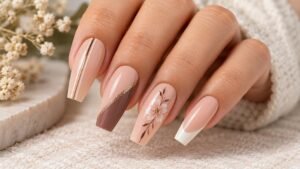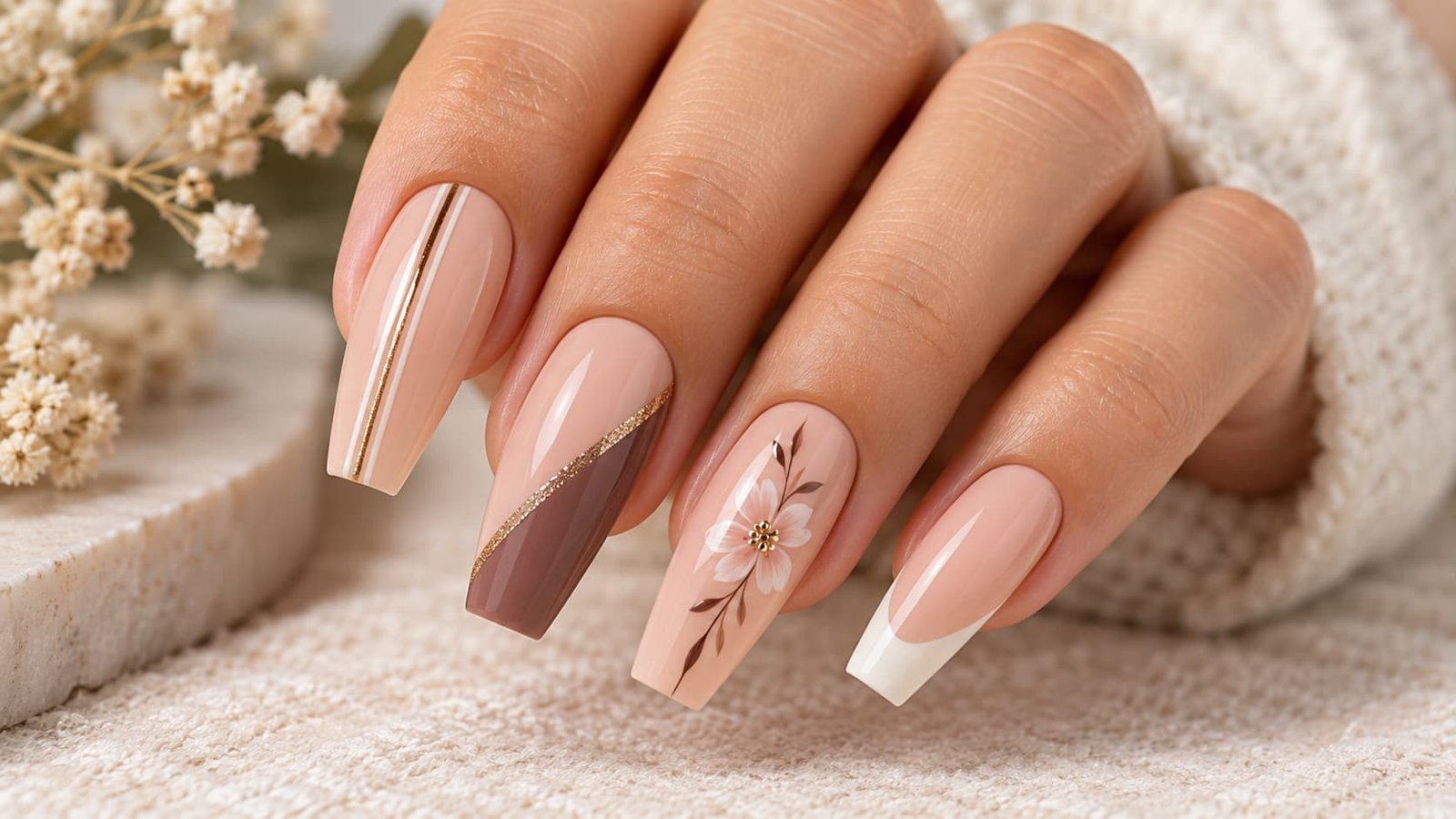
Choosing the right nail art coffin design starts with understanding the shape itself. Coffin nails have tapered sides and a flat tip, which can affect how colors, patterns, French tips, and decorative details appear across the nail.
The aim is not to fill every part of the nail with detail. A more balanced design can come from considering the taper, tip shape, nail length, and available surface area together.
This guide explains how the coffin shape can influence nail-art placement and how different design approaches may work with its distinctive outline.
What Defines a Coffin Nail Shape?
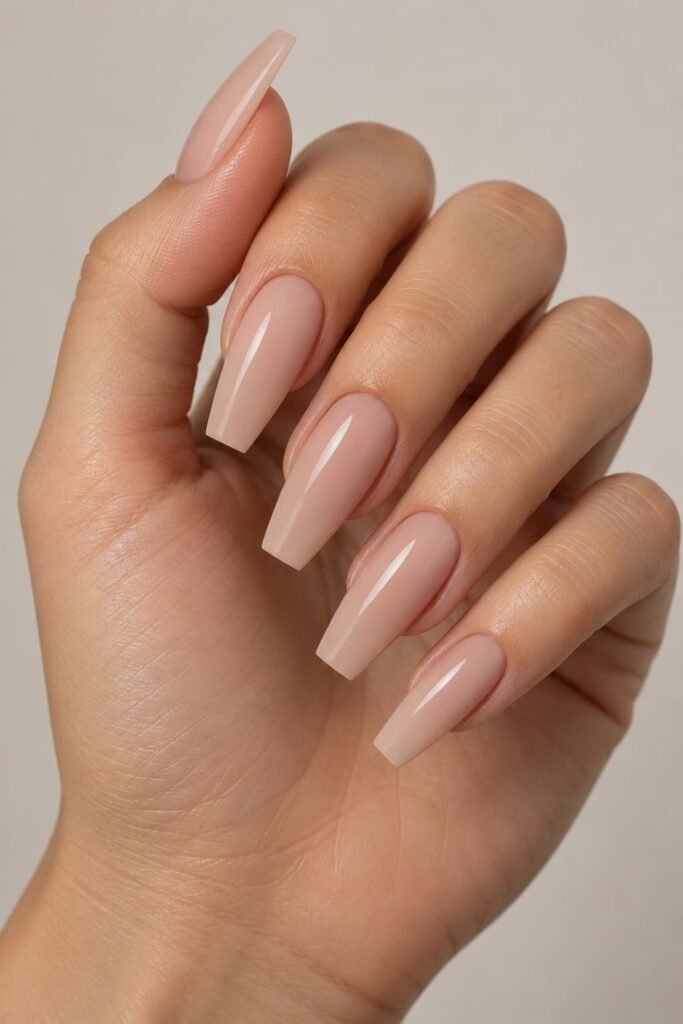
Coffin nails are generally shaped with sides that narrow toward the tip and finish with a flat edge.
This flat end helps distinguish the shape from pointed styles such as almond and stiletto nails. The overall outline is more angular, with a narrower tip than the base.
The shape can appear more defined when there is enough length for the sides to taper gradually. On shorter nails, the coffin outline may appear more compact depending on the width of the nail and the amount of length available.
Tapered Sides and a Flat Tip
The tapered sides narrow as they move toward the end of the nail, while the tip stays flat rather than rounded or pointed.
These features can be considered when choosing nail art. For example, a French tip can follow the flat edge, while lines, swirls, or angled details can be positioned to work with the narrowing outline.
The amount of space also changes from the wider part of the nail toward the narrower tip. A large pattern placed close to the tip may have less room than the same design placed closer to the center.
For this reason, placement can be an important part of choosing the final design.
Coffin Nails vs. Ballerina Nails
The terms coffin nails and ballerina nails are commonly used for very similar nail shapes.
Both usually have tapered sides and a flat end. The ballerina name refers to the resemblance to a ballet pointe shoe, while the coffin name describes the angular silhouette.
The exact appearance can vary. Some versions may have a slightly softer taper or narrower outline, so the terms are not always used with strict technical consistency.
For readers looking for design inspiration, however, both terms often refer to the same general tapered, flat-tipped style.
How the Coffin Shape Affects Nail Art
The coffin outline can influence how a design is placed because the visible nail surface becomes narrower toward the tip.
This means a pattern that fits comfortably near the center of the nail may need to be reduced or repositioned closer to the end.
Designs do not need to follow the nail shape exactly, but considering the available space can help the artwork remain clear rather than crowded.
Using the Flat Tip as Part of the Design
The flat tip can become part of the overall nail-art layout.
French tips are one possible option because the colored section can follow the straight end of the nail. The tip area can also be used for thin bands, glitter accents, chrome-style details, color blocking, or small geometric elements.
If the tip already contains a strong design feature, keeping the rest of the nail simpler may create clearer visual separation.
That is a styling option rather than a fixed rule. The final appearance can vary depending on color contrast, nail length, and the amount of detail used.
Working With the Tapered Sides
The sides of coffin nails gradually narrow toward the tip.
Vertical lines, diagonal details, narrow swirls, or elongated shapes can be positioned in ways that follow this direction. Some people may prefer this approach because it keeps the artwork aligned with the nail’s outline.
Another option is to use wider or centered artwork for contrast.
The important point is to consider how much room remains near the narrower end so the design does not appear compressed.
Choosing the Right Pattern Size
Pattern size can be adjusted according to the visible nail surface.
On shorter coffin nails, fine lines, small floral details, simple shapes, narrow tips, or a single accent may be easier to fit without covering most of the nail.
Longer coffin nails provide more surface area, so larger motifs, layered artwork, gradients, or more detailed patterns can be considered.
There is no fixed pattern size that works for every manicure. A design that looks balanced on one nail length may appear too small or too dominant on another.
Leaving some visible space around detailed artwork can also help separate individual elements. The final look can vary depending on nail length, width, placement, color contrast, and finish.
Choose Nail Art Based on Coffin Nail Length
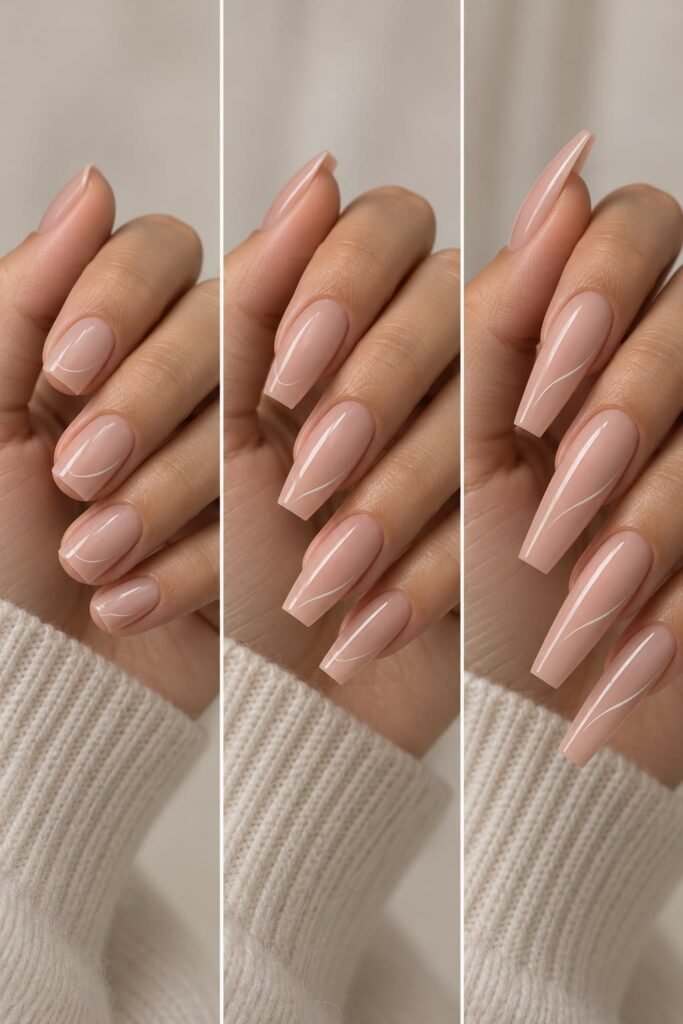
Nail length changes how much space is available for a design, so it can help to choose artwork that fits the proportions of the nail rather than using the same layout at every length.
Short, medium, and long coffin nails can all support decorative designs, but the size, placement, and amount of detail may need to change.
Nail Art for Short Coffin Nails
Short coffin nails have less visible surface area, so smaller or simpler design elements may be easier to keep clear.
Fine lines, small flowers, narrow French tips, small geometric details, or one accent element are possible options. A limited color palette can also leave more of the nail shape visually open.
Negative-space designs may work well on shorter nails because part of the nail or base remains visible.
On shorter nails, the tapered outline may appear more compact because there is less length available for the sides to narrow. Designs that follow the flat tip or tapered sides can help make those shape details more noticeable.
Nail Art for Medium Coffin Nails
Medium coffin nails provide more space for design placement than shorter versions.
French tips, ombré effects, swirls, geometric patterns, floral details, and mixed finishes can all be considered at this length.
Artwork can sit near the tip, run through the center, or appear on selected accent nails. This gives more flexibility when deciding where the main design should appear.
Some people may prefer a medium length when they want visible nail art without using the larger surface area of longer coffin nails.
Nail Art for Long Coffin Nails
Long coffin nails provide more visible surface area for larger or more detailed artwork.
This can make room for layered patterns, longer gradients, larger floral motifs, extended line work, or several design elements on the same nail.
Extra space does not mean every part of the nail needs decoration. A simple design can still work on long coffin nails, especially when the shape is intended to remain an important part of the overall look.
If several decorative elements are included, leaving space between them can help keep the design visually clear.
Nail Art Coffin Designs That Work With the Shape
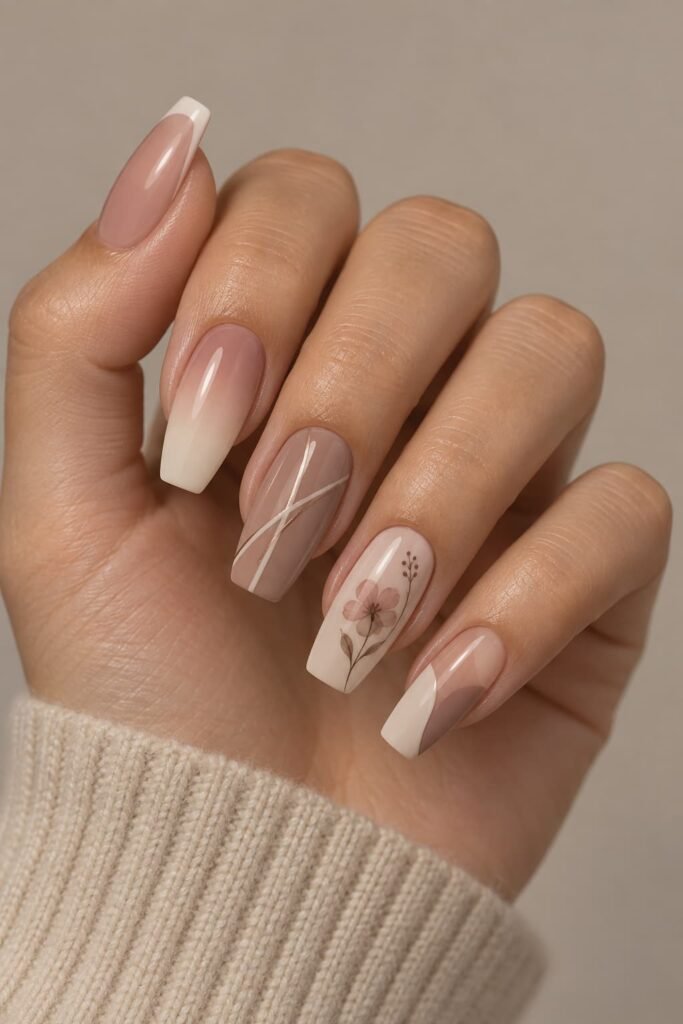
Different nail-art styles can use the coffin outline in different ways.
The flat tip creates a straight edge that can be included in tip-focused designs, while the tapered sides provide another direction for lines, patterns, and decorative placement.
French Tip Coffin Nails
French tips can follow the flat end of a coffin-shaped nail.
A thin tip can keep the design understated, while a wider tip can make the end of the nail more visually noticeable.
The tip color does not need to be white. Neutral shades, dark colors, bright tones, metallic-looking finishes, or contrasting colors are all possible choices.
Angled tips or double-line French designs can also be considered for a more detailed variation.
Ombré Coffin Nail Designs
Ombré nail art uses a gradual transition between colors or shades.
On coffin nails, the blend can move from the base toward the tip, across the nail, or between two contrasting colors.
Longer nails provide more physical space for a gradual transition, while shorter nails can still use a more compact fade.
Colors that are close in tone can create a softer transition, while stronger contrast can make the gradient more noticeable.
Geometric and Line Art
Straight lines, blocks, and angled patterns are possible design options for the structured outline of coffin nails.
Thin vertical lines can create a length-focused design that follows the direction of the nail, while diagonal lines can introduce a different visual direction.
Color-block designs can also use the flat tip, center, or side of the nail as a dividing area.
If several geometric elements are used together, leaving open space between them may help the individual shapes remain clear.
Floral Coffin Nail Art
Floral designs can range from small details to larger decorative motifs.
On shorter coffin nails, one small flower or a few fine petals may be easier to position without covering most of the visible surface.
Medium and long nails provide more room for stems, layered petals, or larger floral artwork.
Another option is to keep floral details on one or two accent nails while using a simpler color or finish on the remaining nails.
Negative-Space Designs
Negative-space nail art intentionally leaves part of the nail or base visible within the design.
Thin lines, half-moon shapes, diagonal sections, open geometric areas, or spaces between color blocks can all be used.
Negative space can be combined with strong colors or detailed accents to leave parts of the design visually open.
This can also help the underlying coffin shape remain visible instead of covering the entire nail with artwork.
Accent Nail Designs
An accent nail uses a different color, pattern, finish, or level of detail from the surrounding nails.
For example, most nails may use a simple base while one or two nails include glitter, floral artwork, line details, or a contrasting finish.
This approach can create variation without repeating a detailed design across every nail.
The difference can be subtle. A small change in color, texture, or pattern may be enough to separate the accent nail from the rest.
Simple vs. Detailed Coffin Nail Art
Both minimal and detailed designs can be used on coffin-shaped nails.
The choice can depend on nail length, available design space, color contrast, and the type of look you prefer.
When Minimal Designs May Work Better
Minimal designs may suit people who prefer fewer colors, clean lines, and more open space.
Possible options include thin French tips, one small symbol, a single line, subtle negative space, or one accent nail.
Keeping the artwork simple can also leave more of the coffin outline visible.
On shorter nails, minimal designs may be easier to fit when there is less room for larger patterns.
How to Balance More Detailed Nail Art
Detailed coffin nail art can include several colors, layered patterns, florals, glitter, chrome-style accents, or geometric elements.
One way to keep a detailed design visually clear is to choose one main feature.
For example, floral artwork can remain the focal point while the surrounding nails use simpler colors or finishes.
Another option is to repeat one small element across several nails instead of making every nail completely different.
Leaving some areas less decorated can also help separate the more detailed parts of the design.
How to Choose Colors for Coffin Nail Art
Color affects how clearly different parts of a nail design can be seen. When choosing a palette, it can help to begin with one main shade and then add supporting colors where they serve the design.
The colors do not need to be dramatically different. Some designs use closely related shades for a softer appearance, while others use stronger contrast to make lines, tips, or patterns easier to distinguish.
Using One Main Color With Supporting Shades
One main color can give the design a clear starting point.
Supporting shades may be lighter, darker, or noticeably different from the main color. They can appear in French tips, line art, floral details, geometric shapes, or accent nails.
For example, a brown base can be paired with cream details, while a deep red base can be combined with a lighter red or neutral shade.
Related colors can create a more connected palette, while contrasting shades can separate different parts of the artwork more clearly.
Creating Contrast Between the Base and Nail Art
Contrast describes the visual difference between colors.
A light design on a dark background, or a dark design on a light background, can make individual lines and shapes easier to distinguish.
Colors that are closer in value or tone can create a more subtle transition. Beige and cream, for example, will usually create less visual separation than black and white.
The amount of contrast can depend on the intended look. Detailed line work may be easier to see with clearer separation, while a softer design can use shades that sit closer together.
Using Neutral, Bright, or Dark Colors
Neutral shades such as beige, cream, soft pink, taupe, and brown can provide a quieter background for decorative details.
Bright colors can be used across the full nail or limited to tips, color blocks, lines, or small accents.
Dark shades such as black, burgundy, deep brown, navy, or dark green can create stronger contrast when paired with lighter details.
There is no single color group that suits every coffin nail design. The final appearance can vary depending on nail length, pattern size, placement, finish, and personal preference.
Choose a Finish That Supports the Design
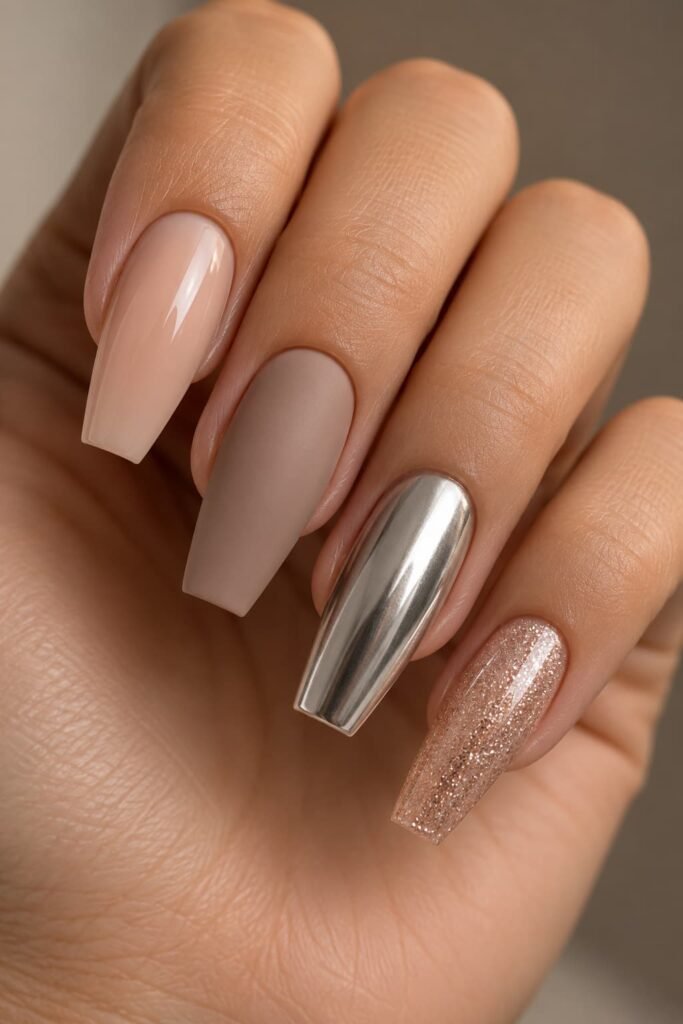
The finish affects how the nail surface interacts with light.
Glossy finishes create shine, matte finishes reduce shine, and chrome or metallic-looking effects produce a more reflective surface.
A finish can cover the entire nail or be limited to selected areas of the design.
Glossy Coffin Nails
A glossy finish gives the nail surface a shiny appearance.
It can be used with solid colors, French tips, florals, gradients, line art, or geometric patterns.
Gloss can cover the whole nail or be combined with areas that use a different finish.
If the design already contains several decorative details, keeping the finish consistent is one possible way to avoid adding another visual element.
Matte Coffin Nails
A matte finish creates a surface with little or no visible shine compared with a glossy finish.
It can be used with neutral, dark, or bright colors.
Matte and glossy areas can also appear together in the same design. For example, a matte base can be combined with glossy tips, lines, or small details.
This creates contrast through finish rather than through color alone.
Chrome and Metallic Details
Chrome nail effects are known for their reflective, metallic-looking appearance.
Chrome can cover the whole nail or appear in smaller areas such as tips, borders, lines, or accent details.
Using it in selected sections is one possible way to combine a reflective finish with a simpler base.
The amount of chrome can depend on whether the design is intended to look understated or more decorative.
Glitter as an Accent
Glitter can be used across the entire nail or limited to selected areas.
Possible placements include the tip, one accent nail, a narrow line, part of a gradient, or a small section within a larger design.
Using glitter selectively can add shine while leaving other parts of the nail visually simpler.
The amount used is mainly a styling choice and can vary with the overall design.
How to Position Nail Art on Coffin-Shaped Nails
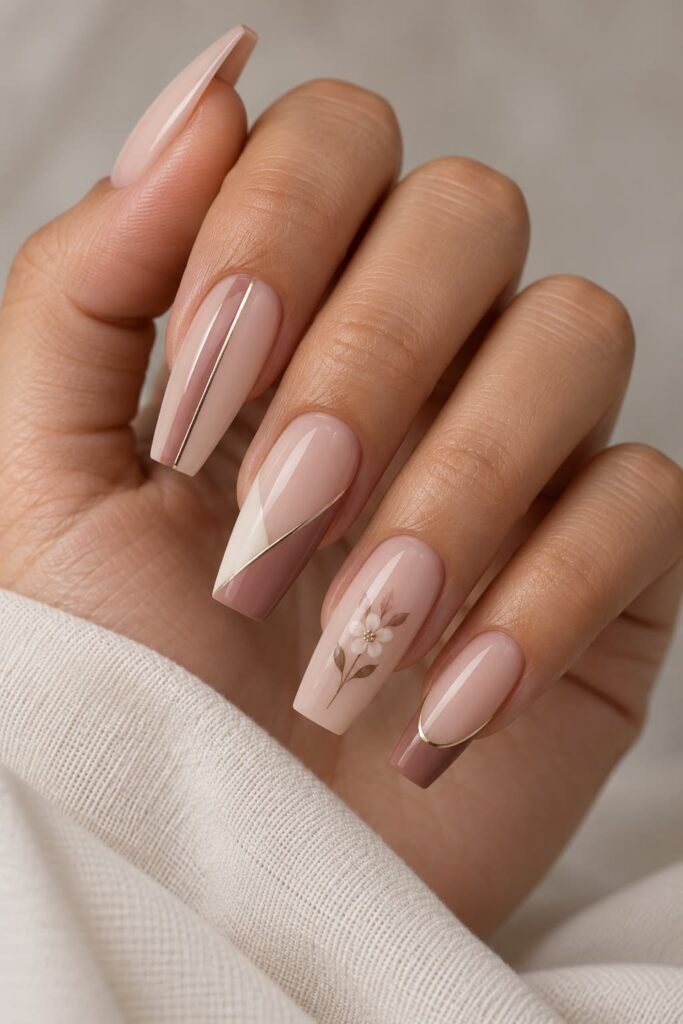
Placement affects where the eye first notices a design and how the artwork fits within the tapered outline.
On coffin-shaped nails, artwork can be arranged vertically, diagonally, through the center, or around the flat tip.
None of these placements is automatically better than another. The choice depends on the pattern, nail length, and amount of available space.
Vertical Designs
Vertical designs follow the length of the nail.
Thin lines, narrow swirls, stems, or elongated shapes can run from the base toward the tip.
This type of placement follows the same general direction as the nail and can create a length-focused layout.
On longer coffin nails, vertical designs may also provide enough room for several connected details.
Diagonal Placement
Diagonal designs cross the nail at an angle.
They can be used with color blocks, lines, glitter sections, floral elements, or divided-color designs.
A single diagonal detail can keep the layout relatively simple, while a longer nail may provide room for several angled elements.
The angle and width of the design can be adjusted according to the available nail space.
Centered Details
Centered designs place the main decorative element near the middle of the nail.
This can include a flower, symbol, geometric shape, vertical line, or another small motif.
Keeping the surrounding area simpler can make the central element easier to notice.
A centered layout can also work when the design is built around one main feature rather than several separate details.
Tip-Focused Nail Art
The flat end of a coffin nail creates a defined area that can be incorporated into the design.
French tips are one familiar example, but the tip can also include color blocking, glitter, chrome-style details, lines, or small patterns.
A tip-focused design can leave the rest of the nail relatively simple or be combined with additional artwork farther down the nail.
The depth and width of the tip section can be adjusted depending on nail length and the amount of available space.
Practical Things to Consider Before Choosing a Design
Before choosing a design, consider the amount of nail space available, the level of detail you want, and the nail length you prefer for everyday wear.
These factors can help narrow down the options without turning them into fixed rules.
Match the Detail Level to the Available Nail Space
Visible nail space affects how much artwork can fit comfortably within the design.
Shorter coffin nails may suit smaller motifs, fine lines, narrow tips, or one main accent. Medium and longer nails provide more room for larger patterns, layered details, or several connected elements.
Leaving some areas less decorated is one option if you want the main artwork to remain visually clear.
The amount of detail can be adjusted depending on nail length, pattern size, and the overall style you want.
Consider Everyday Activities and Nail Length
Daily activities may influence which nail length feels comfortable or practical for some people.
Those who type often or work with their hands may prefer a shorter or medium coffin shape, while others may choose a longer length because it provides more space for decorative artwork.
There is no single length that works for everyone.
Personal preference, lifestyle, and the type of design can all influence the final choice.
Keep the Design Consistent Across Both Hands
The designs on both hands do not need to be identical.
One way to create visual continuity is to repeat a color, finish, pattern, line style, or accent detail across several nails.
For example, one hand may use a floral accent while the other repeats the same color or line detail.
This allows variation while still giving the manicure a connected overall look.
How to Choose the Right Nail Art Coffin Design for Your Style
A simple way to choose a coffin nail design is to make the main decisions one at a time.
Start with the nail length. Short, medium, and long coffin nails offer different amounts of space for artwork.
Next, choose the main color or color family. This can be neutral, bright, dark, or a combination of several shades.
Then decide where the main design should sit. It may appear at the tip, through the center, diagonally, vertically, or on selected accent nails.
After that, choose the level of detail. Minimal designs may use fine lines, small motifs, negative space, or simple tips. More detailed designs can include florals, layered patterns, glitter, or chrome-style accents.
Finish with the surface effect. Glossy, matte, metallic-looking, or glitter details can change the appearance of the design without changing its basic layout.
This step-by-step approach is simply one way to organize the choices and make the design process easier to follow.
Frequently Asked Questions
What nail art looks good on coffin nails?
Many styles can work with coffin-shaped nails, including French tips, ombré designs, florals, line art, geometric patterns, negative space, and accent nails.
The final choice can depend on nail length, color, pattern size, finish, and personal preference.
Can coffin nails be short?
Yes. Coffin nails can be worn at a shorter length.
Because there is less length available for the sides to taper, the outline may appear more compact than it does on longer nails.
Smaller or simpler decorative elements may be easier to fit clearly on a shorter surface.
Are coffin nails and ballerina nails the same?
The terms are commonly used for the same general nail shape.
Both usually describe nails with tapered sides and a flat tip. The exact outline can vary depending on how the nail is shaped, but “ballerina” and “coffin” are often used interchangeably.
Do French tips work well on coffin nails?
French tips are one possible design choice for coffin-shaped nails.
The flat tip provides a defined edge that can be followed with a straight, angled, thin, or wider tip design.
The appearance can vary depending on nail length, tip width, color contrast, and finish.
What designs work well on short coffin nails?
Possible options include fine lines, small floral details, narrow French tips, simple geometric designs, negative space, or one accent nail.
Smaller decorative elements may be easier to fit when the visible surface area is limited.
Are coffin nails suitable for simple nail art?
Yes. Coffin nails can be used with minimal as well as detailed designs.
Thin tips, single lines, small symbols, subtle color blocks, and negative-space details are all possible options for a simpler look.