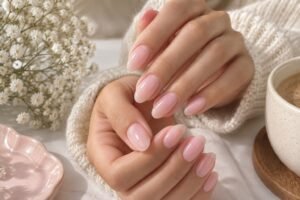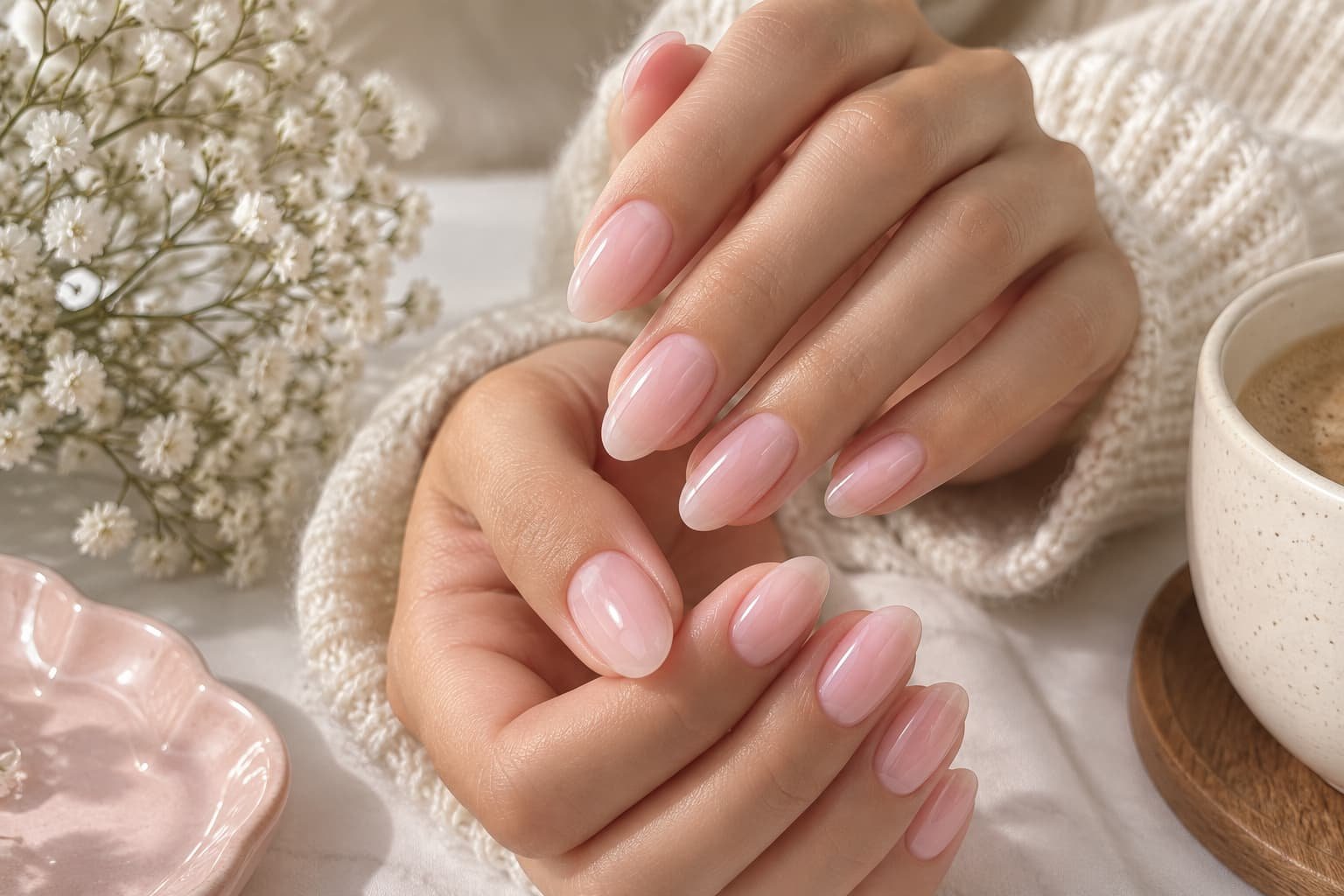
Bubble bath nails are known for their soft pink color, translucent coverage, and understated finish. They usually feature a pale pink or pink-nude base that allows some of the natural nail to remain visible.
The look can range from very sheer to softly milky. A glossy finish is common, but the final appearance can change depending on the polish opacity, number of layers, natural nail color, and chosen finish.
Bubble bath nails can stay simple or provide a base for French tips, chrome, pearl effects, glitter, or minimal nail art.
What Are Bubble Bath Nails?
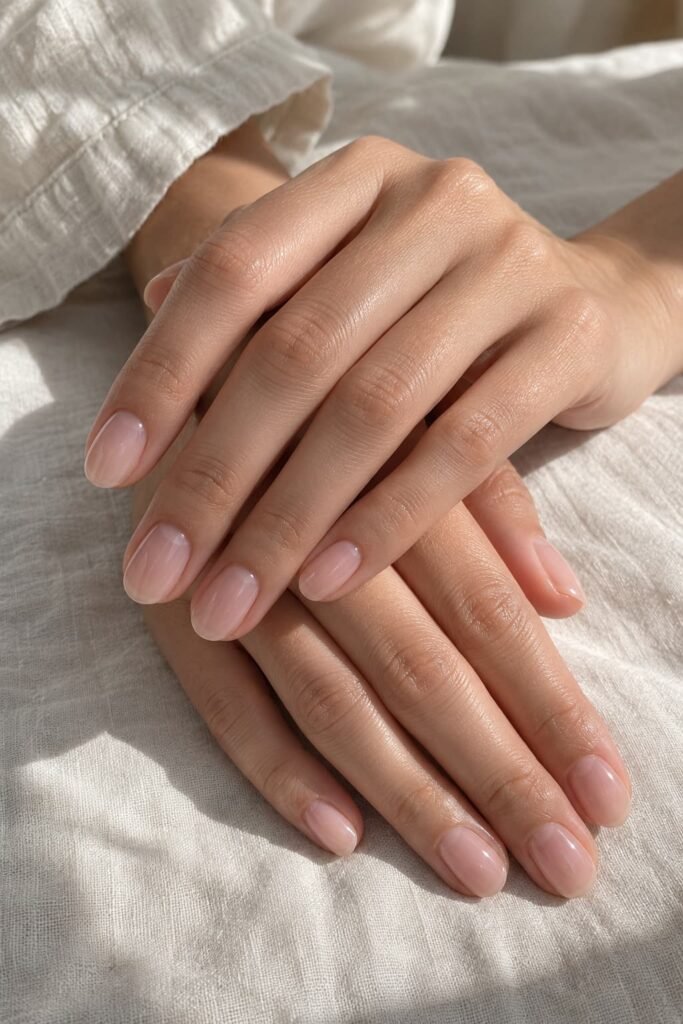
Bubble bath nails generally refer to a pale pink or pink-nude manicure with sheer, semi-sheer, or lightly milky coverage.
Unlike a fully opaque pink manicure, this style often keeps some visual connection to the natural nail underneath. The nail bed may remain partly visible while the pink tint adds soft color.
The classic look combines a neutral pink shade with a smooth, glossy surface. “Readers looking for the classic shade can also view OPI Bubble Bath nail polish on Amazon.” However, there is no single level of transparency that every bubble bath manicure must have. Some versions appear almost translucent, while others look creamier and more milky.
The same soft pink base can also be adapted with French tips, reflective finishes, or small decorative details.
What Do Bubble Bath Nails Look Like?
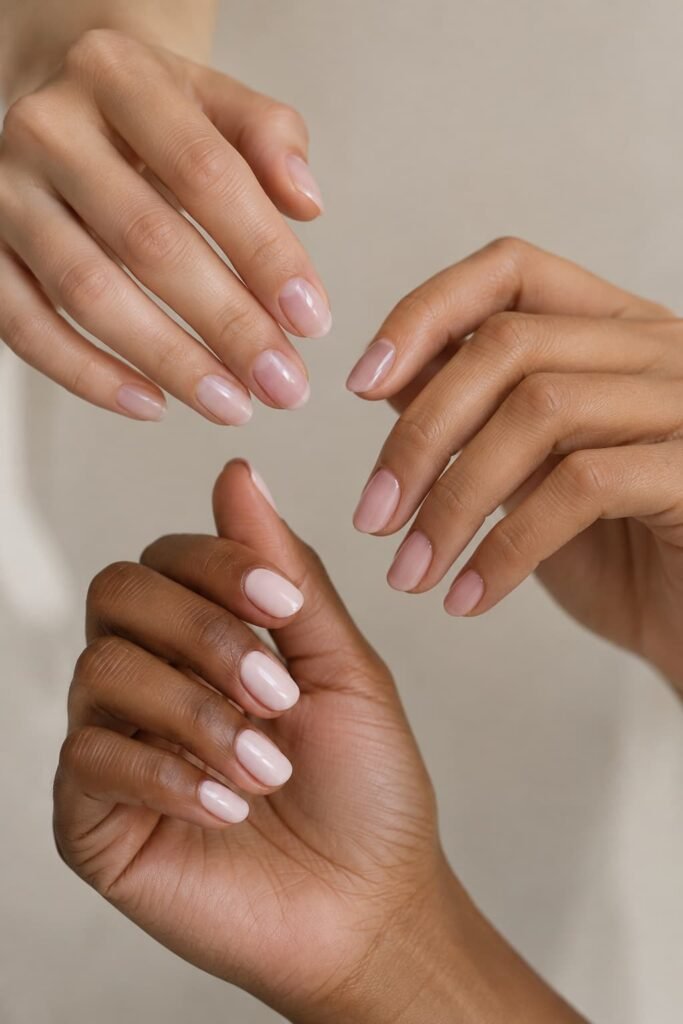
The main visual features are light pink color, soft coverage, and a polished finish.
Bubble bath nails often sit somewhere between a natural-looking nude manicure and a more noticeable pale pink manicure. Small differences in undertone, opacity, and finish can significantly change the appearance.
Soft Pink and Nude Undertones
Bubble bath nails usually have a pale pink base, but the exact pink can vary.
Some shades may lean toward blush or rosy pink. Others can appear closer to beige, peach, or a pink-toned nude.
Cooler pinks may appear more rosy, while warmer pink-nude shades can look slightly peachy or beige.
These differences can be subtle, particularly with translucent polish. Two manicures can therefore fall within the same general style while showing different undertones.
Sheer, Semi-Sheer, and Milky Coverage
Transparency is an important part of the bubble bath look.
A sheer version allows much of the natural nail to remain visible. The polish adds a light tint instead of fully covering the nail.
Semi-sheer coverage creates more visible pink while still allowing some natural color to show through.
A milkier version has greater opacity and a softer, cloudier appearance. The contrast between the nail bed and free edge may become less noticeable.
These levels of coverage do not have strict boundaries. The final appearance can vary depending on the polish and how the color is layered.
Glossy and Soft-Shine Finishes
A smooth glossy surface is commonly associated with bubble bath nails.
Gloss allows the pale pink color and transparency to remain visible while adding reflected light across the nail.
A pearl effect can add a softer reflective quality, while chrome can create a stronger shine or iridescent appearance.
A matte finish is also possible, although it changes the look considerably by removing much of the shine usually associated with the style.
Why Can Bubble Bath Nail Color Look Different?
A sheer pink manicure can look different from one person or photograph to another because the color underneath remains partly visible.
The natural nail color can influence the result. A naturally pink nail bed may make the polish appear rosier, while a different natural tone can shift the finished look toward beige, peach, or another neutral tone.
The undertone of the polish also matters. Pale pink shades can lean cooler, warmer, beige, peachy, or slightly milky.
Opacity changes how much natural nail shows through. A very sheer polish leaves more of the nail visible, while greater pigmentation creates a stronger pink or milky effect.
The number of layers can also change coverage. Additional layers may make a sheer shade look more noticeable and reduce some of the transparency.
Lighting can further affect how pale colors appear. Daylight, warm indoor lighting, camera exposure, and image editing can all change how a pink or nude shade looks in a photograph.
An inspiration photo can therefore show the general color and finish, but the final manicure may not appear identical.
How Are Bubble Bath Nails Different From Similar Styles?
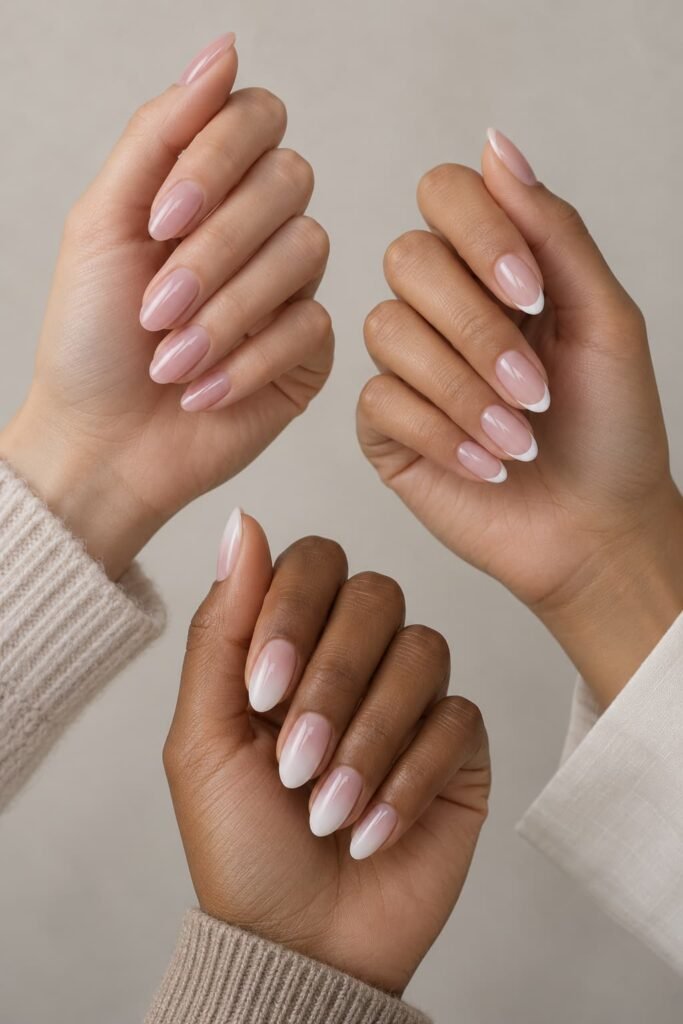
Bubble bath nails can overlap visually with milky pink, soap, French, and ombre manicures. The main differences usually involve transparency, finish, and color placement.
Bubble Bath Nails vs Milky Pink Nails
Bubble bath nails and milky pink nails can look similar.
A bubble bath look often keeps a noticeable sheer or translucent pink quality, allowing some natural nail to remain visible.
Milky pink nails generally place more emphasis on a cloudy or creamier pink appearance with greater visual coverage.
The distinction is not always sharp. A bubble bath manicure with greater coverage can look similar to a milky pink manicure, while a very sheer milky pink can move closer to the bubble bath look.
Bubble Bath Nails vs Soap Nails
Bubble bath nails and soap nails can share a pale pink base and glossy finish, but the main emphasis is different.
Bubble bath nails are primarily associated with soft pink or pink-nude color and sheer-to-milky coverage.
Soap nails focus more strongly on a clean, highly glossy appearance. The color may be sheer pink, nude, clear, milky, or another subtle neutral.
A very glossy bubble bath manicure can therefore overlap visually with the soap-nail style without the two terms meaning exactly the same thing.
Bubble Bath Nails vs French and Ombre Nails
Bubble bath nails are not the same as French or ombre nails, although the styles can be combined.
A simple bubble bath manicure usually applies the soft pink color across the nail without creating a separate tip.
A French manicure introduces a defined tip that contrasts with the base. A bubble bath shade can be used underneath white, cream, colored, or metallic French tips.
Ombre uses a gradual transition between colors instead of a clearly separated tip. For example, pale pink may gradually blend into white or cream toward the end of the nail.
Readers looking specifically for blended pink, nude, and white gradients can explore natural ombre nails, where the gradual color transition is the main feature of the design.
A bubble bath shade can still form part of either a French or ombre manicure. In those designs, it works as part of the color palette rather than defining the entire design by itself.
What Bubble Bath Nail Designs Can You Choose?
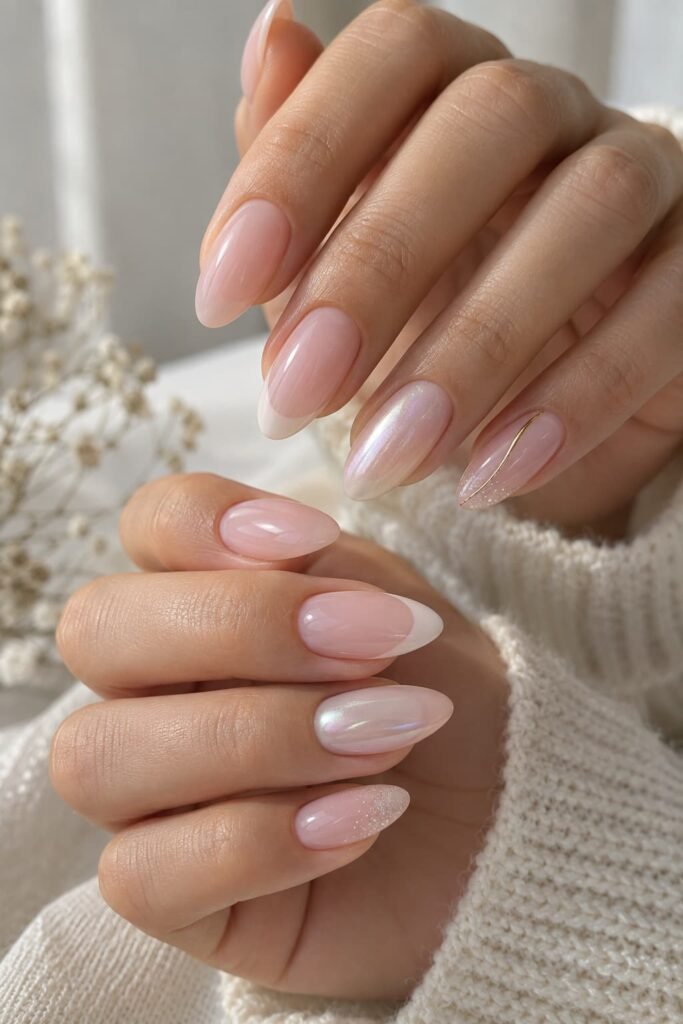
Bubble bath nails can stay simple or include details that change the finish, placement, or overall level of decoration.
Classic Glossy Bubble Bath Nails
A simple version keeps the focus on a sheer or semi-sheer pink base with a glossy finish.
Depending on the opacity of the polish, some of the natural nail may remain visible. A more transparent application can appear lightly tinted, while greater coverage can produce a milkier look.
This may suit someone who prefers a manicure without contrasting tips or decorative details.
Bubble Bath French Tips
French tips create visible contrast between the soft pink base and the edge of the nail.
White or cream can create a familiar French-style look, while colored or metallic tips provide a more decorative variation.
Tip width also affects the design. A narrow tip leaves more of the pink base visible, while a wider tip becomes a stronger visual feature.
Bubble Bath Nails With Chrome or Pearl Finish
Chrome and pearl finishes add reflection to the soft pink base.
A pearl effect can create a softer sheen that changes with the light. Chrome can create a stronger reflective surface.A pearl chrome nail powder is one possible way to explore this type of reflective finish.
Depending on the chosen effect, the finish may appear white, silver-toned, pearly, or slightly iridescent.
These treatments differ from ordinary gloss because the reflective effect becomes part of the design itself.
Bubble Bath Nails With Minimal Nail Art
Small nail-art details can be added while leaving most of the soft pink base visible.
Possible options include fine lines, dots, small flowers, hearts, stars, or simple abstract details.
The artwork may appear on one accent nail or across several nails. Placement can also change the look, whether the detail sits near the tip, close to the base, or in the center of the nail.
This approach may appeal to someone who wants additional detail without covering most of the pink base.
Bubble Bath Nails With Subtle Glitter or Metallic Accents
Glitter and metallic details can create contrast in selected areas.
Fine glitter may be placed near the tips, along one side of the nail, close to the base, or on an accent nail.
Metallic details can include thin gold or silver lines, small foil-style accents, dots, or metallic French tips.
This differs from a full chrome finish because the reflective detail appears only in specific areas.
A small amount of glitter or metallic detail can keep the design restrained, while heavier placement creates a more decorative look.
How Do Nail Shape and Length Affect the Look?
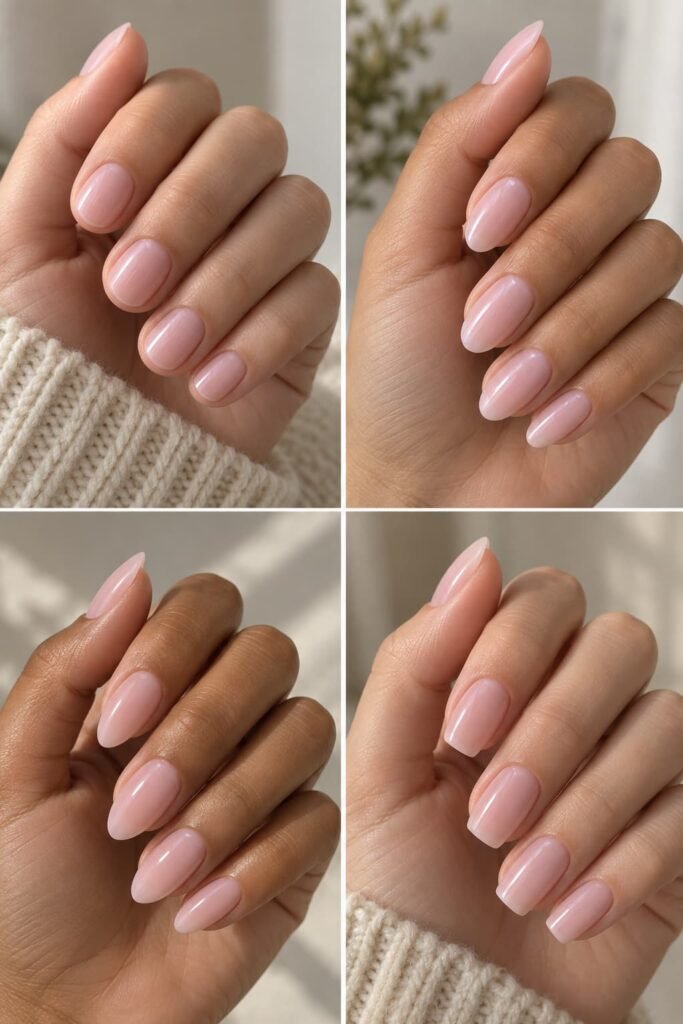
Shape and length change the proportions and outline of a bubble bath manicure.
Short nails offer less surface area, while longer nails leave more room for French tips, reflective finishes, and nail art. Rounded, tapered, and straight-edged shapes also create different silhouettes around the same pale pink color.
There is no required shape or length for this style. The final appearance can vary depending on the natural nail, chosen shape, level of transparency, and desired design.
Bubble Bath Nails on Short Nails
On short nails, a bubble bath shade can create a compact and understated manicure.
A plain glossy finish keeps the design simple. Small details such as micro French tips, dots, or thin metallic accents can also be added without covering much of the nail surface.
How clearly the natural free edge remains visible depends on the transparency of the polish and the individual nail.
Rounded, square, and squoval shapes are all possible options for shorter bubble bath nails.
Almond, Oval, and Rounded Shapes
Almond, oval, and rounded nails all use curved edges, but their silhouettes are different.
Rounded nails follow a softer curved outline.
Oval nails have a more elongated curve, changing the proportions of the nail compared with a shorter rounded shape.
Almond nails taper toward a softer point, making the outline more noticeable even when the color remains subtle.
A bubble bath shade can be paired with any of these shapes. The final appearance depends on the nail length, degree of tapering, and color coverage.
Square and Squoval Shapes
Square nails have straighter sides and a flatter edge, giving the manicure a more structured outline.
The flat edge can also provide a clearly defined area for French-tip designs.
Squoval nails combine relatively straight sides with softened corners, placing the shape visually between square and rounded nails.
Both shapes can be paired with plain gloss, French tips, metallic details, or minimal nail art.
The choice depends on the preferred appearance rather than one shape being automatically better for this manicure.
Longer Bubble Bath Nails
Longer nails provide more visible surface area, which can make both the sheer color and added design details more noticeable.
With a translucent pink shade, the difference between the nail bed and free edge may remain visible. Greater coverage can reduce some of that contrast.
Additional length also gives more room for wider French tips, chrome, glitter placement, line art, or other details.
Decoration is optional. Longer bubble bath nails can also remain simple with only a soft pink base and glossy finish.
What Colors Work With a Bubble Bath Base?
A pale pink bubble bath base can be paired with several accent colors. The choice mainly affects how subtle or noticeable the finished design appears.
White is a common option for French tips, lines, or small details. Against translucent pink, it creates clear contrast while keeping the overall palette light.
Cream offers a softer alternative to bright white and can be used for tips or understated accents.
Soft nude and beige shades remain close to the neutral character of the base. They can work in tonal French tips, abstract lines, or other subtle nail art.
Gold and silver can add metallic contrast through fine lines, small foil-style details, dots, or narrow tips.
Darker or brighter tip colors can create stronger contrast. Burgundy, navy, brown, black, or pastel shades are possible options when a more noticeable French tip or accent is preferred.
Placement also matters. A narrow tip or small detail leaves most of the pink base visible, while a larger block of contrasting color creates a more decorative design.
What Should You Consider Before Choosing Bubble Bath Nails?
Several visual details can affect how a bubble bath manicure appears.
Decide How Sheer You Want the Color
Bubble bath-style manicures can range from highly translucent to softly milky.
A sheer application allows more of the natural nail to remain visible. Greater coverage creates a more noticeable pink or milky appearance.
Neither option is automatically better. The choice depends on the desired level of transparency.
Consider Warm and Cool Undertones
Pale pink shades can have different undertones.
Some may lean toward rosy or cooler pink, while others contain peach, beige, or warmer nude tones.
Someone trying to match a particular inspiration image may want to consider the undertone as well as how light or dark the shade appears.
Think About Natural Nail Visibility
Sheer and semi-sheer colors allow the natural nail to influence the finished look.
The nail bed and free edge may remain visible through the color. A more transparent shade shows greater natural contrast, while a milkier shade may reduce it.
The preferred amount of natural nail visibility is mainly a style choice.
Consider Nail Length and Shape
Length and shape affect the proportions of the manicure.
Shorter nails have less surface area for decorative elements, while longer nails offer more room for French tips, chrome, glitter, or detailed nail art.
Rounded, oval, almond, square, and squoval shapes can all be paired with a soft pink base. The choice depends on the preferred silhouette.
Choose the Finish
A glossy finish keeps the surface smooth and reflective while allowing the soft pink color to remain the main feature.
Pearl can add a softer reflective effect, while chrome creates a more noticeable reflective surface.
The same pink base can therefore appear different depending on the finish placed over it.
Decide How Much Nail Art You Want
A plain bubble bath manicure keeps the focus on color, transparency, and shine.
French tips, fine lines, glitter, small motifs, metallic details, or accent nails can make the design more decorative.
Some people may prefer to keep most of the base visible, while others may choose stronger contrast or additional detail.
Use Inspiration Photos as a Visual Guide
Pale and translucent nail colors can look different across photographs.
Lighting, camera exposure, image editing, polish opacity, and the natural nail underneath can all influence how a shade appears.
An inspiration image can help communicate the preferred color, transparency, finish, and design, but the final appearance may vary.
Frequently Asked Questions
What Color Are Bubble Bath Nails?
Bubble bath nails are generally associated with soft pale pink or pink-nude tones.
Some versions may look more rosy, while others lean toward beige, peach, or milky pink. The appearance can vary depending on the shade, opacity, natural nail underneath, and lighting.
Are Bubble Bath Nails Sheer or Milky?
They can range from sheer to softly milky.
A more translucent version allows more of the natural nail to remain visible. Greater coverage can produce a creamier or more noticeable pink appearance.
Some manicures may visually fit both descriptions.
Are Bubble Bath Nails the Same as Milky Pink Nails?
Not necessarily, although the two looks can overlap.
Bubble bath nails often retain a noticeable sheer or translucent pink quality. Milky pink nails generally emphasize a cloudier or creamier appearance.
A bubble bath-style manicure with greater coverage can look very similar to a milky pink manicure, so the distinction can be subtle.
Are Bubble Bath Nails the Same as Soap Nails?
Not exactly, although the styles can overlap.
Bubble bath nails are mainly associated with a soft pink or pink-nude base and sheer-to-milky coverage.
Soap nails place greater emphasis on a clean, highly glossy appearance and may use pink, nude, clear, milky, or other subtle shades.
A glossy bubble bath manicure can therefore create an appearance similar to soap nails.
Can Bubble Bath Nails Have French Tips?
Yes. A soft pink bubble bath-style shade can be used as the base for a French manicure.
White and cream are possible tip colors, while metallic, pastel, dark, or other contrasting shades can create different variations.
Tip width, color, and placement affect how noticeable the French design becomes.
Can Chrome Be Added to Bubble Bath Nails?
Yes. Chrome can be paired with a soft pink base to create a more reflective finish.
Depending on the chosen effect, the surface may appear pearly, silver-toned, white-reflective, or slightly iridescent.
This differs visually from small metallic accents because chrome can change a larger area of the nail surface.
Can Bubble Bath Nails Work on Short Nails?
Yes. A bubble bath-style color can be used on short nails as well as longer lengths.
Short nails can stay simple with a glossy pink finish or include smaller details such as micro French tips, dots, or fine metallic accents.
The final appearance depends on nail shape, color transparency, and the amount of decoration.
Why Does the Same Bubble Bath Shade Look Different on Different Nails?
Sheer and semi-sheer colors allow some of the natural nail underneath to remain visible.
Natural nail color, polish undertone, opacity, layering, and lighting can therefore affect the finished appearance.
Photography can create further variation. Warm or cool lighting, exposure, and image editing may make pale pink look different from how it appears in person.
For this reason, the same general shade may appear more pink, nude, warm, cool, sheer, or milky depending on the nail and viewing conditions.