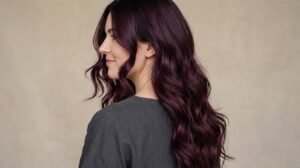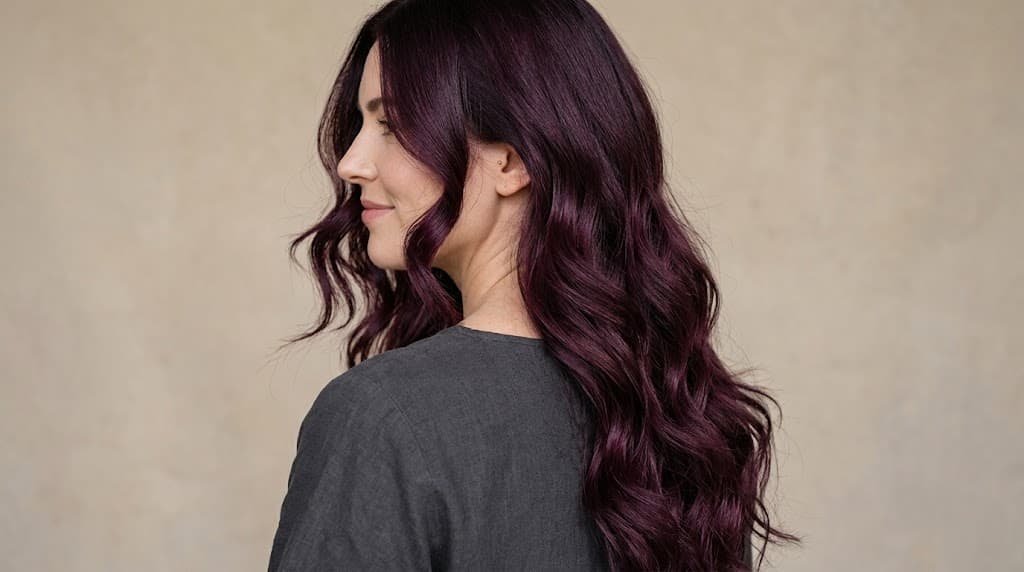





Plum hair color combines purple and red tones to create shades ranging from deep violet to brighter berry-inspired colors. Some variations also include brown undertones, giving the hair a darker, more muted appearance.
The finished color depends partly on your starting hair shade. On black or dark brown hair, plum tones may appear subtle, while lighter hair can allow brighter purple and red pigments to become more noticeable. The specific color formula also affects the result.
Understanding the differences between shades can help you decide whether you prefer a subtle brunette tint or a more noticeable berry-purple color.
What Is Plum Hair Color?
Plum hair color is a purple-red shade inspired by the rich coloring of plums. It generally combines violet with red or berry undertones, although the exact balance can vary.
Some plum shades appear almost black, while others have a clearly visible purple, burgundy, or reddish finish. Brown-based variations can create a more muted appearance.
Lighting can also change how the color is perceived. A dark plum shade may look predominantly brunette or black in softer lighting, with purple-red reflections becoming more noticeable under brighter light.
Because plum describes a range of related colors rather than one exact formula, comparing shade examples is useful when deciding how dark, red, or purple you want the finished color to appear.
How Do Purple, Red, and Brown Undertones Change Plum Hair?
The undertones in plum hair influence whether the shade appears more violet, reddish, or brunette.
Purple undertones create the recognizable violet character of plum hair. Blue-leaning purple shades can look cooler, while red-violet combinations may appear warmer or more magenta.
Red undertones add a berry or wine-colored influence. When red becomes more noticeable, the color may resemble burgundy or a deep raspberry shade.
Brown undertones create a more muted appearance by making brunette tones a larger part of the overall color. Plum brown, for example, combines a recognizable brown base with purple-red accents.
These undertones can overlap, and the dominant tone may vary between dye formulas.
What Are the Different Shades of Plum Hair Color?
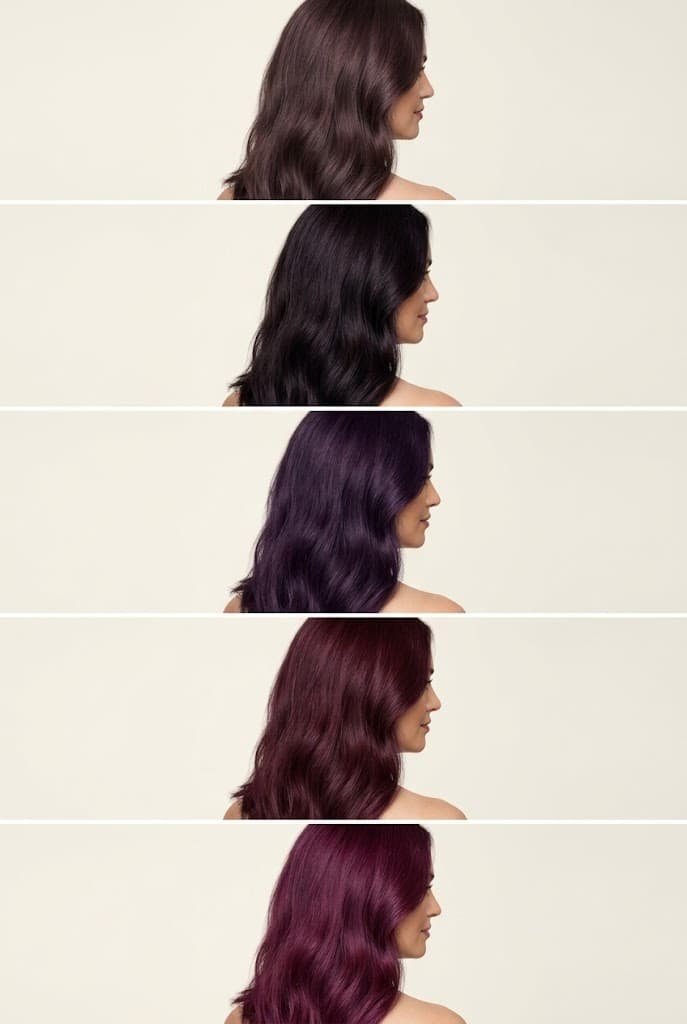
Plum shades vary in depth and in how strongly they lean red or violet. These names describe common color directions rather than standardized formulas, so actual results vary by product and starting hair color.
Plum Brown Hair Color
Plum brown combines a brown base with purple-red undertones. Brown remains an important part of the overall shade, while plum adds a subtle berry or violet influence.
Depending on the color formula, plum brown can range from a muted medium brunette to a deeper chocolate-like shade with purple reflections.
This combination may be worth considering if you prefer brown hair but want to introduce an additional color. It can be worn as an all-over shade or introduced through selected sections for a more varied appearance.
Black Plum Hair Color
Black plum is usually described as a very dark base with deep purple-red tones. Many examples appear darker overall than typical plum-brown shades, although the names are not standardized.
Under softer lighting, the color may appear close to black. Brighter light can make the violet or reddish reflections easier to see, depending on the amount of pigment and the starting hair color.
Some black plum variations have more visible purple than others. A deeper formulation may create a subtle tinted-black appearance, while another may show a stronger violet influence.
Black plum is an option for people who prefer to keep their overall hair color dark while introducing purple-red tones.
Eggplant Plum Hair Color
Eggplant plum is inspired by the deep purple color of eggplant skin. It typically emphasizes violet, sometimes with cooler blue-purple undertones.
Unlike burgundy plum, which has a stronger red influence, eggplant plum places more visual emphasis on purple.
Some versions have a dark, muted finish, while others show a richer violet appearance. A very dark eggplant shade can resemble black plum in some lighting.
Eggplant plum may appeal to someone who prefers a purple-dominant shade rather than a visibly reddish color.
Burgundy Plum Hair Color
Burgundy plum blends wine-red and purple tones to create a rich reddish-violet appearance.
Red is generally more prominent in this variation than in eggplant plum. Depending on the formula, the color may resemble dark wine with violet reflections or a balanced mixture of burgundy and purple.
Burgundy plum can also contain brown undertones, which make the overall shade appear darker or more muted.
The distinction between burgundy and plum is not always exact because both color families can contain red and violet. Comparing the dominant tone is more helpful than relying on the name alone.
This variation is worth considering if you prefer a deep red-based hair color with a noticeable purple influence.
Raspberry Plum Hair Color
Raspberry plum combines purple with brighter pinkish-red or magenta tones. Compared with the deeper black and brown variations, it often has a more colorful, berry-inspired appearance.
Depending on the formula, raspberry plum may lean toward reddish purple or a stronger magenta tone.
The starting hair color makes a difference here. On a lighter base, raspberry tones may appear more vivid. On very dark hair, achieving a similarly bright result may require pre-lightening, depending on the chosen formulation.
Raspberry plum is an option for someone who prefers a more noticeable purple-red color rather than a muted, dark finish.
How Is Plum Hair Color Different From Burgundy, Cherry Cola, and Violet?
Plum, burgundy, cherry cola, and violet belong to related hair color families. They can share red and purple tones, but the balance of these colors creates different appearances.
| Hair Color | Main Color Characteristics | Typical Appearance |
|---|---|---|
| Plum | Purple mixed with red or berry undertones | Deep purple-red, from muted to vibrant |
| Burgundy | Wine-red, often with violet undertones | Rich red with a purple influence |
| Cherry Cola | Brown combined with cherry-red or burgundy tones | Dark brunette with reddish reflections |
| Violet | Purple-dominant, sometimes with blue or red undertones | A more distinctly purple appearance |
In these common descriptions, burgundy emphasizes wine-red, cherry cola emphasizes brunette-red, and violet gives greater emphasis to purple.
These color families can overlap. For example, a deep violet shade with red undertones may resemble plum, while a reddish plum can look close to burgundy.
Hair color names also vary between brands. Comparing actual shade examples can give you a clearer idea of how much brown, red, or purple a particular color contains.
How Does Plum Hair Color Look on Different Starting Hair Colors?
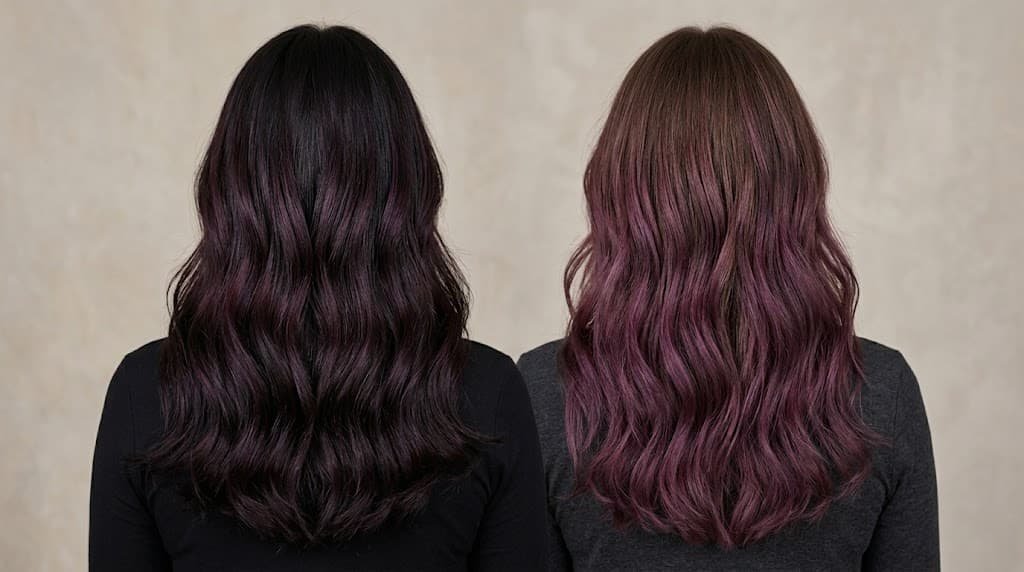
Your existing hair color affects how a plum shade may appear. Darker bases can make certain purple-red tones less noticeable, while lighter bases often allow brighter colors to show more clearly.
The result also depends on the dye formula and whether the hair has been colored before.
Plum Hair Color on Black and Dark Brown Hair
On black hair, deep plum shades may appear as subtle violet-red reflections rather than a clearly visible purple color.
Black plum is one option for keeping the overall shade very dark. In brighter lighting, its purple influence may become easier to notice.
Dark brown hair can provide a base for plum brown, burgundy plum, or selected purple-red highlights. The contrast depends on how different the chosen plum shade is from the existing brown.
A dark plum color may be possible without pre-lightening, depending on the product and starting shade. However, achieving a bright or strongly visible purple on very dark hair may require lightening first.
If you prefer a subtle change, darker plum tones are worth comparing with brighter violet options.
Plum Hair Color on Light Brown and Blonde Hair
On light brown hair, plum tones can appear with different levels of intensity, depending on the formula. A muted plum may create a purple-brown appearance, while a brighter shade can introduce more noticeable berry or violet color.
Blonde hair generally provides a lighter base for purple and red pigments. This can make certain plum shades appear more vivid than they would on dark hair.
However, a lighter starting shade does not guarantee a particular result. The amount of pigment, the chosen color depth, and the existing undertones all influence the finished appearance.
For a darker result, deep plum or plum brown may be useful color references. If you prefer a brighter finish, raspberry plum or a more saturated violet-plum shade may be worth exploring.
How Does Previously Colored Hair Affect a Plum Shade?
Previously colored hair may produce a different result from natural hair because artificial pigments are already present.
For example, hair dyed dark brown or black may not develop a bright plum appearance simply by applying another color over it. Existing artificial color can make significant lightening more complicated.
Faded red, burgundy, or purple color may also influence a new plum shade. If the previous color is uneven, the finished appearance can vary across different sections.
When choosing a new shade, consider the hair’s color history rather than relying only on its current appearance.
For substantial changes, such as moving from previously dyed black hair to a bright plum shade, a professional colorist can assess which coloring approach is appropriate.
What Are the Different Ways to Wear Plum Hair Color?
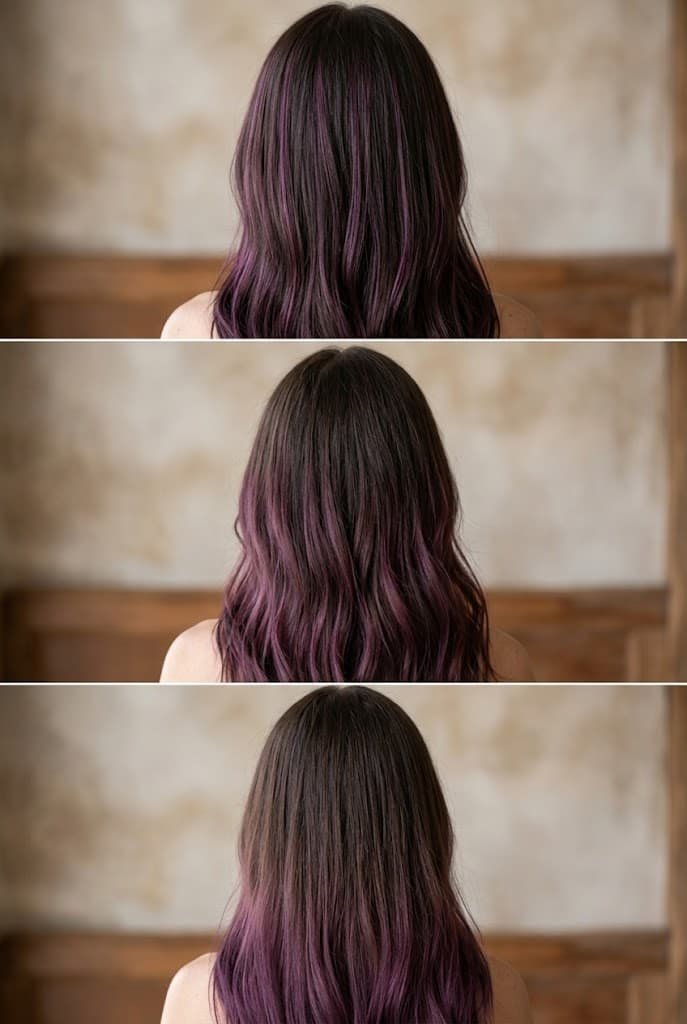
Plum can be applied throughout the hair or added to selected sections. Placement changes where purple-red tones appear and how much of the base color remains visible.
All-Over Plum Hair Color
All-over plum applies the chosen color throughout the hair, making purple-red the main feature of the hairstyle.
A deep plum shade can create a dark, rich appearance, while brighter variations make the purple or berry tones more noticeable.
This approach may appeal to someone who wants a more consistent plum appearance rather than separate colored sections.
An uneven starting base or previous dye can affect how consistent the finished color looks.
Plum Highlights on Dark Hair
Plum highlights introduce purple-red tones into selected sections of black or brown hair while keeping much of the darker base visible.
Fine highlights can create subtle color variation, especially when the plum shade is close in depth to the surrounding hair.
Wider highlights can make the contrast more noticeable. The placement can also change the look, with face-framing pieces bringing color toward the front and scattered highlights distributing it through the lengths.
Plum highlights are an option if you want visible purple-red accents without making plum the main color across the entire head.
Plum Balayage and Ombre
Plum balayage and ombre both allow the color to be combined with a darker base, but they describe different aspects of hair coloring.
Plum balayage uses a hand-painted highlighting technique to place color through selected sections. On brunette hair, plum tones can be blended into the middle lengths and ends while leaving other areas darker.
The amount of contrast depends on the selected shade and placement.
Plum ombre describes a gradual change from one shade to another. For example, dark brown roots can transition into deep plum through the middle lengths, with more noticeable purple-red color toward the ends.
Balayage refers to how highlights are applied, while ombre describes the resulting color transition. A stylist may use balayage techniques to create an ombre effect.
If you prefer plum color distributed through selected strands, balayage is one option to explore. If you want a more continuous transition from dark roots to plum-colored ends, ombre may better match your preferred appearance.
How Do You Choose the Right Plum Hair Color?
Choosing a plum shade involves more than deciding between dark and bright purple. The balance of red and violet, your starting hair color, and the amount of maintenance you prefer can all influence your decision.
Comparing examples on hair with a similar starting color can help you identify a shade that matches your preferred appearance.
Choosing Between Subtle and Vibrant Plum Shades
Subtle plum shades often combine deep brown or black with muted purple-red tones. Plum brown and black plum are options if you prefer a darker overall appearance.
Brighter variations place more emphasis on visible color. Raspberry plum has a stronger pinkish-red influence, while vivid violet-plum shades appear more purple.
Your starting hair color also affects the contrast. A dark plum shade may blend closely with brown hair, while brighter colors can create a more noticeable difference.
Consider whether you want plum to be the main color throughout your hair or a softer accent against your existing shade.
Choosing Warm or Cool Plum Undertones
Plum hair can have warm or cool undertones depending on the balance of red and purple.
Warm plum shades lean toward burgundy, berry red, or reddish purple. They may appeal to someone who prefers wine-inspired colors.
Cool plum shades emphasize violet or blue-purple tones. Eggplant plum is one option if you prefer a darker color with a stronger purple influence.
Neither direction is automatically better for a particular skin tone. You can choose a shade that creates contrast or one that coordinates with your preferred clothing and makeup colors.
Comparing warm and cool plum references under similar lighting may help you decide which direction you like.
Considering Hair Condition and Color Maintenance
Consider your current shade and any earlier coloring before making a large change.
Previously lightened or colored hair may develop a different result from untreated hair. If the starting color is uneven, the finished plum shade may also vary across the lengths.
Brighter purple-red shades may need refreshing as they fade. A muted plum shade closer to the natural base may make color changes less conspicuous.
Color placement can also affect upkeep. All-over coloring may require attention to visible root growth, while highlights or balayage can leave more of the original hair color visible.
If achieving your preferred shade requires a significant color change, a professional consultation can help you understand the available options.
How Can You Maintain Plum Hair Color?
Plum hair color can gradually lose some of its original intensity. How it fades depends on the coloring formula, the starting hair condition, and everyday care habits.
The following practices may help maintain the appearance of color-treated hair.
- Use products intended for colored hair. A color-safe shampoo and conditioner can be part of a routine designed to help maintain dyed hair.
- Consider how often you wash your hair. Frequent washing can contribute to pigment loss. Choose a washing routine that suits your hair rather than following a fixed schedule.
- Use lukewarm water. Very hot water can contribute to color fading, so a moderate water temperature is a reasonable choice.
- Be mindful of heat styling. Frequent exposure to high temperatures may affect the appearance of dyed hair. Using lower heat settings and a suitable heat-protection product may help.
- Consider sun exposure. Prolonged UV exposure can contribute to changes in artificial hair color. A hat or scarf can help limit direct exposure.
- Refresh the color when appropriate. Depending on the formula, a colorist may suggest a suitable gloss or color-depositing product to adjust faded tones.
Plum shades do not all fade in the same way. Some may gradually look less vibrant, while others may show a different balance of red and violet as the color changes.
Follow the care instructions for your particular color product rather than assuming a fixed maintenance schedule.
Frequently Asked Questions About Plum Hair Color
Can Plum Hair Color Be Temporary or Semi-Permanent?
Yes. Purple-red shades are available in temporary, semi-permanent, and permanent hair-color formulas.
Temporary products are intended for short-term color changes, although the amount of color left behind can depend on the product and hair condition.
Semi-permanent color generally deposits pigment without permanently lightening the natural hair base. It gradually fades with washing, but the rate varies.
On dark hair, some semi-permanent plum shades may appear subtle. Lighter hair may show the pigment more clearly, and previously lightened hair can sometimes retain noticeable color after washing.
Choose a formula based on your starting hair color, the appearance you want, and the product’s instructions.
Can Plum Hair Color Cover Gray Hair?
Plum can be used on gray hair, but the amount of coverage depends on the product rather than the color name alone.
Semi-permanent formulas may add a tint to gray strands without covering them completely. Demi-permanent products are often used for gray blending, although their coverage varies.
Permanent formulas developed for gray coverage may provide more opaque coverage than a sheer tint, but the color name alone does not establish a product’s coverage ability.
Gray strands can also develop a different color intensity from the surrounding pigmented hair. If even coverage is your goal, look for a formula specifically intended for gray hair and check its recommended use.
Final Thoughts
Plum covers a range of purple-red colors, from muted brown-based shades to richer violet and brighter berry tones.
Choosing between them comes down to your starting hair color, preferred undertones, and how visible you want the finished shade to be.
Whether you are considering all-over color, highlights, or balayage, comparing realistic shade references and thinking about future maintenance can help you narrow down the options.