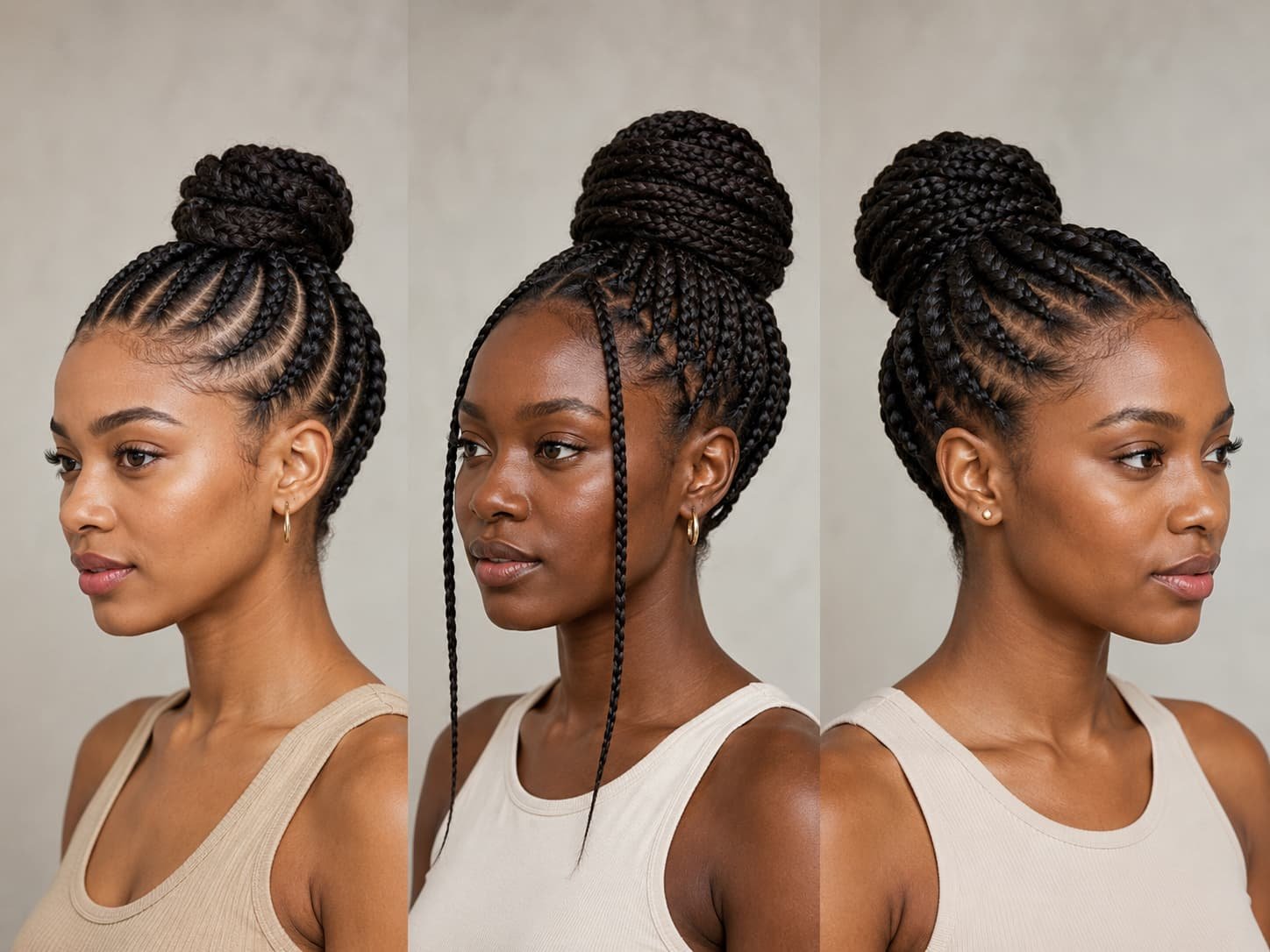

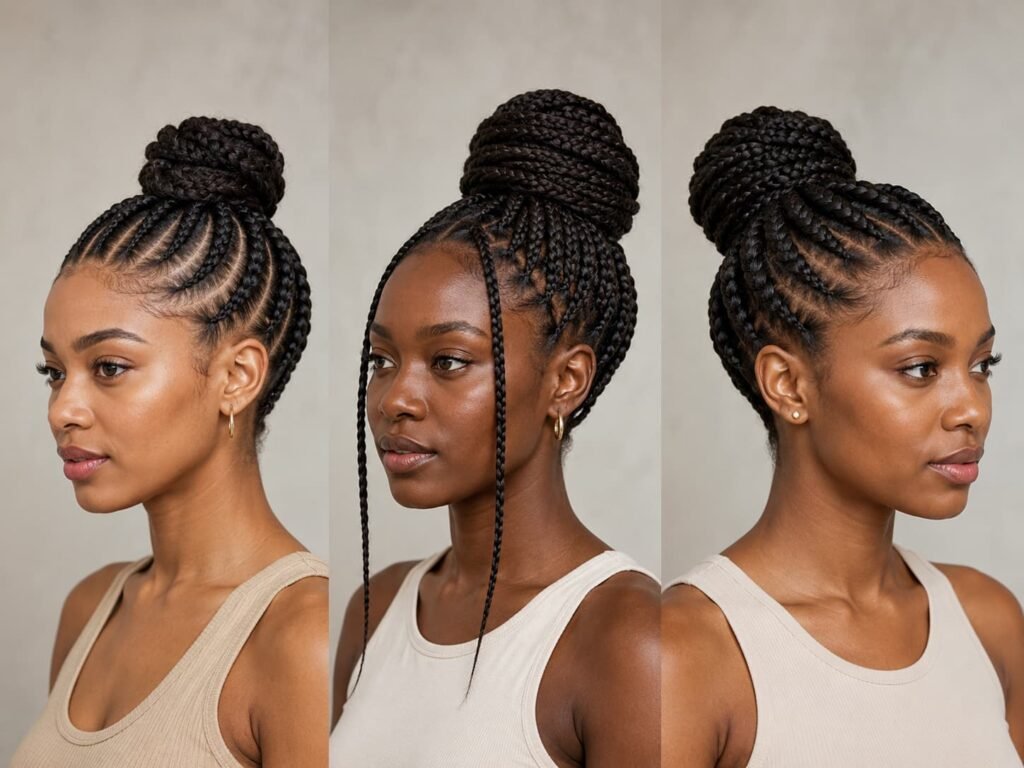
Braided bun hairstyles for Black hair combine the detail of braids with the gathered shape of an updo. The finished appearance can be sleek and structured, softly textured, or more sculptural depending on the braid pattern and how the bun is arranged.
There is no single version of a braided bun. Some styles use cornrows that lead toward the crown or nape, while others gather individual braids such as box braids or knotless braids into a wrapped bun. Braid size, parting, placement, and decorative details can all change the overall look.
What Is a Braided Bun Hairstyle?
A braided bun is an updo that combines one or more braids with hair gathered into a bun shape.
The braids may sit close to the scalp, as with cornrow-based styles, or remain as individual braids that can be gathered and wrapped. Some designs also combine different braiding methods within the same hairstyle.
The bun can sit high near the crown, lower toward the nape, or slightly to one side. Two separate buns are another possible variation.
Because braid technique, size, direction, and placement can all vary, the term “braided bun” describes a broad group of hairstyles rather than one specific design.
What Changes the Look of a Braided Bun?
The visual effect of a braided bun depends mainly on the braid technique, bun position, braid size, and parting pattern.
Changing even one of these details can produce a noticeably different result.
Braid Type
Cornrows are braided close to the scalp, making the direction of the braids an important part of the design. Straight rows can create a clean, linear appearance, while curved or angled sections can add more movement before the braids meet the bun.
Box braids are created from individually sectioned portions of hair. When they are gathered into a bun, the separate braids remain visible and can create a layered, textured shape.
Knotless braids are also formed as individual braids, but the construction at the root differs from traditional box braids with a visible starting knot. When gathered, they can be wrapped into high, low, or other bun shapes depending on their length, size, and arrangement.
Feed-in braiding involves gradually incorporating additional braiding hair as the braid develops. When feed-in braids are directed toward a bun, the changing braid size can become part of the overall pattern.
Stitch braids use clearly defined sections along the braid pattern, giving the style a precise, segmented appearance. When the braids lead into a bun, both the parting and the gathered shape can become visible design features.
These braid types do not create identical results. Some emphasize the pattern across the scalp, while others place more attention on the texture and shape of the gathered braids.
Bun Placement
A high braided bun places the main shape near the crown. Braids that travel upward can draw attention toward this central point and create more height in the overall silhouette.
A low braided bun sits closer to the nape. This placement keeps the gathered shape lower and may place more visual emphasis on the front parting or braid pattern.
A side bun moves the focal point away from the center. Curved braids can be directed toward one side, or individual braids can simply be gathered into an off-center bun.
Double braided buns divide the hair into two gathered sections instead of one. The placement can be symmetrical, or the overall look can be varied with different parting patterns or a few loose braids.
There is no single bun position that suits everyone. Some people may prefer a higher, lower, centered, or asymmetrical shape depending on the appearance they want.
Braid Size and Parting
Braid size affects how much individual braided texture is visible.
Smaller braids can create finer detail throughout the hairstyle and within the bun. Medium braids give each section more visual definition, while larger or jumbo braids create stronger lines and a bolder overall scale.
Parting can change the design just as noticeably.
Straight sections can create a structured pattern, while curved or diagonal parts introduce more movement. A center part can create a more symmetrical front view, while a side part shifts the balance of the hairstyle.
Geometric parting may use triangular, angled, zigzag, or intersecting sections as part of the visible design. In these styles, the parting itself can become an important feature even when the bun remains relatively simple.
The final appearance depends on how these elements work together. Two braided buns with the same basic placement can still look very different when the braid size, technique, or parting pattern changes.
Braided Bun Hairstyles for Black Hair
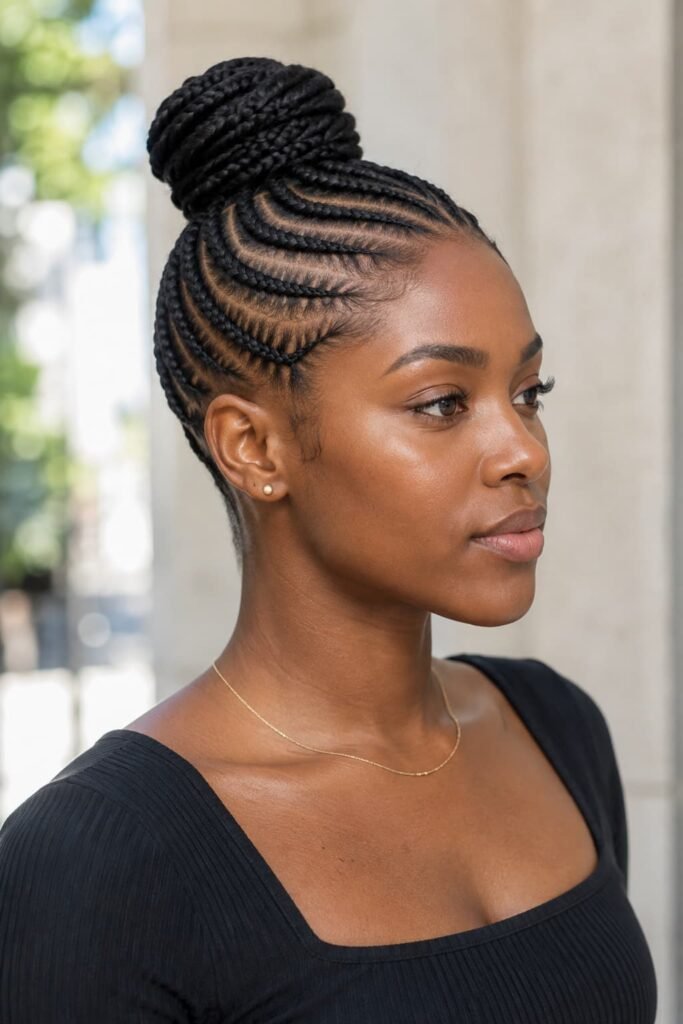
Braided buns can take many forms. The braid technique, bun placement, parting pattern, and braid size all influence the finished appearance.
Some designs put the focus on the pattern across the scalp, while others highlight the texture or shape of the bun. The following ideas show meaningfully different ways these elements can be combined.
1. High Cornrow Braided Bun
Cornrows can be directed upward and gathered into a bun near the crown. The upward braid pattern naturally draws the eye toward the top of the hairstyle.
Straight rows can create a clean, structured effect, while changing the direction of individual rows can add more visual detail.
2. Low Cornrow Braided Bun
A low cornrow bun brings the braids toward the nape rather than the crown. This creates a lower silhouette and can make the braid pattern across the top and sides more noticeable.
The cornrows may run straight toward the back or curve slightly before reaching the bun.
3. Curved Cornrows With a High Bun
Instead of following straight lines, cornrows can curve around the head before meeting in a high bun.
Sweeping or mirrored curves add movement to the scalp pattern. Keeping the bun relatively simple is one possible way to let those curved lines remain the main design feature.
4. Stitch Braids Into a Bun
Stitch braids use clearly separated sections that give the braid pattern a defined, segmented appearance.
When the braids are directed toward a bun, both the sectioning and the gathered shape become part of the design. Straight rows can create a more linear look, while curved sections introduce a different visual rhythm.
5. Feed-In Braids With a Bun
Feed-in braiding gradually incorporates additional braiding hair as the braid develops. This can create braids that appear slimmer near the starting point and fuller farther along the row.
When those braids lead toward a bun, the change in scale becomes part of the finished hairstyle. The bun may be positioned high or low depending on the direction of the braid pattern.
6. Box Braids High Bun
Individual box braids can be gathered at the crown and wrapped into a high bun.
Because each braid remains visible, the finished bun has a layered braided texture rather than a completely smooth surface. A few front braids may also be left loose if a less fully gathered look is preferred.
7. Box Braids Low Bun
Box braids can also be gathered closer to the nape for a low-bun variation.
This placement creates less height at the crown while keeping the individual braids visible within the bun. A center or side part can further change the appearance from the front.
8. Knotless Braids Top Knot
Knotless braids can be gathered high on the head and wrapped into a top knot.
A closely wrapped arrangement can create a more compact shape, while a looser arrangement may show more of the individual braid texture. The final shape can vary with braid length, size, and the way the braids are gathered.
9. Knotless Braids Low Bun
For a lower profile, knotless braids can be brought together near the nape and formed into a bun.
The lower placement keeps the main shape toward the back of the head while leaving the individual braid pattern visible. A middle part or side part can give the front a different balance.
10. Jumbo Braided Bun
Larger braids can create a bun with broad, clearly visible braided sections.
Because the braids themselves have more visual weight, the bun can become a strong focal point even with relatively simple parting. This is one option for someone who prefers larger braid details over many smaller sections.
11. Small Braids Wrapped Into a Bun
Smaller braids create a finer texture when several sections are gathered together.
Wrapped into a bun, they can form multiple visible layers and narrow braided lines. This approach gives the style a different level of detail from a bun made with jumbo or medium-size braids.
12. Center-Part Braided Bun
A center part divides the front of the hairstyle into two main sections and can create a more symmetrical appearance.
The braids may travel backward toward a low bun or upward toward the crown. Similar braid patterns on both sides can emphasize the balanced layout.
13. Side-Part Braided Bun
A side part shifts the visual balance away from the center.
Braids can follow the direction of the part before joining a bun at the back or crown. This is a simple way to introduce asymmetry without relying on an elaborate braid pattern.
14. Geometric-Part Braided Bun
Parting can become a major feature of the hairstyle when the sections use angular or geometric shapes.
Diagonal, triangular, or intersecting sections can add detail before the braids meet the bun. With a more intricate parting pattern, a simpler bun can provide visual balance.
15. Braided Bun With Face-Framing Braids
Not every braid has to be gathered into the bun.
One or two narrow braids can remain loose near the front while the rest are pulled back. These face-framing sections create contrast between the gathered updo and the visible length around the face.
16. Braided Bun With Curly Details
A braided bun can also include selected curly pieces.
Curls may appear around the face, between individual braids, or near the bun itself. The combination creates contrast between the defined braided sections and the softer-looking curl pattern.
Using only a few curls creates a subtle accent, while additional curly sections make the texture more noticeable.
17. Side Braided Bun
Instead of sitting directly at the crown or center of the nape, the bun can be positioned toward one side.
Cornrows may curve toward that placement, or individual braids can simply be gathered off-center. In this variation, asymmetry becomes one of the main visual features.
18. Double Braided Buns
The braids can be divided into two sections and wrapped into separate buns.
The buns may sit high on either side of the head or lower toward the back. Similar placement creates a more symmetrical design, while different braid directions or parting patterns can add extra detail.
19. Half-Up Braided Space Buns
A half-up variation keeps some of the braided length loose while the upper sections are gathered into two buns.
This allows both the bun shapes and the remaining braids to stay visible. It creates a noticeably different silhouette from double buns in which all of the braids are gathered.
20. Braided Bun With Beads or Cuffs
Beads or braid cuffs can be used as decorative details on selected braids.
A small number of accessories can create a restrained accent, while placing them across several visible sections produces a more decorative effect.
They may be positioned near the front, along individual braids, or on sections that remain visible around the bun, depending on the desired look.
High vs. Low Braided Buns
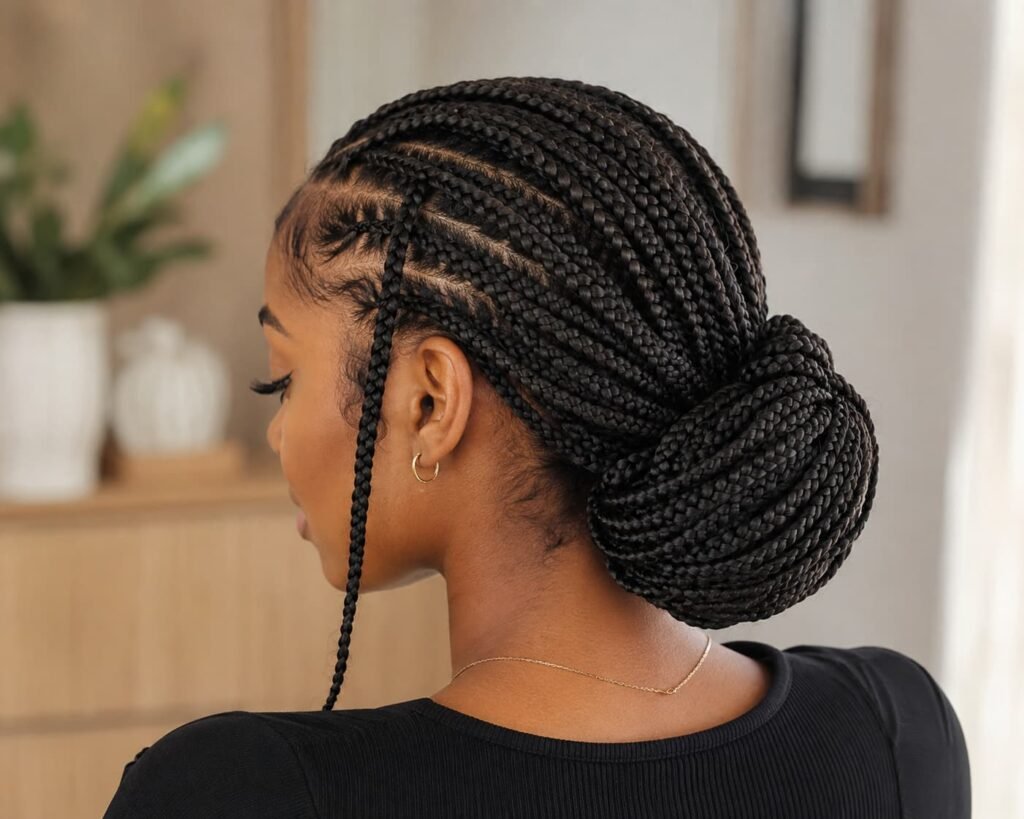
Bun placement can change the overall silhouette of a braided style. A high bun creates more height, while a low bun keeps the shape closer to the back of the head.
Neither option is automatically better. The choice depends on the braid pattern, the amount of visible detail, and the type of shape you prefer.
High Braided Buns
A high braided bun sits near the crown and draws more attention toward the top of the hairstyle.
Cornrows that travel upward can emphasize this placement, while individual braids can be wrapped into a top knot or fuller high bun. The result may look more sculptural because the bun becomes a strong focal point.
High placement can also make curved, straight, or geometric braid patterns around the sides more noticeable.
Low Braided Buns
A low braided bun sits closer to the nape and creates less height at the crown.
This placement can give the hairstyle a more understated silhouette while keeping attention on the parting and braid pattern across the scalp.
Low buns can work with cornrows, box braids, knotless braids, or other individual braided styles. A center part, side part, or curved braid pattern can further change the finished look.
How to Choose a Braided Bun Style
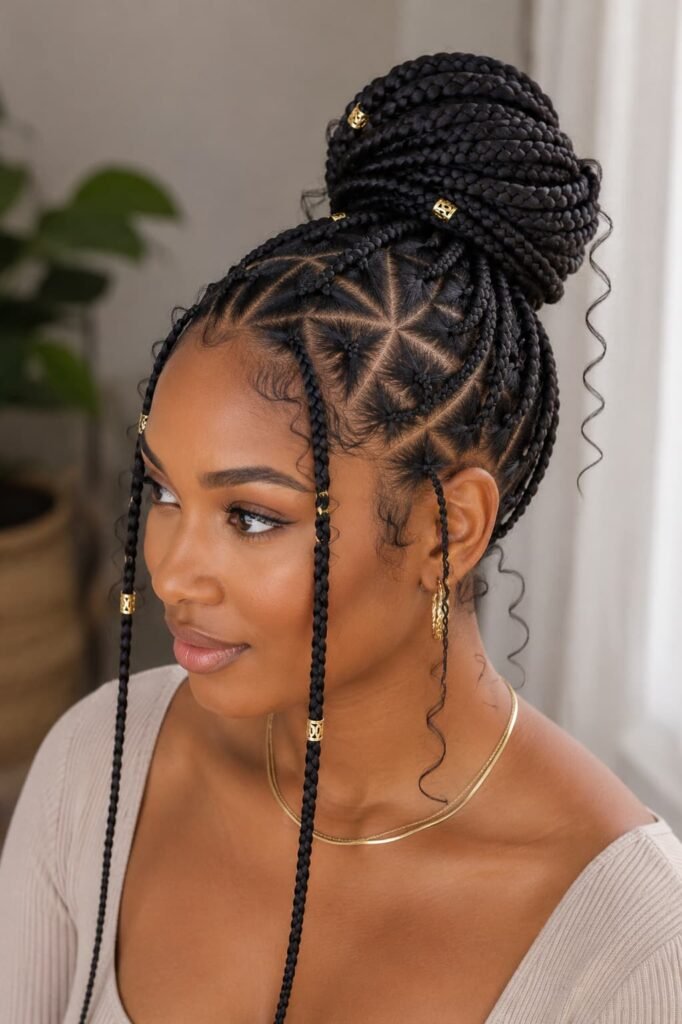
The easiest way to choose a braided bun is to look at the hairstyle as a combination of separate design choices.
Start with the braid type. Cornrows make the scalp pattern more visible, while box braids or knotless braids keep more individual braid texture throughout the hairstyle.
Next, consider braid size. Smaller braids create finer detail, while larger braids produce stronger lines and a bolder overall scale.
Bun placement also matters. A high bun adds more height, a low bun keeps the shape closer to the nape, and a side bun creates a more asymmetrical silhouette.
The parting pattern can be simple or decorative. Straight sections may create a clean structure, while curved, diagonal, or geometric parts can add more visual interest.
You can also decide how much of the braid detail you want to keep visible. A tightly gathered bun places more attention on the overall shape, while a looser arrangement may show more of the individual braids.
Face-framing braids and curly accents are optional details that can soften the appearance of a fully gathered updo. Beads or braid cuffs can add another decorative element without changing the basic structure of the hairstyle.
The final choice can depend on whether you prefer a compact, balanced, detailed, asymmetrical, or more sculptural overall look.
What to Consider Before Choosing a Reference Style
The phrase “braided bun” can describe many different hairstyles, so a clear reference image can help communicate the exact look you want.
A useful image should ideally show more than just the front of the hairstyle. Look for photos that make the braid direction, parting pattern, bun position, and overall shape easy to see.
The front view can show details such as a center part, side part, or face-framing braids. Side views can reveal how the braids travel toward the bun, while a back view can show the size and placement of the bun more clearly.
It can also help to notice the braid size and whether the style uses cornrows, individual braids, or a combination of techniques.
Instead of relying only on the hairstyle name, focus on the specific visual details you want to copy or adapt.
Frequently Asked Questions About Braided Bun Hairstyles for Black Hair
What Types of Braids Can Be Styled Into a Bun?
Several braid types can be arranged into a bun, including cornrows, box braids, knotless braids, feed-in braids, stitch braids, and other individual braided styles.
The finished appearance can vary depending on whether the braids are attached closely to the scalp or remain as separate lengths that are gathered together.
Can Box Braids Be Worn in a Bun?
Yes. Box braids can be gathered and wrapped into high, low, side, or double buns.
Because the individual braids remain visible, the bun usually keeps a layered braided texture rather than appearing completely smooth.
Can Knotless Braids Be Styled Into a Bun?
Yes. Knotless braids can be gathered into different bun shapes, including high buns, top knots, low buns, and double buns.
The final shape can vary depending on the braid size, length, and how the braids are arranged.
What Is the Difference Between a Cornrow Bun and a Box-Braid Bun?
A cornrow bun usually begins with braids that run closely along the scalp and lead toward the bun.
A box-braid bun is created by gathering individual braids and wrapping them into a bun shape.
Because the braid structures are different, the scalp pattern and overall texture also look different.
Can a Braided Bun Be Worn Low at the Nape?
Yes. Braids can be directed or gathered toward the nape to create a low braided bun.
This placement creates less height at the crown and can make the front parting or scalp braid pattern more noticeable.
Can Braided Buns Include Curly Pieces?
Yes. Curly pieces can be added around the face, between braids, or near the bun.
The curls create a softer texture next to the more defined braided sections. The amount of curl can be kept subtle or made more noticeable depending on the desired look.
What Is a Braided Top Knot?
A braided top knot is a high bun formed from braided hair near the crown or top of the head.
It can be created from individual braids gathered together or from a braided section that is wrapped around its base.
Can You Create Two Braided Buns Instead of One?
Yes. Braids can be divided into two sections and wrapped into two separate buns.
The buns may sit high on either side of the head or lower toward the back. Some versions also leave a portion of the braids loose for a half-up look.
How Do Braid Size and Parting Change the Appearance of a Braided Bun?
Smaller braids create finer detail, while larger braids produce broader, more visible sections.
Parting changes the structure around the scalp. Straight parts can look more linear, while curved, diagonal, or geometric sections can make the braid pattern more decorative.
These details can make two buns with the same placement look noticeably different.
What Should I Show a Braider When Asking for a Braided Bun?
Choose a reference image that clearly shows the braid type, braid size, parting pattern, bun placement, and any details such as loose front braids, curls, beads, or cuffs.
If possible, use images that show the hairstyle from more than one angle. This can make it easier to communicate the overall shape rather than relying only on the name “braided bun.