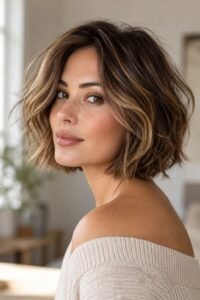

Mushroom brown hair color is a soft brunette shade known for its muted, earthy appearance. Instead of strong golden, copper, or red tones, it usually blends brown with cooler or neutral shades such as taupe, beige, ash, and soft gray.
The color does not have one fixed appearance. Mushroom brown can be light and beige, medium and neutral, or deep and smoky. The final look also changes depending on your starting hair color, the amount of contrast, and whether the color is applied evenly or through highlights and balayage.
If you are considering mushroom brown hair color, understanding these differences can help you choose a version that matches the look you actually want.
What Does Mushroom Brown Hair Color Look Like?
Mushroom brown is generally a cool-to-neutral brunette color. Its main feature is a muted finish rather than obvious warmth.
A classic version often combines medium brown with taupe, beige, or ash tones. Some versions have more gray and look smoky, while others contain more beige and appear softer.
Lighting can also change the appearance. Mushroom brown may look more ashy in cool indoor light but show more natural brown or beige in daylight.
This is why two photos labeled “mushroom brown” can look noticeably different. Instead of choosing by the name alone, look at three things: the depth of the brown, the undertone, and the amount of contrast.
Light, Medium, or Dark Mushroom Brown?
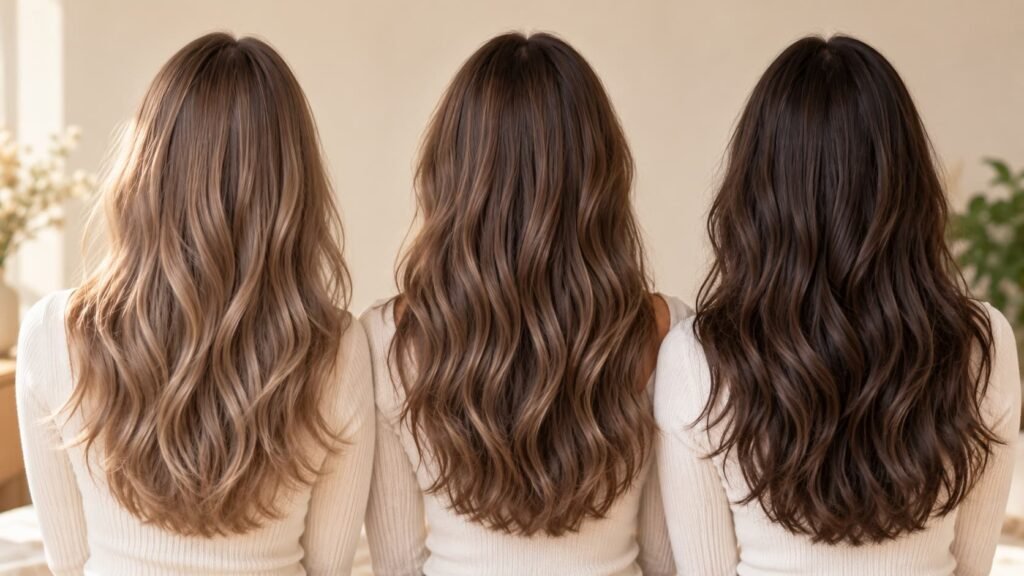
The easiest way to narrow down the color is to first decide how light or dark you want the brunette base to be.
Light Mushroom Brown
Light mushroom brown sits toward the softer end of the brunette range. It may combine light brown with muted beige, taupe, or ash-toned pieces.
With enough lightness, it can start to look close to bronde, which sits between brown and blonde. However, the overall finish remains more muted than a strongly golden or honey-toned bronde.
This version makes sense when you want mushroom tones without a deep brunette appearance.
Medium Mushroom Brown
Medium mushroom brown keeps brown as the main color while allowing taupe, beige, and ash undertones to remain visible.
It can be worn as a fairly even color, but small differences between lighter and darker sections can prevent the shade from looking flat.
For a subtle result, keep the highlights close to the base color. For stronger dimension, use noticeably lighter mushroom-toned sections.
Dark Mushroom Brown
Dark mushroom brown keeps more brunette depth while reducing obvious golden and reddish warmth.
In softer lighting, it may simply appear dark brown. Brighter light can reveal smoky, taupe, or cool-brown tones.
This direction works particularly well as inspiration when you want to stay clearly brunette rather than moving toward a light brown or bronde appearance.
Beige, Taupe, or Smoky Mushroom Brown?
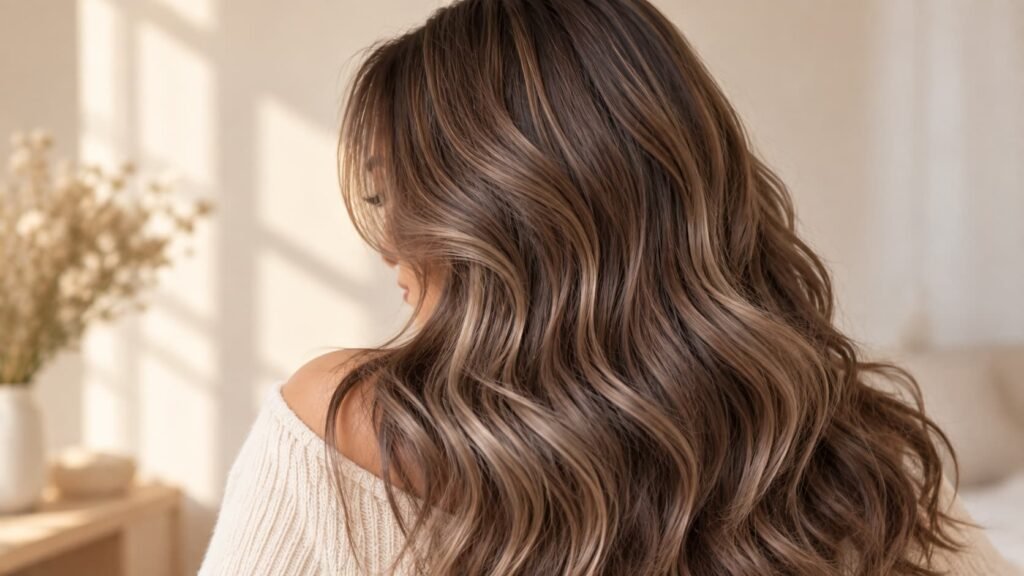
Depth is only one part of the decision. The undertone changes the personality of mushroom brown just as much.
Beige mushroom brown has a softer appearance. It mixes brown with muted beige and may contain a small amount of ash or taupe.
Taupe mushroom brown balances gray and brown. It often has the earthy, understated appearance most closely associated with the mushroom color family.
Smoky mushroom brown moves further toward cool tones. Gray or ash influences become more visible, although the hair should still read primarily as brunette rather than silver.
If you prefer a distinctly cool brunette, compare this shade with Ash Brown Hair Color Ideas. The two can overlap, but mushroom brown commonly mixes beige and taupe into the cool brunette palette as well. srhairandnails.com
All-Over Color, Highlights, or Balayage?
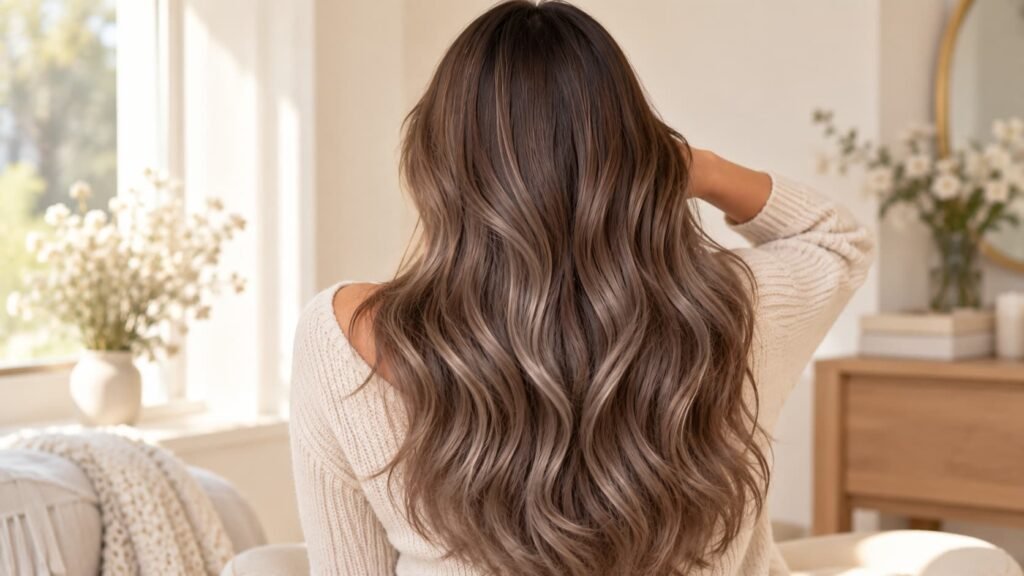
Mushroom brown does not have to be one solid shade from roots to ends. Color placement can completely change how noticeable its different tones become.
An all-over mushroom brown gives the hair a more consistent brunette appearance. This can work well when you prefer low contrast and want the undertone to be the main feature.
Mushroom brown highlights introduce lighter taupe, beige-brown, or ash-brown pieces. Fine highlights create a softer change, while wider or lighter sections make the dimension more obvious.
Mushroom brown balayage usually keeps greater depth near the roots and introduces lighter tones through selected mid-lengths and ends. The transition can be subtle when the shades are close together or more noticeable when a dark brunette base is combined with much lighter mushroom pieces.
For a softer dimensional result, you can also use fine babylights rather than large contrasting sections.
How Starting Hair Color Changes the Result
Your starting color matters because the same inspiration photo will not produce an identical appearance on every base.
On dark brown hair, deeper mushroom shades can keep much of the existing brunette depth. Taupe or ash-brown sections can add visible dimension without turning the entire head noticeably light.
If you want a much lighter mushroom shade from very dark hair, the change in depth is greater.
On medium brown hair, mushroom brown can be a relatively subtle tonal change. Beige, taupe, or cool-brown pieces can create dimension while keeping the hair clearly brunette.
On light brown or blonde hair, mushroom brown can introduce greater brunette depth. Some lighter pieces can also remain visible, creating a mushroom-bronde effect instead of a completely uniform brown.
Previously colored hair is another consideration. Existing dark dye, highlights, or warmer sections can affect how a new color appears, so a reference image should be treated as inspiration rather than a guaranteed result.
How Hair Length and Texture Affect the Look
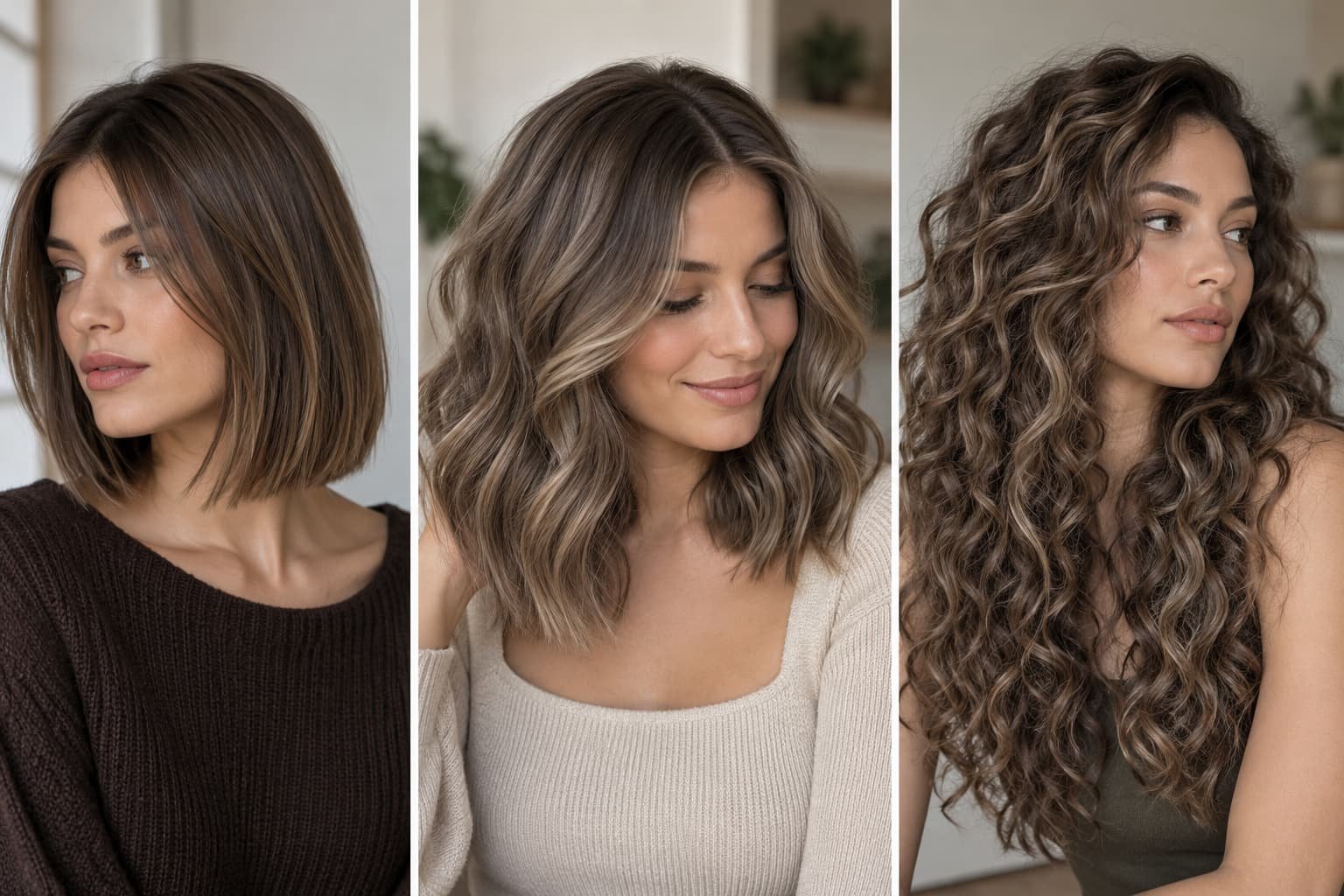
Mushroom brown can work visually across short, medium, and long hair, but the haircut changes how the color placement is displayed.
A bob or other short haircut has less space for a long color transition, so subtle highlights or face-framing pieces may be easier to notice.
Medium-length hair provides more room for balayage, highlights, and darker roots. Layers can also expose different shades as the hair moves.
Long hair gives a colorist more length for gradual transitions between a deeper root, medium mushroom brown, and lighter taupe or beige ends.
Texture matters visually too. Straight hair can show color placement in longer continuous sections. Waves expose different light and dark pieces as the hair bends, while curls can make individual highlighted sections appear more separated.
Mushroom Brown vs Ash, Mocha, and Chocolate Brown
These brunette shades can overlap, so the undertone is more useful than the name alone.
Mushroom brown generally emphasizes muted taupe, beige, gray, and ash influences. Ash brown usually places stronger emphasis on a cool or smoky undertone. srhairandnails.com
Mocha brown hair color can lean warm, neutral, or cool. Some mocha shades have a richer coffee-like brown appearance, while mushroom brown usually stays more subdued and earthy. srhairandnails.com
Chocolate brown hair color is commonly richer and may show golden, caramel, or red-brown warmth, although neutral and cooler chocolate variations also exist. srhairandnails.com
These shade names are not strict formulas, so compare actual reference colors rather than relying only on labels.
Maintaining the Appearance of Mushroom Brown Hair
Artificial mushroom brown color can change as it fades. Cooler or muted tones may become less noticeable over time, which can make warmer tones appear more visible.
How quickly the appearance changes depends on the starting hair, color process, washing habits, heat styling, environmental exposure, and the shades used.
Products made for color-treated hair can be considered as part of a regular routine, but there is no single product or maintenance schedule that applies to every mushroom brown color.
Root appearance also depends on contrast. If your natural roots are close to the colored shade, new growth may look softer. A larger difference between the natural roots and colored lengths makes regrowth easier to notice.
For more information about temporary and permanent approaches to visible roots, see Root Touch Up Hair Color.
Frequently Asked Questions
Is mushroom brown hair warm or cool?
Mushroom brown generally falls between cool and neutral. Smoky versions lean cooler, while beige or taupe variations can look more balanced.
Is mushroom brown the same as ash brown?
Not exactly. Both can have cool and muted qualities, but mushroom brown often combines several earthy tones such as taupe, beige, gray-brown, and ash. Ash brown places more emphasis on a cool or smoky brunette undertone.
Can mushroom brown hair have highlights?
Yes. Highlights can use lighter taupe, beige-brown, ash-brown, or muted bronde tones. Keeping them close to the base creates subtle dimension, while lighter pieces produce more contrast.
Does mushroom brown have to look gray?
No. Gray can contribute to some mushroom shades, but the main color can remain clearly brown. Beige and taupe versions may look much softer than strongly smoky mushroom brown.
Final Thoughts
Mushroom brown hair color is not one exact shade. It is a muted brunette family that can range from light beige-brown to deep smoky brown.
Start by deciding how much brunette depth you want. Then choose whether you prefer beige, taupe, or stronger ash influences. Finally, consider whether you want an even color or dimension from highlights, balayage, or darker roots.
Looking at those details separately makes it much easier to choose a mushroom brown reference that matches the result you have in mind.