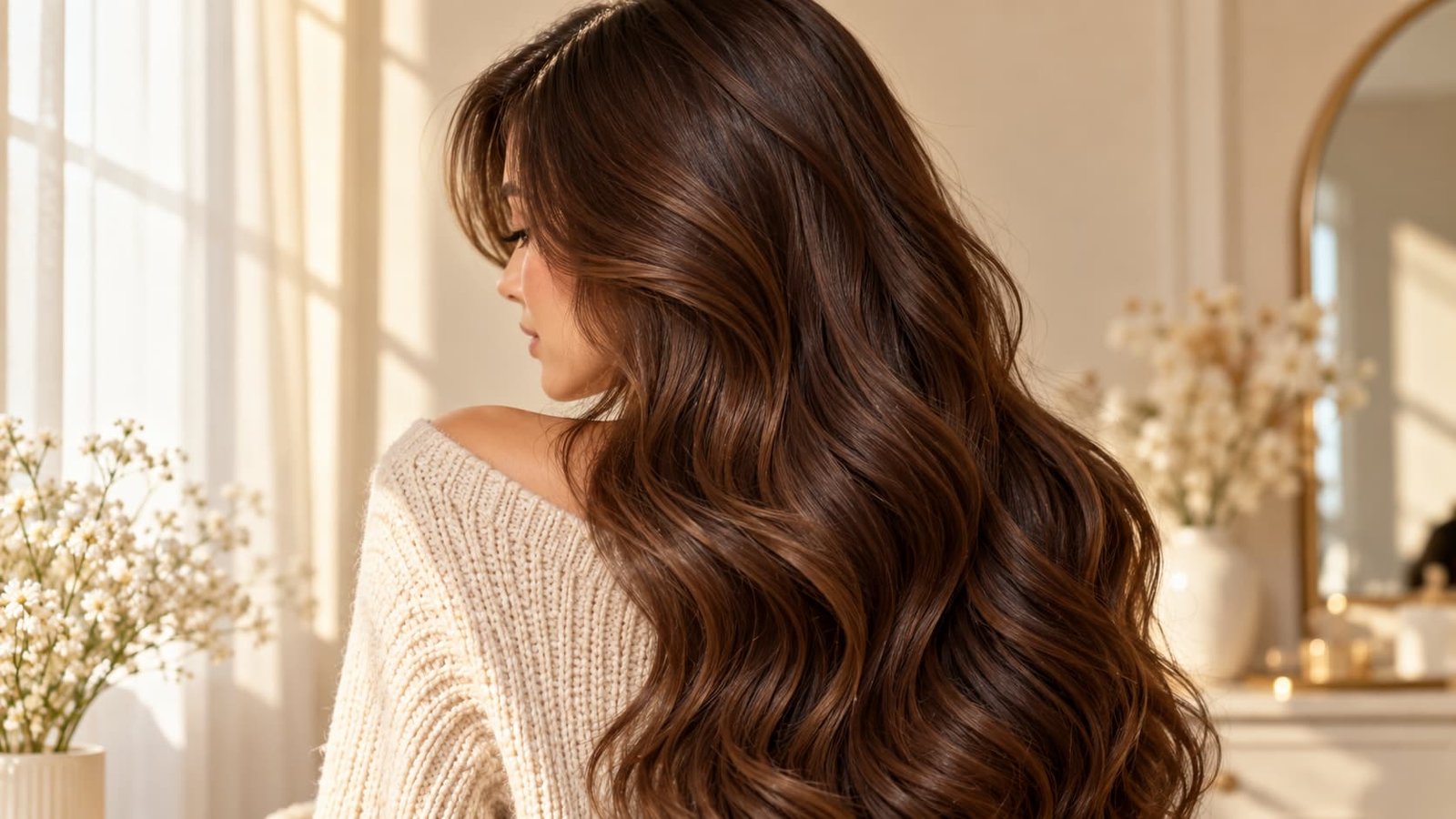



Chocolate brown hair is more than one deep brunette shade. It can be dark and rich, soft and creamy, warm with golden tones, or balanced with a more neutral brown finish.
That variety is what makes chocolate brown hair color ideas useful to compare before choosing a new look. Two people can both have chocolate brown hair while their colors look noticeably different because of depth, undertone, highlights, and lighting.
Some chocolate shades look almost dark brown indoors but reveal warm brown tones in daylight. Others use caramel or lighter chocolate pieces to create more visible dimension.
Here is how to tell the main chocolate brown shades apart and decide which direction matches the look you want.
What Makes Hair Color Look Chocolate Brown?
Chocolate brown is a brunette color family rather than one exact shade.
The brown base normally remains the most noticeable part of the color. What changes is the depth and the subtle tone within that brown.
A warm chocolate brown may show golden, caramel, bronze, or soft red-brown reflections. A neutral chocolate brown keeps these influences more balanced. Some chocolate shades can even lean slightly cool without becoming strongly gray or ashy.
This is why choosing only by the words “chocolate brown” is not enough. Looking at the actual depth and undertone gives you a clearer idea of the finished color.
Chocolate Brown Shades at a Glance
| Shade | Overall Appearance | Consider It If You Want |
|---|---|---|
| Classic Chocolate | Rich medium-to-deep brown | A traditional brunette look |
| Dark Chocolate | Deep, rich brunette | More depth with visible brown |
| Milk Chocolate | Softer medium brown | A lighter chocolate effect |
| Golden Chocolate | Brown with golden warmth | More visible warm reflection |
| Neutral Chocolate | Balanced rich brown | Less obvious gold or red |
| Chocolate Chestnut | Brown with red-gold warmth | A warmer brunette direction |
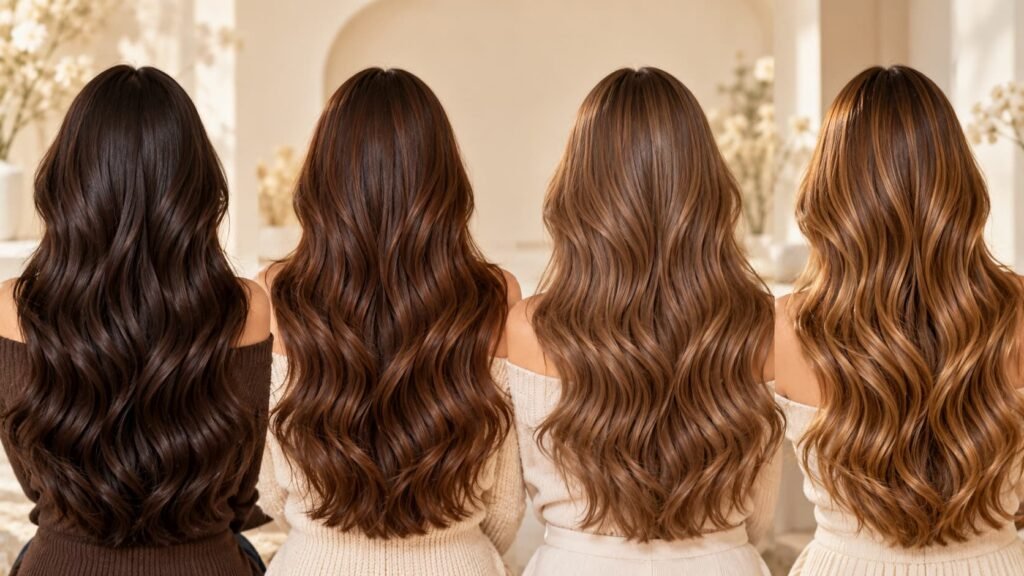
These shade names are useful guides, but they are not strict color formulas. Actual results can vary depending on the starting hair color and the tones used.
Classic Chocolate Brown
Classic chocolate brown sits comfortably between medium and deep brunette.
The base remains clearly brown, while small amounts of warmth prevent the shade from looking flat. Depending on the color, that warmth may appear golden, caramel, or slightly red-brown.
This shade can work as a solid all-over color when you want a consistent brunette appearance. It can also provide a darker base for lighter highlights.
Dark Chocolate Brown
Dark chocolate brown moves toward the deeper end of the brunette range.
In softer indoor lighting, it can look very dark. Natural or brighter light may make the brown undertones easier to see.
The important difference between dark chocolate and black hair is that the chocolate shade should still retain visible brunette character. It does not need dramatic highlights to create that effect.
If you want dimension without making the hair much lighter, subtle medium-brown pieces can be blended into the deeper base.
Milk Chocolate Brown
Milk chocolate is a softer and lighter interpretation of chocolate brown.
It often combines medium brown with beige-brown, soft golden, or light caramel influences. The result usually has less depth than dark chocolate.
Milk chocolate can be worn as an even shade, but it also works well when several closely related brown tones are blended together.
This is useful if you want brunette hair but do not want the overall color to appear very deep.
Warm or Neutral Chocolate Brown?
Depth tells you how dark the hair looks. Undertone tells you what kind of brown you see within that depth.
Warm chocolate brown may show caramel, golden, bronze, or soft red-brown reflections. These tones can become more noticeable in sunlight.
Neutral chocolate keeps brown at the center of the color. It may contain both warm and cooler influences, but neither dominates strongly.
A cooler chocolate brown reduces obvious golden and red tones. However, it should not automatically look gray. If you want a clearly cooler brunette, compare it with our Mushroom Brown Hair Color guide before choosing between the two directions.
Chocolate Brown With Caramel Highlights
Caramel highlights create one of the clearest ways to add dimension to chocolate brown hair.
The chocolate base provides depth, while caramel pieces introduce lighter warmth. The amount of contrast depends on how light and wide those pieces are.
Fine caramel highlights that remain close to the base can create a subtle multi-tonal result. Brighter or wider sections stand out more clearly.
Placement matters too. Highlights throughout the hair create distributed brightness, while a few lighter pieces around the front concentrate the contrast in one area.
If you want very fine highlighted sections instead of stronger ribbons, our Babylights guide explains that softer highlighting style.
Chocolate Brown Balayage
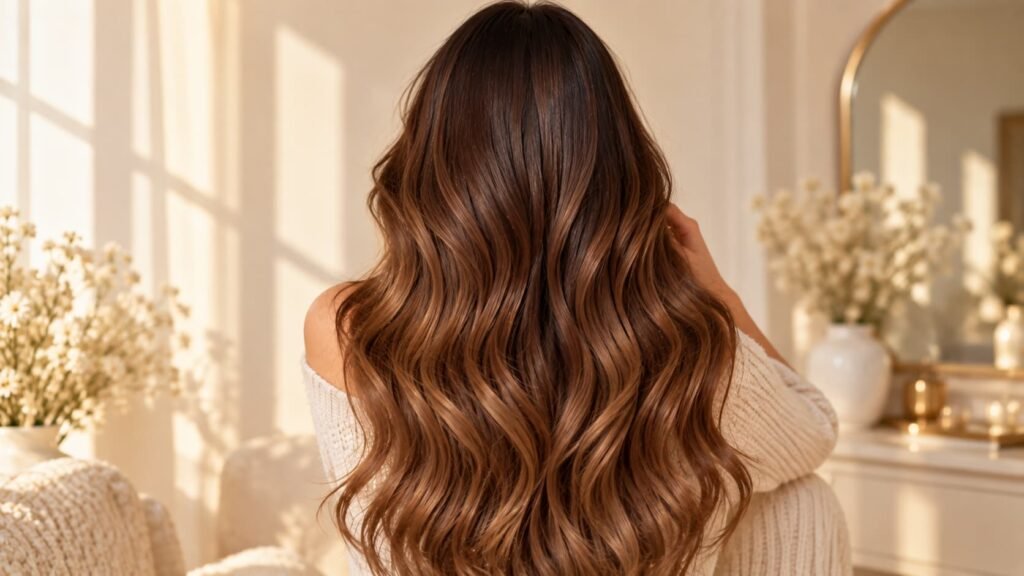
Balayage changes the placement of the lighter color rather than simply changing the shade.
A chocolate brown balayage can keep deeper brunette color near the roots and gradually introduce lighter chocolate, caramel, or golden-brown tones through the lengths.
On wavy hair, the lighter sections may become more noticeable because different bends catch the light separately. Straight hair can make the direction of the color transition easier to see.
Longer hair also gives the transition more space. However, medium-length hair can still show a clear chocolate-to-caramel blend.
All-Over Color or Dimensional Chocolate?
Think about how much variation you actually want to see.
An all-over chocolate shade creates a more consistent brown from one area to another. It keeps the focus on richness and undertone rather than obvious light and dark sections.
Highlights introduce separate lighter pieces. Balayage usually creates a softer transition through selected lengths and ends. Lowlights work in the opposite direction by adding deeper sections to lighter hair.
None of these options is automatically better. They simply create different visual effects.
If your haircut already has visible movement and layers, color variation can become even easier to notice. For example, Long Layered Haircuts for Women can expose different sections of a dimensional brunette color as the hair moves.
How Starting Hair Color Changes the Result
Your current hair color affects how noticeable the change to chocolate brown may be.
On black or very dark hair, deep chocolate can create a relatively subtle difference. The brown tones may become easier to see under brighter lighting.
Dark brown hair already sits close to many chocolate shades. In this case, changing the undertone or adding lighter pieces may create more visible difference than simply choosing another dark brown.
Medium and light brown hair can be deepened into a richer chocolate shade or kept dimensional by leaving some lighter sections visible.
Moving from blonde to chocolate brown creates a larger change in depth. Previously colored or lightened hair can also behave differently from natural hair, so a reference photo should be treated as a visual direction rather than a promise of an identical result.
Chocolate Brown vs Mocha Brown
Chocolate and mocha brown can overlap, but their overall character can differ.
Chocolate brown often emphasizes rich brunette depth and may contain golden, caramel, neutral, or red-brown warmth.
Mocha brown can also be warm, but some versions look more neutral, muted, or coffee-toned.
Because neither name represents one universal formula, compare the actual colors rather than relying only on their names. You can see the other brunette direction in our Mocha Brown Hair Color guide.
Chocolate Brown vs Mushroom Brown
These two shades usually create a more noticeable tonal difference.
Chocolate brown commonly appears richer and warmer. Mushroom brown usually brings in muted taupe, beige, gray-brown, or ash influences.
Someone looking for a warm, rich brunette may therefore start with chocolate references. Someone wanting a more earthy and muted result can compare them with Mushroom Brown Hair Color ideas.
There can still be overlap, especially with neutral or cooler chocolate shades.
Keeping Chocolate Brown Looking Consistent
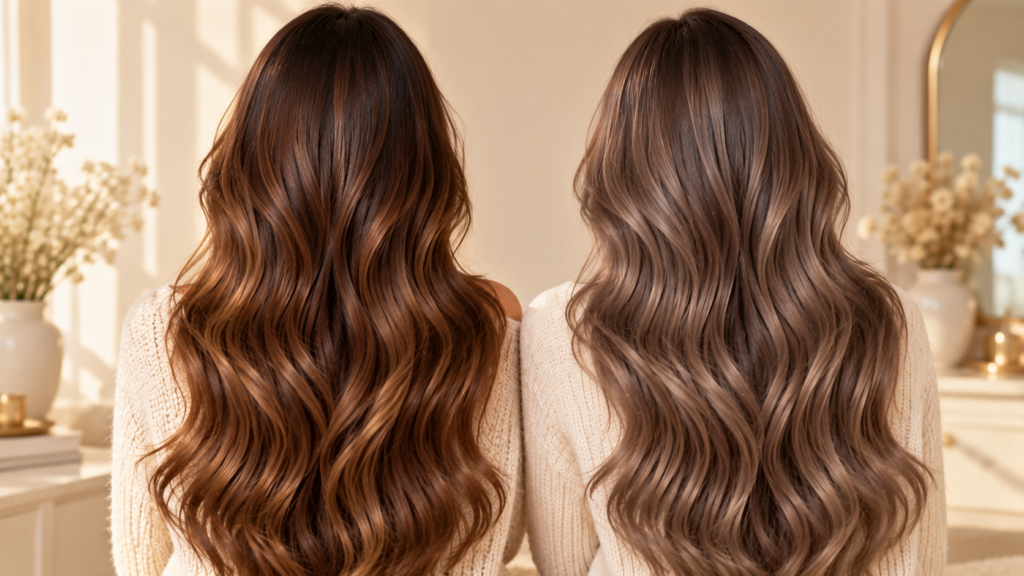
Color-treated brunette hair can change gradually over time. How noticeable that change becomes depends on the original hair color, coloring method, washing habits, heat styling, and the amount of lighter color present.
An all-over chocolate shade and a balayage look can also show root growth differently.
When the natural roots are close to the colored hair in depth, the transition may appear less obvious. A larger difference between the natural and colored shades can make new growth easier to see.
If visible roots become part of your maintenance planning, our Root Touch Up Hair Color guide explains different approaches to root coverage.
There is no single refresh schedule that applies to every chocolate brown color, so maintenance should depend on the actual coloring method and the result you want to keep.
Frequently Asked Questions
Is chocolate brown hair warm or cool?
Chocolate brown is commonly warm or neutral, but cooler versions also exist. Warm shades may contain caramel, golden, bronze, or red-brown tones, while cooler versions reduce those obvious warm reflections.
Is chocolate brown darker than regular brown?
Not necessarily. Chocolate brown describes a color family rather than one specific level of darkness. Light, medium, and dark chocolate brown shades can all exist.
Can chocolate brown hair have highlights?
Yes. Caramel, golden brown, beige-brown, or lighter chocolate pieces can be added to a chocolate brunette base. Keeping them close to the base creates softer dimension, while lighter pieces create stronger contrast.
Does chocolate brown always have red undertones?
No. Some versions contain red-brown warmth, while others lean golden, caramel, neutral, or slightly cool.
Can chocolate brown look natural without highlights?
Yes. Chocolate brown can be worn as one consistent brunette shade. Highlights and balayage are options for adding dimension, not requirements.
Final Thoughts
Chocolate brown hair color ideas range from deep dark chocolate to softer milk chocolate, golden brown, neutral brunette, and dimensional caramel combinations.
Instead of choosing by the shade name alone, look at three details: depth, undertone, and contrast. Decide how dark you want the brunette base, whether you prefer warm or balanced tones, and whether you want one consistent color or visible lighter pieces.
Those details make it much easier to find a chocolate brown reference that actually matches the look you want.