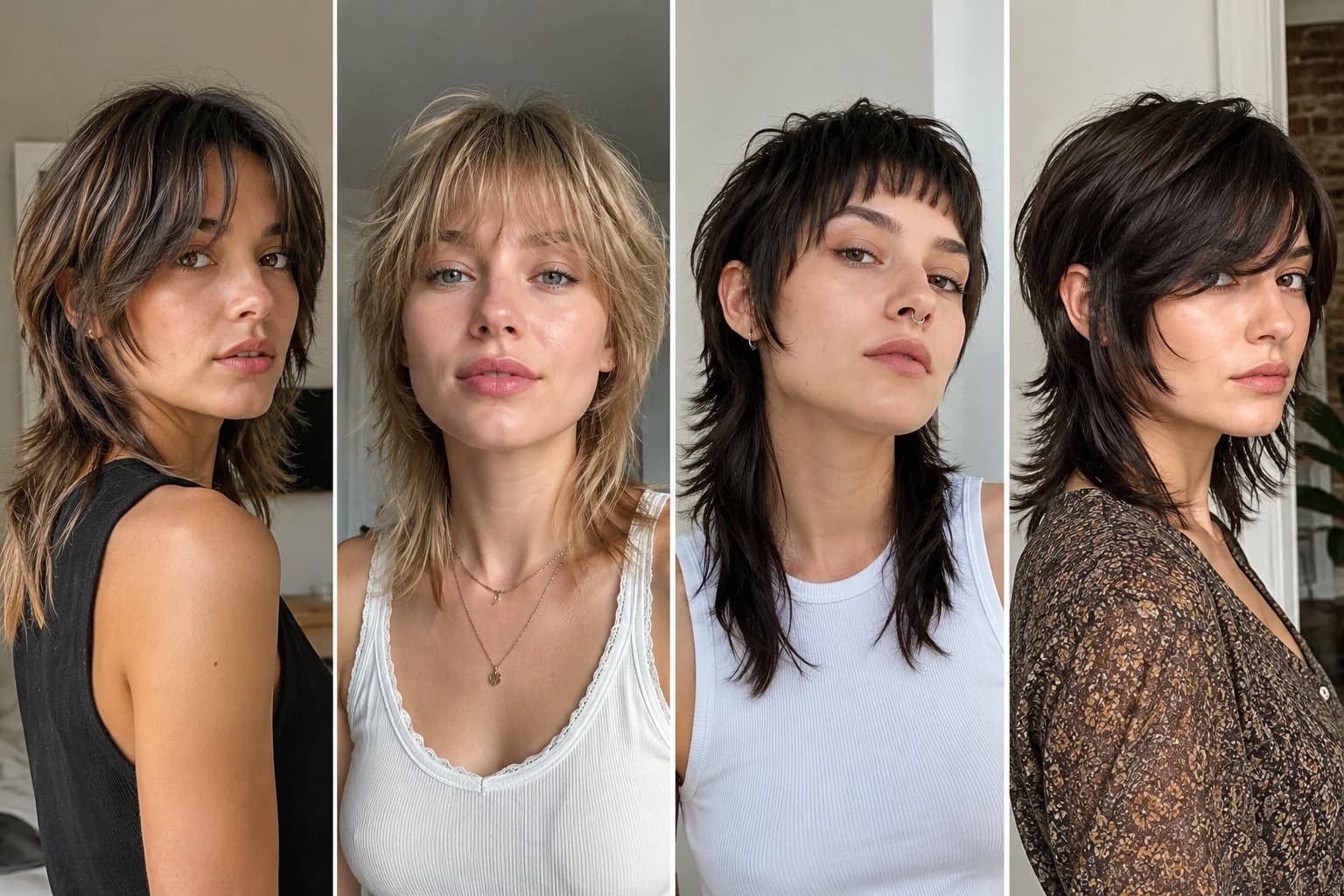



A mullet hairstyle for women is defined mainly by a contrast in length, with shorter hair through the front, top, or sides and more length at the back. The amount of contrast can vary, so the haircut may look softly blended or more clearly disconnected.
Many versions also include layers, bangs, face-framing pieces, or textured ends. These details can change the overall silhouette while keeping the longer back as a recognizable part of the cut.
This guide explains how length, layering, bangs, and hair texture can influence the appearance of a women’s mullet, along with several common variations and styling considerations.
What Is a Mullet Hairstyle for Women?
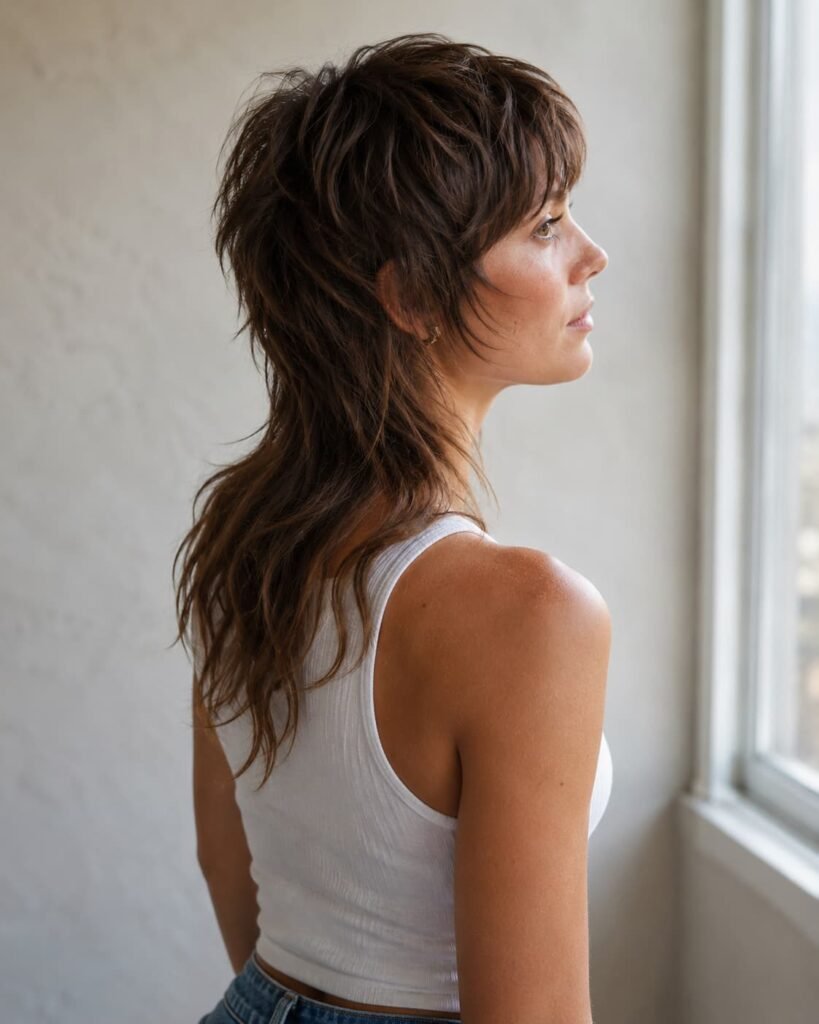
A mullet is a haircut that keeps the hair shorter through the front, top, and sides while leaving more length at the back. The exact proportions can vary considerably.
Some versions use noticeably shorter sides and crown sections with a clearly longer back. Others use more gradual transitions, creating a softer shape while still maintaining additional length through the nape.
A mullet can also be adapted to different overall lengths. Short versions may keep most of the haircut compact, while longer versions retain more length through the back and lower sections.
Bangs are optional. Curtain bangs, wispy fringe, short textured bangs, or fuller fringe can all change the appearance of the front without defining whether the haircut is a mullet.
What Creates the Mullet Shape?
The main feature of a mullet is the relationship between the shorter areas and the longer back. Several haircut details can make that contrast appear stronger or softer.
Shorter upper sections can make the difference between the crown and back more noticeable. Depending on the cut and styling, these sections may appear smooth, textured, piecey, or more closely blended.
Longer back length gives the haircut its characteristic rear emphasis. In a softer version, the difference may be gradual. In a more disconnected mullet, the contrast can be much easier to see.
Crown layering can change the visible shape through the upper part of the haircut. Shorter layers may create the appearance of more separation and movement, while longer layers can produce a smoother transition toward the back.
The degree of contrast also affects the overall silhouette. A larger difference between the front, sides, and back can create a more dramatic shape, while gentler transitions may make the haircut appear softer.
How Mullet Length Changes the Overall Look
Overall hair length changes the proportions of a mullet. Short, medium, and long versions can all maintain more length through the back, but the silhouette can look quite different.
Short Mullet Hairstyles
A short mullet generally keeps the upper sections and sides compact while leaving additional length through the nape.
With less overall length, the difference between the upper sections and back can appear more defined. Shorter layers may also create a more piecey or textured appearance when the ends are visibly separated.
Some short mullets use a strong contrast between sections, while others use a more gradual transition. The final shape depends on how the front, sides, crown, and back are balanced.
Short bangs can make the front appear more compact, while longer or wispy fringe may create a softer transition around the face.
Medium-Length Mullet Hairstyles
A medium-length mullet keeps additional length through the sides and back while maintaining shorter sections higher in the haircut.
The extra length can make the layers appear more mobile and allow the transition between sections to look either soft or clearly defined.
Longer side pieces and face-framing layers are one possible way to reduce a strong visual break between the shorter upper sections and longer back.
Waves, curls, or textured styling may make individual layers more noticeable, although the final appearance can vary with natural texture, density, and styling.
Long Mullet Hairstyles
A long mullet retains substantial length through the back while keeping shorter areas through the crown, front, or sides.
A large difference between the upper sections and back can create a stronger mullet silhouette. A more gradual transition can make the same overall length appear softer.
Face-framing pieces and longer fringe can visually connect the front of the haircut with the lower length. This is one possible option for someone who prefers a less sharply separated shape.
The overall effect depends on the relationship between the shorter and longer sections rather than back length alone. A long haircut with only subtle differences between sections may show less of the classic mullet silhouette than one with clearer front-to-back contrast.
Soft, Choppy, and Shaggy Mullet Variations
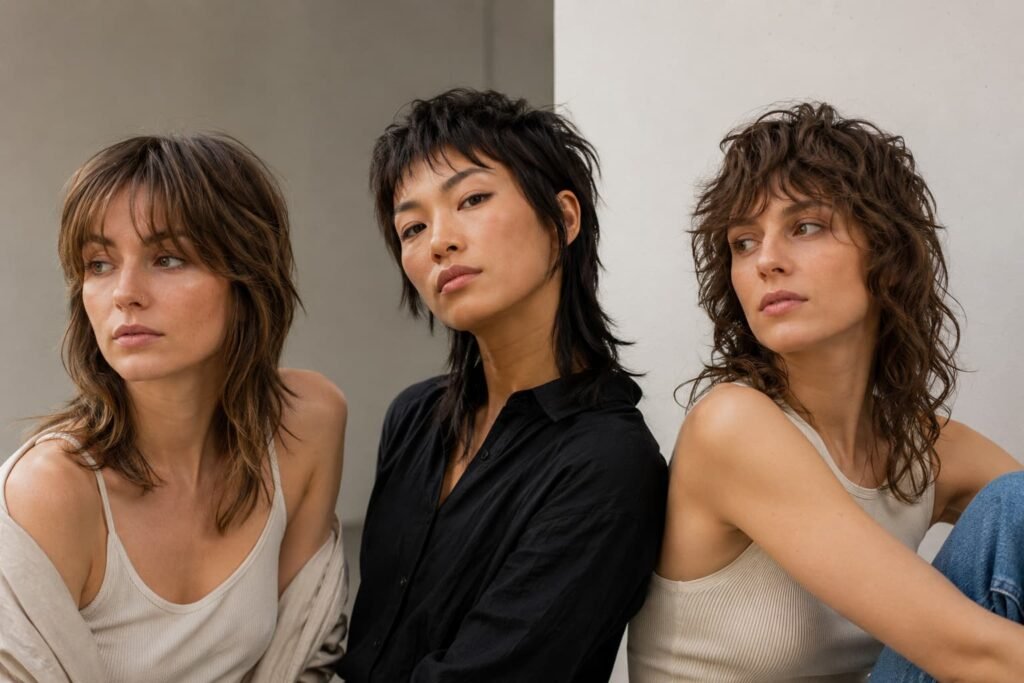
Mullet haircuts can differ substantially depending on how the lengths are connected and how much visible texture is created. Soft, choppy, and shaggy are useful descriptive terms for some of these variations.
Soft Mullet
A soft mullet uses gentler transitions between the shorter and longer sections.
Instead of a sharp visual break between the crown, sides, and back, the lengths are more gradually connected. This can create a less dramatic silhouette while still keeping additional length through the back.
Longer face-framing pieces, curtain bangs, and more blended layers are possible ways to support this softer appearance.
Hair texture can also influence how obvious the transitions look. Straight hair may show the outline of individual sections more clearly, while waves or curls can visually soften the boundaries between them.
Choppy Mullet
A choppy mullet places greater emphasis on visible separation between sections and ends.
The layers may appear piecey, uneven, or more distinctly separated rather than smoothly connected. Shorter crown areas combined with longer pieces through the back can make the contrast easier to see.
Styling that separates the ends may make this texture more noticeable, although the final appearance can vary depending on the haircut and natural hair texture.
A choppy effect does not require an extremely short or dramatically disconnected cut. It mainly describes how clearly the different pieces and layers are visible.
Shaggy Mullet
A shaggy mullet combines the longer back of a mullet with more widely distributed layering through the rest of the haircut.
The shape may include shorter crown sections, face-framing pieces, fringe, and textured ends. Compared with a strongly disconnected mullet, the layers can appear more spread throughout the haircut.
Waves or curls may make the separation between layers more visible, while straight hair can show the structure in a different way, particularly when the ends are styled with a piecey finish.
A shaggy mullet can resemble other layered cuts, including a shag or wolf cut. The useful distinction is the overall silhouette: a mullet places clearer emphasis on additional length through the back, while related layered styles may distribute their length and layering differently.
How Layers Change a Women’s Mullet
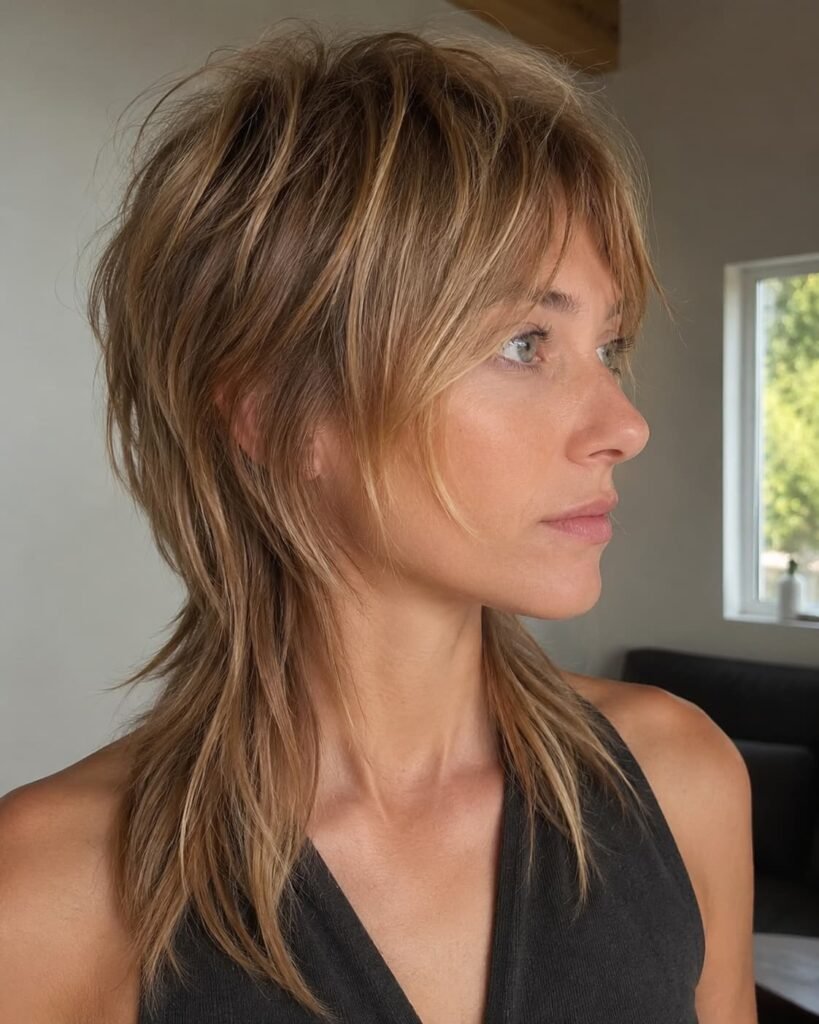
Layers influence how the shorter upper sections of a mullet connect with the longer hair at the back. Their placement, length, and degree of separation can change whether the haircut looks softly blended, textured, or more clearly disconnected.
The final appearance can vary with the haircut itself, natural texture, hair density, and styling.
Crown Layers and Volume
Crown layers shape the upper part of a mullet and help determine how clearly it differs from the longer back.
Shorter crown layers can create more visible separation between the upper and lower sections. Depending on the hair and styling, this may make the crown appear more textured or give it a more defined outline.
Longer crown layers create a more gradual transition into the lower lengths. This is one possible option for someone who prefers a softer mullet rather than a strongly disconnected shape.
Styling also changes how visible these layers appear. Separated or tousled sections may emphasize individual pieces, while smoother styling can make the transition look more blended.
Face-Framing Layers
Face-framing layers affect the shape around the front and sides of the haircut.
Shorter pieces can make the contrast between the front and longer back more noticeable. Longer face-framing sections can create a more gradual visual connection between the fringe, sides, and lower layers.
The exact placement can vary. Some versions use shorter pieces around the cheeks or jaw, while others keep the front sections longer.
Face-framing layers may be combined with bangs or used on their own. The choice mainly affects how much shorter detail appears around the front of the haircut.
Blended vs Disconnected Layers
Blended and disconnected layering create noticeably different mullet shapes.
Blended layers transition more gradually from shorter sections into longer ones. This can make the haircut appear softer and reduce the visual break between the crown, sides, and back.
Disconnected layers create a clearer difference between lengths. The shorter upper sections remain more visibly separate from the longer back, producing a stronger contrast in the silhouette.
Neither approach is necessary for every mullet. Some people may prefer a subtle transition, while others may want the difference between lengths to be more obvious.
Mullet Hairstyles With Bangs
Bangs are optional in a mullet, but they can significantly change the front silhouette.
Fringe length, density, and shape can make the front appear softer, more compact, or more strongly defined. How the bangs connect with the side and crown layers also affects the overall look.
Curtain Bangs
Curtain bangs usually have shorter sections near the center with more length toward the outer edges.
With a mullet, this shape can create a gradual connection between the fringe and the side layers. Longer curtain bangs may also blend into face-framing pieces, making the transition around the front appear softer.
The result can vary depending on the bang length and how strongly the rest of the haircut is layered.
Wispy Bangs
Wispy bangs use lighter, more separated sections across the forehead.
They can add definition to the front without creating the solid visual line of a fuller fringe. Their more open appearance may also make the transition into the side layers look softer.
How light or defined they appear depends on the amount of hair used and how the fringe is cut and styled.
Short Textured Bangs
Short textured bangs create a more compact front section and can emphasize the contrast between the front and longer back.
They may be cut with a smooth outline or with more visible separation between individual pieces. A piecey finish can echo the texture of a choppy mullet, while a cleaner edge creates a more defined front shape.
The exact length can vary, so short bangs do not need to follow one fixed position on the forehead.
Full or Side-Swept Fringe
A full fringe places more visual weight across the front of the haircut. This can create a stronger boundary between the fringe and the longer sections behind it.
A side-swept fringe creates a more directional shape and may connect more gradually with longer side pieces.
Some people may prefer a full fringe for a more defined front, while others may choose a side-swept shape for a softer transition. The final effect depends on the fringe length, density, and surrounding layers.
How Hair Texture Changes the Mullet
Natural hair texture affects how the lengths and layers of a mullet appear.
Straight, wavy, and curly hair can all show the same basic shorter-to-longer structure differently. Texture can influence the visible movement, separation, volume, and apparent length of individual sections.
Straight Hair
Straight hair can make the outline of individual layers easy to see because the sections tend to fall in more defined lines.
In a disconnected mullet, the shorter crown, face-framing pieces, and longer back may appear clearly separated. In a more blended cut, the transition between these sections can look smoother.
Styling also matters. A smooth finish can emphasize the overall silhouette, while separated ends can make individual layers more noticeable.
Wavy Hair
Wavy hair introduces bends through the layered sections, which can create a looser-looking silhouette.
The waves may make individual layers and textured ends more visible while also softening the boundary between shorter and longer areas.
Because wave patterns vary, the amount of separation and movement will not look the same on every haircut. Layer placement and styling also affect the final shape.
Curly Hair
Curly hair can change the apparent length and proportions of a mullet because curls do not fall in the same straight line as stretched hair.
The shorter and longer sections may therefore appear closer together or more strongly contrasted depending on the curl pattern and layer placement.
Shorter crown layers can make the upper shape more noticeable, while longer curls through the back can preserve the longer rear section associated with a mullet.
Curl pattern also affects how clearly individual layers can be seen. The final silhouette depends on the relationship between the cut, natural texture, and styling rather than on one fixed curly mullet shape.
Mullet vs Wolf Cut: What Is the Difference?
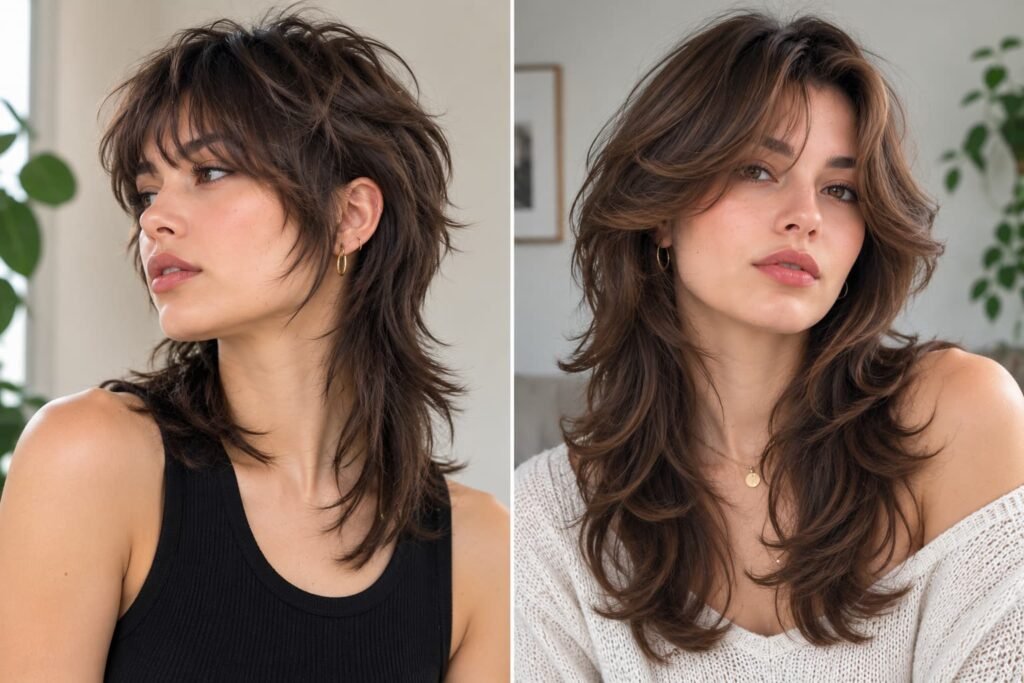
A mullet and a wolf cut can share features such as shorter crown layers, face-framing pieces, bangs, and textured ends, but their overall proportions are usually different.
A mullet places clearer emphasis on the contrast between shorter sections through the front, top, or sides and additional length at the back.
A wolf cut usually spreads its shorter, choppy layers more widely through the haircut. It often combines shag-like layering with some of the length contrast associated with a mullet, creating a more evenly layered silhouette.
Because both cuts can be soft, textured, or heavily layered, the difference is not always obvious at first glance. Looking at how the length is distributed from the crown to the back is more useful than relying on one feature alone.
For a closer look at that haircut, see the SR Hair and Nails guide to the wolf cut hairstyle.
Mullet vs Shag Haircut
A shag and a mullet can both include crown layers, fringe, face-framing pieces, and textured ends. The main difference is how the overall length is distributed.
A mullet usually keeps stronger front-to-back contrast, with more emphasis on length through the nape and back.
A shag generally spreads its layers more continuously through the crown, sides, and lower sections. This can create a more evenly layered outline rather than a clearly longer rear section.
The amount of disconnection can vary in both haircuts. A soft mullet may be closely blended, while a more dramatic version can show a clear break between the upper sections and the back. A shag can also have strongly defined layers, so disconnection by itself does not identify the cut.
The overall silhouette and the amount of rear length are more useful differences to look at.
Styling Options for a Mullet Hairstyle
Styling can make different parts of a mullet more or less noticeable. Some finishes emphasize individual layers and length contrast, while others create a smoother outline.
The final appearance can vary with natural texture, layer placement, density, and the amount of styling used.
Tousled and Textured Styling
A tousled finish can make shorter layers and individual pieces easier to see.
Separating the ends may emphasize choppy sections, face-framing layers, and the transition into the longer back. A softer tousled finish can keep that texture visible without making every section look sharply defined.
This is one possible styling direction rather than a requirement for the haircut.
A small amount of Hair Wax Stick sold through or another texturizing product can be one option for separating individual pieces and defining the ends.
Smooth or More Defined Styling
A smoother finish can make the overall outline of the haircut appear cleaner.
When the layers lie closer together, a blended mullet may look softer, while a more disconnected cut can show a clearer difference between the shorter upper sections and longer back.
Different areas can also be styled differently. For example, the fringe may be kept smooth while the lower ends remain more separated.
Waves and Curls
Waves and curls can change how the layers overlap and how much movement is visible through the haircut.
On wavy or curly hair, individual sections may appear less linear than they do on straight hair. This can soften some transitions while making other layers more noticeable.
Someone may prefer loose, irregular texture or more defined waves and curls. The haircut can retain its basic mullet shape with either approach.
A small amount of hair styling wax or an other wide-tooth comb product can be one option for separating individual pieces and defining the ends.
Creating More Visible Crown Shape
Styling the crown can make shorter upper layers more noticeable.
Separating or lifting these sections may create a more defined upper silhouette, while smoother styling can make the crown appear more closely connected to the lengths below.
How much shape appears at the crown also depends on the existing layer length, natural texture, and density. Styling can emphasize the structure that is already present, but it does not replace the effect of the haircut itself.
What to Consider Before Choosing a Mullet Haircut
There is no single mullet shape. The haircut can range from softly blended to strongly disconnected, so it helps to decide which proportions and details are preferred before choosing a version.
Length contrast, fringe, layering, natural texture, and desired styling effort are useful factors to consider.
How Dramatic Do You Want the Length Contrast?
The difference between the shorter and longer sections strongly affects the silhouette.
A larger contrast can make the mullet shape more obvious. A smaller difference in length can create a softer interpretation.
Someone who prefers a subtle look may choose longer crown and side sections, while a clearer difference between the upper sections and the nape can create a more defined shape.
Bangs or No Bangs?
Bangs are optional.
Short textured bangs can make the front appear more compact, while curtain or side-swept bangs can connect more gradually with the side layers.
Without a separate fringe, longer front sections can flow directly into face-framing layers. The choice mainly changes the front silhouette.
Blended or More Disconnected Layers?
Blended layers move gradually from shorter sections into longer ones.
More disconnected layers create a clearer visual break between the upper sections and the back.
Reference images can be useful when deciding between these approaches because terms such as soft, choppy, and disconnected can describe a wide range of haircut shapes.
Natural Hair Texture and Density
Natural texture and density can affect how the finished haircut appears.
Straight hair may show the edges and length differences of individual layers more clearly. Waves and curls can change the apparent length, separation, and movement of those same sections.
Density can also affect how much visual weight appears in different areas of the haircut.
Rather than treating one hair type as automatically suitable or unsuitable, it is more useful to consider how the chosen layer pattern and length contrast may appear on the individual hair.
Preferred Styling Effort
The amount of styling can vary from one mullet to another.
Someone who prefers to work mainly with their natural texture may want a shape that falls close to their preferred look without extensive styling. Someone who wants clearly separated ends, a defined crown, or controlled fringe may choose to spend more time arranging those areas.
There is no single maintenance level that applies to every mullet. The haircut structure, fringe, natural texture, and desired finish can all affect the amount of styling someone chooses to do.
Growing Out a Mullet
As a mullet grows, the proportions between the shorter and longer sections can gradually change.
The crown, sides, fringe, and back usually begin at different lengths, so their relationship may become less pronounced as the shorter sections gain length. Some layers may also begin to connect more closely with the sections below them.
How noticeable this change is depends on the original haircut. A strongly disconnected mullet may show a more obvious shift in proportions, while a softer version may blend more gradually as it grows.
One option is to keep reshaping selected sections to maintain the mullet silhouette. Another is to allow the shorter areas to become closer in length to the back, moving toward a more evenly layered haircut.
There is no fixed grow-out timeline that applies to everyone. The visible changes depend on the starting lengths, haircut structure, and how the hair is shaped over time.
Frequently Asked Questions
Can a mullet be worn with long hair?
Yes. A mullet can keep substantial length through the back while using shorter sections around the crown, front, or sides.
The defining feature is the contrast between the shorter areas and the longer rear section. A long mullet can look softly blended or more clearly disconnected depending on the layer placement.
Can straight hair have a mullet?
Yes. Straight hair can be cut into a mullet.
Because straight hair often falls in more defined lines, the difference between shorter and longer sections may be easier to see. A smoother finish can emphasize the overall silhouette, while separated ends can make individual layers more noticeable.
The final appearance can vary with density, layer placement, and styling.
Can curly hair have a mullet?
Yes. Curly hair can also be shaped into a mullet by keeping shorter sections through the upper areas and more length at the back.
Curl pattern can change the apparent length and separation of individual sections. Some curly mullets may look softer and more blended, while others can show a stronger contrast between the crown and back.
What is a soft mullet?
A soft mullet is a more blended version of the haircut.
Instead of creating a sharp break between the shorter upper sections and the longer back, the lengths transition more gradually. Longer face-framing pieces, softer crown layers, and less dramatic side-to-back contrast can all contribute to this look.
Are a mullet and a wolf cut the same?
No. The two cuts can share features such as crown layers, fringe, face-framing pieces, and textured ends, but their overall proportions are usually different.
A mullet places clearer emphasis on additional length through the back. A wolf cut generally distributes shorter layers more broadly through the haircut, often creating a more evenly layered silhouette.
What is the difference between a mullet and a shag?
A mullet usually has a clearer front-to-back length contrast, with more emphasis on the longer nape or back section.
A shag generally distributes its layers more continuously through the crown, sides, and lower lengths. Both cuts can be textured or heavily layered, so the overall silhouette and placement of length are more useful differences than texture alone.
Can a mullet have curtain bangs?
Yes. Curtain bangs can be combined with a mullet.
Their longer outer sections can connect with face-framing or side layers, which may create a more gradual transition around the front of the haircut. The final effect depends on the bang length and the structure of the surrounding layers.
How can a mullet look less dramatic?
A softer mullet can use a smaller difference between the shorter and longer sections.
Longer crown and side layers, blended transitions, softer face-framing pieces, and less separation through the back are possible ways to create a subtler silhouette.
These are styling and haircut options rather than fixed rules. The final appearance can vary with natural texture, density, layer placement, and styling.