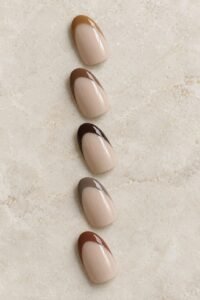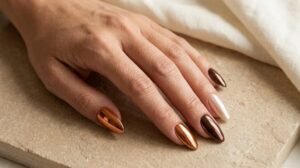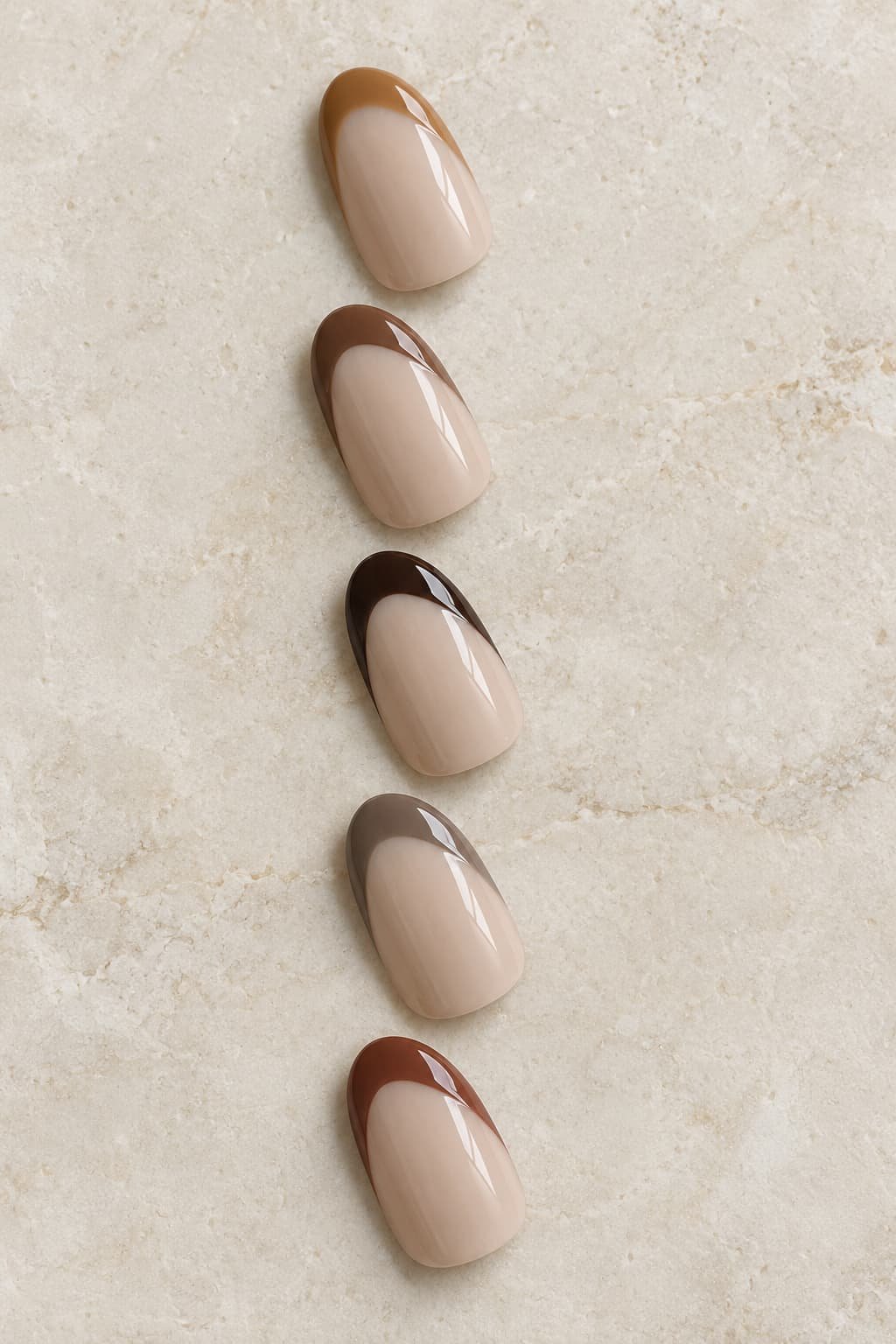

Brown French tip nails place brown color along the nail’s outer edge while leaving a separate base visible. The look can range from light caramel tips over beige to deep chocolate curves against pale pink.
Choosing the brown is only part of the design. The base color, amount of tip coverage, nail shape, and finish all influence the appearance. Starting with the color pairing can help you decide whether to keep the tips plain or add detail.
What Defines Brown French Tip Nails?
Brown French tips concentrate the color at the end of the nail. The remaining surface can have a clear, sheer, or opaque base.
The curved border between the tip and base is often called the smile line. It may sit close to the outer edge or extend farther down the sides for a deeper French shape. The painted border does not have to follow the nail’s natural white edge exactly.
Although a contrasting base is one option, brown French tips can also use similar colors or different finishes to define the edge.
Choosing a Brown Shade for Your Tips
Brown shades vary in depth and undertone. Depth describes how light or dark a color appears. Undertone describes influences such as gold, red, or gray within the brown.
Names such as caramel, toffee, chocolate, and espresso are descriptive guides rather than precise color specifications. Look at the actual shade before choosing.
Caramel and Toffee: Lighter, Golden Browns
Caramel and toffee commonly describe warm browns with golden tones. Either name may refer to a lighter or deeper shade, depending on the polish range.
A light golden brown over a similar beige base can create a subtle combination. Pairing it with pink may make the color difference more noticeable, depending on the depth and undertone of both shades.
These colors offer an option when you want the tips to remain lighter than a deep chocolate or near-black brown.
Chocolate and Espresso: Deep Brown to Almost Black
Chocolate can describe a medium or deep brown with warm, neutral, or reddish tones. Espresso generally suggests a very dark brown.
If you want the tips to look clearly brown, consider a medium chocolate shade rather than a near-black espresso. The distinction depends on the actual colors, not just their names.
Espresso is an option when you prefer a dark outline. Its brown tone may be less apparent in some lighting, particularly when only a fine line of color is visible.
Taupe and Reddish Brown: Different Undertone Options
Taupe generally describes a muted gray-brown. Some versions lean warmer or more beige, while others appear grayer. It can be paired with dusty pink, pale beige, or other muted shades.
Reddish brown has a more visible red influence. It offers another direction if golden caramel and gray-toned taupe do not match the palette you want.
Comparing undertones helps distinguish browns that are similar in depth but different in character.
How the Base Color Changes the Look
The base forms the background for the brown edge. Its color and opacity affect how distinct the tip appears.
A sheer base allows the surface underneath to remain partly visible. An opaque base provides fuller color coverage. This difference matters when comparing a translucent manicure with one that has a solid cream or beige background.
Sheer Pink and Brown for Clear Color Separation
A sheer pink base adds a light tint while allowing some of the underlying nail to show through. Dark chocolate or espresso tips can provide a defined edge against it.
Peach-pink introduces more warmth, while rose pink offers a cooler-looking alternative. Choose according to the color pairing you prefer.
On natural nails, the nail’s own color contributes to the appearance of sheer polish. A reference image therefore may not show exactly how the same translucent shade would look on another person.
Beige and Brown for a Tonal Combination
Beige and brown can create a tonal manicure, with the base and tip belonging to a related color family.
Light caramel over a similar beige produces a gentler distinction than dark chocolate over pale beige. The closer the two colors are in depth and undertone, the less obvious their border may be.
A tonal design does not require the base to match your skin. You can choose beige for its relationship with the brown tip.
Cream and Brown for More Defined Tips
A light, opaque cream base provides contrast against medium or dark brown tips.
Cream has a warmer appearance than bright white. Paired with golden caramel, it can form a warm palette. Paired with dark espresso, it creates a stronger light-to-dark difference.
A slim brown curve leaves the cream base dominant. A broader edge increases the amount of brown visible.
Brown French Tip Designs and Their Differences
Color placement and pattern offer several ways to vary the design. Each option below changes more than the brown shade alone.
Classic Curved Tips Versus Micro Tips
Classic curved tips use a visible band of brown across the outer edge. Micro tips reduce that band to a fine line.
Micro tips can also be curved, so the distinction is mainly the amount of color. A broader band provides more space to see the brown shade, while a micro tip keeps most of the base exposed.
A medium chocolate curve is one option for showing the color clearly. A dark brown micro tip offers a smaller outline.
Double French Tips with Brown and Cream Lines
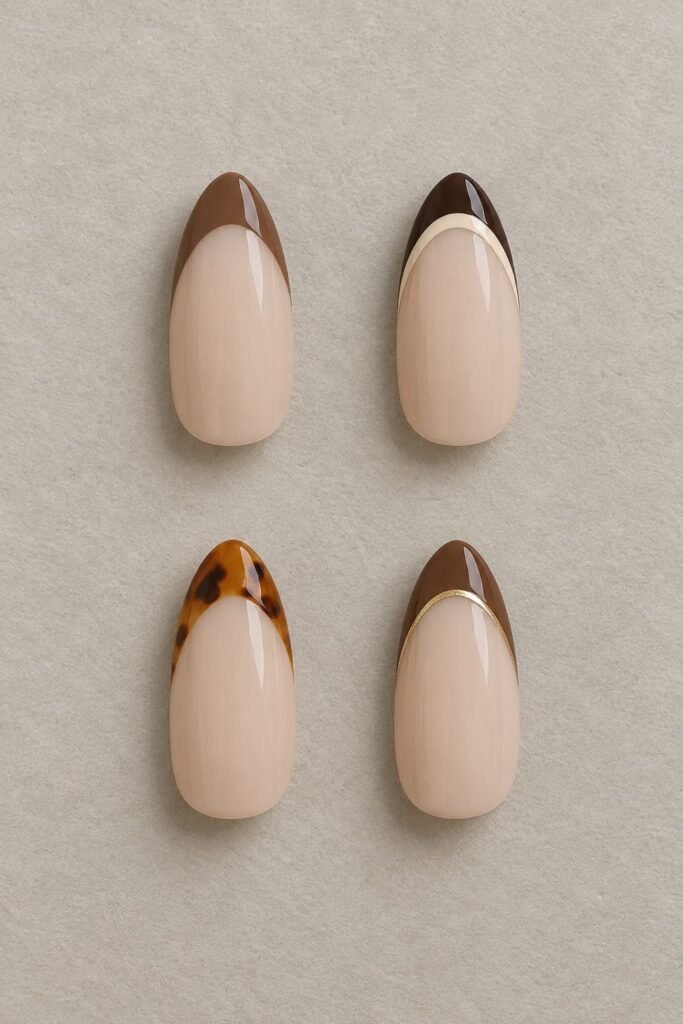
Double French tips use two distinct lines near the edge. For example, a brown outer tip can sit above a finer cream curve.
A small gap of visible base separates the two lines. Placing the cream directly against the brown creates an outlined border instead.
This design adds detail through line placement rather than a separate picture or motif.
Mixed Brown Tips Across Different Nails
Mixed brown tips use separate shades across the manicure. The colors could move from caramel to chocolate and espresso, or alternate between lighter and darker browns.
A consistent base keeps attention on the shade changes. Repeating a similar tip shape provides another visual connection between the nails.
Each tip can remain a solid color, with no blending required.
Brown Tips with a Tortoiseshell-Inspired Pattern
A tortoiseshell-inspired design uses irregular dark brown patches over an amber or tan background. Restricting the pattern to the tips leaves the base visible.
A broader tip offers more room for the markings. On a narrow edge, a few small patches may be easier to distinguish than a dense pattern.
For less decoration, use a patterned tip on one accent nail and plain brown tips on the others.
Brown French Tips with a Fine Metallic Outline
A gold- or silver-colored line can trace the border between the brown tip and its base.
Gold introduces a warmer-looking metallic accent, while silver provides a cooler-looking alternative. Neither is required to match a particular brown; the pairing is a style choice.
Keep the line along the existing curve to concentrate the decoration near the tip. It can appear across the manicure or only on selected nails.
Matching Tip Width to Nail Shape and Length
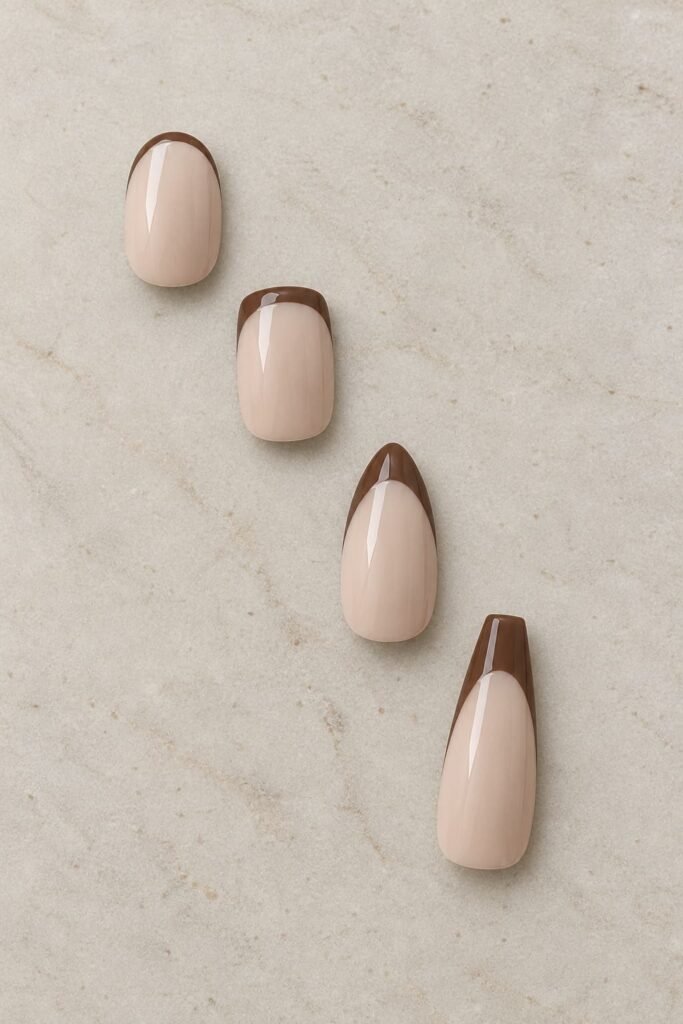
Consider how much of the visible nail the brown section will cover. A tip that occupies a small portion of a long nail may cover much more of a short one.
Short Round and Squoval Nails
Round nails have curved outer edges. Squoval nails have a flatter edge with softened corners.
A narrow brown band leaves room for the base on either shape. A deeper tip is also possible, but it gives brown a larger share of the surface.
If you want double lines or a pattern, consider whether the individual details will remain distinct at the chosen size.
Almond and Oval Nails
Oval nails have a rounded outline. Almond nails taper toward a narrower, softly pointed end.
A shallow French curve places most of the brown near the tip. A deeper smile line extends the color down the sides while leaving a curved area of base visible in the center.
The available length affects these proportions. A design shown on long almond nails may need a shallower curve when adapted to shorter nails.
Square and Coffin Nails
Square nails have relatively straight sides and a flat outer edge. Coffin nails narrow along the sides before ending in a flat tip.
Both can carry a straight brown band or a curved smile line. The outer shape and painted border do not have to follow the same outline.
Longer versions provide room for patterned tips or double lines, but they can also be worn with a simple narrow edge.
Choosing Between Glossy and Matte Brown Tips
Glossy tips show distinct light reflections. Matte tips have less visible shine, giving the same color a different surface appearance.
Using one finish across the nail keeps the color arrangement as the main feature. Combining finishes introduces another kind of contrast.
For example, glossy brown tips over a matte brown base can define the French shape without a strong color change. The boundary may become more apparent as the viewing angle changes.
FAQs About Brown French Tip Nails
Why Do Some Espresso Tips Look Black?
Espresso often describes a brown that is very close to black. Its brown tone can be difficult to distinguish in dim light or when the painted area is small.
Photographic lighting, exposure, and screen settings can also affect its appearance. If you want an obviously brown shade, compare the actual color rather than relying only on its name.
How Can You Keep Light Brown Tips Visible Against a Beige Base?
Choose a lighter beige or a slightly deeper brown to increase the difference between them.
If you prefer closely matched shades, a fine cream or dark brown outline can help define the border. This introduces another color while keeping the palette neutral.
Are Mixed Brown French Tips the Same as Brown Ombre Nails?
In this guide, mixed brown tips means using different solid shades across separate nails. Brown ombre refers to a gradual color blend within a nail.
When choosing a reference, look at whether the colors change from nail to nail or blend together on each nail.
Do Brown French Tips Have to Match Your Skin Tone?
No. You can choose a brown close to your skin tone or one that contrasts with it.
Consider the base and tip together as well. A shade that looks subtle beside your skin may still stand out against a light cream base.
Final Thoughts
Choose the brown shade and base as a pair, then decide how much of the tip to cover. A pattern, second line, or metallic accent can be added if you want more detail.
When looking at a reference image, identify the feature you like most: the color combination, curve, pattern, or finish. That gives you a clearer starting point for adapting the idea to your preferred nail shape and length.