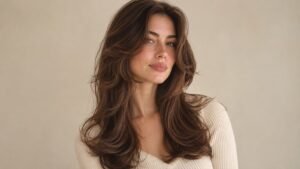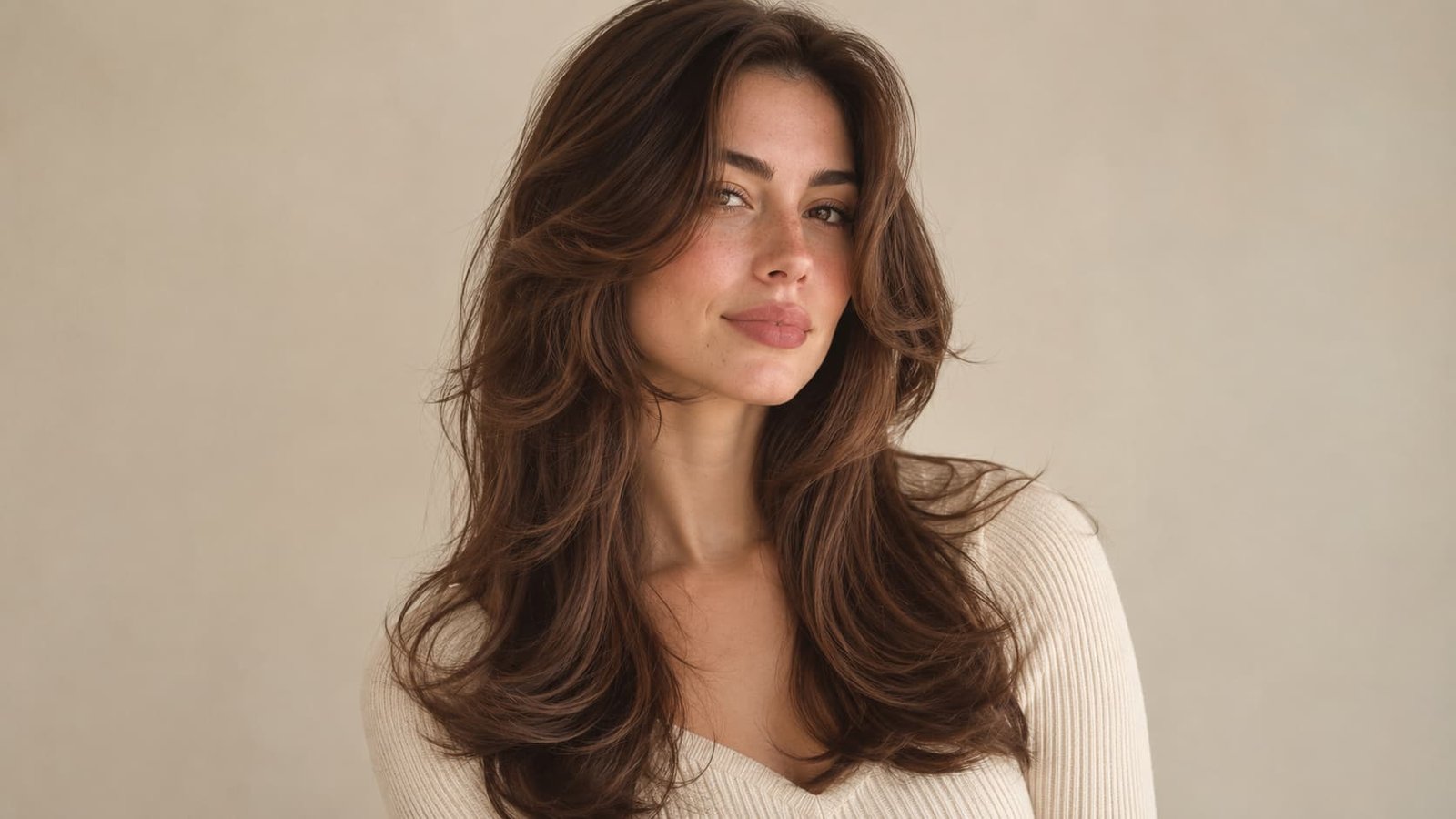


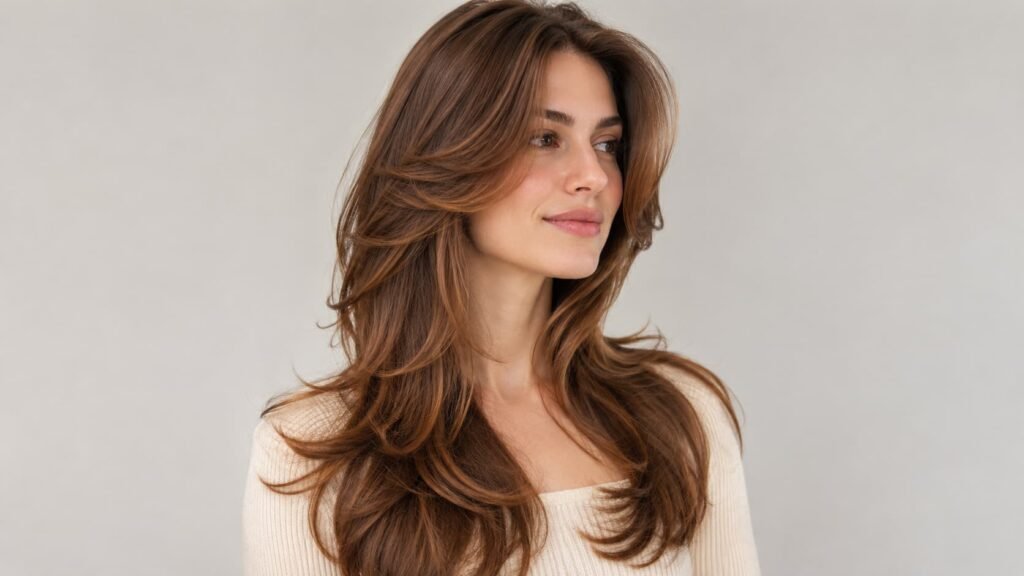
The butterfly haircut combines short, face-framing layers with longer sections of hair to create a soft, flowing shape. Its distinctive appearance comes from the contrast between the shorter layers around the face and the longer hair falling over the shoulders.
The style can look soft and natural or more defined with outward-swept ends and a bouncy blowout. Hair length, texture, and layer placement all influence the finished appearance.
This guide explains how butterfly layers work, the different variations of the haircut, and what to consider when choosing and styling it.
What Is a Butterfly Haircut?
A butterfly haircut is a layered hairstyle designed around two main lengths. The shorter layers frame the face, while the longer sections preserve much of the overall hair length.
The name comes from its wing-like appearance. When the front layers curve outward on both sides of the face, they can resemble the open wings of a butterfly.
Unlike a traditional layered haircut, which may distribute layers more evenly, the butterfly cut emphasizes the contrast between shorter front sections and longer, flowing lengths. This arrangement can give the impression of shorter hair around the face without removing all the length.
Although the hairstyle is commonly associated with long hair and bouncy blowouts, it can also be adapted to medium-length hair and different natural textures.
What Makes Butterfly Haircut Layers Different?
The main difference lies in how the layers are positioned and connected. Rather than simply adding layers throughout the hair, this haircut uses different lengths to create a recognizable shape.
Short Face-Framing Layers
The shorter layers sit around the front of the face and may begin near the cheekbones, chin, or shoulders. Their starting point influences how noticeable the face-framing effect appears.
Cheekbone-length layers can create a more defined shape around the face, while chin-length layers may offer a softer transition into the longer sections.
When styled outward, these pieces help create the sweeping appearance commonly associated with the butterfly cut.
Longer Flowing Layers
The longer layers form the lower portion of the hairstyle and maintain much of its original length. They provide contrast with the shorter front sections while allowing the hair to fall naturally over the shoulders and back.
The placement of these layers can influence how full the ends appear. More restrained layering may preserve a fuller-looking outline, while more noticeable layers can create additional visual movement.
Soft vs. Dramatic Layer Transitions
A soft butterfly haircut features gradually blended layers with subtle differences in length. This variation may create a relaxed appearance without strongly defined sections.
A dramatic butterfly cut uses a more noticeable contrast between the shorter front layers and longer hair. Outward-curved ends and a structured blowout can emphasize this difference.
Neither approach is inherently better. The choice depends on the preferred appearance, existing hair length, density, natural texture, and everyday styling habits.
Butterfly Haircut Styles for Different Hair Lengths
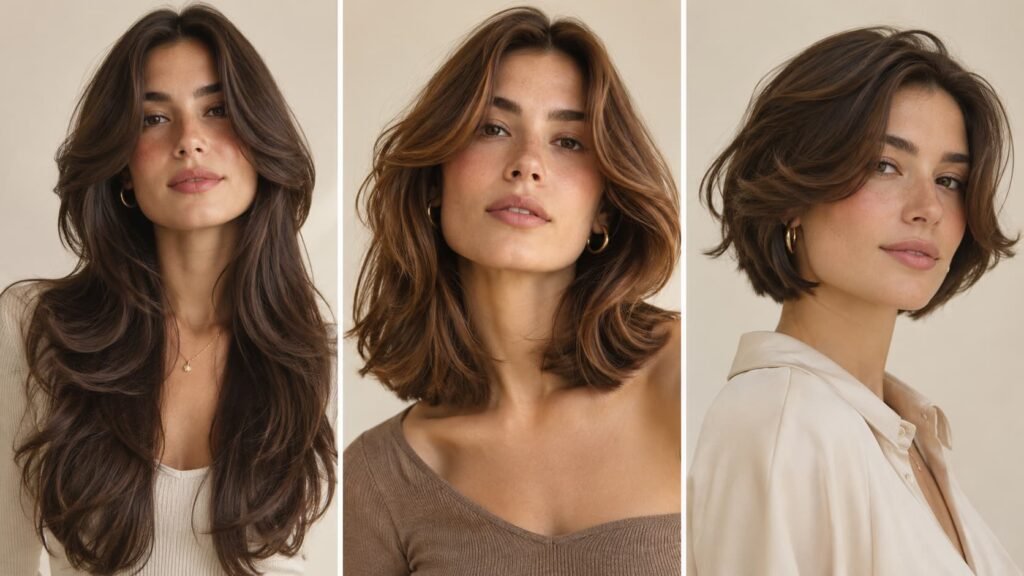
The amount of hair available for layering influences the shape of a butterfly cut. Longer hair allows for a greater difference between layers, while shorter lengths create a more compact version of the hairstyle.
Butterfly Haircut for Long Hair
Long hair provides enough length to create noticeable separation between the shorter front layers and the longer sections at the back. The upper layers may sit around the chin or shoulders, while the remaining hair extends farther down.
This variation can create a flowing silhouette without significantly changing the overall length. Large, loose waves or outward-curved ends can highlight the individual layers.
Medium-Length Butterfly Haircut
A medium-length butterfly haircut typically falls around the shoulders or collarbone. The layers are positioned closer together, creating a more compact shape than the long version.
Face-framing sections can blend into the shoulder-length ends to create a balanced appearance. This variation may appeal to readers who prefer noticeable layers without keeping very long hair.
Short Butterfly Haircut
A short butterfly haircut adapts the main features of the original style to a shorter length. It may resemble a layered bob or long bob with sweeping sections around the face.
Since there is less space between the shortest and longest layers, the contrast is generally less noticeable. Feathered ends and outward movement can help maintain the butterfly-inspired appearance.
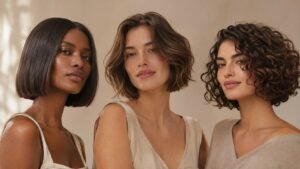
How a Butterfly Haircut Looks on Different Hair Textures
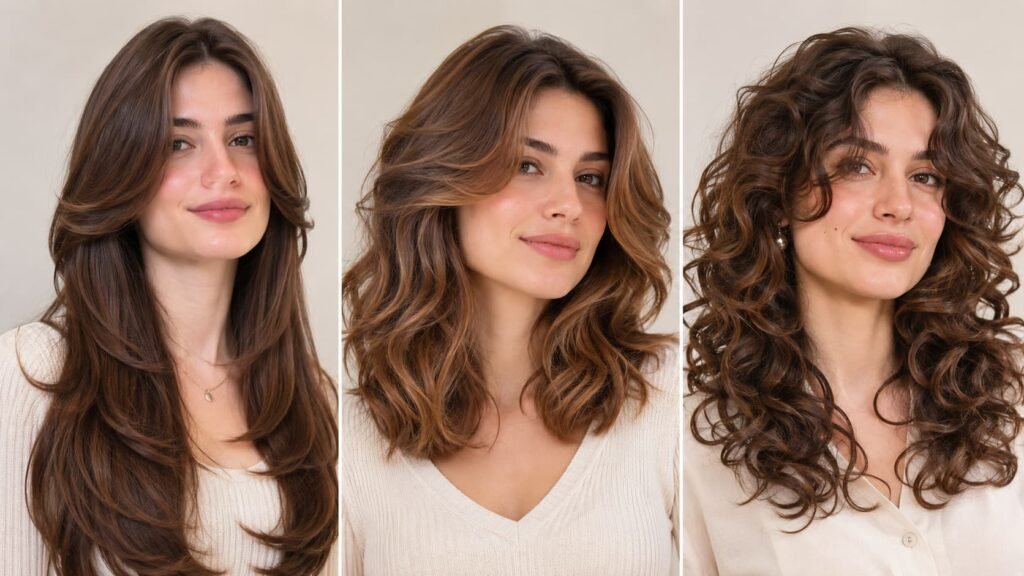
Hair texture affects how individual layers fall and interact. The same layer placement can produce noticeably different appearances on straight, wavy, and curly hair.
Straight Hair
On straight hair, the difference between layer lengths may be more clearly visible. Smooth sections can create a defined outline, particularly around the cheeks and jawline.
Without additional styling, the layers may sit closer to the face. Curving the ends outward can introduce the sweeping shape associated with the classic butterfly hairstyle.
Wavy Hair
Natural waves introduce bends throughout the layered sections. These bends can make the transitions between lengths appear softer and less structured.
Depending on the wave pattern, some layers may curve outward while others fall inward. This creates a more relaxed appearance compared with a carefully styled blowout.
Curly Hair
A curly butterfly haircut can feature shorter curls around the face and longer curls throughout the lower sections. The result is often more rounded and textured than a straight version.
Curl shrinkage is an important consideration when choosing layer lengths. Sections that appear longer when wet may sit higher once dry. The finished shape depends on the curl pattern, density, and placement of the layers.
Butterfly Haircut With or Without Bangs
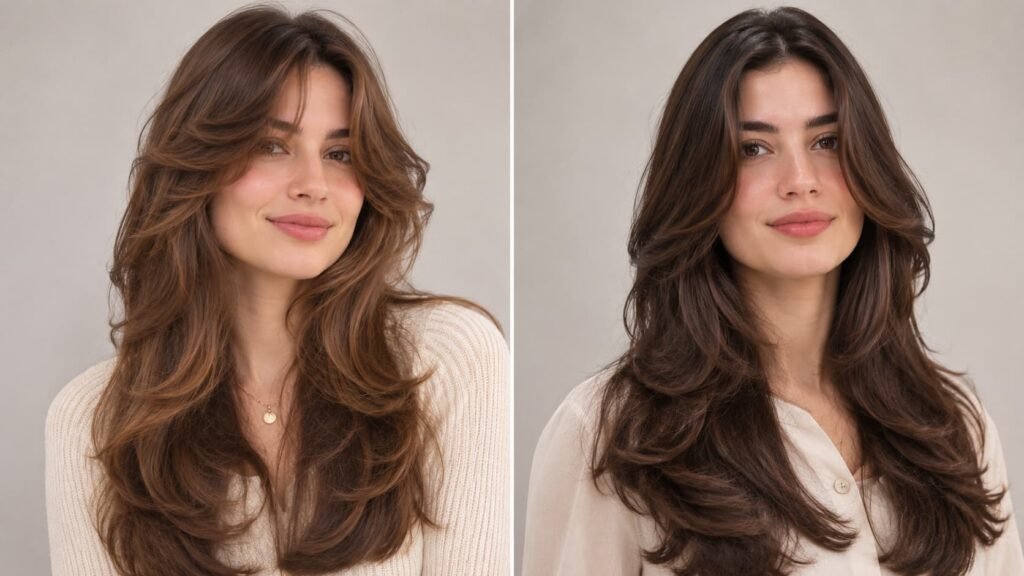
Bangs are an optional feature rather than a requirement of the butterfly cut. Their length and shape influence how the hairstyle frames the forehead and connects with the surrounding layers.
Butterfly Haircut With Curtain Bangs
Curtain bangs usually separate near the middle of the forehead and sweep toward both sides of the face. Their outer sections can gradually blend into the longer face-framing layers.
Shorter curtain bangs introduce a more noticeable fringe, while longer versions may create a softer transition around the cheeks. This combination can emphasize the outward movement of the hairstyle.
Butterfly Haircut Without Bangs
A butterfly cut without bangs leaves the forehead more open. Instead of a separate fringe, longer front sections begin around the cheeks, chin, or below.
This variation may appeal to people who prefer to keep shorter strands away from their forehead. Both middle and side parts are possible, depending on the arrangement of the front layers.
Butterfly Haircut vs. Other Layered Haircuts
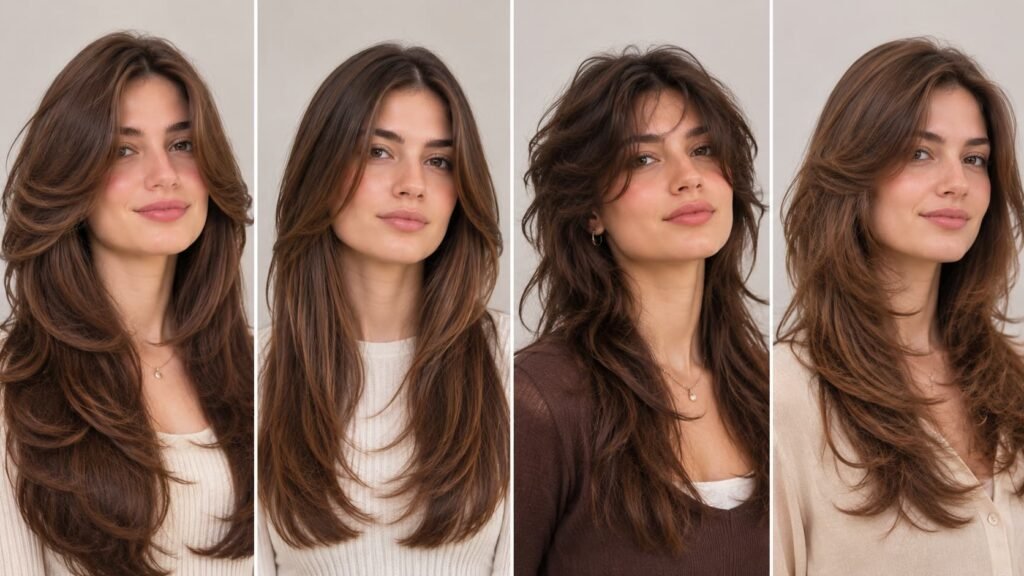
Several hairstyles use layers to introduce shape and movement. However, their structure, distribution of shorter sections, and overall appearance can differ.
Butterfly Cut vs. Regular Layered Cut
A regular layered haircut can use different lengths throughout the hair without following one particular arrangement.
The butterfly cut is a more specific layering pattern that emphasizes shorter sections around the face and longer lengths underneath and toward the back. A regular layered cut may have more evenly distributed layers or fewer noticeable changes in length.
Butterfly Cut vs. Wolf Cut
A wolf cut typically combines shag-inspired layers with shorter sections around the crown and a more textured outline. Its ends may appear tapered, giving the hairstyle a deliberately less uniform shape.
The butterfly cut generally emphasizes flowing lengths and sweeping front layers. While both hairstyles can contain shorter upper sections, their overall silhouettes and styling approaches differ.
Butterfly Cut vs. Feathered Cut
A feathered cut focuses on soft, tapered ends that create a feather-like appearance. Feathering describes the finish of the hair rather than one fixed arrangement of layers.
A butterfly haircut focuses more on the relationship between shorter and longer sections. It can also include feathered ends, meaning the two styling concepts can be combined within the same haircut.
How to Style a Butterfly Haircut
Styling influences how clearly the different layers appear. A structured finish can emphasize the contrast between sections, while a natural finish may create a softer shape.
Bouncy Blowout With Outward-Swept Layers
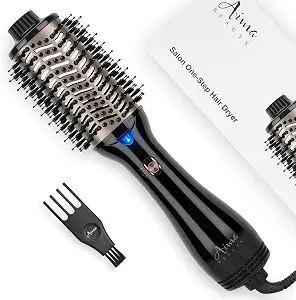
A round brush and hairdryer can help create the curved ends associated with a classic butterfly blowout.
Work through manageable sections, lifting the hair with the brush and directing the shorter front pieces away from the face. The longer sections can be styled with broader curves to maintain their flowing appearance.
The amount of visible fullness and movement depends on the hair’s texture, density, and response to styling.
Soft Waves With Defined Layers
Loose waves offer an alternative to the rounded shape of a blowout. Instead of creating tightly defined curls, this approach focuses on gentle bends through the middle lengths and ends.
The front layers can be directed outward, while the longer sections follow a softer wave pattern. This may create a relaxed appearance while keeping the different layer lengths visible.
Natural Finish Without a Blowout
A butterfly haircut does not always need a structured blowout. Naturally straight, wavy, or curly hair can be left to follow its existing texture.
A wide-tooth comb or gentle finger styling can help arrange the sections, depending on the hair type. As the hair dries naturally, the layers may sit closer together or form less defined curves.
The result may look different from professionally styled reference photographs, particularly when those images feature pronounced volume and outward-swept ends.
What to Consider Before Getting a Butterfly Haircut
Before choosing this hairstyle, consider how the layers may interact with your existing hair and everyday routine. The most noticeable version of the haircut may not necessarily match your preferred appearance.
Hair Density and Fullness at the Ends
Hair density refers to how many strands are present, while fine or coarse hair describes the thickness of individual strands.
Extensive layering may reduce the appearance of fullness at the ends of lower-density hair. Longer, more restrained layers are one possible option for maintaining a fuller-looking outline.
Higher-density hair may allow for more pronounced layering while retaining a substantial lower section. However, the finished appearance still depends on the distribution and length of the layers.
Preferred Length and Layer Placement
Consider where you want the shortest sections to fall and how much overall length you would like to retain.
Shorter layers around the cheekbones may create stronger facial framing, while longer sections around the chin or collarbone can produce a more gradual transition.
It is also worth considering whether you regularly tie your hair back. Shorter front sections may not reach a ponytail or bun, depending on their length.
Everyday Styling Preferences
The appearance of butterfly layers can change considerably between a natural finish and a structured blowout.
If you usually air-dry your hair, reference photographs showing natural textures may provide more realistic inspiration. If you prefer rounded ends and outward-swept layers, additional styling may be needed to achieve that appearance.
Maintenance also depends on how closely you want to preserve the original shape. As the shorter sections grow, the face-framing effect may gradually become less pronounced.
How to Ask for a Butterfly Haircut
Reference photographs can help communicate the specific variation of the butterfly haircut you want. Choose images that show similar hair lengths, textures, and layer arrangements to your preferred appearance.
Rather than requesting the haircut by name alone, explain where you want the shortest layers to begin, how much overall length you want to keep, and whether you prefer subtle or noticeable transitions.
Mention whether you want curtain bangs, how you normally part your hair, and whether you usually wear it naturally or style it with a blowout.
Discussing these details with a hairstylist can help clarify how the haircut may be adapted to your existing hair. Reference images should serve as visual guidance rather than a guarantee of an identical result.
Maintaining the Shape of Butterfly Layers
As butterfly layers grow longer, their position around the face gradually changes. Shorter sections that originally rested near the cheekbones may begin to fall closer to the jawline, creating a softer face-framing effect.
Some people may prefer this grown-out appearance, while others may want to maintain the original layer definition. Trimming selected sections rather than shortening the entire haircut is one possible way to refresh its shape.
Maintenance needs vary depending on how quickly the hair grows, the original layer placement, and personal styling preferences. There is no fixed trimming schedule that applies to every butterfly haircut.
Frequently Asked Questions
Can You Tie a Butterfly Haircut Into a Ponytail?
Yes, provided the hair is long enough. However, shorter face-framing layers may fall outside the ponytail. A low ponytail or small hair clips may help manage these sections, depending on their length.
Can a Butterfly Haircut Have a Side Part?
Yes, butterfly layers can be worn with a side part. This creates an asymmetrical appearance, with more hair sweeping toward one side. The placement of the front layers can influence how naturally the hair falls when parted differently.
Can You Get a Butterfly Haircut Without Losing Much Length?
A butterfly haircut can retain much of the overall hair length while introducing shorter layers around the face and upper sections. If keeping the length is a priority, communicate this clearly before the haircut.
What Are the Disadvantages of a Butterfly Haircut?
Shorter layers may be difficult to gather into certain updos, and extensive layering can make the ends appear less full. Achieving a defined, outward-swept finish may also require additional styling. These considerations vary depending on the haircut and natural hair texture.
Can a Butterfly Haircut Work With Fine Hair?
A butterfly cut can be adapted to fine hair. Subtle layers and longer face-framing sections may create visible movement without removing too much fullness from the ends. Hair density and the desired outline are important considerations when selecting the amount of layering.
Final Thoughts
The butterfly haircut offers a distinctive combination of shorter face-framing layers and longer, flowing sections. Its appearance can range from softly blended layers to a more dramatic, outward-swept finish.
Choosing a variation involves considering your existing hair length, natural texture, preferred shape, and everyday styling routine. Whether you prefer curtain bangs, loose waves, or a natural finish, the placement of the layers plays an important role in the overall appearance.
Rather than focusing only on a styled reference photograph, consider how the haircut may look during everyday wear. This can help you choose a version that reflects your personal style and styling preference